Photo: Anthony Prince/Equator Studios
Essential Hip-Hop Releases From The 1980s: Slick Rick, RUN-D.M.C., De La Soul & More
Releases from the 1980s are some of the genre's most consequential, paving the way for rap to be where it is now. In celebration of the 50th anniversary of hip-hop, revisit 10 releases from a decade that expanded the culture's framework.
GRAMMYs/Jul 12, 2023 - 05:48 pm
The handful of rap songs released in the 1970s opened doors for the onslaught of creative variation that marked rap albums of the 1980s. Diss tracks, party anthems, socially minded material and gangsta rap all had a place in this era, defined by groups and solo efforts that strove to differentiate themselves from one another. Debuts from the likes of MC Lyte, De La Soul, Slick Rick and others kickstarted not only legendary careers, but a wave of innovations that undeniably led to rap’s commercial takeover in the ‘90s.
Hip-hop’s four elements (rap, DJjing, breakdancing and graffiti) grew independently and exponentially in form and acknowledgment in the ‘80s. Seldom was it deemed legitimate in the ‘70s but the ‘80s came with it a realization: that big business and big money could be squeezed from the culture. For better or worse, hip-hop began to lodge itself into the mainstream during this decade.
MTV placements, such as RUN-D.M.C.’s bloated collab with Aerosmith, brought posters into teenagers’ bedrooms and cross promotional ideas to the forefront. Films like as Breakin’ and Beat Street used hip-hop as a dramatic vehicle. And while there was a sense of underlying exploitation, it catapulted hip-hop culture nationally and worldwide. Graffiti was once viewed as vandalism was now on walls and podiums at art galleries, praised as “street art.” Sugar Hill Gang's "Rapper's Delight" seemed light years ago, and there was a palpable sense of maturation and explosion of ideas in the music.
A colorful cast of new artists pushed boundaries of the time. For one, Marley Marl, of the Juice Crew, was an innovator who preceded Wu-Tang as a super producer who surrounded himself with a motley crew of MCs, each with distinct approaches and personalities. He pioneered methods of drum programming and sampling, all of which began as early as 1983 when he was slowly piecing together the collective. Artists at his helm include Biz Markie, Roxanne Shanté, Kool G Rap, and Big Daddy Kane — all of which were innovators in their own right.
We’d be remiss not to cite just a handful of the many adventurous artists whose careers began in the '80s: EPMD, LL Cool J, Ultramagnetic MCs, Ice-T, Jungle Brothers and more. Their work and that of many others ushered in the beginning of hip-hop's golden age, as seen by numerous breakthrough albums in the later part of the decade; 1988 in particular, was a historically fruitful year.
This late ‘80s era encapsulates the genre's most consequential releases, ones that paved the way for rap to be where it is now. The following albums took the genre into warp speed, pushing its creative limitations to where it is today.
RUN-D.M.C - Raising Hell (1986)
RUN D.M.C.’s third studio album, produced by Russell Simmons and Rick Rubin, is arguably their greatest — not only in terms of commercial success, but also influence. Their distinct fashion and sound catapulted hip-hop culture (which was still foreign to many at the time) into the commercial realm.
In addition to juggernaut singles "My Adidas," "It’s Tricky," and "You Be Illin," this album featured "Walk This Way," a wildly ambitious crossover single in collaboration with none other than Aerosmith. It was rap’s first leap into another genre, garnering MTV plays and placing the album all over various music charts. It also was the first rap album to go platinum. Their popularity propelled rap albums that followed later in the decade, and also helped hip-hop gain unprecedented attention in the mainstream.
Boogie Down Productions - Criminal Minded (1987)
KRS-One’s solo career had many highpoints but his early era with BDP is what cements his legacy. While one of the first albums to have true elements of street edge, its approach vastly differed from that of Schoolly D or NWA. KRS lectured more than rap, he was spiritual and scholarly, weaving more stray observations and warnings of street life rather than glamorizing the violence.
Scott LA Rock and Ced Gee’s production was also progressive, opening up the sample palette to rock and obscure soul even further. This was not only their first album but also the only one that featured LA Rock, who was murdered about six months after the album’s release. "9mm Goes Bang" and "The Bridge Is Over" are classics that gave the country a peek into the worldview of New York natives.
Eric B & Rakim - Paid In Full (1987)
It's hard to think of a greater gamechanger in the art of rap than Rakim, a phenom who rightly went as Kid Wizard on tapes before releasing 1986's "My Melody" with Eric B. At a time when MCs were innocently basic, both structurally and lyrically, Rakim added internal rhymes schemes and multi-syllabic rhymes into his sentences. His voice was a calm monotone. His rhymes were writerly, filled with metaphors and a complexity unseen prior. His many one-liners would be referenced and repeated by generations of rappers including Wu-Tang and Jay-Z.
Paid In Full was a debut brimming with bonafide classics, "I Ain't No Joke," "Eric B. Is President," and "I Know You Got Soul." On Paid In Full, Rakim moved the needle miles forward for lyricism, altering every rapper that followed.
Beastie Boys - Licensed To Ill (1987)
Just behind RUN-D.M.C.’s Raising Hell, this rap debut from the brothers Beastie was the second to go platinum in the genre. It was also the only rap album by a Jewish hip-hop group to receive the coveted "5 Mic" rating from The Source, a magazine that was the hip-hop bible of its time.
The album was unquestionably hip-hop but was also multi-faceted. The track "No Sleep Til Brooklyn" featured a guitar solo from Slayer’s Kerry King, a call-back to the Beasties original rock roots. Songs like "Brass Monkey," "Paul Revere," "Girls," and "Fight For Your Right" were party anthems that kept his-hop’s positive party ethos afloat during a time when the music was shifting towards more serious directions.
The Beasties were fun, earnest, and distinct — beloved by both purveyors of the culture and fans of it, proving that hip-hop, if done right, is such an inclusionary artform.
Public Enemy - It Takes A Nation of Millions To Hold Us Back (1988)
Public Enemy's second album saw the group vastly mature from their debut, Yo! Bumrush The Show. The Bomb Squad's surgical studio techniques raised the bar for production and what was possible in terms of sample layering.
Chuck D, whose voice is one of the most powerful in all of recorded music, deepened his lyrical content even further, speaking on race, politics, class, power structures, and overall, more socially focused material. Songs like "Black Steel In The Hour Of Chaos," "Don't Believe The Hype" and "Rebel Without A Pause" were a gut punch, a jolt of seriousness and bombast unheard prior and unmatched in its era. It Takes A Nation... charted for 47 straight weeks on the Billboard 200 and many of its profound themes arguably are still relevant today.
NWA - Straight Outta Compton (1988)
Eazy-E and company were having a breakthrough moment when this song furthered their ascent into stardom and public infamy. A cacophonous origin story, it gave listeners a worldview most hadn’t heard and a taste of individual talent that was to come. Ice Cube and Dr. Dre soon became huge solo artists thereafter once the group disbanded. As posterboys of the gangsta rap, they had politicians, police, and the FBI all shook.
By 2015, when N.W.A.’s biopic film cemented their place in popular culture, they had long made history as one of the most consequential groups ever, both musically and culturally. Straight Outta Compton was their unflinching first step that had suburbia clutching its pearls en masse.
Slick Rick - The Greatest Adventures of Slick Rick (1988)
The ability to tell a succinct story with engaging detail is what makes an MC truly well rounded. Masters of this, Ghostface, Nas, and Black Thought, all have all cited Slick Rick as highly influential.
This was Rick's solo debut with production from RUN-D.M.C.'s Jam Master Jay as well as the Bomb Squad (of Public Enemy). Greatest Adventures... is forever colorful, anchored by Rick's charisma and ability to spin visual tales. Strikingly imaginative, he raps in different voices and cadences, able to be hilarious and vulgar, making his songs feel like comic strips. "Children's Story" remains a watershed moment of which all future storytelling raps would be measured by.
MC Lyte - Lyte As A Rock (1988)
The involvement of women in hip-hop culture cannot be overstated, despite being historically marginalized. Case in point: MC Lyte’s debut was commercially overlooked but its ripples are still felt today.
With production from Prince Paul, Audio Two and other innovative giants of the time, Lyte’s lyrics addressed drug use, racism, and womanhood. The album’s lead single, "10% Dis," is not only one of the greatest did tracks ever, but was also subsequently sampled and referenced years after, notably by the likes of A Tribe Called Quest, Common, Mobb Deep, and Biggie. Here, at prodigious 18 years old, Lyte solidified herself as not just a formidable female artist, but one the all-time greatest MCs.
Too Short - Life Is Too Short (1989)
In 1989, the West Coast certainly didn’t see the same attention or action as the East Coast, but one Todd Shaw a.k.a. Short Dogg a.k.a. Too Short had been around since 1983, selling homemade cassettes from the trunk of his car in Oakland. Life Is was his fifth album, independently released in 1988 but officially re-released on a major label, Jive, with major distribution a year later.
Short's presentation was uniquely his own — part street stories, part party music, part pimp fiction. The production eschewed samples for more keyboard and drum machines. It utilized replayed funk riffs and Short’s lyrics were almost cartoonishly misogynistic and obscene. This album in particular exposed him to a national audience, placing Oakland— and the West Coast — on the map as a new region for rap music.
De La Soul - 3 Feet High & Rising (1989)
Prince Paul opened up a new galaxy of innovations on De La Soul's debut. His sampling of kids' records, doo-wop, and left-field sounds coupled with unconventional son structure made 3 Feet High & Rising kaleidoscopic and sunny.
Paul’s use and insertion of skits became his trademark, adding a movie-like feel to this children’s book of an album. Singles like "Plug Tunin'," "Potholes In My Lawn," and "Me Myself and I" lampooned the gangsta image, making De La's flowery reputation as hip-hop’s hippies even more pronounced.
Their attempt to shed this persona is why their follow-up was called De La Soul Is Dead. The foundational creativity that informs their brilliant career not only forever altered hip-hop, but it started here.
Essential Hip-Hop Releases From The 1970s: Kurtis Blow, Grandmaster Flash, Sugarhill Gang & More
Slick Rick
On His First Album In 26 Years, Slick Rick Takes A 'Victory' Lap
More than a quarter-century since his last album, the hip-hop pioneer is back to talk about working with Idris Elba, where he gets his stories from, and why he’s been away for so long.
GRAMMYs/Jun 16, 2025 - 03:18 pm
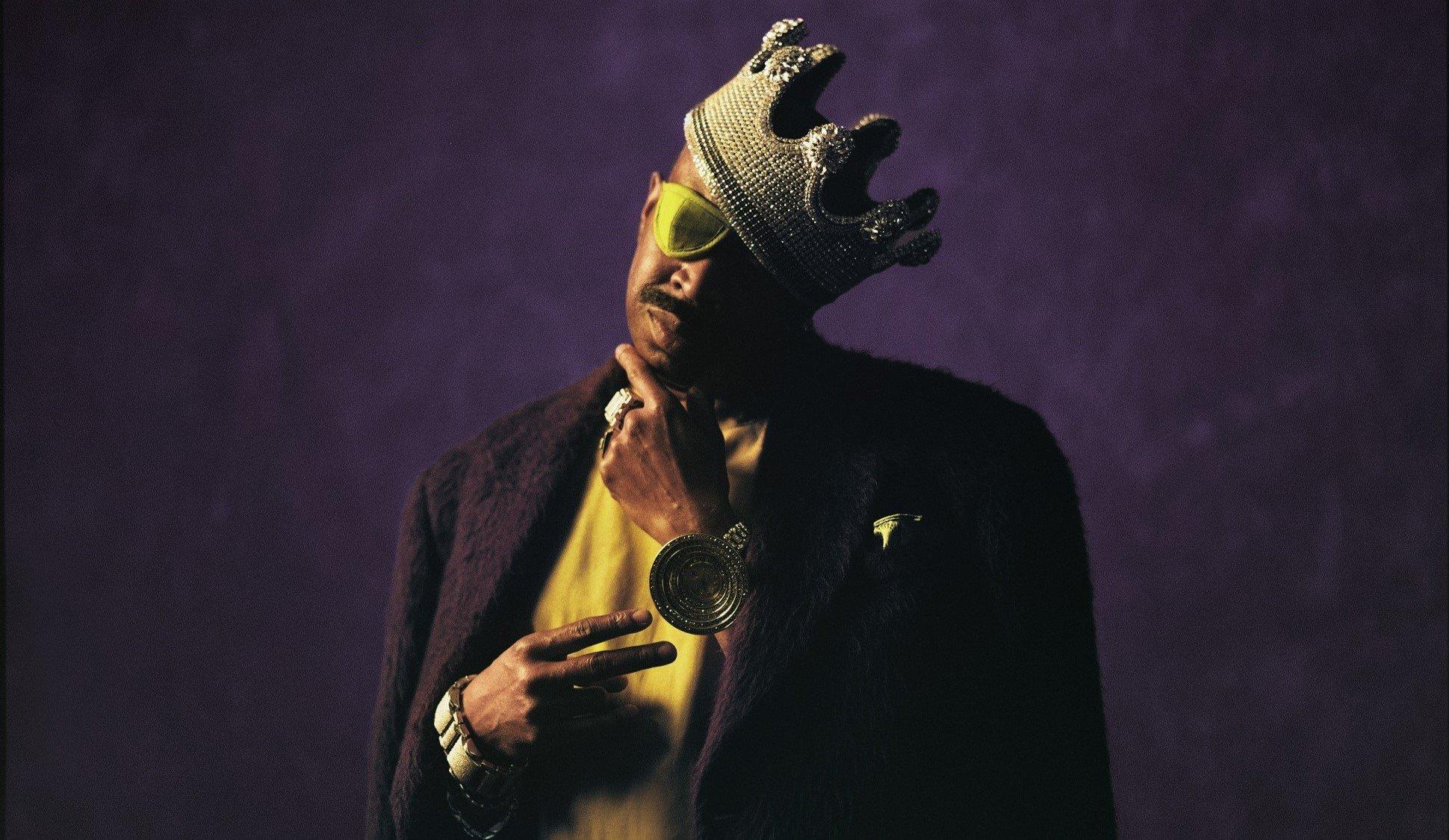
Slick Rick emerges from his hotel bedroom, shakes my hand and fixes a beady eye on his interviewer. He wears an understated rugby shirt (Louis Vuitton), several large bracelets and rings (diamond-encrusted), and a white eyepatch. We sit in two plush armchairs by the window of his suite at the Four Seasons, overlooking Buckingham Palace.
Richard Walters was born in London, in a sleepy southwest suburb called Mitcham, before he and his family moved to the Bronx when he was 10 or 11. He’s back in the British capital promoting Victory, his first album since 1999. He worked as both chief songwriter and producer on the album, and hasn’t lost a day of his youthful exuberance.
"It’s the same spark like when I was a child, when ‘La Di Da Di’ and ‘Children’s Story’ came out," he says. "Now we’re a different age. But you still can bring the same enthusiasm and inspiration, with growth."
In New York in the 1980s, Walters began rapping while his school friends drummed rhythms on their desks. They called themselves the Kangol Crew, after the brand of furry hats they wore along with Clark Wallabee shoes and heavy, ostentatious jewellery. After meeting the producer and beatboxer Doug E Fresh, Rick made history in 1985 with the songs "The Show" and "La Di Da Di," the "greatest two-sided single since ‘Hound Dog/Love Me Tender,’" as critic Peter Shapiro wrote in The Rough Guide to Hip-Hop years later.
Read more: Essential Hip-Hop Releases From The 1980s: Slick Rick, RUN-D.M.C., De La Soul & More
"La Di Da Di" became one of the most sampled songs in the history of music and with his subsequent solo album The Great Adventures of Slick Rick, featuring the hit single "Children’s Story," Walters pioneered a new kind of hip-hop with his gift for vivid storytelling. Traces of his British upbringing could be heard in his buttery voice, while his look — most notably an eyepatch covering an injury caused by a broken window when he was two — became one of rap’s most iconic images.
Acclaim followed, but in the early '90s Rick was found guilty of attempted murder when he shot at his cousin in the street (following a dispute over money), injuring a bystander. After Def Jam label head Russell Simmons bailed him out of jail, Rick released his next album The Ruler’s Back while awaiting trial. It was nowhere near as successful as his debut, but it remains an underrated gem in a priceless catalogue.
Rick served five years in prison, during which time he managed to release a third album, Behind Bars, while on day release. While many critics at the time (and even Rick himself) heard a rushed, hit-and-miss record, much of Behind Bars is now beloved by fans. On that release, Rick conjured complex stories of intimacy between enslaved people and their enslavers, as well as a tale of sexual violence in prison. With issues of misogyny and abuse in hip-hop prevalent in the news cycle, Rick’s knack for both delicacy and levity are more precious than ever.
Upon release Rick recorded the superb comeback The Art of Storytelling. Walters produced several hits on the 1999 album, including "Street Talking" with OutKast and "I Own America" parts one and two. But further hardship was to come. In 2002, Rick was deported from the U.S. on the grounds that he was an immigrant who had been convicted of a felony. A legal struggle followed, until New York governor David Paterson granted Rick a full pardon in 2008.
Rick’s comeback album Victory arrives 26 years after its predecessor, released on Idris Elba’s record label 7Wallace and featuring guest performances from Nas and British legends Giggs and Estelle. Rick’s flair for storytelling remains, more dense and cryptic than in his younger years, while his voice has begun to crinkle at the edges, his irresistible drawl aging like malt whisky. At 60 years young, he proves as slick as ever.
Below, the Recording Academy Lifetime Achievement Award honoree discusses his long hiatus, aging gracefully, and his love for the Beatles.
It’s been 26 years since your last album. Why so long?
I was just chilling. My wife and Idris pushed me to make an album. I was waiting for an opportunity, just popping and weaving for a while, you know?
When the opportunity came with Idris, I said, "What the heck?" It was a new day in the industry, you study? People could put a record out and put it on the internet real quick. So that's where my mindset was going, just drop a single here, there, put it on the internet and see how it does. But Idris came and said "Let’s make an album."
There’s a bar on new track "We’re Not Losing" where you say, "Boot pastor? Bout to be a nuclear disaster, these assholes." Can you shed some light on what that song’s about?
When I say pastor, I was trying to reference like a moral compass. So it’s saying without a moral compass there’s about to be a nuclear disaster. Not to offend anybody, you know what I mean?
Who’s "these assholes"?
Well, I can't name them. I’ll get shot. Use your imagination. When you speak truth to power, who do you think you’re talking to? Put your mind in that type of situation where we got to straighten out the powers that be so they don't make inequality and people like me can make a living and do what we do without it being a big problem.
Your new tracks "Cuz I'm Here" and "Come Let's Go" have a house beat — a bit like the last song on your second album, The Ruler’s Back. What made you want to rap over beats like these again?
I was hanging out with Idris. He was DJing somewhere in England. He was playing these [house] records. The ones that stood out to me was those two. I looped them and said we should rap on these two house tracks. It's a different audience, so now you're appealing to a house audience, a gay audience.
Tell me about your working relationship with Idris.
It's always been fun. Met him at a party once; we just clicked. Later on, his people got in touch and said they wanted me to come to England and make an album.
On "I Own America" you rapped "From New York to Cali, none’ll f— with the Awkward/you think Muhammad Ali used to talk s—?" How on Earth do you come up with a flow like that?
I guess it's just something that's embedded. The music is like Aladdin and his magic carpet, and you just ride along with it. Any line that doesn't seem like it's rhyming, you tweak it, fix it, so it's just like it's just flowing. It's like a river. You're just flowing on top of the track.
Why did you call yourself the Awkward?
Just being awkward, you know. Not average, a little corky, a little off.
There's a clip of you and Doug E. Fresh’s Get Fresh Crew performing "The Show" on "Top of the Pops" in 1985, and you sang a little bit of "Michelle" by the Beatles. It's not in the studio version of "The Show," but you did it again on your later solo track "I Run This." What was behind that?
Just from my upbringing. Some songs stick with you because they sound beautiful. It's like Walt Disney: as a child, Jungle Book or Cinderella or Snow White, it sticks with you. Since I was from England and this is what we was hearing, these are the songs that stuck with me as a youth.
Paul McCartney, John Lennon, Sammy Davis Jr., Janice Joplin… Like you, these legends all won the Recording Academy Lifetime Achievement Award. How does it feel to be in the company of people like that?
I mean, it's a honor. It's a status symbol. You can tell your friends. You can wave it around like credentials or something.
I’d love to ask you about the Behind Bars title track. Can you remember what that song's about?
Not really. Those albums was like a rushed job because I was out on bail. So me and the record label tried to put two albums together at the same time, in like a two, three-month period. So a lot of the work wasn't at its finest.
If you look on Spotify or YouTube, "Behind Bars" is one of your most popular songs now, with its beautifully animated video and lurid depiction of life in prison. Especially in today's climate, I can't help but notice there’s a reference to an attempted sexual assault on that track. Was that taken from real life?
No, I was just telling stories of my imagination, and most people's imagination of prison. You know, it's dangerous. You might get raped and you might get hurt and extorted and all that. So I used my imagination to put into a story.
There’s something about the way you find humor in such dark places that feels important right now. Elsewhere on the album, on a song called "I'm Captive," you describe being approached by someone called "Master’s wife." Am I right in thinking that song is about you being seduced by and then performing a sex act on a slave driver's wife?
Yes. [Laughs.] Once again, imagination, watching stuff like Roots, where you saw it in a more serious essence. But I was trying to put a little humor into it. I saw Dave Chappelle do it once too, like that. It wasn't the same subject, but the same kind of mentality, tryna make light of slavery.
"La Di Da Di" has been sampled over 800 times. Which is your favourite?
I wouldn't know what to tell you fam. I don't really have a favourite, so I'll just say there's a lot that I appreciate. People took different sentences from it, made it their chorus or whatever. That's like an English thing, "La di da di" and "oh golly wally!"
I hate to mention age, but at 60 years old, how do you feel, health wise?
I feel great. I think it's all about your mindset, you know what I mean? Once I'm in my hip-hop mind state, age is just a number. It's just like fine wine or cheese. I think hip-hop, if you grow it right, can age like fine wine.
There aren't many rappers who have made it to 60 in a graceful way. Do you ever worry about staying relevant?
Not really, because my mind state now is just entertaining myself. And then by me entertaining myself is where people come and say, "What the f—'s going on over here?"
Do you feel like hip-hop is in good health at the moment?
I would say 50-50. If you're young, nobody's not gonna expect you to be Einstein, you know what I mean? But if you my age, they expect you to show growth. A plant grows and it grows. If it's healthy, it becomes a tree and then it can nourish others.
Is it the first of a few more Slick Rick albums?
I would say so. It depends what the public wants. If the public is hungry and this is an avenue that cures their boredom…
Celebrating Black Music Month
Gorillaz perform at the 2006 GRAMMYs
Photo: Bob Riha Jr/WireImage
The Lasting Impact Of Gorillaz’s 'Demon Days': From Making GRAMMYs History To Political Foreshadowing
Released in 2005 and a winner at the following year's GRAMMY Awards, 'Demon Days' pushed sonic and aesthetic boundaries.
GRAMMYs/May 23, 2025 - 04:43 pm
"Let's repeat the same process, but do it better," co-creator Jamie Hewlett reasoned about reviving Gorillaz for a second helping of virtual insanity, Demon Days. "Everyone thought it was a gimmick. If you do it again, it's no longer a gimmick, and if it works then we've proved a point."
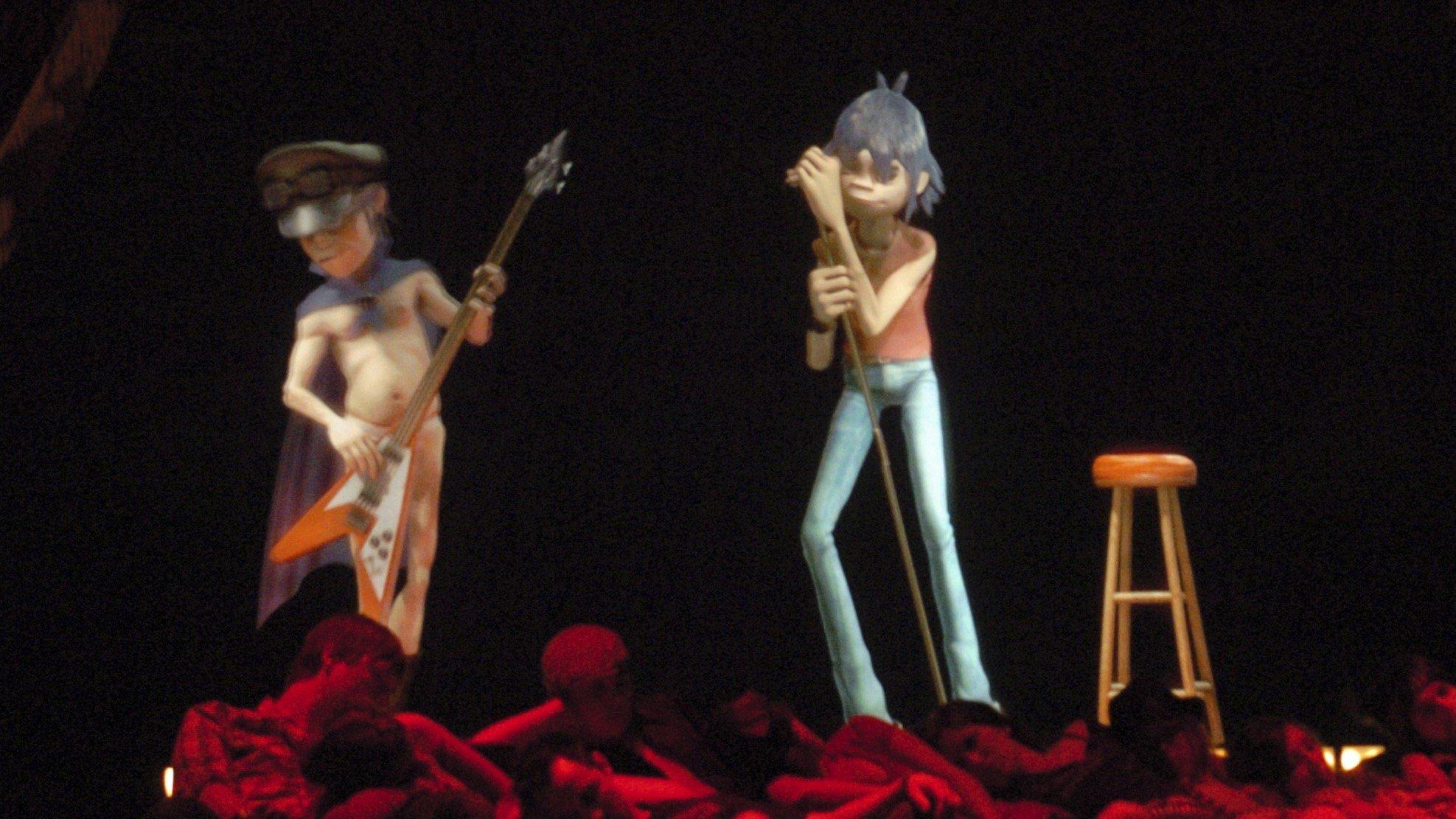
The motley crew of 2D, Noodle, Russel, and Murdoc subsequently sold eight million copies of the record and album singles were nominated for four golden gramophones at the 2006 GRAMMYs. Gorillaz took home the GRAMMY Award for Best Pop Collaboration With Vocals for "Feel Good Inc," while the album spawned a string of classic singles, proving that the group was far more than a gimmick.
Released in the U.S. on May 24, 2005, this second studio album was initially conceived as a feature film. But on realizing that most movie execs didn’t share their creative vision, Hewlett and Damon Albarn decided to mesh their 2D comic book visuals and musical prowess in the studio. The result was a dark pop concept album about "the world in a state of night."
Of course, Hollywood’s loss proved to be the music industry’s gain as an army of well-respected collaborators lined up to climb aboard the group’s genre-hopping train, resulting in a record even more adventurous than their eponymous 2001 debut.
Although Gorillaz have continued to push the sonic and aesthetic boundaries of pop over six further albums, they’ve arguably never bettered their politically-charged second release. To celebrate its 20th anniversary, here’s a look at eight ways the meeting of minds instantly achieved classic status.
It Changed The Collective Game
While Gorillaz’s self-titled debut album featured a variety of cult acts (including rapper Del Tha Funkee Homosapien and Cuban vocalist Ibrahim Ferrer), their follow-up considerably upped the star power ante. Hip-hop legends De La Soul, rock and roll pioneer Ike Turner, and none other than Hollywood bad boy Dennis Hopper were just a few of the household names who gleefully signed up to collaborate with a bunch of cartoon characters.
"Each and every person was chosen to appear for the particular attribute or texture, or aspect of culture they represent," drummer Russel helpfully explained in an accompanying comic.
Demon Days’ collective but cohesive approach was soon adopted by a whole host of artists with both the cultural cache and the bank balance to attract A-list talent. Two years later, Mark Ronson invited Amy Winehouse, Kaiser Chiefs, and Robbie Williams to guest on his covers album Version. And everyone Clean Bandit to Coldplay have all since recognized the benefits of opening up their studio doors to a popcultural who’s who.
It Went Viral Before Going Viral Was A Thing
YouTube had only just launched, Facebook was still restricted to college campuses, and Twitter was barely a twinkle in its founders’ eyes when Demon Days hit the shelves. Yet in another sign that Gorillaz were on a different level, the album still managed to go viral thanks to a clever series of marketing stunts.
The band launched Reject False Icons, a "culture jamming" website which encouraged fans to spread the word far and wide via stickers and graffiti. Then, in a somewhat surprising move, they embraced their inner Simon Cowells with an online talent contest designed to find their next collaborator. You can see/hear the winners on the release of fourth single "Kids With Guns"/"El Manana," with Schneeflocke providing new artwork for the latter, Asidus serving up a "Dirty Harry" remix titled "Uno Quatro," and Sourbee delivering an animated video for the B-side "Don’t Get Lost in Heaven (Original Demo Version)."
It Made GRAMMY History
In 2002, Gorillaz made GRAMMY history when they became the first animated outfit to pick up a major nod with "Clint Eastwood" (Best Rap Performance by a Duo or Group). Four years later, they once again made GRAMMY history when they became the first animated outfit to actually win one. The De La Soul-featuring "Feel Good Inc." was awarded Best Pop Collaboration with Vocals, beating out works by human nominees such as Stevie Wonder & India.Arie and Foo Fighters & Norah Jones.
The 2006 GRAMMYs proved to be quite the night for 2-D, Noodle, and co. The same track also received nods for Record Of The Year and Best Music Video, Short Form, while "Dirty Harry" was nominated for Best Urban/Alternative Performance. They also kicked off the whole shebang alongside Madonna in a visually stunning mash-up featuring the Queen of Pop’s "Hung Up."
It Pioneered The Post-Genre Age
"You are now entering the harmonic realm," a booming otherworldly voice proclaims on Demon Days' brief "Intro," signaling the sonic odyssey ahead. Indeed, from the ska-grime fusion of "All Alone" and creeping synth-funk of "Fire Coming Out of the Monkey’s Head" to the folksy hip-hop of "Feel Good Inc." and distorted blues of "O Green World," Demon Days prided itself on breaking down the usual genre barriers.
Of course, in today's post-genre world, where acts like The 1975, Muse, and Arcade Fire are just as likely to drop a synth-pop banger as a rock-out anthem, such musical diversity is nothing new. But back in the mid-'00s, when alternative, electronic, and hip-hop were mutually exclusive terms, Gorillaz's adventurousness was rightfully viewed as revolutionary. Completely bypassing the 'difficult second album syndrome,' Demon Days undeniably paved the way for the streaming age where anything is possible and anything goes.
It Legitimized One Of The '00s Most Prolific Producers
Danger Mouse, a.k.a. Brian Joseph Burton, had already made quite the splash before taking over from Dan the Automator as Gorillaz's producer of choice. He'd famously spliced together the Beatles' White Album and Jay-Z's The Black Album to make ground-breaking mash-up The Grey Album. But the gray areas around its defiance of copyright laws meant that he was still very much a figure on the fringes.
However, Demon Days undeniably legitimized his talents, leading to a Producer Of The Year nomination at the 2006 GRAMMYs, a category he ended up winning five years on. "It was a no-brainer when there was interest there from Damon," Danger Mouse later said. "I had a very up-and-down year [in 2004], but it was definitely a big up when I got a chance to [work with Gorillaz]." The multi-talent subsequently achieved success in the duos Gnarls Barkley and Broken Bells, helmed records by the Black Keys, Beck, and U2, and reunited with Albarn for another side project The Good, the Bad and the Queen.
It Foreshadowed Chaos
While Demon Days’ sound was often vibrant, its lyrical themes — as foreshadowed by the Dawn of the Dead soundtrack-sampling "Intro" — were often steeped in the apocalyptic. "Fire Coming from Out of the Monkey’s Head," for example, was inspired by the question, "What is going to happen when they've taken all of the oil out of the earth?
Elsewhere, "Dirty Harry" takes aim at the Bush administration in the wake of 9/11 and the Iraq War. "All Alone" finds rapper Roots Manuva blasting those who manipulate the Bible’s teachings for their own ill-gotten gains. And on "Last Living Souls," an anxiety-ridden 2-D meditates on the increasing isolation of the human race. Such dystopian vibes were inspired by a train journey Albarn took with his family to Mongolia from Beijing in which he saw countless rundown satellite towns.
While the album was viewed by some as unnecessarily alarmist at the time, it’s now considered an eerily prescient critique of the modern financial, environmental, and political landscapes.
It Gave Several Artists Their Biggest Hits
Remarkably, De La Soul had never reached higher than No. 34 on the Hot 100 ("Me, Myself and I" in 1989) before enjoying their first of many Gorillaz guest spots on "Feel Good Inc." The Demon Days lead single not only peaked at a new career high of No.14, but it also gave the flower power trio their first ever GRAMMY and an eight-week stint atop Billboard’s Modern Rock Songs Chart, too. Furthermore, it still remains the highest charting single that Albarn has put his name to, surpassing Blur’s "Girls and Boys" and signature hit "Song 2."
Gorillaz’s sophomore also helped another name who emerged in the late ‘80s to score their biggest ever domestic hit. Indeed, Madchester legends Happy Mondays had twice reached No. 5 in the UK with "Step On" and "Kinky Afro." But 15 years later, frontman Shaun Ryder went all the way to the top spot with "Dare" thanks to an improvised vocal apparently inspired by a sudden alteration to his headphone levels.
It Spawned Numerous Iconic Videos
"Feel Good Inc." was awarded Best Special Effects and Best Breakthrough at the 2005 MTV Video Awards for its Idiocracy-esque commentary on how the mainstream media has dumbed down society. But there was plenty more dystopian madness where that came from.
"El Mañana" picks up where the latter left off as Noodle comes under attack from, and appears to be killed off by, two incredibly persistent helicopters hovering above a floating island. "Dirty Harry," the group’s first location-based promo, sees the Pharcyde’s Bootie Brown entertain a bunch of air crash survivors in the Namibian desert before they’re all rescued by a Gorillaz-driven military vehicle. While "Dare" pays homage to a glut of classic horrors in a dream sequence where Ryder is reduced to a disembodied head. By adding live-action to their signature 2D comic book animation, the Demon Days campaign looked as intriguing as it sounded.
Latest News & Exclusive Videos

Cymande
Photo: Dean Chalkley
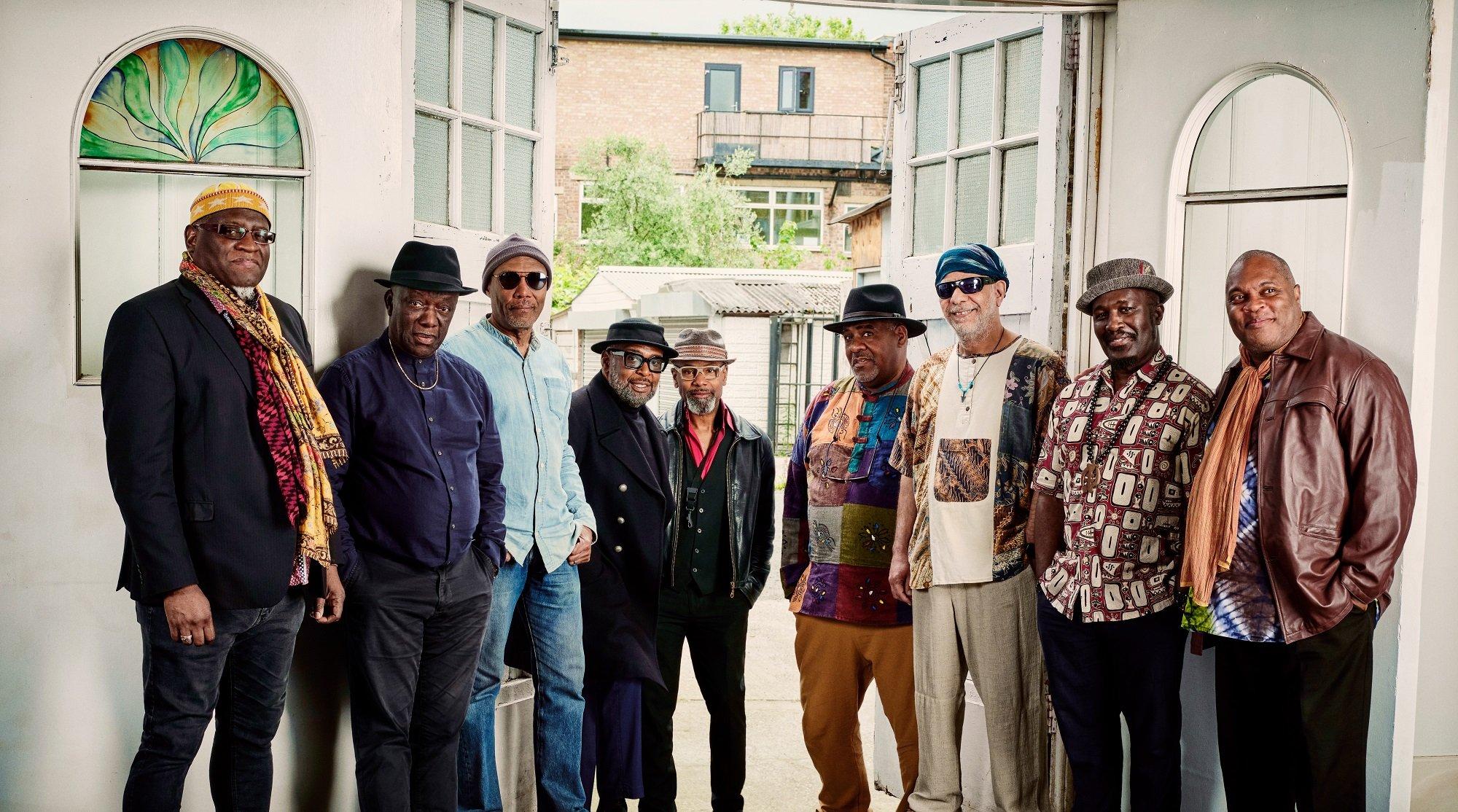
5 Songs To Get Into Cymande, The British Funk Pioneers Behind Your Favorite Samples
Cymande’s latest record, 'RENASCENCE,' offers a fresh take on the politically-aware, infectious grooves that have defined their sound since forming in 1970. Ahead of the band’s U.S. headline tour, explore their pioneering music via five great tracks.
GRAMMYs/Feb 13, 2025 - 03:38 pm
When Patrick Patterson and Steve Scipio formed Cymande in 1971 in South London, they had two main goals in mind: Make original music, and make music with a message.
The group didn’t have a specific approach or genre, but pulled musical and cultural inspiration from the African and Caribbean roots of their predominantly Black communities. They wrote lyrics about the racism they faced in late '60s, early 1970s London. The resulting music was funky, but not overly busy or rushed; its laid-back grooves and melodies are clear, distinct, and uplifting.
In their late teens, guitarist Patterson and bassist Scipio played in a jazz group called Metre, and also played with a Nigerian band who introduced them to polyrhythmic ideas. These key elements carried over into Cymande, pronounced "see-Mahn-dee," a word taken from the lyrics of a popular calypso song.
"Don’t ask me to play any covers, I can’t do covers," Patterson tells GRAMMY.com. "Right from the start, we wanted to write our own music, and make it unique."
Their decision to blend funk, soul, reggae, and jazz in unique ways quickly changed their lives in phenomenal ways. Over the course of just a few years, Cymande went from playing small basement clubs in London to touring the U.S. with Al Green, Kool & The Gang, Patty LaBelle, Billy Preston, Ramsey Lewis, and Mandrill.
"To be onstage with someone like Al Green was just fantastic. He was in a world of his own," Scipio says. "In the small UK clubs, we were lucky to play for a hundred people. In America the biggest audience we had was 20,000 people. Some of the guys in the band were scared. It was a very rapid ascent."
Cymande released three albums between 1972 and 1974, and their self-titled debut album reached the U.S. Billboard pop and R&B Charts. Their first single, "The Message" reached the Billboard Hot 100 and Hot R&B Charts. In 1972, the group became the first British band to perform at The Apollo Theatre in Harlem.
Coming back to the UK was a buzzkill for the band: they felt neglected and rejected by a British music industry that didn’t seem keen on nurturing all-Black bands. By the end of 1974 they went on hiatus, and Patterson and Scipio eventually both became practicing lawyers in the Caribbean. The group remained disbanded for decades.
In the ensuing years, Cymande has resurfaced in many different ways. British DJ Norman Jay introduced a new generation of listeners to Cymande by playing their records in the 1980s on London pirate radio. Early hip-hop DJs like Kool Herc sampled their music in the '80s. In the 1990s, Cymande was sampled by the likes of De La Soul, Wu-Tang Clan, Gangstarr, MC Solaar and the Fugees; Spike Lee used their music in two of his films. They’ve released a handful of studio albums and compilations, and have regrouped for a handful of live performances. A documentary on their history, Getting It Back: The Story of Cymande, was released in 2022.
In January, the band released RENASCENCE, their first album of new material in a decade. The album's 10 tracks have that same energy and style the band is known for, combined with the depth of a lifetime of experiences. Cymande is touring 10 U.S. cities in February and will perform this Spring and Fall in the UK. On Feb. 27, the GRAMMY Museum in Los Angeles will host a film screening of the band documentary, featuring a Q&A with Patterson and Scipio.
GRAMMY.com spoke with Patterson and Scipio about their lives in and out of Cymande, and selected the following songs that help illustrate the heart of their sound and style.
Arguably one of their most recognizable songs, "Bra" was named for a colloquial West Indian expression for brother, and the style of "Bra" and other songs written at that time were influenced by Miles Davis. The song originated with the bass line and rhythm, and the melody and the lyrics came later, according to Scipio.
Hip-hop group Gangstarr sampled "Bra" on their 1988 song "Movin’ On," and De La Soul sampled it a year later. Filmmaker Spike Lee included the song in 1994’s Crooklyn and 2002’s 25th Hour.
This moody, psychedelic groove is almost 11 minutes long, punctuated by jazzy flute improvisations and haunting vocals. Wu-Tang Clan sampled it on their 1991 song "Problems," and the Fugees and EPMD also sampled it later that same decade.
Scipio found out through his children that Cymande songs like "Dove" were being sampled in hip-hop. He and Patterson subsequently put their legal expertise to work to get their publishing rights back from the record labels, making sure they had full ownership of how their music was being used.
Beyond its highly sampled legacy, doves are central to Cymande: "Cymande" is a reference to a lyric from a calypso song called "Dove and Pigeon," and dove images appear on their album covers. "The dove represents peace and love and for us," Scipio told Rolling Stone in 2016.
This heavy groove — sampled by MF Doom in 2004 — maye have hints of Curtis Mayfield, but the standouts are all signature Cymande: clear, melodic bass line, hand percussion, poignant lyrics, and plenty of space for the song to breathe.
"Brothers On The Slide" is Cymande’s most popular song on Spotify, with nearly 50 million plays. The song appeared on their third album, Promised Heights, released in 1974. The lyrics seem to speak directly to young men who may be struggling with life’s hardships: "Working on the wrong side/What ya gonna do/You can't win so you know you must lose/We know which way you goin.'"
"Promised Heights was kind of a realization of getting to where we want to be," Scipio said in 2014. "The quality of the songs, the lyrics, are much deeper than what had gone before, and also the structure and arrangement of the songs was much more involved."
"Crawshay" is a bouncy yet somber groove from the band’s 1973 album Second Time Round. The song is essentially two long, bluesy verse-chorus arrangements divided by a laid-back piano solo that conveys a feeling of sweet melancholy.
The chorus is a proud declaration of freedom: "It makes no difference what you think of me/Once again I’m free."
Cymande began recording Second Time Round after their first U.S. tour. "In relation to the second album, we had a little more experience of not only writing but also of recording. We had a clearer vision of where our music should be going," Patterson said in 2014. "We had more language in terms of what we wanted to say. We had a wider vocabulary. Some of the songs on Second Time Around didn’t speak simply to our local or national experience but perhaps we had a better world perspective. I feel our songs on the second album were deeper, and certainly to me more meaningful."
Jazz has always been a through-line in Cymande’s music, and iconic artists like Miles Davis and John Coltrane were a huge influence since the group’s teenage years in South London in the '60s.
It was important to Patterson and Scipio that they keep the core, recognizable elements of Cymande — jazz, reggae, soul, calypso, funk — but also not try to recreate the past. They wanted to continue the message of their three main albums, but also show that they have moved on and developed as people and musicians.
"Coltrane is so important to Black music," Patterson says. "It's not just about music, it's about the Black experience. It’s so identifiable about Coltrane. And it’s been so important to our group as well, something that is forever. It’s a forever thing."
Latest News & Exclusive Videos
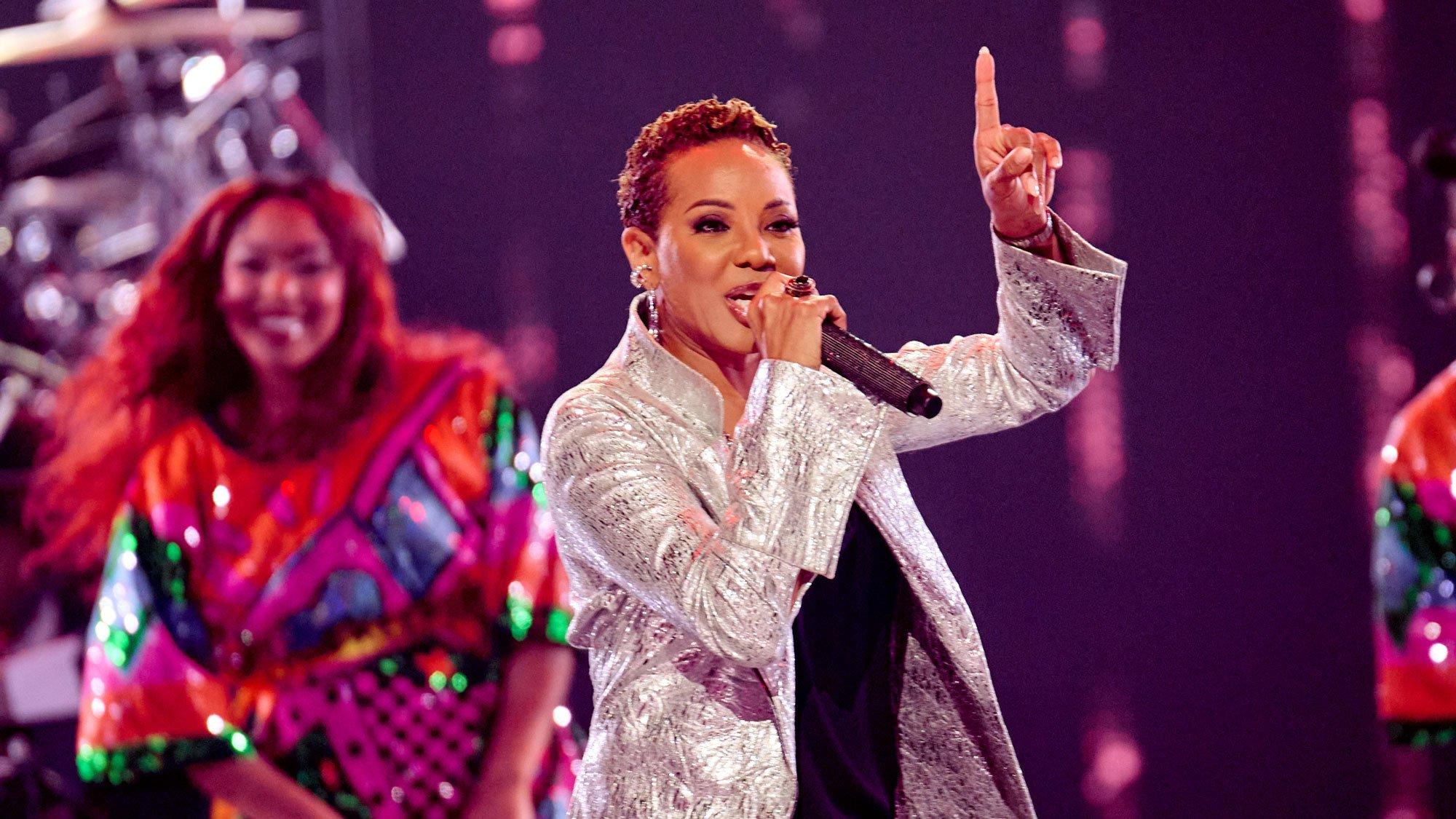
MC Lyte performs at the 2024 Black Music Honors.
Photo: Derek White/Getty Images
Living Legends: MC Lyte On Her New Album '1 of 1,' Building An Empire & Being The Guiding Light
"What I'm saying is real. And it's important," Lyte tells GRAMMY.com on her groundbreaking work and new release, '1 of 1,' featuring Stevie Wonder, Queen Latifah, KRS-ONE, and more. "It's just real talk, and I think we haven't had that for some time."
GRAMMYs/Aug 7, 2024 - 05:33 pm
MC Lyte is hip-hop's original female emcee. Born in Brooklyn, the multi-hyphenate rapper, actor, entrepreneur, and fearless advocate for women is a pioneering force. Nine years since her last album, Lyte is finally ready to release her ninth studio album, 1 of 1, on Aug. 9.
Lyte is celebrated not only for her conscious lyrical prowess, but also for shattering gender barriers. At 16, she released her debut single, "I Cram to Understand U (Sam)," making a poignant statement about addiction in the '80s. In 1988, she unleashed her debut album, Lyte as a Rock, becoming the first solo female rapper to release a full album.
"[Early hip-hop] was so much freedom that we were able to really make a difference," Lyte tells GRAMMY.com. "That's myself with Heavy D and KRS-One and Rakim and all of the greats having the opportunity to use their voices the way that they wanted to use it."
Her 1993 release, Ain't No Other, earned her (and all female solo rappers) two firsts: the first GRAMMY nomination for "Ruffneck," and the first song to be certified gold. In 1996, she struck gold again with Bad As I Wanna B, featuring "Keep On, Keepin' On" with Xscape. Lyte's ability to illuminate powerhouse female voices in music shines through her collaborations with Janet Jackson on "You Want This" and Brandy's remix of "I Wanna Be Down" with Yo-Yo and Queen Latifah.
Earlier this year, she released two singles ahead of 1 of 1: "Woman," featuring Salt of Salt-N-Pepa, Big Daddy Kane, and Raheem DeVaughn in support of Women's History Month, and "King King" featuring Queen Latifah. Other legends on the new work include Stevie Wonder, KRS-One, Common, Q-Tip, Mary Mary, and Muni Long.
Beyond music, she is also a voiceover artist, actress, and active mentor through her organization, Sunni Gyrl, which focuses on artist development and creative services, and co-founded the Hip Hop Sisters Foundation, to promote positive images of diversity.
Learn more: 9 Teen Girls Who Built Hip-Hop: Roxanne Shante, J.J. Fadd, Angie Martinez & More
Lyte has been honored with a special salute at the 2024 Black Music Honors, received the I Am Hip Hop Lifetime Achievement Award at the 2013 BET Hip Hop Awards, and Harvard University's W. E. B. Du Bois Medal. At the Recording Academy, she has served in multiple roles, including President, Trustee, and Governor of the Los Angeles Chapter.
"I think we've sort of permeated every space of entertainment you can ever imagine," Lyte says of the culture in hip-hop. "Never could I have imagined years ago that we'd be here."
Over Zoom from the set location where she plays Detective Monroe in the BET original series "Angel," GRAMMY.com caught up with MC Lyte to discuss the new album, the source of her limitless passion, and her advice for the next generation.
This interview has been edited for length and clarity.
It's been nine years since you released your last album, Legend. What can fans expect from 1 of 1?
It's executive produced by Warryn Campbell, who by far has won his share of GRAMMYs through his own work and through production for others. But just so happens that he's also my pastor.
When we set out on this mission, I knew that I would feel comfortable enough to stay in the new lane that I have created for myself. It's interesting to now be in this space and not only navigate what's new, but also be at the forefront of what is my career. You know, starting at 16, 17, you're doing everything that everyone else wants you to do. You're standing that way. You're moving in that way. You're wearing this.
But this album, because I'm in a different, spiritual place, it felt good to be in collaboration with Warryn Campbell because there was nothing on it [trying] to be something that I was; something that he sees me being. And I think a lot of times, at least in my experience, producers have said, "Oh, we need to do something that sounded like that," or "You need to attack the mic like you did in that song." It's just a bunch of references made to older things.
So, 1 of 1, to me, is sort of a second coming of age. Where I'm able to stay in my truth and also give inspiration to others who are at a point where it feels like they can't get beyond the ridge.
**Your new single "Woman" was released during Women's History Month and "King King" was recently released with Queen Latifah. Who else shows up on this album?**
I made a lot of calls for this album. A lot of people answered the calls. So we've got some really great talent on the record, which I'm really excited about. We've got Common and Stevie Wonder and Q-Tip.
Our leading charge is a song called "Thank You," and that's with Mary Mary and Muni Long. And I just think, for all of the times where I didn't make the call, making a call at this time feels great to have people answer like, "Yes, I wanna do it." We've hit a space with people wanting to engage without, you know, [dollar] signs.
You've always been such an outspoken proponent of celebrating and sharing the experience of womanhood through your music — why is that so important to you?
I do believe having the opportunity to release music shouldn't be taken for granted. And so with that notion, I always, I guess, even from "I Cram to Understand U," my very first song, I always wanted to record with a purpose.
We recorded ["Woman"] before the pandemic, actually. And we knew that it needed to come out for Women's History Month. So if we missed Women's History Month, we had to wait for the next year. That's the type of focus that we wanted to have on that particular record. I think we were able to achieve it, and it's also one of those songs that we don't hear a lot of these days.
To have a song that celebrates women simply — with a wonderful hook by Raheem Devaughn — but then also seeing what's important to the two women that are in the song, myself and Salt, the perspective that we're coming from is in alignment with the way that a lot of women think. So we wind up speaking not just to them, but for them. Then to have Big Daddy Kane say all that he adores about women is just icing on the cake.
Celebrating 50 Years of Hip-Hop
To bring it all the way up to now to "King King," which wasn't really planned to do as let's do a song for women, and now let's do a song for men. It didn't go like that. And when I tell you that "King King" and "Thank You" I wrote in bed at about 1 o'clock in the morning — it was just God downloading the lyrics so quickly. I couldn't even believe it. As I was writing it, I was like, oh my goodness. It's gonna stop. It won't stop.
Having this kind of conviction for your testimony speaks to the spiritual nature of your music. How else does that influence your work?
It brings people together. I think it just falls to me in a space of responsibility. It's not anything that's separate from me. Often I'll let the music lead me. And if I listen to a track, and it's like, oh, this is great. But it doesn't incite power or purpose, I'll put that track to the side. When I'm ready to just rap about nothing or rap about how dope I am, I'll pick that up. But when I'm looking for something that I want a message attached to it, the music literally will lead me into the place where I need to be open to whatever God puts on my heart.
So much of what is said in "Woman" is who I am. And same thing with "King King," it's what I believe. It's the times when I see guys in huge celebrations when they're winning, you know, trophies for basketball, and it is just like one of the most vulnerable moments to see them as they celebrate with their friends. You can see the pain and the anguish and the triumph and the tears. And it just brings chills all over my body.
To see that from these men that usually have to have these hard faces with this stance that's so mighty and strong. That's how I feel about, specifically men of color. No no one knows him. And so I wanted to celebrate them and then also their walk towards responsibility and not shying away from what it means to be in a long lasting, loving relationship.
What about your relationships with men in hip-hop? I know you and Rakim just performed together on the same stage at Rondos Day in St. Paul, Minnesota.
The interesting thing about Rakim, he's probably one of the emcees I know the least about, on a personal level. But yet, whenever we're in one another's company, we have such a high level of admiration and adoration for one another. It feels like we know one another really well. I really give honor to that. However, there are others like Biz Markie and Heavy D and Chuck D and KRS-ONE. These are my big brothers in the business.
Those are people that would just call me and say, "What is going on? How are you feeling?" Or they'll see some performance… That's Big Daddy Kane. He's gonna tell me, "I like what you was wearing on there," or "I like the energy." It's all of these moments where I am the little sister. You know, they've seen me grow up in this business. And many times over, they've assisted in some capacity.
It's so funny how many layers, relationships exist within hip-hop, and you may not know it because you don't see it. But we know that, you know, that connection is real.
Has your songwriting or creative process evolved through the years?
Yeah. Absolutely. There's a few things that have happened. One, when you're in the spell of writing, stay there. When I was younger…you leave a song open ended to have to try to find the same sentiment days later. And it may not be there. And so [I've learned] to stay still during the writing process. And then I've also learned much more melody than usual.
Coming from New York, we have a way of wanting to put all the words that we can find to show how dope and how advanced we are as emcees. And I think for me to be able to slow down on this record and find melody and nuances that weren't as important to me before, I think that it really benefited me with this record, and that's where I will give the credit to Warryn to push me.
I remember long ago, I was talking to Nelly, and I was about to embark upon a new album. It might have been 14 years ago. But what Nelly began to explain to me, is that "I lived in New York for a summer, you guys moved so quickly. It's no wonder you all rap like that." He said, "Where we're from, we're driving to our destinations." I think that was brought to the forefront for me here with this album. I'm not in a rush. I don't need a lot of tricks with what it is that I'm saying because what I'm saying is real. And it's important. I don't need a lot of influence. You know, I'm simply speaking. It's just real talk, and I think we haven't had that for some time.
You live in Los Angeles now, but do you get back to New York?
I've lived in Brooklyn. I've lived in Manhattan. I've lived in Queens, and I've lived in Jersey. And then I came to California. I've been in California for some time now. But I go back and forth often enough that I don't really feel like I'm missing anything. I'm going back this first week of August, which is pretty exciting, doing a lot of press for the album, and then also, performing at Wingate Park, which is where I attended high school.
**Speaking of, where are we going to see MC Lyte performing soon?**
I'm on the Queens of R&B tour. So we did Atlanta, Charlotte, New York, and then Madison Square Garden. There's going to be a show [in Los Angeles] at the [Kia] Forum. Cincinnati Music Festival, I'm performing out there, and I'm doing "King King," bringing them, you know, some new music at the same time, which is pretty exciting.
You also have a full plate with your other endeavors: acting, voice overs, mentorship. Do you get fuel from these different activities to inspire the other work you do?
Absolutely. I'm actually on set now. I played detective Monroe in a [BET] show called "Angel." I'm on set all week with this.
We have a full fledged production and management company [Sunni Gyrl]. Right now, our premier talent is Van Van, who is an internet sensation turned actor, recording artist. She's actually 5; she just released her first album. She also plays a character called Vancy with Snoop Dogg on Doggyland.
We've got other talent, gospel singers, Dave Hollister. And then production wise, we had a sitcom that I wrote ["Partners in Crime"], and we did some really great things with that with AMC. And now we've got a few deals around town with different projects, TV shows, cooking shows, competitive shows. I just signed on to be music supervisor for a short film called The Memo, by a new company called A Seed Productions and it's pretty powerful. I'm looking forward to all that comes from that.
But, yeah, each day it's a different hat. It makes it completely exciting.
What drives you to continue to commit yourself to mentorship and fostering new talent in the next generation through all that you're doing through Sunni Gyrl?
It just feels it feels like the right thing to do. I don't know any other way. And it's crazy because I meet people all the time that had met me at a younger age. And they say to me, "You said this to me and that really mattered at that time. I wanna tell you what it did for me."
My close friends would call me grandma because I'm always imparting something that can be used later — and I don't even know that I'm really doing it. I'm just talking. It's just the idea of never being afraid to share your weaknesses and your shortcomings. Just being an open book to help someone else get to the next step, the next phase.
There have been some autobiographies that I've read throughout time, and you know the ones that are just ink on the page. And you know the ones that had to see past their tears to actually write it. And that alone is what brings people closer to you. It's the human bond. And if you're willing to just be that open book, so many people can learn from what it is that you're saying. And it may not even be what you're saying. It could be the cornerstone for them to go get the knowledge or, you know, educate themselves about something completely different. I think as an emcee, I have to really be in tune with the power that I have and that words are powerful and have meaning. And so why not use them, responsibly and purposefully?
Can you tell me a bit more about the importance of listening? And have you always felt like a good listener?
No. Even now, it's still a struggle with me. You know, acting is all about listening.
I think a lot of times [what] we do in life is we take the part that incites some sort of reaction, and then we don't even pay attention to what was said before or after. For me, it's important that I slow down in order to listen. Because first off, I'm quick. And so are a lot of other people.
I've tasked myself each and every day with slowing down enough to listen.
Listening during acting has taught me how to listen in life. And that not everything said deserves a response or requires a response. It's the admittance of not knowing that's humbling.
How do you find the energy? What is the source of this well that you're continually pouring from?
The source: God. That's all I can attribute it to, because it's certainly not me. I just allow myself to be used as the vessel to get the thing done. It's a part of the dream. So while I'm doing it, I'm just grateful like, wow. I asked for this. Oh, yeah. And I asked for that. And so I only ask that God give me the wherewithal to handle it as it comes and also to say no to the things that I just don't have time to do and don't fulfill the ultimate goal.
What artists today are you excited about or you're listening to?
I love what Common and Pete Rock are doing right now. Rapsody, Tierra Whack. I listen to a lot of people in terms of Kendrick, in terms of Drake. And, I listen to Tems.
I just hope that the new artists coming in today find their strength at an earlier turn than a lot of us.
A lot of times, I believe artists understand who they are much more when they've gone out into the world and understand how blessed they are to even be in the position to speak their minds. There are plenty of places where not just women, but anyone who wants to speak out against the system, or disagree with a certain politic, or a political stance, or political agenda [cannot].
What other advice would you give a younger you or artists coming up now?
Surround yourself with people that have your best interest. And when you're young, you don't really know who those people are. But I would just say what you see, believe it. And you can see things much better than what you're told. Because people lie. Unfortunately, if everybody told the truth, then I wouldn't have to advise you to watch people show you much better than they tell you anything.
There's always room for improvement and to stay focused on what it is that you started out with. Because many times, there will be distractions. There will be distractions along the way, and you wanna make sure that you reach the intended goal. And know what you're in it for.