
Photo: Prince Williams/WireImage
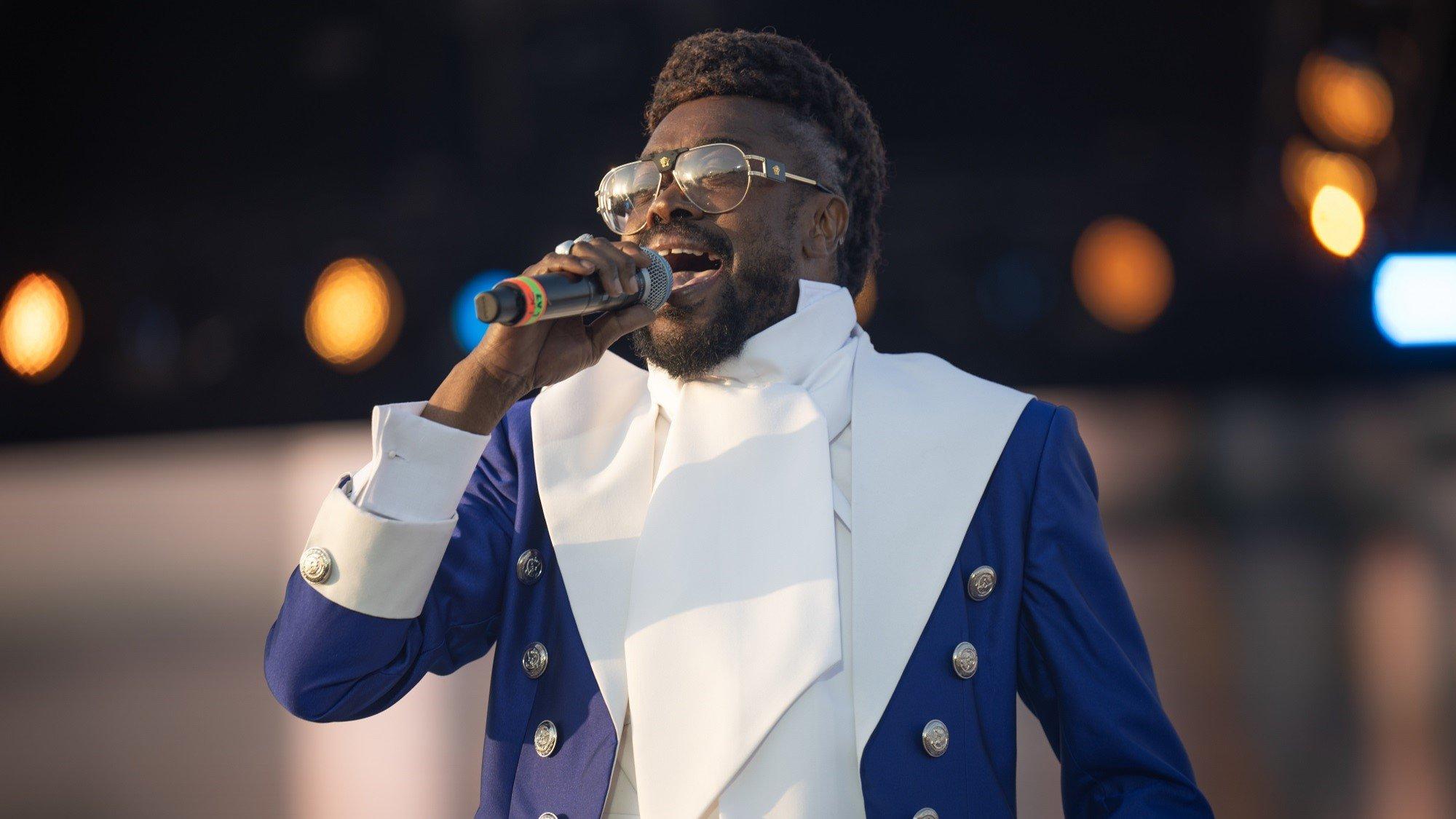
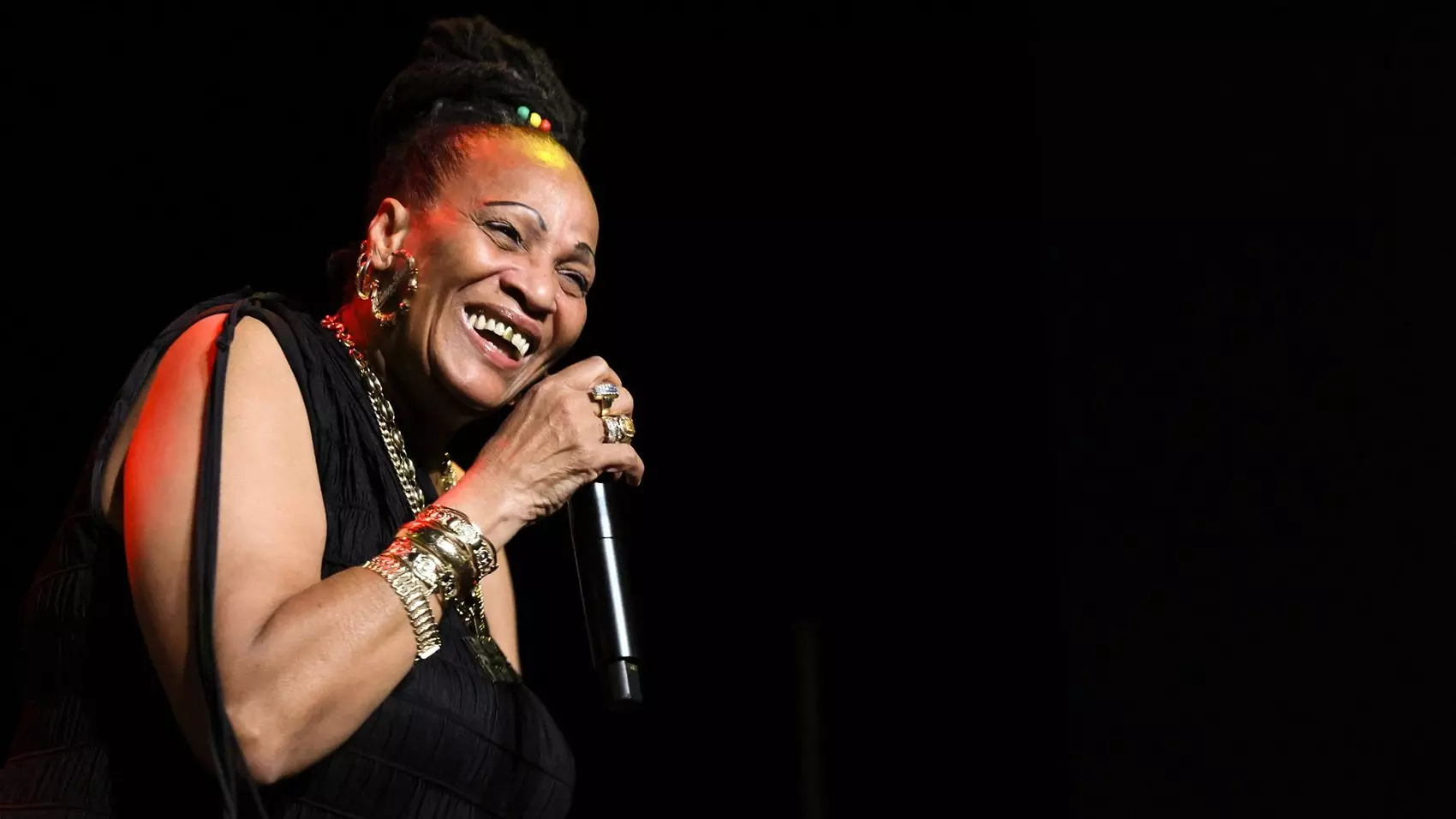
Beenie Man
Dancehall Icon Beenie Man On Regaining His Visa, Winning A GRAMMY & Battling For King
"Just like Bob Marley is the king of reggae, it means everything to any artist to be crowned king of their own game," Beenie Man says.
GRAMMYs/Jun 6, 2025 - 03:16 pm
Designating a king or queen of a genre is a futile endeavor, made ever more difficult with the passage of time. The dancehall space in particular has never been a sovereign empire with one appointed monarch; rather an oligarchy where a privileged few dominate as a result of their numerous hit songs, enduring popularity, influence, and ability to command the stage.
Among this privileged few is Beenie Man, a GRAMMY-winning luminary who brought dancehall to an international audience. The four-time nominee has performed several highly-anticipated shows of late, including his first concert in the New York City area in over 10 years at the end of May. That event at the UBS Arena in Long Island was a testament to his longevity, multi-generational appeal, and a reaffirmation of his more than 30-year rule as, arguably, dancehall’s greatest live performer.
Beenie Man's prolonged absence from the U.S. was due to his inability to secure a visa.In April 2010, his visa (as well as visas belonging to dancehall artists Aidonia, Bounty Killer, Mavado and sound system selector Ricky Trooper) was cancelled without explanation. Beenie Man regained his visa briefly in 2011, it was rescinded in 2015 then restored in late December 2024. The expectations surrounding his New York concert were understandably high.
Dapperly attired in a crimson suit with a full-length topcoat, black boots and grey fedora, supported by the incomparable Ruff Kutt band, two female backing vocalists and five female dancers with Jamaican flags tucked into their leather shorts, Beenie Man displayed relentless energy and star power. Early on, in an exaggerated Americanized vocal twang, the dancehall meminded the audience of his veteran status: "I’ve been doing this music for 45 years. I have 187 No. 1 songs [in Jamaica] and almost 2,000 hit songs, so now I’m gonna take us back in the day."
While it’s impossible to verify Beenie Man’s (inflated) hit tallies, his 70-minute set didn’t allow enough time to perform all of his popular songs. Punctuating his vocals with yelps, screeches and his signature catchphrase "zagga zow," Beenie Man’s set included the certified gold single "Who Am I (Sim Simma)," which reached No. 6 on the Billboard Hot Rap Singles chart, the opera tinged "Maestro," hardcore dancehall gem "Girls Dem Sugar," and 2004’s "King of the Dancehall," a self-proclaimed yet much-deserved regal designation. He also shouted out other dancehall superstars who are often cited as contenders to the throne: Bounty Killer, Buju Banton, Vybz Kartel and Shabba Ranks.
Read more: Vybz Kartel Talks First GRAMMY Nomination, Tattoos, Finding God & Prison Reform
Beenie Man was born Moses Davis on Aug. 22, 1973 in the musically fertile Waterhouse area of Kingston, home to the late dub creator King Tubby, digital riddim innovator King Jammy and winners of the inaugural Best Reggae Album GRAMMY, vocal trio Black Uhuru. As a child, he received the nickname Beenie, which means little in Jamaican patois. At a precocious 5 years old, Beenie Man began deejaying (toasting patois lyrics) on his uncle’s Master Blaster sound system. He started recording at age nine, after winning a local talent contest with his song "Too Fancy."
Shortly thereafter, he released his debut album, The Invincible Beenie Man: Ten Year Old Wonder. The album had little impact, but its title was somewhat prophetic and by the early 1990s, Beenie Man would prove his dancehall invincibility. Under the management of Patrick Roberts of Shocking Vibes Productions, he released early dancehall classics, "Modelling" and "World Dance," which commenced a major hit-making streak that would extend well into the 2000s.
Over the past 45 years, Beenie Man has released 18 studio albums, including the 2001 GRAMMY winner Art and Life and eight compilations. He portrayed himself in the 1997 film Dancehall Queen and recorded the film’s theme song, with Chevelle Franklin, which cracked the Billboard Hot 100. His numerous collaborators include the Hot 100 charting "Feel it Boy" with Janet Jackson (produced by the Neptunes) and "Girls" with Akon, which reachedNo. 27. In October2024, Beenie Man was bestowed an Order of Distinction by the Jamaican government, "for his contribution to the development of Jamaican music-dancehall."
Ahead of his UBS Arena show, Beenie Man spoke to GRAMMY.com about his stagecraft, impeccable style, what makes a great dancehall producer, and his advice to younger artists.
Congratulations on regaining your visa. How does it feel to be back in the U.S.?
It’s a beautiful feeling. I’ve been away for so long, the fans have been suffering, so it’s nice to be back so the people can see me do what I do best.
Were you given a reason why your visa was taken away?
No, just that I was ineligible to get a visa at that time. Dem use words like "we give you a privilege to come to America, so you just have to wait." Honestly, I was thankful for the break. We had so many shows in the United States that if I was there, I couldn’t have toured Africa or other places in the world and hear what the fans there had to say about us.
I’ve seen your headlining performances in Jamaica at Reggae Sumfest several times over the past 32 years.
Yes, I’ve performed at Sumfest 24 times.
At Sumfest 2023 you, Bounty Killer, Cham, Wayne Wonder, Frisco Kid, and Mr. Easy performed together in tribute to dancehall producer Dave Kelly. You’ve had many hits produced by Dave, including"Slam," "Ole Dawg," "Silent Violence," and "Dude" featuring Ms. Thing, Shawn. What makes him such an exceptional producer?
One word: genius. It’s all about the vibes that the producer brings, and Dave Kelly knows exactly what to say, what riddim to make. It’s always the right vibes when you are around him. He knows exactly what he wants, which direction he wants the artist to go in and that makes him different from the others.
The 1990s through the mid-2000s is considered dancehall’s golden age. During that period, you had many hits with various producers: Bobby Digital, Jeremy Harding, Tony Kelly, Sly and Robbie, and Patrick Roberts/Shocking Vibes. What made dancehall music of that era so special?
All of those producers have one thing in common: They respect the music and the artists so the artists can respect the work that they do. Many producers today only know how to make a riddim. The producer has to know how to start and end the song, how to mix the song and how to make you sound on the riddim. That’s what’s missing from dancehall today, that’s what changed the music from the 1990s to now.
Learn more: The Women Essential To Reggae And Dancehall
Another defining element of 1990s dancehall were the clashes between you and Bounty Killer. [Editor's note: Bounty Killer was also honored with an Order of Distinction on the same day as Beenie Man.] When did you first meet each other and how did the rivalry begin?
I heard about Bounty Killer, he said me and him haffe clash. That was it. The first time we buck [meet up] was Stone Love 22nd Anniversary (in Kingston) by Portmore Entertainment Center. Then we buck at Sting (the now defunct Jamaican dancehall concert) the rest is history.
On May 23, 2020 you and Bounty Killer took your now friendly competition to online clash series "Verzuz." Yours was the only segment featuring Jamaican artists; what did that "Verzuz" battle do for your career?
At that time it was COVID, nobody was going anywhere, so I was happy to do "Verzuz" because the worst thing for me is not to work. More people got to know me and Bounty Killer because of "Verzuz." It was a comeback for dancehall but it wasn’t a comeback for us because we went nowhere, we just had to cool out because of COVID.
You are still regarded as perhaps dancehall’s greatest entertainer. How did your stagecraft become as engaging and skillful as it is?
You have to watch and learn, but if you only watch dancehall, then you don’t move from there. You have to watch Michael Jackson, watch how Stevie Wonder deal with the people, learn from the greats, adjust, adapt, and make it yours.
You started out performing as a child at sound system dances. How did the sound system training you received contribute to you becoming the performer you are today?
It was very important because experience teaches wisdom and the longer you are in music, the more wisdom you get, the better you can please the audience. It’s great to work in the studio but it’s even better to work live so people not only know your songs, they know you for who you are.
Do you feel today’s dancehall artists are at a disadvantage because they no longer hone their performances on sound systems?
What me figure out in these times is every man do them own thing and that’s not what dancehall is. Each one teach one, and the more you can learn from the man who was there before you, the stronger you can be. You can take your craft, put it with their craft and turn it into a totally different thing. So if them nah learn, them nah go receive.
You’ve been nominated for four Best Reggae Album GRAMMYs and you’ve won one. How did winning a GRAMMY impact your career?
The GRAMMY Award is an international thing. It takes you to places you haven’t been before, gives you a chance to perform in places like Australia, Singapore, South Africa, places where people maybe know your songs but never get the chance to see you perform, places where people don’t speak English, but they know every word of your song and that’s a great feeling.
In 2004 you released "King of the Dancehall" (which reached the lower rungs of the Billboard Hot 100) and you were crowned King of the Dancehall at Reggae Sumfest in 2009 (Vybz Kartel will be similarly enthroned at Sumfest 2025). What does that designation mean to you?
Just like Bob Marley is the King of Reggae, it means everything to any artist to be crowned king of their own game.
Yellowman, the first reggae deejay signed to an American major label, declared himself King Yellowman on the title of his 1984 album, he objected to your song "King of the Dancehall" and your 2020 cover of his big hit "Zungguzungguguzungguzeng." In 2016, Vybz Kartel released his King of the Dancehall album, another declaration of regal status. Since you’ve all made extraordinary contributions to dancehall, can there be more than one king?
All of us are kings because we are born from women. Yuhzeeit? But what make me king is my work ethic and the love that I have for the music. I was in a contest [The Fader Presents King Clash, 2004] against reggaeton artist Tego Calderón and I "killed" him in the competition. That's where we got the idea for the song "King of the Dancehall."
Are you working on a new album? Can you share any details about it?
Yes, I am in the studio right now, the album will be released this year but I can’t give you the title yet. There are classic riddims but also new beats, new producers. We have original producers too. Tony Kelly will be a part of it, we’d like to get another Dave Kelly. It’s not fully a dancehall album because we have other genres, too.
There are many genres within your discography. You’ve done jazz ("Nuff Gal"), gospel ("Gospel Time") and decades before Cowboy Carter, you went to Nashville and recorded a country track ("Ain’t Gonna Figure It Yet"). Any plans to do another country song?
Yes! Not for this album, but maybe the next album.
You consistently dress to impress. How do you choose what you will wear onstage?
You have to find a skilled designer who’s not too popular, then find something nobody else is going to wear; if you buy a Louis Vuitton suit and a man in the dance is wearing the same thing, it doesn’t make any sense. So you and the person who is getting you ready have to know style and say, "This is how we are going for this show." I don’t care what type of show it is, I have to look proper on all shows.
Having achieved so much within dancehall music, do younger artists ask you for advice about their careers?
Yes, a few of them come and want to know how am I still here. The only thing that can make you last so long is love and respect for the music. Not for the cars, the crowds and the girls you can get, but for the music. When you finish touring, spend time with the music, go to the studio, make some songs, videos, so people will know that you are still here. It’s the love of the music that makes you the artist that you are.
Celebrating Black Music Month
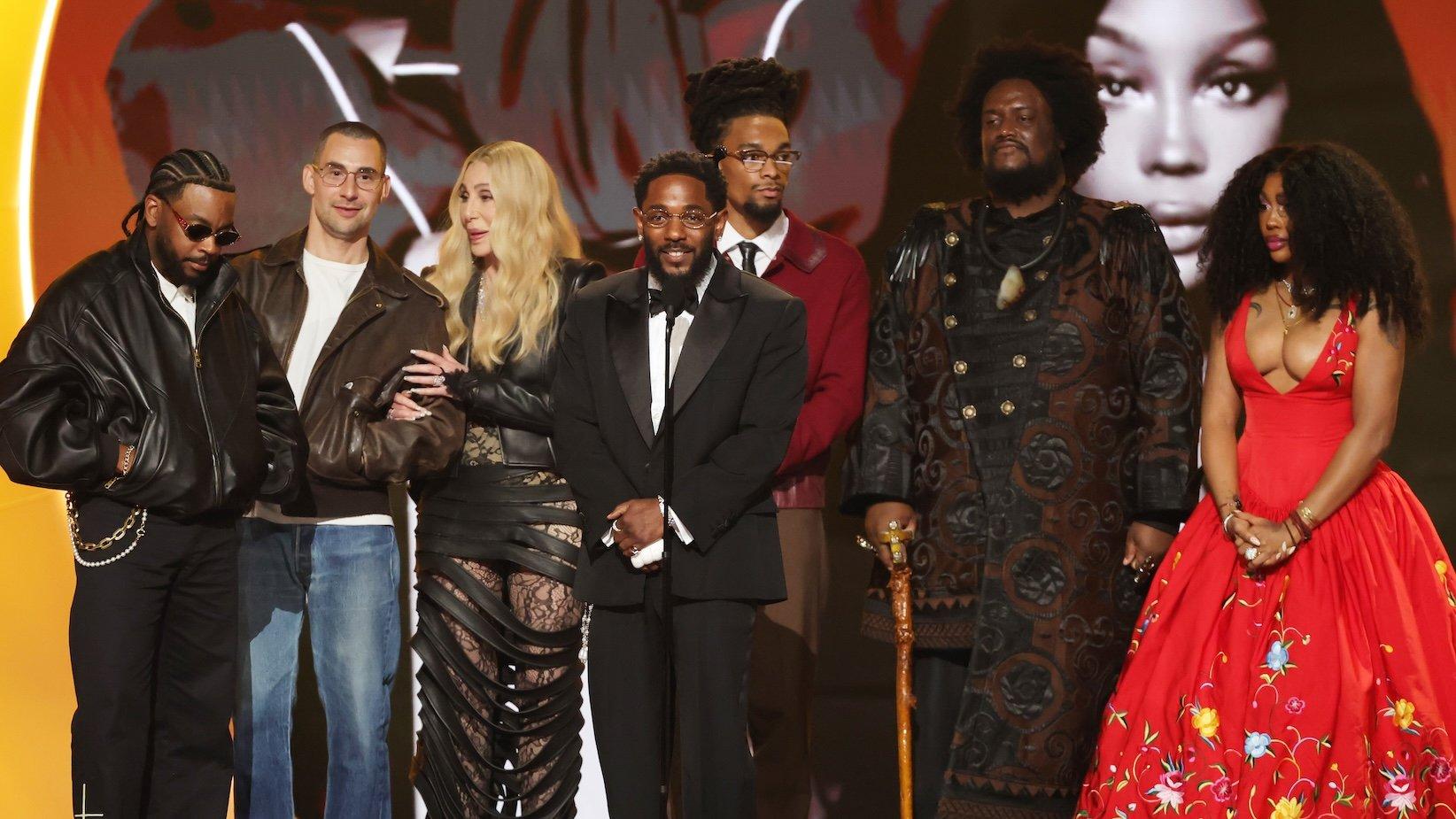
Kendrick Lamar and SZA win the Grammy for Record Of The Year at the 2026 Grammys on Sunday, Feb. 1, at Crypto.com Arena in Los Angeles, California. (L-R) Sounwave, Jack Antonoff, Cher, Kendrick Lamar, Scott Bridgeway, Kamasi Washington, and SZA.
Photo: Kevin Winter/Getty Images for The Recording Academy
10 Rappers Who Have Won The Most Grammys: Kendrick Lamar, Jay-Z, Eminem & More
From Jay-Z to Lauryn Hill, Grammy.com highlights 10 artists with the most Grammy Awards. Their impact, influence and innovation have helped shape the culture — and earned them an abundance of accolades.
GRAMMYs/Feb 2, 2026 - 01:18 am
Editor’s Note: Updated Sunday, Feb. 1, 2026, to reflect the results of the 2026 Grammys.
1989 was a year of many highlights, from the debut of "The Simpsons" and "Seinfeld" to the collapse of the Berlin Wall and the beginning of the Game Boy. It was also the first year hip-hop artists won Grammy Awards, an honor that went to D.J. Jazzy Jeff & the Fresh Prince for "Parents Just Don't Understand."
Hip-hop and the GRAMMYs have come a long way in the ensuing decades. While Will Smith and DJ Jazzy Jeff broke barriers with their win for Best Rap Performance, the duo boycotted the show because the rap Category was not televised. The boycott proved successful, as the genre Categories began to be televised during the following year, in 1990, and every year since then.
Read more: Who Are The Top GRAMMY Awards Winners Of All Time? Who Has The Most GRAMMYs?
Now, the Recording Academy celebrates the sounds of hip-hop and acknowledges the genre’s indelible impact; few genres have disrupted and defined music on such a global scale. Hip-hop rappers, producers, and songwriters have significantly shaped the musical landscape, garnering a bevy of Grammy Awards along the way. And although many artists have taken home Grammy Awards since ‘89, there are a few artists in the game who reign supreme.
Read on for 10 rappers who have won the most Grammy Awards
Kendrick Lamar
27 wins, 66 nominations
Loading...
Kendrick Lamar’s wins represent a return of “conscious” rap that tackles topics such as race and politics while embracing the art of authentic storytelling. As such, his 2015 album To Pimp a Butterfly gave way to many social justice anthems such as “Alright” and “Wesley’s Theory”; the release also took home the award for Best Rap Album at the 58th GRAMMY Awards.
Further reading: Kendrick Lamar's GRAMMY Timeline: From His First Win And Performances To "Not Like Us"
Additionally, Lamar’s most successful album, DAMN — which features hits like “DNA" and “Humble" — won five GRAMMYs Awards. At the 2025 Grammys, the rapper's hit single “Not Like Us” swept its Categories. Among Lamar's wins that night were Record Of The Year, Song Of The Year and Best Music Video. At the 2026 Grammys, he won the Grammy for Record Of The Year for “luther,” Best Rap Album for GNX, Best Rap Song for “tv off,” Best Melodic Rap Performance for “luther,” and Best Rap Performance “Chains & Whips” (his collaboration with Clipse), breaking the record for the rapper with the most Grammy wins.
Learn more: Kendrick Lamar Sweeps The 2025 GRAMMYs With Song Of The Year Win
Kendrick Lamar’s influence extends to broader cultural events, such as his groundbreaking 2025 Super Bowl halftime show. The show set a record for viewership and became one of the most-watched halftime shows since the Super Bowl’s inception, surpassing 130 million views.
Jay-Z
25 wins, 89 nominations
Loading...
Rapper and business mogul Jay-Z not only holds the record of having the most GRAMMYs of any hip-hop artist, he is also among the most nominated artists of any genre in GRAMMY history.
The rapper’s GRAMMY wins include Best Rap Album, which he won in 1998 for his album Vol. 2…Hard Knock Life. The album, which was nominated for two additional GRAMMYs, was his highest selling and included songs such as “Hard Knock Life” and “Can I Get A…” featuring Ja Rule and Amil.
Learn more: Songbook: How Jay-Z Created The 'Blueprint' For Rap's Greatest Of All Time
In 2006, Jay-Z made his musical debut at the GRAMMYs when he performed “Numb/Encore” with Linkin Park and “Yesterday’ with Paul McCartney. From solo hits to collabs with some of the most legendary artists in music, Jay-Z has dominated the GRAMMYs and shows no signs of slowing down.
Read more: 8 Ways Jay-Z's 'The Black Album' Changed The Hip-Hop Game
His influence was further acknowledged In 2024, when he was bestowed with the prestigious Dr. Dre GRAMMY Global Impact Award. In June 2025, his debut album Reasonable Doubt was inducted into the GRAMMY Hall of Fame. Not only has he been instrumental in East Coast hip-hop, he has had a hand in shaping fashion and other societal pillars on a global scale, opening doors for artists to go beyond music and branch off into other ventures.
Kanye West
24 wins, 76 nominations
Loading...
Kanye West has the second most GRAMMYs of any hip-hop artist, with 24 awards and 76 nominations. His GRAMMY accolades in multiple fields and Categories highlight his versatility as an artist: such as Jesus is King (Best Contemporary Christian Music Album) and The College DropOut (Best Rap Album), the latter of which was his first GRAMMY win in 2004. His awards also reflect his work as a producer; his GRAMMY wins in this arena include Best R&B Song for Alicia Keys’ hit “You Don’t Know My Name,” which West also co-wrote.
West also took home a golden gramophone Best Rap Solo Performance for the hit song "Gold Digger" with Jamie Foxx. At 2008 GRAMMYs, he performed his hit “Stronger” alongside Daft Punk, complete with illuminated, futuristic visuals. In all, Kanye has pushed boundaries with music and art, sampling songs and turning performances into experiences.
Eminem
15 wins, 47 nominations
Loading...
Eminem’s influence in the industry is evident not only by his chart-topping hits, but also by the number of golden gramophones he has secured. The Detroit rapper, who has effortlessly merged lyrical skill with shock, is both among the best-selling artists of all time and the rapper with the most GRAMMY awards.
Further reading: Songbook: A Deep Dive Into Eminem's Inimitable Career
He is also the only rapper who has won the award for Best Rap Album for three consecutive LPs. Eminem won his first GRAMMYs for The Slim Shady LP; these awards include Best Rap Solo Performance ("My Name Is"), as well as the award for Best Rap Album. 2000's The Marshall Mathers LP, which features "The Real Slim Shady" and "Forget About Dre," won three GRAMMY Awards/ The album also features Eminem's hit song "Stan," which the artist performed at the GRAMMYs as a duet with Elton John.
Read more: 4 Reasons Why Eminem's 'The Slim Shady LP' Is One Of The Most Influential Rap Records
Pharrell Williams
13 wins, 39 nominations
Pharrell Williams' versatility as a rapper, producer, pop artist and songwriter has garnered 13 GRAMMY wins. His awards showcase different facets of his artistry, from his days as a member of the group the Neptunes, to his work as a solo artist and producer.
From Beyoncé to Britney Spears, he has worked with a range of artists and has thrice taken home the golden gramophone for Producer Of The Year, Non Classical. Highlighting his production work, Pharrell's first GRAMMY was for producing Justin Timberlake’s 2003 album Justified. His collaboration with Daft Punk spawned the popular hit "Get Lucky," which won GRAMMYs Awards for Record Of The Year and Best Pop Duo/Group Performance.
As an artist and producer, Pharrell is able to blend pop and hip-hop effortlessly. Pharrell’s "Happy," from the Despicable Me 2 soundtrack, took home two GRAMMY Awards (as well as an Oscar nomination) and became one of the best-selling singles of the 2010s. Though Pharrell’s ingenuity has opened doors for him to work with an array of artists, he still holds hip-hop in high regard. In recent years, his work on Kendrick Lamar’s albums has spawned several GRAMMYs and nominations–including a win for Kendrick’s song "Alright" off of his album To Pimp a Butterfly.
Learn more: 4 Ways Pharrell Williams Has Made An Impact: Supporting The Music Industry, Amplifying Social Issues & More
Andre "3000" Benjamin
9 wins, 28 nominations
Andre 3000’s innovative sound and style has pushed creative boundaries in music and netted multiple GRAMMY Awards. Andre 3000's wins and nominations–in both rap and R&B–reflect his work as a solo artist and as part of the group OutKast. His wins include Best Rap Album for Stankonia, as well as Best Urban/Alternative Performance for the hit song "Hey Ya," off of the Speakerboxxx/The Love Below album. Additionally, Andre 3000 has also won a GRAMMY for Best R&B Performance for his feature on Anderson .Paak’s song "Come Home."
His versatility as an artist is evident on his recent instrumental jazz album, New Blue Sun, which earned him three nominations at the 2025 GRAMMYs. Additionally, this album showcases a departure from some of the sounds Andre 3000 is known for, and shows audiences that he is unafraid to challenge musical conventions.
Read more: André 3000 On 'New Blue Sun,' Finding Inspiration In Visual Art & His New Musical Journey
Anderson .Paak
9 wins, 14 nominations
Loading...
Although Anderson .Paak is best known for his contributions to R&B, he has netted GRAMMYs for his work as a rapper. He won his first GRAMMY for "Bubblin," a song which took home Best Rap Performance at the 2019 GRAMMYs. At the 2021 GRAMMY Awards, he won Best Melodic Rap Performance for his single "Lockdown." Additionally, he has also secured multiple GRAMMY wins as part of the R&B duo Silk Sonic with Bruno Mars.
The group’s best-selling album, An Evening With Silk Sonic, features the hit song "Leave the Door Open" and brings together R&B and funk. The melodious genre mix ultimately earned the group GRAMMYs for Best R&B Performance and Record Of The Year.
As a solo artist, Anderson .Paak has also carved out a distinctive and celebrated career, earning multiple GRAMMYs for his genre-bending albums that showcase his unique blend of singing and rapping.
Lauryn Hill
8 wins, 19 nominations
Loading...
Lauryn Hill has established a benchmark for female artists in hip-hop, setting an exceptionally high bar that many artists still aspire to reach.
Her seminal 1998 album, The Miseducation of Lauryn Hill, achieved widespread critical acclaim before becoming one of the best-selling albums of all time. Additionally, it is the first hip-hop album to win a GRAMMY for Album Of The Year. The album ultimately launched Lauryn Hill’s career into the stratosphere; she became the first female rapper with a diamond-certified album. It is also the only solo album Lauryn has put forward to date. In 2024, the album was inducted into the GRAMMY Hall of Fame.
Although Lauryn Hill’s artistry and lyrical depth has garnered her GRAMMYs as a solo artist, her success also stems from her contributions as a songwriter and vocalist for the hip-hop group the Fugees. The group’s second album, The Score, earned two GRAMMYs and includes the hit song "Killing Me Softly," which is a rendition of Roberta Flack’s original.Additionally, at the 42nd GRAMMY Awards, Lauryn Hill also won a GRAMMY for her work on Santana’s influential album Supernatural, which was inducted into the GRAMMY Hall of Fame this year.
Dr. Dre
7 wins, 26 nominations
Loading...
Dr. Dre was and remains a highly influential figure in West Coast hip-hop, who has achieved significant success as a rapper, producer and founding member of the group N.W.A.
Throughout his extensive career, Dr. Dre has earned seven GRAMMYs, including the first win for Producer Of The Year, Non-Classical by a hip-hop producer and artist.
His acclaimed solo album, The Chronic garnered Dr. Dre his first GRAMMY for his single "Let Me Ride" (Best Rap Solo Performance). His best-selling album 2001, was also GRAMMY nominated and features popular tracks like "Still D.R.E." and "The Next Episode" with Snoop Dogg. Beyond his solo achievements, he has been instrumental in launching the careers of artists such as Eminem and producing classic albums for both Snoop Dogg and 50 Cent.
In 2023, Dr. Dre was honored with having the distinguished GRAMMY Global Impact Award carry his namesake. Since the award’s inception, Jay-Z and Alicia Keys have received this accolade.
OutKast
6 wins, 16 nominations
Loading...
OutKast’s creative approach to hip-hop has helped them win six GRAMMYs and secure 16 nominations. The duo of Andre "3000" Benjamin and Antwan "Big Boi" Patton, have pushed genre boundaries blending rap, jazz, and pop while staying true to their Southern roots. In 2001, OutKast won their first GRAMMY Awards, one being Best Rap Album for Stankonia.
Their 2004 win for their innovative double album Speakerboxxx/The Love Below was a defining moment for Southern rap; it notably became the second hip-hop album to receive the GRAMMY for Album Of The Year and Best Rap Album. The album, which was certified diamond, features multiple chart-topping hits such as "The Way You Move" featuring Sleepy Brown and "Hey Ya."
Honorable Mentions
There are many hip-hop artists who have received extensive nominations but have yet to receive a GRAMMY Award — notwithstanding their important contributions to the genre. Snoop Dogg, Busta Rhymes, Nicki Minaj, Travis Scott and Rick Ross each have numerous nominations but no golden gramophone. Snoop leads this pack with a total of 16 nominations, followed by Busta and Minaj (each with a dozen), Scott (10), and Ross (nine). Post Malone stands out, however, with 18 career nominations and no wins.
2026 Grammys: Performances, Winners & Highlights
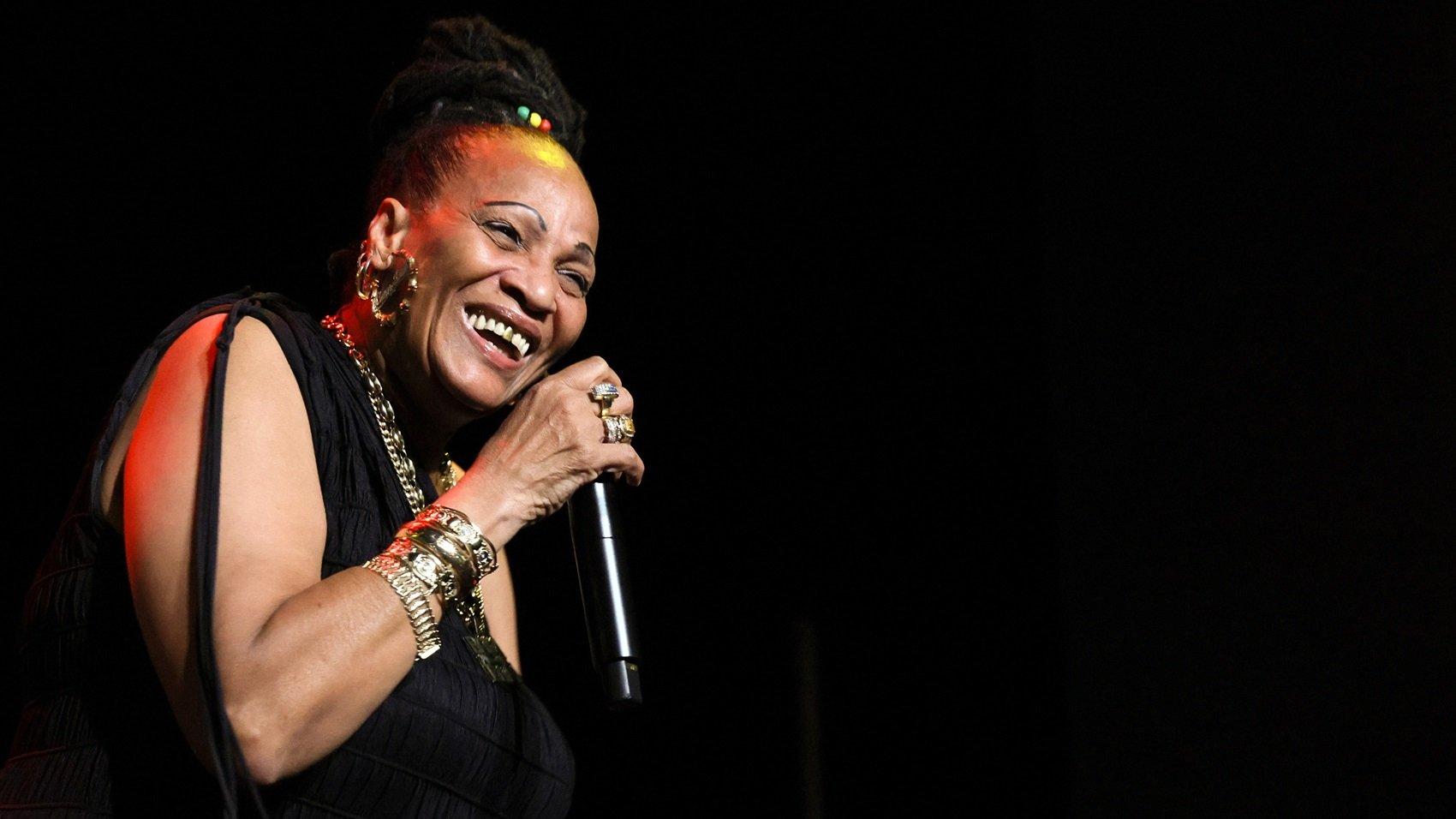
Sister Nancy performs at the premiere of 'Bam Bam: The Sister Nancy Story' during the 2024 Tribeca Festival.
Photo: Dia Dipasupil/Getty Images for Tribeca Festival
Sister Nancy Talks "Bam Bam," Why She Loves Jay-Z & Longevity In Reggae
The past 12 months have been some of the busiest in the Jamaican singer's career, and she has no plans to slow down. "As long as my voice is heard, I am going to be doing that. Because there ain't no stopping Sister Nancy."
GRAMMYs/Oct 31, 2025 - 02:46 pm
Sister Nancy is racing around New York City, sharing her "truths and rights."
The first lady of dancehall has just left an interview at radio station Power 105 and is en route for a number of back-to-backs. She's promoting a documentary about her journey — "it's not a story, it's my life," she clarifies — called Bam Bam: The Sister Nancy Story. In August, she released a new Mad Professor-produced album, Armageddon — her first LP in over 20 years. In December, Nancy will headline a celebration of her career featuring female artists including Renée Neufville.
This hustle isn't unusual for Nancy — the Kingston, Jamaica-born MC has been performing since she was a teenager, when she was mentored by her brother Brigadier Jerry — though the amount of activity and acclaim is something slightly more recent. The past 12 months have been the busiest of Sister Nancy's 45-year career.
"People love what I stand for. I always give [the audience] something they can think about," Sister Nancy tells GRAMMY.com, Zooming in from a car in Midtown Manhattan. "I will never be your ordinary thing. When you come to see me, it doesn't matter the time or the space, it's always going to be good."
While Sister Nancy needn't be reminded of her influence — "I'm the woman who created dancehall … on the mic system, around the sound system. I'm the one who did all of that, first" — the past 15 years have seen the artist receive her flowers on a global stage. In addition to her status as a rare female voice in a sea of male performers at the dawn of dancehall, Sister Nancy is recognized for her influential, highly sampled single "Bam Bam."
She recorded the early dancehall anthem in 1982 when she was just 20 years old as a last-minute addition to her debut album, One, Two. An interpolation of Toots and the Maytals' 1966 song of the same name, Sister Nancy's in-studio freestyle was laid over sparse rub-a-dub production, allowing her declaration of ambition and skill to ring loud and clear.
"I went with Yellowman to Harry J's Studio. Yellowman did a 'Bam Bam,', and I had to finish my One, Two album, and I just said I am going to do a tune like Yellowman did. And I did 'Bam Bam,' my way," Nancy recalls. "I just made up in the studio right there."
Remarkably, "Bam Bam" was far from an instant classic and received little airplay in Jamaica. Sister Nancy wouldn't perform the song on a Jamaican stage for eight years, until she featured at 1990's Sting competition. Yet the song made its way to the States, where it found popularity in New York, New Jersey and Connecticut's Caribbean diaspora and caught the ear of hip-hop innovators of the '80s.
Sister Nancy's grooving refrain and undulating horns from an Ansel Collins riddim have been widely sampled in the four decades since its release. Multiple sources consider it the most sampled reggae song ever (WhoSampled.com counts 155 samples), with Beyoncé, Madlib, Run D.M.C., Lauryn Hill, Chris Brown, Alicia Keys, Ariana Grande, and Buju Banton and many others pulling from Nancy's crisses lyrics. It's been used in film and television, including prominently in 1998's Nas- and DMX-featuring Belly.
"I didn't hear it play in Jamaica. I didn't know how big it was at all. I just didn't hear it at all," Nancy recalls. "And remember, I had songs before that like 'One, Two' and 'Transport Connection'; they were playing, but I didn't hear 'Bam Bam' until I come to the U.S."
Sister Nancy moved to New Jersey with her daughter in 1996, and worked as an accountant in a bank. She never stopped performing, and while Sister Nancy traveled as far as Israel to sing, she was often relegated to multi-artist bills — and not in the largest text. She was known and respected among those in the diaspora and by folks with a crate-digging sensibility, but wider recognition remained somewhat elusive.
Still, Nancy kept her spirits up, locking into her faith and sense of humor. "The inspiration [comes] from almighty God himself,” she says. “You can't be a sulky person and I don't believe in that. I like to make people laugh."
Like many artists of her era who either had bad contracts or no contract at all, Sister Nancy did not benefit from the popularity of "Bam Bam" for the majority of her career. Nancy was largely unaware of its popularity as a hip-hop sample, and didn't receive royalties for the tune (itself owned by producer Winston Riley, who died in 2012). Things came to a head in 2014, when Nancy's daughter shared that "Bam Bam" was used in a Reebok commercial. After that, there was no stopping Sister Nancy.
"I just couldn't take no more. I just say it's time for me to be compensated, and I just did what I had to do," the icon says of her legal battle for royalties. "It was not a difficult process. I just did the right thing and everybody who was involved just complied, and I was satisfied."
In 2016, Sister Nancy received 10 years of back royalties as well as royalties going forward, which allowed her to retire from the bank and pursue music full time. She encourages artists in similar binds to find an attorney who's familiar with their work.
"The attorney that I got told me that he and his wife was my biggest fans, so it was easy for him to really work for me," she says, adding, "I don't go for no young lawyer because they have name. Get people with experience to fight for you."
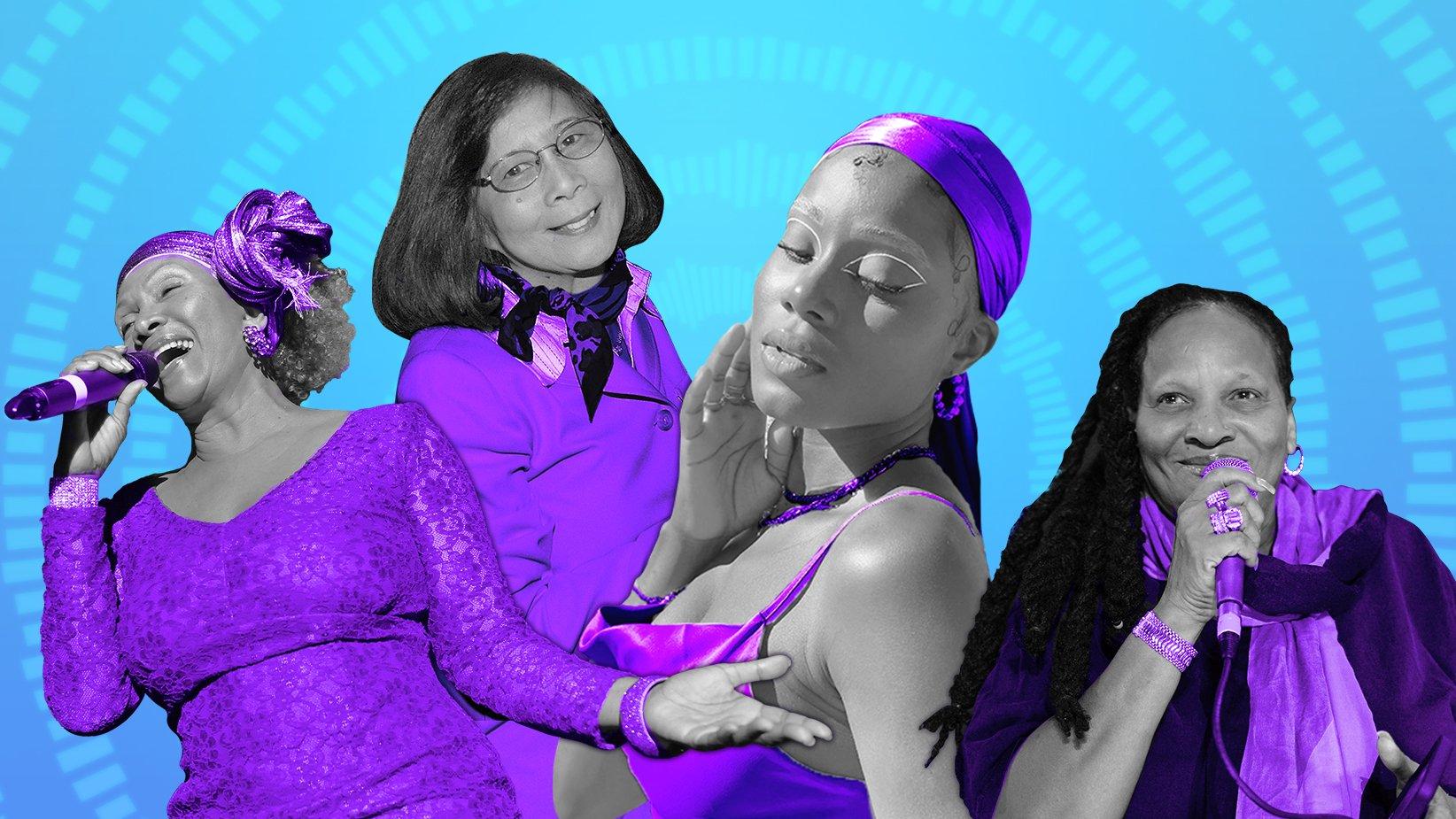
With her rights restored, Sister Nancy's trajectory changed dramatically in the latter half of the 2010s — due in no small part to nods and samples from two of hip-hop's biggest artists. Kanye West prominently sampled "Bam Bam" in the Rihanna-featuring "Famous"; Nancy's chorus comes in midway through the song, adding an ethereal quality to West's braggadocio. "Famous" was nominated in multiple Categories at the 2017 GRAMMYs, including for Best Rap Song.
Of the many, many samples and interpolations of her work, Sister Nancy is unequivocal about who delivered her favorite: Jay-Z
For his 2017 single "Bam" featuring Damien Marley — off the GRAMMY-nominated 4:44 — Jay-Z not only sampled "Bam Bam," but worked with Nancy directly. After hearing Nancy on Hot 97's "Ebro In The Morning," Jay-Z flew the legend to Jamaica to sing and feature in his hybrid music video-documentary. That direct connection, a deferential gesture, was not lost on Sister Nancy.
"That's the best one. I'd rather work with him than anybody, it's because he did the right thing. He took me with him. I appreciate that," Sister Nancy says of Hova. "I have a respect for him because he chose to go with me and do it the right way. The rest of them just went behind my back."
In the years since, Sister Nancy has continued to thrive. She's performed on global stages and can be seen regularly at New York hotspots such as Union Pool, Public Records, and S.O.B.'s. Janelle Monáe featured Nancy not once but twice on 2023’s Album Of The Year-nominated The Age Of Pleasure, and sampled "Bam Bam" on “Water Slide." In further recognition of her impact, Burberry asked Sister Nancy to participate in their spring/summer 2024 campaign, which was shot in Jamaica.
She continues to release new music of her own, though she believes in letting projects simmer before embarking on something new. Armageddon —her first full-length since 2001's Sister Nancy Meets Fireproof — was released this summer, seven years after it was recorded with Mad Professor in the U.K. "Mad Professor is someone I look up to. He's a genius, and I love working with him," Sister Nancy adds. "He remind me of [Jamaican dub pioneer] King Tubby. "
While Sister Nancy's icon status has long since cemented, she remains committed to performing. She's one of few women of her generation to do so; peers like Sister Carol and Marcia Griffiths continue to share their messages in a reggae style, though with less frequency than Sister Nancy. Her presence on record and on stage has inspired generations of singers and DJs.
"If someone can patronize you or learn from what you're doing, it makes it worthwhile," Nancy says. "I'm going to do that as long as I can talk. As long as my voice is heard, I am going to be doing that. Because there ain't no stopping Sister Nancy."
More than 40 years later, she's still happy to discuss and play that single she recorded back in Kingston as a young woman. "I have to appreciate 'Bam Bam.' I have no problem talking about it because it's mine. I did the song, so I'm not tired of talking about it. I'm not tired of playing it either," Sister Nancy says. " I love it. That's my voice. I made that."
More Reggae News
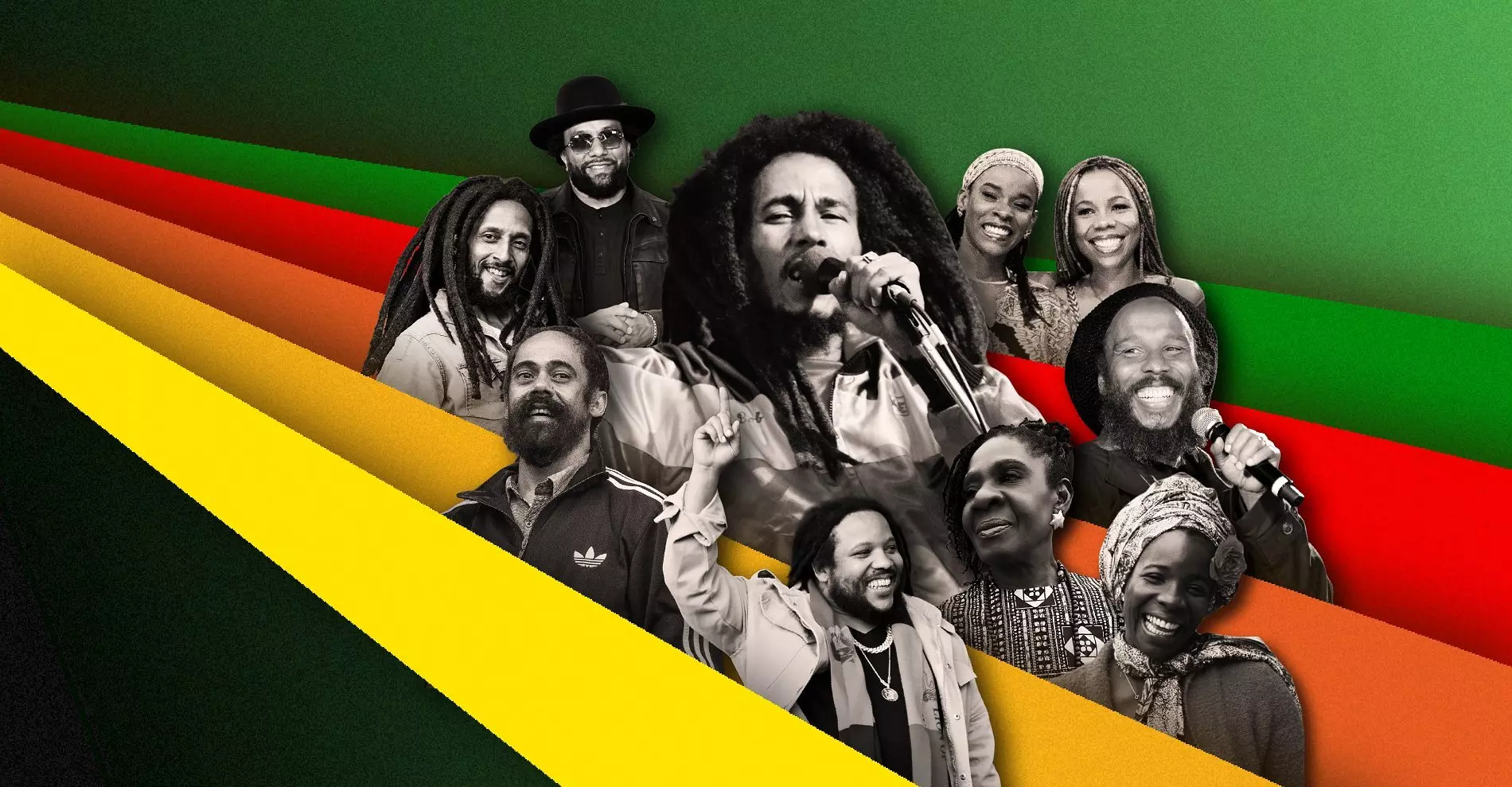

(Clockwise from left) Julian, Ky-Mani, Bob, Sharon and Cedella, Ziggy, Rita, "Black" Pearl, Stephen, and Damian Marley
Photos: Erika Goldring/Getty Images; David Becker/Getty Images; Pete Still/Redferns; TK and TK;Unique Nicole/Getty Images for Paramount Pictures; Jean-Louis Atlan/Sygma via Getty Images; courtesy of the artist; Astrida Valigorsky/Getty Images; Joseph Okpako/WireImage
Bob Marley is one of the most influential musicians of the 20th century, and his reach is generational. Explore how the reggae legend's work reverberated through his own family tree — from daughters Sharon and Cedella, to sister Pearl, and son Ky-Mani.
GRAMMYs/Sep 15, 2025 - 03:19 pm
One of popular music’s most expansive and prosperous lineages has its roots in the west Kingston ghetto of Trench Town. There, in 1962, childhood friends Bob Marley and Bunny Livingston met Peter Tosh in the yard of their mentor Joe Higgs, and formed the Wailing Wailers. The group’s initial success arrived with their 1963 ska hit "Simmer Down," recorded for producer Coxsone Dodd’s Studio One label.
In the nascent reggae era of the late '60s and early '70s, the Wailers were similarly evolving their sound. Working with producer Lee "Scratch" Perry and his studio band The Upsetters, Marley and co. crafted a heavier, more militant sound anchored in the dynamic drum and bass, respectively, of Carlton "Carly" and Aston "Family Man" Barrett. The Barrett brothers became the nucleus of the backing band Bob Marley and the Wailers.
In 1972, the Wailers signed to Chris Blackwell’s Island Records and released their albums Catch A Fire and Burnin’ — the latter featuring "Get Up Stand Up", (co-written by Marley and Tosh), a globally embraced anthem of resistance. Tosh and Livingston left the group in 1973 with Livingston adopting the name Wailer, signifying his allegiance to the original trio. Marley, Tosh and Wailer each released remarkable albums throughout the 1970s, but it was Marley who led the musical revolution that took reggae (and Rastafari) to the world.
Marley’s significance transcended music. Jamaica’s Ministry of Culture, believing Marley’s presence could quell the country's deadly, rampant political violence, asked Marley to headline a free concert, Smile Jamaica, on Dec. 5, 1976. Shortly after the concert’s announcement, the incumbent People’s National Party (PNP) called for elections and some perceived Marley’s involvement as a PNP endorsement. Two days before the concert, Marley and three others, including his wife Rita, were shot in an assassination attempt at his Kingston home.
Undeterred, Marley, still healing from bullet wounds, performed for 90-minutes at Smile Jamaica, his courageousness elevating him to folk hero status. Marley’s masterful 1979 album Survival, focused on activism and pan-Africanism, included "Ambush in the Night," written about the shooting spree.
While in self-imposed exile in England, Marley recorded the albums Exodus — embellished with elements of rock, soul and funk — and the mellow Kaya (Kaya includes "Crisis," sampled by Bob’s grandson YG Marley for his 2024 single "Praise Jah In The Moonlight"). Marley returned to Jamaica to headline the One Love Peace Concert on April 22, 1978. During his mesmerizing rendition of "Jamming," Marley clasped, then held aloft, the hands of rivals Prime Minister Michael Manley and opposition leader Edward Seaga, then intoned, "love, prosperity be with us all, Jah Rastafari."
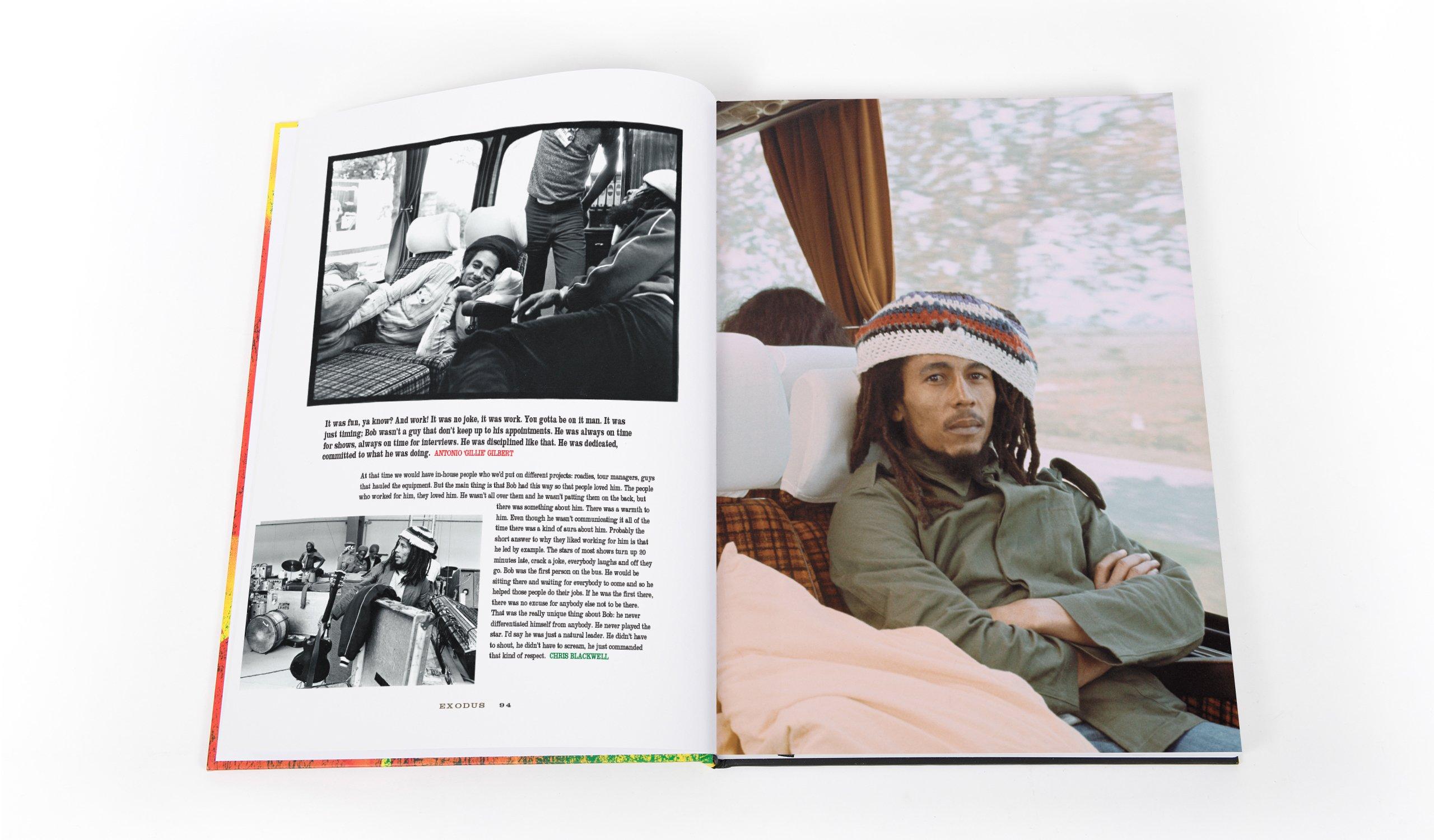
For his valiant attempt to unify Jamaica’s warring partisan factions, Marley received the United Nations Peace Medal of the Third World in June 1978.
Marley’s music inspired liberation movements around the world including the crusade against South African Apartheid and the fight for emancipation from colonial rule in neighboring Zimbabwe. Bob wrote "Zimbabwe" as a tribute to the nation’s freedom fighters and on April 18, 1980, he headlined independence celebrations there.
In his lifetime Marley never received a GRAMMY nomination. Posthumously, he was bestowed a Recording Academy Lifetime Achievement Award in 2010, the same year Catch A Fire was inducted into the GRAMMY Hall of Fame; Exodus was inducted four years earlier. At the 2025 GRAMMYs, Marley's biopic soundtrack took home a golden gramophone for Best Reggae Album. Bob Marley: One Love Music Inspired by the Film featured various artists interpreting his songs including his grandchildren Skip and Mystic Marley.
Marley was inducted into the Rock and Roll Hall of Fame in 1994. Exodus was named Album of the Century by Time Magazine, its track "One Love" designated Song of the Millennium by the BBC. Legend, released in 1984, a compilation of Marley’s apolitical songs, is the best-selling reggae album of all time, RIAA Certified 18x platinum.
Forty-four years after Marley’s passing on May 11, 1981, at just 36, his music, messages of peace and fight against oppression still resonate. His family members —many of whom have lengthy musical careers of their own — regularly sample, cover and otherwise intertwine his work into their output.
Here’s a look at the sprawling familial lineup orbiting in the Marley musical universe.
Rita Marley
Rita Marley’s vision and tireless work ethic has been invaluable to the preservation of Bob Marley’s legacy and the sustained global popularity of his music.
Born Alfarita Constantia Anderson in Santiago De Cuba on July 25, 1946, her family relocated to Jamaica when Rita was just three months old. Rita was raised by her Aunt Viola in Trench Town. She met Bob at Studio One when both were teenaged aspiring singers; Rita was a member of vocal group the Soulettes and Bob was their coach. The Soulettes had moderate success with various singles including "Time to Turn," a cover of Pete Seeger’s biblically-inspired plea for peace, "Turn, Turn, Turn."
Rita was charmed by Bob’s affection for her infant daughter, Sharon, whom he later adopted. "This is where my love came in. I looked at him and thought, uh oh, such a nice guy. And I got weak in the knees," Rita wrote in her 2004 autobiography, No Woman No Cry: My Life with Bob Marley. Bob and Rita Marley were married on Feb. 10, 1966 and had three children together: Cedella, David (Ziggy), and Stephen.
In 1973 Rita, Marcia Griffiths and Judy Mowatt formed the I Threes; they sang harmonies on Marley’s recordings and toured the world with him. After Bob’s passing, the trio intermittently performed and recorded together. Their 1985 single, "He's A Legend" is a heartfelt Marley tribute.
Rita received her first GRAMMY nomination in the Best Ethnic or Traditional Folk Recording Category for the album Reggae Sunsplash ’81, A Tribute to Bob Marley. She released her debut solo album, Who Feels It Knows It in 1981. Its follow-up, Harambé included "One Draw," an irresistible ganja anthem and the first reggae single to reach the Billboard Dance Club Song Chart. Rita’s second GRAMMY nod, this time for Best Reggae Album, arrived in 1992 with We Must Carry On.
Rita handled the legal and business interests associated with Marley’s name and estate. In 1981 she purchased Jamaica’s Federal Records, renamed Tuff Gong (after Bob’s nickname, earned as a teenager tussling his way through Trench Town), which became a leader in recording, manufacturing and distribution of music in the Caribbean. In 1986 Rita transformed Bob’s former Kingston home into the Bob Marley Museum. She also created the non-profit Bob Marley and Rita Marley Foundations, focused on education, healthcare and community upliftment.
Rita has suffered several strokes which have left her unable to speak. Yet, she continues to be heard through the various projects emanating from the legacy she has worked so hard to protect.
"Black Pearl" Livingston
In the early 1960s Bob Marley’s mother Cedella had a relationship with Bunny Wailer’s father, Thaddeus Livingston. Their union produced a daughter, Claudette "Pearl" Livingston, also known as Black Pearl.
Pearl was born in Trench Town, raised in Miami and now resides in Nine Mile, Jamaica, Bob’s birthplace and the site of his mausoleum. Like her brothers Bob and Bunny, Pearl is blessed with abundant talent as a singer/songwriter and musician, although her struggles with drug addiction impeded those pursuits. "I got to a point and I thought, it’s time for me to sing the songs that I have written," Pearl tells GRAMMY.com.
Now clean for over eight years, Pearl, 63, released her debut album, Your Richness Is Life, in August 2025. Its 10 rocking reggae tracks, many written or co-written by Pearl, are delivered in her warm, soulful vocals. On the upbeat title track, Pearl reveals her inspirations in making music: "From the belly of my mother, I hear the voice of my brother, he’s singing his songs to me."
Pearl blesses "The Youths of Trench Town" and confidently aims to trod the same path as her brothers on "I’m The Rebel": "Wailers conquered the world with reggae music, I am Pearl and I will do it." She spiritedly reworks her brothers’ classics, Bob Marley’s "Natty Dread" and Bunny Wailer’s "Rock and Groove."
Recorded at Kingston’s Anchor Studio with some of Jamaica’s greatest musicians, Your Richness Is Life was produced by Greg Quail, an award-winning Australian television producer. "I thank God for putting this angel of opportunity in my path," says Pearl of Quail, "and for being here to share my music with the world."
Sharon Marley
Born in 1964, Sharon Marley was barely into her teens when she embarked on a musical career with her three younger siblings, Cedella, Ziggy and Stephen. Calling themselves the Melody Makers, their first single "Children Playing in the Streets," was written by their father. The Melody Makers were together from 1979 through 2002, during which time they toured the world, released 10 studio albums, one live album, four compilations and won three Best Reggae Album GRAMMY Awards.
Sharon has balanced multiple roles throughout her career. At 22 she became the curator of the Bob Marley Museum, a position she held for 12 years. She ran the Ziggy Marley and the Melody Makers fan club and her brothers’ label Ghetto Youths International. She also studied child psychology and owned/operated a school/training institution in Kingston.
In 2021 Sharon returned to recording, covering her mother’s "Just One More Morning" in celebration of her 75th birthday. That single commenced Sharon’s solo career, which remains very much a family affair: her sons Ingemar and Matthew Prendergast, are, respectively, her principal songwriter and graphic designer. Her daughter Donisha Prendergast directs the stunning videos for Sharon’s songs, including "Steppah," which evokes the classic rub-a-dub dancehall era, featuring veteran toaster Big Youth, and "Firebird," a self-affirmation ballad.
Sharon considers her return to performing a form of therapy. "My mom losing her voice really affected my whole family. It's heartbreaking," she told Foyer.com. "So being able to sing is like therapy for me and my mom. I do have her singing tone, and it’s comforting for me to hear that tone again."
Cedella Marley
Bob Marley named his first biological child after perhaps his greatest teacher, his mother Cedella. Born on Aug. 23, 1967, Cedella Marley is an author of several children’s books, a successful fashion designer, philanthropist and the mother of three sons. She’s also the CEO of the Bob Marley Group of Companies, which includes the family’s record label/distributor Tuff Gong International, the Bob Marley Museum, and director of the Bob Marley and Rita Marley Foundations.
Cedella sang and danced alongside her sister Sharon, supporting their brothers Ziggy and Stephen in the Melody Makers. Since then, she’s sporadically released new music. In 2020, she joined her son Skip Marley in "Song Around The World," an interpretation of "Get Up Stand Up" for the Playing For Change foundation.
Cedella contributed a graceful rendition of "Don’t Let Me Be Misunderstood" to the seven-track project Celebrating Nina: A Reggae Tribute to Nina Simone, produced by Stephen Marley. "As a strong woman in a man’s world, Cedella is misunderstood sometimes," Stephen told Billboard in 2022. The same year, Cedella joined Jamaican singers Diana King and Tanya Stephens on "Diamonds In The Sun," a female empowerment anthem with healing words for abuse survivors. Cedella is also featured on Ghanaian reggae artist Rocky Dawuni’s recent ballad for humanity, "I Got A Song."
Alongside brother Ziggy, Larry Mestel (CEO Primary Wave) and Scott Givens (CEO FiveCurrents), Cedella is an executive producer of Bob Marley Hope Road, a new interactive, multisensory visit to Marley's Jamaica, at Mandalay Bay Resort and Casino, Las Vegas.
Cedella oversees the multitude of merchandise displaying Marley’s image and the various ventures undertaken in his name. Some contend it's an over-commercialization of Marley’s Rasta soul rebel identity. However, Cedella told The Guardian, such endeavors align with her father’s mission to control his music and brand. "Bob Marley was the first Jamaican artist who decided that he was going to print his own T-shirts, manufacture his own records, and choose his own destiny. I learned that you take control of your own assets."
Ziggy Marley
The eldest son of Bob and Rita, David "Ziggy" Marley grew up watching his father working in the studio and accompanied him on many international concert engagements, including the historic 1980 freedom celebrations in Zimbabwe. Ten years later, The Melody Makers headlined liberation festivities in nearby Namibia and wrote "Namibia" for their 1991 album Jahmekya.
As lead singer and guitarist with the Melody Makers, Ziggy’s vocals, strongly reminiscent of his father, and the group’s pop, R&B influenced reggae, brought them immense popularity on the international concert circuit. They released ten studio albums, three recognized with Best Reggae Album GRAMMYs: Conscious Party (1989, which yielded a top 40 hit, "Tomorrow People"), One Bright Day (1990) and Fallen is Babylon (1998). Ziggy assisted in the production of the Melody Makers’ albums and co-wrote their songs with his siblings.
In 2003 Ziggy released his first solo venture, Dragonfly, followed in 2006 by Love Is My Religion — the first album released on Ziggy’s label Tuff Gong Worldwide. Love Is My Religion brought Ziggy his first solo GRAMMY for Best Reggae Album; he holds the record for the most wins in that category with eight awards.
In 2010 Ziggy won a GRAMMY for Best Musical Album for Children for Family Time, which features Paul Simon, Willie Nelson, Rita and Cedella Marley and Ziggy’s daughter, Judah.
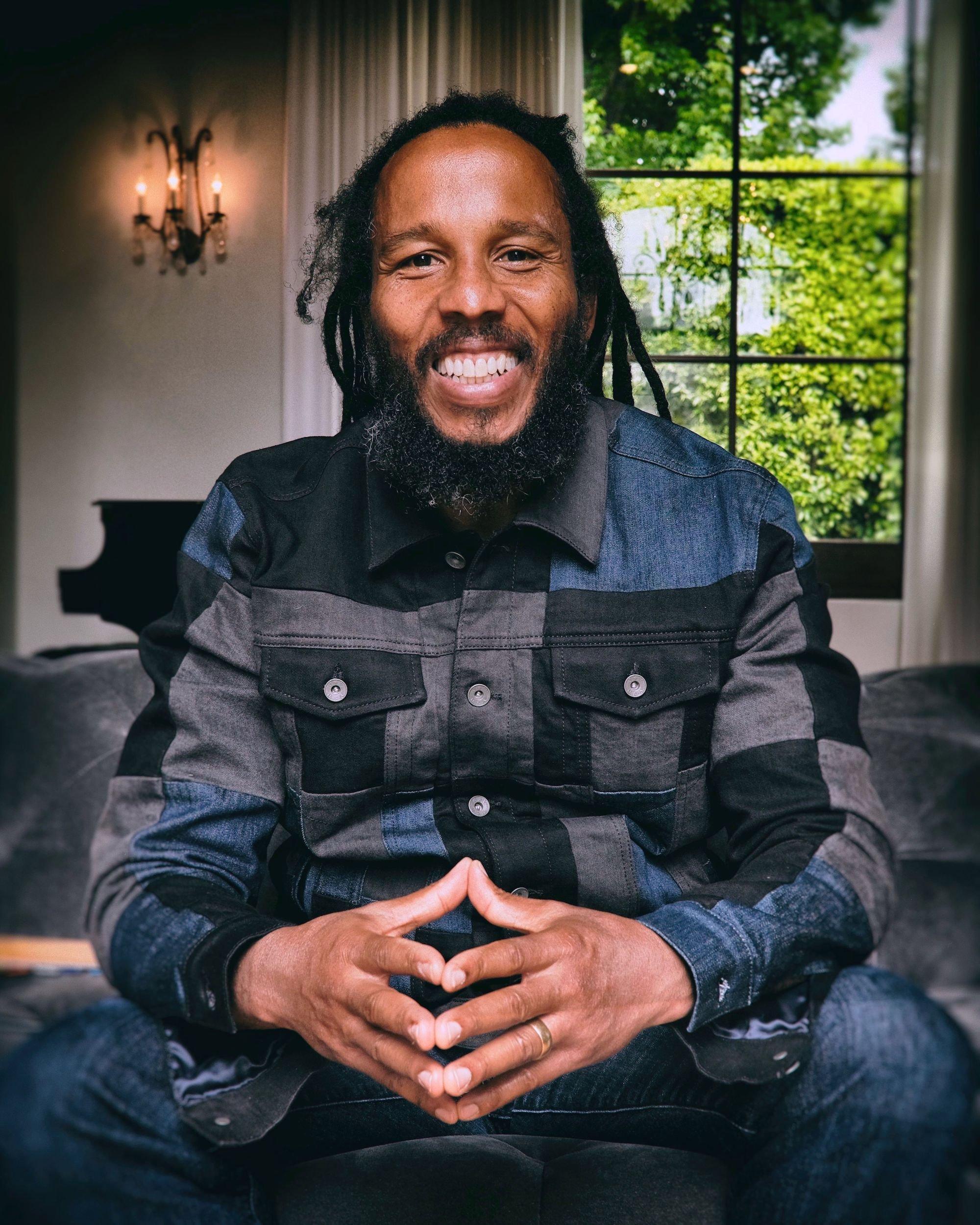
Ziggy founded the non-profit U.R.G.E. (Unlimited Resources Giving Enlightenment), which focuses on children, supports schools (in Jamaica and Mexico, among other locales), and provides medical care and resources for health clinics. "In Los Angeles, we work with an organization that has after-school programs for underprivileged kids. If we can help the children, that is where the world will change," Ziggy told GRAMMY.com in 2020.
Ziggy served as a producer and musical adviser for the Bob Marley: One Love biopic and was essential to the film's conception, narrative and casting, and is a co-producer on the 2025 GRAMMY winning various artist soundtrack Bob Marley: One Love Music Inspired By The Film.
On Sept. 16, Ziggy hits the road with legend Burning Spear for their Do The Reggae Tour.
Stephen Marley
At age nine, the spotlight shone on Stephen "Ragga" Marley’s precocious talents as he took the lead on the Melody Makers’ 1981 single "Sugar Pie." A guitarist, percussionist, vocalist and songwriter with the group, Stephen, the youngest child of Bob and Rita Marley, born April 20, 1972, also assisted in the production of their albums.
Stephen went on to helm the production on several Marley family members’ albums including his grandmother Cedella Booker’s Altar and his eldest son, the late Jo Mersa Marley’s debut EP, Comfortable. Stephen also produced younger brothers Julian and Damian’s debut albums, respectively, Lion in the Morning and Mr. Marley, and Damian’s GRAMMY winners Halfway Tree and Welcome to Jamrock, which reached N. 7 on the Billboard 200. "Producer was a role that wasn’t being taken care of and it was necessary so that the flock never stray," Stephen told the Washington Post in 2007.
Stephen’s 1999 production, Chant Down Babylon, juxtaposed rapped verses alongside his father’s vocals on hip-hop renditions of Marley classics, taking the Gong’s music to a new audience. "People discovered Bob’s 'Turn Your Lights Down Low' because Lauryn Hill was on the track," Stephen told GRAMMY.com.
Stephen’s much-anticipated debut album Mind Control dropped in 2007, his vocals handily navigating from forlorn romantic on "You’re Gonna Leave" to reggae revolutionary decrying political corruption on "Chase Dem." Mind Control won the Best Reggae Album GRAMMY in 2008 as did its follow-up, Mind Control Acoustic, in 2010.
With an aim of preserving reggae’s integrity as a message music, Stephen recorded his 2012 GRAMMY winning album Revelation Part I: The Root of Life. The album includes "Jah Army," featuring Damian Marley and Buju Banton, each pledging allegiance to Rastafari in the fight against oppressive systems (generally referred to as Babylon).
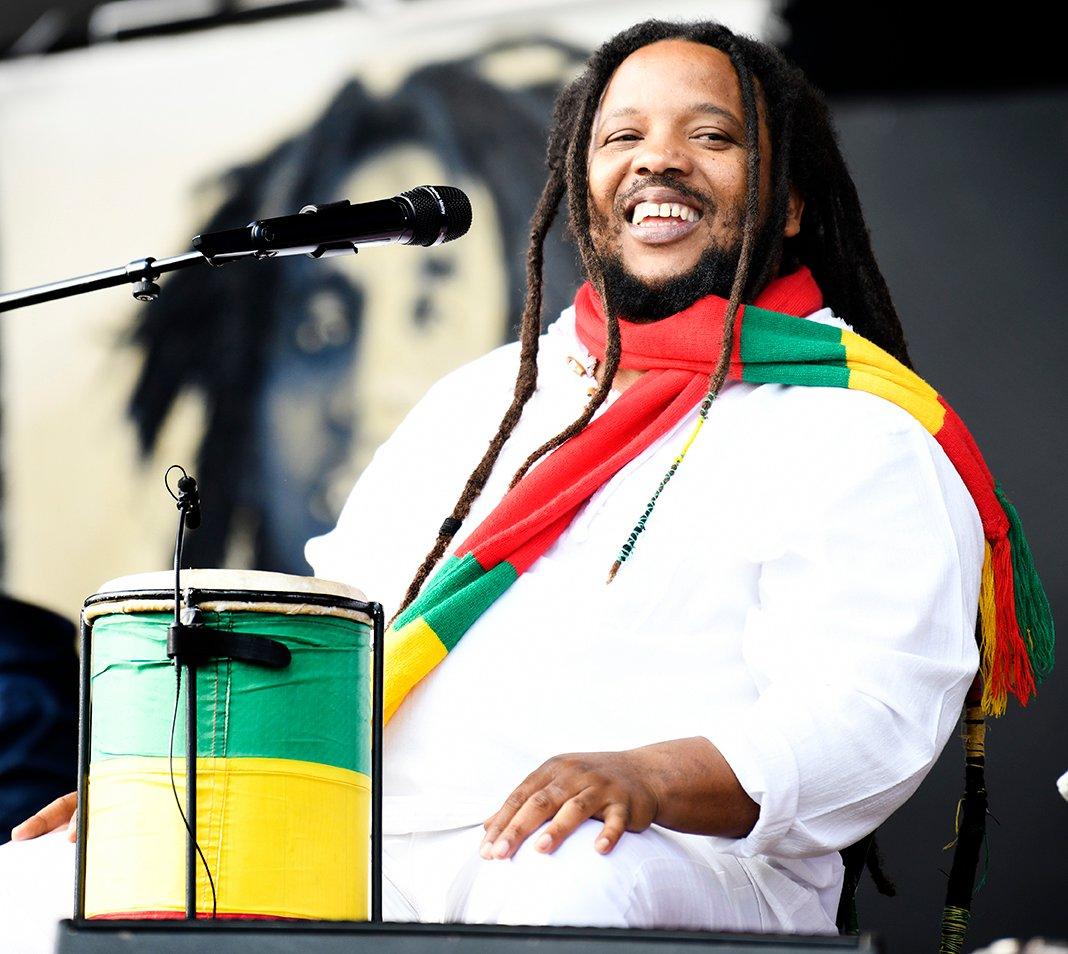
The title track to Stephen’s most recent album, the enchantingly eclectic acoustic set, Old Soul, succinctly summarizes his role in upholding his exalted familial legacy: "I'm an old soul, tribute to the ones who made it all possible, inside me, your legacy lives on."
On Sept. 6, 2025, Stephen and younger brother Damian concluded their 27 date North American Traffic Jam tour.
Julian Marley
Julian "Juju Royal" Marley, the son of Lucy Pounder and Bob Marley, was born on June 4, 1975 in London. Though he was raised in England, Julian visited Jamaica throughout his childhood. He made his first demo tape at just five years old, recording a version of his father’s "Slave Driver" at the Marley family’s Tuff Gong studios. Primarily a self-taught musician proficient on bass, keyboards, drums and guitar, Julian also studied with Wailers’ bass and drum maestros, respectively Aston "Family Man" and Carlton "Carly" Barrett. When Carly was murdered outside of his Kingston home in 1987, Julian wrote "Uprising" in response to the tragedy. It was his first single release.
He moved to Kingston in 1992, joining forces with his brothers as the Ghetto Youths crew. In 1996, he released his debut album, Lion in the Morning, produced by Stephen Marley, on their Ghetto Youths International imprint. The album’s title track is a testament to Julian’s Rastafari grounding.
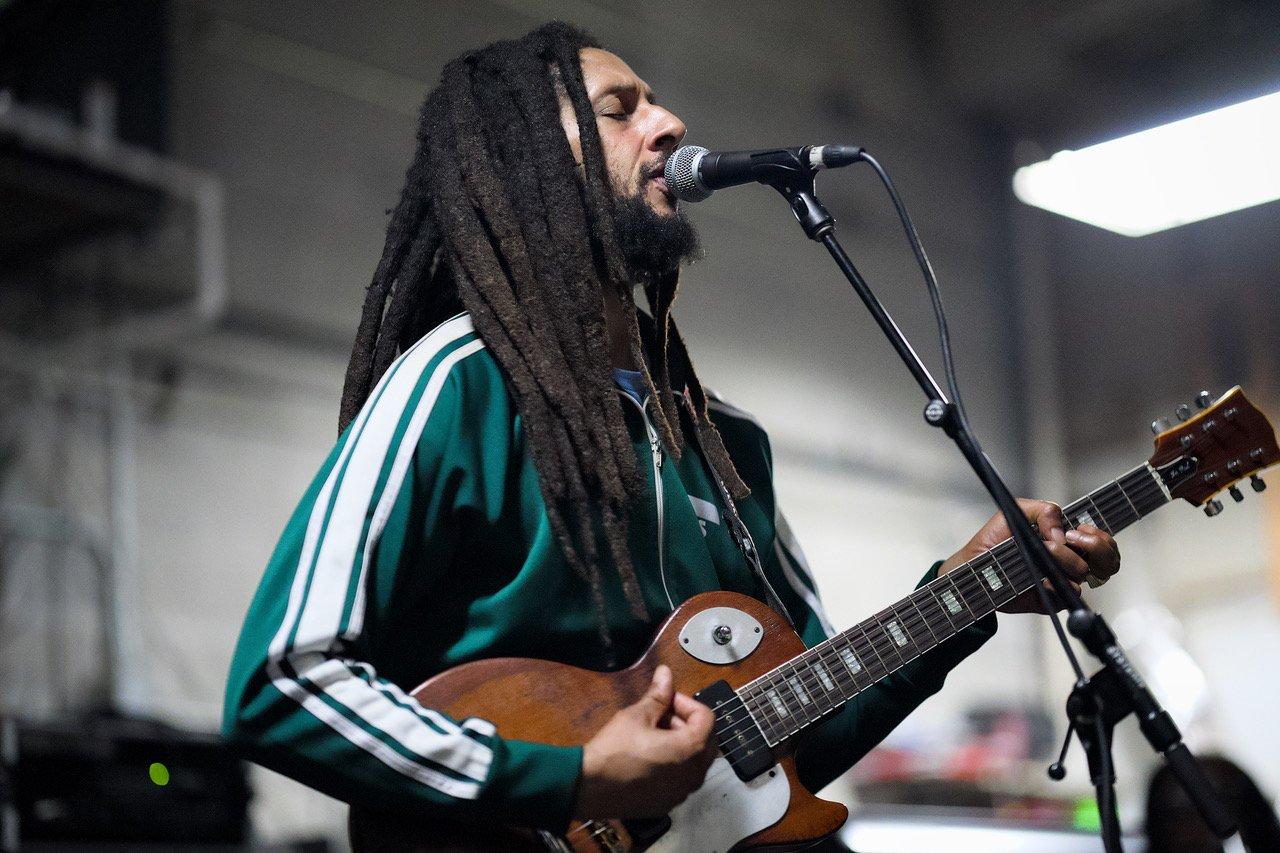
Julian mingles acoustic textures with electronic touches on his 2003 sophomore set, A Time and Place and its follow-up Awake, the latter earning Julian his first Best Reggae Album GRAMMY nomination. Co-produced by Stephen and Damian Marley, Awake was inspired by the efforts of family members who’ve preceded Julian.
A decade passed before Julian released As I Am, in 2019, produced by Julian, Stephen and Damian Marley, which brought Julian his second GRAMMY nod. Julian expanded his sonic palette, incorporating electronic dance music strains on Colors of Royal, a collaborative album with Antaeus that earned the duo their first Best Reggae Album GRAMMY in 2024.
Describing his as of yet untitled upcoming album, Julian told GRAMMY.com: "It’s a bit more Afrobeat, dancehall, with a hip-hop vibe, expressing another part of me. Jah say carry the message to the four corners of the earth; reggae is in one corner, you have people who don’t listen to reggae in another corner, and they need the message, too, so that’s why we branch out."
Ky-Mani Marley
Born on Feb. 26, 1976, in Falmouth, Ky-Mani lived in Jamaica until he was eight, then relocated to Miami with his mother, Jamaica table tennis champ Anita Belnavis. Ky-Mani made his first concert appearance on Feb. 6, 1995, on what would have been Bob’s 50th birthday, at the Bob Marley Museum. Prior to that pivotal performance, Ky-Mani was poised for a career in professional sports.
Ky-Mani's emotive single "Dear Dad," included on his 1999 album The Journey, is constructed as a letter to his father ("Dear dad, I really didn’t get to know you and sometimes it makes me blue"), his poignant lyrics and plaintive vocals, recorded over a loop of the riddim supporting Bob’s 1976 track "Crazy Baldhead." Ky-Mani’s second album Many More Roads was nominated for a Best Reggae Album GRAMMY in 2001.
Ky-Mani released his album Radio in 2007, the same year Van Halen’s David Lee Roth chose him as the opening act for the band’s reunion tour. Regarding the unexpected pairing, Ky-Mani told World Music Central that Roth was "a big fan of my dad. Apparently, he knows some of the work that I’ve done. He was a fan of Shottas and in no way would I have imagined he would have been a fan of that."
An accomplished actor, Ky-Mani has starred in several films including the romantic drama One Love, also starring Idris Elba and Cherine Anderson and, Shottas, the brutal gangster tale that’s likely the most bootlegged Jamaican film of all time. Ky-Mani has just wrapped another film, Vendetta/Necessary Badness, which he wrote, produced, co-directed and stars in.
In 2024 Ky-Mani performed alongside his brothers Ziggy, Stephen, Damian and Julian as part of the Marley Brothers’ 2024 Legacy Tour Celebrating the Music of Bob Marley, which traveled throughout the USA; the tour’s Wilmington, N.C. date was filmed for a PBS special.
Ky-Mani has released a few cuts from a forthcoming album, Love and Energy, including the title track, featuring Jamaican sing-jays Iba Mahr and Lutan Fyah. He told London Yardie TV, "Love and Energy, it’s about confronting the things that matter; it’s important while I’m giving love that you feel my energy."
Damian Marley
In 2006 Damian "Jr. Gong" Marley became the first, and to date only, Jamaican artist to win the GRAMMY for Best Urban/Alternative Performance for the title track to his gold certified album, Welcome to Jamrock. "Welcome to Jamrock" was lauded for its swaggering reggae meets hip-hop instrumentation and descriptively gritty lyrics, delivered in rapid-fire succession, depicting the (politically divisive) violence in Kingston’s ghettoes: "The thugs dem will do whe dem got to and won't think twice to shot you, don't make dem spot you, unless you carry guns a lot too." As Damian told GRAMMY.com in 2020, "Being known for politically driven themes has been a blessing in my career. That's where my heart is. If I had blown up on my previous album (Halfway Tree) perhaps I wouldn't be known for this kind of content."
The son of Bob Marley and Cindy Breakspeare (Miss World 1976), Damian was born on July 21, 1978. While in high school he began recording his debut album, Mr. Marley, produced by his older brother Stephen. Their (studio) chemistry yielded, among other releases, Damian’s Best Reggae Album GRAMMY winners Halfway Tree and Welcome to Jamrock.
"Steve has been a guiding force in my life since I was very young. Before I was able to do a lot of production, he would take all of the responsibility. So over the years we've been involved with each other's careers," Damian told GRAMMY.com.
Stephen assisted Damian in the production of Distant Relatives, Damian’s acclaimed collaborative album with Nas, and Stony Hill, Damian’s 2018 Best Reggae Album GRAMMY winner; the latter features "Medication," a celebration of marijuana’s healing properties that’s surpassed 155 million Spotify streams.
Damian’s production credits also include Third World’s GRAMMY nominated album More Works to Do, sing-jay Kabaka Pyramid’s 2023 GRAMMY winner The Kalling, and Damian’s own sublime reggae rendering of George Harrison’s "My Sweet Lord."
Also a successful entrepreneur, Damian’s Welcome to Jamrock Reggae Cruise celebrates its 10th anniversary Oct. 27-Nov. 1, which features a roster of top tier reggae acts and has sold out each year. This year’s lineup includes Bob’s grandchildren Mystic, Skip, YG and Yohan Marley, billed as Marley 3rd Generation.
Latest News & Exclusive Videos
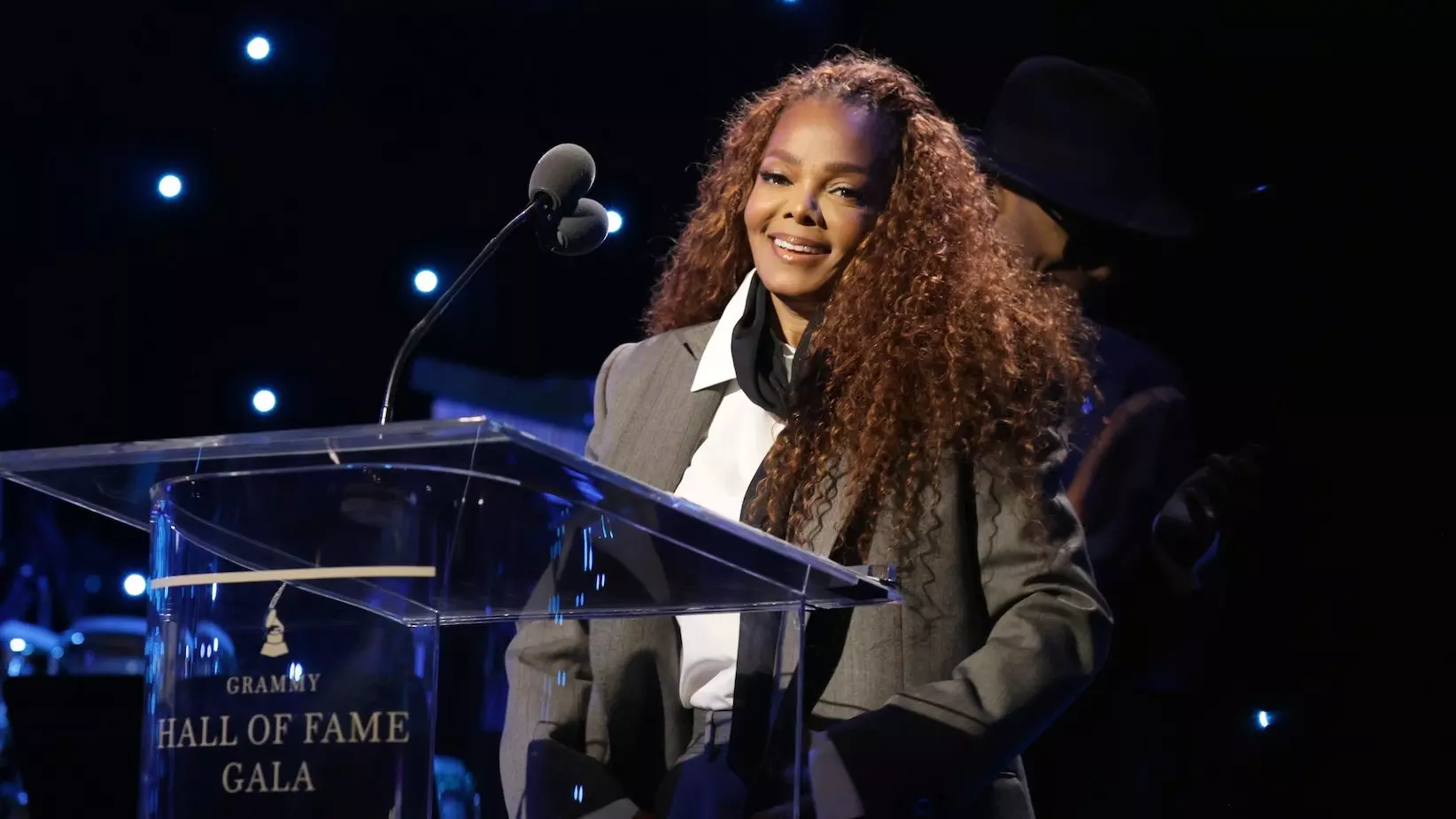
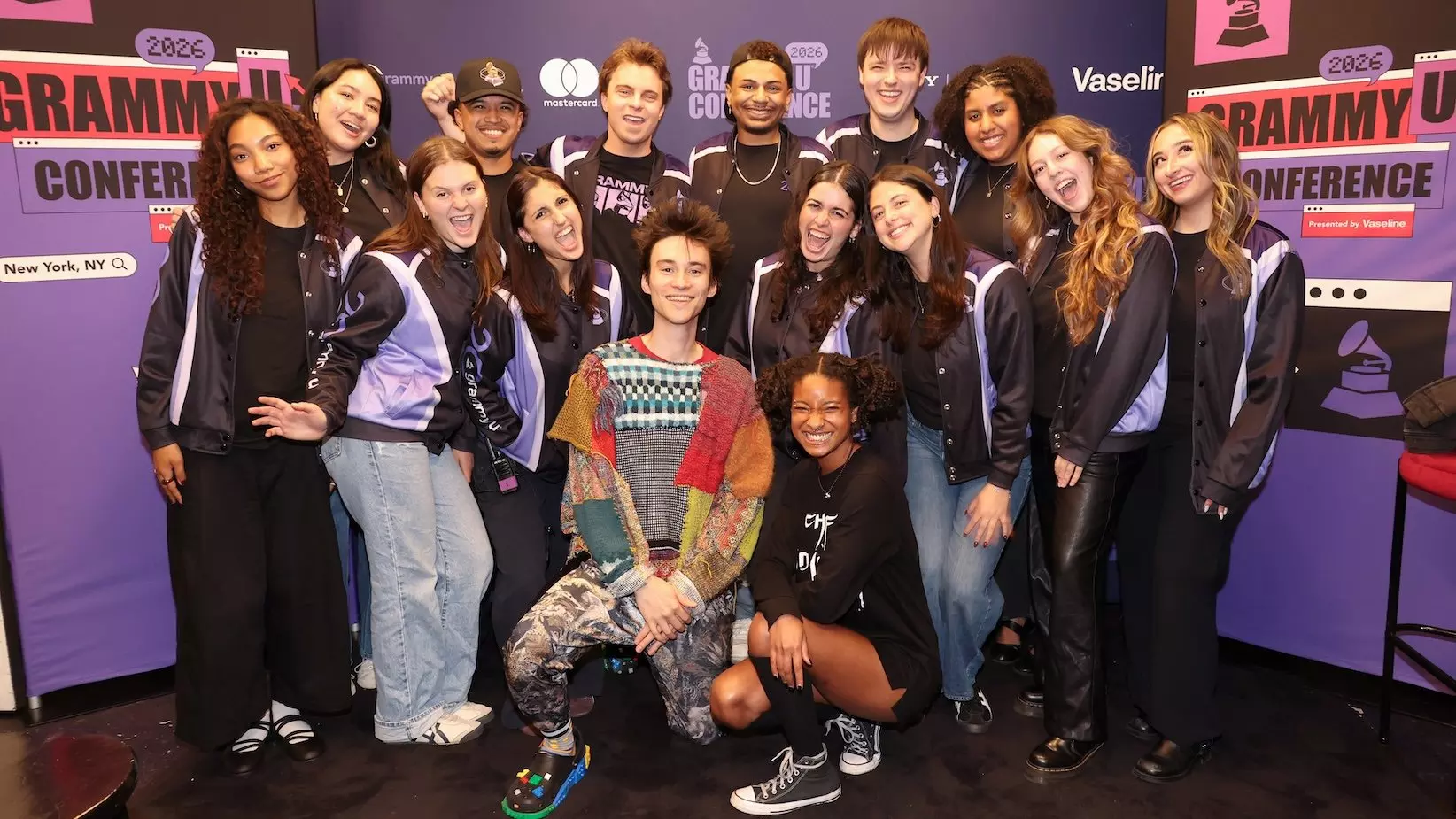

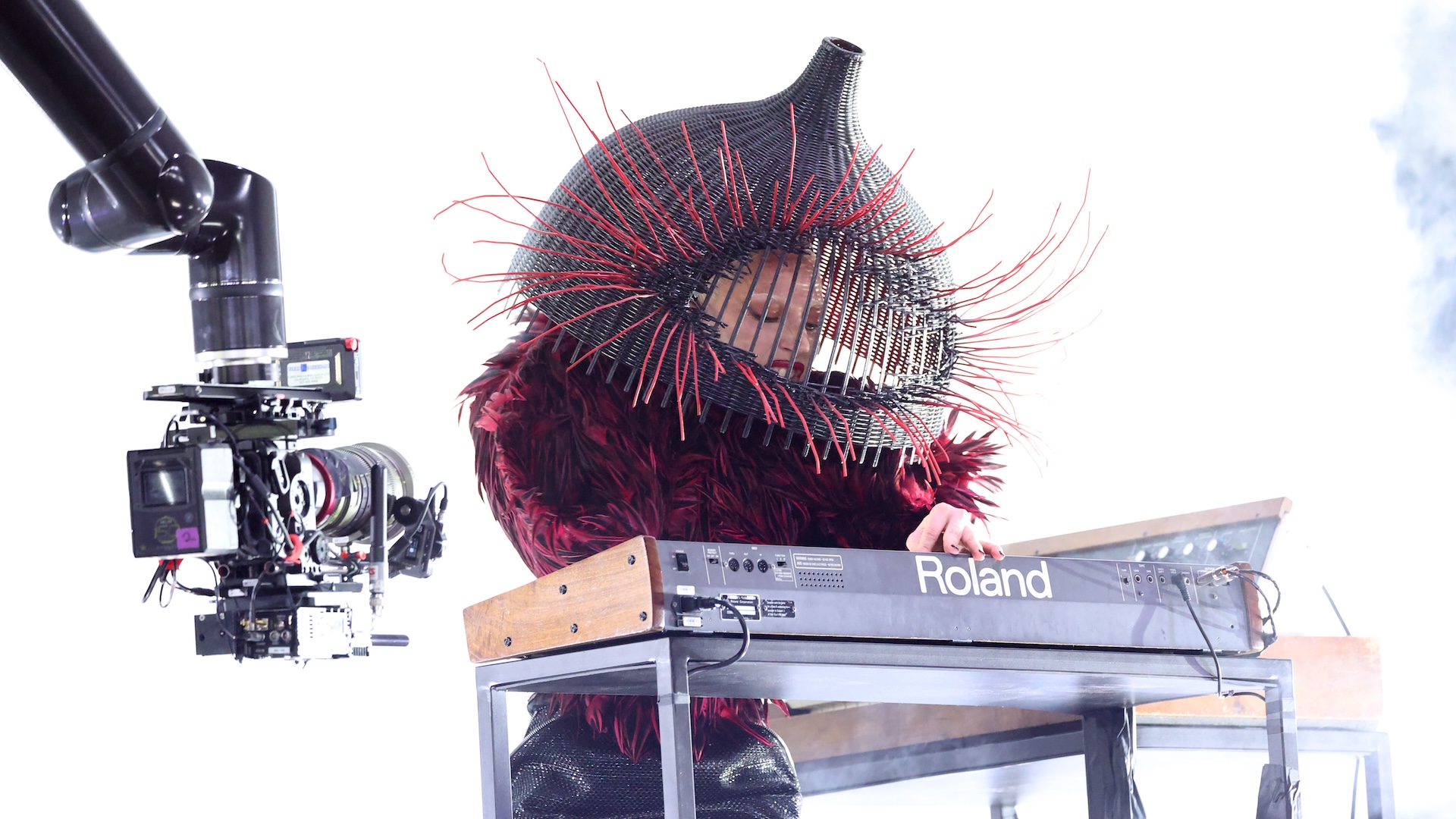
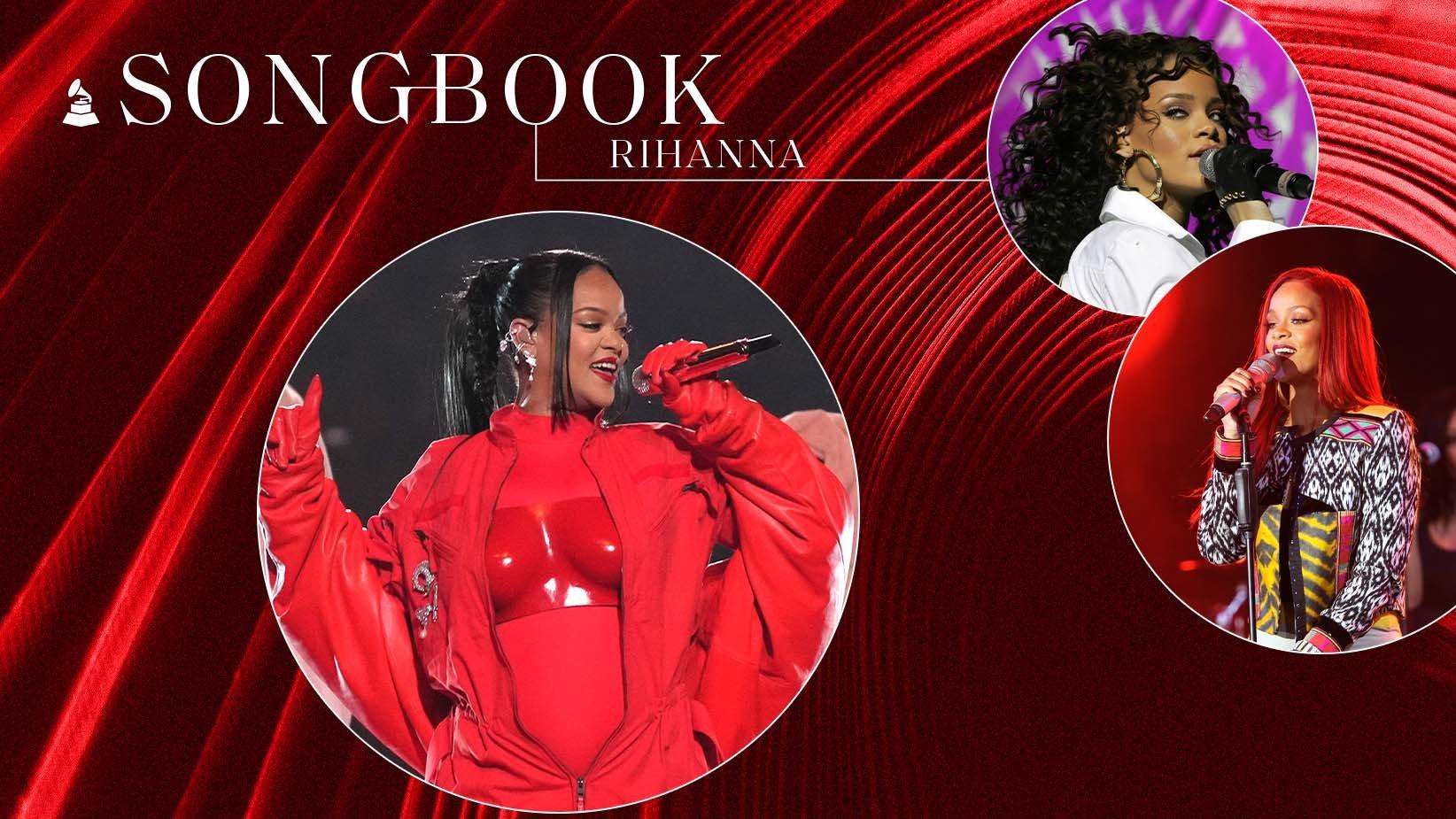
(L-R) Rihanna in 2023, 2006 and 2010.
Photos: Kevin Mazur/Getty Images for Roc Nation, Greetsia Tent/WireImage, Kevin Mazur/WireImage
Songbook: The Ultimate Guide To Rihanna's Reign, From Her Record-Breaking Hits To Unforgettable Collabs
As Rihanna's debut album, 'Music of the Sun,' turns 20, take a deep dive into the superstar's catalog and her evolution from teen idol to beloved icon.
GRAMMYs/Aug 29, 2025 - 01:14 pm
Editor's Note: This article was originally published on Feb. 20, 2024 and was updated on Aug. 29, 2025 to reflect the 20th anniversary of Music of the Sun.
A chance meeting changed Rihanna's life.
The singer was just 15 years old when she met producer Evan Rogers, who was vacationing with his wife in Barbados. Rogers recognized Rihanna's potential, and invited her to an audition in his hotel suite.
Shortly after her 16th birthday, Rihanna left her home country for the U.S. to record a demo, which included her breakthrough hit "Pon de Replay." The demo found its way into Jay-Z's hands, and Hov signed the teen artist to Def Jam and the label expedited her 2005 debut album, aptly titled Music of the Sun.
"When I left Barbados, I didn't look back," Rihanna told Entertainment Weekly in 2007. "I wanted to do what I had to do [to succeed], even if it meant moving to America."
Twenty years later, Rihanna is a renowned entertainer-turned-mogul. She has sold over 60 million albums worldwide, landed 14 Billboard Hot 100 chart-toppers, and won nine GRAMMY Awards. Even her business ventures have been a massive success, as her Fenty Beauty brand is worth nearly $3 billion as of press time.
Though it's been close to a decade since Rihanna's last studio album, 2016's ANTI, she reminded the world of her reign with her 2023 Super Bowl halftime show — which also marked her first time taking the stage in five years. Performing hit after hit while unveiling a baby bump, her 13-minute set became one of the most-watched halftime shows of all time with over 121 million viewers.
As the world eagerly awaits new music, celebrate 20 years of Rihanna with the monstrous hits, ambitious projects, brow-raising visuals, and iconic collabs that propelled her to international stardom — and why it's all put her in a league of her own.
A New Island Girl In Town
True to her Carribean heritage, Rihanna's dancehall-inspired debut single "Pon de Replay" earned the then 17-year-old Barbados native her first entry on the Hot 100 at an impressive No. 2. Her official introduction to the world also hit No. 1 on the Billboard Dance Club Songs chart; she boasts 33 on the tally, second behind only the Queen of Pop herself, Madonna.
Follow-up single "If It's Lovin' That You Want" stalled at No. 36 on the Hot 100, but still whetted fans' appetite — as did her debut album, Music of the Sun, which is mostly comprised of dance-pop and dancehall tracks with hints of R&B (like "Willing to Wait"). Plus, her reimagining of Dawn Penn's 1994 reggae classic "You Don't Love Me (No, No, No)" is still so fun to listen to after all these years.
A mere eight months later, Rihanna's sophomore effort, 2006's A Girl Like Me, arrived to an eager audience. Defying the sophomore slump, she celebrated her first No. 1 with the ubiquitous lead single "SOS," which famously samples Soft Cell's 1981 hit, "Tainted Love." While A Girl Like Me is filled with high-energy, danceable tracks (including the nostalgic "Break It Off" with Sean Paul), Rihanna's second single was the melodramatic ballad "Unfaithful."
Penned by then-labelmate Ne-Yo, "Unfaithful" peaked at No. 6 on the Hot 100. More importantly, it showed a different side to Rihanna, proving that she could channel deep emotion when the performance calls for it. It also marked Rihanna's first time veering away from her "girl next door" image, as the song's subject matter deals with infidelity.
A Girl Like Me contains many fan favorites, from the laid-back "We Ride" to standouts "Dem Haters" and "Kisses Don't Lie." The latter is a reggae-rock hybrid that sounds like a catalyst for some of Rihanna's edgier tunes like "Breakin' Dishes" from 2007's Good Girl Gone Bad era. Touching ballads"Final Goodbye" and "A Million Miles Away" showcase her voice beautifully, foreshadowing later big-vocal numbers like "Love on the Brain."
An Icon In The Making
Rihanna was a familiar face by 2007, but with the arrival of her third studio album, Good Girl Gone Bad, she graduated from cookie-cutter pop star to bonafide icon.
Produced by Tricky Stewart, the LP's juggernaut lead single "Umbrella" featuring Jay-Z skyrocketed to No. 1 in 17 countries. Between striking images of Rihanna's silver-painted silhouette in the accompanying video and the now-iconic "ella-ella, eh, eh, eh" hook, "Umbrella" thrust the then 19-year-old into another stratosphere. Her confident delivery also commanded attention in a way fans and critics hadn't heard before.
The transformative era also birthed the gritty "Shut Up and Drive," on which Rihanna channels her inner rock star. The next two singles cracked the top 10: an affectionate duet with Ne-Yo, "Hate That I Love You," which showed off Rihanna's softer side, and the party-starting, Michael Jackson-sampling "Don't Stop the Music," which cemented her place in the digital era.
The melancholy "Rehab" is a clever metaphor for lost love, co-written by Timbaland and Justin Timberlake. Despite being Good Girl Gone Bad's lowest-charting single, Timberlake heralded the song as "the bridge for her to be accepted as an adult in the music industry."
Good Girl Gone Bad remains Rihanna's best-selling album and marks her greatest reinvention as she adopted a more rebellious sound. She also won her first GRAMMY in 2008 (Best Rap/Sung Collaboration for "Umbrella") and scored four other nominations, including Record Of The Year. The album's reissue spawned two more No. 1s: "Take a Bow" and "Disturbia," the latter of which acts like a prelude to Rated R, which saw Rihanna exploring darker themes.
Nine months before the release of 2009's Rated R, Rihanna was assaulted by then-boyfriend Chris Brown. On the deeply personal album, she translated her pain into art. Through lead single "Russian Roulette" and bitingly catchy anthems "Stupid in Love," "Fire Bomb," "Photographs," "Cold Case Love," and "The Last Song," Rihanna explored her angst and confusion.
But to focus solely on the domestic violence incident undermines Rihanna's artistic vision.
Following three multi-platinum albums in a three-year span, Rihanna's rebranding as a rebel at heart reached its apex. The singer had grown in leaps and bounds while taking musical risks, even penning nine of Rated R's 13 tracks (she had no writing credits on Good Girl Gone Bad).
The road to Rihanna's most badass anthems — including "Bitch Better Have My Money" — can be traced back to Rated R. Case in point: Her bravado is loud and clear on "Hard," "Wait Your Turn," and "G4L." On "Rockstar 101," which features legendary rocker Slash, Rihanna declares her power: "Six inch walker/ Big sh— talker/ I never play the victim/ I'd rather be a stalker."
Badgal RiRi returned to her dancehall roots on her fifth No. 1 "Rude Boy," which offsets the album's harrowing motif. Final single "Te Amo" didn't chart, but garnered a great deal of attention as the Latin-infused Stargate production depicts Rihanna being enticed by a female love interest.
Rated R showcased Rihanna's undeniable star power, and allowed her to shed her good-girl image once and for all.
A Partygoer's Dream
Following the career-pivoting Rated R, 2010's Loud offered a welcome return to the West Indian artist's earlier sound. The album feels like one big celebration of life, as evidenced by Rihanna's fire-engine red hair and No. 1 singles "Only Girl (In the World)" and "What's My Name?" (the latter of which was Rih's first collaboration with Drake).
Best described as "Don't Stop the Music" 2.0, the effervescent "Only Girl" marked her eminent return to the dance floor and took home a GRAMMY for Best Dance Recording in 2011. While "What's My Name?" may not outshine Rih and Drizzy's other collabs — including 2011's "Take Care" or 2016's "Work" — the second she sings, "Hey, boy, I really wanna see if you can go downtown with a girl like me," it's impossible not to whine your waist to the riddim.
Easily one of Rihanna's most overlooked hits, "Cheers (Drink to That)" is built around an unexpected sample of Avril Lavigne's 2002 hit "I'm With You," but it works surprisingly well as a party anthem. That same carefree spirit can be heard in the feminist track "Raining Men," which features Nicki Minaj — their first of two collabs, as they joined forces again for "Fly," the final single off the rapper's iconic Pink Friday album.
A playful ode to sadomasochism and bondage, "S&M" contains some of Rihanna's most provocative lyrics: "Sticks and stones may break my bones/ But chains and whips excite me," she declares on the chorus.
Banned in 11 countries upon its release, the accompanying video features Rihanna tied up in pink rope, dancing with a blowup doll, and donning a Playboy bunny-esque costume as damning newsreels about herself flash across the screen. But Rihanna's love of kink made her an even bigger star: "S&M" produced a remix with Britney Spears and earned Rihanna her 10th No. 1 single. With this feat, she became the youngest artist to attain the most chart-toppers in a five-year span.
On "Man Down," Rihanna's patois is in full effect as she takes listeners through a gripping tale about murdering her abuser. "What started out as a simple altercation/ Turned into a real sticky situation," she laments in the opening verse, amplified by siren noises in the background. There's something so satisfying about Rihanna's Bajan accent as she unfurls "Rum-pum-pum-pum" repeatedly over an intensifying reggae beat that would make Sister Nancy and Bob Marley proud.
Nominated for Album Of The Year at the 2021 GRAMMYs, Loud is Rihanna's second most commercially successful LP — and for good reason. It was especially refreshing to see Rihanna emerge from one of the darkest periods of her life as exuberant as ever.
An Unapologetic Queen
Sonically and thematically, Talk That Talk doesn't break new ground, but Rih's DGAF attitude is front and center with plenty of sexual innuendos: Songs like "S&M" and "Rude Boy" seem pretty tame next to "Cockiness (Love It)," which features longtime friend-turned-boyfriend A$AP Rocky on its remix. "Suck my cockiness/ Lick my persuasion/ Eat my poison/ And swallow your pride down, down," she commands in the tantalizing chorus.
At just over a minute long, "Birthday Cake" leaves nothing to the imagination ("It's not even my birthday, but he wanna lick the icing off"). Rihanna controversially released a full-length version in the form of a remix with Chris Brown.
On an album that mostly sees Rihanna singing about her sexual fantasies, "We All Want Love" pulls back the curtain as it reveals her desire for true love: "And some say love ain't worth the buck/ But I'll give my last dime/ To have what I've only been dreaming about."
Her longing continues in "Where Have You Been," which flaunts Rihanna's versatility, flipping Geoff Mack's 1959 country song "I've Been Everywhere" into an infectious EDM banger. Lead single "We Found Love" is undeniably the biggest hit to stem from the Talk That Talk era, spending 10 consecutive weeks atop the Hot 100.
Boosting Calvin Harris' career, "We Found Love" presents one juxtaposition after the other: dark yet gleaming, euphoric yet sobering, fraught yet hopeful. Rihanna relies on more than just evocative lyrics to tell her story; accompanying synthesizers and alarm bells help to paint a picture as well. Met with controversy, its intense visuals portraying a drug-fueled, toxic relationship — and featuringwhat many speculated was a Chris Brown look-alike — earned RiRi a GRAMMY for Best Long Form Music Video in 2013.
Seven years into an already extraordinary career, 2012's Unapologetic became Rihanna's first album to debut at No. 1 on the all-genre Billboard 200 chart. Its lead single "Diamonds" resonated in an equally major way, giving Rih her 12th No. 1 on the Hot 100.
Written by Sia, the power ballad kicked off another exciting era for the Barbadian singer, who unleashes an impassioned vocal performance. One of Rihanna's most precious offerings to date, "Diamonds" emerged as a self-love mantra due to its uplifting "Shine bright like a diamond" chant.
Vocally, Rihanna's strength lies in her ability to evoke raw emotion à la "Stay." Featuring Mikky Ekko, the stripped-down, slow-burning piano ballad narrowly missed the top spot on the Hot 100 but gave Rihanna her 24th top 10 hit, surpassing Whitney Houston's record of 23 in 2013.
Her swagger is boisterous in "Phresh Out the Runway," "Jump," and strip club anthem "Pour It Up," but "Nobody's Business" really drives home the album's theme of being unbothered. Her decision to join forces with Chris Brown yet again perplexed fans and critics alike, though the track itself is an irresistible production that features a genius interpolation of Michael Jackson's "The Way You Make Me Feel."
Further down the track list, "Love Without Tragedy / Mother Mary" is as autobiographical as it gets, and further taps into Rihanna's emotionally vulnerable side. "Mr. Jesus, I'd love to be a queen/ But I'm from the left side of an island/ Never thought this many people would even know my name," she pleads in the seven-minute two-parter.
Unapologetic spawned fewer hit singles compared to Rihanna's previous efforts. Its win for Best Urban Contemporary Album at the 2014 GRAMMYs, however, proved that Rihanna's reign wasn't letting up anytime soon.
While recording her then-forthcoming album, ANTI, Rihanna delivered what is arguably the single most unapologetic moment of her career: "Bitch Better Have My Money." The backstory is almost inconceivable given Rihanna's awe-inspiring billionaire status, but in 2009, Rihanna faced bankruptcy due to her accountants mishandling her funds — and thus "Bitch" was born six years later in 2015.
With lyrics like "Your wife in the backseat of my brand new foreign car" over a cryptic-sounding trap beat and an accompanying video depicting kidnapping and torturing her debtors, "Bitch" is not for the faint-hearted. The one-off single is so quintessentially Rihanna that it notably kicked off her Super Bowl halftime show.
Loading...
An In-Demand Collaborator
While bestowing hit after hit on her own, Rihanna generously lent her distinct voice to some of her biggest peers. 2008 marks one of the earliest instances of her Midas touch: She flirts with funk in Maroon 5's underappreciated "If I Never See Your Face Again" before hopping on T.I.'s "Live Your Life," which shot straight to No. 1 on the Hot 100.
In 2009, Rihanna joined Jay-Z and Kanye West for the militant "Run This Town," sounding defiant as ever in the intro. She was called upon again for West's horn-laden "All of the Lights," flying solo on the hook followed by a star-studded choir that included Alicia Keys, John Legend, Fergie, and Elton John. Both larger-than-life productions won GRAMMYs for Best Rap/Sung Collaboration in 2010 and 2012, respectively.
In between joining forces with Hov and Ye, Rihanna assisted Eminem in "Love the Way You Lie," which struck a nerve with many for its gut-wrenching lyrics shedding a light on abusive relationships. (Rih recorded an equally moving sequel for her Loud album.) Three years later, the two confronted their inner demons in "The Monster," and their musical chemistry scored a GRAMMY in 2015 for Best Rap/Sung Collaboration.
Amid smash collabs, Rihanna and Coldplay's intricate "Princess of China" number gets lost in the shuffle, but it speaks to her charm as it's the band's first album (2011's Mylo Xyloto) to feature another artist. Another overlooked jam, her sultry "Can't Remember to Forget You" duet with Shakira sees both stars trade lines about struggling to let go of an undeserving lover.
On paper, a collaboration between Rihanna, Kanye West, and Sir Paul McCartney may seem strange, but the unlikely trio is further proof that opposites attract. Their "FourFiveSeconds" is a pop-folk hybrid with a universal message about carrying the weight of the world on your shoulders. It's yet another example of Rihanna's willingness to push past her comfort zone to create something unique.
A year later, Rihanna got listeners on their feet by way of the Taylor Swift-penned "This Is What You Came For" with Calvin Harris. Understated compared to the duo's previous megahits ("We Found Love" and "Where Have You Been"), Harris' signature DJing style and Rih's ethereal vocals are a perfect match.
In 2017, Rih, DJ Khaled and Bryson Tiller dropped the song of the summer with "Wild Thoughts," which heavily borrows from Carlos Santana's 1999 GRAMMY-winning "Maria Maria." It may be DJ Khaled's song, but RiRi owns it from the very moment she utters, "I don't know if you could take it/ Know you wanna see me nakey, nakey, naked." The bop reached No. 2 on the Hot 100.
She spits bars in Kendrick Lamar's "Loyalty" and "Lemon" with N.E.R.D., the latter of which comes close to rivaling your favorite rappers' verses: "You can catch me, Rih, in the new La Ferrar'/ And the truck behind me got arms/ Yeah, longer than LeBron/ Just waitin' for my thumb like The Fonz."
No matter what genre Rihanna touches or what artist she links up with, she brings her full self to each session whilst completely immersing herself into the music — taking on different personas to make the collab well worth it.
An Artist Fully Realized
With 13 No. 1s and twice as many top 10 hits under her belt, Rihanna set out to create timeless music instead of chasing a radio-friendly formula with her 2016 magnum opus, ANTI.
But that shift began with 2015's criminally underrated "American Oxygen." Her most political statement at the time, the goosebump-inducing lyrics detail Rihanna's journey as an immigrant, foreshadowing her then soon-to-be massive Fenty Beauty success. "We sweat for a nickel and a dime/ Turn it into an empire," she sings in the chorus.
Released four years after Unapologetic — her longest gap between albums at the time — ANTI illustrated Rihanna's greater desire for quality over quantity. "I needed the music to match my growth," she told Vogue in 2016 about the making of ANTI. "I didn't want to get caught up with anything the world liked, anything the radio liked, anything that I liked, that I've already heard. I just wanted it to be me."
The black-and-white, red paint-splattered album cover signals a rebirth, featuring a real-life image of Rihanna as a child. ANTI lives up to its name in its first 40 seconds, via opening track "Consideration." The minute she declares, "I got to do things my own way, darling," it's apparent that ANTI is not your average Rihanna album.
Lead single "Work" is the closest to pre-ANTI Rihanna on an album that defies expectations. But the dancehall masterpiece is one of a kind for Rih's refusal to water down the Jamaican patois (different from her native language of Bajan Creole) — proving that she is fully aware of her impact as one of the biggest Caribbean-born artists to make it in the U.S.
Many non-understanding listeners described it as "gibberish" at the time. Yet, the general public didn't seem to mind: About a month after its release, "Work" became Rihanna's 14th and longest-running chart-topper on the Hot 100. Weeks later, ANTI became her second LP to top the Billboard 200 chart. Subsequently, Rihanna held the No. 1 spots on the Billboard 200 and Hot 100 simultaneously, her second time achieving such an impressive feat.
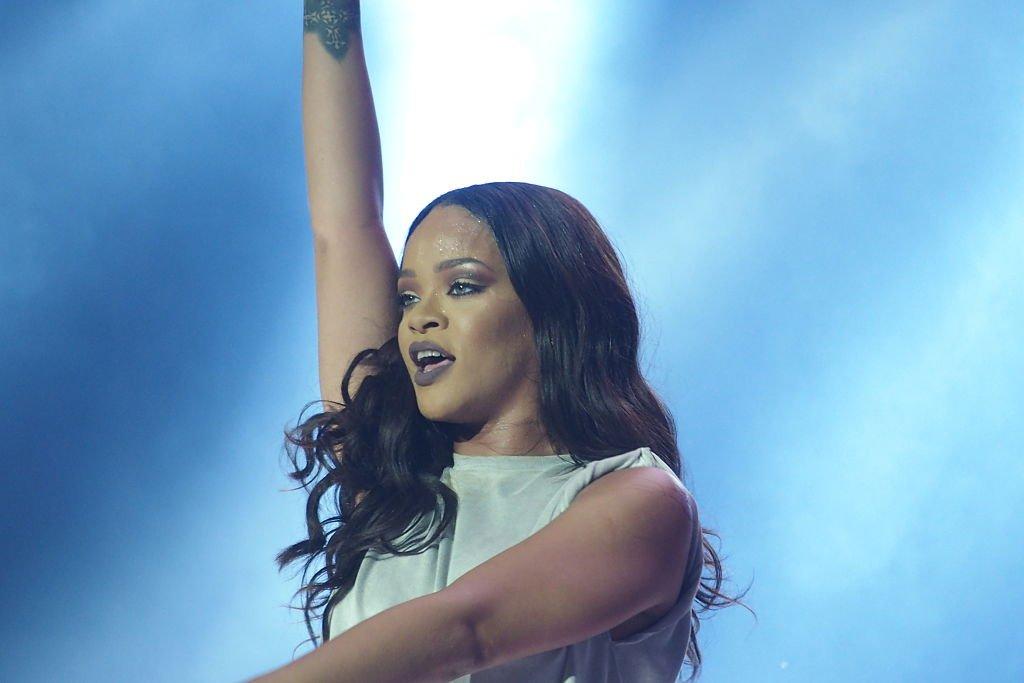
ANTI is full of pleasant surprises that show off her artistry. Rihanna comes out of left field with the Prince-inspired "Kiss It Better," the album's second single, which sees the superstar falling back on addictive sex that "feels like crack" to justify a destructive relationship. "Same Ol' Mistakes" is a cover of psychedelic rock band Tame Impala's "New Person, Same Old Mistakes" — her first time remaking another artist's song for her own album since "You Don't Love Me (No, No, No)" on Music of the Sun. The Western-themed "Desperado" lends itself particularly well to covers by country artists, while the Dido-sampling "Never Ending" conveys the uncertainty she feels about entering a new relationship.
Elsewhere on ANTI, Rihanna drunk dials an ex ("Higher"), compares smoking weed to her lover ("James Joint"), and chastises a guy for getting emotionally attached after their fling ("Needed Me"). The latter song contains one of Rihanna's most empowering lyrics: "Didn't they tell you that I was a savage?/ F— ya white horse and ya carriage," she asserts in the pre-chorus.
Her voice sounds stronger than ever on "Love on the Brain," a doo-wop ballad resembling Etta James. But Rihanna makes it her own thanks to the bluntness of lines like "It beats me black and blue but it f— me so good."
The deep cuts on ANTI aren't merely fillers, and even rival some of the album's biggest hits. For instance, "Sex with Me" is featured on the deluxe edition as a bonus track, but managed to crack the Hot 100 at No. 83 and reach No. 8 on the R&B/Hip-Hop Airplay chart. Furthermore, the deluxe edition consists of 16 tracks, half of which topped the Dance Club Songs chart — smashing the record (previously held by Katy Perry's Teenage Dream) for the most No. 1s from a single album.
Accolades aside, ANTI is proof that magic happens when an artist of Rihanna's caliber follows their own instincts in pursuit of creating a body of work — one that can outlast them and continue to inspire generations to come.
Ever since ANTI, Rihanna's devoted fanbase has been begging for a new album, with Rih playfully trolling them with responses like "I lost it" and Instagram captions that read, "Me listening to R9 by myself and refusing to release it."
Her much-awaited return to music came at the tail end of 2022. The hitmaker twice contributed to the GRAMMY-nominated Black Panther: Wakanda Forever soundtrack: "Born Again" and "Lift Me Up," the latter of which helped Rihanna score her first Oscar and Golden Globe nominations in 2022 and 2023, respectively. With the glorious "Lift Me Up," she found herself in the top 10 for the first time since 2017's "Wild Thoughts."
While the world is still anticipating her ninth studio album, Rihanna — now a mom of two boys — continues to make her own rules and move at her own pace. But as she's proven time and time again, it's always worth the wait.