Photo: Kevin Winter/Getty Images for The Recording Academy
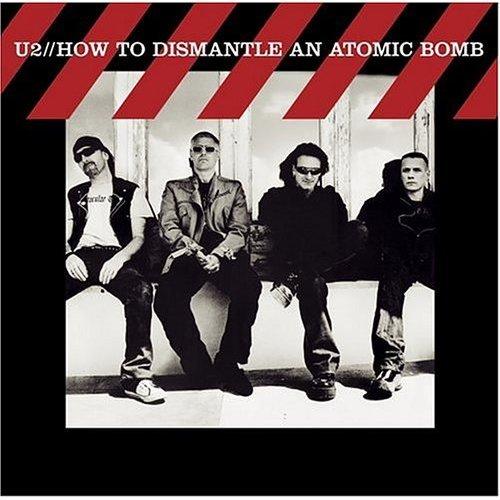
U2, How To Dismantle An Atomic Bomb
GRAMMY Rewind: 48th Annual GRAMMY Awards
U2 scores Album and Song Of The Year honors and John Legend is Best New Artist against these nominees
GRAMMYs/Oct 23, 2021 - 12:19 am
Music's Biggest Night, the 54th Annual GRAMMY Awards, will air live from Staples Center in Los Angeles on Sunday, Feb. 12 at 8 p.m. ET/PT on CBS.
In the weeks leading up to the telecast, we will take a stroll down music memory lane with GRAMMY Rewind, highlighting the "big four" categories — Album Of The Year, Record Of The Year, Song Of The Year, and Best New Artist — from past awards shows. In the process, we'll examine the winners and the nominees who just missed taking home a GRAMMY, while also shining a light on the artists' careers and the eras in which the recordings were born.
Join us as we take an abbreviated journey through the trajectory of pop music from the 1st Annual GRAMMY Awards in 1959 to last year's 53rd Annual GRAMMY Awards.
48th Annual GRAMMY Awards
Feb. 8, 2006
Album Of The Year
Winner: U2, How To Dismantle An Atomic Bomb
Mariah Carey, The Emancipation Of Mimi
Paul McCartney, Chaos And Creation In The Backyard
Gwen Stefani, *Love. Angel. Music. Baby.*
Kanye West, Late Registration
After trumping Michael Jackson's Bad for the Album Of The Year trophy in 1987, U2 cleared yet another hurdle by beating out one-fourth of the Beatles, 2012 MusiCares Person of the Year honoree Sir Paul McCartney [http://www.grammy.com/news/paul-mccartney-to-perform-at-2012-musicares-person-of-the-year-gala\]. How To Dismantle An Atomic Bomb, said to be the group's return to the big-anthem classics produced in the '80s, charted at No. 1 on the Billboard 200 and garnered seven additional GRAMMYs in 2004 and 2005, including Best Rock Song for "City Of Blinding Lights" and "Vertigo." Also making a comeback of sorts was Carey, whose 10th studio release, The Emancipation Of Mimi, won her three GRAMMY Awards, including Best R&B Song for the No. 1 hit "We Belong Together." In 1990 Carey won her first two GRAMMYs, including Best New Artist. For Chaos And Creation In The Backyard, produced by GRAMMY winner Nigel Godrich, McCartney returned to the one-man band style exhibited on his self-titled solo debut, playing nearly every instrument on the album from guitars and keyboards to bass and drums. Stefani earned a nomination for her solo debut effort, Love. Angel. Music. Baby. The album spawned four additional nods and featured her first No. 1 single as a solo artist, the infectious "Hollaback Girl." West's sophomore release, Late Registration, marked his second Album Of The Year nod (he also received recognition for production work on Carey's The Emancipation …). The album topped the Billboard 200 in 2005 and featured the No. 1 hit "Gold Digger."
node: video: U2 Win Album Of The Year

Record Of The Year
Winner: Green Day, "Boulevard Of Broken Dreams"
Mariah Carey, "We Belong Together"
Gorillaz Featuring De La Soul, "Feel Good Inc."
Gwen Stefani, "Hollaback Girl"
Kanye West, "Gold Digger"
Rock reigned supreme in the Record Of The Year category as Green Day won for their hit "Boulevard Of Broken Dreams." The track appears on American Idiot, which won the group a GRAMMY for Best Rock Album the year prior and gained them presence on Broadway when it was later made into a musical in 2009. Carey's "We Belong Together" skyrocketed to the top of several pop charts in 2005 and earned her two GRAMMY wins, including Best Female R&B Vocal Performance. Adding variety to the field was virtual hip-hop group Gorillaz with the viral "Feel Good Inc." featuring De La Soul. The track earned them a GRAMMY for Best Pop Collaboration With Vocals and a virtual duet with Madonna on the GRAMMY telecast. Stefani's "Hollaback Girl" scored a nomination with the help of GRAMMY-winning producers the Neptunes. West's "Gold Digger," which features Jamie Foxx sampling pieces from Ray Charles' "I Got A Woman," garnered the 14-time GRAMMY winner a win for Best Rap Solo Performance.
node: video: Green Day Win Record Of The Year
Song Of The Year
Winner: U2, "Sometimes You Can't Make It On Your Own"
Mariah Carey, "We Belong Together"
John Legend, "Ordinary People"
Rascal Flatts, "Bless The Broken Road"
Bruce Springsteen, "Devils & Dust"
The second Song Of The Year win for U2, the emotional "Sometimes You Can't Make It On Your Own," was written by Bono and U2, and also garnered the self-proclaimed best band in the world a GRAMMY for Best Rock Performance By A Duo Or Group With Vocal that year, beating out Coldplay, Foo Fighters, Franz Ferdinand, and the Killers. Carey's third nomination in the General Field was co-written with an all-star cast that included Johnta Austin, Babyface and Jermaine Dupri. Making his GRAMMY debut this year was Legend, who co-wrote "Ordinary People" with Black Eyed Pea will.i.am. The singer/pianist's debut studio album, Get Lifted, won a GRAMMY for Best R&B Vocal Album, a trophy that was replaced [link to: http://www.grammy.com/news/legend-gets-a-do-over\] in 2010 by The Recording Academy after an incident involving Legend's nephew. One of the first country groups in recent memory to receive a Song Of The Year nomination was Rascal Flatts' "Bless The Broken Road," written by Bobby Boyd, Jeff Hanna and Marcus Hummon. The track, previously recorded by the Nitty Gritty Dirt Band, won for Best Country Song. The final entry, Springsteen's self-penned "Devils & Dust," which appears on the No. 1 album of the same name, earned the Boss five GRAMMY nominations this year, including a win for Best Solo Rock Vocal Performance.
node: video: "Sometimes You Can't Make It On Your Own" Wins Song Of The Year
Best New Artist
Winner: John Legend
Ciara
Fall Out Boy
Keane
Sugarland
Neo-soul artist Legend, who made two big debuts in 2005 with his first studio album and first appearance at the GRAMMY Awards, picked up Best New Artist honors. Get Lifted also broke the Top 5 on the Billboard 200. Texas-native Ciara, named the "First Lady of Crunk and B" by producer Lil Jon, scored a nod. She also took home a Best Short Form Music Video GRAMMY for "Lose Control." Pop/punk outfit Fall Out Boy received their only GRAMMY nomination to date. The group's 2005 album, From Under The Cork Tree, peaked at No. 9 on the Billboard 200. Piano-driven pop/rock group Keane added more variety to the diverse field, and picked up a second nomination the following year for "Is It Any Wonder?" The second country act to garner a nod in the General Field was the then-trio Sugarland, featuring Kristian Bush, Kristen Hall and Jennifer Nettles. The group won a GRAMMY two years later for Best Country Performance By A Duo Or Group With Vocal — minus Hall —for the tear-jerker "Stay."
node: video: Carrie Underwood Wins Best New Artist
Come back to GRAMMY.com tomorrow as we revisit the 49th Annual GRAMMY Awards.
Follow GRAMMY.com for our inside look at GRAMMY news, blogs, photos, videos, and of course nominees. Stay up to the minute with GRAMMY Live. Check out the GRAMMY legacy with GRAMMY Rewind. Keep track of this year's GRAMMY Week events, and explore this year's GRAMMY Fields. Or check out the collaborations at Re:Generation, presented by Hyundai Veloster. And join the conversation at Facebook, Twitter, and YouTube.
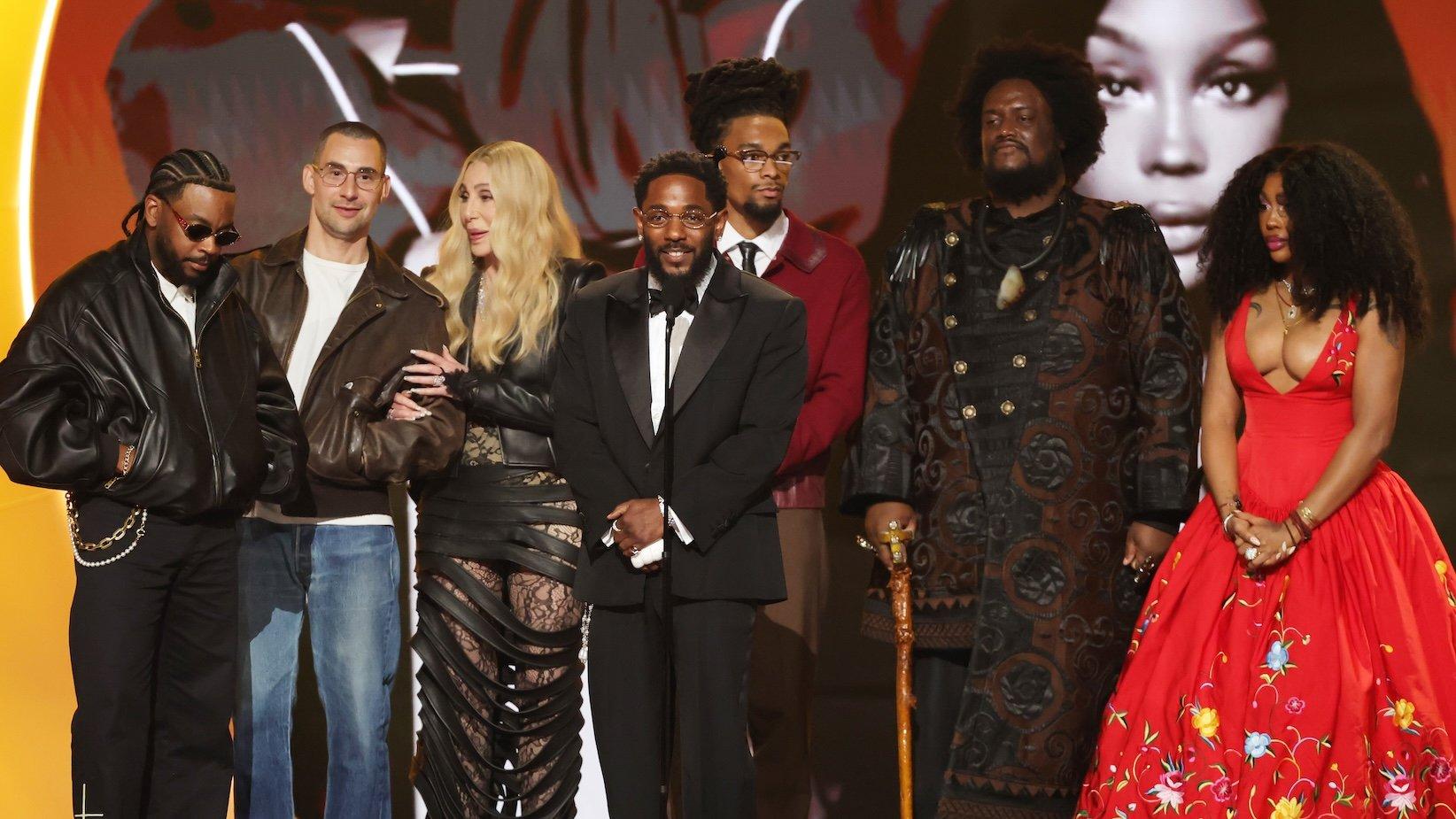
Kendrick Lamar and SZA win the Grammy for Record Of The Year at the 2026 Grammys on Sunday, Feb. 1, at Crypto.com Arena in Los Angeles, California. (L-R) Sounwave, Jack Antonoff, Cher, Kendrick Lamar, Scott Bridgeway, Kamasi Washington, and SZA.
10 Rappers Who Have Won The Most Grammys: Kendrick Lamar, Jay-Z, Eminem & More
From Jay-Z to Lauryn Hill, Grammy.com highlights 10 artists with the most Grammy Awards. Their impact, influence and innovation have helped shape the culture — and earned them an abundance of accolades.
GRAMMYs/Feb 2, 2026 - 01:18 am
Editor’s Note: Updated Sunday, Feb. 1, 2026, to reflect the results of the 2026 Grammys.
1989 was a year of many highlights, from the debut of "The Simpsons" and "Seinfeld" to the collapse of the Berlin Wall and the beginning of the Game Boy. It was also the first year hip-hop artists won Grammy Awards, an honor that went to D.J. Jazzy Jeff & the Fresh Prince for "Parents Just Don't Understand."
Hip-hop and the GRAMMYs have come a long way in the ensuing decades. While Will Smith and DJ Jazzy Jeff broke barriers with their win for Best Rap Performance, the duo boycotted the show because the rap Category was not televised. The boycott proved successful, as the genre Categories began to be televised during the following year, in 1990, and every year since then.
Read more: Who Are The Top GRAMMY Awards Winners Of All Time? Who Has The Most GRAMMYs?
Now, the Recording Academy celebrates the sounds of hip-hop and acknowledges the genre’s indelible impact; few genres have disrupted and defined music on such a global scale. Hip-hop rappers, producers, and songwriters have significantly shaped the musical landscape, garnering a bevy of Grammy Awards along the way. And although many artists have taken home Grammy Awards since ‘89, there are a few artists in the game who reign supreme.
Read on for 10 rappers who have won the most Grammy Awards
Kendrick Lamar
27 wins, 66 nominations
Loading...
Kendrick Lamar’s wins represent a return of “conscious” rap that tackles topics such as race and politics while embracing the art of authentic storytelling. As such, his 2015 album To Pimp a Butterfly gave way to many social justice anthems such as “Alright” and “Wesley’s Theory”; the release also took home the award for Best Rap Album at the 58th GRAMMY Awards.
Further reading: Kendrick Lamar's GRAMMY Timeline: From His First Win And Performances To "Not Like Us"
Additionally, Lamar’s most successful album, DAMN — which features hits like “DNA" and “Humble" — won five GRAMMYs Awards. At the 2025 Grammys, the rapper's hit single “Not Like Us” swept its Categories. Among Lamar's wins that night were Record Of The Year, Song Of The Year and Best Music Video. At the 2026 Grammys, he won the Grammy for Record Of The Year for “luther,” Best Rap Album for GNX, Best Rap Song for “tv off,” Best Melodic Rap Performance for “luther,” and Best Rap Performance “Chains & Whips” (his collaboration with Clipse), breaking the record for the rapper with the most Grammy wins.
Learn more: Kendrick Lamar Sweeps The 2025 GRAMMYs With Song Of The Year Win
Kendrick Lamar’s influence extends to broader cultural events, such as his groundbreaking 2025 Super Bowl halftime show. The show set a record for viewership and became one of the most-watched halftime shows since the Super Bowl’s inception, surpassing 130 million views.
Jay-Z
25 wins, 89 nominations
Loading...
Rapper and business mogul Jay-Z not only holds the record of having the most GRAMMYs of any hip-hop artist, he is also among the most nominated artists of any genre in GRAMMY history.
The rapper’s GRAMMY wins include Best Rap Album, which he won in 1998 for his album Vol. 2…Hard Knock Life. The album, which was nominated for two additional GRAMMYs, was his highest selling and included songs such as “Hard Knock Life” and “Can I Get A…” featuring Ja Rule and Amil.
Learn more: Songbook: How Jay-Z Created The 'Blueprint' For Rap's Greatest Of All Time
In 2006, Jay-Z made his musical debut at the GRAMMYs when he performed “Numb/Encore” with Linkin Park and “Yesterday’ with Paul McCartney. From solo hits to collabs with some of the most legendary artists in music, Jay-Z has dominated the GRAMMYs and shows no signs of slowing down.
Read more: 8 Ways Jay-Z's 'The Black Album' Changed The Hip-Hop Game
His influence was further acknowledged In 2024, when he was bestowed with the prestigious Dr. Dre GRAMMY Global Impact Award. In June 2025, his debut album Reasonable Doubt was inducted into the GRAMMY Hall of Fame. Not only has he been instrumental in East Coast hip-hop, he has had a hand in shaping fashion and other societal pillars on a global scale, opening doors for artists to go beyond music and branch off into other ventures.
Kanye West
24 wins, 76 nominations
Loading...
Kanye West has the second most GRAMMYs of any hip-hop artist, with 24 awards and 76 nominations. His GRAMMY accolades in multiple fields and Categories highlight his versatility as an artist: such as Jesus is King (Best Contemporary Christian Music Album) and The College DropOut (Best Rap Album), the latter of which was his first GRAMMY win in 2004. His awards also reflect his work as a producer; his GRAMMY wins in this arena include Best R&B Song for Alicia Keys’ hit “You Don’t Know My Name,” which West also co-wrote.
West also took home a golden gramophone Best Rap Solo Performance for the hit song "Gold Digger" with Jamie Foxx. At 2008 GRAMMYs, he performed his hit “Stronger” alongside Daft Punk, complete with illuminated, futuristic visuals. In all, Kanye has pushed boundaries with music and art, sampling songs and turning performances into experiences.
Eminem
15 wins, 47 nominations
Loading...
Eminem’s influence in the industry is evident not only by his chart-topping hits, but also by the number of golden gramophones he has secured. The Detroit rapper, who has effortlessly merged lyrical skill with shock, is both among the best-selling artists of all time and the rapper with the most GRAMMY awards.
Further reading: Songbook: A Deep Dive Into Eminem's Inimitable Career
He is also the only rapper who has won the award for Best Rap Album for three consecutive LPs. Eminem won his first GRAMMYs for The Slim Shady LP; these awards include Best Rap Solo Performance ("My Name Is"), as well as the award for Best Rap Album. 2000's The Marshall Mathers LP, which features "The Real Slim Shady" and "Forget About Dre," won three GRAMMY Awards/ The album also features Eminem's hit song "Stan," which the artist performed at the GRAMMYs as a duet with Elton John.
Read more: 4 Reasons Why Eminem's 'The Slim Shady LP' Is One Of The Most Influential Rap Records
Pharrell Williams
13 wins, 39 nominations
Pharrell Williams' versatility as a rapper, producer, pop artist and songwriter has garnered 13 GRAMMY wins. His awards showcase different facets of his artistry, from his days as a member of the group the Neptunes, to his work as a solo artist and producer.
From Beyoncé to Britney Spears, he has worked with a range of artists and has thrice taken home the golden gramophone for Producer Of The Year, Non Classical. Highlighting his production work, Pharrell's first GRAMMY was for producing Justin Timberlake’s 2003 album Justified. His collaboration with Daft Punk spawned the popular hit "Get Lucky," which won GRAMMYs Awards for Record Of The Year and Best Pop Duo/Group Performance.
As an artist and producer, Pharrell is able to blend pop and hip-hop effortlessly. Pharrell’s "Happy," from the Despicable Me 2 soundtrack, took home two GRAMMY Awards (as well as an Oscar nomination) and became one of the best-selling singles of the 2010s. Though Pharrell’s ingenuity has opened doors for him to work with an array of artists, he still holds hip-hop in high regard. In recent years, his work on Kendrick Lamar’s albums has spawned several GRAMMYs and nominations–including a win for Kendrick’s song "Alright" off of his album To Pimp a Butterfly.
Learn more: 4 Ways Pharrell Williams Has Made An Impact: Supporting The Music Industry, Amplifying Social Issues & More
Andre "3000" Benjamin
9 wins, 28 nominations
Andre 3000’s innovative sound and style has pushed creative boundaries in music and netted multiple GRAMMY Awards. Andre 3000's wins and nominations–in both rap and R&B–reflect his work as a solo artist and as part of the group OutKast. His wins include Best Rap Album for Stankonia, as well as Best Urban/Alternative Performance for the hit song "Hey Ya," off of the Speakerboxxx/The Love Below album. Additionally, Andre 3000 has also won a GRAMMY for Best R&B Performance for his feature on Anderson .Paak’s song "Come Home."
His versatility as an artist is evident on his recent instrumental jazz album, New Blue Sun, which earned him three nominations at the 2025 GRAMMYs. Additionally, this album showcases a departure from some of the sounds Andre 3000 is known for, and shows audiences that he is unafraid to challenge musical conventions.
Read more: André 3000 On 'New Blue Sun,' Finding Inspiration In Visual Art & His New Musical Journey
Anderson .Paak
9 wins, 14 nominations
Loading...
Although Anderson .Paak is best known for his contributions to R&B, he has netted GRAMMYs for his work as a rapper. He won his first GRAMMY for "Bubblin," a song which took home Best Rap Performance at the 2019 GRAMMYs. At the 2021 GRAMMY Awards, he won Best Melodic Rap Performance for his single "Lockdown." Additionally, he has also secured multiple GRAMMY wins as part of the R&B duo Silk Sonic with Bruno Mars.
The group’s best-selling album, An Evening With Silk Sonic, features the hit song "Leave the Door Open" and brings together R&B and funk. The melodious genre mix ultimately earned the group GRAMMYs for Best R&B Performance and Record Of The Year.
As a solo artist, Anderson .Paak has also carved out a distinctive and celebrated career, earning multiple GRAMMYs for his genre-bending albums that showcase his unique blend of singing and rapping.
Lauryn Hill
8 wins, 19 nominations
Loading...
Lauryn Hill has established a benchmark for female artists in hip-hop, setting an exceptionally high bar that many artists still aspire to reach.
Her seminal 1998 album, The Miseducation of Lauryn Hill, achieved widespread critical acclaim before becoming one of the best-selling albums of all time. Additionally, it is the first hip-hop album to win a GRAMMY for Album Of The Year. The album ultimately launched Lauryn Hill’s career into the stratosphere; she became the first female rapper with a diamond-certified album. It is also the only solo album Lauryn has put forward to date. In 2024, the album was inducted into the GRAMMY Hall of Fame.
Although Lauryn Hill’s artistry and lyrical depth has garnered her GRAMMYs as a solo artist, her success also stems from her contributions as a songwriter and vocalist for the hip-hop group the Fugees. The group’s second album, The Score, earned two GRAMMYs and includes the hit song "Killing Me Softly," which is a rendition of Roberta Flack’s original.Additionally, at the 42nd GRAMMY Awards, Lauryn Hill also won a GRAMMY for her work on Santana’s influential album Supernatural, which was inducted into the GRAMMY Hall of Fame this year.
Dr. Dre
7 wins, 26 nominations
Loading...
Dr. Dre was and remains a highly influential figure in West Coast hip-hop, who has achieved significant success as a rapper, producer and founding member of the group N.W.A.
Throughout his extensive career, Dr. Dre has earned seven GRAMMYs, including the first win for Producer Of The Year, Non-Classical by a hip-hop producer and artist.
His acclaimed solo album, The Chronic garnered Dr. Dre his first GRAMMY for his single "Let Me Ride" (Best Rap Solo Performance). His best-selling album 2001, was also GRAMMY nominated and features popular tracks like "Still D.R.E." and "The Next Episode" with Snoop Dogg. Beyond his solo achievements, he has been instrumental in launching the careers of artists such as Eminem and producing classic albums for both Snoop Dogg and 50 Cent.
In 2023, Dr. Dre was honored with having the distinguished GRAMMY Global Impact Award carry his namesake. Since the award’s inception, Jay-Z and Alicia Keys have received this accolade.
OutKast
6 wins, 16 nominations
Loading...
OutKast’s creative approach to hip-hop has helped them win six GRAMMYs and secure 16 nominations. The duo of Andre "3000" Benjamin and Antwan "Big Boi" Patton, have pushed genre boundaries blending rap, jazz, and pop while staying true to their Southern roots. In 2001, OutKast won their first GRAMMY Awards, one being Best Rap Album for Stankonia.
Their 2004 win for their innovative double album Speakerboxxx/The Love Below was a defining moment for Southern rap; it notably became the second hip-hop album to receive the GRAMMY for Album Of The Year and Best Rap Album. The album, which was certified diamond, features multiple chart-topping hits such as "The Way You Move" featuring Sleepy Brown and "Hey Ya."
Honorable Mentions
There are many hip-hop artists who have received extensive nominations but have yet to receive a GRAMMY Award — notwithstanding their important contributions to the genre. Snoop Dogg, Busta Rhymes, Nicki Minaj, Travis Scott and Rick Ross each have numerous nominations but no golden gramophone. Snoop leads this pack with a total of 16 nominations, followed by Busta and Minaj (each with a dozen), Scott (10), and Ross (nine). Post Malone stands out, however, with 18 career nominations and no wins.
2026 Grammys: Performances, Winners & Highlights
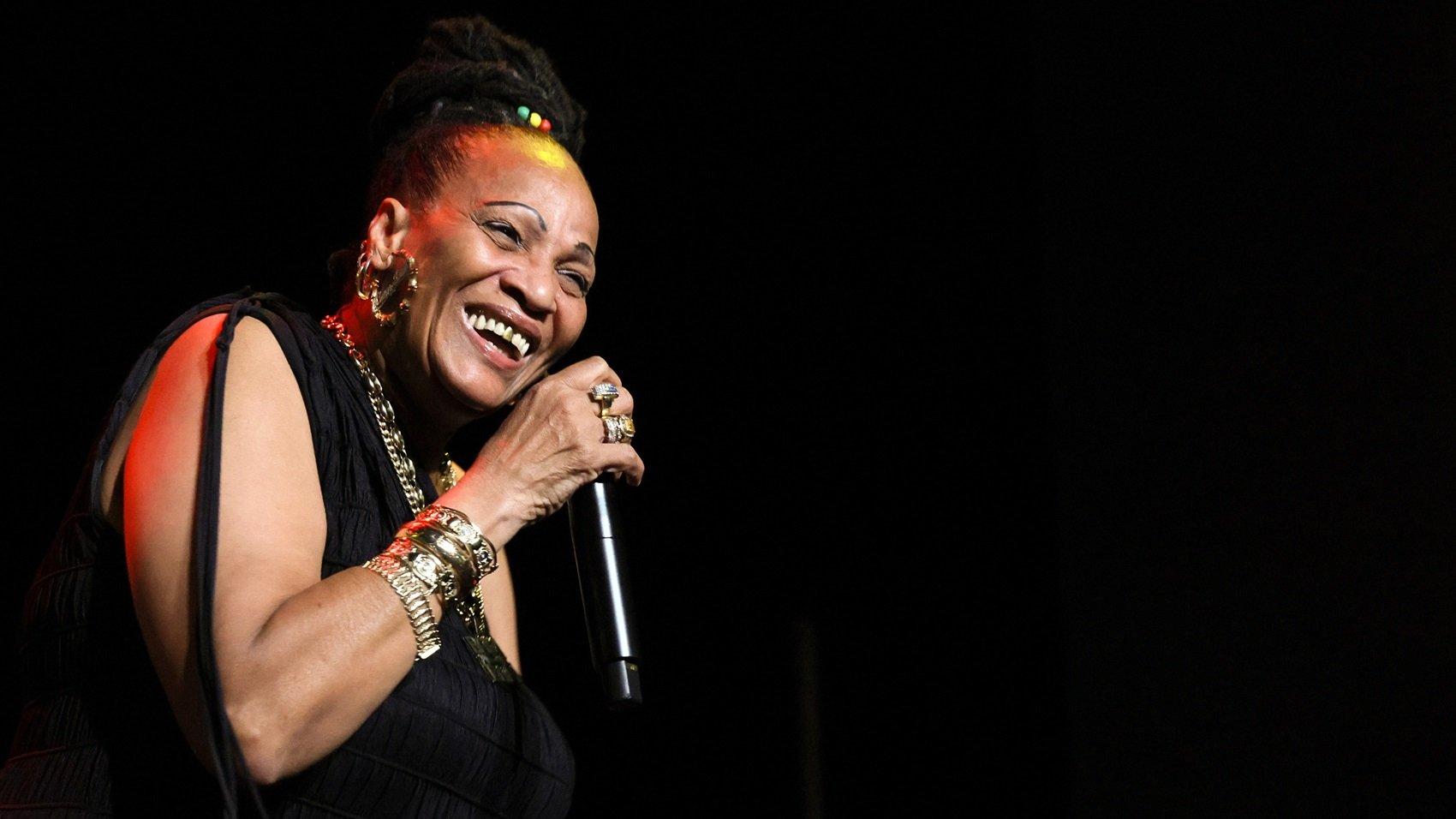
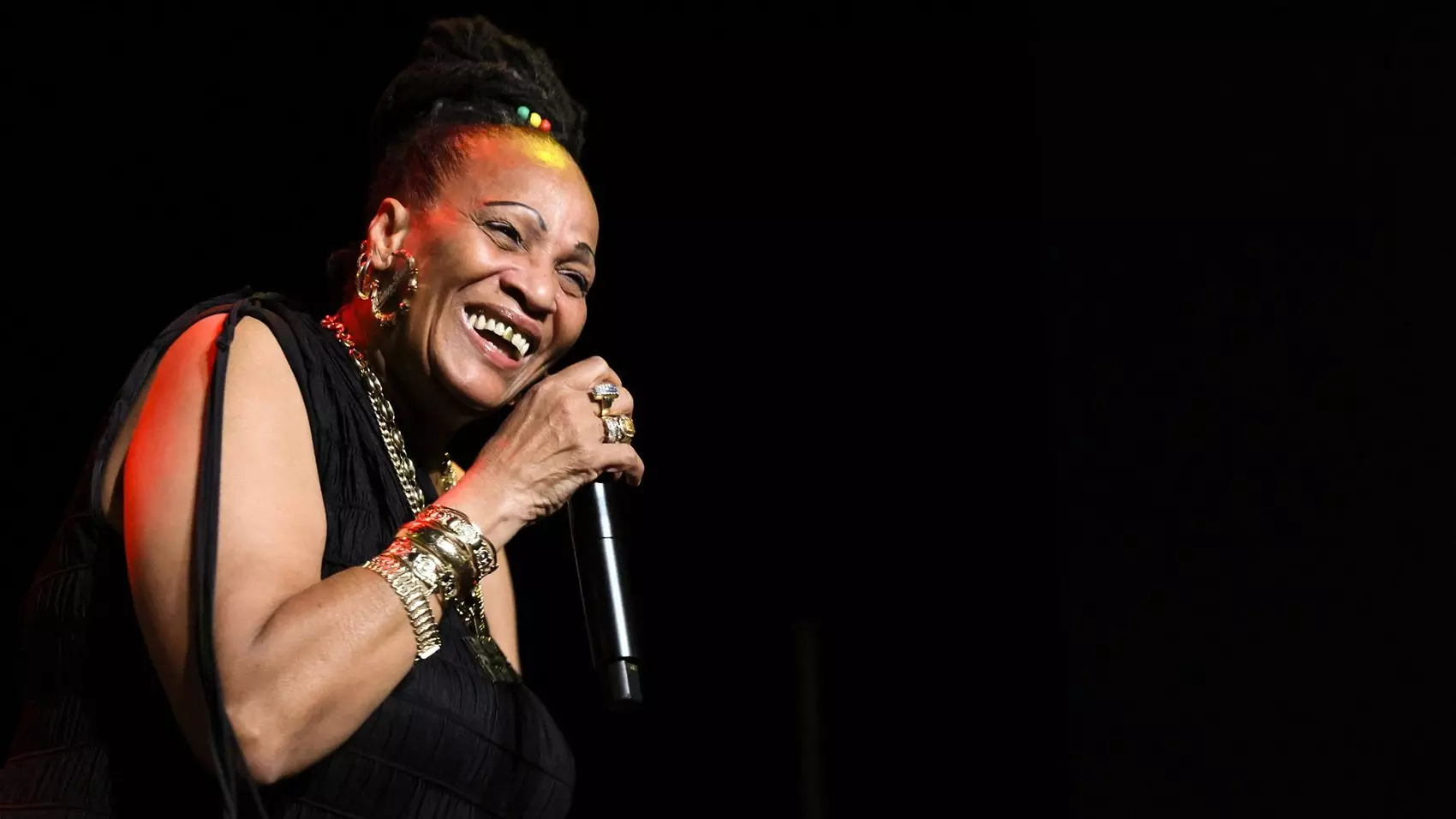
Sister Nancy performs at the premiere of 'Bam Bam: The Sister Nancy Story' during the 2024 Tribeca Festival.
Photo: Dia Dipasupil/Getty Images for Tribeca Festival
Sister Nancy Talks "Bam Bam," Why She Loves Jay-Z & Longevity In Reggae
The past 12 months have been some of the busiest in the Jamaican singer's career, and she has no plans to slow down. "As long as my voice is heard, I am going to be doing that. Because there ain't no stopping Sister Nancy."
GRAMMYs/Oct 31, 2025 - 02:46 pm
Sister Nancy is racing around New York City, sharing her "truths and rights."
The first lady of dancehall has just left an interview at radio station Power 105 and is en route for a number of back-to-backs. She's promoting a documentary about her journey — "it's not a story, it's my life," she clarifies — called Bam Bam: The Sister Nancy Story. In August, she released a new Mad Professor-produced album, Armageddon — her first LP in over 20 years. In December, Nancy will headline a celebration of her career featuring female artists including Renée Neufville.
This hustle isn't unusual for Nancy — the Kingston, Jamaica-born MC has been performing since she was a teenager, when she was mentored by her brother Brigadier Jerry — though the amount of activity and acclaim is something slightly more recent. The past 12 months have been the busiest of Sister Nancy's 45-year career.
"People love what I stand for. I always give [the audience] something they can think about," Sister Nancy tells GRAMMY.com, Zooming in from a car in Midtown Manhattan. "I will never be your ordinary thing. When you come to see me, it doesn't matter the time or the space, it's always going to be good."
While Sister Nancy needn't be reminded of her influence — "I'm the woman who created dancehall … on the mic system, around the sound system. I'm the one who did all of that, first" — the past 15 years have seen the artist receive her flowers on a global stage. In addition to her status as a rare female voice in a sea of male performers at the dawn of dancehall, Sister Nancy is recognized for her influential, highly sampled single "Bam Bam."
She recorded the early dancehall anthem in 1982 when she was just 20 years old as a last-minute addition to her debut album, One, Two. An interpolation of Toots and the Maytals' 1966 song of the same name, Sister Nancy's in-studio freestyle was laid over sparse rub-a-dub production, allowing her declaration of ambition and skill to ring loud and clear.
"I went with Yellowman to Harry J's Studio. Yellowman did a 'Bam Bam,', and I had to finish my One, Two album, and I just said I am going to do a tune like Yellowman did. And I did 'Bam Bam,' my way," Nancy recalls. "I just made up in the studio right there."
Remarkably, "Bam Bam" was far from an instant classic and received little airplay in Jamaica. Sister Nancy wouldn't perform the song on a Jamaican stage for eight years, until she featured at 1990's Sting competition. Yet the song made its way to the States, where it found popularity in New York, New Jersey and Connecticut's Caribbean diaspora and caught the ear of hip-hop innovators of the '80s.
Sister Nancy's grooving refrain and undulating horns from an Ansel Collins riddim have been widely sampled in the four decades since its release. Multiple sources consider it the most sampled reggae song ever (WhoSampled.com counts 155 samples), with Beyoncé, Madlib, Run D.M.C., Lauryn Hill, Chris Brown, Alicia Keys, Ariana Grande, and Buju Banton and many others pulling from Nancy's crisses lyrics. It's been used in film and television, including prominently in 1998's Nas- and DMX-featuring Belly.
"I didn't hear it play in Jamaica. I didn't know how big it was at all. I just didn't hear it at all," Nancy recalls. "And remember, I had songs before that like 'One, Two' and 'Transport Connection'; they were playing, but I didn't hear 'Bam Bam' until I come to the U.S."
Sister Nancy moved to New Jersey with her daughter in 1996, and worked as an accountant in a bank. She never stopped performing, and while Sister Nancy traveled as far as Israel to sing, she was often relegated to multi-artist bills — and not in the largest text. She was known and respected among those in the diaspora and by folks with a crate-digging sensibility, but wider recognition remained somewhat elusive.
Still, Nancy kept her spirits up, locking into her faith and sense of humor. "The inspiration [comes] from almighty God himself,” she says. “You can't be a sulky person and I don't believe in that. I like to make people laugh."
Like many artists of her era who either had bad contracts or no contract at all, Sister Nancy did not benefit from the popularity of "Bam Bam" for the majority of her career. Nancy was largely unaware of its popularity as a hip-hop sample, and didn't receive royalties for the tune (itself owned by producer Winston Riley, who died in 2012). Things came to a head in 2014, when Nancy's daughter shared that "Bam Bam" was used in a Reebok commercial. After that, there was no stopping Sister Nancy.
"I just couldn't take no more. I just say it's time for me to be compensated, and I just did what I had to do," the icon says of her legal battle for royalties. "It was not a difficult process. I just did the right thing and everybody who was involved just complied, and I was satisfied."
In 2016, Sister Nancy received 10 years of back royalties as well as royalties going forward, which allowed her to retire from the bank and pursue music full time. She encourages artists in similar binds to find an attorney who's familiar with their work.
"The attorney that I got told me that he and his wife was my biggest fans, so it was easy for him to really work for me," she says, adding, "I don't go for no young lawyer because they have name. Get people with experience to fight for you."
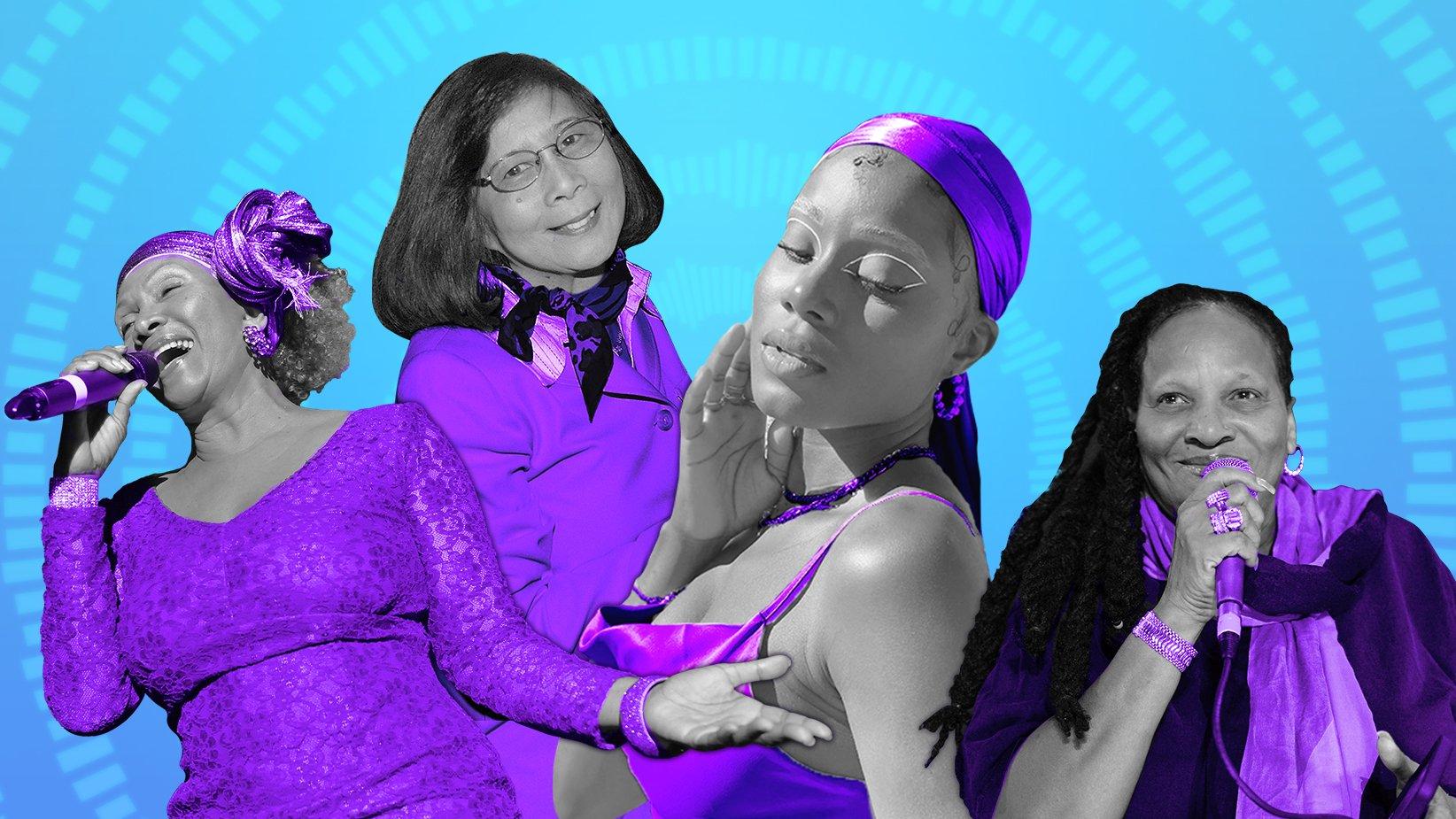
With her rights restored, Sister Nancy's trajectory changed dramatically in the latter half of the 2010s — due in no small part to nods and samples from two of hip-hop's biggest artists. Kanye West prominently sampled "Bam Bam" in the Rihanna-featuring "Famous"; Nancy's chorus comes in midway through the song, adding an ethereal quality to West's braggadocio. "Famous" was nominated in multiple Categories at the 2017 GRAMMYs, including for Best Rap Song.
Of the many, many samples and interpolations of her work, Sister Nancy is unequivocal about who delivered her favorite: Jay-Z
For his 2017 single "Bam" featuring Damien Marley — off the GRAMMY-nominated 4:44 — Jay-Z not only sampled "Bam Bam," but worked with Nancy directly. After hearing Nancy on Hot 97's "Ebro In The Morning," Jay-Z flew the legend to Jamaica to sing and feature in his hybrid music video-documentary. That direct connection, a deferential gesture, was not lost on Sister Nancy.
"That's the best one. I'd rather work with him than anybody, it's because he did the right thing. He took me with him. I appreciate that," Sister Nancy says of Hova. "I have a respect for him because he chose to go with me and do it the right way. The rest of them just went behind my back."
In the years since, Sister Nancy has continued to thrive. She's performed on global stages and can be seen regularly at New York hotspots such as Union Pool, Public Records, and S.O.B.'s. Janelle Monáe featured Nancy not once but twice on 2023’s Album Of The Year-nominated The Age Of Pleasure, and sampled "Bam Bam" on “Water Slide." In further recognition of her impact, Burberry asked Sister Nancy to participate in their spring/summer 2024 campaign, which was shot in Jamaica.
She continues to release new music of her own, though she believes in letting projects simmer before embarking on something new. Armageddon —her first full-length since 2001's Sister Nancy Meets Fireproof — was released this summer, seven years after it was recorded with Mad Professor in the U.K. "Mad Professor is someone I look up to. He's a genius, and I love working with him," Sister Nancy adds. "He remind me of [Jamaican dub pioneer] King Tubby. "
While Sister Nancy's icon status has long since cemented, she remains committed to performing. She's one of few women of her generation to do so; peers like Sister Carol and Marcia Griffiths continue to share their messages in a reggae style, though with less frequency than Sister Nancy. Her presence on record and on stage has inspired generations of singers and DJs.
"If someone can patronize you or learn from what you're doing, it makes it worthwhile," Nancy says. "I'm going to do that as long as I can talk. As long as my voice is heard, I am going to be doing that. Because there ain't no stopping Sister Nancy."
More than 40 years later, she's still happy to discuss and play that single she recorded back in Kingston as a young woman. "I have to appreciate 'Bam Bam.' I have no problem talking about it because it's mine. I did the song, so I'm not tired of talking about it. I'm not tired of playing it either," Sister Nancy says. " I love it. That's my voice. I made that."
More Reggae News

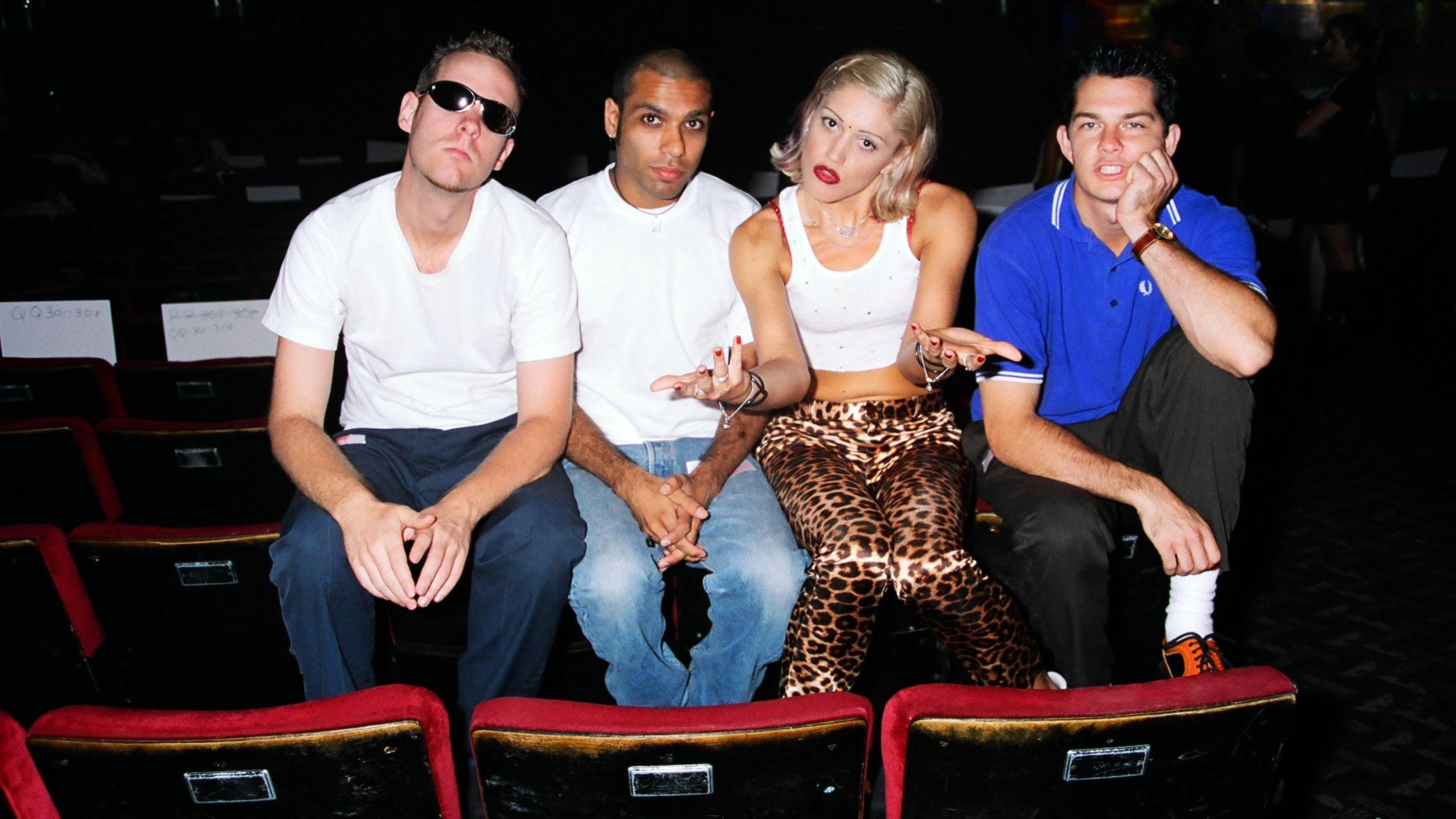
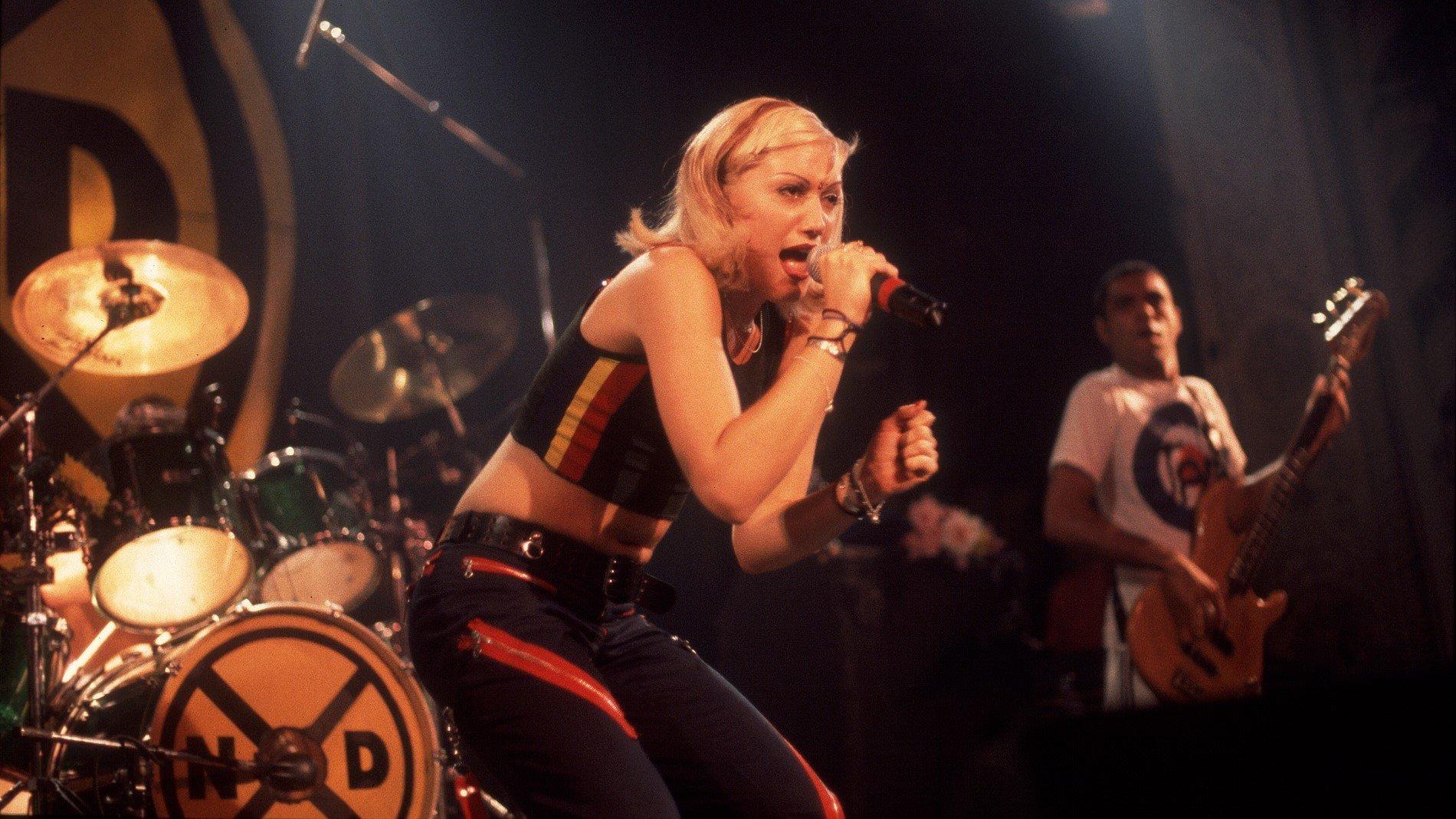
Tom Dumont, Tony Kanal, Gwen Stefani and Adrian Young of No Doubt
Photo: Jeff Kravitz/FilmMagic
Revisiting 'Tragic Kingdom' At 30: Why No Doubt's Masterpiece Stands The Test Of Time
The 1995 breakthrough netted canonical hits such as "Just a Girl," "Don't Speak" and "Spiderwebs" — as well as multiple GRAMMY nominations.
GRAMMYs/Oct 9, 2025 - 03:24 pm
"Just A Girl" Remains A Timeless Feminist Anthem
Although No Doubt was never part of the ‘90s riot grrrl movement and Gwen Stefani has never publicly claimed to be a feminist — in 2021 she told Paper Magazine, "I don’t even know if I knew what feminist at that time was" — "Just a Girl" remains relevant and influential. So much so that, in 2019, Marvel Studios’ Captain Marvel used the song when Brie Larson’s character finally learns to harness her strength, empowering her to defeat the bad guys.
"Just a Girl" is a snarky song that speaks to women being fed up with the patriarchal rules that limit personal autonomy and freedom — a feeling women still experience on a daily basis. Stefani told Paper that the song is about growing up and "all of a sudden you realize your gender."
The No Doubt frontwoman might not be a feminist, and she may not have meant for the song to be a feminist anthem, but it rightfully has become a long-reigning tune championing our angst and subversion of gender norms.
Tragic Kingdom Can Still Mend A Broken Heart
If you’re going through heartache and all the pain associated with it, this album is overloaded with songs marking every phase of the mournful process, and they’re based on the real-life relationship Stefani had with Kanal.
"Happy Now?" goes hard with the pummeling guitar riffs as Stefani shouts words of reproach like, "There’s no looking back / This time I mean it!" Other songs like "Don’t Speak" are more sentimental and regretful, speaking to the sorrow you feel when you realize a meaningful relationship has truly run its course. The album is rich with variety when it comes to themes, but when it comes to heartache, it’s full of bangers to get you through the emotional journey.
It Also Reflects On Healing, Acceptance & Growth
Tragic Kingdom's 14 tracks allow listeners to indulge in the despair and misery associated with a breakup, but also offer songs for the healing process.
"Sunday Morning," one of the most upbeat and fun songs on the album, is a song of epiphany: It marks the moment Stefani realized she had outgrown Kanal and the roles had reversed between them. She makes this evident when she croons, "I didn’t think you had it in you/And now you’re looking like I used to."
Meanwhile, "End It on This" is all about acceptance, and it offers hope for the future, which Stefani proves when she sings, "I’ve been here before / But I’ve never ever felt this sure / And now I know I’ve been dreaming / And your actions / Have inspired me."
Tragic Kingdom Still Sounds Contemporary
Many albums made in the ‘90s sound like the time they were made; a distinction often made by their sludgy grunge sound or hyper-alternative rock riffs. Tragic Kingdom defies this trend, largely because No Doubt intentionally avoided grunge and other popular styles of the time.
Perhaps because of their ska roots, they were trying to find their own niche, and the album perfectly captures their experimentation with sound. There are fast-paced upbeat rock songs like "Excuse Me Mr." and "Sixteen," while throwing in other styles like the funk/disco-inspired song "You Can Do It," and the reggae/two-tone-influenced "World Go ‘Round." Perhaps because of that variation in sound (and due in part to renewed interest in '90s sounds by Gen Z fans), Tragic Kingdom remains sonically and lyrically relevant.
The Album Enabled Gwen Stefani To Spread Her Wings & Soar
Stefani’s brother and band co-founder, Eric, left the band before Tragic Kingdom was released. Eric had been the primary songwriter for the band, so when he left, the daunting responsibility to write songs suddenly fell to Stefani.
"As soon as he left, a kind of creativity opened up for me," she told Interview Magazine. "I think that’s why a lot of the songs on Tragic Kingdom are much more personal than on our previous record, because I wrote almost all the lyrics on this one."
From that moment on, Stefani was never the same — she evolved, took the helm writing the band’s songs thereafter, and eventually became such a star in her own right, that she went on to have a profound solo career. Stefani has won two golden gramophones as a solo artist.
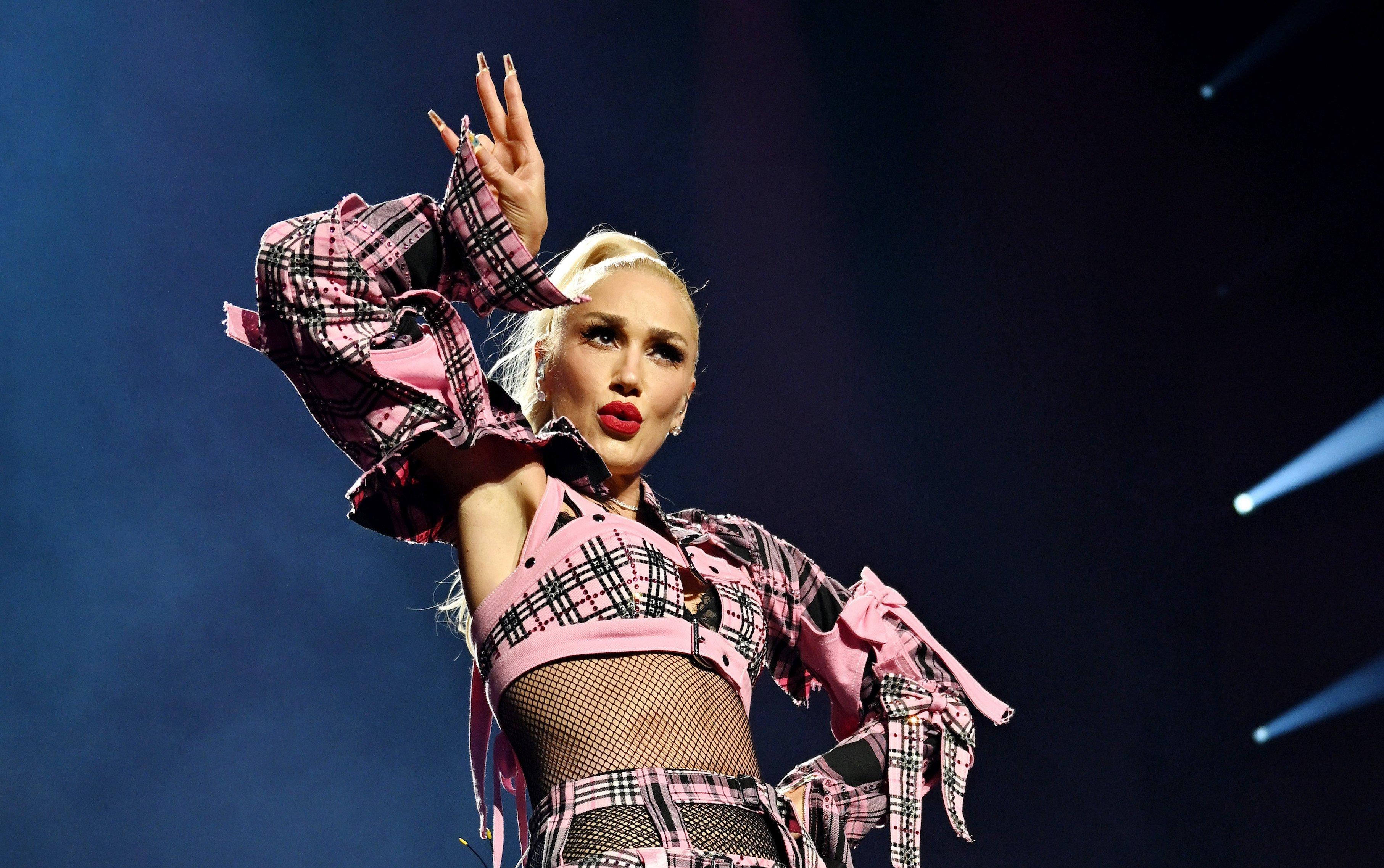
The Title Track Offers Its Own Kind Of Disney Magic
Many punk songs have been written about Disneyland — among them, the Dickies’ "Stukas Over Disneyland," the Eyes’ "Disneyland" and the Vandals’ "Pirate’s Life" — and while they’re all great in their own right, No Doubt's song goes hardest.
"Tragic Kingdom" offers a folkloric storytelling of the theme park. The intricate tune follows the tradition of an epic poem and starts by narrating the legend of Disneyland when Stefani croons, "Once was a magical place / overtime it was lost / price increased the cost / Now the fortune of the kingdom / Is locked up in its dungeon vaults." The myth continues, along with heavy distortion, explosive beats, and a fiercely blistering guitar solo that captures the Miltonian nature of the song. It makes perfect sense that the album ends with this monumental tale, so that we remember and never forget the epic story of "Tragic Kingdom."
Eric Stefani’s Magic Touch Is Still Present
The eldest Stefani had been the leader of the band since its inception, but started disconnecting from the band prior to the release of Tragic Kingdom when he accepted a job as an animator on "The Simpsons" and then left the band entirely. However, two important songs on the album are credited to him: "The Climb" and "Don’t Speak."
"The Climb" is a moody but inspiring tale about overcoming adversity, and it’s the longest song on the album at 6 minutes and 36 seconds. He also originally wrote "Don’t Speak" for the band, and even though it was later re-worked, the song catapulted the band into stardom — the single sold more than 3 million units and was certified platinum three times. Even through his departure, his influence in Tragic Kingdom remained strong, and as the No Doubt frontwoman put it to Rolling Stone in 1997, "…Eric is No Doubt."
"Different People" Highlights The Unity We Need Now More Than Ever
"Different People" calls for everyone to come together in unity to create a better world based on our diversity. Stefani told Paper Magazine that "Different People" was the first song she ever wrote, noting it’s "a song about everyone being different and being the same and loving each other." The song is so positive, catchy and upbeat, that former President Barack Obama is into it, and in 2012, included it in his annual music playlist.
Matthew Wilder’s Pop Expertise Took Tragic To New Heights
Artist Matthew Wilder, who had a hit single in the ‘80s with "Break My Stride," went on to become a successful music producer, working on projects like the soundtrack for Disney’s 1998 animated film, Mulan. When he was tapped to produce Tragic Kingdom, the band was initially hesitant about the collaboration.
In a YouTube interview with music composer Jared Faber, Wilder revealed that at the time, he was trying to help "pull them away from the ska and develop a sound for them that was not so singular in its direction." While Stefani told Rolling Stone that the direction "was such an invasion, at first," the partnership clearly worked, because the album became rooted in pop sensibilities. Tragic Kingdom had seven singles and many other unsung goodies in the mix.
Tragic Kingdom Created A Lasting Legacy
Without a doubt, Tragic Kingdom launched the band’s career, taking the group from Anaheim to the world. Tragic Kingdom generated their mainstream success, and changed their lives forever. From their first GRAMMY nominations to diamond status with the RIAA, Tragic Kingdom's massive success of the album and its force in introducing No Doubt to the world, ultimately creating a legacy still going strong today.
Latest News & Exclusive Videos

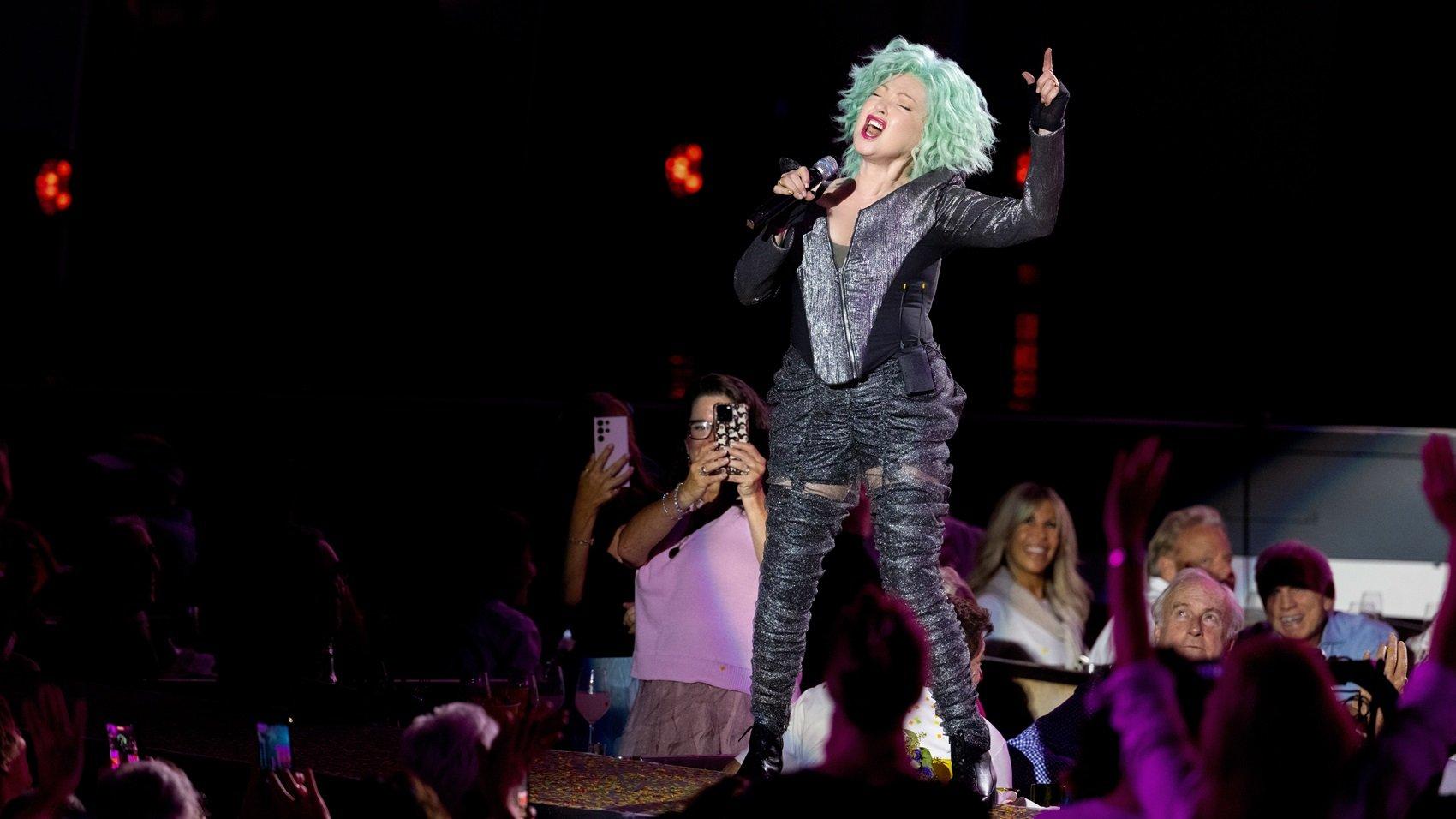
Cyndi Lauper performs at the Hollywood Bowl
Photo: Sonja Flemming/CBS ©2025 CBS Broadcasting, Inc.
5 Moments From "A GRAMMY Salute To Cyndi Lauper": Fashion, Famous Friends & More
Featuring performances from Cher, John Legend, SZA and others, as well as wild fashion, historic clips, and many jokes, Cyndi Lauper's TV special proved to be a fitting celebration of an icon — time after time.
GRAMMYs/Oct 7, 2025 - 05:53 pm
Pop icon Cyndi Lauper wrapped up her 68-date Girls Just Want to Have Fun Farewell Tour with two nights at the Hollywood Bowl. The star-studded concerts were captured for the television special "A GRAMMY Salute to Cyndi Lauper: Live from the Hollywood Bowl," which aired on CBS on Oct. 5 and is now streaming on Paramount+.
Every moment with Lauper on screen feels iconic: her first GRAMMY win, recording "We Are the World," immortalizing her handprints on the Hollywood Walk of Fame, and even facing the Supreme Court multiple times. The special opens with a rapid montage of these milestones — alongside flashes from her colorful music videos — projected across the Hollywood Bowl shell. Before the festivities kicked off, Cher — who later joined Lauper for her signature hit, "Girls Just Want to Have Fun"— introduced viewers to the event they were about to witness.
Whether you were in L.A. having fun with the two-time GRAMMY winner or are reliving the show from your couch, read on for five takeaways from "A GRAMMY Salute to Cyndi Lauper: Live from the Hollywood Bowl."
She Is As Much About Storytelling As Her Timeless Songs
Lauper may be best known for her songs, but storytelling — in any form — is her true gift. Between numbers, she shared tales drawn from her immigrant family, formative professional experiences, and life-changing moments with friends. After performing "I Drove All Night," she noted that, at the time, there weren’t many songs on the radio with women behind the wheel.
"To me, it was a power song," she said. "When you can get into a car and go wherever you want — well, jeez, that’s power, ain’t it?" Whatever the subject, Lauper painted a vivid picture through her sincerity and delivery, turning the evening into a kind of one-woman show.
She’s Got Jokes
Even when Lauper is being dead serious, there’s always an undercurrent of humor to what she says. Throughout the evening, she tossed off one-liners like, "I was a wrestling manager, so I know a few moves. Don’t try me," and launched into full-blown stories.
Recounting her run-ins with early music executives, she acted out both sides of the exchange: First the exec: "What’s that you’re wearing? Why don’t you just wear jeans and a T-shirt?" Then herself: "Why don’t you shave your head? You’re going to go freakin’ bald anyway." She quickly clarified, "I didn’t actually say that — because, you know, I was working on my people skills." Later, she joked about her family, adding, "My cousin Vinny. Yes, most Italian families have a cousin Vinny."
Once A Fashion Icon, Always A Fashion Icon
Lauper cycled through numerous costume and hairstyle changes over the course of the concert. She opened in a KISS-meets-Mad Max chainmail-esque ensemble with exaggerated shoulders and hips, paired with a natural-looking curly wig that shifted from silver to lavender, blue, and green under the lights. Later, she appeared in an asymmetrically zipped white jacket with a long, expressive train, which doubled as a projection screen for a moving car during "I Drove All Night." She next donned a smock-like top with half a black lace bustier sewn onto the front, crediting "Project Runway" winner Geoffrey Mac for these designs.
Then came a full transformation: a red jacket with yellow plumes and a neon yellow wig. "I opted not to wear a T-shirt and jeans," she quipped, before name-checking another "Project Runway" alum, designer extraordinaire Christian Siriano, for the rest of her looks. In one of the evening’s most theatrical moments, she changed onstage ("without any of you seeing something you cannot possibly forget") emerging in a sleek, broad-shouldered black blazer. Finally, she removed her neon wig, revealing a simple black wig cap, and somehow looked even more commanding.
She Showcased 40 Years of Musical Friendships
After decades in the industry, Lauper has some notable friends, and a wide cross-section took part in these performances. Micky Guyton sang on "Who Let in the Rain," while John Legend stepped in partway through "Time After Time," wearing a floor-length sparkly black Tom Ford jacket. The two were lit by a sea of phone lights, including those held by Lauper and Legend.
John Wesley Rogers, Lauper’s opening act on select dates, performed "Money Changes Everything," which featured some playful faux wrestling with Lauper. Angélique Kidjo and Trombone Shorty contributed to "Iko Iko," with Shorty returning later to play on Joni Mitchell’s "Carey."
During the encore, SZA teamed up with Lauper for "True Colors," ending with the pair flying an LGBTQ flag. Dressed in matching Yayoi Kusama–inspired red polka-dot coats, which matched the projections, Lauper closed the night with Cher on "Girls Just Want to Have Fun," tweaking the lyrics to say, "Girls just want to have fundamental rights."
An unexpected surprise came in the form of Corey Feldman and Martha Plimpton in the audience, who were featured on camera during "The Goonies ‘R’ Good Enough," the song Lauper contributed to The Goonies, in which Feldman and Plimpton starred. The moment felt especially personal when Lauper recalled seeing them as children.
She Plays Unexpected Instruments
Lauper’s strengths lie in her voice, but she shared a story about getting her first guitar — on which she could only play one song — and how she was influenced by a folk singer known for unusual tunings, before eventually turning to Joni Mitchell center stage.
She didn’t play guitar during the evening, but she did wield a mean recorder on "She Bop." And on "Iko Iko" and her cover of Mitchell’s "Carey," she played a washboard, wearing it like yet another one of her impossibly distinctive, costume-like accessories.