
Photo: Michael Ochs Archives/Getty Images
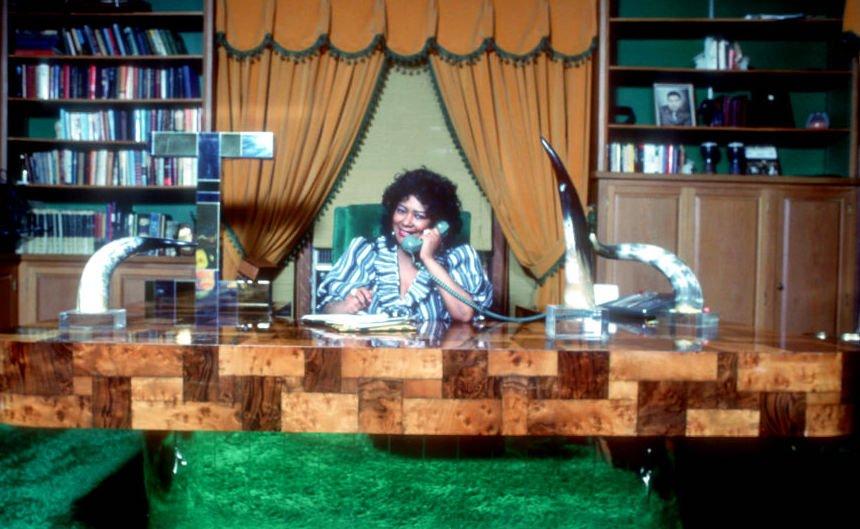
Guitarist, singer and producer Sylvia Robinson at home in May 1983
Women In Hip-Hop: 7 Trailblazers Whose Behind-The-Scenes Efforts Define The Culture
Culture often moves behind the scenes — in studios, boardrooms and wherever deals are made. Multiple generations of women have been making waves as producers, executives and cultural foreseers shepherding the sound of hip-hop.
GRAMMYs/Jun 23, 2023 - 04:26 pm
Since its inception in the early 1970s, hip-hop has largely been a boy’s club. However, women like Funky 4 + 1’s "Mother of the Mic" Sharon "Sha-Rock" Green, who’s celebrated as the "first female rapper," along with DJ Kool Herc’s sister and "hip-hop’s first promoter" Cindy Campbell, have been part of the culture and movement since from the jump.
Compared to their male counterparts, the number of female rappers who breakthrough and achieve remarkable success — including MC Lyte, Salt-N-Pepa, Lil’ Kim, Nicki Minaj, Cardi B, Megan Thee Stallion, and emerging acts like GloRilla, Latto, Coi Leray, and Ice Spice — remains a small pool.
Arguably, real change happens behind the scenes, in studios and boardrooms where six- and seven-figure deals get negotiated. Yet the pool of women calling the shots in hip-hop has been even smaller than those letting it rip on stage.
In honor of hip-hop’s 50th anniversary, here’s a look at seven women who have worked tirelessly to push the genre forward — from label heads to executives and producers.
Sylvia Robinson: Hip-Hop's OG Label Head
Sylvia Robinson︱Al Pereira/Michael Ochs Archives/Getty Images
The Sugarhill Gang's 1979 single "Rapper’s Delight" is often credited for helping to usher hip-hop into the mainstream. The Chic-sampling track was produced by a history-making female executive: the late Sylvia Robinson, founder and CEO of Sugar Hill Records. The label also released Grandmaster Flash & The Furious Five's landmark single "The Message."
Robinson was no industry novice by the time she founded Sugar Hill Records. She was half of the R&B duo Mickey & Sylvia (whose "Love Is Strange" is now a classic), and scored a hit in 1973 with the sensual solo single "Pillow Talk."
"She could see things," Doug Wimbish, Sugar Hill Records’ in-house bassist, told Billboard about Robinson’s creative prowess. "Somebody might come up with an idea, and she knew how to take key elements out of it, magnify it and turn things into a recording."
After Sugar Hill Records dissolved in the mid-'80s, Robinson launched Bon Ami Records with a little-known rap group called the New Style. Their debut LP was met with disappointing sales, but they relaunched years later under a different label as Naughty By Nature, proving that Robinson’s musical ear and shrewd business sense never stopped working.
In 2014, "Rapper’s Delight" was inducted into the GRAMMY Hall of Fame; that same year, it was added to the Library of Congress’ National Recording Registry for its "cultural, historical or aesthetic" significance. She died in 2011 and was lauded as "The Mother of Hip Hop."
Sylvia Rhone: Hip-Hop's Biggest Champion
Sylvia Rhone ︱Kayla Oaddams/WireImage
Throughout her 50-year career, "Godmother of the music industry" Sylvia Rhone has championed the voices of some of the most influential female rappers, including Missy Elliott and MC Lyte — the first GRAMMY-nominated female hip-hop artist. In 2009, Nicki Minaj even name-dropped Rhone on "Still I Rise" off her now-iconic Beam Me Up Scotty mixtape.
The 71-year-old Harlem native began her career as a secretary at Buddah Records, and worked her way up to CEO of Epic Records and Chairman/CEO of the Elektra Entertainment Group, the first Black woman in either role. In her role at Elektra, Rhone made headlines as the first woman to lead a Fortune 500 company-owned record label.
At Epic Records, Rhone's roster of chart-topping artists includes Travis Scott, Camila Cabello, and 21 Savage. Under Rhone’s direction, three of the label’s artists twice simultaneously scored albums in the Top 10 on the Billboard 200 chart.
Earlier this year, Rhone was honored for her history-making contributions at the Recording Academy’s annual Black Music Collective event during GRAMMY Week, telling the audience "it's nights like these that keep me revitalized. They serve as a powerful reminder that hip-hop was a calling."
Juliette Jones: From Intern To Groundbreaking Exec
Juliette Jones︱Jerritt Clark/Getty Images for Grit Before the Gram
A self-proclaimed "accidental executive," Juliette Jones handed out tapes at a club and interned for five years — including a career-altering stint at New York City’s iconic WBLS radio — before securing an entry-level gig at the now-defunct Jive Records. Fast forward over two decades later, and Jones has worked at every major label, from Capitol Records to Warner Bros.
Before landing at Jive though, Jones applied for a receptionist role at Atlantic Records and was turned down, so being named Atlantic Records’ executive vice president of urban promotion in 2012 must have been a full-circle moment. During her 10-year tenure at Atlantic, Jones has played a significant role in helping artists like Cardi B, Meek Mill, Lil Uzi Vert, Gucci Mane, the late Nipsey Hussle break new ground both on the music charts and in the culture.
"When I got access to the labels, the rock stars to me were the executives, not the artists," Jones said in a 2020 Hypebae interview. "I love working with artists and promoting their art, but I appreciate the talent behind the scenes as well."
These days, Jones is making waves as Chief Operating Officer at Alamo Records. The label is home to Lil Durk and Rod Wave, who each scored No. 1 albums on the Billboard 200 in 2022.
Ethiopia Habtemariam: Motown's Miracle Worker
Ethiopia Habtemariam︱Eugene Gologursky/Getty Images for Fast Company
As a 16-year-old intern at Elektra, Ethiopia Habtemariam was so in awe of Sylvia Rhone that she penned a fan letter to the famed music executive — who, at the time, was the label's chairman and CEO. That level of boldness Habtemariam displayed at such a young age continued throughout her career.
Habtemariam skipped college to work as an assistant in LaFace’s production department, and met LaRonda Sutton, a then-general manager at LaFace’s affiliate Hitco Publishing. When Sutton accepted a job at Edmonds Publishing, she took Habtemariam along for the ride. Habtemariam’s time as Edmonds’ Creative Manager eventually led to a position at Universal Music Publishing Group. As President of Urban Music and Co-Head of Creative, she signed Ludacris, Justin Bieber, J. Cole, Chris Brown, and other artists.
When presented with the opportunity to breathe new life into Motown Records, Habtemariam was up for the challenge. Three years after being appointed Senior VP, she was promoted to President of the iconic label and quickly forged a partnership with Quality Control, which boasts Migos, Lil Yachty, and City Girls as signed artists.
"I heard people say, ‘Oh, she got the job just because she’s a Black woman and they’re just trying to cover their asses,’" she told Billboard. "Even if that was the case, it’s on me. What am I going to do to make an impact and assure that other people get these kinds of opportunities in the future? Plus, I love proving people wrong."
Habtemariam announced her departure from Motown Records in late 2022. Though she didn’t reveal what her next endeavor would be, her next move will surely be just as impactful.
WondaGurl: Prodigy Producer To Legends
WondaGurl︱Michael Tran/AFP via Getty Images
WondaGurl was still in high school when a beat she created for Travis Scott was passed along to none other than Jay-Z for the "Crown" track off his 12th studio album Magna Carta Holy Grail, which picked up six GRAMMY nominations in 2014.
A year later, Nigerian Canadian producer, who cites Timbaland as her biggest influence, scored two top 15 hits on the Billboard Hot 100 with Rihanna’s trap-inspired "B— Better Have My Money" and Travis Scott’s "Antidote." Those hits off a wave of more A-list collaborations, including Drake’s "Used To" featuring Lil Wayne and a handful of tracks off Lil Uzi Vert’s debut album (e.g. "The Way Life Goes").
As the protégé of fellow Canadian producer and GRAMMY nominee Boi-1da, the now 26-year-old producer received the Jack Richardson Producer of the Year Award at the 2021 Juno Awards — the first Black woman to win in that category. She also became the first woman who isn’t a recording artist to take home the Producer of the Year award.
Natina Nimene: Hip-Hop’s Celebrated Strategist
Natina Nimene︱Matt Winkelmeyer/Getty Images for Billboard
Named one of Billboard’s Hip-Hop Power Players, Natina Nimene celebrated her 10th year at Def Jam Recordings with a promotion: EVP of Promotion & Artist Relations. Under her leadership, Kanye West’s G.O.O.D. Music label launched a five-album rollout that included Ye. All five LPs generated nearly 400 million first-week streams.
Nimene has also worked closely with Pusha T, 2 Chainz, Logic, YG, Big Sean, Fredo Bang, and Jeezy. "Natina always goes hard," Jeezy said to Variety at the time of her promotion. "She always looks out and I trust she’ll get the job done. She understands radio promo and the culture as a whole. Ask around — everyone knows and loves Natina."
In addition to her work at Def Jam, Nimene sits on the National Museum of African American Music’s advisory board and is a member of the Universal Music Group Task Force for Meaningful Change.
Crystal Caines: Producer Who Can Rap And Control The Micstro
Crystal Caines with ASAP Ferg (right)︱Rob Kim/Getty Images
The first beat Crystal Caines ever made can be heard on A$AP Ferg’s "A Hundred Million Roses," which led to more production and engineering credits on the rapper’s debut studio album, the critically acclaimed Trap Lord. Caines’ thumbprint is on the Bone-Thugs-n-Harmony-featuring "Lord," as well as "Shabba" and "Fergivicious."
The Harlem native, who also boasts rapping skills of her own, has also linked up with household names like Jack Harlow and M.I.A and up-and-comers such as BIA, Ransom, Nick Hook, Johnny Cinco, and BbyMutha.
"I feel like most producers lean on trap because it’s what’s winning right now, but that’s the difference with me as an artist and producer, so I focus on creating the new and not creating the old," she said in a 2017 HipHopDX interview. "I want to move the culture forward by being who I am."
What’s more, Caines doesn’t shy away from sharing the spotlight with other talented female producers like WondaGurl and Trakgirl, the latter of which has worked with R&B stars Jhené Aiko, Omarion, and Luke James. Both WondaGurl and Trakgirl produced Caines’ "Play Tough" and "Black Jesus" tracks (released in 2015), respectively.
The 2026 Special Merit Awards honorees will be celebrated during Grammy Week 2026, days ahead of the 2026 Grammys.
Graphic courtesy of the Recording Academy
The Recording Academy Announces 2026 Special Merit Award Honorees: Carlos Santana, Chaka Khan, Cher, Fela Kuti, Paul Simon, Whitney Houston & More
The Special Merit Awards Ceremony celebrating the 2026 Lifetime Achievement Award, Trustees Award and Technical Grammy Award recipients will be held during Grammy Week 2026, days ahead of the 2026 Grammys.
GRAMMYs/Dec 19, 2025 - 01:59 pm
See the full list of winners and nominees from the 2026 Grammys.
Watch highlights and exclusive Grammys content from the 2026 Grammys all year long.
The Recording Academy's Special Merit Awards Ceremony celebrating the 2026 Lifetime Achievement Award, Trustees Award and Technical Grammy Award recipients will be held on Saturday, Jan. 31, 2026, during Grammy Week 2026, on the night before the 2026 Grammys. Carlos Santana, Chaka Khan, Cher, Fela Kuti, Paul Simon, and Whitney Houston are the Recording Academy Lifetime Achievement Award honorees; Bernie Taupin, Eddie Palmieri and Sylvia Rhone are the Trustees Award honorees; and John Chowning is the Technical Grammy Award honoree. The official Grammy Week event will celebrate the honorees' outstanding contributions to the recording field.
"It's a true honor to recognize this year's Special Merit Award recipients — an extraordinary group whose influence spans generations, genres and the very foundation of modern music," Recording Academy CEO Harvey Mason jr. said. "Each of these honorees has made a profound and lasting impact, and we look forward to celebrating their remarkable achievements on the eve of Grammy Sunday."
Grammy Week is the Recording Academy's weeklong celebration comprising official Grammy Week events celebrating the music community and current Grammy nominees in the lead-up to the annual Grammy Awards. Grammy Week 2026 culminates with the 2026 Grammys, which take place live Sunday, Feb. 1, at Crypto.com Arena in Los Angeles. The 2026 Grammys will broadcast live on the CBS Television Network and stream on Paramount+ at 5-8:30 p.m. PT/8-11:30 p.m. ET. Hours ahead of the live telecast, the 2026 Grammy Awards Premiere Ceremony will be held at the Peacock Theater in Los Angeles on Sunday, Feb. 1, at 12:30 p.m. PT/3:30 p.m. ET and will be streamed live on live.grammy.com and the Recording Academy’s YouTube channel.
Learn more about the 2026 Special Merit Awards honorees below.
Lifetime Achievement Award Honorees: This Special Merit Award is presented by vote of the Recording Academy's National Trustees to performers+ who, during their lifetime, have made creative contributions of outstanding artistic significance to the field of recording. See past recipients here. (+through 1972, recipients included non-performers).
For over five decades, Carlos Santana has been a pioneering force in music, fusing Afro-Latin, blues, rock, and jazz into a sound that transcends genre, culture and generation. A 10-time Grammy and three-time Latin Grammy winner, he made history with Supernatural in 1999, earning eight Grammys in a single night. He is a Rock & Roll Hall of Fame inductee, a Kennedy Center Honoree, and a recipient of Billboard's Century and Latin Music Lifetime Achievement Awards. Rolling Stone ranks him No. 11 on its "100 Greatest Guitarists of All Time" list. Santana recently marked the 50th anniversaries of his groundbreaking album Abraxas and his iconic Woodstock performance, as well as 25 years of Supernatural. His latest album Sentient features collaborations with Cindy Blackman Santana, Michael Jackson, Miles Davis, and more. The feature documentary CARLOS, produced by Sony Music Entertainment and Imagine Documentaries, premiered at the 2023 Tribeca Film Festival and is now streaming globally. His Las Vegas residency at House of Blues, now in its 14th year, continues to thrill audiences. His newest release, Carlos Santana: Love, Devotion, Surrender (Insight Editions, 2025), is a visual journey through five decades of artistry.
Chaka Khan is one of the most transformative vocal artists of the last five decades, a 10-time Grammy winner, Rock & Roll Hall of Fame inductee (2023) and a creative innovator whose influence reaches across pop, R&B, jazz, rock, country, gospel, dance, classical, indie, and beyond. She has collaborated with more artists, across more genres, than any other singer in history, with admirers and creative partners ranging from Joni Mitchell, Miles Davis, Prince, Sia, Stevie Wonder, and Whitney Houston. The Chaka Khan Foundation champions wellness, emotional resilience and creative empowerment bringing meditation, music and healing practices to women, youth and system-impacted communities worldwide. What began as a local organization has grown into a global movement for hope, dignity and transformation. She is a trailblazer, storyteller and the voice of power and freedom for many generations. Her live performances are nothing short of electrifying. Chaka Khan remains a living force in music – an artist whose work and life continue to inspire, elevate and redefine what is possible.
For nearly 50 years, Cher has remained one of the world's most enduring entertainers, with a career spanning music, film and television. The only artist with No. 1 hits in six consecutive decades, she is an Academy Award, Grammy, Emmy, and Golden Globe winner whose influence has shaped pop culture and fashion worldwide. Rising to fame with the groundbreaking hit "I Got You Babe," she went on to achieve solo chart-toppers like "Gypsies, Tramps & Thieves," "Half-Breed" and "If I Could Turn Back Time," before redefining dance-pop with the Grammy-winning "Believe," one of the best-selling singles in history. On television, she became a trailblazer with The Sonny & Cher Comedy Hour and The Cher Show, cementing her status as a dynamic and innovative performer. As an actress, Cher earned acclaim in films such as Silkwood, Mask and Moonstruck, the latter earning her an Oscar for Best Actress. Her record-setting world tours and landmark Las Vegas residency have drawn millions of fans, while her documentaries, television work and humanitarian efforts continue to expand her legacy. Still evolving creatively, she remains one of the most influential performers of all time.
Fela Kuti^ was a Nigerian musician, producer, arranger, political radical, outlaw, and the father of Afrobeat. In the 1960s, he created the genre by combining funk, jazz, salsa, calypso, and a blend of traditional Nigerian rhythms. A titanic sociopolitical voice, Afrobeat's revolutionary politics brought Fela into violent conflict with successive Nigerian military regimes, which made many attempts to suppress him and once sent in the army to burn down his communal home, Kalakuta Republic. Fela's mother later died as a result of the raid. Fela's influence and catalog of music have been widely celebrated and explored, including the podcast series Fela Kuti: Fear No Man (the New Yorker's No. 1 Podcast of 2025), and the Tony Award-winning Broadway run of Fela! The Musical from 2008-2010. Fela's influence spans generations, inspiring artists such as Beyoncé, Paul McCartney and Thom Yorke, and shaping modern Nigerian Afrobeats. His legacy lives on through his family: His sons, Femi Kuti and Seun Kuti, lead The Positive Force and Egypt 80, respectively, while his daughter, Yeni Kuti, and son, Kunle Kuti, are the keepers of the Kalakuta Museum and the New Afrika Shrine. An annual celebration in his honor, Felabration, takes place in Lagos and around the world each October.
Songwriter, recording artist, performer, and philanthropist Paul Simon has shaped the sound of modern music across seven decades with classics like "Bridge Over Troubled Water," "The Sound of Silence" and his album Graceland. Widely regarded as one of the greatest songwriters of all time, he has earned 16 Grammy Awards, three for Album Of The Year, and holds a rare place in the Rock & Roll Hall of Fame as a two-time inductee. His accolades also include the Kennedy Center Honors, the inaugural Gershwin Prize for Popular Song, the Polar Music Prize, and the Smithsonian's Great Americans Medal. In 2023, Simon released his seven-movement masterwork Seven Psalms, earning his 36th Grammy nomination and inspiring the documentary In Restless Dreams: The Music of Paul Simon. Despite significant hearing loss during its creation, he returned to the stage with his 2025 Quiet Celebration Tour, met with widespread acclaim. A devoted humanitarian, Simon co-founded the Children's Health Fund, supports global conservation efforts and has raised millions for education, arts and public health, extending his influence far beyond music.
Whitney Houston^, renowned worldwide as "The Voice," was a record-breaking vocalist whose unparalleled talent and more than 220 million records sold made her one of the most celebrated artists in music history. Born into a dynasty of legendary singers, she rose from performing in New York clubs to signing with Clive Davis in 1983 and releasing her groundbreaking self-titled debut album in 1985, which became the best-selling debut album by a solo artist. Houston made history with seven consecutive No. 1 Billboard Hot 100 hits and eight consecutive multi-platinum albums, achievements that cemented her status as a generational icon. Her acting debut in The Bodyguard (1992) led to one of the best-selling soundtracks of all time and to her defining recording "I Will Always Love You," the biggest-selling single ever by a female artist. The six-time Grammy winner was inducted into the Rock & Roll Hall of Fame in 2020 and became the first Black artist with three RIAA Diamond-certified albums. Today, the Whitney E. Houston Legacy Foundation advances her lifelong commitment to uplifting youth, ensuring that her voice, spirit and influence resonate for generations to follow.
Trustees Award Honorees: This Special Merit Award is presented by vote of the Recording Academy's National Trustees to individuals who, during their careers in music, have made significant contributions, other than performance+, to the field of recording. See past recipients here (+through 1983, recipients included performers).
Bernie Taupin is a celebrated lyricist, author and visual artist whose words have shaped some of the most enduring songs in modern music. Best known for his legendary partnership with Elton John, Taupin helped create more than 35 gold and 25 platinum albums, over 30 consecutive U.S. Top 40 hits and one of the best-selling singles of all time, "Candle in the Wind 1997." His achievements have earned him the Gershwin Prize for Popular Song, a dozen Ivor Novello Awards, an Academy Award, two Golden Globes, induction into the Rock & Roll Hall of Fame, and a Commander of the British Empire honor. A best-selling memoirist and a prolific collaborator, Taupin continues to write across genres, most recently contributing to the Grammy-nominated album Who Believes in Angels? and earning an additional Academy Award nomination for "Never Too Late." Beyond music, he is an acclaimed visual artist whose abstract and mixed-media works have been exhibited in prominent galleries and major art fairs worldwide.
Eddie Palmieri^ was a visionary pianist, composer, arranger and bandleader whose own personal signature took Afro-Caribbean music to new horizons for over seven decades. Born in 1936 in Spanish Harlem to Puerto Rican parents, he began playing piano in childhood and launched his professional career in the 1950s. In 1961, he founded La Perfecta, replacing trumpets with trombones to forge a bold new sound that helped define modern salsa. His landmark 1965 recording Azúcar Pa' Ti, exemplified his groundbreaking works and was inducted into the Library of Congress in 2009. In 1975, Palmieri became the first Latino ever to win the Grammy for his historic recording Sun of Latin Music, eventually earning eight Grammy Awards and two Latin Grammys. He was honored with the Latin Grammy Lifetime Achievement Award, the NEA Jazz Master distinction and induction into Lincoln Center's Ertegun Jazz Hall of Fame. Palmieri also enriched film and multimedia. He received an honorary Doctorate from Berklee College of Music and remained a devoted educator at Rutgers University. His legacy endures as a cornerstone of Latin music's evolution.
Sylvia Rhone is a pioneering music executive whose five-decade career reshaped the recording industry and forged historic pathways for women and people of color. Rising from Harlem, she became the first woman to serve as CEO of a major record label owned by a Fortune 500 company and went on to hold top executive roles across all three major music groups at four companies, including Atlantic Records, Elektra, Motown, and Epic Records, where she was named Chairwoman and CEO in 2019. Rhone expanded the labels' global reach, overseeing career-defining releases across genres — from Travis Scott, Future, En Vogue, Metallica, Björk, and Tracy Chapman to Zara Larsson and Tyla — while playing a vital role in shaping the rise of hip-hop and championing female trailblazers from MC Lyte and Missy Elliott to Nicki Minaj. Her leadership has earned her more than three dozen honors, including the Recording Academy's Global Impact Award, Billboard's Executive of the Year and the City of Hope Spirit of Life Award. Widely regarded as the most influential female executive in music history, Rhone's legacy endures through the artists she empowered, the institutions she reimagined, and the doors she opened for generations to come.
Technical Grammy Award Honorees: This Special Merit Award is presented by vote of the Producers & Engineers Wing Advisory Council and Chapter Committees and ratification by the Recording Academy's National Trustees to individuals and/or companies/organizations/institutions who have made contributions of outstanding technical significance to the recording field. See past recipients here.
- John Chowning is a transformative composer and computer-music innovator whose discovery of frequency modulation (FM) synthesis in 1967 revolutionized electronic sound. After studying with Nadia Boulanger and earning his doctorate at Stanford, he launched the university's early computer-music program and developed the first digital algorithm for surround-sound localization. Stanford's licensing of his FM patent to Yamaha led to the most successful synthesis engine in the history of electronic instruments. A co-founder of Stanford's Center for Computer Research in Music and Acoustics (CCRMA) in 1974, Chowning helped establish one of the world's leading hubs for computer-music research. Even after retiring in 1996, he continued a teenage interest in exploring reverberant caves. He initiated and assembled experts from relevant disciplines to explore ancient acoustic environments, projects to reconstruct the sound worlds of Peru's Chavín de Huántar, China's Longyou Grotto, and France's prehistoric Chauvet Cave. His honors include election to the American Academy of Arts and Sciences, the French Ordre des Arts et Lettres, multiple honorary doctorates, and the Giga-Hertz Award.
^Denotes posthumous honoree.
2026 Grammys: Performances, Winners & Highlights
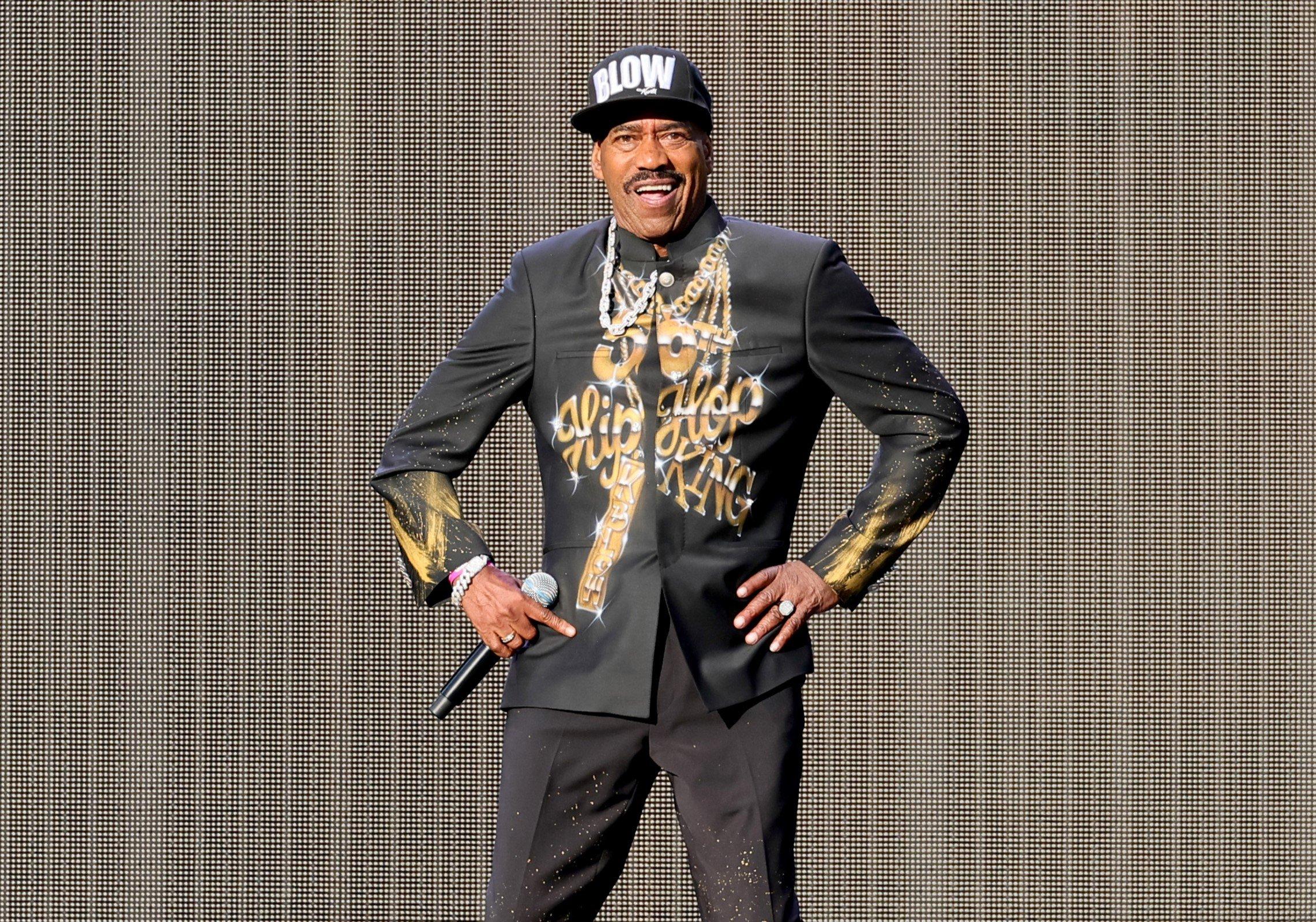
Kurtis Blow
Photo: Theo Wargo/Getty Images
Living Legends: Kurtis Blow On How Hip-Hop Culture Was "Made With Love" & Bringing The Breaks To The Olympics
More than 40 years after he became hip-hop's first commercial breakout star, Kurtis Blow is still moving the culture forward. The rapper and OG B-boy reflects on hip-hop’s rich history, and the impact of seeing hip-hop represented at the 2024 Paris Games.
GRAMMYs/Aug 22, 2024 - 06:18 pm
On the eve of the first-ever Olympic breakdancing competition, hip-hop legend Kurtis Blow was thrilled. It was the first time one of the core elements of hip-hop culture had reached such a global stage.
Alongside DJ Kool Herc (whose breaks provided the soundtrack for B-boys and girls), Blow is credited with popularizing breakdancing. The rapper began breaking as a teenager in the early 1970s, as part of the Hill Boys breaking crew — named for the Sugar Hill area of Harlem where Malcolm X first started his galvanizing pro-Black movement —
And while the International Olympic Committee decided to remove breakdancing from the 2028 Olympics, Blow is unbothered. As far as he’s concerned, his legacy and the legacy of breaking itself is all but set in stone.
"It was definitely something special," Blow tells GRAMMY.com. "And I wasn’t the only one who realized it at the moment it was happening."
Born Kurtis Walker, the Harlem-based Blow began DJing when he was just seven years old. In 1979, the 20-year-old's "Christmas Rappin’" sold over 400,000 copies and turned the up-and-comer into a household name. But it was his follow-up single, 1980’s "The Breaks," that helped launch a whole new genre: rap music. "The Breaks" became the first hip-hop album to receive a gold certification from the RIAA, and proved that Blow wasn’t just a one-trick pony.
Kurtis Blow proved to be immediately influential on the then-nascent rap scene. When Rev. Run of Run-D.M.C. started his career, he billed himself as "The Son of Kurtis Blow" to give him an air of credibility that helped propel the hip-hop trio into the pop culture stratosphere. But Blow's influence didn’t begin and end with his "adopted son": Everyone from Russell Simmons to Wyclef Jean has worked with Blow, and he has been sampled by Nas ("If I Ruled The World" is all but an interpolation of Kurtis Blow’s song of the same name), KRS-One and many others. In fact, more than 100 songs have used samples from "The Breaks," and nearly 1,500 songs have used a sample or an interpolation from Blow’s discography.
Learn more: Essential Hip-Hop Releases From The 1970s: Kurtis Blow, Grandmaster Flash, Sugarhill Gang & More
Kurtis Blow was also one of the first rappers to sign to a major label (Mercury Records) and was the first rapper to be a multihyphenate (in addition to his music, Blow worked as an actor on films like In a Dark Place and California Dreamers, and was the musical coordinator for the legendary hip-hop film Krush Groove). Blow continues to work steadily in hip-hop today, though he eschews the legendary breaking parties in favor of cultural events that offer a new glimpse into the culture he helped create.
To wit, Blow is performing with The Hip Hop Nutcracker, in which Tchaikovsky’s classic score is set to breakdancing and modern hip-hop dance; the emcee will perform a brief set to kick off each show. A nationwide tour kicks off in Southern California in November and concludes at the end of December in Durham, North Carolina.
Kurtis Blow spoke with GRAMMY.com about the importance of bringing breaking to the Olympics, reconciling his ministry with modern hip-hop’s message, and his four-decade legacy.
This interview has been edited and condensed.
Breakdancing has been a huge part of hip-hop culture for many, many years — and it’s long overdue to be recognized on a global scale like the Olympics. What are your thoughts about seeing this movement that you started getting this kind of recognition?
This whole culture that we call hip-hop started back in the 1960s. With the Civil Rights movement, community organizers, and government officials all debating about something so basic: the right to all be seen as equal and free. It was a traumatic time, you know? But we had music that was so relevant to the whole movement.
By the time the late 1970s and early 1980s came along, everyone was trying to escape all of the traumatic racism that was still going on. And music became our escapism. That’s where breaking came in: everyone was just trying to mimic James Brown on the dance floor. You’d see one guy doing his thing, and everyone would form a circle around him. Pretty soon, someone else would join the circle and challenge him. And before you knew it, there was a whole competition — and whoever won became the most popular in the club.
That kicked it all off. To see it recognized on such a large scale just reaffirms, to me, that this hip-hop culture of ours was made with love.
There were breaking films such as 1985's 'Krush Groove' that were completely revolutionary in that it gave everyone — not just those within the culture — a view into the world of hip-hop, and suggested what it could become. At the time, you were becoming the first commercially successful rapper and one of the pillars of what would become the New York sound. Were you aware that you were on the precipice of something revolutionary?
I don’t want to call myself a visionary or anything like that, but I did know that this was something special, because I saw how quickly it spread around different boroughs in New York City.
From Harlem and the Bronx, and then over into Queens, Brooklyn, and even New Jersey, it was amazing to see everyone just gel around that whole hip-hop scene. As I said before, we all needed that escapism, you know? Forget about your troubles, just come and dance.
With me being in Harlem, right down the block from the Cotton Club and that whole mindset around dancing becoming America’s pastime — just coming from that era, where we had to go to the parties to have a good time — [I knew] that we had created something that would outlast us.
Not only did you attend divinity school, but you are also an ordained minister. How do you bridge those two aspects of your life and how do you reconcile being a rapper with being a minister?
That is such a great question, and thank you for asking.
It’s very simple: God is the Creator. God created hip-hop. We have to start with that, right here. God gave us the talent to perform the music; he gave us the passion to want to spread the music to the masses. He gave us the desire to say, "Hey, come take a look at me! God has blessed me with this — can you do this?"
Now, when you talk about the actual elements of hip-hop — that is, the emcees, and the message that we bring — it’s crucial to understand that we are commanded by God to uplift our community and to show them love. This is the actual essence of hip-hop: peace, unity, love, and just having safe fun.
My mission is to believe in the faith that God is real, and God is in the miracle business. I have seen nothing but miracles for the last 45-50 years in this thing called hip-hop. And it’s important to understand that God is in the mix, and we are all blessed by the common denominator known as hip-hop. It should be our mission to get that back.
As for what’s going on today — the nature of the lyrics, the gangster rap, and all the violence — it didn’t really start out that way, did it? And if we can inspire the future for our youth, then we’ve made a difference. Because the future is in their hands, and we need to inspire them.
But, as a counterpoint, times are different today. And what these men and women are speaking to may not necessarily be destructive — rather, there could be a case made where they’re merely being street poets, and telling the reality of life as they see it. What advice would you give to those people who are telling a different story than the one you told all those years ago?
We are called to be these soldiers, warriors, servants, and communicators. So I understand their reality is different, you know? The world is upside down. The kids out there are just telling it like it is. They’re communicating their reality.
But I think that we should not only communicate how it is, but how it could be. And how it should be.
Think of how different it would be if they also gave some inspiration for a positive future: "Yeah, we goin’ through this, we goin’ through that, but with God, you can overcome all of that. With prayer, you can have miracles, and blessings, come down."
Even if you just understand the nature of the reality that we’re going into right now — things like mass incarceration, the drug epidemic, gun violence, the war profiteering off of Black and brown bodies — it falls upon the shoulders of the elders of this community, this hip-hop movement, to inspire and communicate the possibilities to the younger up-and-comers.
They need to understand that they are the product of royalty. They are the descendants of kings and queens of Africa. They need to honor themselves and honor their ancestors, accordingly.
The culture of hip-hop isn’t just about the music. It’s about fashion, slang, cars, the sports — if you think about it, anthropologically, hip-hop is a civilization onto itself. But, as with all things, so much of it has been co-opted and mainstreamed. How do we bridge the divide between the originators and the colonizers?
Only love can bridge that gap between the ages, the races, our government — the diversity of all these different countries — you know, it needs to be all love.
This is what it’s going to have to take for us to change our present reality. And I feel that in hip-hop, that is the key to that future. The OG’s had the right mindset: peace, love, unity, and having safe fun. We need to get back to that.
When you look back on your career and the legacy you leave behind, how do you want to be remembered?
I remember being in divinity school at Nyack College in New York, and the professor asked the whole class the same thing. And I thought about it for a while, you know? I thought about being remembered as a pioneer of hip-hop — an OG breakdancer — a DJ when I was just seven years old — and an incredible educator.
But what stuck with me was being known as a man of God. That’s it. Because that encompasses everything that I have been through and survived. All of my success, and everything you know about me, comes from God — and to God be the glory.
Latest In Rap Music, News & Videos
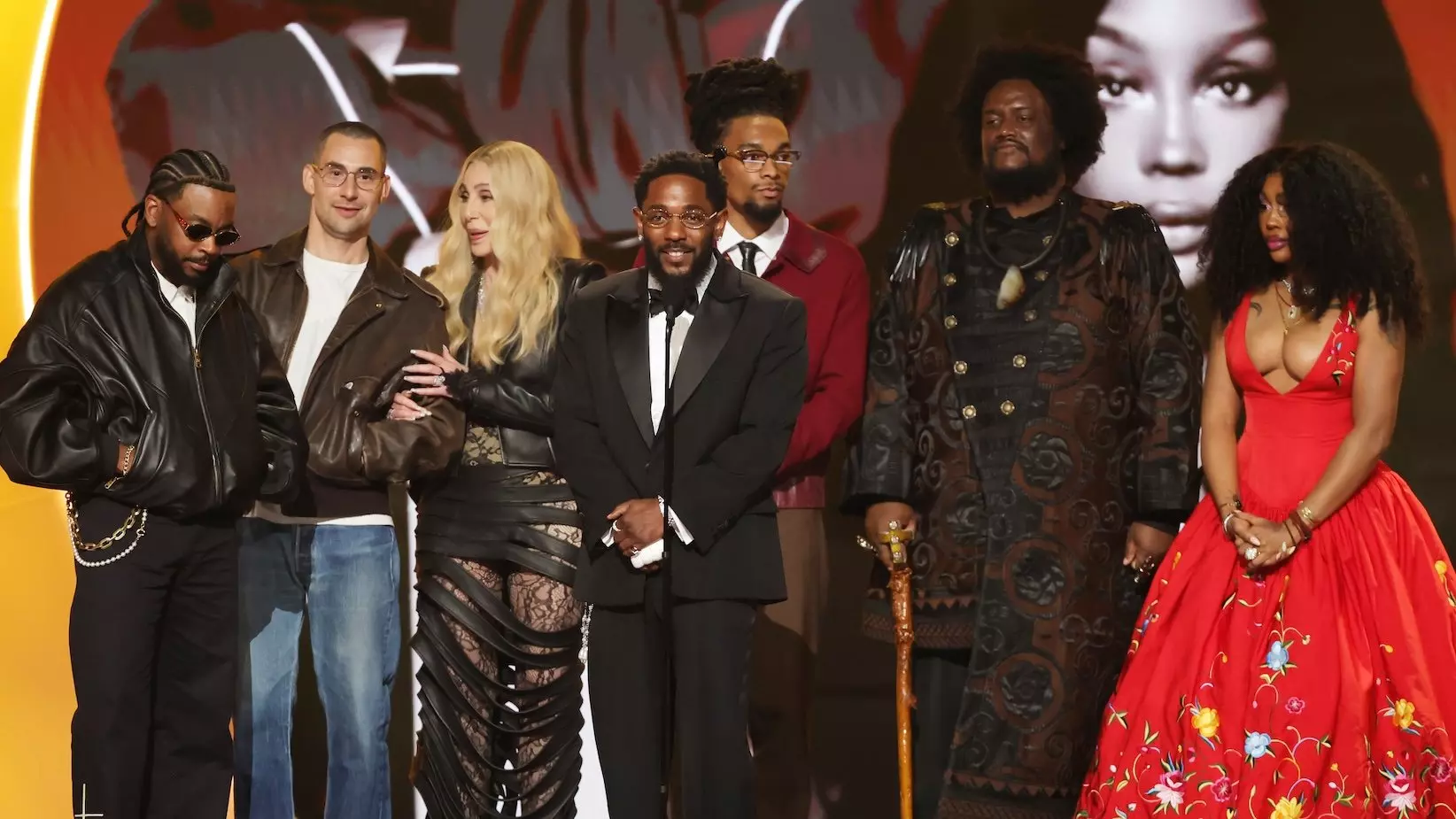
Missy Elliot
Photo: Aaron J. Thornton
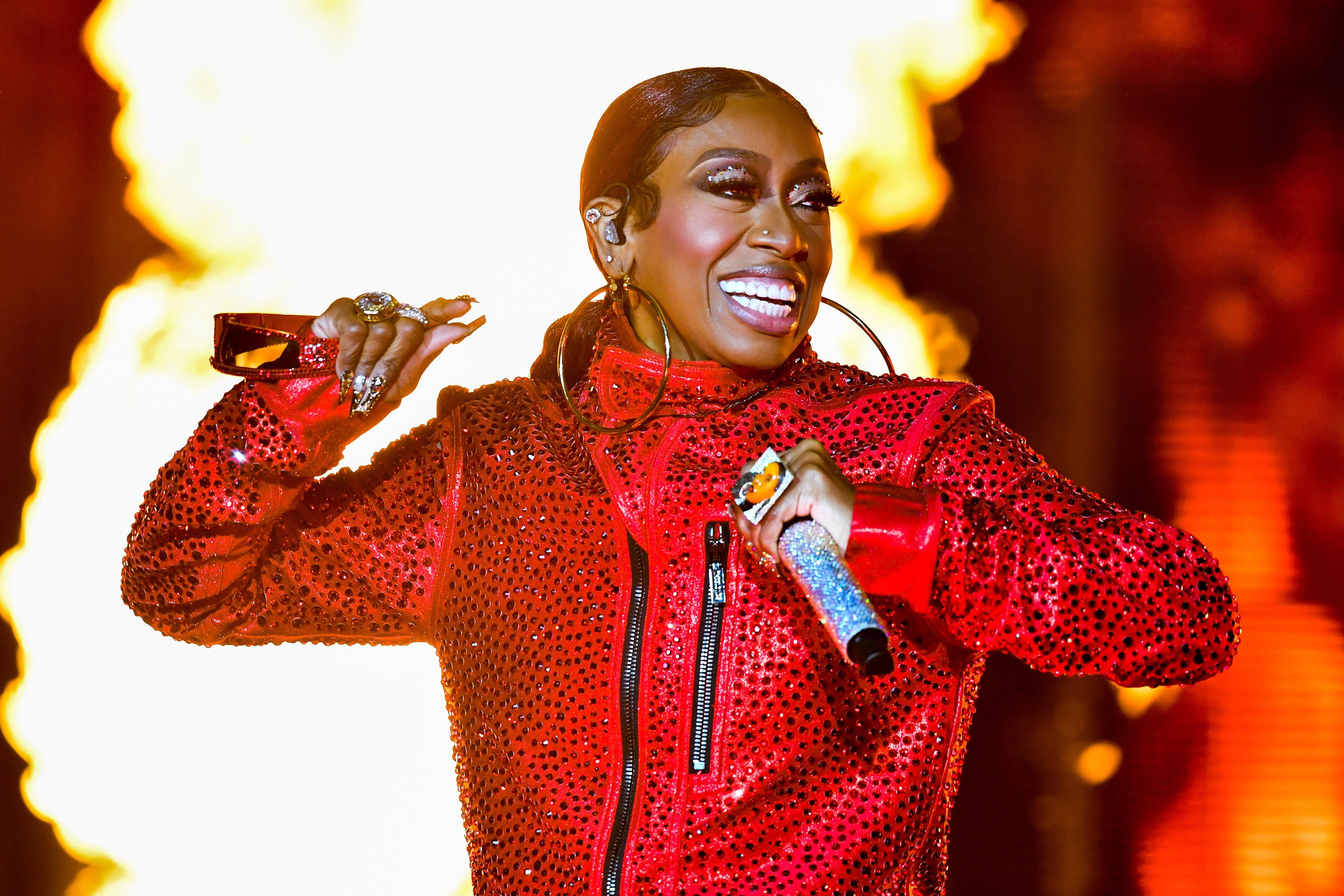
Celebrating Missy Elliott: How The Icon Changed The Sound, Look & Language Of Hip-Hop
In celebration of Missy Elliott's incredible legacy — and very first headlining tour, which kicks off July 4 — GRAMMY.com spoke with Missy's colleagues and collaborators for an insider’s view on what makes the four-time GRAMMY winner unique.
GRAMMYs/Jul 1, 2024 - 03:52 pm
We’re fortunate enough to be living in the middle of a Missy Elliott resurgence — not that she ever went away.
Three decades into her groundbreaking career, Missy is readying her very first headlining tour, which begins July 4 in Vancouver, British Columbia. The Out of This World Tour runs through August and features her longtime collaborators Timbaland, Busta Rhymes, and Ciara.
The fact that it is her first headlining tour may be surprising, given that she’s been on the scene since debuting with the group Sista in the mid-1990s, and has been a chart-topping star since becoming a solo artist in 1997.
The hip-hop icon released her last full-length album, The Cookbook, nearly two decades ago but time hasn’t diminished her influence at all. In fact, we’re all still catching up to the futuristic vision that Missy and Timbaland introduced to the world in the late 1990s in their songs and videos.
Missy began her career as a member of Sista, which was a part of the Swing Mob, a musical collective working under Jodeci’s DeVanté Swing. That crew included a number of future world-changers, including Missy, Timbaland, Ginuwine, Tweet, Stevie J., and two legends who have since passed on, Magoo and Static Major. After Sista was dropped from their label, Missy, by all accounts, would have been perfectly happy to settle into a life as a songwriter and producer. But something bigger was beckoning.
Persuaded by Elektra’s Sylvia Rhone with the promise of her own label, Missy agreed to turn in one album as a solo artist. That album, 1997’s Supa Dupa Fly, made Missy not just a star but an icon, and changed the course of her life. It began a career that, over a quarter-century later, found her inducted into both the Rock and Roll Hall of Fame and the Songwriters Hall of Fame — she was the first female rapper ever to be nominated for the latter.
And that’s just the beginning of the accolades. There are the four GRAMMY wins and head-spinning 22 nominations. She was also honored alongside Dr. Dre, Lil Wayne (who has not been shy about calling Missy his favorite rapper), and the woman who gave Missy her first solo record deal, Sylvia Rhone, at 2023’s Black Music Collective’s Recording Academy Honors event. Missy was also a key participant in the GRAMMYs tribute to a half-century of hip-hop that same year.
Throughout it all, Missy has remained humble. When speaking to GRAMMY.com in 2022, she reflected on how she and longtime collaborator Timbaland had no idea of their impact at the time.
"We really just came out with a sound that we had been doing for some time, but we had no clue that it would be game changing, that we would change the cadence — the sound of what was happening at that time," she said. "No clue!"
"Her whole existence is based on moving us and influencing us," says her longtime manager Mona Scott-Young. "She wants to be able to touch people."
And that she has. To celebrate the Missy-aissance, GRAMMY.com spoke with Missy's colleagues and collaborators for an insider’s view on the course of her career and what makes the four-time GRAMMY winner unique.
The quotes and comments used in this feature were edited for clarity and brevity.
Missy’s Impact Began With Her First Guest Verse
The first time many people took note of Missy Elliott was her verse on the 1996 remix of Gina Thompson’s "That Thing You Do."
Gina Thompson (singer): I was in the process of completing my first album, Nobody Does It Better. Actually, it was complete. So what happened was, my A&R at the time, Bruce Carbone at Mercury Records, wanted to have Puffy do the remix.
Puffy was like, "We have this person that's really talented. Her name's Missy, and she used to be with the group Sista, and she's a phenomenal writer. She's working with a lot of other artists, she’s definitely the next big thing in the R&B/hip-hop world." We were like, cool.
I believe we actually heard it over the speaker phone in Bruce’s office. I know that I said that I loved it, and I felt her style was unique and different. It grew on me in a great way. I just felt like it was a smash. She definitely had added a great touch to it. I was super-excited about it.
Merlin Bobb (former Executive Vice President, Elektra Records): I was blown away by the simple fact that I knew she was a great songwriter. But when I heard her rhyming, I thought it was the most unique style that I had heard in some time.
Digital Black (former member of Playa, part of the Swing Mob): A lot of people only knew her as a writer or an R&B artist, but when she came on that Gina Thompson record with that rap, it changed everything. It allowed her to be even more herself.
Mona Scott-Young (manager): Oh my God, have you heard that song? It’s her ability to use expression and evoke emotion without even using words. She said, "He he he haw," and we all found a new way to bounce. There was something fun and magical and different that spoke to what we would come to know was this incredibly vivid imagination that would take us places sonically and visually that we didn’t even know we needed to be.
She Changed The Sound Of Hip-Hop With Her Debut LP
Missy’s first solo album, Supa Dupa Fly, came out the following year. It gave new energy to a hip-hop scene that was still reeling from the deaths of 2Pac and Biggie.
Anne Kristoff (former Vice President of PR, Elektra): She 100 percent did not want to be an artist. She's like, "I'm not an artist. I want to be Diane Warren. I'm going to write the songs. I'm going to be behind the scenes."
Merlin Bobb: I started talking to her regarding being an artist. She was totally against it. "No, I want to be a songwriter." And also, just to be honest, [Sista] had been dropped from Elektra prior to my conversations with her, so she wasn't too eager, I think, to jump back aboard.
It took about six or seven months of us discussing ways to do this. I spoke to Sylvia [Rhone, then-head of Elektra], and I said, "She's an incredible songwriter. Let's offer her a production deal or a label deal where she can not only just look at herself as an artist, but at the same time develop and nurture artists under her own banner." Sylvia thought it was a great idea.
We both talked to Missy about it, and she said, "Okay, I'll do one album." I was ecstatic because she was writing some great songs, but she also gave us her first album, which was, needless to say, a classic.
Kathy Iandoli (author, "God Save the Queens: The Essential History of Women in Hip-Hop and Baby Girl: Better Known as Aaliyah"): In God Save the Queens, I referred to her as the Andy Warhol of hip-hop, in the sense that she took the art and the cultural aspect of it, and she just put this spin and interpretation of the art that no one had ever really done prior.
With Missy’s arrival around ‘97, we were at a point in time where hip-hop was in a complete state of confusion. We did not know where it was going to go. Missy made high art hip-hop that was commercially accessible. And for that, she changed the entire game.
Gina Thompson: When she had her first project with the whole vision — not only her sound, but her songwriting style, the look — everyone was like, "This girl went out on edge. I'm gonna do a little bit of the same thing and not be so worried if I don't sound so average, what people are going to think. Because she's out on the edge doing it." And I promise you, ever since she came out, that you started hearing a lot more of female rappers tweaking their voices.
Lenny Holmes (guitarist): In hip-hop, everybody would think that it's a whole bunch of computer generated stuff. Missy Elliott does not approach it like that. She loves live instrumentation, but she likes to take bits and pieces of it. She simplifies it, and it is placed uniquely in the track at certain points. That's what makes up the structure of the song.
Mona Scott-Young: Everything from the way she looked to what she was talking about to the way she delivered that music and what she represented in terms of being nonconforming, not looking like the other female rappers of the day — I think all of those elements were the perfect lightning in a bottle. The way she rode that beat, both lyrically and with her delivery, was very, very different from everything else that we were hearing.
Read more: Revisiting 'Supa Dupa Fly' At 25: Missy Elliott Is Still Inspired By Her Debut Record
She Reinvented The Music Video
You can’t think of Missy Elliott without picturing her iconic music videos, many done in collaboration with director Hype Williams.
Brian Greenspoon (former International Publicist, Elektra): I mean, she came out of the gate wearing a garbage bag, and made it the coolest thing anyone had ever seen.
Merlin Bobb: She said, if I put out this album — initially we were talking about a single deal, but we went into an album — there’s two things very important to me: the dance aspect and the visual aspect.
Kathy Iandoli: The thing that I really loved about Missy's music videos, she was a big budget music video person. She got the men's music video budget.
Anne Kristoff: When you think about the "Rain" video — I'm just guessing, I don't want to put words in her mouth — but I think when she saw that the vision in her head could become real out in the world, that anything she could think of could happen, that maybe it made it a little more fun for her to be an artist. I hope.
Digital Black: Missy is one of the funniest people you’ll ever meet. People maybe don't know. She loves joking. So that was just her being her.
Gina Thompson: You started seeing a lot of people doing certain robotic-type images or moves in their videos to almost mimic her "Supa Dupa Fly." She’s the creator of that.
Earl Baskerville (manager/producer): Missy would get with the director, and she would sit there and go over the whole treatment. A lot of the visuals came from her. She was very hands on. Today, you can shoot a video in four or five hours. But Missy’s video shoots was so long, I used to hate it. We would be there fifteen hours for a three minute video!
She Was Avant-Garde But Still Pop
Missy’s musical and visual style was like nothing anyone had ever seen. Yet she still became a star. How did she manage to be both innovative and accessible?
Kathy Iandoli: You can't make something that the general public can't access, or speak over their heads.
Digital Black: Even if you said it sounded weird, it still had some soulfulness to it. I think that was what allowed her to touch so many different people.
Merlin Bobb: When you have an artist that stands out, but it doesn't go over your head musically, artistically, lyrically, then it works. People, when they heard and experienced something new and fresh that was easy to digest, but it was unique, they gravitated to it.
Brian Greenspoon: How was it sold to a mass audience? I mean, the sound was breakthrough. What Timbaland was doing with drum sounds, and the way they were building these very sparse rhythms and sound beds, they were breaking ground. But the thing that worked is that they had these incredible songs that Missy was writing and that she had these incredible featured artists on.
Gina Thompson: To try to figure out what her brain is doing, I’ve been gave that up.
Earl Baskerville: Nobody could figure out what we were doing, because they couldn’t understand the sound.
Lenny Holmes: Her rhythmic style of how she would do the vocals was just unheard of. Like, doubling up accents. The things that she started doing — you would hear a deejay do a scratch on a record. You would not hear a singer do it. I was like, What in the world?
Anne Kristoff: She was doing these really creative things that no one else was doing visually. And the sound was different than whatever everyone else was doing. So it wasn't a hard sell for the press.
She Was A Master At Working With Other Artists
Missy was far more than just a solo star. All throughout her career, she continued her first love: writing and producing for other artists — including Ciara, Aaliyah, Destiny’s Child, and Whitney Houston.
Lenny Holmes: Missy had a great relationship with singers and rappers, because she could do both. A lot of people don’t know, but Missy can sing. So when we worked with groups that had singing parts on them, a lot of times she would go ahead and lay down the guide track for the actual artist to sing.
Kathy Iandoli: Missy just really understood the artists that she worked with. She saw their strengths, and she helped them utilize them to the best of their capabilities.
Angelique Miles (former music publishing executive): She was able to relate to the artist and express that artist. She was able to customize and express that artist's story. Whatever she wrote for 702 didn’t sound like what she wrote for Whitney Houston.
Digital Black: She was good at listening to the artist, seeing what they do, and then, how can you enhance what they do well? Those are the best records. She was great at tailor-making records for people, just from her doing her due diligence on learning who the artist is. Not just going in, "I’m Missy, I can write whatever." I'm gonna write something specifically for you that enhances what you’ve already done.
Merlin Bobb: She would have made an incredible A&R person. I would have hired her back then. She was able to come up with lyrics and melodies and songs and chords and production that to me stood out. She worked with both male and female artists. She really knew how to get an artist not only to sing a great song, but to sing very uniquely and in their own way, because she was a great vocal production coach.
Mona Scott-Young: She's always listening beyond what we hear. Even if there's a song an artist has [that she’s not involved with], she'll say, "Yeah, I would have done this thing differently with this artist. Because if you listen to what she did on this one part of the song, you can hear that there's more range there. But for some reason they didn't push her to go there." That to me is just one of the things that makes her such a great producer and star finder, because she always is looking for what more they can do and how they can challenge themselves to be better.
Earl Baskerville: She had signed an artist that I used to manage named Mocha. And she told Mocha to go in there and just rap. I think Mocha might have did 30-something bars, 60 bars. know. Missy listened to all of the stuff she did, took it, and dissected it. She went in there and took eight bars, not from the beginning of the track — I don’t know where she found it, in the middle or something — and put it on the Nicole Wray record "Make It Hot." When Mocha comes in, that’s actually the middle of the verse somewhere! That was crazy to me.
Her First Love Was Always Songwriting
Through it all, Missy’s strength remained (and remains) her songwriting. But what makes her songs stand out, and stand the test of time?
Earl Baskerville: Missy didn’t want to be an artist. She just wanted to be a songwriter.
Merlin Bobb: Her songwriting was very soulful, but it also had great melodic edge to it. They’re very realistic lyrics to a young scene that was happening in R&B and hip-hop at the time. So it was somewhat of a fusion of R&B and hip-hop lyrically, and she just had a very strong sense of melody and great hook lines.
Mona Scott-Young: She wasn't talking about the same thing that we were hearing from a lot of the other females in the genre at the time — overt sexuality and material possessions and that kind of stuff. She was engaging, having a good time lyrically, and holding her own with her male counterparts.
She was giving us music that was great, and it didn't matter that it was coming from a female. She was kind of this androgynous being that was delivering great music. You listen to the song, you just want to party.
Read more: Missy Elliott Makes History As First Female Rapper Nominated For Songwriters Hall Of Fame
She Changed The Artists Who Came After Her
As with all major innovations, it didn’t take long after Missy broke big for her influence to be felt.
Kathy Iandoli: The special relationship between Aaliyah, Missy, and Timbaland was the fact that together they all created a new sound that would set the standard of hip-hop and what we now define as alt-R&B. They invented a new subgenre. It was something that Missy was able to continue along and then create a sound on her own terms.
Gina Thompson: Many people were trying to emulate her whole different style.
Lenny Holmes: [Were people copying her?] Most definitely. But there's only one Missy. And I got to say, there’s only one Timbaland too. You hear that trademark voice or the trademark lick, and you just know that's them.
Brian Greenspoon: I think she influenced just about everybody that came after her. The sound of hip-hop changed after her and Timbaland dropped that music. The way the people produced their drum sounds and their beats, the use of hi hats, it all changed based on Missy and Timbaland.
Merlin Bobb: Most hip-hop/R&B collaborations at that time were hip-hop records with vocal hooks from R&B artists. She kind of flipped it, where she worked from the R&B side and made the vocals and the production more hip-hop friendly.
Mona Scott-Young: Her whole existence is based on moving us and influencing us. She wants to be able to touch people. So when we see artists who you can hear or see the influence, then you know that she's done her job.
There's so many artists — Flyana Boss, a little bit Cardi, a little bit Nicki. They all, I think, have been influenced by Missy, her look, her sound, in one way, shape or form. And that is the greatest compliment, to inspire a generation and see them take what you've done to another level. But then she's constantly also evolving and keeping everyone on their toes.
Learn more: 8 Ways Aaliyah Empowered A Generation Of Female R&B Stars
Considering Missy And Her Legacy
Everyone interviewed for this piece had so much love for Missy. Here’s a small sample.
Brian Greenspoon: Missy is one of the most professional, talented, creative artists I've ever had the luck to work with. I'm happy to see that she is being recognized for being the icon that we all saw that she was becoming back then.
Lenny Holmes: Even today, in whatever we're doing, we use what we've learned from Missy Elliott. It’s mixed in whatever we do. It’s amazing what she has done for herself, but she has definitely helped people along the way, and we will forever be grateful to her.
Digital Black: She's a one-of-one, God-given talent. She earned every award, every accolade, accomplishment. Her work ethic was phenomenal, and nothing was given. Big sis earned everything, and I just want to say I love her, and it's been a pleasure and an honor to be a part of her career.
Kathy Iandoli: There’s so much of the art that we have right now that we have to thank her for.
Mona Scott-Young: This has been an incredible journey. I always talk about being incredibly blessed to have had the opportunity to play a role when you have somebody like her who has touched so many people globally and whose music and entire presence hold this special place in fans’ hearts.
Every day it's just about, how do we continue to push forth, break boundaries, challenge ourselves to do things bigger and better than we did it the last go round.
Explore The Artists Who Changed Hip-Hop

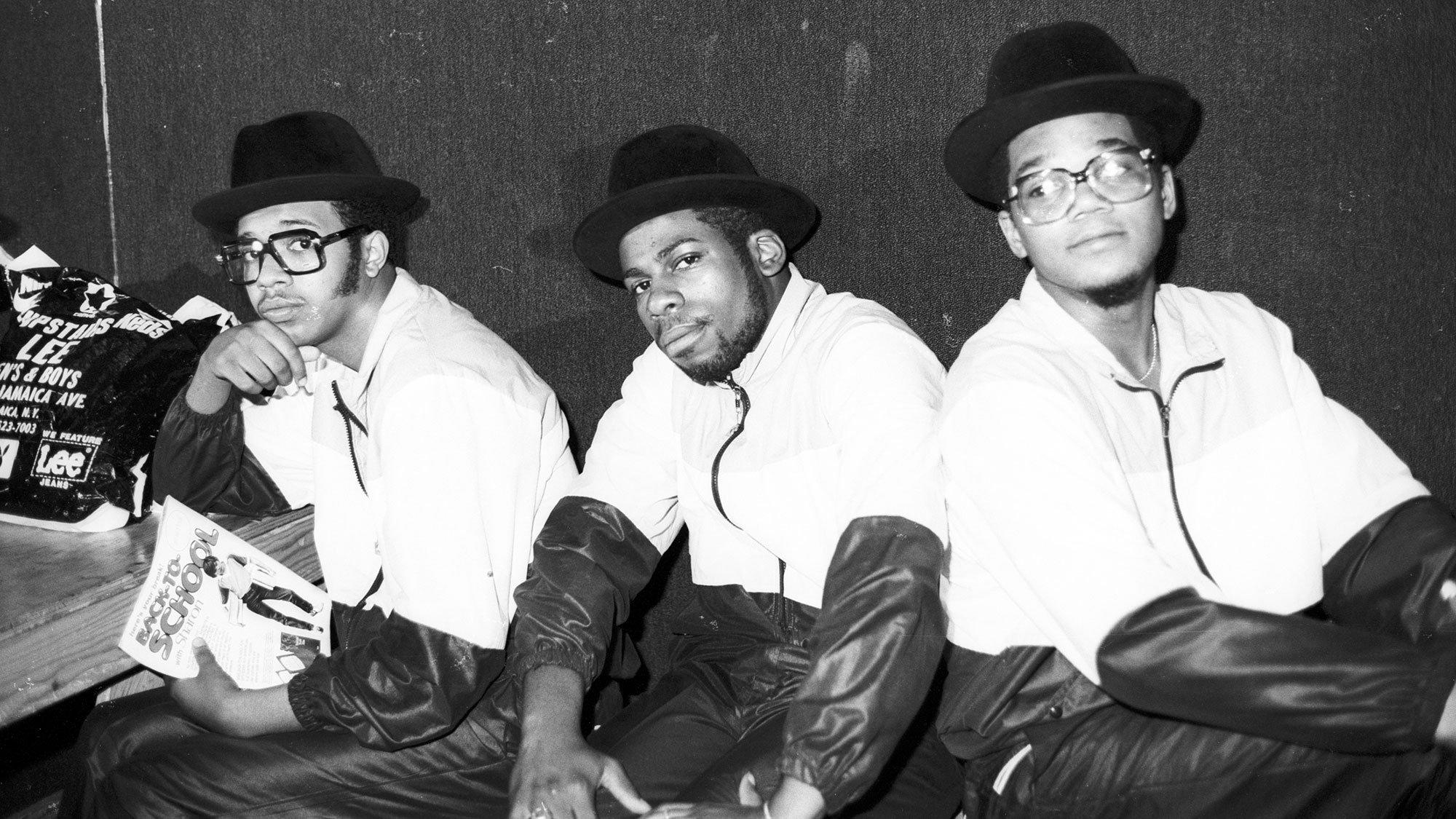
Run-DMC
Photo: Michael Ochs Archives/Getty Images
'Run-DMC' At 40: The Debut Album That Paved The Way For Hip-Hop's Future
Forty years ago, Run-DMC released their groundbreaking self-titled album, which would undeniably change the course of hip-hop. Here's how three guys from Queens, New York, defined what it meant to be "old school" with a record that remains influential.
GRAMMYs/Mar 27, 2024 - 03:49 pm
"You don't know that people are going to 40 years later call you up and say, ‘Can you talk about this record from 40 years ago?’"
That was Cory Robbins, former president of Profile Records, reaction to speaking to Grammy.com about one of the first albums his then-fledgling label released. Run-DMC’s self-titled debut made its way into the world four decades ago this week on March 27, 1984 and established the group, in Robbins’ words, "the Beatles of hip-hop."
Rarely in music, or anything else, is there a clear demarcation between old and new. Styles change gradually, and artistic movements usually get contextualized, and often even named, after they’ve already passed from the scene. But Run-DMC the album, and the singles that led up to it, were a definitive breaking point. Rap before it instantly, and eternally, became “old school.” And three guys from Hollis, Queens — Joseph "Run" Simmons, Jason "Jam Master Jay" Mizell, Darryl "D.M.C." McDaniels — helped turn a burgeoning genre on its head.
What exactly was different about Run-DMC? Some of the answers can be glimpsed by a look at the record’s opening song. "Hard Times" is a cover of a Kurtis Blow track from his 1980 debut album. The connection makes sense. Kurtis and Run’s older brother Russell Simmons met in college, and Russell quickly became the rapper’s manager. That led to Run working as Kurtis’ DJ. Larry Smith, who produced Run-DMC, even played on Kurtis’ original version of the song.
But despite those tie-ins, the two takes on "Hard Times" are night and day. Kurtis Blow’s is exactly what rap music was in its earliest recorded form: a full band playing something familiar (in this case, a James Brown-esque groove, bridge and percussion breakdown inclusive.)
What Run-DMC does with it is entirely different. The song is stripped down to its bare essence. There’s a drum machine, a sole repeated keyboard stab, vocals, and… well, that’s about it. No solos, no guitar, no band at all. Run and DMC are trading off lines in an aggressive near-shout. It’s simple and ruthlessly effective, a throwback to the then-fading culture of live park jams. But it was so starkly different from other rap recordings of the time, which were pretty much all in the style of Blow’s record, that it felt new and vital.
"Production-wise, Sugar Hill [the record label that released many key early rap singles] built themselves on the model of Motown, which is to say, they had their own production studios and they had a house band and they recorded on the premises," explains Bill Adler, who handled PR for Run-DMC and other key rap acts at the time.
"They made magnificent records, but that’s not how rap was performed in parks," he continues. "It’s not how it was performed live by the kids who were actually making the music."
Run-DMC’s musical aesthetic was, in some ways, a lucky accident. Larry Smith, the musician who produced the album, had worked with a band previously. In fact, the reason two of the songs on the album bear the subtitle "Krush Groove" is because the drum patterns are taken from his band Orange Krush’s song “Action.”
Read more: Essential Hip-Hop Releases From The 1970s: Kurtis Blow, Grandmaster Flash, Sugarhill Gang & More
But by the time sessions for Run-DMC came around, the money had run out and, despite his desire to have the music done by a full band, Smith was forced to go without them and rely on a drum machine.
His artistic partner on the production side was Russell Simmons. Simmons, who has been accused over the past seven years of numerous instances of sexual assault dating back decades, was back in 1983-4 the person providing the creative vision to match Smith’s musical knowledge.
Orange Krush’s drummer Trevor Gale remembered the dynamic like this (as quoted in Geoff Edgers’ Walk This Way: Run-DMC, Aerosmith, and the Song that Changed American Music Forever): “Larry was the guy who said, 'Play four bars, stop on the fifth bar, come back in on the fourth beat of the fifth bar.' Russell was the guy that was there that said, ‘I don’t like how that feels. Make it sound like mashed potato with gravy on it.’”
Explore The Artists Who Changed Hip-Hop
It wasn’t just the music that set Run-DMC apart from its predecessors. Their look was also starkly different, and that influenced everything about the group, including the way their audience viewed them.
Most of the first generation of recorded rappers were, Bill Adler remembers, influenced visually by either Michael Jackson or George Clinton and Parliament-Funkadelic. Run-DMC was different.
"Their fashion sense was very street oriented," Adler explains. "And that was something that emanated from Jam Master Jay. Jason just always had a ton of style. He got a lot of his sartorial style from his older brother, Marvin Thompson. Jay looked up to his older brother and kind of dressed the way that Marvin did, including the Stetson hat.
"When Run and D told Russ, Jason is going to be our deejay, Russell got one look at Jay and said, ‘Okay, from now on, you guys are going to dress like him.’"
Run, DMC, and Jay looked like their audience. That not only set them apart from the costumed likes of Grandmaster Flash and the Furious Five, it also cemented the group’s relationship with their listeners.
"When you saw Run-DMC, you didn’t see celebrity. You saw yourself," DMC said in the group’s recent docuseries.
Read more: 20 Iconic Hip-Hop Style Moments: From Run-D.M.C. To Runways
Another thing that set Run-DMC (the album) and Run-DMC (the group) apart from what came before was the fact that they released a cohesive rap album. Nine songs that all belonged together, not just a collection of already-released singles and some novelties. Rappers had released albums prior to Run-DMC, but that’s exactly what they were: hits and some other stuff — sung love ballads or rock and roll covers, or other experiments rightfully near-forgotten.
"There were a few [rap] albums [at the time], but they were pretty crappy. They were usually just a bunch of singles thrown together," Cory Robbins recalls.
Not this album. It set a template that lasted for years: Some social commentary, some bragging, a song or two to show off the DJ. A balance of records aimed at the radio and at the hard-core fans. You can still see traces of Run-DMC in pretty much every rap album released today.
Listeners and critics reacted. The album got a four-star review in Rolling Stone with “the music…that backs these tracks is surprisingly varied, for all its bare bones” and an A minus from Robert Christgau who claimed “It's easily the canniest and most formally sustained rap album ever.” Just nine months after its release, Run-DMC was certified gold, the first rap LP ever to earn that honor. "Rock Box" also single-handedly invented rap-rock, thanks to Eddie Martinez’s loud guitars.
There is another major way in which the record was revolutionary. The video for "Rock Box" was the first rap video to ever get into regular rotation on MTV and, the first true rap video ever played on the channel at all, period. Run-DMC’s rise to MTV fame represented a significant moment in breaking racial barriers in mainstream music broadcasting.
"There’s no overstating the importance of that video," Adler tells me. vIt broke through the color line at MTV and opened the door to a cataclysmic change."
"Everybody watched MTV forty years ago," Robbins agrees. "It was a phenomenal thing nationwide. Even if we got three or four plays a week of ‘Rock Box’ on MTV, that did move the needle."
All of this: the new musical style, the relatable image, the MTV pathbreaking, and the attendant critical love and huge sales (well over 10 times what their label head was expecting when he commissioned the album from a reluctant Russell Simmons — "I hoping it would sell thirty or forty thousand," Robbins says now): all of it contributed to making Run-DMC what it is: a game-changer.
"It was the first serious rap album," Robbins tells me. And while you could well accuse him of bias — the group making an album at all was his idea in the first place — he’s absolutely right.
Run-DMC changed everything. It split the rap world into old school and new school, and things would never be the same.
Perhaps the record’s only flaw is one that wouldn’t be discovered for years. As we’re about to get off the phone, Robbins tells me about a mistake on the cover, one he didn’t notice until the record was printed and it was too late.
There was something (Robbins doesn’t quite recall what) between Run and DMC in the cover photo. The art director didn’t like it and proceeded to airbrush it out. But he missed something. On the vinyl, if you look between the letters "M" and "C,", you can see DMC’s disembodied left hand, floating ghost-like in mid-air. While it was an oversight, it’s hard not to see this as a sign, a sort of premonition that the album itself would hang over all of hip-hop, with an influence that might be hard to see at first, but that never goes away.

A Guide To New York Hip-Hop: Unpacking The Sound Of Rap's Birthplace From The Bronx To Staten Island