
Photo: Zora Sicher
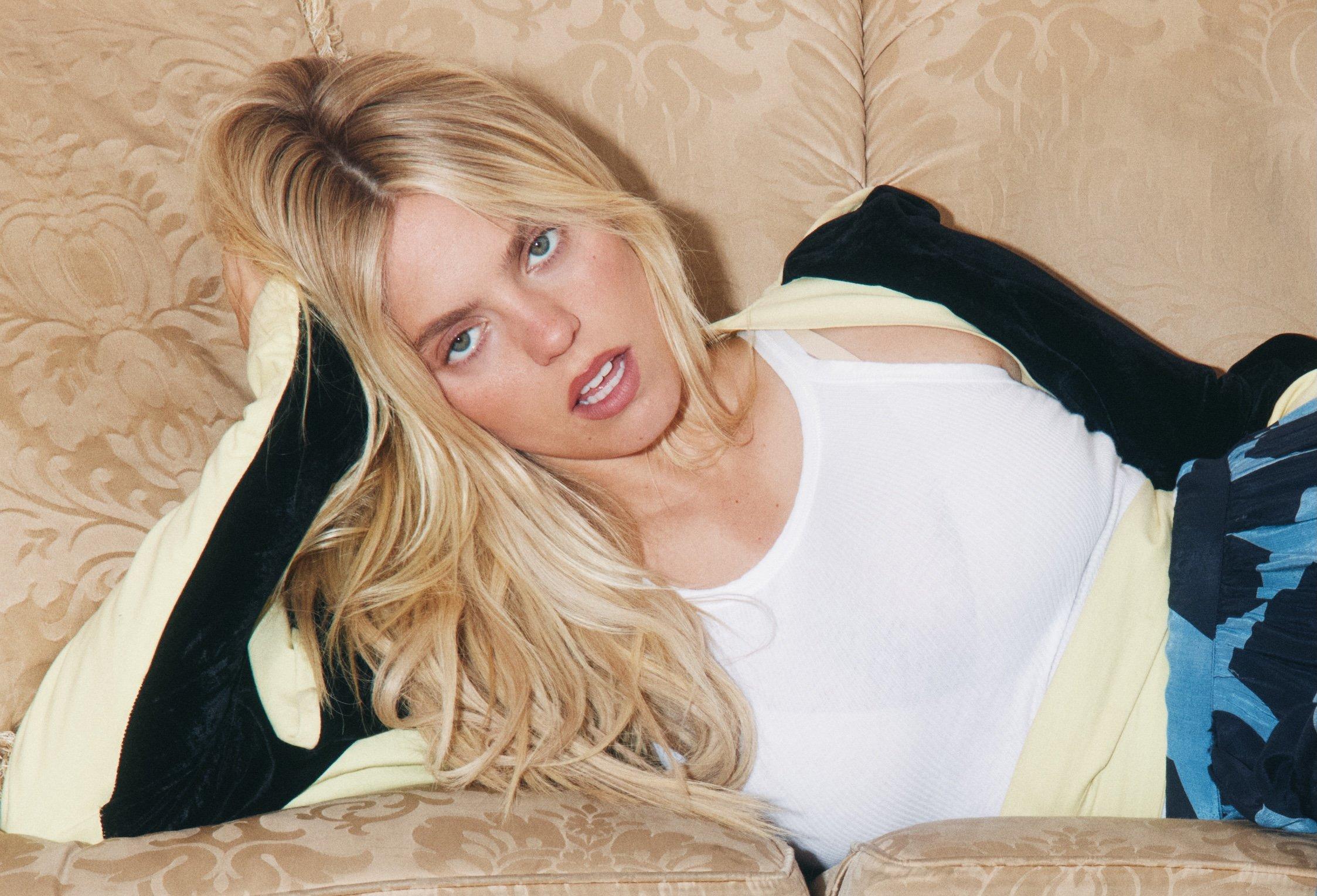
Reneé Rapp
How 'BITE ME' Helped Reneé Rapp Love Herself — And Her Life
The singer/actress details the biggest influences behind her new album, and how the process led her to newfound happiness and strength.
GRAMMYs/Aug 1, 2025 - 02:46 pm
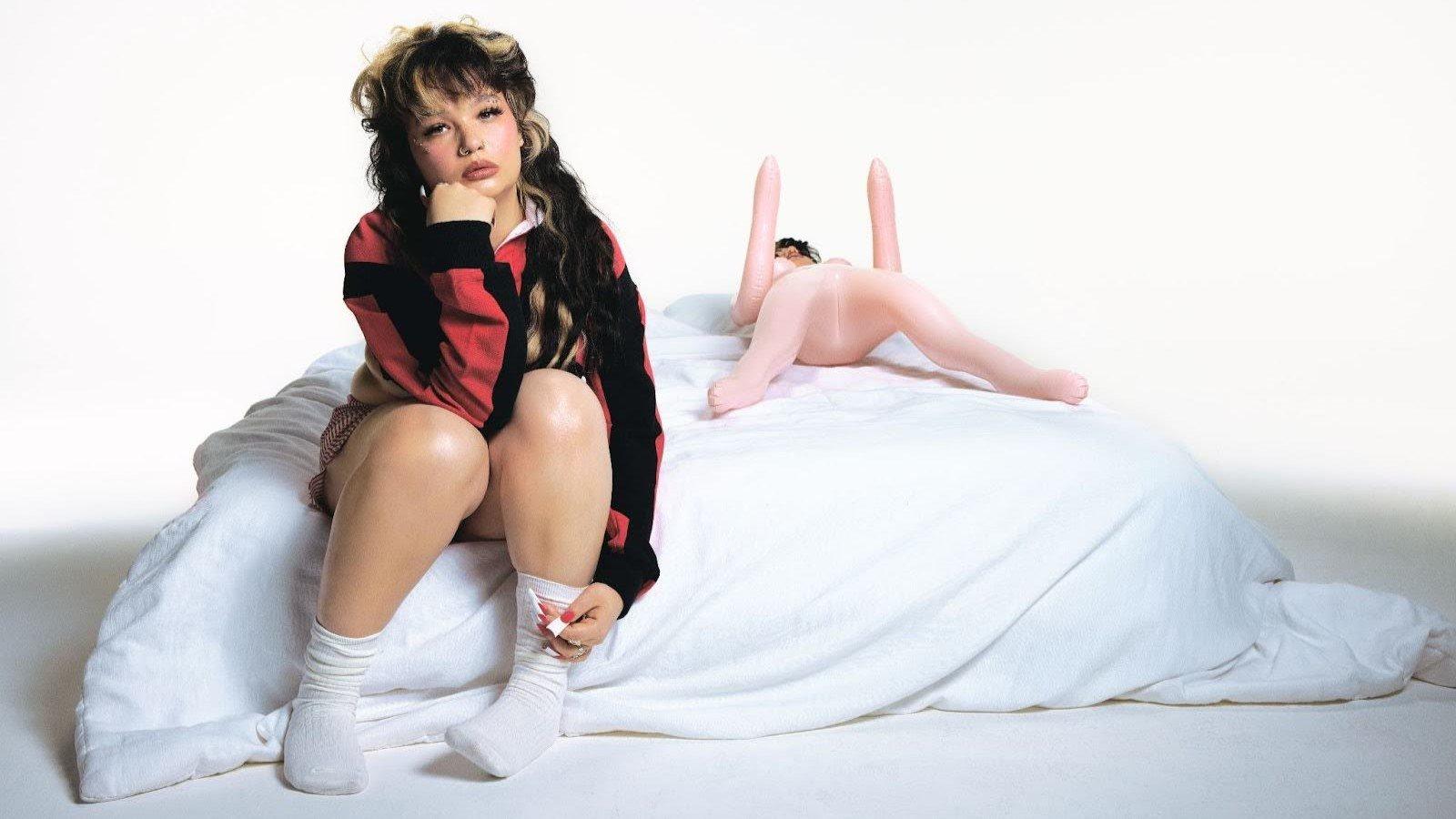
The world couldn't get enough of Reneé Rapp after her August 2023 debut LP, Snow Angel, sold-out Snow Hard Feelings Tour, and starring turn as Regina George in the 2024 Mean Girls musical film. But as more people wanted more of her, the actress-turned-pop star realized she was losing herself. So, she silenced external demand in order to listen to her inner voice — and tell everyone to BITE ME.
The fiery title of Rapp's sophomore album, out now via Interscope Records, mirrors the new level of confidence she's unleashed. Snow Angel showed her what her artistry could be, but BITE ME sees Rapp fully embracing herself, flaws and all. She's as assured as she is vulnerable, as funny as she is poignant. And as the project's name insists, she's not looking for anyone's approval.
BITE ME is the result of Rapp establishing hard boundaries and asking herself what she wanted in her personal life — and in turn, finding her community and falling in love (with British guitarist/singer-songwriter Towa Bird). Her collaborators helped, too, with Snow Angel executive producer Alexander 23 by her side for 11 of the 12 tracks, and pop masterminds Ryan Tedder, Omer Fedi, Julian Bunetta, and Ali Tamposi all contributing.
The album sees Rapp navigating different relationship dynamics, from flirtatious indulgences ("Shy") and lopsided heartbreak ("Sometimes") to emotional intimacy ("I Can't Have You Around Me Anymore") and betrayal ("That's So Funny"). She doubles down on the raw honesty she displayed on Snow Angel, leaning further into her shameless sexuality and addressing her insecurities and struggles head-on.
While Rapp says that the album was inspired in part by Alanis Morissette's opus, Jagged Little Pill ("it's so honest and angry... it really resonates with me"), BITE ME ultimately pulls from the personal growth she's experienced in the last two years. And when she listens to the project herself, she wholeheartedly feels it.
"Snow Angel was a test run, and BITE ME is a body of work," Rapp tells GRAMMY.com. "When I finished making [BITE ME], I was so excited. It just felt so good. I would cry because I was so happy and so proud of what I made and what we did. I try to hold onto that as much as I can, even when it's really hard to."
Below, in her own words, Rapp explains the inspirations behind BITE ME, from leaning on her friends after a tumultuous breakup to letting people say whatever they're going to say.
I'm perceived very differently from how I view myself and how I actually am in my head. That's always so confusing to me. Everybody is like, "Oh, she's so confident and embraces everything. Wow, what a sister!" But I don't feel that way wholeheartedly.
I think there was a lot of admission on this album. There was a lot of admission of my being hurt, feeling not good enough, and feeling like the second choice. Even in the songs that are so irreverent and sexy, like "At Least I'm Hot." If you want to boil the song down to what it is, it's like, Well, I'm depressed and borderline don't want to be alive, but at least I'm sexy. I wanted to make something that was a positive takeaway, or at least a cute takeaway, from that feeling.
If you boil down any of my songs or lyrics on paper, they're really depressing. Even the ones that you think are irreverent, empowered, and inspiring are actually depressing. They suck. They actually suck.
I used to feel like such a little freak. People would constantly just be like, "Ooh, that's too much." Or, "Oh my God, why would you do that? Why would you say that?" And then, I realized that I just needed better friends. I needed people around me who didn't want to put me in a box and make me smaller so that they were comfortable. That's kind of always been the case with me, and I think it's the case for a lot of artists and creatives. You often get tossed into this little pile of being too much, too emotional, or too awkward.
[Making this album] was the first time I liked my life. I was like, oh, f—. I love my life. I love my girlfriend. I love my friends. I love everything that I've done. I love being alive, even if I'm not happy all the time. I really felt that throughout the making of this album — at least the last seven or eight months, when it started to come together.
I relied on my friends by seeing my friends more. I wanted to see my friends more. I wanted to explore. I wanted to travel. I wanted to go and have fun with my friends. I wanted to not bury myself in work as much. I wanted to be choosy with who I surrounded myself with. I wanted to spend time with my girlfriend. I wanted to spend time with myself. I wanted to be alone. My whole life was just work for such a long time. Then, I gained this incredible personal life that, I think, made my work life better.
My friends coached me through a terrible relationship and breakup. I was in a relationship where I was kept from my friends and the people around me for a really long time. My friends saw me through that and didn't judge me for it. They weren't like, "Well, f— you for being with this person and being away from us!" Instead, they embraced me and waited it out until I saw the light.
That made a really big difference in this album and also in my closeness with them. I realized that they were there to see me through a controlling relationship. That informed so much of the album and the way I spoke about it and wrote songs.
I can always tell where someone's asking [about my sexuality] from. Sometimes, a lot of straight people just ask me to be baity. They think it's this trendy, cute little thing now. And I'm like, well, you guys are so f—ing late on the bandwagon. Of course, now you want to chat about it. But not all the time. I mean, it's something that I love about myself.
I'm so loud about it because, no matter how out and all that I am, it's still not great to be out where I grew up or where my girlfriend grew up. Gay marriage is not legal where my girlfriend is from.
There's casual advocacy in just existence. In some ways, a lot of people's existence in the gay and queer community, and the trans community especially, is rebellion enough. But I also think that there has to be loudness. There has to be aggression, and there has to be solace, and there has to be warmth to it. It has to be everything. It takes all forms. I don't think one is good enough without the other.
"That's So Funny" is a good one because of the second verse: "Now everyone hates you/ Except, of course, my lawyer/ 'Cause you spoiled him, girl/ But here comes the spoiler." I'm talking about something that was just absolutely so terrible for me, and I'm also making a joke that, well, my lawyer loves you because I had to spend so much on bank and legal fees.
I like to approach things with a bit of deep, dark sarcasm and humor. That's kind of all over the album, but ["That's So Funny"] was probably the most juxtaposed way of doing that.
Bro, every day, we would write a song that I felt was amazing, and I would feel proud of myself for two seconds, and then I'd move on. To celebrate is a really hard thing for me to do when I constantly have the source in my head that it could be better, and it's not enough. But that's not specific to this album. That's specific to my whole life — my whole life artistically and just in every f—ing way. Every f—ing way. I was taught that there's always room for improvement.
I think it works for me, and it also makes me chronically sad. I'm doing my best to try and not live my life that way. I'm finding it really difficult, and I've always found it difficult. I used to think that it was what made me great, but now, I'm starting to think that it's making me sad. That's something I am really trying to work on, but it's a part of me. So, maybe I just have to learn how to live with it and make peace with it.
My favorite song is "I Can't Have You Around Me Anymore." It just is the perfect song to me. The feeling of it is amazing. The tone of the guitar is so my alley. It's just so heartbreaking and pure, and it's my musical taste.
There's nothing I would change in that song. I have no notes, and I haven't since the day we wrote it. I remember being like, This is f—ing fantastic. If another artist wrote that song, I would be so f—ing livid that I didn't write it.
It's important to have somebody who loves every part of you in the room. Alexander [23] loves the things about me that I'm not able to love about myself. He'll champion the parts of me that I think are crazy, and he believes in me when I don't believe in myself.
I live in my head, so I get lost every 10 minutes. I'm constantly second-guessing everything I'm doing all the time. So, it's important for somebody who knows me so well to steer me back on track. Like [with the track] "Sometimes," I had to get thrown off a cliff for that song to make the album. I mean, it's really beautiful, so I get it.
A writing influence — and just an influence on who I am as a person and how I speak — is my dad. He's just so sure of his faults and his accomplishments at the same time.
He's had a really, really difficult life. He has suffered addiction, incredible loss, and just basically gone through everything. I think it's made him such a complex and interesting person to have as a role model. And I think it's been so lucky for me because of the way he talks. The way he carries himself with such depth and sadness, but also real love for being alive, protection of people, and sees the value in everything. My dad was a big inspiration.
My parents really love this album, which is so great because I value their opinion and seek their approval.
Blocking Out Public Opinion
As much as I'm grateful and excited that so many people are tuned [into my career] now, and want to be a part of this world that we've created, it's also really jarring. I think there's a line that a lot of people cross. I also think I'm very outspoken and loud about what I want and what I don't. In a way — in a positive way — it's also made a lot of people in this fandom want to be more like that in their personal lives. But then, sometimes, that gets kind of ricocheted onto me, and then that doesn't feel as amazing. But I can still applaud it.
I've had to learn who to trust in my work life and my personal life, and that's a lengthy, sad process. No matter who you are, you get older and you learn more about yourself. Your business expands, and you learn more about yourself. I'm just doing it on a very public scale, and the stakes feel high.
Everyone has an opinion about my life, and that's okay. It's cool. I've grown to be at a place where I'm fine with that, but it's weird. Do I wish that I could do a deep dive and explain every single lyric and every single thing about my life? Sometimes, yes. But I also don't owe people that, so I'm not going to waste breath because you're not entitled to all of those details in my life.
I'm not here to judge that because it's pop music. You take what you want [from this album]. If you want to go ahead and make assumptions and run with that bulls—, then do it. You're chatting about me.
Latest News & Exclusive Videos
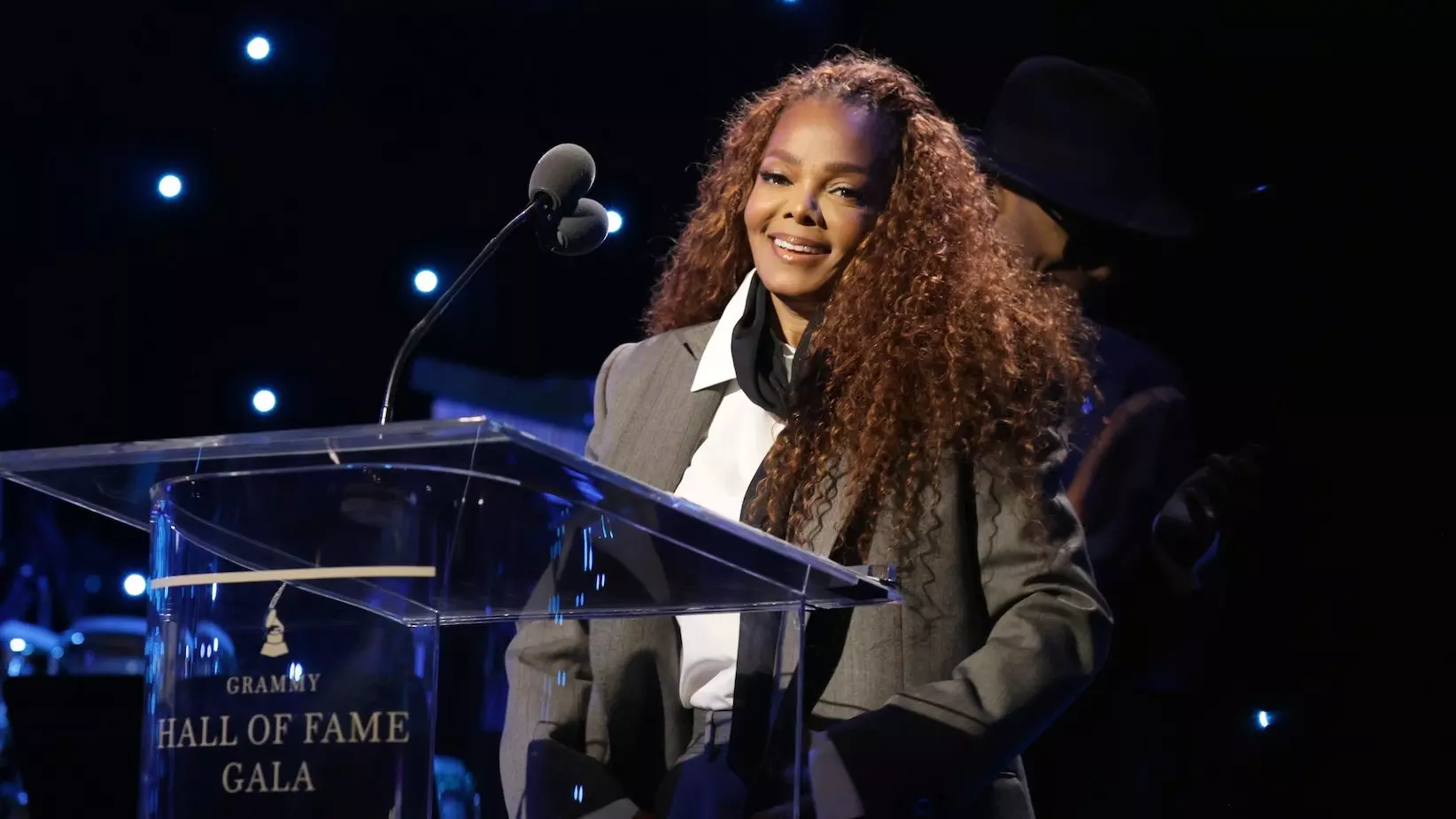
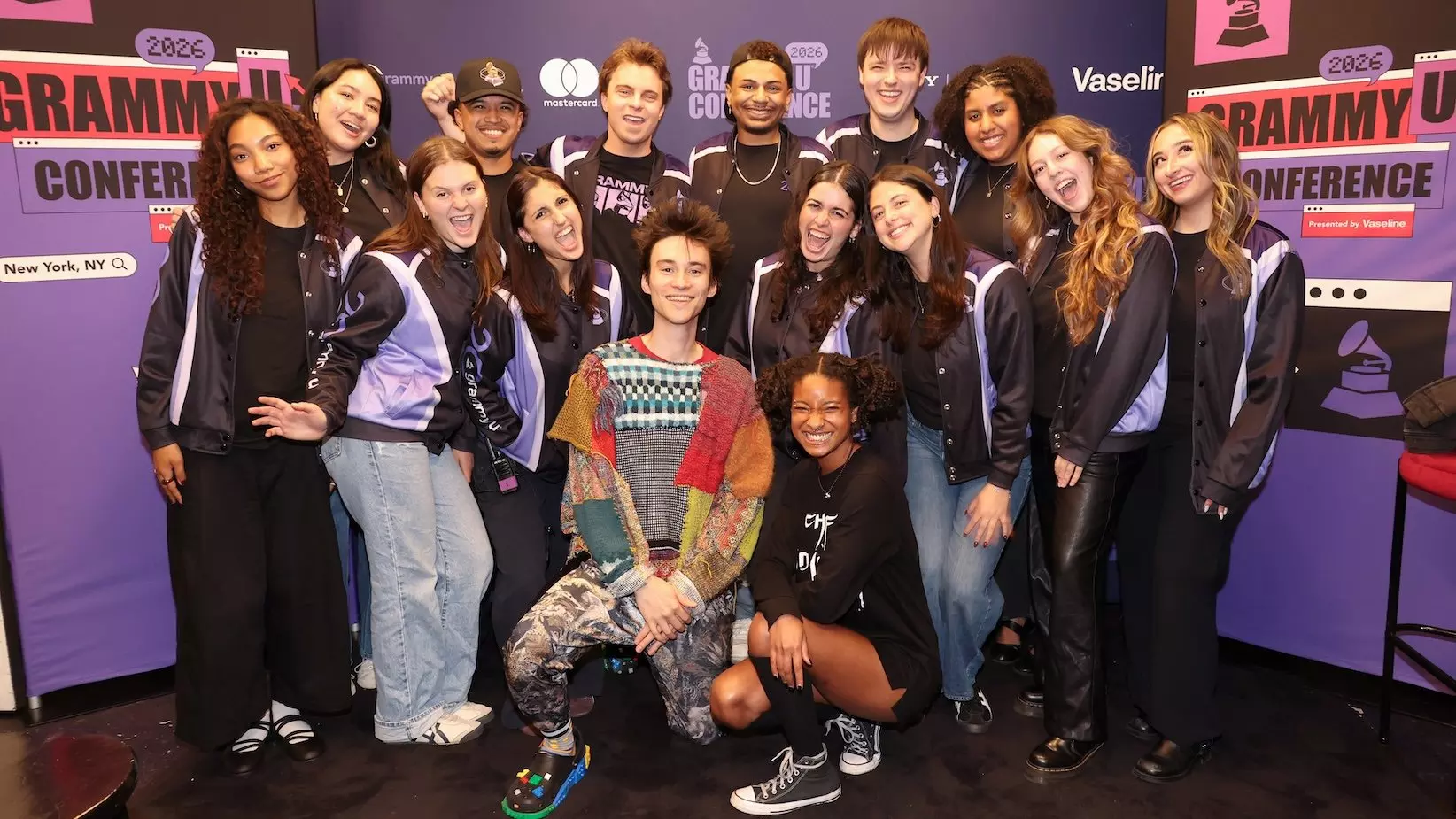

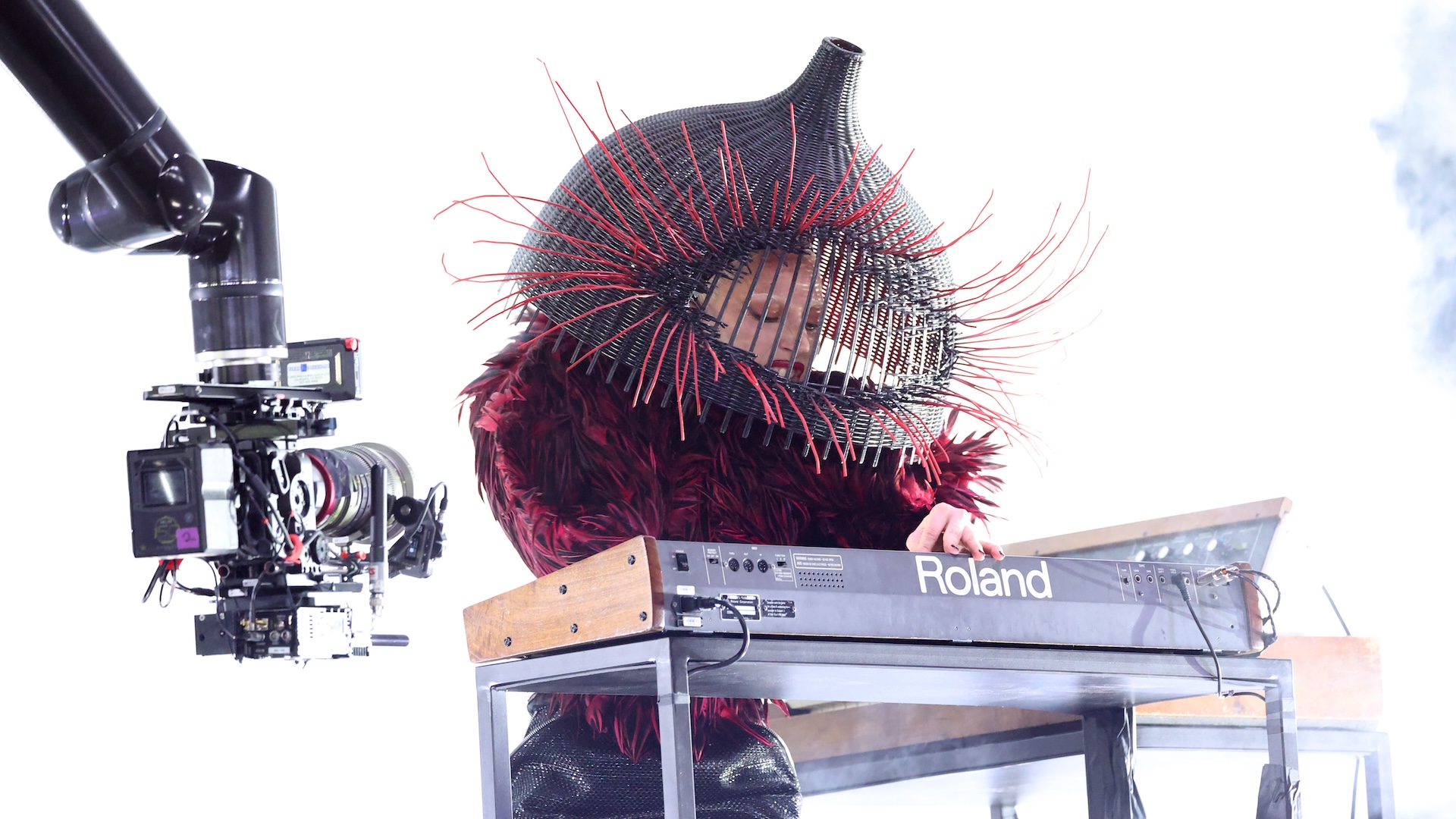
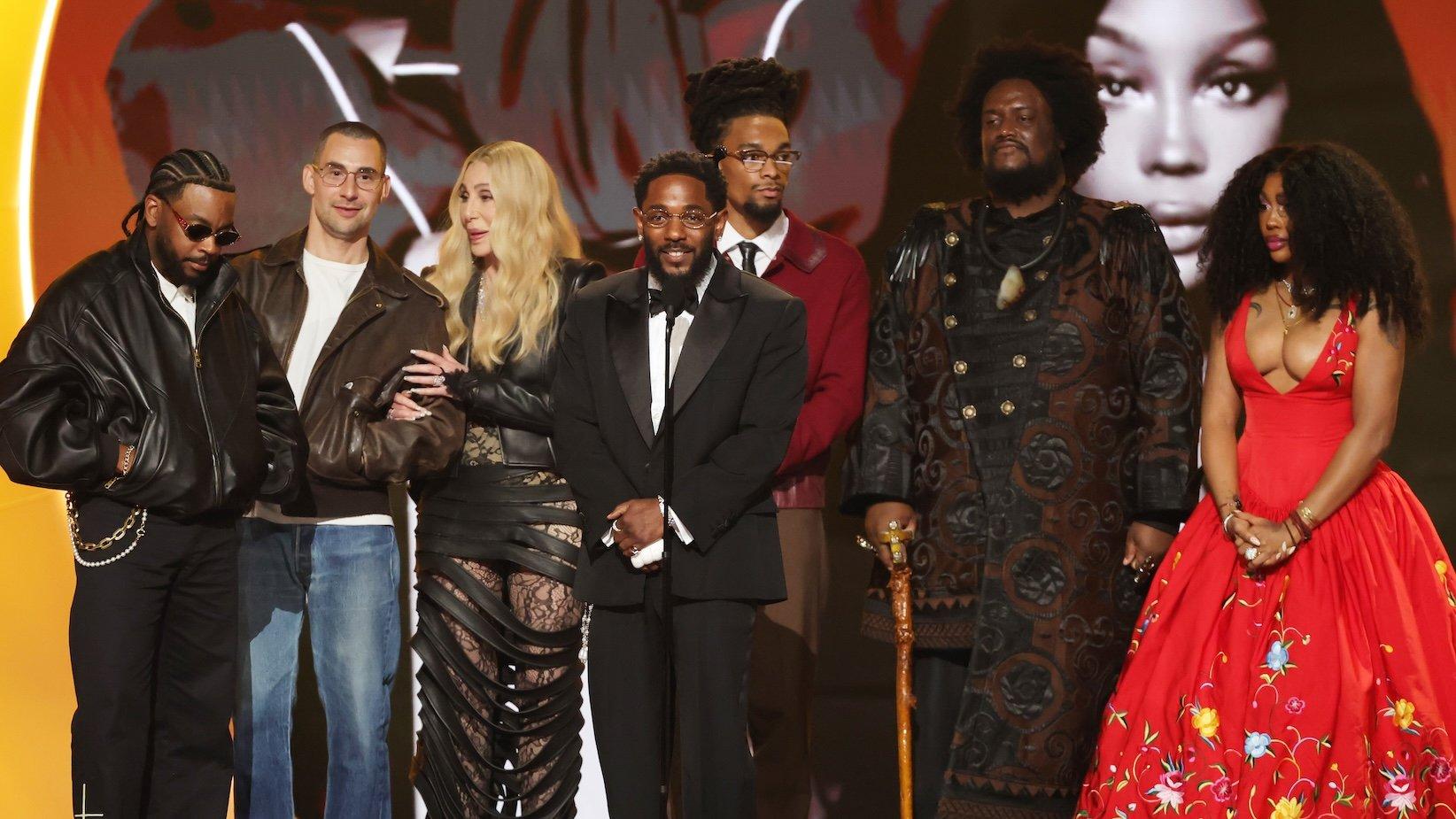
Kendrick Lamar and SZA win the Grammy for Record Of The Year at the 2026 Grammys on Sunday, Feb. 1, at Crypto.com Arena in Los Angeles, California. (L-R) Sounwave, Jack Antonoff, Cher, Kendrick Lamar, Scott Bridgeway, Kamasi Washington, and SZA.
Photo: Kevin Winter/Getty Images for The Recording Academy
9 Powerful Acceptance Speeches From The 2026 Grammys: Bad Bunny, Kendrick Lamar, Lady Gaga & More
From pro-immigrant statements to vocal support for women in music, these moving acceptance speeches from the 2026 Grammys reflected the moments defining music and culture today.
GRAMMYs/Mar 1, 2026 - 01:49 am
See the full list of winners and nominees from the 2026 Grammys.
Watch highlights and exclusive Grammys content from the 2026 Grammys all year long.
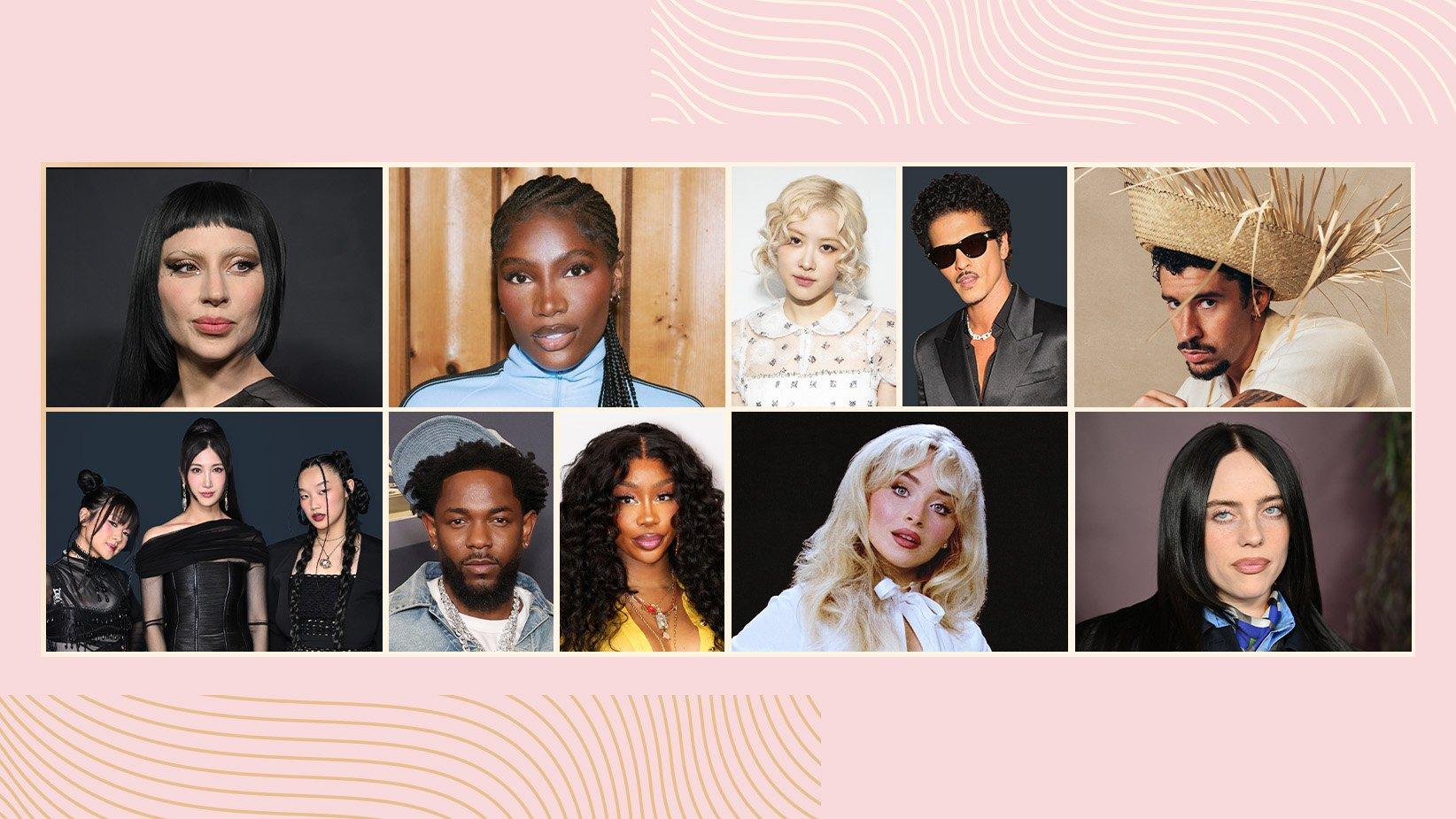
At the 2026 Grammys, winning artists took to the stage with much more than gratitude on their minds. Grammy winners such as Lady Gaga and Recording Academy Lifetime Achievement Award honoree Cher supported rising artists, particularly women in the music industry. Kendrick Lamar deflected from his own victories to pay tribute to Luther Vandross, namesake of his Record-Of-The-Year-winning tune, and the hip-hop community at large.
In particular, many artists reacted to the ongoing campaign of deportations and anti-immigrant violence happening across the U.S. Bad Bunny, Billie Eilish and Olivia Dean all spoke movingly in support of immigrants, while many other artists wore "ICE OUT" pins.
Below, revisit some of the most moving acceptance speeches from the 2026 Grammys.
Kendrick Lamar Makes Rap History & Shouts Out The Hip-Hop Community
After dominating the 2025 Grammys with "Not Like Us," Kendrick Lamar took home five Grammys this year and became the rapper with the most Grammy wins ever. After winning three Grammys earlier in the day during the 2026 Grammy Awards Premiere Ceremony, the Los Angeles artist won the first Grammy Award of the telecast for Best Rap Album for GNX. With this Grammy win, he topped JAY-Z's 25 wins to snatch the record for most Grammys won by a rapper.
"Every time I tell you this: Hip-hop is gonna always be right here," Lamar said in his Grammy acceptance speech, dedicating his win to the hip-hop movement. "We gonna be in these suits, we gonna be looking good, we gonna be having our folks with us, we're gonna be having the culture with us."
Kendrick also shouted out Clipse, with whom he won Best Rap Performance earlier in the day for their track "Chains & Whips." He would return to the stage once more before the end of the night to take home the Grammy for Record of the Year for his song "luther" with SZA, bringing his career total to 27 Grammy wins.

Bad Bunny Stands Up For Immigrants
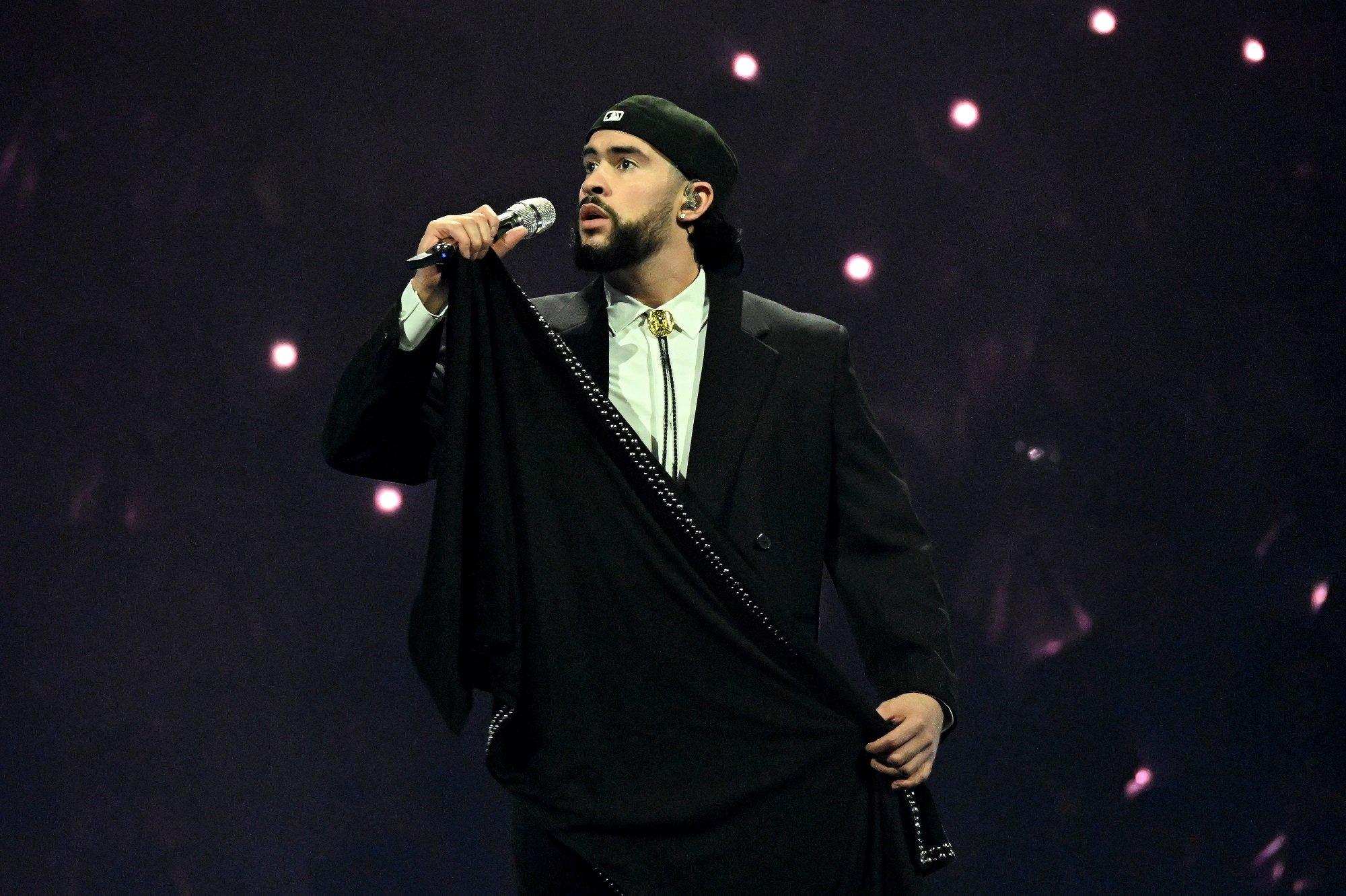
Of the many statements made in support of immigrants at the 2026 Grammys, few felt more powerful and resonant than Bad Bunny's, who twice spoke on the issue on the Grammy stage. Accepting the Grammy for Best Música Urbana Album for DeBÍ TiRAR MáS FOToS, the Puerto Rican superstar front-loaded his acceptance speech with a rebuke of the dehumanizing rhetoric faced by immigrants, especially Latin Americans such as himself.
"Before I say thanks to God, I'm gonna say: ICE out," he declared. "We're not savage, we're not animals, we're not aliens. We are humans and we are Americans."
Loading...
Later that night, after winning the Grammy for Album of the Year, a visibly shocked and overwhelmed Bad Bunny returned to the stage to deliver another Grammy acceptance speech, though this time mostly in Spanish. It was an appropriate move considering the history-making album is the first non-English-language album to ever win the Grammy for Album Of The Year. But given his stunned reaction, Bad Bunny may have just been too emotional to so quickly translate most of his thoughts. But in a fitting move, he dedicated his Grammy win to "all the people who had to leave their homeland, their country, to follow their dreams."
Olivia Dean Tearfully Takes Best New Artist
Loading...
"I never imagined I'd be up here, let alone nominated," Olivia Dean said as she tearfully accepted the Grammy for Best New Artist. Having just performed her U.K. chart-topping single "Man I Need" on the Grammy stage, the British singer used her platform to speak out in support of immigrants, including her own grandmother, who immigrated to the U.K. from Guyana as part of the Windrush generation.
"I'm up here as a granddaughter of an immigrant," Dean said. "I'm a product of bravery, and I think those people deserve to be celebrated."
Lady Gaga Supports Women In Music
As well-known as she is for awards-show spectacles – Remember the meat dress? – Lady Gaga kept things (mostly) low-key and earnest. Following a dynamic performance of "Abracadabra," she returned to the stage to accept the Grammy for Best Pop Vocal Album for MAYHEM.
Thanking her fiancé, Michael Polansky, and her collaborators, including Cirkut, who won the Grammy for Producer Of The Year, Non-Classical winner, and Gessaffelstein, the latter of whom won the Grammy for Best Remixed Recording for his remix of "Abracadabra," Lady Gaga offered some encouraging words for women in the music industry.
"When you're in the studio with a bunch of guys, it can be hard," she said. "Always listen to yourself and always fight for your ideas, fight for your songs, fight for yourself as a producer."
"Abracadabra" also won the Grammy for Best Dance Pop Recording, bringing her total career Grammy wins to 16.
Lola Young Swears She Didn't Expect Grammy Win
Though Lola Young certainly had stiff competition in the Best Pop Solo Performance Category, including veterans such as Justin Bieber and Lady Gaga, nobody was more shocked at her Grammy win in than Young herself. The singer, also nominated for Best New Artist, had just wrapped an emotional piano rendition of her track "Messy" earlier in the evening, one of her first live performances in four months following a health scare.
"I don't have any speech prepared," a visibly shocked Young said. "I don't know what to say. Thank you so much!" Utterly overwhelmed and searching for words, Young dropped a few less-than-TV-appropriate words before thanking her friends and mother and fleeing the stage while in a state of pure ecstasy.
Billie Eilish Gets Serious During Song Of The Year Speech
Loading...
Winning the Grammy for Song of the Year for "WILDFLOWER," her 10th Grammy, didn't seem to weigh heavily on Billie Eilish's mind as she took the stage to accept the award. Flanked by her brother and creative partner FINNEAS, both wearing "ICE OUT" pins, as were many of the other attendees, the pop star weighed in on the current anti-immigration policies being carried out in the U.S.
"No one is illegal on stolen land," Eilish said. "It's just really hard to know what to say and what to do right now … I feel really hopeful in this room, and I feel like we just need to keep fighting and speaking up and protesting, and our voices really do matter, and the people matter."
The more serious tone of the speech contrasted with Eilish's previous wins, but it felt more than appropriate given the current climate.
Cher's Audacious Return To The Grammy Stage
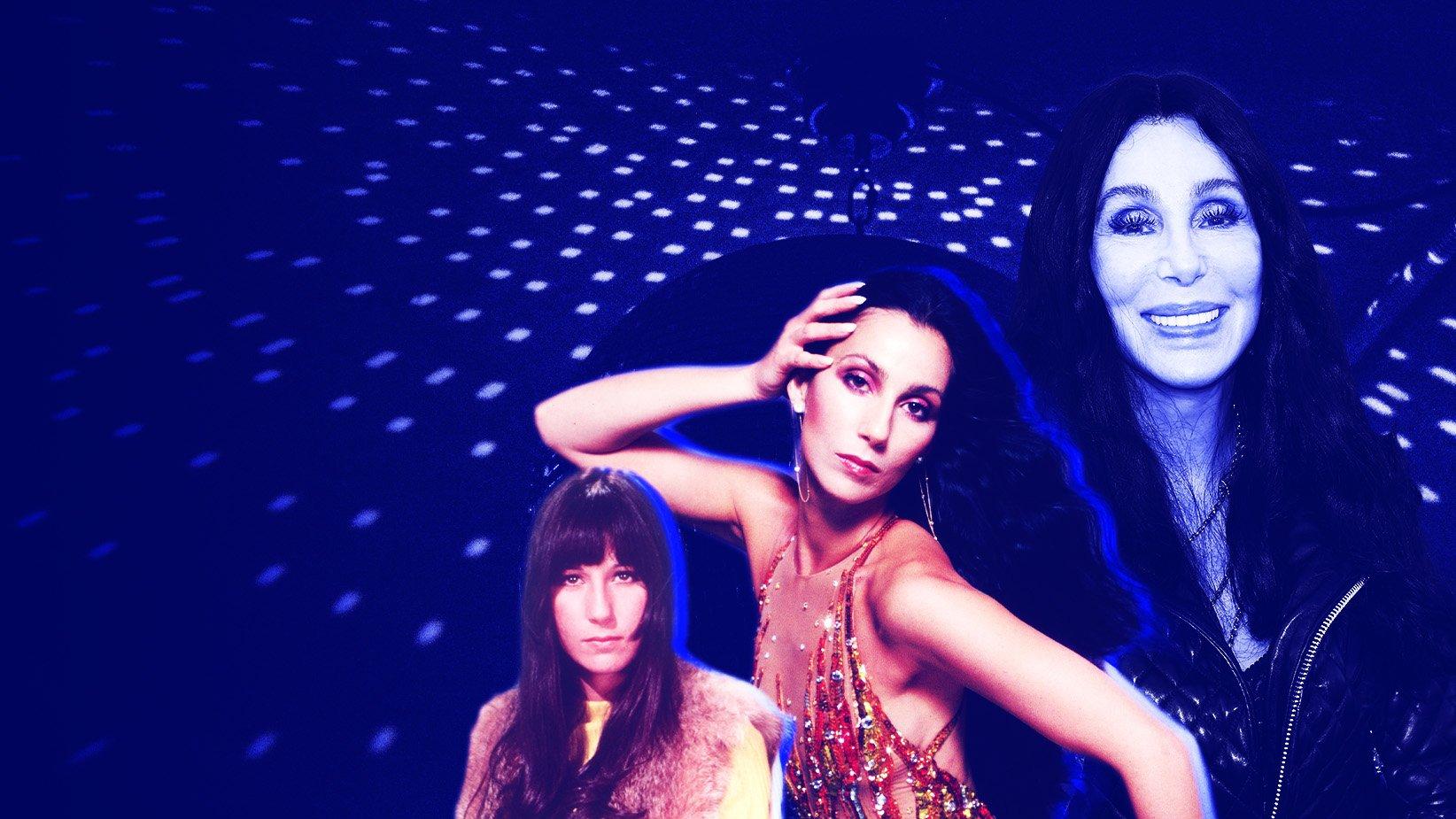
Cher is always a class act. With dozens of hits across a decades-spanning career, she earned the Recording Academy Lifetime Achievement Award deservedly. Her acceptance speech on the Grammy stage quickly became one of the most talked-about moments of the night.
First, she gave a stirring speech reflecting on her storied yet tumultuous time in show business. "I was famous at 19 and had a top-rated show in my 20s, actually, but it didn't occur to me how rough my career was going to be," she said. "I was either a loser or winning an Oscar. I'm sure a lot of you in the audience know what I'm talking about."
Cher also reflected on her stint in the "elephant graveyard" of Las Vegas in the '80s and her pioneering use of AutoTune on her Grammy-winning hit single "Believe." She closed out her speech by encouraging the audience: "Never give up on your dream, no matter what happens. Live it, be it, and if it's not happening now, it will happen soon."
Then things got a little bit … whacky. Apparently unclear that she would be presenting the Grammy for Record of the Year, the singer nearly walked off the stage before the crowd and host Trevor Noah coaxed her back. Then she mistakenly declared the late Luther Vandross the winner, in reference to the winning song, "luther" by Kendrick Lamar and SZA. Oh Cher, don't you ever change!
Jelly Roll Goes Full Country Music
Loading...
Jelly Roll had already won two Grammys earlier in the day for collaborations with Brandon Lake and Shaboozey, but it wasn't until the evening that he got to ascend the Grammy stage solo. Winning the Grammy for Best Contemporary Country Album for Beautifully Broken, he made his acceptance speech into a sort of country song in its own right, thanking his wife, referencing his Christian faith, and describing the troubles that led him to turn to music.
"I didn't think I had a chance, y'all," he said. "There were days that I thought the darkest things. I was a horrible human … There was a moment in my life that all I had was a Bible this big and a radio the same size and a six-by-eight-foot cell. And I believed that those two things could change my life."
The singer wrapped his speech by once again invoking religion: "Jesus is for everybody. Jesus is not owned by one political party. Jesus is not owned by no music label."
"luther" Wins Record of the Year
Cher may have been a bit off when she confidently misread that the Grammy for Record of the Year was going to "Luther Vandross." But the actual winners, Kendrick Lamar and SZA, made it clear that their chart-topping tune "luther" was a spiritual victory for the legendary R&B star who inspired the song, which prominently samples Vandross' and Cheryl Lynn's 1982 cover of "If This World Were Mine."
"First and foremost, let's give a shout-out to the late, great Luther Vandross," co-producer Sounwave began. "It was very, very, very important to keep the integrity of his record."
Lamar echoed the sentiment. "It's one of my favorite artists of all time, and they granted us the privilege to do our version of it. When we got that clearance, I promise you we damn near all dropped a tear.
"Being able to put our vocals on it, it proves that we were somewhat worthy to be just as great as them individuals," he continued. "They granted us that. They said, 'No cursing,' though."
Finally, SZA struck a note of hopefulness at the end of the speeches. "I know that right now is a scary time. I know the algorithms tell us that it's so scary, and all is lost," she said. "We can go on. We need each other. We need to trust each other and trust ourselves, trust your heart. We're not governed by the government, we're governed by God."
This Grammy win for "luther" puts Lamar in elite territory as a back-to-back Record Of The Year Grammy winner, joining fellow winners like Billie Eilish, U2, and the late Roberta Flack, the latter of whom was tributed in the annual In Memoriam celebration led by Ms. Lauryn Hill earlier in the ceremony.
2026 Grammys: Performances, Winners & Highlights
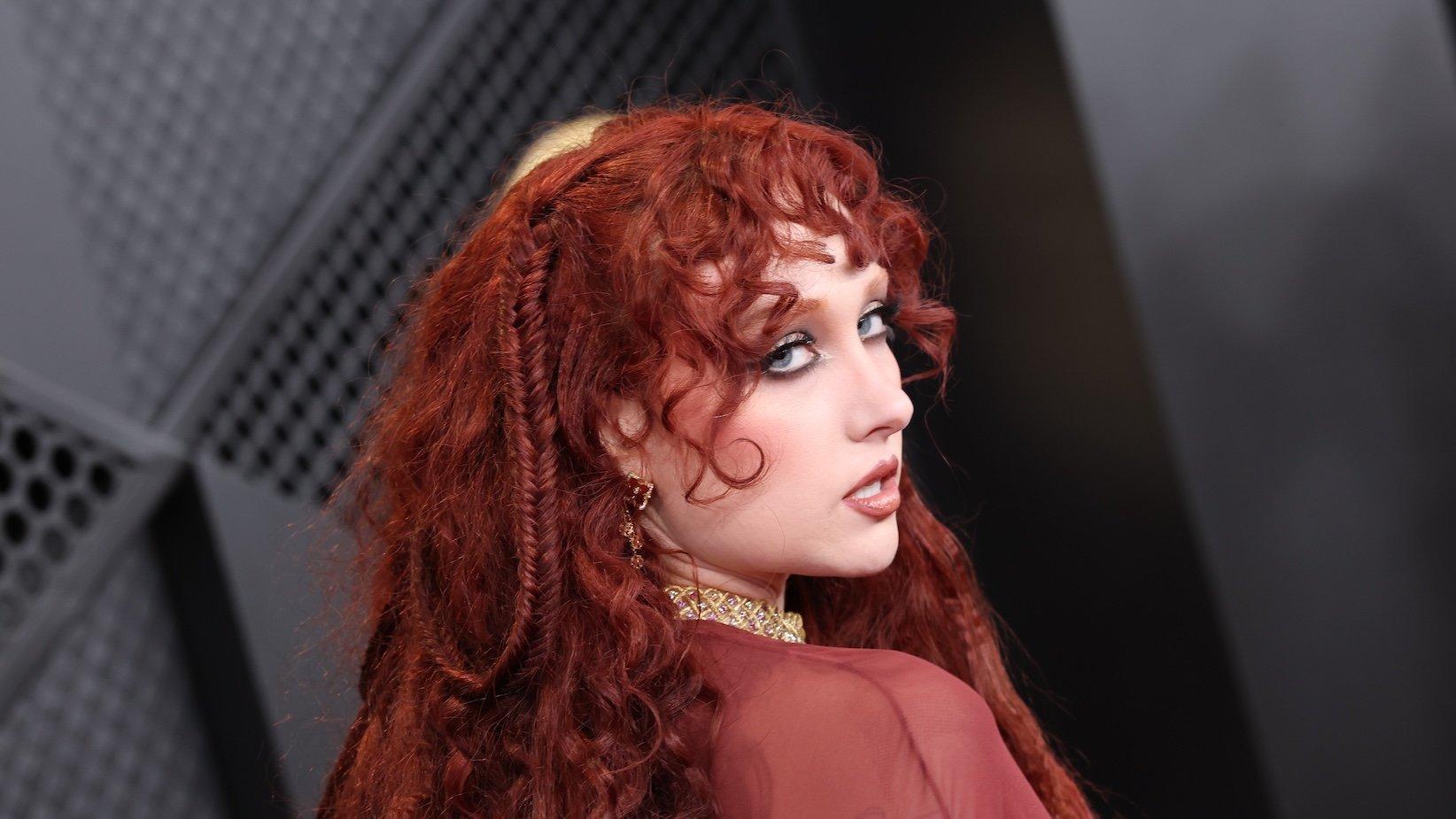
Chappell Roan walks the red carpet at the 2026 Grammys on Feb. 1 at Crypto.com Arena in Los Angeles, California.
Photo: Amy Sussman/Getty Images
7 Eye-Catching Outfits From The 2026 Grammys: Chappell Roan, Bad Bunny, Sabrina Carpenter, KATSEYE & More
Biggest Night doubles as one of the biggest nights in fashion. Relive some of the most unforgettable fashion looks from the 2026 Grammys, from Chappell Roan's spicy Mugler moment to Bad Bunny's history-making haute couture.
GRAMMYs/Feb 28, 2026 - 07:48 pm
See the full list of winners and nominees from the 2026 Grammys.
Watch highlights and exclusive Grammys content from the 2026 Grammys all year long.
The Grammys have undeniably always been Music's Biggest Night, but there's an argument its one of fashion's biggest nights, too. Over the years, the Grammys have offered fans an endless display of eye-catching and boundary-pushing fashion, in between celebrating music, and the 2026 Grammys were no exception.
The sartorial parade began, of course, on the Grammy red carpet, where Grammy nominees, presenters, and more of the music industry's brightest stars celebrated the year in musical excellence. But with plenty of outfit changes, over-the-top performances and surprise appearances during the show, the can't-miss looks continued throughout the entire evening — all the way up until host Trevor Noah bid the millions watching at home a good night.
Below, check out some of the most unforgettable and talked-about looks from the 2026 Grammys, from Chappell Roan's spicy Mugler moment to Bad Bunny's history-making haute couture.
Chappell Roan
Chappell Roan, last year's Best New Artist winner, turned heads on the Grammy red carpet with a custom Mugler ensemble involving nipple rings, pastie prosthetics, and a plethora of medieval-inspired temporary tattoos. (The entire look was directly inspired by Mugler's Jeu de Paume couture collection from spring/summer 1998.)
While the risqué outfit set the internet positively ablaze, Roan — who was nominated for Record of the Year and Best Pop Solo Performance for her 2025 single "The Subway" and presented this year's Grammy Award for Best New Artist to Olivia Dean — shrugged off the online pearl-clutching with a laugh.
"Giggling because I don't even think this is THAT outrageous of an outfit. The look's actually so awesome and weird," Roan wrote in an Instagram post after the Grammys.
"I recommend just exercising your free will it's really fun and silly :D," the Midwest Princess continued. "Thank you for having me @grammys and those who voted for me!!"
Sabrina Carpenter
Sabrina Carpenter was nothing short of a vision when she arrived at the 2026 Grammys wearing a romantic custom gown by Valentino.
Honoring the late Italian fashion icon, who died in January at 93, the superstar's dress featured a dainty, sheer capelet for the sleeves, a sparkling bodice made of crystalline, beaded flowers, and a cascading, ruffled skirt.
Loading...
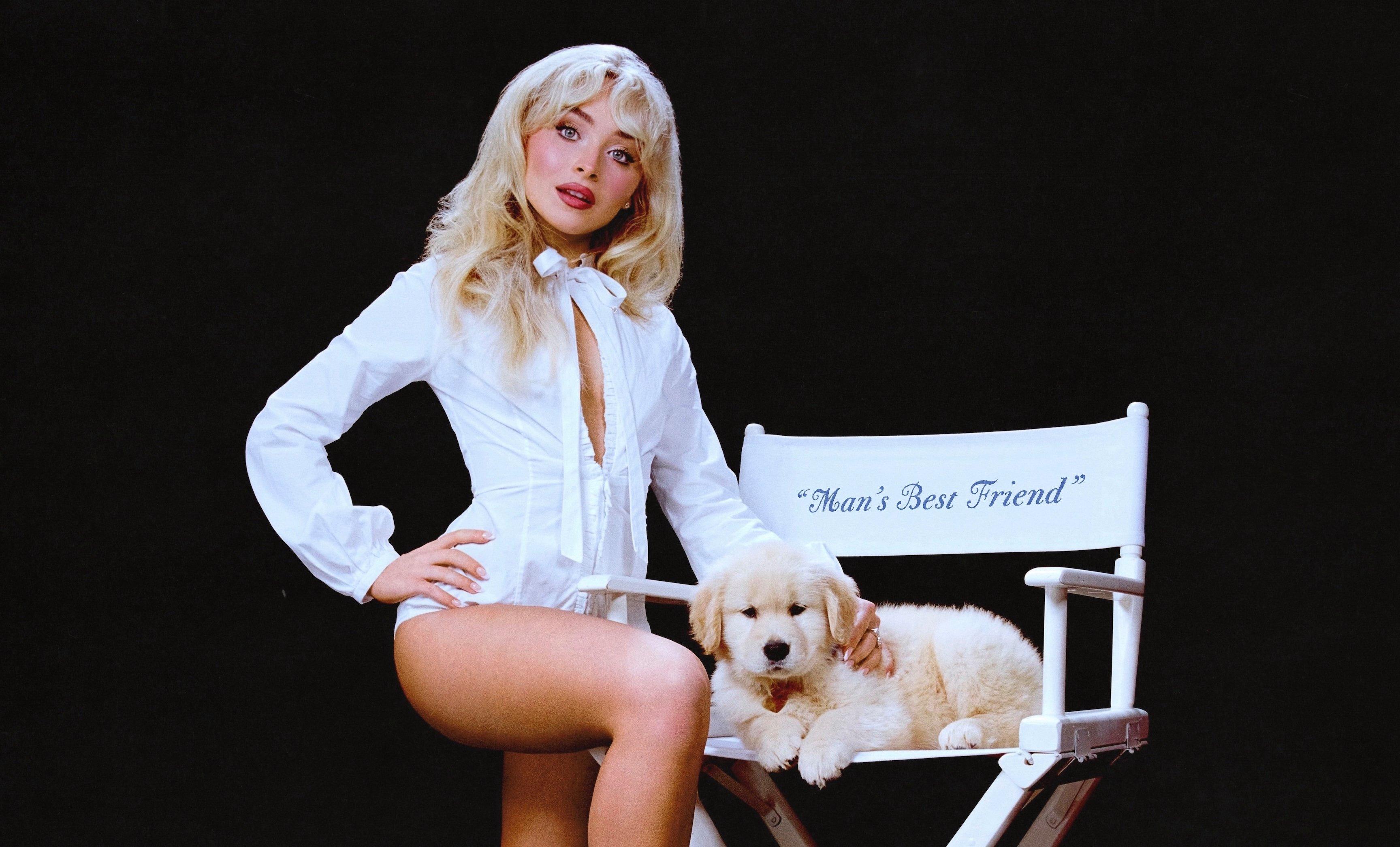
Nominated for six Grammys — including Album of the Year and Best Pop Vocal Album — for her 2025 album Man's Best Friend, Carpenter lit up the Grammy stage early in the telecast with a maximalist production number of her No. 1 single "Manchild," which also earned nods for Song of the Year, Record of the Year, Best Pop Solo Performance, and Best Music Video. For the high-energy, airport-themed number, Carpenter changed into a corseted pilot's uniform, complete with matching white go-go boots and an old-fashioned airline captain's hat.
KATSEYE
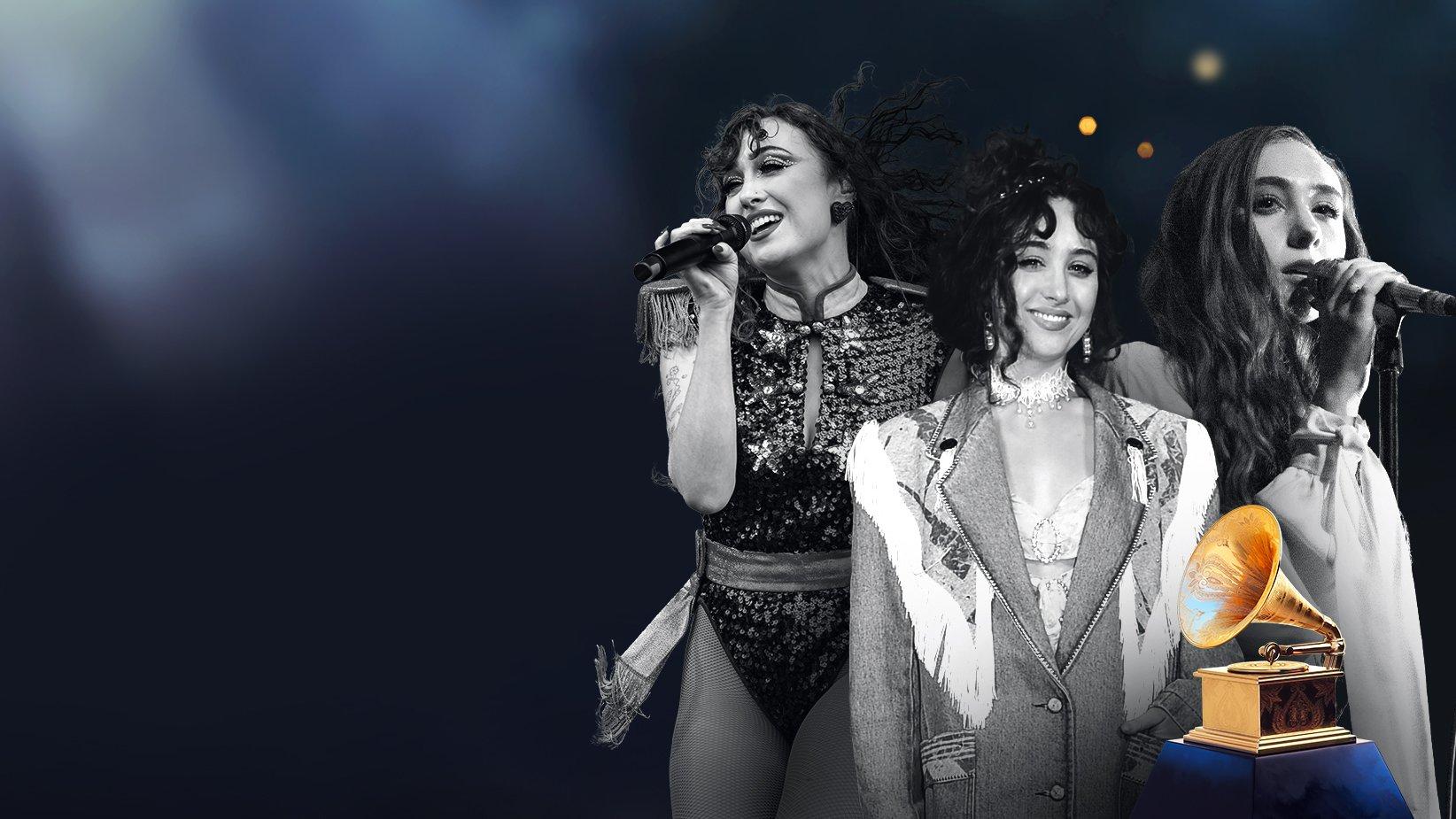

KATSEYE expertly resurrected the immortal tradition of girl groups rocking matching looks on the Grammys red carpet. The sextet looked all sorts of angelic in their coordinated white and silver gowns by Ludovic de Saint Sernin, complete with studded silver detailing and ample use of both halter necklines and lace.
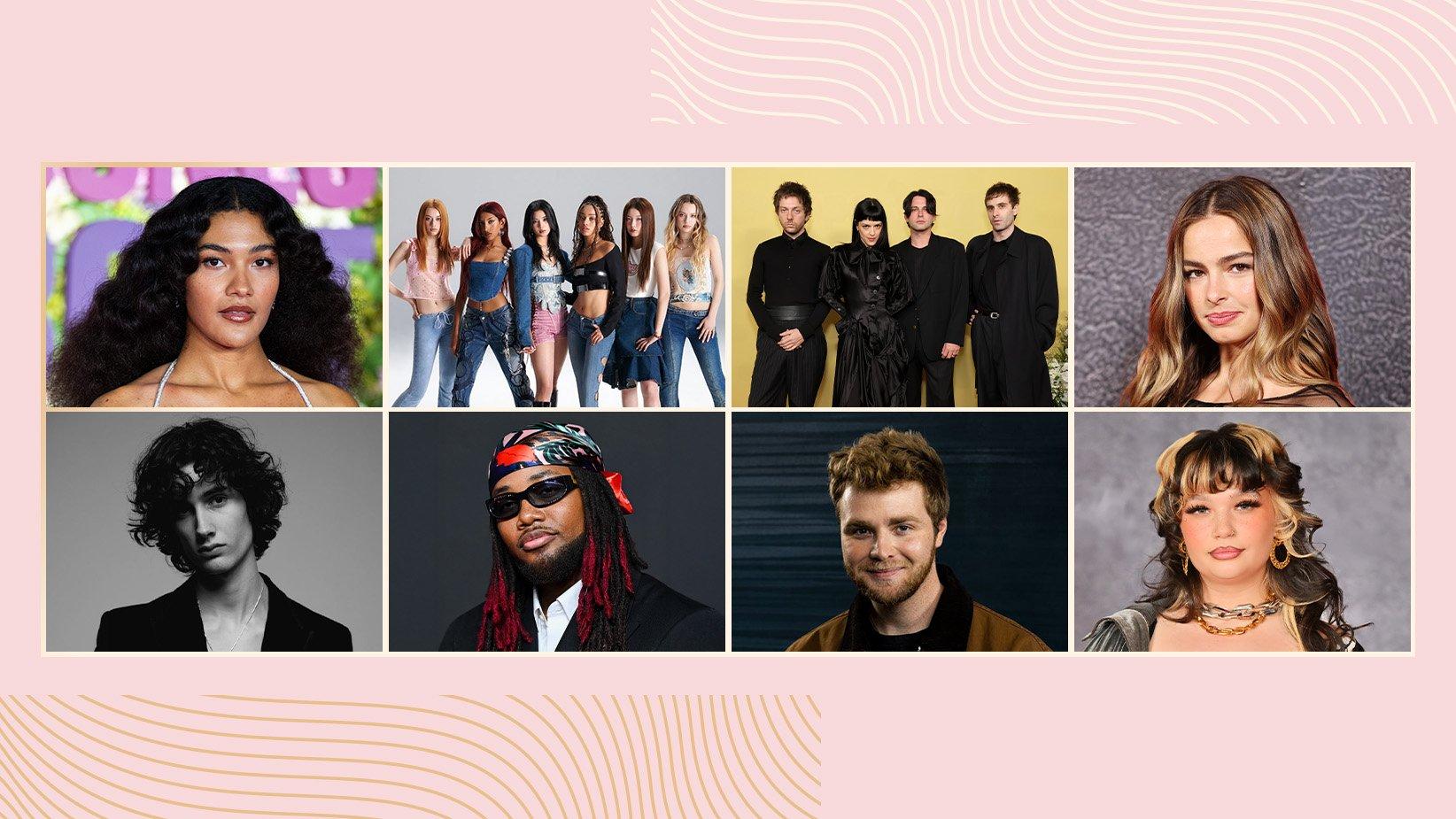
Of course, during the telecast, the first-time Grammy nominees changed into more choreography-friendly outfits to perform their addictive single "Gnarly" — a high-octane highlight from the Best New Artist medley that also featured performances from fellow Best New Artist Grammy nominees The Marías, Addison Rae, Leon Thomas, Alex Warren, Lola Young, sombr, and eventual winner Olivia Dean.
Loading...
KATSEYE weren't the only group sporting a matching aesthetic at the show. British girl group FLO, who earned their first Grammy nomination this year in the Best Progressive R&B Album Category, served up regal shades of royal blue on the red carpet just days after paying tribute to Mariah Carey with a cover of "Dreamlover" at the 2026 MusiCares Person of the Year benefit gala. The sisters of HAIM, meanwhile, opted for a trio of strappy black-and-silver dresses by Louis Vuitton. Plus, on the menswear side of the aisle, Pharrell Williams matched with Clipse in peachy velvet suits before hitting the Grammy stage to perform their 2025 collaboration "So Far Ahead," off the Grammy-nominated Let God Sort Em Out.
Teyana Taylor
Fresh off her win at the 2026 Golden Globes, Teyana Taylor wore an ab-baring gown by Tom Ford at the 2026 Grammys.
The budding multi-hyphenate, who earned her first Grammy nomination for Best R&B Album for her 2025 album Escape Room, wowed in an asymmetrical look made of metallic chain mail. Continuing the red carpet theme of daring, nearly-naked fashion, the dress featured an innovative strapless design that had to be seen to be believed.
Perhaps the most striking detail, though, is that Taylor reportedly styled herself for the evening, pairing the sculptural gown with a plunging gold necklace from Tiffany & Co., bronzed makeup, and a matching manicure.
Heidi Klum
Heidi Klum's dress at the 2026 Grammys was both a high-fashion moment and a technological marvel. Dreamed up by Berlin-based designer Marina Hoermanseder, the skin-toned leather look brought new meaning to "nude illusion," with the dress sculpted to a mold of the supermodel's body.
"She did a little mold, and then everything is done by leather. She makes it wet, it gets molded, then she dries it. Then it gets lacquered, sprayed and voila!" Klum explained on the Grammy red carpet while dishing on "Red Eye," her new collab with Diplo created for the upcoming season of "Germany's Next Topmodel."
"I always go for, like, a showstopper kind of an outfit, you know? I'm never someone who's like, 'This looks nice,'" the longtime "Project Runway" host concluded. "I always like something special."
Following the ceremony, Hoermanseder gave followers a behind-the-scenes peek at the process of making Klum's body-baring gown via an insightful Instagram carousel. The fashion designer showed off every step of the painstaking process — from creating the very first sketches and computer models to stretching and drying the leather by hand before matching its color precisely to Klum's skin.
Bad Bunny
Hours before Bad Bunny's triumphant night at the Grammys ended with his historic win for Album of the Year, it started with the perfect Schiaparelli tuxedo.
Inspired by a gender-bending design from the French maison's Couture runway show in 2023 and featuring a laced-up, corset-style back and subtle measuring tape lapel, Benito's dapper tux made its own mark on fashion history as Schiaparelli's very first Haute Couture custom menswear look to ever grace a red carpet.
Following the 2026 Grammys, Schiaparelli took to social media to celebrate Bad Bunny's trio of big wins for Album of the Year, Best Música Urbana Album, and Best Global Music Performance. They also gleefully pointed out the fact that the past three Album of the Year Grammy winners have all accepted their Grammys while wearing custom Schiaparelli Haute Couture — including Beyoncé in 2025 for COWBOY CARTER and Taylor Swift in 2024 for Midnights. Talk about a high fashion hat trick!
Harry Styles
Harry Styles served as the final presenter at the 2026 Grammys, returning to the Grammy stage to announce this year's winner for Album of the Year. And while the three-time Grammy winner didn't walk the Grammy red carpet, he still managed to make quite the sartorial statement by pairing a dazzling Dior blazer with — of all things — casual dark wash jeans.
"A truly great album can change the way you see everything. An artist can take you on a journey as you discover the world together. The best albums stay with you, and you can always return to them, just like old friends," Styles said, before listing off the eight albums nominated for Album of the Year and ultimately announcing Bad Bunny's DeBÍ TiRAR MáS FOToS as the year's big winner.
2026 Grammys: Performances, Winners & Highlights
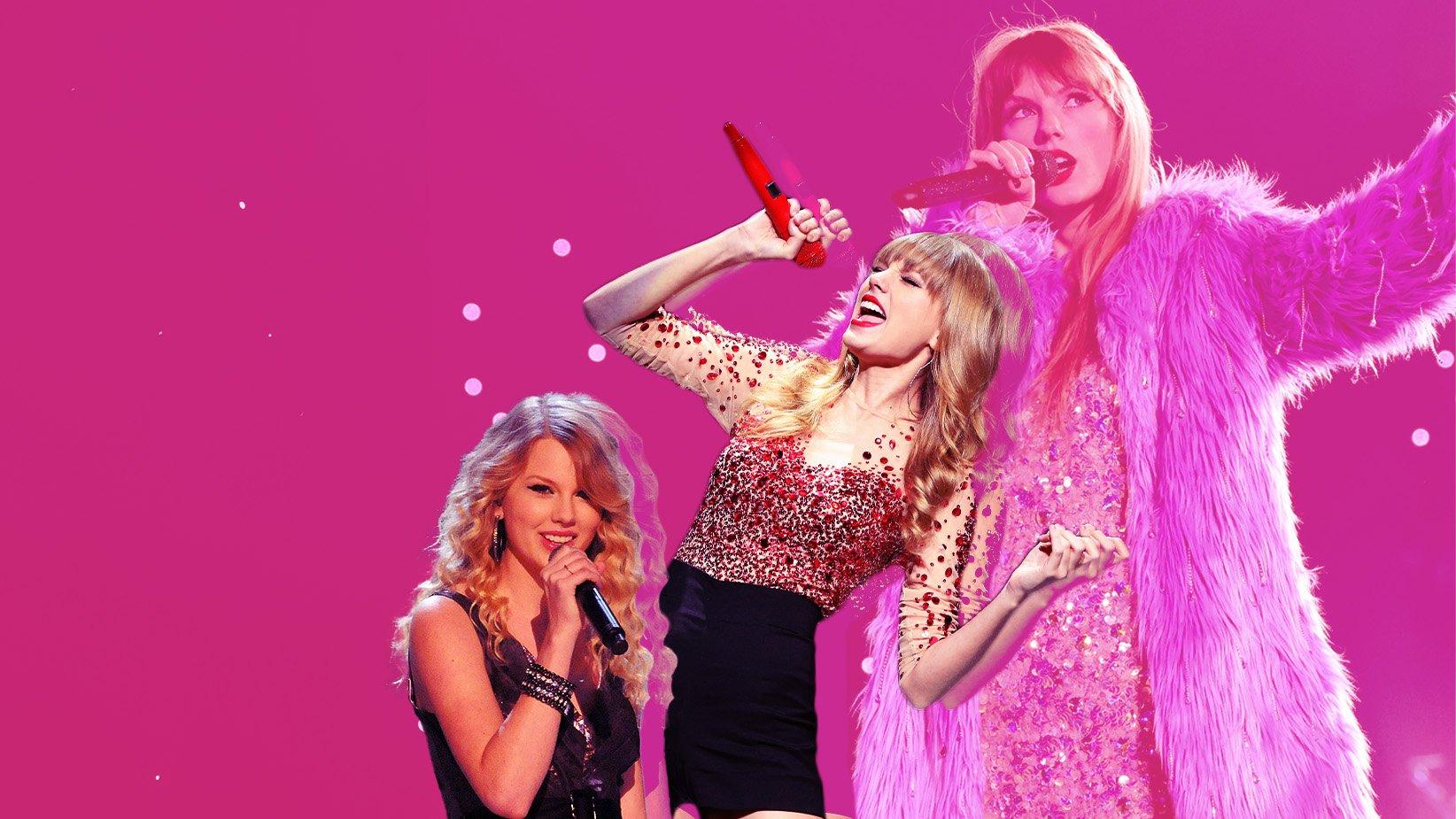
(L-R) Taylor Swift in 2008, 2012 and 2023.
Photos (L-R): Jeff Kravitz/FilmMagic, Christopher Polk/Getty Images for Clear Channel, Buda Mendes/TAS23/Getty Images for TAS Rights Management
Songbook: An Era-By-Era Breakdown Of Taylor Swift's Journey From Country Starlet To Pop Phenomenon
Upon the arrival of Taylor Swift's 'The Life of a Showgirl,' take a deep dive into her discography and see how each album helped her become the genre-shifting superstar she is today.
GRAMMYs/Oct 6, 2025 - 06:23 pm
Editor’s note: This story was updated on Oct. 6, 2025 to reflect the release of The Life of a Showgirl.
The world now knows Taylor Swift as a global pop superstar, but back in 2006, she was just a doe-eyed country prodigy. Since then, she's released 12 studio albums, re-recorded four as "Taylor's Version," and cultivated one of the most feverish fan bases in music. Oh, and she's also won 14 GRAMMY Awards, including four for Album Of The Year — the most ever won by an artist.
Swift has become one of music's most notable shapeshifters by refusing to limit herself to one genre, moving between country, pop, folk, and beyond. A once-in-a-lifetime generational storyteller, one could argue that she is music's modern-day maverick, constantly evolving both her music and the culture around her.
Every album era has seen Swift reinvent herself over and over, which has helped pave the way for artists to explore other musical avenues. In turn, Swift hasn't just become one of the biggest artists of all time — she's changed pop music altogether.
To celebrate Taylor Swift's newest era with The Life of a Showgirl, GRAMMY.com looks back on all of her albums (Taylor's Versions not included) and how each era shaped her remarkable career.
Taylor Swift: Finding Her Place In Music
In a genre dominated by men, the odds were already stacked against Swift when she first broke into country music as a teenage female artist. The thing that differentiated her from other writers — and still does to this day — is her songwriting. She didn't want to be just "another girl singer" and knew writing her own songs would be what set her apart.
Written throughout her adolescence, Taylor Swift was recorded at the end of 2005 and finalized by the time Swift finished her freshman year of high school. Serving as a snapshot of Swift's life and teenhood, she avoided songwriting stereotypes typically found in country music. Instead, she wanted to capture the years of her life while they still represented what she was going through, writing about what she was observing and experiencing, from love and friendship to feeling like an outsider.
As a songwriter, Taylor Swift set the tone for what would be expected of her future recordings — all songs were written by her, some solely and others with one or two co-writers. One writer in particular, Liz Rose, applauded Swift's songwriting capabilities, stating that she was more of an "editor" for the songs because Swift already had such a distinct vision.
The album's lead single, "Tim McGraw," an acoustic country ballad inspired by Swift knowing her relationship was going to end, represents an intricate part of Swift's songwriting process; meticulously picking apart her emotions to better understand them. With its follow-up, "Our Song" — which spent six consecutive weeks on the top of Billboard's Hot Country Songs chart — she became the youngest person to solely write and sing a No. 1 country single; she also became the first female solo artist in country music to write or co-write every song on an album.
Although Swift's eponymous debut is underappreciated now — even lacking its own set on Swift's Eras Tour — Taylor Swift's forthcoming rerecording is arguably the most anticipated by fans, who are eager to hear the songs with the singer's current and more refined vocals. Still, for fans who haven't properly explored Taylor Swift, it's easy to tie together Swift's earlier work to her current discography.
On the track "A Place In This World," a song she wrote when she was just 13, Swift sings about not fitting in and trying to find her path. While her songwriting has developed and matured, feeling like an outsider and carving her own path is a theme she still writes about now, as seen on Midnights' "You're On Your Own, Kid."
Even as a new country artist, critics claimed that she "mastered" the genre while subsequently ushering it to a new era — one that would soon see Swift dabble in country-pop.
Fearless: Creating A Different Kind Of Fairytale
If Taylor Swift was the soundtrack to navigating the early stages of teenhood, Fearless is Swift's coming-of-age record. More than its predecessor, Fearless blurs the line between country and pop thanks to crossover hits like "Love Story" and "You Belong With Me," yet still keeps the confessional attributes known in country songwriting.
Most of Fearless is Swift coming to terms with what she believed love to be. On the album's liner notes, Swift says Fearless is about "living in spite" of the things that scare you, like falling in love again despite being hurt before or walking away and letting go. The 2008 version of Taylor wanted to "believe in love stories and prince charmings and happily ever after," whereas in Swift's Fearless (Taylor's Version) liner notes, she looks back on the album as a diary where she was learning "tiny lessons" every time there was a "new crack in the facade of the fairytale ending she'd been shown in the movies."
Much of Fearless also sees Swift being reflective and nostalgic about adolescence, like in "Never Grow Up" and "Fifteen." Still wistful and romantic, the album explores Swift's hopes for love, as heard in the album's lead single "Love Story," which was one instance where she was "dramatizing" observations instead of actually experiencing them herself.
Unlike the slow-burn of Taylor Swift, Fearless went straight to No. 1 on the Billboard 200 and stayed there for eight consecutive weeks. It won Swift's first Album Of The Year GRAMMY in 2010, at the time making her the youngest person to win the accolade at age 20. To date, it has sold 7.2 million copies in America alone. It might not be the romantic tale Swift dreamed of growing up, but her sophomore album signalled that bigger things were to come.
Speak Now: Proving Her Songwriting Prowess
Everything that happened after the success of Fearless pushed Swift from country music's best-kept secret to a mainstream star. But this meant that she faced more publicity and criticism, from naysayers who nitpicked her songwriting and vocals to the infamous Kanye West incident at the 2009 MTV Video Music Awards.
For the first time since becoming an artist, she was forced to reckon with the concept of celebrity and how turning into one — whether she wanted it or not — informed her own writing and perception of herself. No longer was she the girl writing songs like "Fifteen" in her bedroom — now she was working through becoming a highly publicized figure. Speak Now is the answer to those growing pains.
Along with having more eyes on her, Swift also felt pressured to maintain her persona as a perfect young female role model amid a time when her peers like Miley Cyrus and Demi Lovato were attempting to rebrand to be more mature and sexier. During her NYU commencement speech in 2022, she reflected on this era of her life as one of intense fear that she could make a mistake and face lasting consequences, so the songs were masked in metaphors rather than directly addressing adult themes in her music. But that also resulted in some of her most poignant lyrics to date.
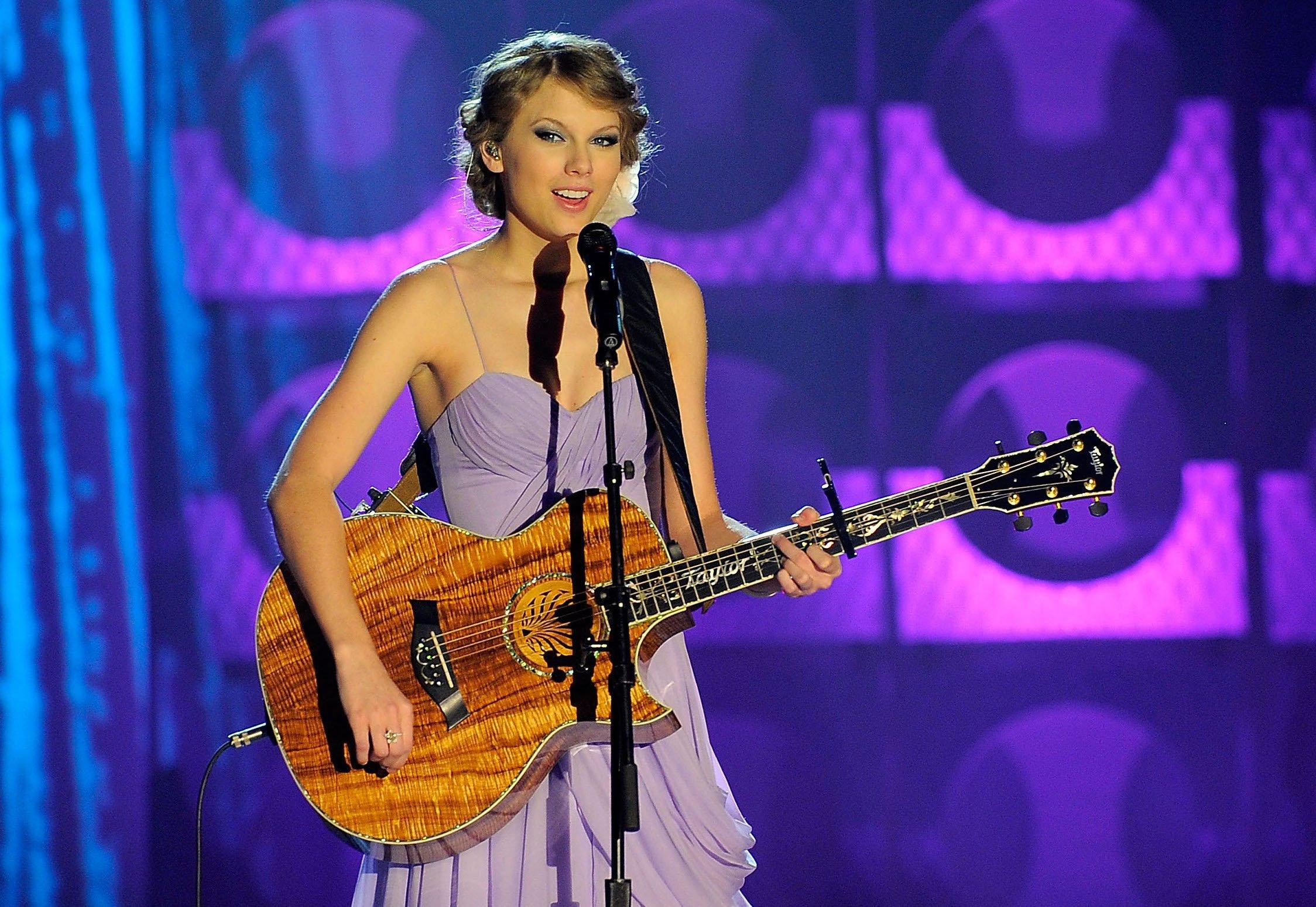
Writing the entire album herself, Swift used Speak Now to prove her songwriting prowess to those who questioned her capabilities. Much like her previous two albums, Swift included songs that were both inspired by her own life and being a fly on the wall. The album's title track pulled from the saying, "Speak now or forever hold your peace," inspired by a friend's ex-boyfriend getting engaged; meanwhile, "Mean" was everything Swift wanted to say to a critic who was continuously harsh about her vocals.
Retrospective and reflective, Speak Now is an album about the speeches she could've, would've and should've said. From addressing the aforementioned VMA incident in the forgiving "Innocent" to a toxic relationship in "Dear John," Speak Now also hinted that her rose-colored glasses were cracked, but Swift (and her songwriting) was only becoming stronger because of it.
Red: Coming Into Her Own
Highly regarded as Swift's magnum opus, Red sees the singer shed the fairytale dresses and the girl-next-door persona to craft a body of work that has now been deemed as her first "adult" record. On Red, Swift focused on emotions evoked from a hot-and-cold relationship, one that forced her to experience "intense love, intense frustration, jealousy and confusion" — all feelings that she'd describe as "red."
Unlike most of her previous writing that had been inspired by happy endings and fairytales, Red explores the lingering pain and loss that can embed itself within despite trying your hardest to let go. In her liner notes, she references Pablo Neruda's poem "Tonight I Can Write," stating that "Love is so short, forgetting is so long" is the overarching theme for the album. She plays with time — speeding it up in "Starlight," dabbling in the past in "All Too Well," and reframing it in "State of Grace" — to better understand her experiences.
After releasing country-pop records, Red toed the line between genres more than ever before. Swift leaned further into the full pop territory by working with esteemed producers Max Martin and Shellback for the dubstep-leaning track "I Knew You Were Trouble," the punchy lead single "We Are Never Getting Back Together," and the bouncy anthem "22." But even when the pop power players weren't involved, her country stylings still leaned more pop across the album, as further evidenced with the racing deep cut "Holy Ground" and the echoing title track.
The slight change of direction became polarizing for critics and fans alike. Following the more country-influenced Speak Now, some critics and fans found the pop songs on Red were too pop and the lyrics were too repetitive, possibly indicating that she might be selling out. If that wasn't enough, Red became an era where Swift's personal life went from speculation to tabloid fodder, with misogynistic headlines and diluting her work to just "writing about her exes." It's an era that would eventually inspire many tracks on Red's successor, 1989, like "Blank Space" and "Shake It Off."
Commercially, Red debuted at No. 1 on the Billboard 200 and sold 1.2 million copies in its first week, becoming the fastest-selling country album and making Swift the first female artist to have three consecutive albums spend six or more weeks at the top of the chart. The impact of Red extended beyond its own success, too. Often mentioned as a record that inspired a generation of artists from Troye Sivan to Conan Gray, Swift's confessional, soul-bearing authenticity set a new standard for straightforward pop music.
1989: Reinventing Into A Pop Genius
The night Red lost the GRAMMY for Album Of The Year in 2014, Swift decided that her next album would be a full-on pop record. After years of identifying as a country artist and flirting with pop, Swift departed her roots to reinvent herself, no matter what her then-label or critics had to say. And in true Swiftian fashion, turning into a pop artist didn't just prove her genre-shapeshifting capabilities — it further solidified her as an artist who is at her best when she freely creates to her desires and refuses to adhere to anyone.
1989 was lauded by critics for its infectious synth-pop that was reminiscent of the 1980s, yet still had a contemporary sound. Swift opted to lean more into radio-friendly hits, which resulted in songs like "Style," "Wildest Dreams," "Blank Space," and "Shake It Off," all of which became singles. And where some might trade a hit or two at the expense of their artistic integrity, Swift didn't falter — instead, her lyrics were just as heartfelt and intimate as they were on prior albums.
After exploring pop-leaning sonics she first found with Red, Swift worked with Martin and Shellback again on most of 1989. This reinvention brought new (and very important) collaborators as well. Swift's now-frequent collaborator Jack Antonoff credits her as the first person to take a chance on him as a producer with "I Wish You Would" and "Out Of The Woods"; both tracks exemplified how future Antonoff-produced songs would sound on albums like reputation, Lover and Midnights.
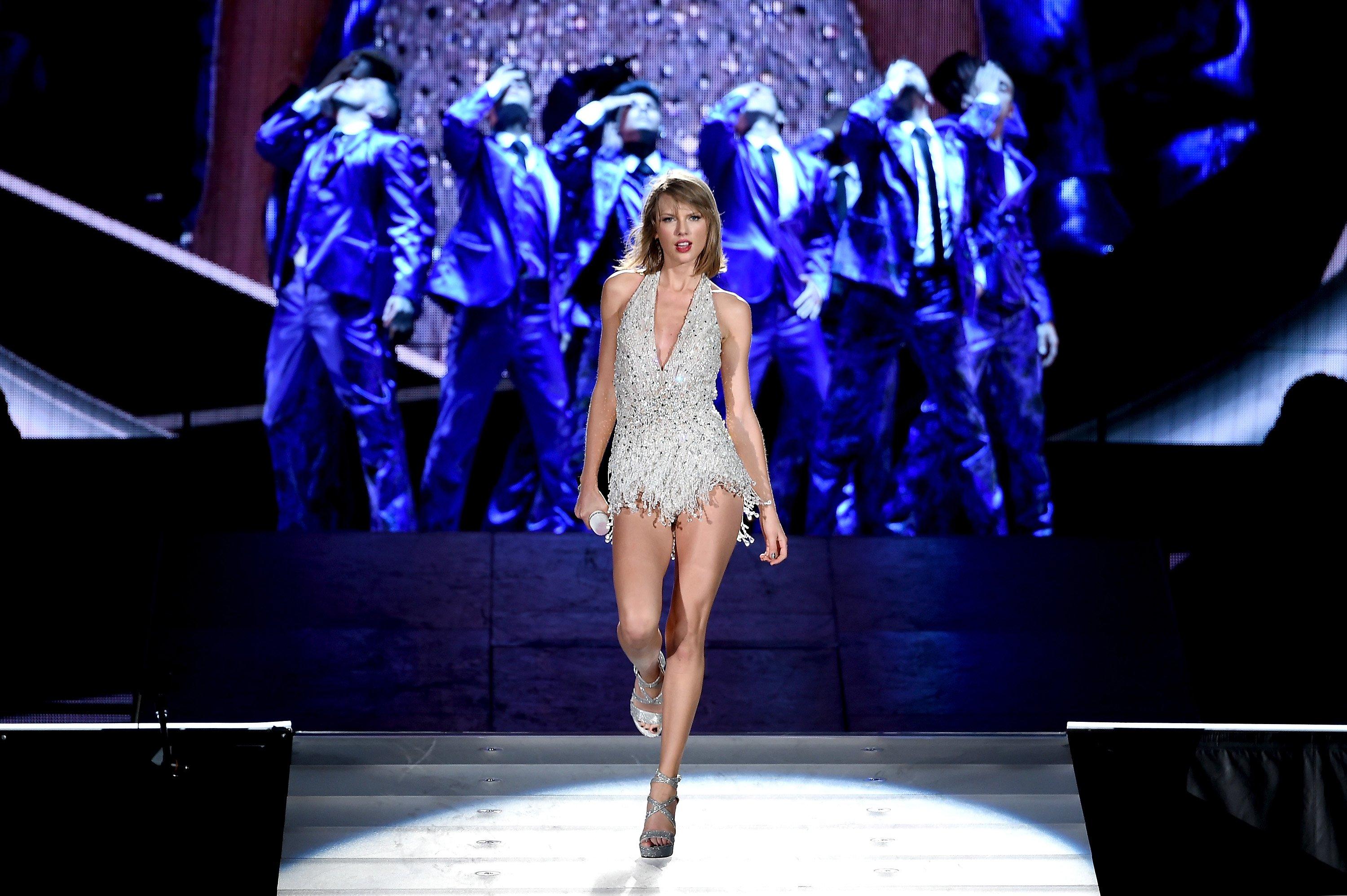
At the time, 1989 became Swift's best-selling album to date. It sold nearly 1.3 million copies within release week in the U.S., debuting atop the Billboard 200 and reigning for 11 non-consecutive weeks. The album also earned Swift several awards — including her second Album Of The Year GRAMMY, which made her the first female artist to ever win the award twice.
Following the release of 1989, Swift became a cultural juggernaut, and the album has had an omnipresence in music since. Swift didn't just normalize blending genres, but proved that you can create a sound that is uniquely yours by doing so. In turn, Billie Eilish, Dua Lipa and more pop stars have refused to conform or stick to what they've done prior.
reputation: Killing The Old Taylor
For years, Swift was on a strict two-year cycle — she'd release an album one year, tour the next, and then release a new album the following year. But following the heightened scrutiny and highly publicized tabloid drama that followed the end of the 1989 era, Swift completely disappeared for a year. She stayed away from public appearances, didn't do any press, and missed the album schedule fans became accustomed to. It wasn't until summer 2017 when she returned from her media (and social media) blackout to unveil the fitting title for her new album: reputation.
Born as a response to the naysayers and name-callers, reputation follows Swift shedding her public image — which includes the pressure to be perfect, the drama, and the criticism — by declaring, "There will be no further explanation. There will just be reputation." Leaning on the same tongue-in-cheek songwriting techniques she used while penning "Blank Space," Swift wrote from the mindset of how the public perceived her.
When Swift released the lead single "Look What You Made Me Do," a song she initially wrote as a poem about not trusting specific people, many assumed the album would center on vengeance and drama. Although Swift said that the album has its vindictive moments — even declaring that the "old Taylor" is dead on the bridge of "Look What You Made Me Do" — it's a vulnerable record for her. Swift described reputation as a bait-and-switch; at their core, the songs are about finding love in the darkest moments.
Swift still remained in the pop lane with reputation, largely leaning on Antonoff and the Martin/Shellback team. The sound almost mirrored the scrutiny Swift faced in the years prior — booming electropop beats, maximalist production and pulsing synthesizers dominate, particularly on "End Game," "I Did Something Bad," and "Ready For It…?" But the "old Taylor" isn't entirely gone on songs like "Call It What You Want," "So It Goes…" and "New Year's Day," where she lets her guard down to write earnest love odes.
Even after Swift spent some time away from the spotlight, the public didn't immediately gravitate toward her return. And even despite matching the 1.2 million first-week sales of her previous releases, some concluded that the album was her first commercial failure when compared to 1989. With time, though, it became clear that the response to reputation became muddled with the public's overall perception of her at the time — some even claimed that Swift was ahead of her time with the album's overall sound.
For her 2023 TIME Person of the Year profile, Swift described reputation as a "goth-punk moment of female rage at being gaslit by an entire social structure." For years, she felt the pressure to be "America's Sweetheart" and to never step out of line. Writing reputation became a lifeline following the events that catalyzed it — a way to shed the so-called snakeskin and make peace with however the public wanted to view her.
Lover: Stepping Into The Daylight
After finding love amongst chaos with reputation, Swift was learning to deal with the anxiety and fear of losing her partner — became a major theme of another aptly titled album, Lover. Both sonically and visually, Lover was a complete change from reputation. After touring reputation, Swift found that her fans saw her as "a flesh-and-blood human being," inspiring her to be "brave enough to be vulnerable" because her fans were along with her. Stepping away from the dark and antagonistic themes around reputation encouraged Swift to step into the light and be playful with her work on Lover.
Swift also found a new sense of creativity within this new mindset, one where she aimed to still embed playful themes in her songwriting but with less snark than that of "Blank Space" and "Look What You Made Me Do." Leaning into Lover being a "love letter to love," Swift explored every aspect of it. Tracks like "Paper Rings" and "London Boy" exude a whimsical energy, even if they center on more serious themes like marriage and commitment. Other songs, including "Death By A Thousand Cuts" and "Cornelia Street," are Swift at her most vulnerable, reflecting on a love lost and grappling with the extreme worry that comes when you could potentially lose someone.
Looking at Lover retrospectively, it's an album that almost symbolizes a bookend in her discography. She was playful yet poignant, picking apart her past lyrics and feelings and looking at them with the perspective of someone who was once on top of the world, hit rock bottom, and survived in spite of it. This evolution is mentioned throughout Lover, particularly in a direct callback to 2012's Red, "Daylight," which sees her describe her love as "golden" rather than "burning red."
Lover also marked the first time Swift divulged into politics and societal issues, like campaigning against Donald Trump, releasing the Pride-infused "You Need To Calm Down," and feeling disillusioned by the political climate with "Miss Americana & the Heartbreak Prince." Swift's documentary Miss Americana explores this change further, discussing how she regrets not being vocal about politics and issues prior, in addition to opening up about her body image issues and mental health struggles.
Lover became Swift's sixth No. 1 album in America, making her the first female artist to achieve the feat. But Lover was more than any accolades could reflect — it was Swift's transitional album in many ways, notably marking the first album that she owned entirely herself following leaving Big Machine Records for Republic Records in 2018.
folklore: Looking Beyond Her Personal Stories
After the pandemic started and Swift cancelled her Lover Fest, she spent the early stages of quarantine reading and watching a myriad of films. Without exactly setting out to create an album, she began dreaming of fictional stories and characters with various narrative arcs, allowing her imagination to run free. The result became folklore, 2020's surprise archetypal quarantine album.
Crafting a world with characters like the folklore love triangle between those in "betty" and "august," as well as Rebekah Harkness from "the last great american dynasty" (who once lived in Swift's Rhode Island mansion), was Swift's way of venturing outside her typical autobiographical style of writing. She'd see visceral images in her mind — from battleships to tree swings to mirrored disco balls — and turned them into stories, sometimes weaving in her own personal narrative throughout, or taking on a narrator role and speaking from the perspective of someone she had never met.
She worked remotely with two producers — again working with her right-hand man Jack Antonoff, and first-time collaborator Aaron Dessner from The National. Some songs, like "peace," were recorded in just one take, capturing the essence and fragility in the song's story, whereas the lyrics for the sun-drenched "august" were penned on the spot as Swift was in her makeshift home studio in Los Angeles.
Another aspect that separated folklore from her previous work was the obvious decision not to create hits made for radio play, so much so that Dessner claimed that she made an anti-pop record at a time when radio wanted clear "bops." Sonically, it ventured into genres Swift hadn't explored much outside of a few folkier tracks on Lover. Rather than relying on mostly electronic elements, Swift, Antonoff and Dessner weaved in soft pianos, ethereal strings, and plucky guitars.
folklore's impact on the zeitgeist at a time where everyone was stuck at home helped shape people's quarantine experience. Fans rejoiced at having songs to comfort them during difficult times, and artists like Maya Hawke, Gracie Abrams, and Sabrina Carpenter credit folklore for inspiring them to create and be even more emotionally honest in their songwriting. After its release, folklore became the best-selling album of 2020 after selling 1.2 million records. At the 2021 GRAMMYs, folklore took home Album Of The Year, making her the fourth artist in history to win three times in the Category.
evermore: Embracing Experimentation
It was exciting enough for Swifties to experience one surprise album drop from Swift, an artist who typically has an entire album campaign calculated. So when evermore was released just six months after folklore, fans were in shock.
Like its (literally) folklorian sister, evermore was a surprise release at the end of 2020, marking the first time Swift didn't have distinct "eras" between albums. She felt like there was something "different" with folklore, stating in a social media post that making it was less like she was "departing" and more like she was "returning" to the next stage of her discography. In turn, the album served as a similar escape for Swift as folklore did.
Bridging together the same wistful and nostalgic themes as heard on its predecessor, evermore sees Swift venture even further into escapism. She explores more stories and characters, some based in fiction like "dorothea," and some real, like "marjorie," written in dedication to Swift's grandmother.
Evermore follows folklore's inclusion of natural imagery and motifs, like landscapes, skies, ivy, and celestial elements. In contrast to the fairytale motifs and happy endings of Fearless, evermore saw Swift become fixated on "unhappy" endings — stories of failed marriages ("happiness"), lifeless relationships ("tolerate it"), and one-time flings ("'tis the damn season").
Sonically, evermore is a slight departure from its sister record; where folklore relies on more alt-leaning and indie-tinged sounds, evermore takes the sonics from all of Swift's past records — from pop to country to indie rock — and features all of them on one album. Country songs like "cowboy like me" and "no body, no crime" reaches back to Swift's earlier work in narrative building, seamlessly crafting a three-party story with ease. "Closure" is a "skittering" track that has the same energy as tracks like Lover's "I Forgot That You Existed," whereas the ballad "champagne problems" is thematically reminiscent of Swift's Speak Now track "Back To December" where she takes responsibility for her lover's heartache.
Working mostly with Dessner on evermore, Swift was emboldened to continue creating and opted to embrace whatever came naturally to them rather than limiting themselves to a sound. Swift felt a "quiet conclusion" after finishing up evermore, describing that it was more about grappling with endings of all "sizes and shapes," and the record represented a chapter closing. Even so, its poetic lyricism and mystical storytelling cleverly foreshadowed what was to come with subsequent albums, particularly The Tortured Poets Department.
Midnights: Encapsulating Her Artistic Magic
After coming out of the folklorian woods following folklore and evermore, fans and critics alike were intrigued to see what direction Swift would take on her next studio album. On Midnights, Swift leaves behind indie folk sounds and returns to the pop production of 1989 and Lover.
Her most conceptual album to date, Midnights charts 13 sleepless nights and explores five themes, from self-hatred and revenge to "what if" fantasies, falling in love, and falling apart. They are the things that keep her up at night, like the self-critiquing in "Anti-Hero," her rise to fame in "You're on Your Own, Kid," and the anxiety of falling in love again in "Labyrinth." Similarly to Swift's cheeky songwriting style that sees her create caricatures of herself in songs like "Blank Space" and "Look What You Made Me Do," she doubles down on claims she's "calculated" on "Mastermind," a song about devising a plan for her and her lover.
Although the album is a departure from the two pandemic sister albums, the overall creation process didn't differ too much. In addition to working alongside Antonoff (and bringing Dessner in for the bonus-track-filled 3am Edition), Swift's worldbuilding is still the throughline that connects Midnights and Swift's recent albums, whether she's dreaming of a Parisian escape in "Paris" or using war imagery as a metaphor for the struggle of love in "The Great War."
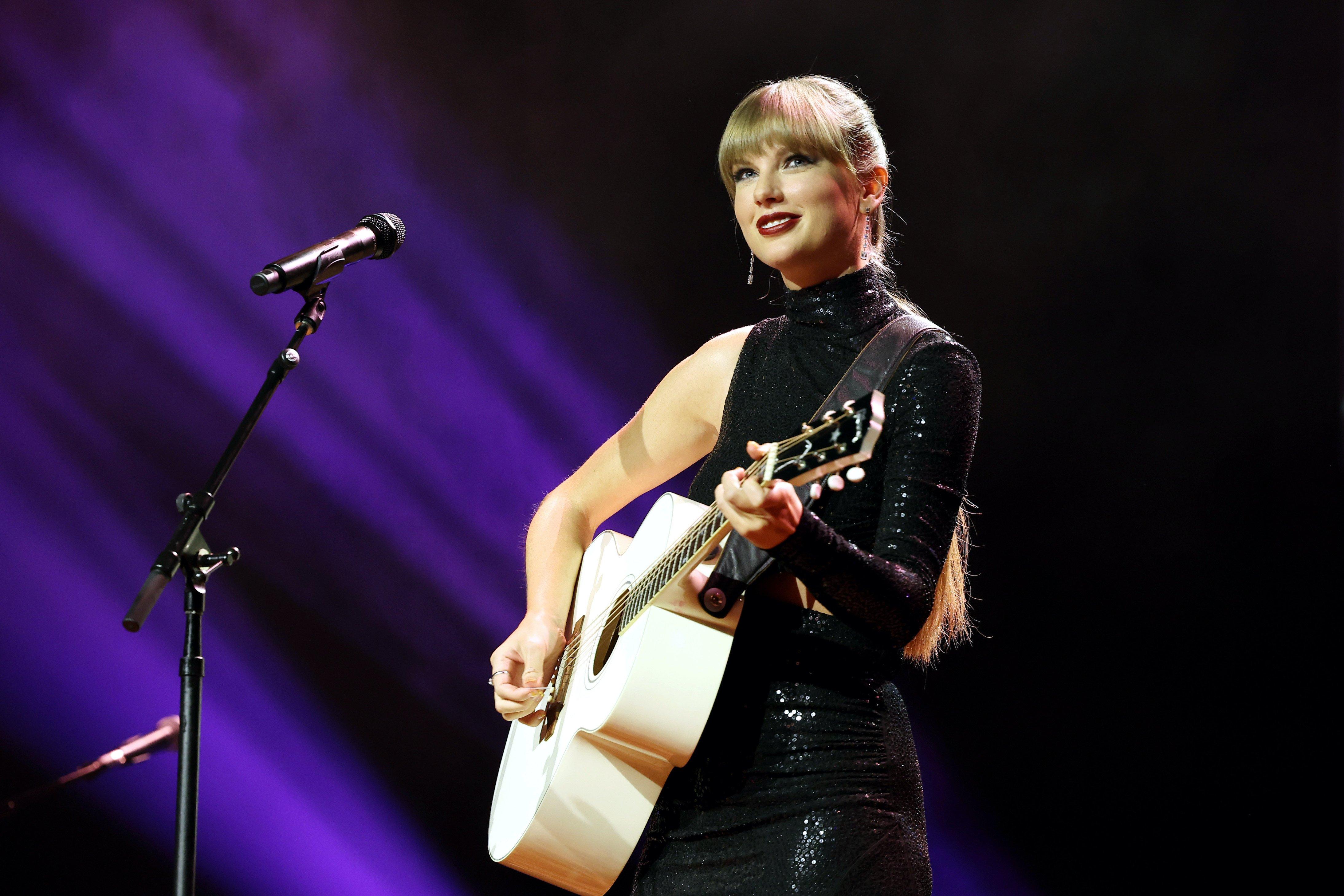
Following the success with folklore and evermore, Swift's intrigue was at a then-all-time high upon the release of Midnights. Along with breaking several streaming records — including becoming the first album to exceed 700 million global streams in a week — it was Swift's 11th No. 1 debut on the Billboard 200, and was the highest-selling album of 2022 (and, remarkably, the second best-selling of 2023).
To say that Swift's celebrity has become otherworldly since the release of Midnights would be an understatement. Celebrating her genre-defying and varied discography through The Eras Tour has resulted in old songs having a resurgence, new inside jokes and Easter eggs within the fandom, and a plethora of new listeners being exposed to Swift's work.
As a result, there had arguably never been more excitement for a Taylor Swift album than for The Tortured Poets Department — especially because the announcement came on the heels of her lucky 13th GRAMMY win in February. Midnights helped further solidify Swift's larger-than-life status at the finale of the 2024 GRAMMYs, too, as she became the only artist in history to win Album Of The Year four times.
The Tortured Poets Department: Delving Into A Grief-Stricken Poetic Odyssey
It’s been a while since Swift has penned a full-fledged breakup album. On The Tortured Poets Department, she navigates the five stages of grief — denial, anger, bargaining, depression and acceptance — after her long-term relationship ended. Taking a page from the release of folklore and evermore, she dropped a double album and announced The Tortured Poets Department: The Anthology at 2 a.m. on release day. Throughout a total of 31 tracks, the prolific songwriter shelved the glittery pop radio-friendly tunes in favor of more subdued, synthy and heart-wrenching songs.
On Instagram, Swift described the album as a collection of poetic songs that reflect the "events, opinions and sentiments from a fleeting and fatalistic moment in time," Swift pulled out the fountain and quill pens to craft songs about the "tortured poets" in her life — sometimes musing about lovers, sometimes taking aim at villains, and sometimes pointing the finger at herself.
TTPD is also her most confessional album thus far. It pokes fun at so-called fans who overstep with her personal life ("But Daddy I Love Him"), says goodbye to a city that gave her a home ("So Long London"), and muses on how her own celebrity has stunted her growth ("Who's Afraid Of Little Old Me?"). To help explain this chapter of her life, Swift brings together a myriad of collaborators — from Stevie Nicks as fellow poetess, to duets with Florence Welch and Post Malone — and leans on real and fictional characters, like Clara Bow, Peter Pan ("Peter"), and Patti Smith.
In the same post, Swift declared that once she’s confessed all of her saddest stories, she’s able to find freedom. Yet The Tortured Poets Department (and its accompanying 15-track anthology) spends much time reflecting: she toys with her own lore, self-referencing past songs from albums like 1989 and poems from her reputation era.
Fourteen years ago, Swift declared that she would never change, but she’ll never stay the same either. The Tortured Poets Department proves that in the throughline of Taylor Swift's many artistic eras is a commitment to exploration and a love of autobiographical lyricism.
The Life of a Showgirl: Offering A Peek Behind The Curtain
After she wrapped the Eras Tour at the end of 2024, everyone had one question: what will Taylor do next?
Following such a monumental celebration of her career, it was only fitting for her to make another big move: reclaim her music. As Swift revealed on May 30, she bought back the master recordings of her first six albums, marking the first time she's been in control of her entire discography.
"To say this is my greatest dream come true is actually being pretty reserved about it," she wrote in a letter posted to her website. In true Taylor fashion, there was an Easter egg hidden amid her gratitude-filled message: "thiiiiiiiiiiiis close," twelve i's hinting that her twelfth album was on the horizon.
Naturally, at 12:12 on Aug. 12, Swift announced TS12, The Life of a Showgirl. And on Aug. 13, she opened up about the concept and creation of the record on her now-fiancé Travis Kelce's podcast, "New Heights."
As she explained, she aimed to mimic the exact feelings she was experiencing both on and off stage during her groundbreaking Eras Tour. In turn, The Life of a Showgirl is a glitter gel pen album, meaning that it's equal parts frivolous and fun, while still being wrapped in Swift's signature storytelling; it's apt that Swift chose to work with 1989 collaborators Max Martin and Shellback to recreate the same pop magic they did over 10 years ago.
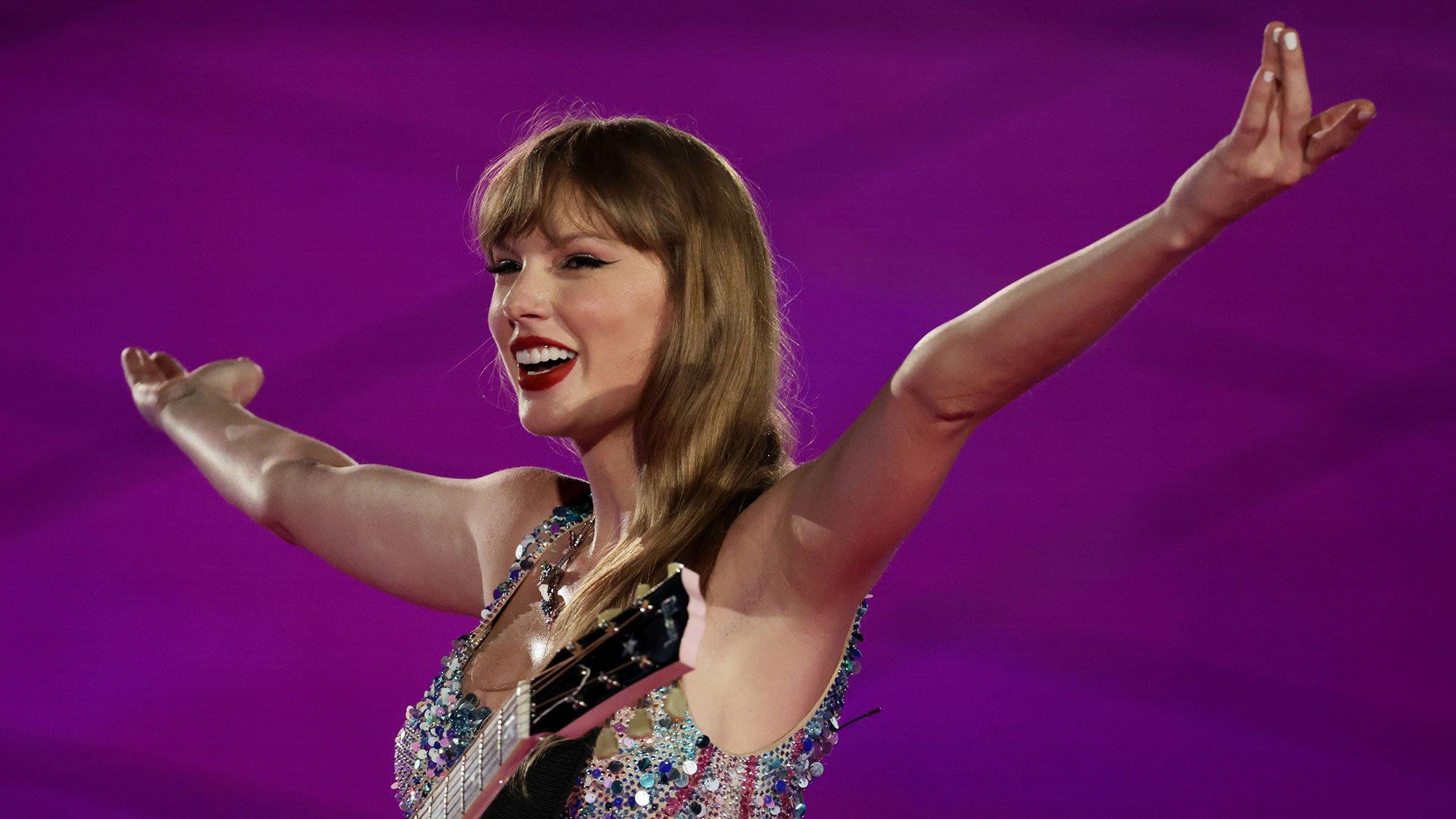
"I would be playing three shows in a row, I'd have three days off. I'd fly to Sweden, go back to the tour, and I was pretty exhausted at this point in the tour, but I was so mentally stimulated and so excited to be creating," she detailed on "New Heights." "This album was about what was going on behind the scenes in my inner life during this tour, which was so exuberant and electric and vibrant."
After the muted sonic tones of The Tortured Poets Department, The Life of a Showgirl is possibly Swift's most jubilant album yet. She explores everything from the price of fame ("Elizabeth Taylor," "CANCELLED!") to finally feeling like she's at peace in the relationship she's in ("The Fate of Ophelia," "WI$HLI$T").
What is most apparent on the album, though, is just how much Swift embraces every aspect of who she is. Yes, she is still the same artist who wrote the fairytale-tinged record Fearless, crafted the indie pandemic escape that was folklore, and dove into the depths of her sadness on The Tortured Poets Department. But with The Life of a Showgirl, it's clear she's closing the chapter — or should we say era — of her life that was the catalyst to the new one she's stepping into. She's no longer anxious in love ("Eldest Daughter," "Honey") and for the first time, she owns all of her work and is in complete artistic control ("Father Figure").
When she announced the album, she declared, "And baby, that's showbiz for you." No one knows that better than someone who has been through the ringer in the industry like Swift has. And yet, she has still come out the other side, sparkling, self-assured and ready to revel in a career built on resilience and reinvention — something only a true showgirl could achieve.
All Things Taylor Swift
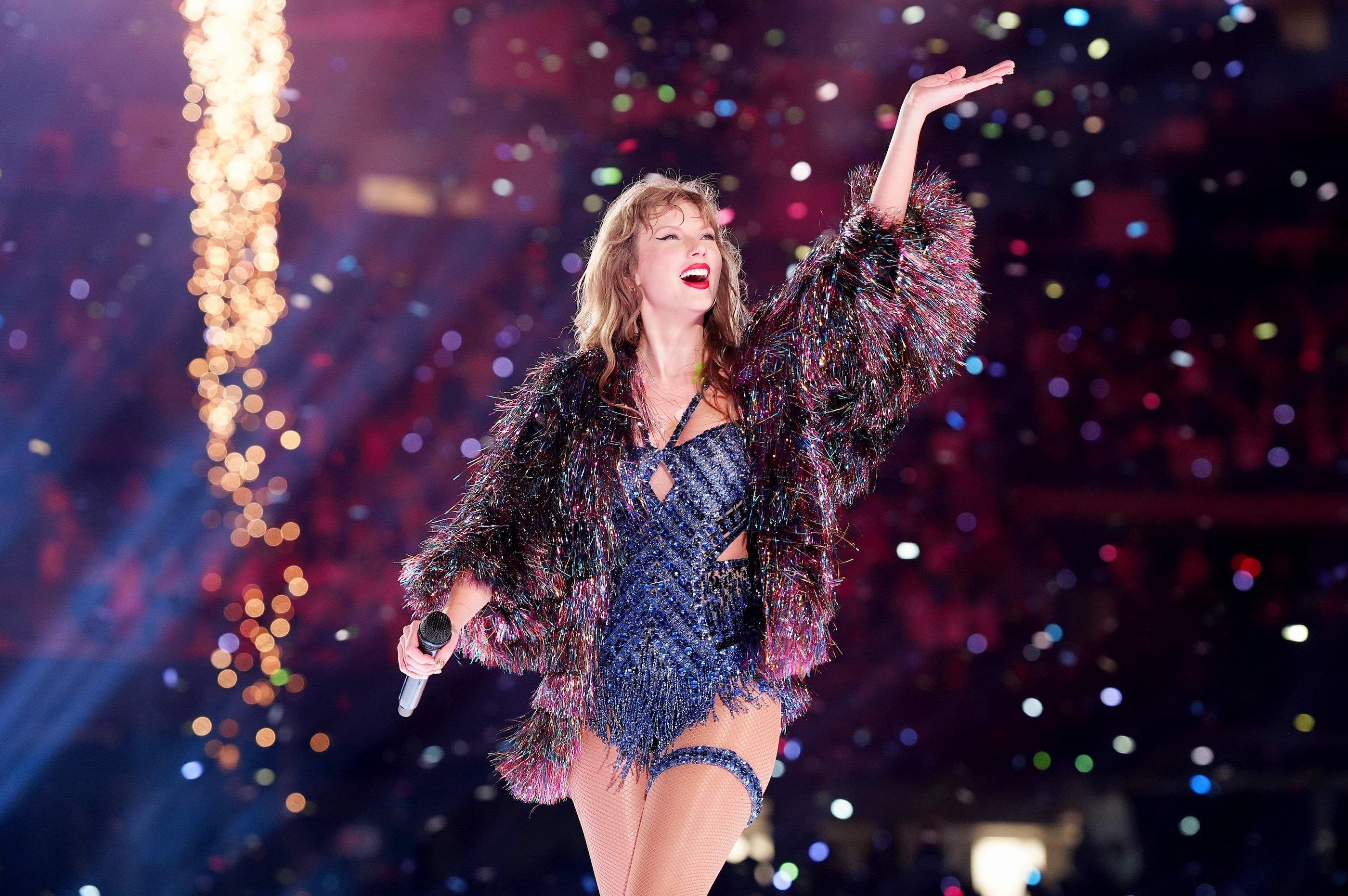
Taylor Swift performs during the Eras Tour in New Orleans in October 2024.
Photo: Erika Goldring/TAS24/Getty Images for TAS Rights Management
Taylor Swift Is Self-Assured & In Love On 'The Life Of A Showgirl': 5 Takeaways From The New Album
With her twelfth album, the pop superstar begins a new era in more ways than one. Take a look at how tracks like "The Fate of Ophelia" and "The Life of a Showgirl" hint that Swift is happier and more inspired than ever.
GRAMMYs/Oct 3, 2025 - 04:56 pm
"And, baby, that's show business for you," Taylor Swift declared after announcing her 12th full-length album, The Life of a Showgirl. From becoming the first woman and only artist to win a GRAMMY for Album Of The Year four times, to dealing with heightened media scrutiny, to breaking records with her Eras Tour, no one understands the highs and lows of being a showgirl like Swift. And after two decades in the business, the 14-time GRAMMY winner is giving everyone a glimpse of what she describes as "the most infectiously joyful, wild, dramatic" chapter of her life thus far.
Swift doesn't want you to get it twisted, though — this is an album about the life of a showgirl, not an album about being a performer. The 12-track record is an amalgamation of what was going on behind the scenes throughout the latter half of The Eras Tour. After The Tortured Poets Department provided insight into how she coped during the beginning of the tour while dealing with two relationships breaking down, producing tracks like "The Smallest Man Who Ever Lived" and "loml," The Life of a Showgirl is a sharp turn in the other direction.
"I wanted melodies that were so infectious that you were almost angry at it and lyrics that are just as vivid, but crisp and focused and completely intentional," Swift explained on the "New Heights" podcast with her now-fiancé, Travis Kelce, and his brother, Jason Kelce. It's apt that she would turn to Max Martin and Shellback, her 1989 and reputation collaborators, to bring that same captivating pop soundscape to The Life of a Showgirl and to capture some of the energy Swift was experiencing.
It's a stark contrast to the muted, subdued and somber tones of The Tortured Poets Department, both in sound and visually. Instead, The Life of a Showgirl mirrors the elation Swift felt on the second leg of The Eras Tour. On stage, fans were seeing the same steadfast, resilient showgirl they were seeing throughout the tour perform three-hour sets. Off stage, though, she was falling in love again — this time with someone who championed her just as much as the fans did in the areas.
Now that the curtain is up and The Life of a Showgirl is out, read on for five key essential insights from Taylor Swift's new album.
It Explores Every Aspect Of Being A Showgirl
Instead of writing songs akin to "I Can Do It With A Broken Heart," a song about performing in the midst of heartbreak and grief, Swift opted to focus on what people don't necessarily see when they buy a ticket to a show. "It's much more than the glitter and the glamour, there's a lot more that comes with it," Swift explained to Amazon Music when discussing the story of the album's title track.
Across the record, she details everything from falling in love ("The Fate of Ophelia," "Honey") to feeling one-sided animosity with another performer and reframing that attention as something romantic ("It's honestly lovely/ All the effort you've put in/ It's actually romantic," she sings in "Actually Romantic"). On "Father Figure," she flips the power dynamic between a "showman," someone who thought they were pulling the strings, and a showgirl. The showgirl is actually the one in charge ("I was your father figure/ You pulled the wrong trigger/ This empire belongs to me"), alluding to her battle to retain her masters.
Swift sings about the same fears around legacy and permanence on the song's title track, worrying she will be replaced just as quickly as she probably did with someone else, detailed on past songs "Nothing New" and "Clara Bow." "It's kind of an ode to show business and the women who move through those pitfalls and obstacle courses," she added in her Amazon Music track-by-track. "I thought who better to ask to be a part of this song than the ultimate showgirl Sabrina Carpenter."
On "The Life of a Showgirl," she declares with her fellow showgirl that she isn't handing over the baton just yet. Instead, she insists it's being shared — and she's not going anywhere. ("And all the headshots on the walls/ Of the dance hall are of the b—es/ Who wish I'd hurry up and die/ But I'm immortal now.")
She Picked Up Her Glitter Gel Pen Again
A few years ago, Swift detailed how she places songs in three categories: quill pen songs, fountain pen songs, and glitter gel pen songs. For her, glitter gel pen songs feature "lyrics that make you want to dance, sing and toss glitter around the room … frivolous, carefree, bouncy, syncopated perfectly to the beat." And on The Life of a Showgirl, she put away the fountain and quill pens of The Tortured Poets Department and exclusively wrote with glitter gel pens.
Reuniting with her pop powerhouse collaborators Max Martin and Shellback, who worked on her biggest pop radio hits like "We Are Never Ever Getting Back Together," "Delicate," "Blank Space," and "Shake It Off," was a return to form after the fog of TTPD. Throughout The Life of a Showgirl, Swift, Martin and Shellback craft tracks that go beyond what they created with 1989 and reputation.
"It felt like all three of us in the room were carrying the same weight as creators," she said on "New Heights." "We've been waiting years to come back together and make this project."
Throughout the record, dynamic and layered pop soundscapes mimic the same energy Swift was feeling both on and off stage. "The Fate of Ophelia" might be Swift's best lead single since "Mine" in 2010, thanks to its infectious beat and memorable chorus. "Wood" is Swift taking cues from fellow showgirl Carpenter, winking at listeners as she weaves as many innuendos about the word as possible. Layered, shimmering harmonies and a retro swing infuse "Opalite" with a glittering quality, like shifting light.
She's Still Reflecting On The Past, But With A Sense Of Growth
One of the biggest takes by critics — that borderlines on sexist at times — is that Swift won't be able to write good, reflective music that cuts deep like the songs that orbit around heartache and pain. As she admitted herself, she's let those assumptions get to her in the past.
"I used to kind of have this dark fear that if I ever were truly happy and free being myself and nurtured by a relationship, what happens if the writing just dries up? What if writing is directly tied to my torment and pain?" she said ahead of the album's release. "And it turns out that's not the case at all … and we just were catching lightning in a bottle with this record."
Swift proves naysayers — and, seemingly, herself — wrong with two tracks on The Life of a Showgirl.
On what is an equal parts wistful and wounding track, "Ruin The Friendship" sees Swift reflect on high school life a la Fearless' "Fifteen" and "You Belong With Me." She details driving around Hendersonville, Tenn., with a male classmate, talking about prom, and how even if the timing was never right, she should've kissed him anyway. "[It's] a song that kind of wistfully goes back in time to moments that you hesitated, moments that you were too scared or anxious to do something that you were really curious about," Swift explained to Amazon Music.
On the bridge, though, Swift regretfully sings about how this person eventually passes away too young, alluding to it being the same person she wrote "Forever Winter" (from Red (Taylor's Version)) about, who passed away two weeks after the release of Speak Now. It's a highlight on The Life of a Showgirl as it's a testament that, regardless of how much time has passed or the fame that Swift has achieved, she still looks back on those who changed her life early on.
Comparatively, "Eldest Daughter" — track five, a spot Swift notoriously reserves for the most emotional song — is a love song about the masks we wear and the selves we choose to reveal. Similar to the same themes on folklore's "mirrorball," Swift reckons with the pressure to appear untouchable yet attainable. "Eldest Daughter" leans into that contrast, exploring the vulnerability that emerges when someone earns the right to see past the facade.
Swift has long preached self-sufficiency and independence on tracks like Midnights' "Lavender Haze," ("All they keep askin' me/ Is if I'm gonna be your bride ... No deal, the 1950s s— they want from me"), but on "Eldest Daughter" she admits that she hasn't been truthful to herself ("When I said I don't believe in marriage/ That was a lie"). The track captures the intimacy of revealing your true values, and the tenderness of admitting you care about what you once pretended not to.
With "Eldest Daughter" and "Ruin The Friendship," she turns inward, confronting her past with a sense of finality and acceptance of where her choices have carried her — even with every misstep and mistake along the way.
It May Just Be Swift's Most Romantic Album To Date
Many of the love songs on Swift's more recent albums are brimming with anxiety, from Lover's "Cornelia Street" ("I hope I never lose you, hope it never ends") to folklore's "Peace" ("The rain is always gonna come if you're standing with me"). And on The Tortured Poets Department's "The Prophecy," she pleaded for someone to change what she believed to be her predestined future of being alone and what she'd give up to find someone she loves.
While half of The Life of a Showgirl's 12 tracks peer into the darker corners of fame and explores the loneliness, scrutiny and fractures that used to come with it, the other half are dedicated to falling completely head over heels. "Wood" and "Honey" capture the playfulness of true love, while songs like "WI$HLI$T" and "Elizabeth Taylor" see love not as a distraction from her life's work but as the very thing that makes it feel meaningful.
Swift sounds secure and at peace in the love songs on The Life of a Showgirl. "The Fate of Ophelia" thematically recalls the emotional terrain of reputation's "King of My Heart," but feels more assured thanks to tighter storytelling and a sense of grounded confidence. It's a reassurance to fans who've long wondered where Swift's heart truly rests: not in the glitz and glamour of Hollywood, but in the vulnerable intimacy of being chosen and choosing in return.
Elizabeth Taylor has appeared as a character in Swift's songs before, particularly in rep's "Ready For It…?" where she compares herself to the famous actress and entertainer. On the Life of a Showgirl track directly named after the late icon, Swift circles back to the themes she touched on with folklore's "Peace" and the tension between her private reality and her public persona.
"As much as she was under a microscope so, so intense, she handled it with humor and she got along with her life," Swift told Amazon Music of Taylor. "She continued to make incredible art and so this is a love song kind of through the lens of the motif of what she had to go through in her life and sort of the parallels that I feel in my own life."
Swift herself has long embodied independence through redefining over and over what it means to be a pop star for over two decades. Yet these songs admit that she doesn't want to carry it all alone; she wants partnership, to build something with someone else. For her, finding a balance between her career and love, and realizing that they can coexist, makes this album one of Swift's most — if not the most — romantic to date.
She's Closing This Chapter Of Her Life
The album's title track, much to fan's intrigue, was questionably placed at the end of the album. For a project about being a showgirl, introducing people to the concept of the album at the end was puzzling for some. Now that it's out, it makes sense: she's not just giving fans a glimpse into what was going on in her personal life off stage, but she's saying goodbye to one of the biggest chapters of her life with The Eras Tour.
"One thing that I really love about the ending of it is that we actually ended the song with actual crowd noise from my last Eras tour show in Vancouver," Swift explained to Amazon Music. "That always chokes me up because it transports me right back to that actual memory of standing on that stage for the last time on that tour that was so important to me, and the tour that really inspired this album. So it's the last track of the album and a really special one to me."
At its heart, The Life of a Showgirl goes beyond the fame, accolades, praise, and anything else Swift has been awarded in her 20-year career. Initially, it might've been surprising that TS12 would be so closely linked to The Eras Tour, given that TTPD was also created during it. But there's a sense of finality woven throughout the songs on The Life of a Showgirl.
She's closing a chapter of her life — saying goodbye to the heartbreaks, pleading and scrutiny — and embracing a new, well, era that was quietly created during the behind-the-scenes of The Eras Tour. And with that tour having celebrated her life's work up to now, The Life of a Showgirl feels like the exhale before a brand new beginning.