
Photos (L-R): Ethan Miller/WireImage, James Devaney/WireImage, Jeff Goode/Toronto Star via Getty Images, Kevin Kane/Getty Images for The Rock and Roll Hall of Fame
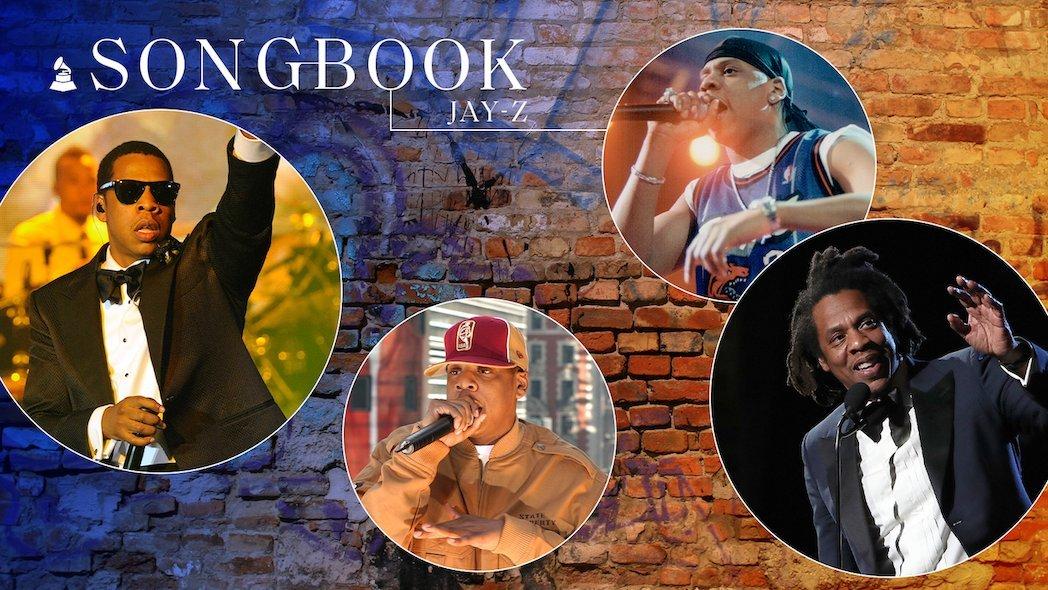
(L-R): Jay-Z in 2011, 2003, 1999 and 2021.
Songbook: How Jay-Z Created The 'Blueprint' For Rap's Greatest Of All Time
From groundbreaking albums to star-studded collaborations, Jay-Z's discography has made the rap mogul one of the genre's biggest icons.
GRAMMYs/Jun 22, 2023 - 03:38 pm
As Jay-Z declared in 2001's "Breathe Easy," few rappers stack up when it comes to his flow, consistency, stories, charisma, and trendsetting powers — and he's backed up his claims for three decades on.
The Brooklyn rapper has cranked out chart-topping hits and street anthems across classic albums like The Blueprint and The Black Album, and he's inspired generations of rappers to take on his pen-free approach to music. But long before becoming a hip-hop icon, the young Shawn Carter first honed his musical gifts by rapping over a boombox in his childhood home in Bed-Stuy's Marcy Projects.
Nicknamed "Jazzy" for his love of music, Jay-Z split his time between exploring his newfound passion and dealing crack cocaine as a teenager. After linking with childhood friend and then-mentor Jaz-O, he adopted the moniker "Jay-Z" in the late 1980s, and eventually captivated hip-hop fans on the posse cut "Show and Prove" from Big Daddy Kane's 1994 album Daddy's Home. That moment led to the eventual release of his own single, 1995's "In My Lifetime," and the years that followed served as the coronation of one of rap's biggest stars.
After being rejected from major record labels, Jay linked with fellow New Yorkers Damon "Dame" Dash and Kareem "Biggs" Burke to establish Roc-A-Fella Records in 1996. He soon went from being an up-and-coming artist selling burned CDs out of his car to producing multi-platinum singles and No. 1 albums.
His greatness has earned him 24 GRAMMYs to date — tied with Kanye West for the most of any rapper — and a spot in the Rock & Roll Hall of Fame. And with a billion-dollar business empire to match his acclaimed discography, Jay-Z has long been declared one of the greatest MCs ever.
As he continues his rap reign, revisit some of Hov's most illustrious career moments, from memorable performances to groundbreaking album releases and legacy-defining accolades.
Listen to GRAMMY.com's official Songbook: An Essential Guide To Jay-Z playlist on Spotify, Apple Music, Amazon Music, and Pandora. Playlist powered by GRAMMY U.
THE RISE
"Hawaiian Sophie" (1989)
A fresh-faced, hi-top faded Jay made one of his earliest appearances on wax with "Hawaiian Sophie." The 1989 record was a modest and playful hit by childhood friend Jaz-O, who let Jay contribute a few lines on the island-themed track.
Though Jay's presence was minor, he put a face to a relatively unknown name by popping up throughout the song's luau-style video. Years later, he gained the attention of legendary Brooklyn rapper Big Daddy Kane, who brought Jay on as a hype man before he broke out as a solo act and formed a more calculated, sharp-tongued lyrical style.
Reasonable Doubt (1996)
Taking inspiration from classic films like The Godfather and Goodfellas, Jay-Z showcased his lyrical potency and storytelling ability on his critically acclaimed debut, Reasonable Doubt, in mafioso fashion. The album was the manifesto of a 26-year-old street hustler, who looked to shed the deadly perils of the drug underworld to bask in the caviar and champagne lifestyle.
He shifted from the colorful, bombastic rap style of his early career to a snappier and grounded delivery on "Coming of Age," and the Biggie Smalls-assisted "Brooklyn's Finest," while still offering a slice of mainstream appeal on "Ain't No N—" featuring Foxy Brown. Legendary producers DJ Premier ("Fried or Foe"), DJ Clark Kent ("Cashmere Thoughts"), and Ski ("Dead Presidents II") helped lay the canvas for Jay-Z to illustrate his past experiences and impending accolades and riches.
The album was among his best releases in the '90s, and helped establish his foothold in the industry through the new millennium. While Reasonable Doubt didn't reach platinum status until six years after its 1996 release, the project elevated Jay's profile as an emerging MC with a penchant for vivid street tales and mainstream edge.
Vol. 2... Hard Knock Life (1998)
Jay-Z's third album is possibly the most impactful in his career. Not only did it notch his first GRAMMY (for Best Rap Album at the 1999 GRAMMYs), but it remains his best-selling album with more than 5 million copies sold. It also started an 11-album streak of No. 1 releases.
The project was a medley of pop-oriented singles such as "Can I Get A…" and club records like the piano-laced hit "Money, Cash, Hoes." It also offered street classics like "Hard Knock Life (Ghetto Anthem)," which showcased his musical versatility and mainstream appeal.
Aside from the Stevie J-produced "Ride Or Die," Jay veered away from the Bad Boy production style of Vol. 2's predecessor, In My Lifetime, Vol. 1. He enlisted Ruff Ryders producer Swizz Beatz for "Coming of Age (Da Sequel)," and producers Timbaland, Jermaine Dupri, Irv Gotti, and Kid Capri were also tapped for the project, creating a lush palette of club bangers and records indicative of the shiny-suit era of late '90s hip-hop.
THE ANTHEMS
"Imaginary Players" (1997)
If it wasn't for Hov, rappers may still be drinking beer over champagne, rocking silver charms over platinum, and driving Range Rover 4.0 SEs instead of 4.6 HSEs. Not only did Jay shift the motor and champagne industry with his second album, but he altered the rap game, too. And "Imaginary Players" was proof.
The In My Life, Vol. 1 cut was a collective side-eye to frauds masked as street hustlers, and signaled Jay-Z's early trendsetting powers. The song didn't graze the Billboard charts as high as singles "Who You Wit," "The City Is Mine" and "(Always Be My) Sunshine," but it grew into a street anthem and blueprint for the real go-getters to shine among the fakes.
"Big Pimpin'" (1999)
For years, "Big Pimpin'" was the ultimate summer anthem. The single from Vol 3… Life and Times of S. Carter showcased Jay's ability to produce hit records with artists from other regions. It also laid the ground for future collaborations between Jay-Z and Timbaland, who went on to produce tracks like "Dirt Off Your Shoulder," "The Bounce," "Tom Ford," and others.
Music aside, the song's video is reflective of the flashy, big-budget era of the late 1990s and early 2000s. Shot during the Trinidad and Tobago Carnival, the video's yacht views, sand-filled beaches, and cigar smoke complimented the song's tropical sound and inspired listeners to wrap themselves in linen garments, kick back and enjoy the Caribbean breeze.
The Blueprint (2001)
Regarded as the best album in his catalog, 2001's The Blueprint encapsulated all of the elements that made Jay-Z a lyrical titan and fixture in music. Between the boundless braggadocio on "The Rules Back," the tales of chaotic romance on "Girls. Girls, Girls," and a snapshot of his uprising on "Blueprint ("Momma Loves Me"), the album captured it all.
While "The Takeover" sparked one of the era's most contentious rap beefs, and forced Queens rapper Nas to snap back with a poignant blow of his own in "Ether," the album was riddled with some of Jay's biggest records during the 2000s. Street anthems like "Izzo (H.O.V.A.)" had rap fans of all ages spelling out the song's title, and soul-stirring album cuts like "Song Cry" had listeners barely holding onto their tears.
The Black Album (2003)
Jay's eighth studio effort was pegged as the final one by the Brooklyn MC. And while he eventually returned for Kingdom Come three years later, 2003's The Black Album would've been the perfect end to an already historic rap career.
On "December 4th," Jay kicked off the album with a call back to his origins. "They say they never really miss you 'til you dead or you gone/ So on that note I'm leaving after this song/ See you ain't got to feel no way about Jay so long/ At least let me tell you why I'm this way, hold on."
Jay goes on to outline his successes on "What More Can I Say," then incites fans to level up their sexy on "Change Clothes." Between experimental records like the DJ Quik-produced "Justify My Thug" and the soulful "Lucifer," The Black Album is also filled with stadium-rocking anthems.
On "99 Problems," Jay raps over zingy guitar riffs for a bold track that's reminiscent of Run DMC and Aerosmith's 1986 smash "Walk This Way." Both songs were produced by Rick Rubin, who provided the rock-induced, bare-bones beat for Hov to unleash on snarky law enforcers and uninformed rap critics.
The Timbaland-produced "Dirt Off Your Shoulder" is a middle finger to the dream killers envious of others' success. The platinum-selling record even inspired Barack Obama to use a shoulder-brushing motion when running against then-rival Hillary Clinton during his 2008 Democratic nomination campaign.
THE COLLABS
"Numb/Encore" (2004)
After dropping a live album with The Roots and releasing two critically panned collaborations with R. Kelly, Jay made a creative pivot with Collision Course (EP). The rapper teamed up with Linkin Park for a hip-rock project that was inspired by Danger Mouse's The Grey Album, and mashed hits like "Jigga What, Jigga Who," "Dirt Off Your Shoulder," "Big Pimpin'" and with songs from Linkin Park's Meteora and Hybrid Theory releases.
The album received mixed reviews, but the project's lone single "Numb/Encore" won Best Rap/Sung Collaboration at the 48th GRAMMY Awards and helped the EP land a No. 1 spot on the Billboard 200.
"Empire State of Mind" (2009)
Fifteen years after Nas' "N.Y. State of Mind," Jay made his own dedication to New York City with "Empire State of Mind." The record is an ode to the city that shaped him, and the millions of other natives who, like him, hustled in various boroughs to get by (and have a closet full of New York Yankees hats).
The Alicia Keys-assisted track touched the hearts of New Yorkers everywhere, including Harlem and Brooklyn native Lil Mama, who notoriously hopped on stage with Keys and Jay during their performance at the 2009 MTV Video Music Awards. The Blueprint 3 single took home two gramophones at the 53rd GRAMMY Awards for Best Rap-Sung Collaboration and Best Rap Song.
Watch the Throne (2011)
After teaming up on classic songs like "Never Let Me Down" and "Diamonds From Sierra Leone (Remix)," Jay and Kanye West came together for a full-length project in 2011. The two rap giants combined their musical genius for Watch the Throne, an explorative and enthralling body of work filled with genre-melding hits coated with top-tier production and memorable features.
Watch the Throne was an exercise in musical cohesion and set the bar for collab projects to follow, given the commercial success and critical reception it received upon its release. Jay served as the lyrical orator, while West was the sonic architect and more animated showman.
Between glossy trap songs like "H.A.M." and "N—s In Paris, and the pop-extravagance of "Lift Off," Jay and Kanye tell fervent tales of their ghetto origins on "Murder To Excellence," visions of their children's lives on "New Day," and give listeners soul-stirring jams like "The Joy" and "Otis." Each track was nourished from the well of Jay and Kanye's artistry, and done without either rapper leaving the other to dry.
"Holy Grail" (2013)
The same year Jay-Z and Justin Timberlake came together for the hit "Suit & Tie," the pair delivered another smash with "Holy Grail." The song's origins began in the sessions for Watch the Throne, but Hov feared it would get lost in the shuffle — so he decided to build 2013's Magna Carta… Holy Grail around the enthralling record.
An explosive track about the allure and destruction of fame, it became the lead single for MCHG, selling over 3 million copies and winning Best Rap/Sung Collaboration at the 2014 GRAMMYs. A year after its release, Billboard placed the record at No. 25 on the publication's Top 100 Hot Rap Songs of all-time list.
EVERYTHING IS LOVE (2018)
Prior to 2018, Jay-Z and his wife, Beyoncé, blessed fans with culture-shifting collaborations like "Crazy in Love," "03 Bonnie and Clyde," and "Drunk in Love." These songs prompted fans to call for a full-length project from the power duo, and after years of anticipation, the power couple delivered 2018's EVERYTHING IS LOVE.
The album came as a surprise to fans, with many jarred by the rumors surrounding Jay and Beyoncé's marriage following the release of Bey's searing 2016 project Lemonade (as well as Jay's honest response with 4:44 — more on that later). While the speculations and alleged drama continue to swirl online, the two stars came together for a nine-track album that gave listeners a behind-the-scenes look at life at the Carter residence.
Announced in the middle of their second On The Run stadium tour, EVERYTHING IS LOVE celebrated the power of black love and family life while exploring unadulterated extravagance. Like their past collaborations, Beyoncé's soothing, high-powered vocals helped elevate Jay's bars and artistry.
Together, they combined their collective powers for stories about rowdy tour stops and endless shopping sprees on "APES—" and "BOSS," and Beyoncé adorned the album with emotion-filled love ballads like "SUMMER." The couple even exchanged braggadocious rhymes about the strength of their union on "LOVEHAPPY," and the fun they have together outside the lines of celebrity on "HEARD ABOUT US" — proving they had not only weathered the storm, but came out stronger together.
THE LEGACY
4:44 (2017)
Arguably one of Jay's most complete and honest bodies of work, 4:44 is a vivid look at the artist's triumphs and failures as Shawn Carter the man. On the opening track "Kill Jay Z," he sheds his ego-fueled moniker to reveal his early upbringing in Bed-Stuy on "Marcy Me," the discovery of his mother's sexuality on "Smile" and the issues surrounding his marriage on the title track.
While the late-career album was largely viewed as a response to Beyoncé's Lemonade album, 4:44 also painted a portrait of Black America, unveiled the pathway to generational wealth on "The Story of O.J.," and the value of shared successes on "Family Feud" and "Legacy."
The rapper veered from the commercial sound of Blueprint 3, and the gumbo of trap and luxury-soaked beats on Magna Carta… Holy Grail, to deliver deeply personal messages over No I.D.'s grounded, sample-heavy production.
The artist hasn't released another solo project since 4:44, but if it is in fact his last album, it's certainly a stellar way to close the door on a legendary music career. The 2017 release was praised by critics and garnered three nominations at the 60th GRAMMY Awards, including Song Of The Year and Album Of The Year.
"GOD DID" (2022)
The GRAMMY-nominated song had plenty of star power thanks to John Legend, Lil Wayne, Rick Ross, Fridayy and producer DJ Khaled — but Jay-Z's verse tilted the hip-hop world on its axis.
On "GOD DID," Jay spit one of the best verses in his catalog. "I be speaking to the souls of men/ Those of them willing to die for the existence that this cold world has chose for them/ Kicking snow off a frozen Timb (woo)/ Back and forth on this turnpike, really took a toll on them." The MC detailed his journey across state lines to live out his street dreams, the drama and misfortunes that followed his tracks, and how he leveraged his powers to become one of the first rappers to reach billionaire status.
He encapsulated it all within a four-minute verse, closing out the track touching on his legacy — and proclaiming that he is in fact one of rap's all-time greats. "I just got a million off a sync/ Without risking a million years tryna get it out the sink (woo)/ Hov big/ They said they don't know me internationally, n—s on the road did/ I see a lot of Hov in Giggs/ Me and Meek could never beef, I freed that n—a from a whole bid/ Hov did/ Next time we have a discussion who the GOAT, you donkeys know this."
Killer Mike Says His New Album, 'Michael,' Is "Like A Prodigal Son Coming Home"
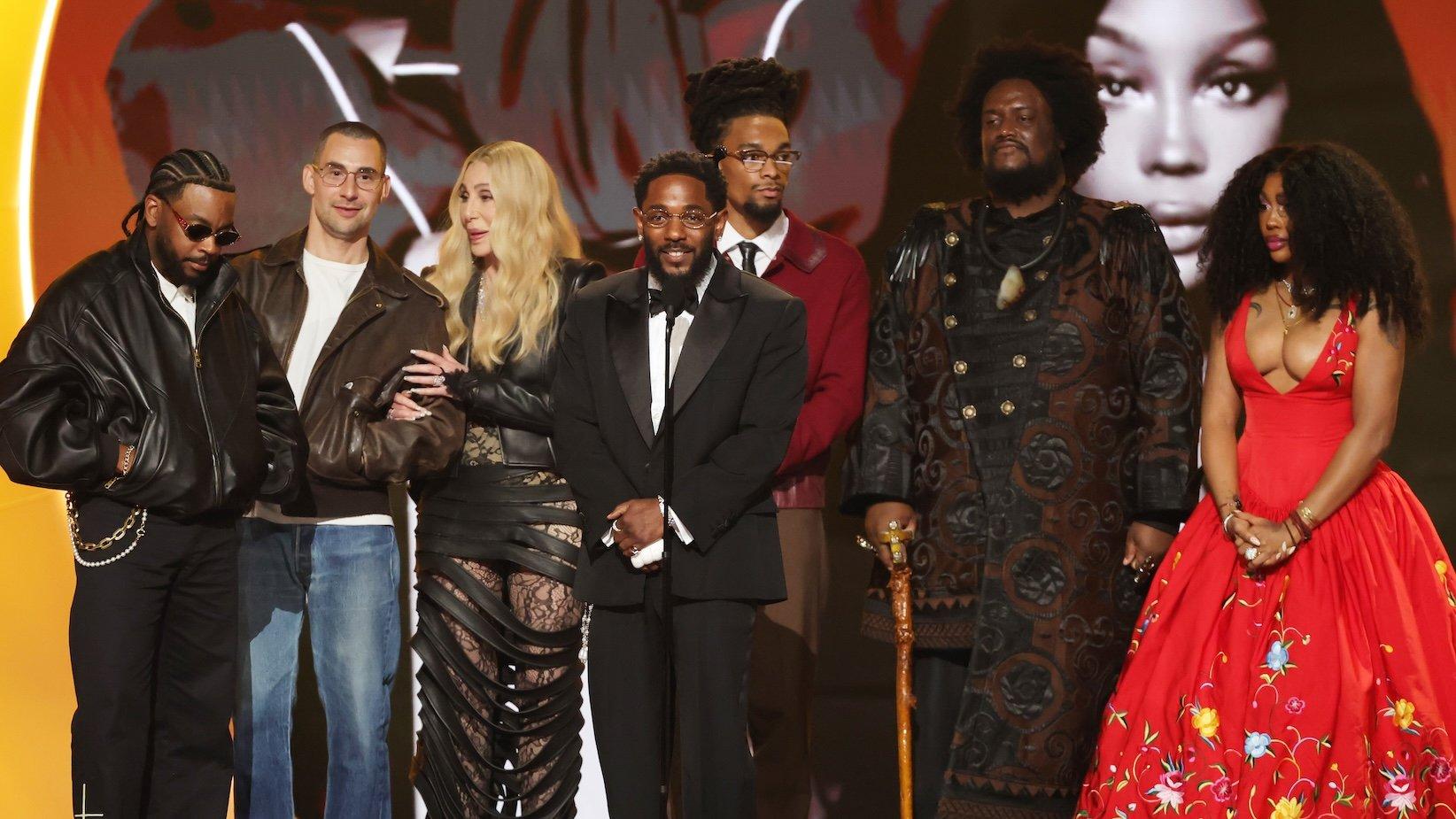
Kendrick Lamar and SZA win the Grammy for Record Of The Year at the 2026 Grammys on Sunday, Feb. 1, at Crypto.com Arena in Los Angeles, California. (L-R) Sounwave, Jack Antonoff, Cher, Kendrick Lamar, Scott Bridgeway, Kamasi Washington, and SZA.
Photo: Kevin Winter/Getty Images for The Recording Academy
10 Rappers Who Have Won The Most Grammys: Kendrick Lamar, Jay-Z, Eminem & More
From Jay-Z to Lauryn Hill, Grammy.com highlights 10 artists with the most Grammy Awards. Their impact, influence and innovation have helped shape the culture — and earned them an abundance of accolades.
GRAMMYs/Feb 2, 2026 - 01:18 am
Editor’s Note: Updated Sunday, Feb. 1, 2026, to reflect the results of the 2026 Grammys.
1989 was a year of many highlights, from the debut of "The Simpsons" and "Seinfeld" to the collapse of the Berlin Wall and the beginning of the Game Boy. It was also the first year hip-hop artists won Grammy Awards, an honor that went to D.J. Jazzy Jeff & the Fresh Prince for "Parents Just Don't Understand."
Hip-hop and the GRAMMYs have come a long way in the ensuing decades. While Will Smith and DJ Jazzy Jeff broke barriers with their win for Best Rap Performance, the duo boycotted the show because the rap Category was not televised. The boycott proved successful, as the genre Categories began to be televised during the following year, in 1990, and every year since then.
Read more: Who Are The Top GRAMMY Awards Winners Of All Time? Who Has The Most GRAMMYs?
Now, the Recording Academy celebrates the sounds of hip-hop and acknowledges the genre’s indelible impact; few genres have disrupted and defined music on such a global scale. Hip-hop rappers, producers, and songwriters have significantly shaped the musical landscape, garnering a bevy of Grammy Awards along the way. And although many artists have taken home Grammy Awards since ‘89, there are a few artists in the game who reign supreme.
Read on for 10 rappers who have won the most Grammy Awards
Kendrick Lamar
27 wins, 66 nominations
Loading...
Kendrick Lamar’s wins represent a return of “conscious” rap that tackles topics such as race and politics while embracing the art of authentic storytelling. As such, his 2015 album To Pimp a Butterfly gave way to many social justice anthems such as “Alright” and “Wesley’s Theory”; the release also took home the award for Best Rap Album at the 58th GRAMMY Awards.
Further reading: Kendrick Lamar's GRAMMY Timeline: From His First Win And Performances To "Not Like Us"
Additionally, Lamar’s most successful album, DAMN — which features hits like “DNA" and “Humble" — won five GRAMMYs Awards. At the 2025 Grammys, the rapper's hit single “Not Like Us” swept its Categories. Among Lamar's wins that night were Record Of The Year, Song Of The Year and Best Music Video. At the 2026 Grammys, he won the Grammy for Record Of The Year for “luther,” Best Rap Album for GNX, Best Rap Song for “tv off,” Best Melodic Rap Performance for “luther,” and Best Rap Performance “Chains & Whips” (his collaboration with Clipse), breaking the record for the rapper with the most Grammy wins.
Learn more: Kendrick Lamar Sweeps The 2025 GRAMMYs With Song Of The Year Win
Kendrick Lamar’s influence extends to broader cultural events, such as his groundbreaking 2025 Super Bowl halftime show. The show set a record for viewership and became one of the most-watched halftime shows since the Super Bowl’s inception, surpassing 130 million views.
Jay-Z
25 wins, 89 nominations
Loading...
Rapper and business mogul Jay-Z not only holds the record of having the most GRAMMYs of any hip-hop artist, he is also among the most nominated artists of any genre in GRAMMY history.
The rapper’s GRAMMY wins include Best Rap Album, which he won in 1998 for his album Vol. 2…Hard Knock Life. The album, which was nominated for two additional GRAMMYs, was his highest selling and included songs such as “Hard Knock Life” and “Can I Get A…” featuring Ja Rule and Amil.
Learn more: Songbook: How Jay-Z Created The 'Blueprint' For Rap's Greatest Of All Time
In 2006, Jay-Z made his musical debut at the GRAMMYs when he performed “Numb/Encore” with Linkin Park and “Yesterday’ with Paul McCartney. From solo hits to collabs with some of the most legendary artists in music, Jay-Z has dominated the GRAMMYs and shows no signs of slowing down.
Read more: 8 Ways Jay-Z's 'The Black Album' Changed The Hip-Hop Game
His influence was further acknowledged In 2024, when he was bestowed with the prestigious Dr. Dre GRAMMY Global Impact Award. In June 2025, his debut album Reasonable Doubt was inducted into the GRAMMY Hall of Fame. Not only has he been instrumental in East Coast hip-hop, he has had a hand in shaping fashion and other societal pillars on a global scale, opening doors for artists to go beyond music and branch off into other ventures.
Kanye West
24 wins, 76 nominations
Loading...
Kanye West has the second most GRAMMYs of any hip-hop artist, with 24 awards and 76 nominations. His GRAMMY accolades in multiple fields and Categories highlight his versatility as an artist: such as Jesus is King (Best Contemporary Christian Music Album) and The College DropOut (Best Rap Album), the latter of which was his first GRAMMY win in 2004. His awards also reflect his work as a producer; his GRAMMY wins in this arena include Best R&B Song for Alicia Keys’ hit “You Don’t Know My Name,” which West also co-wrote.
West also took home a golden gramophone Best Rap Solo Performance for the hit song "Gold Digger" with Jamie Foxx. At 2008 GRAMMYs, he performed his hit “Stronger” alongside Daft Punk, complete with illuminated, futuristic visuals. In all, Kanye has pushed boundaries with music and art, sampling songs and turning performances into experiences.
Eminem
15 wins, 47 nominations
Loading...
Eminem’s influence in the industry is evident not only by his chart-topping hits, but also by the number of golden gramophones he has secured. The Detroit rapper, who has effortlessly merged lyrical skill with shock, is both among the best-selling artists of all time and the rapper with the most GRAMMY awards.
Further reading: Songbook: A Deep Dive Into Eminem's Inimitable Career
He is also the only rapper who has won the award for Best Rap Album for three consecutive LPs. Eminem won his first GRAMMYs for The Slim Shady LP; these awards include Best Rap Solo Performance ("My Name Is"), as well as the award for Best Rap Album. 2000's The Marshall Mathers LP, which features "The Real Slim Shady" and "Forget About Dre," won three GRAMMY Awards/ The album also features Eminem's hit song "Stan," which the artist performed at the GRAMMYs as a duet with Elton John.
Read more: 4 Reasons Why Eminem's 'The Slim Shady LP' Is One Of The Most Influential Rap Records
Pharrell Williams
13 wins, 39 nominations
Pharrell Williams' versatility as a rapper, producer, pop artist and songwriter has garnered 13 GRAMMY wins. His awards showcase different facets of his artistry, from his days as a member of the group the Neptunes, to his work as a solo artist and producer.
From Beyoncé to Britney Spears, he has worked with a range of artists and has thrice taken home the golden gramophone for Producer Of The Year, Non Classical. Highlighting his production work, Pharrell's first GRAMMY was for producing Justin Timberlake’s 2003 album Justified. His collaboration with Daft Punk spawned the popular hit "Get Lucky," which won GRAMMYs Awards for Record Of The Year and Best Pop Duo/Group Performance.
As an artist and producer, Pharrell is able to blend pop and hip-hop effortlessly. Pharrell’s "Happy," from the Despicable Me 2 soundtrack, took home two GRAMMY Awards (as well as an Oscar nomination) and became one of the best-selling singles of the 2010s. Though Pharrell’s ingenuity has opened doors for him to work with an array of artists, he still holds hip-hop in high regard. In recent years, his work on Kendrick Lamar’s albums has spawned several GRAMMYs and nominations–including a win for Kendrick’s song "Alright" off of his album To Pimp a Butterfly.
Learn more: 4 Ways Pharrell Williams Has Made An Impact: Supporting The Music Industry, Amplifying Social Issues & More
Andre "3000" Benjamin
9 wins, 28 nominations
Andre 3000’s innovative sound and style has pushed creative boundaries in music and netted multiple GRAMMY Awards. Andre 3000's wins and nominations–in both rap and R&B–reflect his work as a solo artist and as part of the group OutKast. His wins include Best Rap Album for Stankonia, as well as Best Urban/Alternative Performance for the hit song "Hey Ya," off of the Speakerboxxx/The Love Below album. Additionally, Andre 3000 has also won a GRAMMY for Best R&B Performance for his feature on Anderson .Paak’s song "Come Home."
His versatility as an artist is evident on his recent instrumental jazz album, New Blue Sun, which earned him three nominations at the 2025 GRAMMYs. Additionally, this album showcases a departure from some of the sounds Andre 3000 is known for, and shows audiences that he is unafraid to challenge musical conventions.
Read more: André 3000 On 'New Blue Sun,' Finding Inspiration In Visual Art & His New Musical Journey
Anderson .Paak
9 wins, 14 nominations
Loading...
Although Anderson .Paak is best known for his contributions to R&B, he has netted GRAMMYs for his work as a rapper. He won his first GRAMMY for "Bubblin," a song which took home Best Rap Performance at the 2019 GRAMMYs. At the 2021 GRAMMY Awards, he won Best Melodic Rap Performance for his single "Lockdown." Additionally, he has also secured multiple GRAMMY wins as part of the R&B duo Silk Sonic with Bruno Mars.
The group’s best-selling album, An Evening With Silk Sonic, features the hit song "Leave the Door Open" and brings together R&B and funk. The melodious genre mix ultimately earned the group GRAMMYs for Best R&B Performance and Record Of The Year.
As a solo artist, Anderson .Paak has also carved out a distinctive and celebrated career, earning multiple GRAMMYs for his genre-bending albums that showcase his unique blend of singing and rapping.
Lauryn Hill
8 wins, 19 nominations
Loading...
Lauryn Hill has established a benchmark for female artists in hip-hop, setting an exceptionally high bar that many artists still aspire to reach.
Her seminal 1998 album, The Miseducation of Lauryn Hill, achieved widespread critical acclaim before becoming one of the best-selling albums of all time. Additionally, it is the first hip-hop album to win a GRAMMY for Album Of The Year. The album ultimately launched Lauryn Hill’s career into the stratosphere; she became the first female rapper with a diamond-certified album. It is also the only solo album Lauryn has put forward to date. In 2024, the album was inducted into the GRAMMY Hall of Fame.
Although Lauryn Hill’s artistry and lyrical depth has garnered her GRAMMYs as a solo artist, her success also stems from her contributions as a songwriter and vocalist for the hip-hop group the Fugees. The group’s second album, The Score, earned two GRAMMYs and includes the hit song "Killing Me Softly," which is a rendition of Roberta Flack’s original.Additionally, at the 42nd GRAMMY Awards, Lauryn Hill also won a GRAMMY for her work on Santana’s influential album Supernatural, which was inducted into the GRAMMY Hall of Fame this year.
Dr. Dre
7 wins, 26 nominations
Loading...
Dr. Dre was and remains a highly influential figure in West Coast hip-hop, who has achieved significant success as a rapper, producer and founding member of the group N.W.A.
Throughout his extensive career, Dr. Dre has earned seven GRAMMYs, including the first win for Producer Of The Year, Non-Classical by a hip-hop producer and artist.
His acclaimed solo album, The Chronic garnered Dr. Dre his first GRAMMY for his single "Let Me Ride" (Best Rap Solo Performance). His best-selling album 2001, was also GRAMMY nominated and features popular tracks like "Still D.R.E." and "The Next Episode" with Snoop Dogg. Beyond his solo achievements, he has been instrumental in launching the careers of artists such as Eminem and producing classic albums for both Snoop Dogg and 50 Cent.
In 2023, Dr. Dre was honored with having the distinguished GRAMMY Global Impact Award carry his namesake. Since the award’s inception, Jay-Z and Alicia Keys have received this accolade.
OutKast
6 wins, 16 nominations
Loading...
OutKast’s creative approach to hip-hop has helped them win six GRAMMYs and secure 16 nominations. The duo of Andre "3000" Benjamin and Antwan "Big Boi" Patton, have pushed genre boundaries blending rap, jazz, and pop while staying true to their Southern roots. In 2001, OutKast won their first GRAMMY Awards, one being Best Rap Album for Stankonia.
Their 2004 win for their innovative double album Speakerboxxx/The Love Below was a defining moment for Southern rap; it notably became the second hip-hop album to receive the GRAMMY for Album Of The Year and Best Rap Album. The album, which was certified diamond, features multiple chart-topping hits such as "The Way You Move" featuring Sleepy Brown and "Hey Ya."
Honorable Mentions
There are many hip-hop artists who have received extensive nominations but have yet to receive a GRAMMY Award — notwithstanding their important contributions to the genre. Snoop Dogg, Busta Rhymes, Nicki Minaj, Travis Scott and Rick Ross each have numerous nominations but no golden gramophone. Snoop leads this pack with a total of 16 nominations, followed by Busta and Minaj (each with a dozen), Scott (10), and Ross (nine). Post Malone stands out, however, with 18 career nominations and no wins.
2026 Grammys: Performances, Winners & Highlights
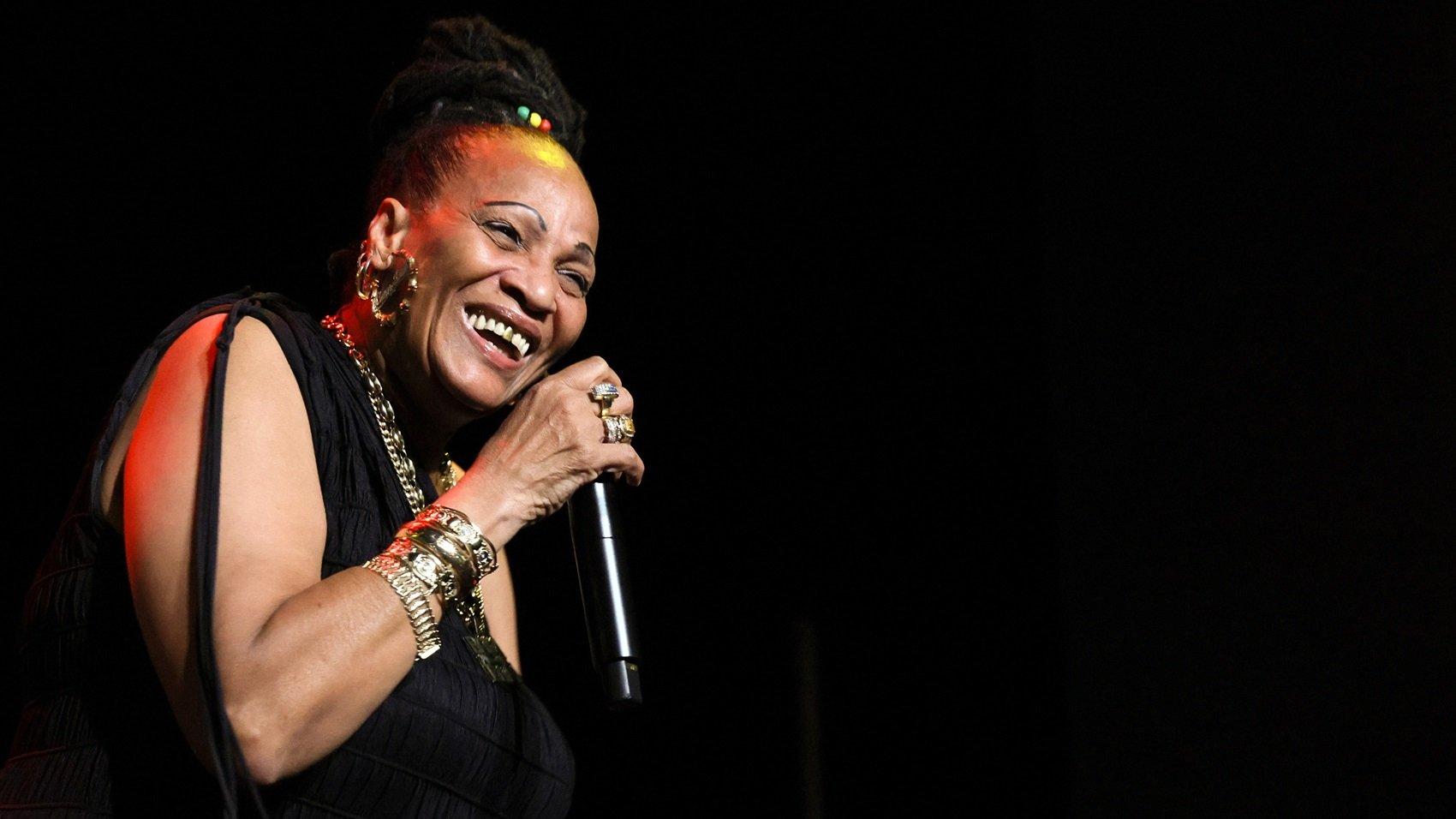
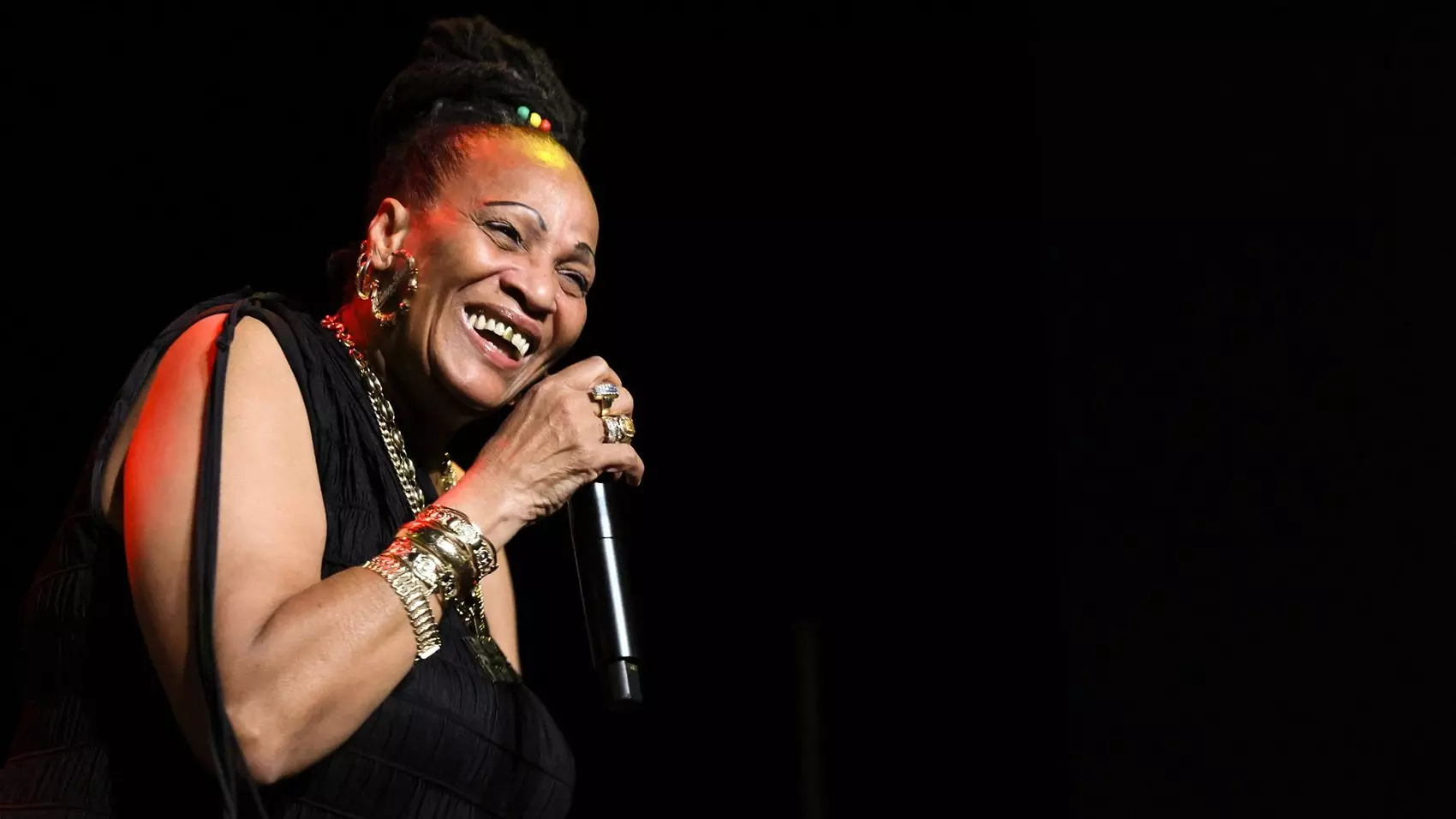
Sister Nancy performs at the premiere of 'Bam Bam: The Sister Nancy Story' during the 2024 Tribeca Festival.
Photo: Dia Dipasupil/Getty Images for Tribeca Festival
Sister Nancy Talks "Bam Bam," Why She Loves Jay-Z & Longevity In Reggae
The past 12 months have been some of the busiest in the Jamaican singer's career, and she has no plans to slow down. "As long as my voice is heard, I am going to be doing that. Because there ain't no stopping Sister Nancy."
GRAMMYs/Oct 31, 2025 - 02:46 pm
Sister Nancy is racing around New York City, sharing her "truths and rights."
The first lady of dancehall has just left an interview at radio station Power 105 and is en route for a number of back-to-backs. She's promoting a documentary about her journey — "it's not a story, it's my life," she clarifies — called Bam Bam: The Sister Nancy Story. In August, she released a new Mad Professor-produced album, Armageddon — her first LP in over 20 years. In December, Nancy will headline a celebration of her career featuring female artists including Renée Neufville.
This hustle isn't unusual for Nancy — the Kingston, Jamaica-born MC has been performing since she was a teenager, when she was mentored by her brother Brigadier Jerry — though the amount of activity and acclaim is something slightly more recent. The past 12 months have been the busiest of Sister Nancy's 45-year career.
"People love what I stand for. I always give [the audience] something they can think about," Sister Nancy tells GRAMMY.com, Zooming in from a car in Midtown Manhattan. "I will never be your ordinary thing. When you come to see me, it doesn't matter the time or the space, it's always going to be good."
While Sister Nancy needn't be reminded of her influence — "I'm the woman who created dancehall … on the mic system, around the sound system. I'm the one who did all of that, first" — the past 15 years have seen the artist receive her flowers on a global stage. In addition to her status as a rare female voice in a sea of male performers at the dawn of dancehall, Sister Nancy is recognized for her influential, highly sampled single "Bam Bam."
She recorded the early dancehall anthem in 1982 when she was just 20 years old as a last-minute addition to her debut album, One, Two. An interpolation of Toots and the Maytals' 1966 song of the same name, Sister Nancy's in-studio freestyle was laid over sparse rub-a-dub production, allowing her declaration of ambition and skill to ring loud and clear.
"I went with Yellowman to Harry J's Studio. Yellowman did a 'Bam Bam,', and I had to finish my One, Two album, and I just said I am going to do a tune like Yellowman did. And I did 'Bam Bam,' my way," Nancy recalls. "I just made up in the studio right there."
Remarkably, "Bam Bam" was far from an instant classic and received little airplay in Jamaica. Sister Nancy wouldn't perform the song on a Jamaican stage for eight years, until she featured at 1990's Sting competition. Yet the song made its way to the States, where it found popularity in New York, New Jersey and Connecticut's Caribbean diaspora and caught the ear of hip-hop innovators of the '80s.
Sister Nancy's grooving refrain and undulating horns from an Ansel Collins riddim have been widely sampled in the four decades since its release. Multiple sources consider it the most sampled reggae song ever (WhoSampled.com counts 155 samples), with Beyoncé, Madlib, Run D.M.C., Lauryn Hill, Chris Brown, Alicia Keys, Ariana Grande, and Buju Banton and many others pulling from Nancy's crisses lyrics. It's been used in film and television, including prominently in 1998's Nas- and DMX-featuring Belly.
"I didn't hear it play in Jamaica. I didn't know how big it was at all. I just didn't hear it at all," Nancy recalls. "And remember, I had songs before that like 'One, Two' and 'Transport Connection'; they were playing, but I didn't hear 'Bam Bam' until I come to the U.S."
Sister Nancy moved to New Jersey with her daughter in 1996, and worked as an accountant in a bank. She never stopped performing, and while Sister Nancy traveled as far as Israel to sing, she was often relegated to multi-artist bills — and not in the largest text. She was known and respected among those in the diaspora and by folks with a crate-digging sensibility, but wider recognition remained somewhat elusive.
Still, Nancy kept her spirits up, locking into her faith and sense of humor. "The inspiration [comes] from almighty God himself,” she says. “You can't be a sulky person and I don't believe in that. I like to make people laugh."
Like many artists of her era who either had bad contracts or no contract at all, Sister Nancy did not benefit from the popularity of "Bam Bam" for the majority of her career. Nancy was largely unaware of its popularity as a hip-hop sample, and didn't receive royalties for the tune (itself owned by producer Winston Riley, who died in 2012). Things came to a head in 2014, when Nancy's daughter shared that "Bam Bam" was used in a Reebok commercial. After that, there was no stopping Sister Nancy.
"I just couldn't take no more. I just say it's time for me to be compensated, and I just did what I had to do," the icon says of her legal battle for royalties. "It was not a difficult process. I just did the right thing and everybody who was involved just complied, and I was satisfied."
In 2016, Sister Nancy received 10 years of back royalties as well as royalties going forward, which allowed her to retire from the bank and pursue music full time. She encourages artists in similar binds to find an attorney who's familiar with their work.
"The attorney that I got told me that he and his wife was my biggest fans, so it was easy for him to really work for me," she says, adding, "I don't go for no young lawyer because they have name. Get people with experience to fight for you."
With her rights restored, Sister Nancy's trajectory changed dramatically in the latter half of the 2010s — due in no small part to nods and samples from two of hip-hop's biggest artists. Kanye West prominently sampled "Bam Bam" in the Rihanna-featuring "Famous"; Nancy's chorus comes in midway through the song, adding an ethereal quality to West's braggadocio. "Famous" was nominated in multiple Categories at the 2017 GRAMMYs, including for Best Rap Song.
Of the many, many samples and interpolations of her work, Sister Nancy is unequivocal about who delivered her favorite: Jay-Z
For his 2017 single "Bam" featuring Damien Marley — off the GRAMMY-nominated 4:44 — Jay-Z not only sampled "Bam Bam," but worked with Nancy directly. After hearing Nancy on Hot 97's "Ebro In The Morning," Jay-Z flew the legend to Jamaica to sing and feature in his hybrid music video-documentary. That direct connection, a deferential gesture, was not lost on Sister Nancy.
"That's the best one. I'd rather work with him than anybody, it's because he did the right thing. He took me with him. I appreciate that," Sister Nancy says of Hova. "I have a respect for him because he chose to go with me and do it the right way. The rest of them just went behind my back."
In the years since, Sister Nancy has continued to thrive. She's performed on global stages and can be seen regularly at New York hotspots such as Union Pool, Public Records, and S.O.B.'s. Janelle Monáe featured Nancy not once but twice on 2023’s Album Of The Year-nominated The Age Of Pleasure, and sampled "Bam Bam" on “Water Slide." In further recognition of her impact, Burberry asked Sister Nancy to participate in their spring/summer 2024 campaign, which was shot in Jamaica.
She continues to release new music of her own, though she believes in letting projects simmer before embarking on something new. Armageddon —her first full-length since 2001's Sister Nancy Meets Fireproof — was released this summer, seven years after it was recorded with Mad Professor in the U.K. "Mad Professor is someone I look up to. He's a genius, and I love working with him," Sister Nancy adds. "He remind me of [Jamaican dub pioneer] King Tubby. "
While Sister Nancy's icon status has long since cemented, she remains committed to performing. She's one of few women of her generation to do so; peers like Sister Carol and Marcia Griffiths continue to share their messages in a reggae style, though with less frequency than Sister Nancy. Her presence on record and on stage has inspired generations of singers and DJs.
"If someone can patronize you or learn from what you're doing, it makes it worthwhile," Nancy says. "I'm going to do that as long as I can talk. As long as my voice is heard, I am going to be doing that. Because there ain't no stopping Sister Nancy."
More than 40 years later, she's still happy to discuss and play that single she recorded back in Kingston as a young woman. "I have to appreciate 'Bam Bam.' I have no problem talking about it because it's mine. I did the song, so I'm not tired of talking about it. I'm not tired of playing it either," Sister Nancy says. " I love it. That's my voice. I made that."
More Reggae News
Ink
Photo: Matty Vogel
Get To Know Ink, The Hitmaking Songwriter For Beyoncé & Kendrick Ready To Take The Spotlight
After a big year of co-writing chart-topping hits, Ink showcases her own artistry with a new EP, 'BIG BUSKIN'.' Learn more about the GRAMMY-nominated singer/songwriter and her journey to stardom.
GRAMMYs/Oct 2, 2025 - 08:22 pm
Imagine cementing your place among icons before releasing your debut project. Ink doesn't have to.
Born Atia Boggs, the Atlanta-raised singer/songwriter has become a go-to collaborator for the likes of Beyoncé, Kendrick Lamar, Childish Gambino, Justin Bieber, Kacey Musgraves, Lil Nas X, and Jennifer Lopez. And now, she's stepping into the spotlight with BIG BUSKIN'. Out Oct. 3, the new EP will see Ink display her own star power, blending elements of country with hip-hop to create her unique genre-blending sound.
BIG BUSKIN' — the title a tribute to her early days busking around her hometown — comes on the heels of a remarkable couple of years for Ink. After writing on Beyoncé's GRAMMY-nominated RENAISSANCE, Ink returned for Bey's Album Of The Year-winning COWBOY CARTER, co-writing its historic crossover hit "TEXAS HOLD 'EM." While that marked her first No. 1 on the Billboard Hot 100, Ink soon landed another thanks to "Luther," Lamar's latest smash with SZA that stayed at the top for a whopping 13 weeks.
"It's just a different level of craftsmanship that they have," Ink told Rolling Stone of Lamar and Beyoncé. "It alters my process and how I look at music."
When it comes to her own project, Ink declares that it's "definitely something special." "[BIG BUSKIN'] showcases a lot of different parts of myself," the three-time GRAMMY nominee shared in a statement. "Each chapter you're going to get something new, and each story you're going to get something true."
As Ink releases her debut EP with Big Loud Records, learn more about the inspiration behind her genre-defying sound and why she's earned Beyoncé's praise as an "artist's artist."
She Has Always Known She'd Be A Star
Ink's musical journey began when she taught herself guitar at a young age. Soon after, she began hitting the streets of Georgia to perform for anyone who'd be willing to listen. "I was playing for change, selling CDs, going straight to the people," she shared in press materials for BIG BUSKIN'.
As she recalled to Rolling Stone, Ink busked outside of Jay-Z and Beyoncé's show at the Georgia Dome in 2014 — not only a fateful situation, but one that displayed her confidence. "I wanted to go in there so bad, but [I thought,] 'I hope they have fun, because when I go in there, it's going to be my time.'"
Five years later, Ink doubled down on that manifestation upon seeing Beyoncé at the Roc Nation GRAMMY Week brunch in 2019. "I went up to her and said, 'Hey, I just wanted to let you know, I'm going to be writing your next album,'" she told Billboard, "And she giggled and said, 'What's your name?' We just hit it off."
Her Genre-Blending Sound Is No Coincidence
Ink's musical style is a melting pot shaped by her upbringing, deeply rooted in both her ethnic and social background. On BIG BUSKIN', she weaves together elements of country, rock and hip-hop — genres that can be described as the soundtracks of her life.
The Germany-born, Georgia-raised artist is influenced by singer/songwriters like Babyface, Tony Henry, Creedence Clearwater Revival, Lauryn Hill, and Sister Rosetta Tharpe. And with roots in the Cherokee and Blackfoot indigenous tribes, Ink's diverse background has helped a unique identity all her own.
It was her deep connection to the South — specifically, through Houston rapper Trae Tha Truth — that truly shaped her musical identity. "He's one of the reasons that I'm how I am today," she shared in a press statement.
She also counts GRAMMY-winning singer/songwriter/producer James Fauntleroy — who has worked with the likes of Bruno Mars, Justin Timberlake, and Rihanna — as a mentor, noting that he's shown support since they became Facebook friends in the late 2000s. "[He gave me the confidence to say, 'I can do this,'" she said to Billboard.
Now in her stride, Ink has even managed to blow Beyoncé's mind with her wide-spanning talent. "[Beyoncé] told me that she didn't understand how I was so consistent, because I'd always make different genres of music," Ink recalled in a press statement. "She said, 'You're an artist's artist,' and that gave me a boost of confidence to stay on my path and stay true to my authentic self."
This Isn't Her First Rodeo
BIG BUSKIN' will mark Ink's official debut with Big Loud Records, but it won't be the first time she's released a project. The singer/songwriter previously released three albums independently: 2018's Highlight Real, 2019's Backstreets and 2021's Imagine Not Knowing.
On Highlight Real, Ink tapped into more of her R&B sensibilities. With Backstreets, she incorporated her rock influences with acoustic and electric guitars. And on Imagine Not Knowing, she intertwined R&B stylings with hip-hop beats. Though none of the projects explored her country side, they each helped mold the innovative sound that has pushed her to the forefront today.
She's Become A Secret Weapon For Superstars…
Ink has become one of the music industry's trusty wordsmiths, co-writing songs for some of today's leading artists. Things first took off for her in 2015, landing credits on tracks by Monica, Tamar Braxton, Rick Ross and Mary J. Blige, and Plies and Jacquees. From there, she scored cuts with several more R&B and rap stars, including Yo Gotti, Remy Ma, Chris Brown, Leon Bridges, and Paloma Mami.
While her biggest moments as a songwriter have come with Beyoncé's "TEXAS HOLD 'EM" and Kendrick Lamar's "Luther," she landed more cuts with each of them, including Beyoncé's "16 CARRIAGES" and Lamar's other SZA collab on GNX, "Gloria." But those two are far from the only major stars she's written for in recent years: along with tracks by Lil Nas X, 21 Savage and Mariah the Scientist, Lay Bankz, and Latto, Ink co-wrote over 80 percent of Jennifer Lopez's ninth studio album, This Is Me…Now.
…And A Sought-After Collaborator
As Ink became more renowned as a songwriter, more and more artists recognized her talents as a singer. Her first big feature came in 2019 with Chris Brown and Justin Bieber's "Don't Check on Me," a song she co-wrote and co-produced; as she asserts, being asked to join as a featured artist was a major turning point in her career.
"It gave me so much exposure and another boost of confidence to have a superstar say, 'Hey, we're going to introduce you to the world,'" she told Billboard, adding, "that was one of the moments that led to the unstoppable train I'm on now."
She's also noted that her feature on Childish Gambino's funky 2020 single "Psilocybae (Millennial Love)" was another moment that transcended her artistry in another light. And since then, she's offered her vocal chops to NLE Choppa's "Hear Me," Leon Bridges' "Don't Worry," Zerb and The Chainsmokers' "Addicted," Lamar's "Dodger Blue," and BigXthaPlug's "24/7," among several others.
She's Ready To Get The Party Started
As Ink began her countrified new chapter earlier this year, the multi-faceted artist released "Turquoise Cowboy." While she has dubbed the anthemic track "a theme song for myself," the singer/songwriter sees its toe-tapping follow-up, "Hoedown," as a perfect depiction of the vibe she's channeling with this new music.
"[Hoedown is] a good way to introduce me to the world," she said in a press statement. "I like to dance, I like to get the party going, I like to keep the energy up."
With a desire to make timeless music and a larger-than-life personality, Ink is ready to show the world her true self with BIG BUSKIN' — and she's excited to take listeners along for the ride. "I do music so that I can interact with humans and turn up the frequency of the universe," she explains in a statement, "while showing people that this classic American music never left."
Latest News & Exclusive Videos

Cam
Photo: Szilveszter Makó
How Cam's 'All Things Light' Was Inspired By Her Daughter, Beyoncé & "Exploring Deeper Questions"
The GRAMMY-winning country star opens up about the life experiences and lessons that shaped her introspective new album, and how the project is "100 percent what I wanted it to be."
GRAMMYs/Jul 22, 2025 - 04:21 pm
Cam admits she's been in survival mode for the past five years. But it resulted in one of her most authentic projects to date.
All Things Light, her reflective new album out now via RCA Records, sees the country singer/songwriter embracing life's highs and lows. Cam started crafting All Things Light by herself during a period she describes as "insane"; as a new mom in the midst of a pandemic, she found creativity on her own.
"I went into the studio by myself a lot, because obviously nobody was sharing spaces," she tells GRAMMY.com of the early album process. "I tapped into something while I was by myself. I love collaborating, but to only be listening from my own gut and coming up with stuff, I had a whole new body of work coming to me."
All Things Light further displays Cam's songwriting depth while embracing a wider sonic landscape. While still rooted in country music, the album experiments with new sounds and genres taken from her life journey; elements of folk, rock and pop weave seamlessly throughout the 12-track project. She sings about life's unanswerable questions, trusting the universe, and ultimately finding her way.
As a result, All Things Light finds Cam surer of herself as a songwriter, a creative and a woman. "If I fall, I still sing and I know why," she confidently sings on the triumphant "Turns Out That I Am God"; elsewhere, she fully embraces her pop and dance side on tracks like "Wherever You Are" and "Pretty Girls." While topics of heartbreak and death ("Half Broke Heart," "Village" on 2015 debut Untamed) and deeply personal songs ("Redwood Tree," "Girl Like Me," on 2020 The Otherside) have been prevalent throughout her catalog, Cam sings them on All Things Light as a woman who has grown from life's obstacles — and throughout every track, her positive light shines through.
While working on the album, Cam got the opportunity to work on Beyoncé's COWBOY CARTER. Co-writing five tracks — "AMERIICAN REQUIEM," "PROTECTOR," "DAUGHTER," "TYRANT," and "AMEN" — her contributions not only earned Cam her first GRAMMY, but also further inspired her own project.
"It all came from the same wellspring," she says of the songs on All Things Light and COWBOY CARTER. "Creatively, it was an amazing time. You can tell from this subject matter on the album that it's a very heavy time. I definitely felt the weight of being a mom, and as a mom, you're the guide, and the protector, and the world builder. You're the one who explains what this whole thing is to your kid."
Cam's experiences with her 5-year-old daughter, Lucy, heavily inspired All Things Light. Living life fully is also at the heart of the project, as she witnessed loss within her immediate family, which she touches on in lead single "Alchemy": "From dust to flesh to bones to dust/ We are golden/ Call it a miracle/ I call it alchemy," she sings on the surprisingly upbeat track. Meanwhile, the old-timey "Slow Down" serves as a reminder to trust her gut when chasing a dream: "If you get a funny feeling/ That it's not your dream you're dreamin/ Slow down."
"A lot of these songs are facing the abyss and exploring deeper questions, and maybe not even having an answer, but guideposts for myself and her," Cam explains. "It's a deep, heavy meaning, and then some fun little dance-y vibes — it's everything I wanted in an album."
Below, Cam discusses All Things Light, her creative process, and how motherhood inspires her songwriting.
This interview has been edited for length and clarity.
All Things Light came from dealing with loss and motherhood during the pandemic. Did the songs help you get through the other side of that loss?
It's been a tough time, personally. In my immediate family, we've had a lot of loss and health stuff, and as difficult as it was, it was a wake-up call about what makes life worth living. It's spending time with people you love. All these songs and raising a kid needing these answers about [life's] big questions, it all showed up [while writing All Things Light]. I have to address things like that.
Even though you think motherhood is a happy creation time, the other side of the coin is, What does it all mean in the big picture? To me, singing is incredibly calming, and writing is super therapeutic and cathartic. These are things that I need to hear.
"Turns Out That I Am God," when I say, "I was busy waiting for someone to live my life," [it] is me being on autopilot and not examining this stuff. "Dreamt myself to the center of all things light" is when I first meditated. I've turned this constantly talking mind off, and inside my belly there's this peace. You get filled with this joy. It's there in me, it's there in the trees, it's there in everything. There's some sort of energy to the universe, and to me, I call that God, and that's realizing that that's in me.
Has your songwriting changed at all being a mother?
I'm really intentional. I don't have time to do anything that isn't important to me. I have to feel really drawn to or inspired by a concept that I commit to, because it's like, Okay, this is important to me. I want this to be out. Then I'll commit all the time that's necessary to make it great.
Obviously when Beyoncé calls, you show up.
It was such incredible divine timing, because I feel like this is something that was coming out of me, this type of music. I obviously love being experimental and pushing boundaries.
Getting a GRAMMY for being a part of that album that was very experimental and pushed a lot of boundaries and still was incredibly meaningful. I think people are going to be discovering the layers of what she did for years. It was so inspiring to see somebody commit and do that at such a high level.
I think it's really easy to feel scared that if you do something outside of the norm or outside of the box, that it's gonna cost you — and maybe it will. But the point is, what are you doing this for? What matters is you're making great art. If anything, it made me feel super free and emboldened to just stick with it.
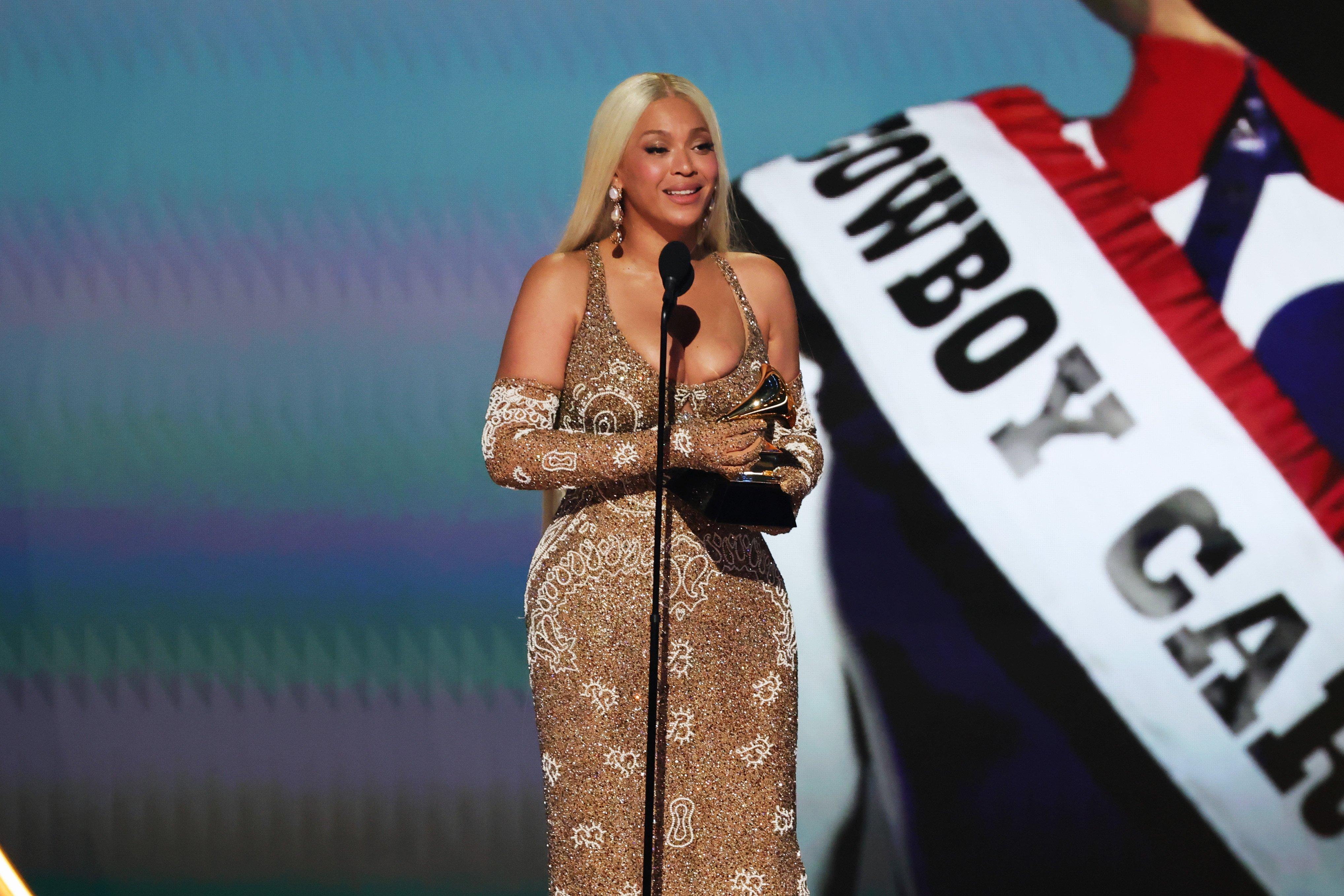
You'll forever be introduced as "GRAMMY-winning singer/songwriter Cam" for working on Beyoncé's COWBOY CARTER. Have you fully processed that?
Honestly, it hasn't fully processed yet. It's pretty cool to have this statue that says my name, and COWBOY CARTER, and Beyoncé on it. 12-year-old me is like, No way! I get to go see the tour in Vegas, and I'm ready to bawl my eyes out, dance and cry, because it's so incredible.
Years ago, you mentioned that you write songs based on colors. Did you do that for All Things Light?
Definitely, yeah. I think that's one of the easiest ways to describe [songs], when you're trying to take something from a collective subconscious, then you have to try and communicate it with anyone else you're working with. I think that colors usually help me the most — or temperature, sometimes — of describing what it is.
"Alchemy" was your first solo release in four years. What color or temperature were you feeling when you wrote that song?
I started it with my longtime co-writer, Anders Mouridsen, and we were trying really hard to focus on melody. I was like, "Wow, this album is heavy. What if I try and not be heavy?" It still ended up being a death mantra. "From dust to flesh to bones to dust." It's a Buddhist meditation on death.
To me, that song, even though it's talking about death, and the single art is flowers growing out of me, in my mind your body decomposes and becomes something else, transformative. "We are golden" is the assurance. That whole process is beautiful, and can we see that in a positive light? So, to me, that one's this orangey, yellowy, golden-ish color.
I noticed Joni Mitchell has a writing credit on "Alchemy."
It's similar enough to "Woodstock," that song of hers, that I was like, "I want to reach out and make sure that this is good with them, because it's such an important thing to say." It was definitely insane to get approval from her and that team.
It's very Joni Mitchell inspired. She's such an inspiration to me. My mom always loved Joni Mitchell growing up, so we listened to a lot of that. She's one in a million.
How have you transformed in the past five years?
I think I went from a bit shellshocked with motherhood, to then trying to find my feet, and feeling a little bit underwater. At this point, I'm trying really hard to own that life is messy and it doesn't look how you think it's gonna look. That doesn't mean it isn't fantastic, and something that you get lessons out of, and you have heartache, and you have joy. The acceptance of it all and the surrender to it all. I don't think I've mastered it, but I think I'm trying to get better at reminding myself that that's why we're here.
Is there one song that best describes where you are in life right now?
Probably "Turns Out That I'm God." That and "Slow Down," I think those are my core thesis statements. This is my life happening, and it's my experience to enjoy or not enjoy, and it's up to me. That is a heavy and freeing thing at the same time.
The first lyric of the album is, "I was busy waiting for someone to live my life," and then the last lyric is from "We Always Do": "We'll think of something we always do." It's like radical optimism, in a relationship, or just humanity. I think we're gonna figure it out. The last lyric on the whole album is "try," and I like that a lot.
Tell me about writing "Turns Out That I'm God."
I listened to Alan Watts give a lecture. He's a philosopher, entertainer, from the '60s/'70s, and he brought a bunch of Eastern ideas to Westerners. Generally speaking, Westerners feel so separate from the world, like humans are alone and isolated. In general, a lot of Eastern philosophies and religions are integrated, and you're all part of one.
He did a thought experiment: We're all God, we've just forgotten. We could do anything we wanted and dream these beautiful dreams, and they would last for 75 years.
After so many nights, you're like, "Well, maybe I should throw in a little surprise, a little risk." After you try that, you're like, "Wow, that was something. I think I want to try more." You add more and more risk until you get to where you are now, and that's you living your life — where you don't know what's going to happen, and what a gift that is, and what a gift you've chosen to live like that.
It's about how that makes you feel, when you hear that, [you think], "Maybe I've chosen to be here doing it this way." That was a relief for me when I heard that.
What has this album taught you about yourself and your career?
I got in really late to professional music, because I switched my career when I was 25. I was 29 and 30 and "Burning House" happened so fast. I want to keep meeting what my dream version of music can be, and I think I keep getting closer. I feel like I've landed on something this time.
I love every single thing that's in this album. Every single piece, nothing was a compromise. Nothing was a decision made out of fear. It all was 100 percent what I wanted it to be. It feels very pure in that way.
I feel really lucky that I get to keep making music and keep journeying forward to do it like this. It's always something new. It's never the same thing over and over again.
It was definitely a heavy, heavy run around. But then, having the COWBOY CARTER stuff happen… and 070 Shake, who I love, getting to sing and feature on her stuff [2024's "Never Let Us Fade"], I'm so proud of where [my career] is at.
I know it's not culturally accepted to take your time making art, but I do, and I appreciate that people still want to hear what I've got to say. I'm proud of this album, and I think it's going to be a healing balm for a lot of people.