
Photo: Craig Sjodin/ Contributor, Getty Images
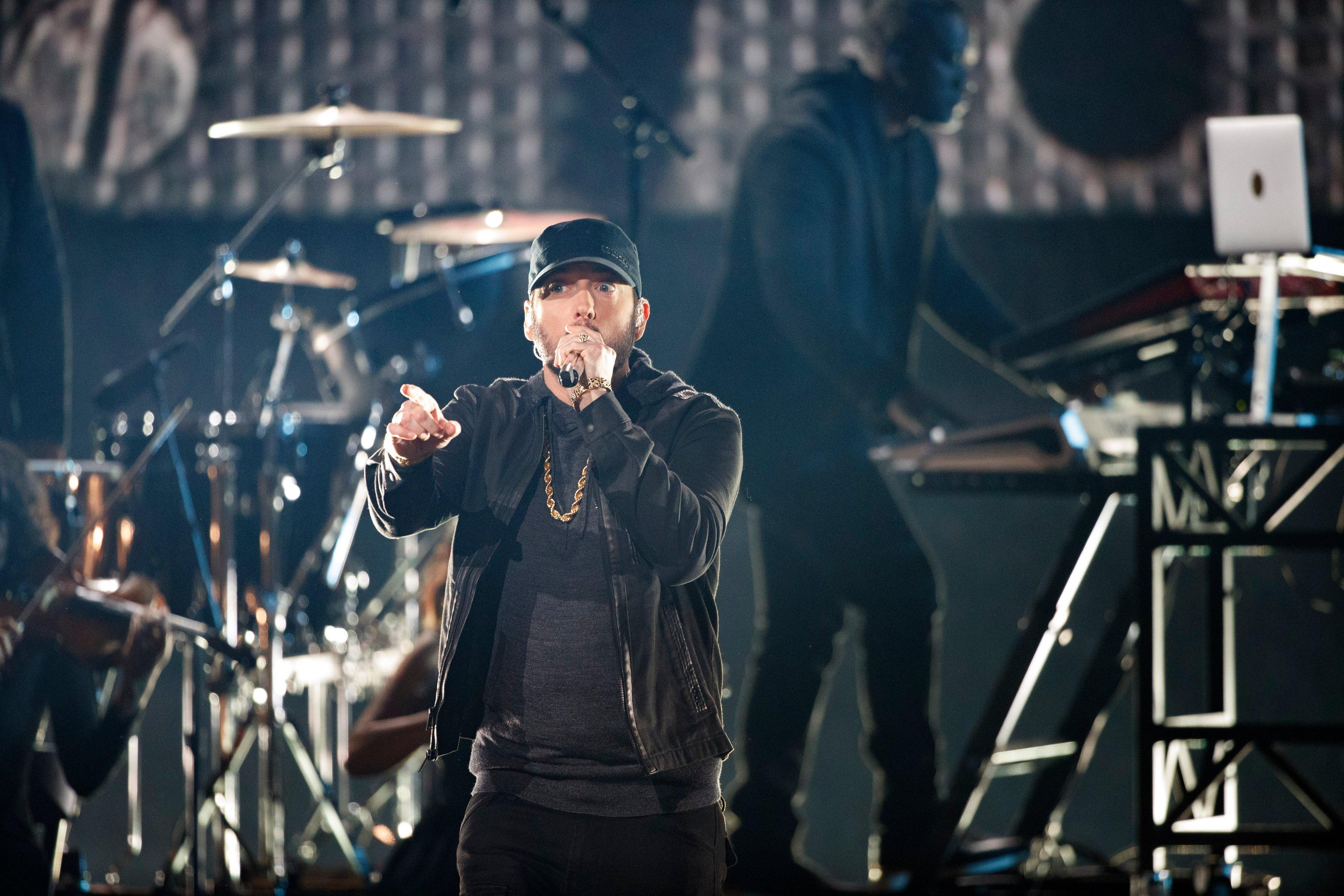
Eminem
Is Eminem's “Stan” Based On A True Story? 10 Facts You Didn't Know About The GRAMMY-Winning Rapper
Brush up on your Slim Shady knowledge ahead of his Super Bowl 2022 Halftime Show performance on Feb. 13
GRAMMYs/Feb 12, 2022 - 04:56 pm
Eminem is heading to Inglewood, Calif. this Sunday (Feb. 13), where he will perform at the Super Bowl LVI Halftime Show alongside frequent collaborator Dr. Dre, rap superstars Kendrick Lamar and Snoop Dogg, and the queen of hip-hop soul herself, Mary J. Blige. The show is already shaping up to be legendary, with the five rap icons poised to take over the SoFi Stadium around 5 p.m. PST/8 p.m. EST.
Although Eminem is the top-selling hip-hop artist of all time, there are still a few lesser-known facts about the elusive Detroit rapper. For example, did you know Eminem starred in a two-minute commercial during Super Bowl XLV — the longest ad in Super Bowl history at the time? Brush up on your Slim Shady knowledge ahead of his highly anticipated performance at this year’s Super Bowl below.
1. Eminem was the first rapper to win an Academy Award
Eminem’s GRAMMY-winning song “Lose Yourself” from the 2002 film 8 Mile won the Academy Award for Best Original Song, making him the first hip hop artist ever to win the award. However, Marshall Mathers was not expecting his song to win — so much so that he skipped the ceremony and spent the night hanging out with his daughter, instead.
At the 2020 Oscars, Shady surprised attendees with a performance of the popular track, nearly two decades after it won him the award.
2. He’s broken 13 Guinness World Records
Over the course of his 34-year career, Eminem has broken 13 Guinness World Records. In 2015, his GRAMMY-nominated single “Rap God” broke the record for Most Words in a Hit Single. The Detroit native also holds titles like Fastest-Selling Rap Artist, Largest Vocabulary For A Recording Artist, and Fastest Rap in a No. 1 Single, the latter of which he clenched with 2020’s “Godzilla.”
3. He was the first artist to have 10 consecutive No. 1 debuts on the Billboard 200
In 2020, Eminem scored his 10th consecutive No. 1 debut on the Billboard 200 with his 11th studio album, Music To Be Murdered By. The 49-year-old was the first artist to achieve this, breaking his then-tie with Kanye West. In terms of non-consecutive No. 1 debuts on the chart, Eminem sits behind Bruce Springsteen and Barbra Streisand, who have both released 11 No. 1 albums; JAY-Z, who has 14; and the Beatles with 19.
4. Eminem recorded “My Name Is” after meeting Dr. Dre
For their first meeting, Eminem went to Dr. Dre’s home studio and recorded what would become his 1999 hit, “My Name Is.” The track earned Eminem one of his first-ever GRAMMY Awards and marked the beginning of one of the most iconic rapper-producer relationships in hip-hop history.
5. He wanted to be a comic book artist before pursuing rap
Before he had hip-hop dreams, Eminem had ambitions of being a comic book artist. Although he wasn’t big on reading — the only book he’s read cover-to-cover is allegedly LL Cool J’s I Make My Own Rules — a young Mathers was fascinated with comics. Superhero comics also provided an outlet while in rehab for drug addiction, Eminem revealed on “The Jonathan Ross Show” in 2009. Eminem’s love of comic books has occasionally popped up in his music career, such as his “Mosh” music video and “The Slim Shady Show” series. He was also the focus of his own Marvel Comics story, “Eminem/Punisher #1.”
6. "Lose Yourself” is Eminem’s biggest hit
“Lose Yourself,” the diamond-certified 2002 hit from 8 Mile, is Eminem’s most successful single to date. The song peaked at No. 1 on the Billboard Hot 100 — becoming his first single to do so — and reached the top spot on 24 national charts worldwide. It was also nominated for five GRAMMY Awards, ultimately winning Best Rap Song and Best Male Rap Solo Performance in 2004.
7. He’s won 15 GRAMMY Awards
Eminem has won a total of 15 GRAMMY Awards and has been nominated 44 times. He took home his first two trophies at the 42nd GRAMMY Awards for “My Name Is,” which won Best Rap Solo Performance, and The Slim Shady LP, which won Best Rap Album. He’s performed at the GRAMMYs four times, the first being his iconic duet of “Stan” with Elton John in 2001.
8. Rick Rubin executive produced two of Eminem’s albums
Rick Rubin worked with Eminem as the producer and executive producer of his eighth album, The Marshall Mathers LP 2, which won Best Rap Album at the 2015 GRAMMYs. In an interview with Rolling Stone, Em revealed he was drawn to working with the legendary producer because he wanted to “experiment with new, older breakbeats” and “retro” sounds. Rubin also produced and executive produced Eminem’s ninth album, Revival.
9. Eminem turned his famous “Mom’s spaghetti” line into a restaurant
"His palms are sweaty, knees weak, arms are heavy / There's vomit on his sweater already, mom's spaghetti,” is a line most Eminem fans know by heart. Although the famous “Lose Yourself” lyric was not inspired by Eminem’s own life — he was writing in-character as 8 Mile protagonist Jimmy “B-Rabbit” Smith Jr. — it did inspire a business venture. In 2021, Eminem opened Mom’s Spaghetti restaurant in Detroit; a pop-up version of the eatery will also be present at Super Bowl LVI.
10. “Stan” is not based on a true story
Eminem’s 2000 smash-hit “Stan” was not based on a real person. However, the song, which tells the story of an obsessed fan who kills himself and his girlfriend after Eminem fails to respond to his letters, was inspired by the rapper’s real experiences. After receiving disturbing fan mail in response to his sophomore album, The Slim Shady LP, Eminem wrote the track as a “message to fans” not to take his lyrics literally. The Dido-sampling song became a career-defining hit and the term “stan” became an official addition to the Oxford English Dictionary.
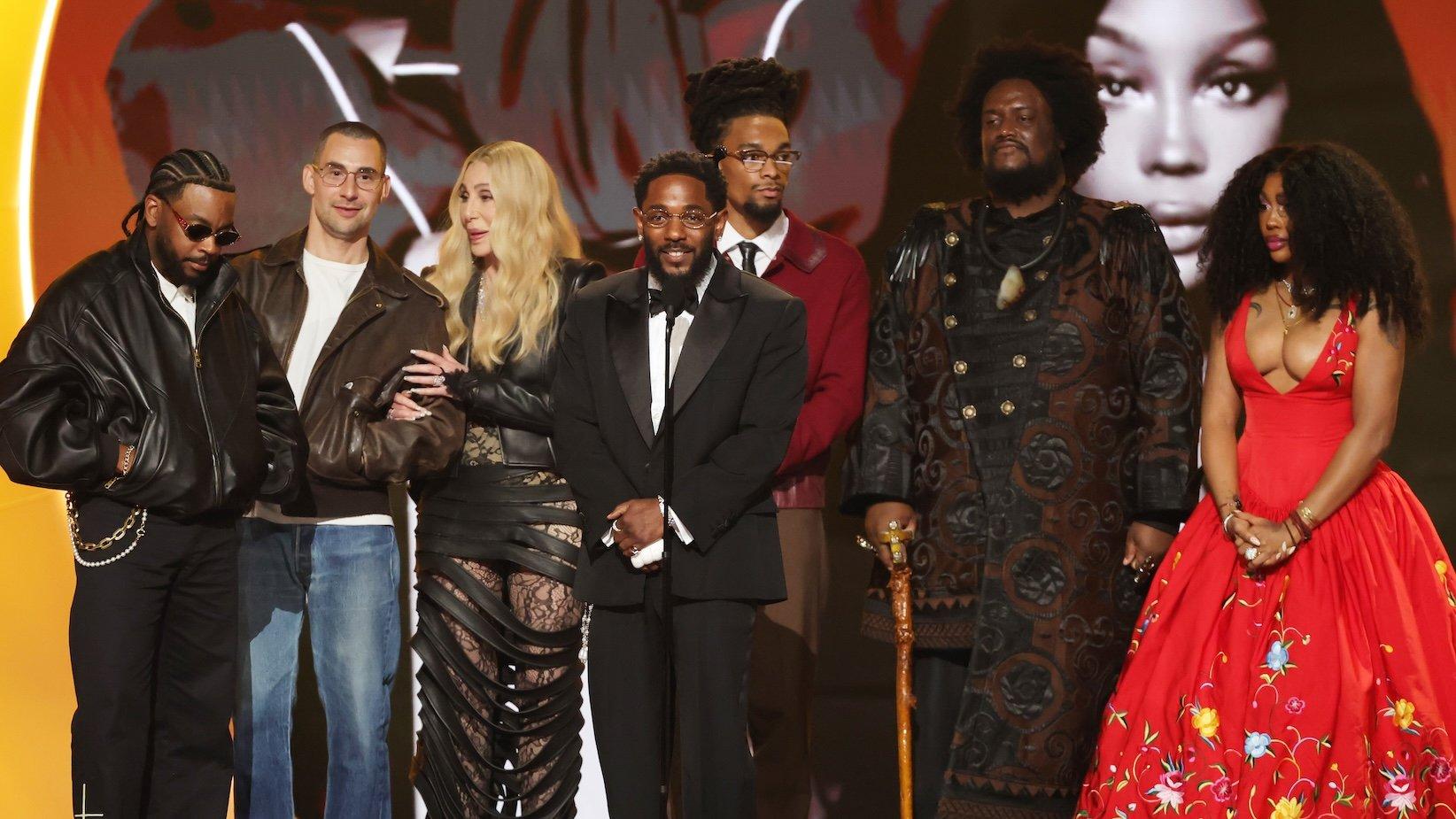
Kendrick Lamar and SZA win the Grammy for Record Of The Year at the 2026 Grammys on Sunday, Feb. 1, at Crypto.com Arena in Los Angeles, California. (L-R) Sounwave, Jack Antonoff, Cher, Kendrick Lamar, Scott Bridgeway, Kamasi Washington, and SZA.
Photo: Kevin Winter/Getty Images for The Recording Academy
10 Rappers Who Have Won The Most Grammys: Kendrick Lamar, Jay-Z, Eminem & More
From Jay-Z to Lauryn Hill, Grammy.com highlights 10 artists with the most Grammy Awards. Their impact, influence and innovation have helped shape the culture — and earned them an abundance of accolades.
GRAMMYs/Feb 2, 2026 - 01:18 am
Editor’s Note: Updated Sunday, Feb. 1, 2026, to reflect the results of the 2026 Grammys.
1989 was a year of many highlights, from the debut of "The Simpsons" and "Seinfeld" to the collapse of the Berlin Wall and the beginning of the Game Boy. It was also the first year hip-hop artists won Grammy Awards, an honor that went to D.J. Jazzy Jeff & the Fresh Prince for "Parents Just Don't Understand."
Hip-hop and the GRAMMYs have come a long way in the ensuing decades. While Will Smith and DJ Jazzy Jeff broke barriers with their win for Best Rap Performance, the duo boycotted the show because the rap Category was not televised. The boycott proved successful, as the genre Categories began to be televised during the following year, in 1990, and every year since then.
Read more: Who Are The Top GRAMMY Awards Winners Of All Time? Who Has The Most GRAMMYs?
Now, the Recording Academy celebrates the sounds of hip-hop and acknowledges the genre’s indelible impact; few genres have disrupted and defined music on such a global scale. Hip-hop rappers, producers, and songwriters have significantly shaped the musical landscape, garnering a bevy of Grammy Awards along the way. And although many artists have taken home Grammy Awards since ‘89, there are a few artists in the game who reign supreme.
Read on for 10 rappers who have won the most Grammy Awards
Kendrick Lamar
27 wins, 66 nominations
Loading...
Kendrick Lamar’s wins represent a return of “conscious” rap that tackles topics such as race and politics while embracing the art of authentic storytelling. As such, his 2015 album To Pimp a Butterfly gave way to many social justice anthems such as “Alright” and “Wesley’s Theory”; the release also took home the award for Best Rap Album at the 58th GRAMMY Awards.
Further reading: Kendrick Lamar's GRAMMY Timeline: From His First Win And Performances To "Not Like Us"
Additionally, Lamar’s most successful album, DAMN — which features hits like “DNA" and “Humble" — won five GRAMMYs Awards. At the 2025 Grammys, the rapper's hit single “Not Like Us” swept its Categories. Among Lamar's wins that night were Record Of The Year, Song Of The Year and Best Music Video. At the 2026 Grammys, he won the Grammy for Record Of The Year for “luther,” Best Rap Album for GNX, Best Rap Song for “tv off,” Best Melodic Rap Performance for “luther,” and Best Rap Performance “Chains & Whips” (his collaboration with Clipse), breaking the record for the rapper with the most Grammy wins.
Learn more: Kendrick Lamar Sweeps The 2025 GRAMMYs With Song Of The Year Win
Kendrick Lamar’s influence extends to broader cultural events, such as his groundbreaking 2025 Super Bowl halftime show. The show set a record for viewership and became one of the most-watched halftime shows since the Super Bowl’s inception, surpassing 130 million views.
Jay-Z
25 wins, 89 nominations
Loading...
Rapper and business mogul Jay-Z not only holds the record of having the most GRAMMYs of any hip-hop artist, he is also among the most nominated artists of any genre in GRAMMY history.
The rapper’s GRAMMY wins include Best Rap Album, which he won in 1998 for his album Vol. 2…Hard Knock Life. The album, which was nominated for two additional GRAMMYs, was his highest selling and included songs such as “Hard Knock Life” and “Can I Get A…” featuring Ja Rule and Amil.
Learn more: Songbook: How Jay-Z Created The 'Blueprint' For Rap's Greatest Of All Time
In 2006, Jay-Z made his musical debut at the GRAMMYs when he performed “Numb/Encore” with Linkin Park and “Yesterday’ with Paul McCartney. From solo hits to collabs with some of the most legendary artists in music, Jay-Z has dominated the GRAMMYs and shows no signs of slowing down.
Read more: 8 Ways Jay-Z's 'The Black Album' Changed The Hip-Hop Game
His influence was further acknowledged In 2024, when he was bestowed with the prestigious Dr. Dre GRAMMY Global Impact Award. In June 2025, his debut album Reasonable Doubt was inducted into the GRAMMY Hall of Fame. Not only has he been instrumental in East Coast hip-hop, he has had a hand in shaping fashion and other societal pillars on a global scale, opening doors for artists to go beyond music and branch off into other ventures.
Kanye West
24 wins, 76 nominations
Loading...
Kanye West has the second most GRAMMYs of any hip-hop artist, with 24 awards and 76 nominations. His GRAMMY accolades in multiple fields and Categories highlight his versatility as an artist: such as Jesus is King (Best Contemporary Christian Music Album) and The College DropOut (Best Rap Album), the latter of which was his first GRAMMY win in 2004. His awards also reflect his work as a producer; his GRAMMY wins in this arena include Best R&B Song for Alicia Keys’ hit “You Don’t Know My Name,” which West also co-wrote.
West also took home a golden gramophone Best Rap Solo Performance for the hit song "Gold Digger" with Jamie Foxx. At 2008 GRAMMYs, he performed his hit “Stronger” alongside Daft Punk, complete with illuminated, futuristic visuals. In all, Kanye has pushed boundaries with music and art, sampling songs and turning performances into experiences.
Eminem
15 wins, 47 nominations
Loading...
Eminem’s influence in the industry is evident not only by his chart-topping hits, but also by the number of golden gramophones he has secured. The Detroit rapper, who has effortlessly merged lyrical skill with shock, is both among the best-selling artists of all time and the rapper with the most GRAMMY awards.
Further reading: Songbook: A Deep Dive Into Eminem's Inimitable Career
He is also the only rapper who has won the award for Best Rap Album for three consecutive LPs. Eminem won his first GRAMMYs for The Slim Shady LP; these awards include Best Rap Solo Performance ("My Name Is"), as well as the award for Best Rap Album. 2000's The Marshall Mathers LP, which features "The Real Slim Shady" and "Forget About Dre," won three GRAMMY Awards/ The album also features Eminem's hit song "Stan," which the artist performed at the GRAMMYs as a duet with Elton John.
Read more: 4 Reasons Why Eminem's 'The Slim Shady LP' Is One Of The Most Influential Rap Records
Pharrell Williams
13 wins, 39 nominations
Pharrell Williams' versatility as a rapper, producer, pop artist and songwriter has garnered 13 GRAMMY wins. His awards showcase different facets of his artistry, from his days as a member of the group the Neptunes, to his work as a solo artist and producer.
From Beyoncé to Britney Spears, he has worked with a range of artists and has thrice taken home the golden gramophone for Producer Of The Year, Non Classical. Highlighting his production work, Pharrell's first GRAMMY was for producing Justin Timberlake’s 2003 album Justified. His collaboration with Daft Punk spawned the popular hit "Get Lucky," which won GRAMMYs Awards for Record Of The Year and Best Pop Duo/Group Performance.
As an artist and producer, Pharrell is able to blend pop and hip-hop effortlessly. Pharrell’s "Happy," from the Despicable Me 2 soundtrack, took home two GRAMMY Awards (as well as an Oscar nomination) and became one of the best-selling singles of the 2010s. Though Pharrell’s ingenuity has opened doors for him to work with an array of artists, he still holds hip-hop in high regard. In recent years, his work on Kendrick Lamar’s albums has spawned several GRAMMYs and nominations–including a win for Kendrick’s song "Alright" off of his album To Pimp a Butterfly.
Learn more: 4 Ways Pharrell Williams Has Made An Impact: Supporting The Music Industry, Amplifying Social Issues & More
Andre "3000" Benjamin
9 wins, 28 nominations
Andre 3000’s innovative sound and style has pushed creative boundaries in music and netted multiple GRAMMY Awards. Andre 3000's wins and nominations–in both rap and R&B–reflect his work as a solo artist and as part of the group OutKast. His wins include Best Rap Album for Stankonia, as well as Best Urban/Alternative Performance for the hit song "Hey Ya," off of the Speakerboxxx/The Love Below album. Additionally, Andre 3000 has also won a GRAMMY for Best R&B Performance for his feature on Anderson .Paak’s song "Come Home."
His versatility as an artist is evident on his recent instrumental jazz album, New Blue Sun, which earned him three nominations at the 2025 GRAMMYs. Additionally, this album showcases a departure from some of the sounds Andre 3000 is known for, and shows audiences that he is unafraid to challenge musical conventions.
Read more: André 3000 On 'New Blue Sun,' Finding Inspiration In Visual Art & His New Musical Journey
Anderson .Paak
9 wins, 14 nominations
Loading...
Although Anderson .Paak is best known for his contributions to R&B, he has netted GRAMMYs for his work as a rapper. He won his first GRAMMY for "Bubblin," a song which took home Best Rap Performance at the 2019 GRAMMYs. At the 2021 GRAMMY Awards, he won Best Melodic Rap Performance for his single "Lockdown." Additionally, he has also secured multiple GRAMMY wins as part of the R&B duo Silk Sonic with Bruno Mars.
The group’s best-selling album, An Evening With Silk Sonic, features the hit song "Leave the Door Open" and brings together R&B and funk. The melodious genre mix ultimately earned the group GRAMMYs for Best R&B Performance and Record Of The Year.
As a solo artist, Anderson .Paak has also carved out a distinctive and celebrated career, earning multiple GRAMMYs for his genre-bending albums that showcase his unique blend of singing and rapping.
Lauryn Hill
8 wins, 19 nominations
Loading...
Lauryn Hill has established a benchmark for female artists in hip-hop, setting an exceptionally high bar that many artists still aspire to reach.
Her seminal 1998 album, The Miseducation of Lauryn Hill, achieved widespread critical acclaim before becoming one of the best-selling albums of all time. Additionally, it is the first hip-hop album to win a GRAMMY for Album Of The Year. The album ultimately launched Lauryn Hill’s career into the stratosphere; she became the first female rapper with a diamond-certified album. It is also the only solo album Lauryn has put forward to date. In 2024, the album was inducted into the GRAMMY Hall of Fame.
Although Lauryn Hill’s artistry and lyrical depth has garnered her GRAMMYs as a solo artist, her success also stems from her contributions as a songwriter and vocalist for the hip-hop group the Fugees. The group’s second album, The Score, earned two GRAMMYs and includes the hit song "Killing Me Softly," which is a rendition of Roberta Flack’s original.Additionally, at the 42nd GRAMMY Awards, Lauryn Hill also won a GRAMMY for her work on Santana’s influential album Supernatural, which was inducted into the GRAMMY Hall of Fame this year.
Dr. Dre
7 wins, 26 nominations
Loading...
Dr. Dre was and remains a highly influential figure in West Coast hip-hop, who has achieved significant success as a rapper, producer and founding member of the group N.W.A.
Throughout his extensive career, Dr. Dre has earned seven GRAMMYs, including the first win for Producer Of The Year, Non-Classical by a hip-hop producer and artist.
His acclaimed solo album, The Chronic garnered Dr. Dre his first GRAMMY for his single "Let Me Ride" (Best Rap Solo Performance). His best-selling album 2001, was also GRAMMY nominated and features popular tracks like "Still D.R.E." and "The Next Episode" with Snoop Dogg. Beyond his solo achievements, he has been instrumental in launching the careers of artists such as Eminem and producing classic albums for both Snoop Dogg and 50 Cent.
In 2023, Dr. Dre was honored with having the distinguished GRAMMY Global Impact Award carry his namesake. Since the award’s inception, Jay-Z and Alicia Keys have received this accolade.
OutKast
6 wins, 16 nominations
Loading...
OutKast’s creative approach to hip-hop has helped them win six GRAMMYs and secure 16 nominations. The duo of Andre "3000" Benjamin and Antwan "Big Boi" Patton, have pushed genre boundaries blending rap, jazz, and pop while staying true to their Southern roots. In 2001, OutKast won their first GRAMMY Awards, one being Best Rap Album for Stankonia.
Their 2004 win for their innovative double album Speakerboxxx/The Love Below was a defining moment for Southern rap; it notably became the second hip-hop album to receive the GRAMMY for Album Of The Year and Best Rap Album. The album, which was certified diamond, features multiple chart-topping hits such as "The Way You Move" featuring Sleepy Brown and "Hey Ya."
Honorable Mentions
There are many hip-hop artists who have received extensive nominations but have yet to receive a GRAMMY Award — notwithstanding their important contributions to the genre. Snoop Dogg, Busta Rhymes, Nicki Minaj, Travis Scott and Rick Ross each have numerous nominations but no golden gramophone. Snoop leads this pack with a total of 16 nominations, followed by Busta and Minaj (each with a dozen), Scott (10), and Ross (nine). Post Malone stands out, however, with 18 career nominations and no wins.
2026 Grammys: Performances, Winners & Highlights
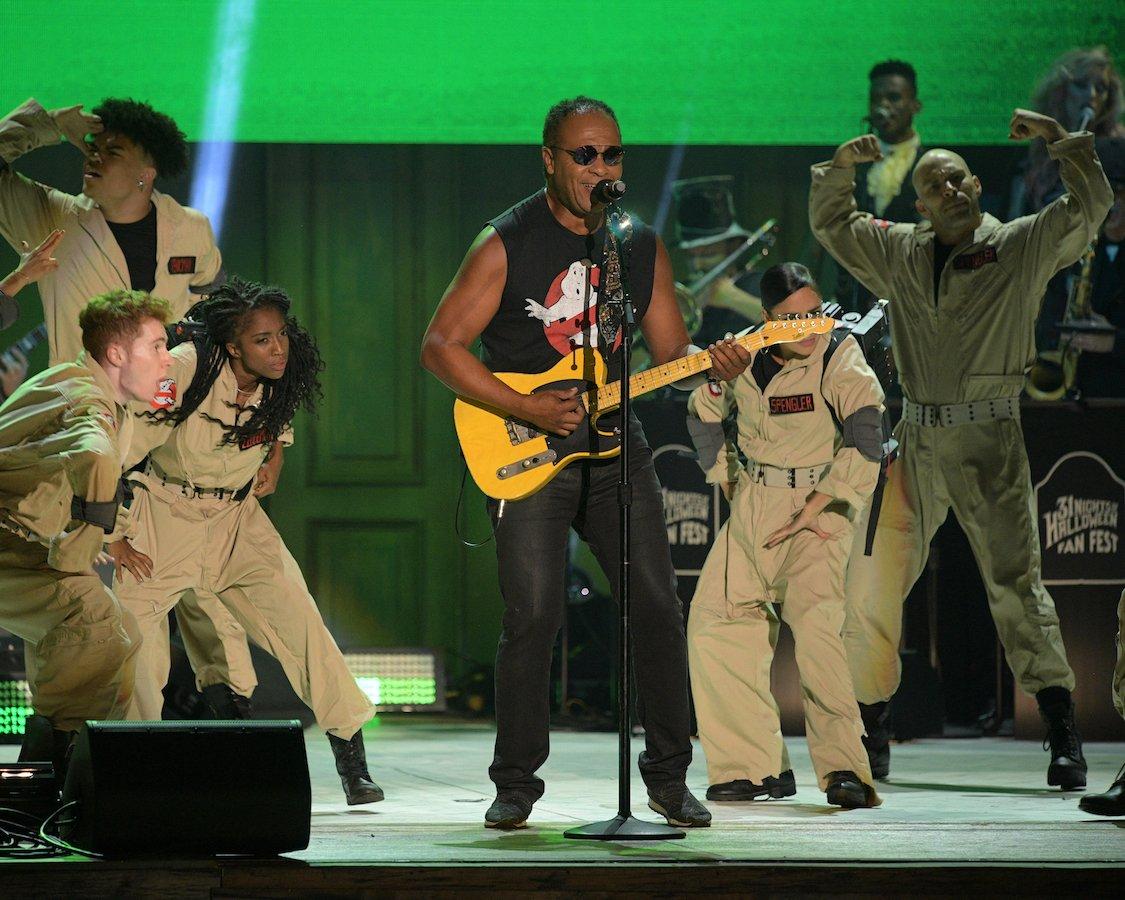
Ray Parker Jr performs "Ghostbusters" for Freeform's "31 Nights of Halloween Fan Fest" in 2019.
Photo: Image Group LA via Getty Images
14 Halloween Songs That Have Won GRAMMYs: "Thriller," "Ghostbusters" & More
With Halloween celebrations in full swing this Oct. 31, revisit some eerie or ghoulishly titled songs that have been awarded golden gramophones, from the 'Exorcist' theme to Eminem and Rihanna's "The Monster."
GRAMMYs/Oct 31, 2025 - 02:08 pm
Editor's Note: This article was originally published in 2023 but was updated in 2025 with the addition of four songs.
If the holiday of trick or treating, pumpkin carving and decorating the yard with skeletons is your favorite of the year, then you'll no doubt already have a playlist stacked with creepy and kooky, mysterious and spooky bangers ready to fire up on Oct. 31. But if you want to add a bit of prestige to your supernatural soundtrack, there's another list of Halloween-friendly songs to check out — one that highlights another celebrated annual occasion.
Along with giving GRAMMY gold to the likes of Smashing Pumpkins, Slayer and Vampire Weekend, the Recording Academy has embraced the odd musical spooktacular in several forms. It granted Halloween obsessive Frank Zappa Best Rock Instrumental Performance for Jazz from Hell in 1988; the year after, it handed Robert Cray Band Best Contemporary Blues Recording for Don't Be Afraid of the Dark. In fact, two of the GRAMMYs' most decorated albums are eerily titled: Michael Jackson's Thriller and Santana's Supernatural, which respectively won seven and nine golden gramophones.
The Recording Academy has also dished out goodies (of the statuette, rather than the sweet, variety) to the likes of Mavis Staples' "See That My Grave Is Clean," Chick Corea's "Three Ghouls," Mastodon's "A Sultan's Curse," and TLC's "Creep." And it's given GRAMMY nominations to several more ominously named releases, including Frank Sinatra's "Witchcraft," AC/DC's "Highway to Hell," Jeff Beck and Joss Stone's version of the spooky classic "I Put a Spell On You," and Olivia Rodrigo's "vampire."
In celebration of Halloween, check out 14 other works — whether creepy-sounding or creepily titled — that have left Music's Biggest Night completely bewitched.
Stevie Wonder — "Superstition"
Best Rhythm & Blues Song and Best R&B Vocal Performance Male, 1974 GRAMMYS
It seems unlikely that Stevie Wonder walked under a ladder, crossed a black cat, or "broke the lookin' glass" while recording "Superstition" — the squelchy Moog-funk classic kickstarted his remarkable run of 25 GRAMMY Awards when it won both Best Rhythm & Blues Song and Best R&B Vocal Performance Male in 1974.
Taken from what many consider to be his magnum opus, 1972's Talking Book, "Superstition" also gave Wonder his first No. 1 hit on the Billboard Hot 100 in over a decade. And the soul legend further leaned into its supernatural theme in 2013 when he appeared as a witch doctor in a Bud Light Super Bowl commercial soundtracked by the ominous chart-topper.
Mike Oldfield — "Tubular Bells"
Best Instrumental Composition, 1975 GRAMMYS
Considering how perfectly Mike Oldfield's prog-rock epic Tubular Bells complements all-time classic horror flick The Exorcist, it's remarkable to think that it was recorded before director William Friedkin came calling. Oldfield, then aged only 19, used a variety of obscure instruments across its two mammoth pieces. Yet, it's the brilliantly creepy Steinway piano riffs that open Part One that are still most likely to bring anyone who experienced the movie's hysteria in a cold sweat.
Oldfield was rewarded for helping to scar a generation of moviegoers for life when a condensed version of his eerie masterpiece picked up the Best Instrumental Composition GRAMMY in 1975.
The Charlie Daniels Band — "The Devil Went Down to Georgia"
Best Country Vocal Performance By A Duo Or Group, 1980 GRAMMYS
The Charlie Daniels Band certainly proved their storytelling credentials in 1979 when they put their own Southern country-fied spin on the old "deal with the devil" fable. Backed by some fast and furious fiddles, "The Devil Went Down to Georgia" tells the tale of a young musician named Johnny who bumps into Beelzebub himself during a jam session in the Peach State. Experiencing a downturn in soul-stealing, the latter then bets he can win a fiddle-off, offering an instrument in gold form against Johnny's spiritual essence.
Luckily, the less demonic party proves he's the "best that's ever been" in a compelling tale that GRAMMY voters declared worthy of a prize, Best Country Vocal Performance By A Duo Or Group, in 1980.
Michael Jackson — "Thriller"
Best Pop Vocal Performance, Male, 1984 GRAMMYS
The 1984 GRAMMYs undeniably belonged to Michael Jackson. The King of Pop picked up a whopping 11 nominations for his first blockbuster album, Thriller, and then converted seven of them into wins, including Album Of The Year. (He also took home Best Recording for Children for his narration on audiobook E.T. The Extra-Terrestrial.)
Remarkably, the title track's iconic John Landis-directed (and thrillingly horrific) video didn't feature at all; its making of, however, did win Best Music Film the following year. But the song itself did pip fellow superstars Prince, Billy Joel and Lionel Richie to the Best Male Pop Vocal Performance crown. Jackson would also win a GRAMMY 12 years later for another Halloween-esque anthem, his Janet Jackson duet "Scream."
Duran Duran — "Hungry Like the Wolf"
Best Music Video, Short Form, 1984 GRAMMYS
Produced by Colin Thurston, the man behind another early '80s Halloween-friendly classic, (Bow Wow Wow's "I Want Candy"), "Hungry Like the Wolf" cemented Duran Duran's status as MTV icons. Alongside their much raunchier earlier clip for "Girls on Film," its jungle-themed promo was also responsible for giving the Second British Invasion pin-ups the inaugural GRAMMY Award for Best Music Video, Short Form; it featured on the Duran Duran compilation that was crowned Best Video Album, too. Frontman Simon Le Bon had been inspired to write their U.S. breakthrough hit by Little Red Riding Hood, giving the new wave classic its sinister, and appropriately predatory, edge.
Ray Parker Jr. — "Ghostbusters"
Best Pop Instrumental Performance, 1985 GRAMMYS
Ray Parker Jr. not only topped the Hot 100 for four weeks with his ode to New York's finest parapsychologists, he also picked up a GRAMMY. Just don't expect to hear "who you gonna call?" in the winning version — it was in the Best Pop Instrumental Performance where "Ghostbusters" reigned supreme.
The fact that Parker Jr. wrote, performed, and produced the entire thing meant he still took home the trophy. However, Huey Lewis no doubt felt he should have been the one making the acceptance speech. The blue-eyed soul man settled out of court after claiming the spooky movie theme had borrowed its bassline from "I Want a New Drug," a track Ghostbusters' director Ivan Reitman admitted had been played in film footage intended to inspire Parker Jr.
TLC — "Creep"
Best R&B Performance By A Duo Or Group With Vocal, 1996 GRAMMYS
Although nothing to do with the 2004 London underground slasher or 2014's same-named found-footage horror, TLC's "Creep" still has a strong connection to the scariest date on the calendar: it was released on Halloween in 1994. Furthermore, its themes of infidelity left Lisa 'Left Eye' Lopes so spooked that she initially planned to gag herself for its iconic satin pajama video in protest.
Redefining its titular term, the four-week chart-topper finds the husky-voiced T-Boz freely admitting to straying from an unaffectionate relationship, proving that the playa anthem wasn't solely the reserve of their male counterparts. It's a bold feminist act that helped power parent album CrazySexyCool to diamond status and was deservedly rewarded with Best R&B Performance By A Duo Or Group With Vocal at the 1996 GRAMMYS (where CrazySexyCool was also crowned Best R&B Album).
Ralph Stanley — "O Death"
Best Male Country Vocal Performance, 2002 GRAMMYS
Traditional Appalachian folk song "O Death" had previously been recorded by the likes of gospel vocalist Bessie Jones, folklorist Mike Seeger and Californian rockers Camper Van Beethoven, just to name a few. Yet it was Ralph Stanley's 2002 version where GRAMMY voters first acknowledged its eerie a cappella charms.
Invited to record the morbid number for the Coen brothers' period satire O Brother, Where Art Thou, the bluegrass veteran won Best Male Country Vocal Performance at the 2002 ceremony, also picking up a second GRAMMY alongside the likes of Alison Krauss, Gillian Welch, and Emmylou Harris when the soundtrack was crowned Album Of The Year.
Skrillex — "Scary Monsters and Nice Sprites"
Best Dance Recording, 2012 GRAMMYS
David Bowie fans may well feel aggrieved that his post-punk classic "Scary Monsters (and Super Creeps)" was entirely ignored by GRAMMY voters, while the bro-step banger it inspired was showered with awards. The title track from EP Scary Monsters and Nice Sprites added Best Dance Recording to Skrillex's 2012 haul: the asymmetrically haired producer also walked away with Best Dance/Electronica Album and Best Remixed Recording, Non-Classical for his work on Benny Benassi's "Cinema." Packed with speaker-blasting beats, distorted basslines, and aggressive synths, Skrillex's wall of noise is enough to scare anyone off their pumpkin pie.
Eminem feat. Rihanna — "The Monster"
Best Rap/Sung Collaboration, 2015 GRAMMYS
Who says lightning can't strike twice? Just four years after picking up five GRAMMY nominations for their transatlantic chart-topper "Love the Way You Lie," unlikely dream team Eminem and Rihanna once again joined forces for another hip-pop masterclass. Unlike their previous collab, however, "The Monster" didn't go home empty-handed, winning Best Rap/Sung Collaboration at the 2015 ceremony. The boogeyman hiding under the bed here, of course, isn't a Frankenstein-esque creation, but the mix of paranoia, self-doubt and OCD that leads the Real Slim Shady into thinking he needs a straitjacket.
Jason Isbell — "If We Were Vampires"
Best Americana Roots Song, 2018 GRAMMYS
While the Twilight franchise may have failed to add a GRAMMY to its trophy cabinet, it did pick up several nominations. But four years after the Team Edward vs Team Jacob saga wrapped up, folk hero Jason Isbell proved mythical bloodsuckers weren't a barrier to awards success.
Emerging victorious in the Best Americana Roots Song Category, "If We Were Vampires" is a little less emo than the various Twilight soundtracks. Still, as a love song dedicated to wife Amanda Shires — and the quiet acceptance that the Grim Reaper will inevitably end their story — it's certainly no less emotional.
Esperanza Spalding — "12 Little Spells"
Best Jazz Vocal Album (12 Little Spells), 2020 GRAMMYS
Gleefully playing the witch doctor, prolific singer/bassist Esperanza Spalding individually released every song (and an accompanying video) from her seventh album across 11 days before serving up its cauldron of genre-hopping sounds in full. Designed to celebrate the healing powers of art, each referred to a specific part of the body ranging from the abdominal portal to the thoracic spine. The title track's typically esoteric ode to the latter ("Casual ribs house an expanded mind/ Left and right hemispheres in balance") is arguably the most spellbinding part of an alternative human biology lesson that enchanted GRAMMY voters enough to win Best Jazz Vocal Album in 2020.
SZA feat. Phoebe Bridgers — "Ghost in the Machine"
Best Pop Duo/Group Performance, 2024 GRAMMYS
Despite its ghoulish title, artificial intelligence appears to be the object of terror in what many, including the GRAMMY voters who awarded it Best Pop Duo/Group Performance in 2024, regard as the highlight of SZA's sophomore. But while the progressive R&B star expresses a world-weary disillusionment with how machines are taking over her livelihood ("Robot got future, I don't/ Robot get sleep but I don't power down"), her musical partner-in-crime Phoebe Bridgers seems more haunted by the breakup — one that's left her standing alone in an airport bar. The result is a tale of two halves that lives up to SZA's "super alternative and strange" claims.
Laufey — "Haunted"
Best Traditional Pop Vocal Album (Bewitched), 2024 GRAMMYS
Sadly not a tribute to the classic '60s sitcom starring Elizabeth Montgomery, Bewitched is instead a self-described "love album" that helped Laufey surpass Björk and Sigur Ros as Iceland's most streamed artist. The singer/songwriter also picked up a Best Traditional Pop GRAMMY in 2024 for her second LP, an immaculate collection of jazz, pop and classical that bridged the gap between Gen-Z and the Great American Songbook. And "Haunted," a poetic lament to unrequited love ("Rose perfume, low-lit room/ I'll pretend you'll stay forever") soundtracked by shuffling bossa nova beats and sultry strings, casts its most potent musical spell.
Latest News & Exclusive Videos

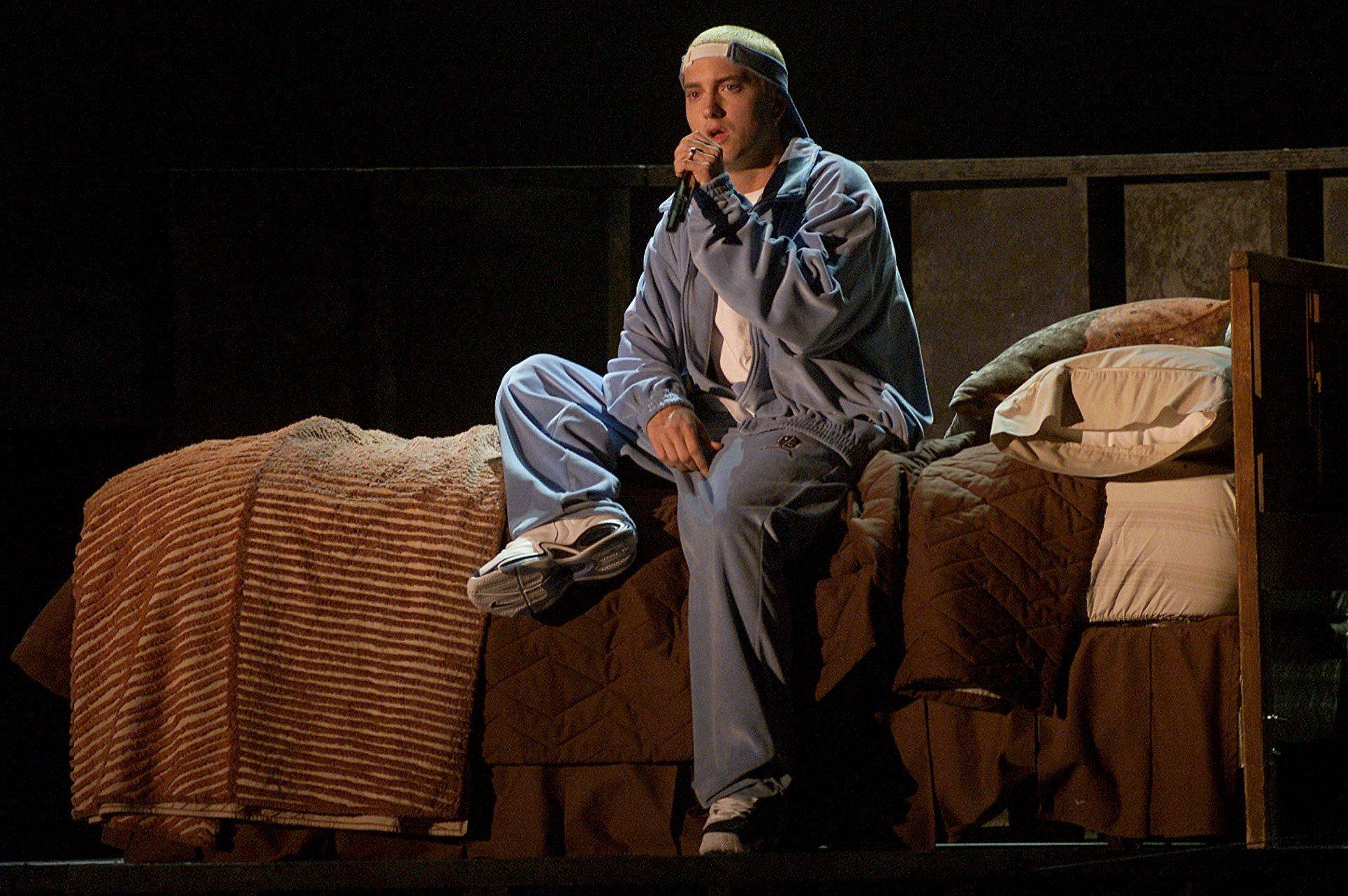
Eminem performs at the 43rd GRAMMY Awards in 2001.
Photo: Dave Hogan/Getty Images
Twenty-five years after the release of Eminem's dark hit, "stan" culture has become a worldwide phenomenon. A new documentary explores this development, which began with the tale of a Marshall Mathers superfan.
GRAMMYs/Aug 7, 2025 - 07:11 pm
When Eminem first released his single "Stan" — a fictional tale of a fan whose devotion takes a deadly turn — the concept of parasocial relationships with celebrities was nothing new.
In the years before the 2000 track became a smash, celebrities like Rebecca Schaeffer, John Lennon, and Selena Quintanilla all fell victim to fans-turned-stalkers. In some cases, those fans saw an unfortunate fate; in 1996, a Madonna fan was shot after trespassing into the star's property and making violent threats.
Twenty-five years after the release of "Stan"— which Eminem performed with Elton John at the 2001 GRAMMYs, before The Marshall Mathers LP won Best Rap Album — "stan" has become shorthand for a particularly fervent fan and a worldwide phenomenon.
Eminem examines this culture through his recently released documentary Stans, which explores the culture behind his own stans and fanbases like Beyoncé’s Beyhive, Nicki Minaj’s Barbs, and Taylor Swift’s Swifties. Each fanbase has a significant social media presence and frequently take their dedication from behind the screens to real life by camping out by venues to meet online friends and by merch. Sometimes, passionate fans will take it upon themselves to act out against their favorite artist’s rivals.
Though Em’s "Stan" has a darker backstory, stan culture has evolved to have a more palatable connotation among fans of musicians. Read on for a history of "Stan" and how Eminem impacted both the music landscape and the modern lexicon.
The Story Of "Stan"
Stan — a fictional character voiced by Eminem — writes Eminem several letters over the course of many months, as described in the song. Interspersed with a sample of Dido’s 1999 hit "Thank You," Stan’s accounts grow more and more frustrated as he believes Em is ignoring his letters, and even describes a situation in which Em snubbed him and his younger brother — "We waited in the blisterin' cold for you, for four hours, and you just said, ‘no.’"
Em’s unreciprocated energy eventually pushes Stan to drive off of a bridge with his pregnant girlfriend in the trunk. By the time Em replies, it’s too late.
In the video, which was directed by Philip Atwell and Dr. Dre, actor Devon Sawa portrays Stan and Dido his ill-fated girlfriend.
"Casting was probably the first big hurdle," says Atwell. "We wanted someone with real acting chops — someone on the rise, but not a big enough name to pull viewers out of the story. Devin Sawa just clicked. He wasn’t trying to ‘act,’ he embodied the role, and we all felt that. It seemed natural for Dido to play the female lead. I remember her feeling a bit intimidated initially, but once she got settled in she worked out perfectly."
Toward the end of the video, viewers see news anchor Jane Yamamoto on the scene, as the car is discovered. Having worked as a reporter in Los Angeles in the years before and after "Stan," Yamamoto says she has witnessed the effects of parasocial relationships with celebrities. "I wouldn't say I saw it so much during that period, but later covering people like Justin Bieber or Taylor Swift," she says.
In an example of art imitating life, Yamamoto garnered a small fanbase of her own after "Stan" and videos for "Forgot About Dre" video and 2000's Up in Smoke Tour featuring Eminem, Dr. Dre, Ice Cube, and Snoop Dogg. "People would even approach me doing my job and act like they knew me because they watch the news every night, which was flattering, but at times it would be really uncomfortable," Yamamoto says. "My colleagues through the years say they've experienced the same thing."
Eminem Courts Controversy Ahead Of The GRAMMYs
Em performed "Stan" at the 2001 GRAMMYs, with Elton John singing Dido’s parts. The performance saw Eminem in the role of Stan for the first three verses, rapping from a set designed to look like a bedroom. During the first chorus, a curtain opens, revealing John to the audience.
"When Elton John was revealed on stage, I clearly recall that his entrance was a metaphor for coming out of the closet," GLAAD panelist Scott Seomin tells GRAMMY.com.
Yet hours before Music's Biggest Night, the set was protested by GLAAD and LGBTQ+ advocacy groups, which slammed the rapper for his homophobic language on The Marshall Mathers LP. A line on "Stan," in which Eminem derides Stan's suggestion about "We should be together too" was also considered homophobic.
In addition to such pejoratives, much of the album leans into horrorcore, with violent lyrics targeted toward his mother and his ex-wife.
"We're not against the man," Seomin said at the time. "We're against his words. … It's about violence, not about ridicule."
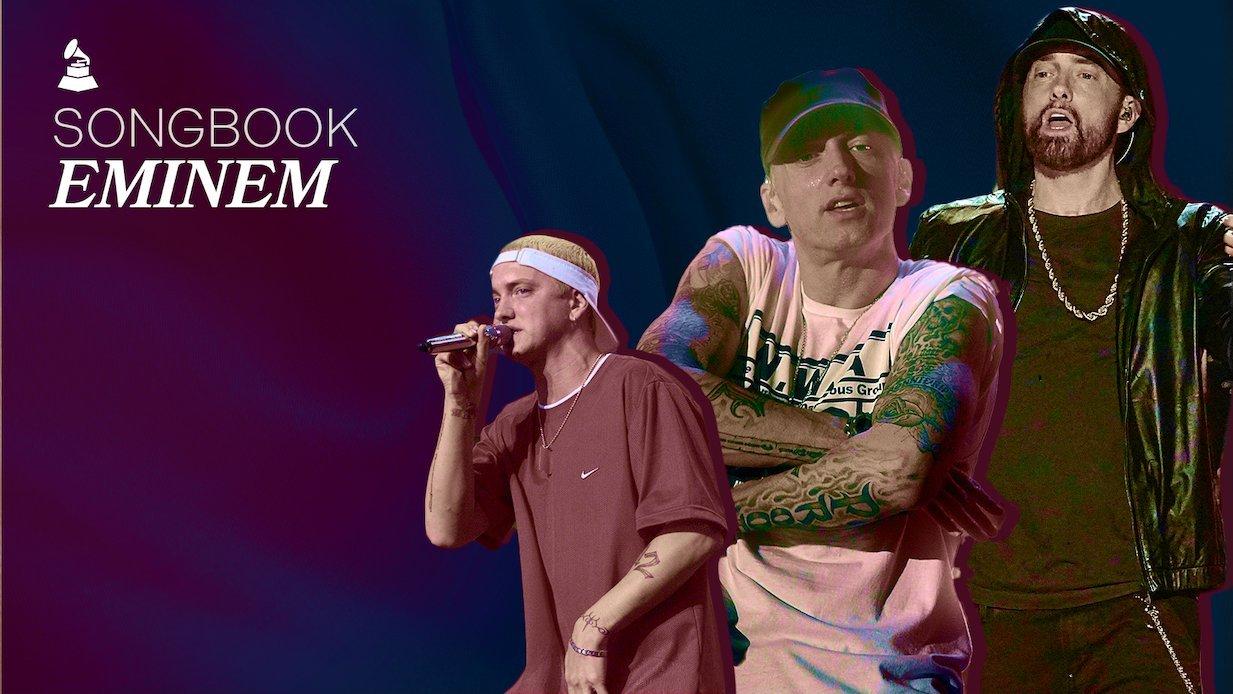
More than two decades later Seomin stands by the protest, though he applauds Eminem for ceasing to use homophobic language and for advocating for the LGBTQ+ community. He considers the impact of Eminem's performance at the GRAMMYs:
"The song still resonates as it can open conversations about mental health and suicide, parasocial relationships and the impact of celebrity culture, which is ‘heavier’ today than in 2001."
Eminem is no stranger to controversy. Throughout his career, the 15-time GRAMMY winner has chagrined many with the violent content of his music, as well as his use of homophobic and transphobic slurs.
But Eminem supporters and fans have defended his lyrics, noting that they are simply part of his storytelling. Journalist Andrea Aguilar — who launched her AllAboutEminem blog when she was 15 — claimed that Em’s naysayers were reading too much into the lines. "The lyrics are really funny and misunderstood. People are overanalyzing them too much," she tells GRAMMY.com.
A Stan, For Better Or Worse
In 2017, the word "stan" was added to the Oxford English Dictionary, defined as "an overzealous or obsessive fan of a particular celebrity." In the years since, stan culture has continued to grow on social media.
Though cases like Eminem’s fictional "Stan" are few and far between, standom can sometimes approach dangerous territory. In 2015, after Beck infamously won Album Of The Year for Morning Phase over Beyoncé's 2013 self-titled album, members of the Beyhive edited Beck’s Wikipedia page over 100 times. In 2023, Swifties doxxed a writer who criticized her Eras tour. Last year, Chappell Roan took to TikTok to call out invasive fans who had "stalked" her and her family.
"I think fandom rooted in a genuine passion for the music can be incredibly fulfilling up to a point," says Aguilar. "When it becomes too personal, invasive, or cult-like, that’s when it crosses the line into true 'Stan' territory. Blind loyalty, obsessive behavior, and stalking take things to a disturbing place I can’t condone."
Perhaps one of the most fervent fanbases is the Barbs — Nicki Minaj fans. Known for their rapid retort and ability to argue relentlessly in Minaj’s defense, the Barbs often celebrate Minaj’s accomplishments and defend her from naysayers.
"When it comes to things we have done as Barbs, we have a lot to be proud of — however, there are some not-so-fun moments that do come with being a diehard stan," says Nicholas Liddle, a Barb from North Carolina. "Whether it be hunting down people’s info for stan wars, or pulling up on known ‘haters’ at shows, there truly isn’t any limits when it comes to the stan life…It is safe to say, when people mention not coming for the Barbs, take it seriously, we do not play."
But part of being a stan is maintaining a connection to one’s favorite artist by any means possible — even if said means are rather unconventional.
"The craziest thing I’ve done is probably a toss-up between dressing up as [Eminem] for Halloween when I was in high school with oversized denim shorts, a wife beater, and a hand drawn ‘Hailie’ tattoo; and spending far too much money to fly from NYC to Austin for just two days for a Formula One event to see him perform live for the first time," says Eminem superfan Annelise Baumann of New York City.
At the same Formula One event, Baumann met a woman from Paris who was traveling with her elderly father. She has been released from rehab days prior. "She said Eminem’s music helped her get sober, and she even had several matching tattoos that he has."
Now a psychotherapist working in Los Angeles, Seomin believes that stans often hold their favorite artists to higher standards. But when said artist doesn’t live up to the expectations established by the fan, this can result in various forms of turmoil.
"In other words, a fan's entire self-worth is wrapped in being seen by Beyoncé [for example]," Seomin says. "When that fails, said fan can spiral into hopelessness and self-harm."
In "Stan," the titular character self-harms, later killing himself and his family in a devastating act of parasocial reprisal. "No artist can take personal responsibility for everyone's pain," Seomin says. "It is impossible to fulfill the emotional needs of millions. Taylor Swift mentions this briefly in her documentary Miss Americana."
"Stan" Continues To Impact
Though the story of "Stan" is rooted in fiction, many real-life stans have seen their efforts pay off. Aguilar's blog manifested in a thriving journalism career, as well as veteran status in the music industry. "I owe it all to [Eminem’s] publicist, Dennis Dennehy, who saw me featured in the LA Times. He also got me an internship at Interscope Records, where I started my career."
Liddle himself has not met Minaj, but says that she has still managed to show up for him and his family from afar. "After [an] episode of Queen Radio, she actually sent me one of her FENDI t-shirts. I also have gotten a pair of her sneakers with LOCI, and…Nicki actually sent my mama several pairs of Pink Friday Nails. My mom is a Barb as well."
Though Yamamoto only met Eminem once on the set of the "Forgot About Dre" video, she considers her role in the Eminem universe "the thing I am most recognized for." She remembers observing his rhyming abilities in real time as a remarkable moment in her career.
Conversations around cultural appropriation and social consciousness have surrounded Eminem since he made his debut in 1996. Many listeners have tried to retroactively cancel Em for his lyrical content. Yet those who have witnessed Em’s rise can’t deny his impact, which now extends beyond rap and into a globally-used language.
"He pushed boundaries — musically, culturally, emotionally," says Atwell. "He challenged people, made them uncomfortable, made them think. He didn’t just influence rap, he changed the cultural conversation around it. His reach isn’t just wide — it’s deep."
Latest News & Exclusive Videos
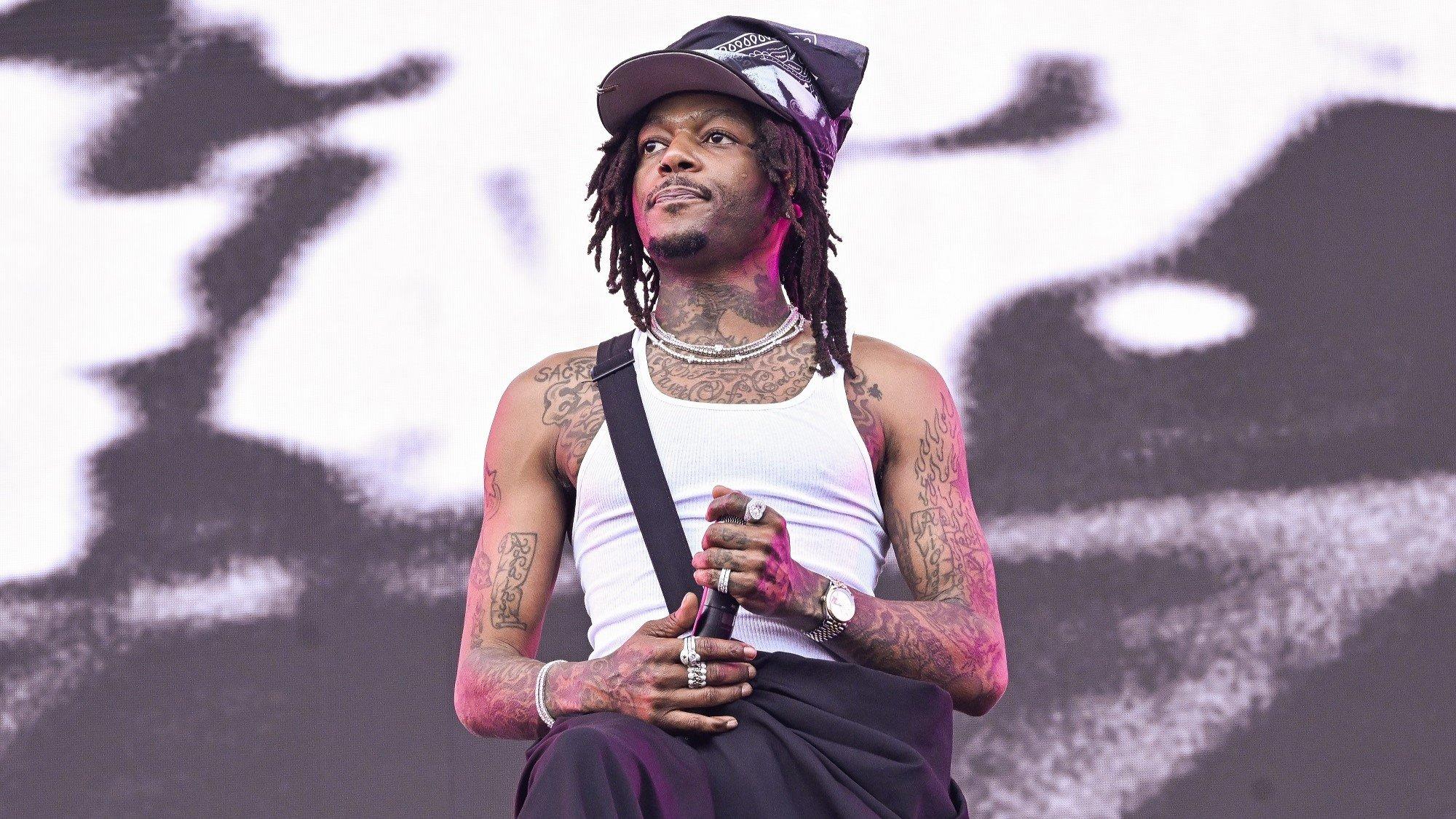
J.I.D. performs during the 2025 Dreamville Music Festival
Photo: Astrida Valigorsky/Getty Images
5 Songs To Get Into J.I.D: From "Never" To "Animals (Part 1)"
Before diving into J.I.D's new album, 'God Does Like Ugly,' get to know the GRAMMY-nominated Atlanta rapper's back catalog. From the lyrical force of 'The Never Story' to the vulnerability behind 'Dicaprio 2' and beyond, J.I.D is never without depth.
GRAMMYs/Aug 5, 2025 - 12:50 pm
In the eight years since his debut release, J.I.D has gone from standout underground rapper to two-time GRAMMY nominee and one of the most technically gifted MCs of his generation. The breakout star of J. Cole’s Dreamville collective, J.I.D has since carved his own lane. His rapid-fire flows, intricate wordplay, and genre-blurring production are instantly recognizable.
Born in Atlanta and the youngest of seven children, J.I.D got his name from a nickname his grandmother gave him as a child: "J.I.Ddery" (a playful twist on "jittery") reflecting his restless energy. In 2009, at 20, he began channeling that energy into a series of mixtapes, laying the groundwork for his critically acclaimed 2017 debut album, The Never Story. The album blended André 3000-level charisma, animated deliveries, gospel undertones, and melodic pockets with East Coast lyrical sensibilities.
Beneath the technically sound lyrical display and flow lies a cohesive, and impressively compelling narrative. Throughout, J.I.D opens up about his family's struggles, trauma, his fears, addictions, self-doubt, and the weight of being the one who might lift his family out of poverty; a burden that lingers behind every verse. At its core, The Never Story is a nod to stories that often go untold.
In 2018 J.I.D released DiCaprio 2, a cinematic project that broadened his production range into more whimsical and theatrical territory. The album feels like a series of short films, with scene-setting lyrics, larger melodic hooks, and dramatic beats. Throughout, J.I.D plays multiple roles, adopting new cadences, accents, and perspectives to craft worlds that seem lifted from a Tarantino or Scorsese script.
Combining the personal storytelling of The Never Story with the dramatic world-building of DiCaprio 2, in 2022, J.I.D released The Forever Story, his most complete album to date. The spiritual sequel to The Never Story, it is technically sharper, emotionally deeper, more ambitious in scope, and richer in storytelling. While The Never Story painted a picture of who J.I.D was and where he came from, The Forever Story invited listeners to walk in his shoes.
With his new album God Does Like Ugly out and three GRAMMY nominations under his belt — including Best Rap Album for his work on Dreamville's Revenge of the Dreamers III and Best Rap Performance for "Down Bad." J.I.D continues to evolve, sharpening his pen and stretching his technical skills further. If you're just getting into his catalogue, here are five songs to help you dive in.
"Never" (The Never Story, 2017)
If there were only room for one song on this list, it'd have to be "Never." As J.I.D put it during his 2022 NPR Tiny Desk Concert, the track is "very important to the ecosystem of J.I.D." A near-perfect debut single, it showcases everything that makes him compelling: dizzying flows, cadence agility, intricate lyricism, and raw storytelling. But more than that, it serves as a thesis statement for both The Never Story and J.I.D as an artist.
The song is lyrically dense, layered and emotionally loaded, like a private journal entry; it chronicles J.I.D's hunger, frustrations, vices and the weight of expectations. You can hear the tension between his humility and aggression. J.I.D's artistic duality is mirrored when the beat switches halfway through: reflective and personal on one side and then aggressive and sharp on the other. The structure of the song alone hints at J.I.D's range, blurring sub-genres seamlessly as it goes from Atlanta trap to New York boom bap. It's not just a great debut single; it's the foundation on which his career was built.
"151 Rum" (DiCaprio 2, 2018)
"151 Rum" is a pure technical showcase. From the opening bars, J.I.D launches into an onslaught of flow switches and sharp lyricism that doesn't let up over the track's sub-3 minute runtime. Try rapping the opening verse to yourself without tying your tongue in a knot. If you even get through the first 30 seconds, you've probably mastered breath control, because that's what it took for J.I.D to lay this track down.
During his 2019 Catch Me If You Can tour, J.I.D would often bring fans on stage to rap the song with him. And when they did manage to deliver, it was nearly as impressive as watching J.I.D himself, a testament to the song's complex structure.
Production by Christo and Nice Rec perfectly captures the big cinematic feel of DiCaprio 2. Thematically, "151 Rum" is about paranoia and survival, anchored by frenetic drums and eerie synths that never let the tension drop. It feels like a car chase scene shot using entirely practical effects. Play it during the final stretch of a cardio workout, and you'll understand. It's pure audio adrenaline.
"Crack Sandwich" (The Forever Story, 2022)
If "151 Rum" is J.I.D's technical showcase, "Crack Sandwich" is his storytelling masterclass. The track plays like a flip through the Routes family scrapbook, brought to life by J.I.D's vivid imagery and the audio recordings threaded between verses.
Structurally, it's a song of two halves. The first sets the stage, outlining the harsh environment and financial hardship that shaped his upbringing. The second zooms in on one vivid memory: His older brother's graduation party at a New Orleans nightclub, which spirals into a street fight and ends with J.I.D and his six siblings crammed into a holding cell. It's a chaotic, but also oddly affectionate tale, told with pride, humour, and razor-sharp clarity.
Even in its most intense moments, there's an undeniable warmth and the sense that his family is both the root of his troubles and his anchor through it.
"Kody Blu 31" (The Forever Story, 2022)
Created in memory of the son of a close friend who passed away unexpectedly at 31, "Kody Blu 31" is both J.I.D's most vulnerable track and the emotional heart of The Forever Story. In an interview with Apple Music, J.I.D revealed that the choir at the intro of the song isn't sampled from a gospel record but his actual family singing at his grandmother's funeral. That context adds incredible emotional weight to the song's aching chorus, "swang on, swang on," a mantra for pushing forward through grief and pain.
At the center of it all is J.I.D's most affecting vocal performance to date. While flashes of melody have appeared in his earlier work, this is the first time he fully leans into a singer-songwriter, and the results are stunning. Raw, restrained, and deeply personal, "Kody Blu 31" shows a new side of J.I.D, less concerned with proving his lyrical brilliance and more focused on honouring his loved ones and letting the listeners into a very intimate moment.
"Animals (Pt. 1)" feat. Eminem (God Does Like Ugly Preluxe, 2025)
Both a prelude to God Does Like Ugly and a showcase of his growth as a technical MC, "Animals (Pt. 1)" finds J.I.D going toe to toe with Eminem — the ultimate litmus test for any rapper who takes lyricism as seriously as J.I.D does.
The two trade dizzying verses that demand multiple listens just to start unpacking. But the song isn’t just about lyrical complexity; it’s a career-defining moment. A co-sign from one of the greatest ever to touch a mic and a statement that J.I.D belongs in that rare tier of MCs. Released as part of the GDLUPreluxe EP, it’s also a sharp preview of the form J.I.D is heading into the next chapter of his career.