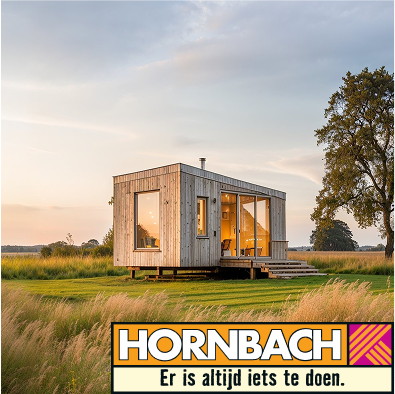
It is a common confusion in the world of innovative construction: is every compact home a tiny house? And when do we call something modular? Although a tiny house can be built modularly, certainly not every tiny house is a modular home. The terms are often used interchangeably, but for you as an investor, policymaker, or future resident, there are fundamentally different rules, opportunities, and risks involved.
Let's get the basics straight. The difference lies not only in the dimensions, but mainly in the construction method and the intended use.
A tiny house (or small house, as it is also called) is a home with compact dimensions, usually 50 m² or less, and in many cases is movable. The essence of the tiny house movement is rooted in green motives: living with a minimal ecological footprint and less material baggage. It is a lifestyle choice in which mobility and self-sufficiency (off-grid) often play a central role.
Modular construction is not a type of house, but a high-quality construction method. The house is assembled in the factory from different segments (modules) under controlled conditions. This is a fully-fledged, scalable alternative to traditional construction. Whereas a tiny house often has a shorter lifespan due to its construction and the quality of the materials used, our modular homes have a lifespan of 50 years or more. It is a fully-fledged real estate property with the quality of a traditional house, but the speed of prefab.
Modular homes are subject to stricter requirements than many tiny houses, simply because modular homes are often used for permanent residence.
Building Decree (Bbl): A modular home must meet all the requirements of the permanent Building Decree. These include a minimum ceiling height of 2.6 meters, strict insulation values (BENG requirements), and sufficient daylight entry.
The tiny house exception: Municipalities often grant exemptions for small-scale houses or assess them against the requirements for 'temporary construction'. This offers flexibility for short periods, but provides less certainty in the long term.
Financing is essential when purchasing a second home or making an investment through a housing association. This is where we see the biggest challenges with tiny houses.
Banks are often reluctant to provide mortgages for micro homes. Some reasons for this are listed below:
Mobility: a house on wheels is often not considered real estate.
Minimum value: many banks apply a minimum property value (often around €100,000) to justify the administrative costs.
Quality risk: if a house is built with less durable materials or is not properly maintained, its collateral value will decline rapidly. This poses a greater risk for the lender.
A mortgage for a modular home, on the other hand, is very possible, provided you meet the right conditions:
The property is built on freehold land (or via a long-term lease).
This is a permanent residential destination.
The property is registered with the Land Registry.
For an investor, modular construction therefore means a property that can increase in value, while a tiny house or flex home is more often depreciated as movable property (similar to a caravan or chalet).
| Characteristic | Tiny house | Modular home |
| Primary focus | Ecological footprint & mobility | Sustainable quality & value retention |
| Lifespan | 15–30 years | 50+ years |
| Ceiling height | Often lower (compact design) | At least 2.6 meters (legal standard) |
| Financing | Limited / own resources | Regular mortgage possible |
| Legal | Often temporary permit | Permanent environmental permit |
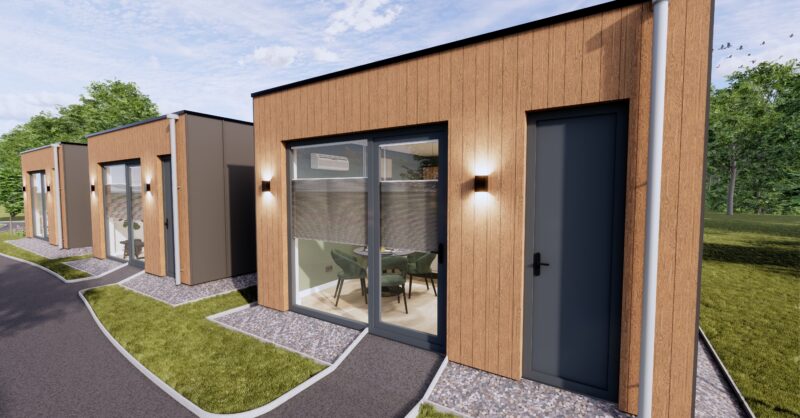
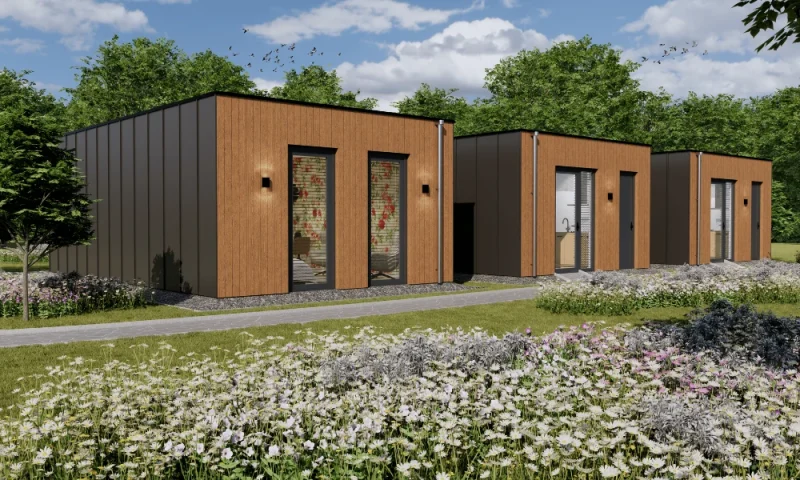
Are Sett Living homes tiny houses or modular homes? We build modular homes with the dimensions of a tiny house. Quality is always our top priority, which means that the home will last a lifetime and we also offer a buy-back scheme if the home no longer suits your lifestyle. Our homes retain their value.