
Photos (L-R, clockwise): GAB Archive/Redferns, Ron Galella/Ron Galella Collection via Getty Images, Kevin Winter/Getty Images, Chung Sung-Jun/Getty Images
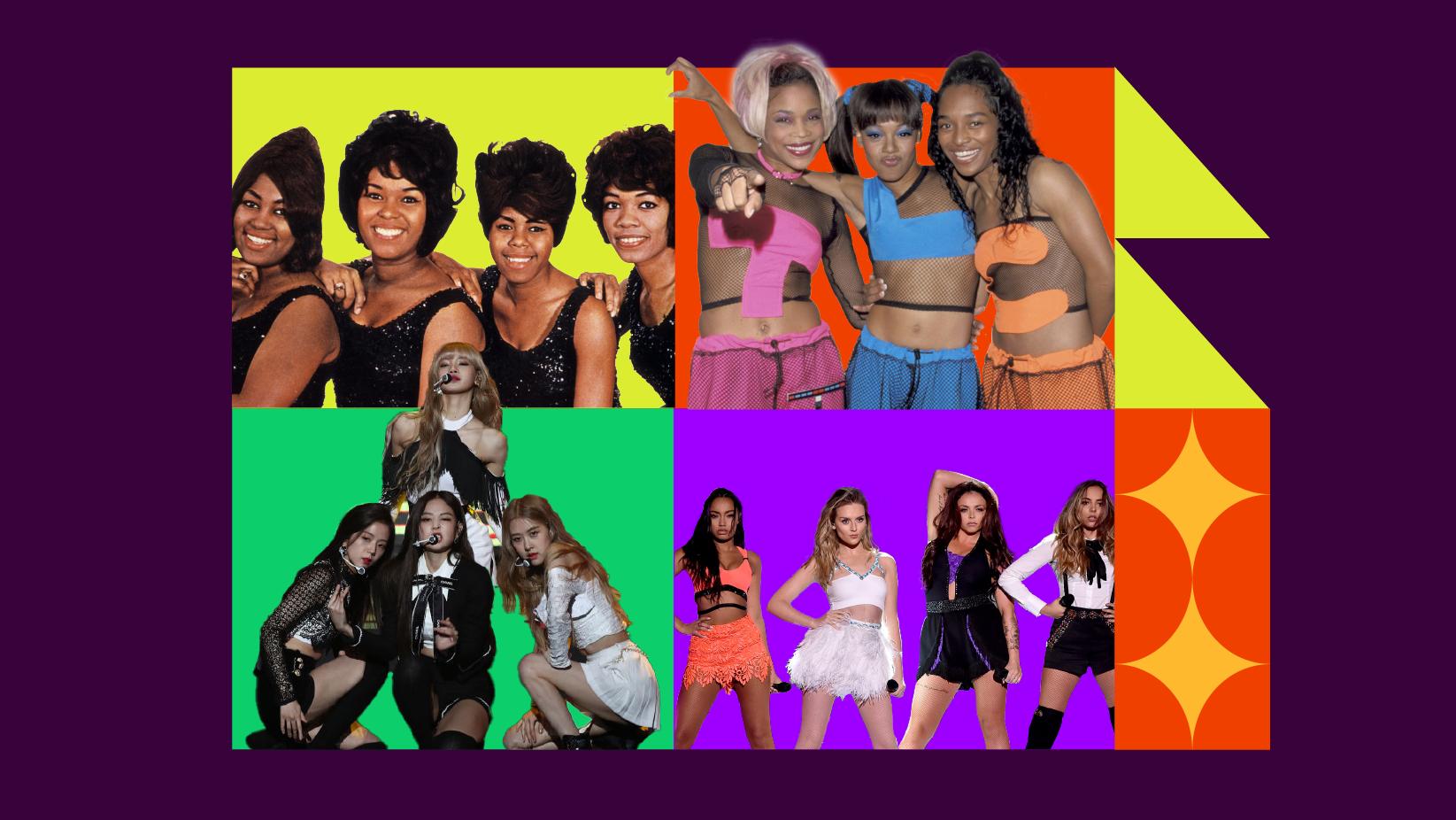
(L-R, clockwise) The Shirelles, TLC, Little Mix, BLACKPINK
The Evolution Of The Girl Group: How TLC, BLACKPINK, The Shirelles & More Have Elevated Female Expression
From the Supremes to the Spice Girls, take a deep dive into the history of girl groups — and how their songs, performance and vocal power changed pop culture.
GRAMMYs/Mar 27, 2023 - 09:47 pm
For more than eight decades, girl groups have harmonized their way into the collective consciousness, bringing female empowerment to the forefront — and changing culture along the way.
Of course, girl groups have come in many forms: there's the family-friendly Andrew Sisters, the funk rock-infused Labelle, and the R&B-leaning Destiny's Child. As the construct of the girl group has evolved, so has their cultural impact — while acts like the Supremes helped push popular music in a more diverse direction in America, J-Pop and K-Pop groups have helped girl groups be viewed through a global lens in recent years.
What has tied all of these groups together is their infectious and inspirational records, which have encouraged women to express themselves and feel empowered in doing so. Groups like the Spice Girls and the Shangri-Las, for instance, have helped women express all sides of themselves, reminding the world that there is joy and beauty in contrast.
As Women's History Month nears its end, GRAMMY.com celebrates all of the powerful women who have been part of the girl group evolution. (To narrow the field, we characterize a girl group as acts with a minimum of three members and a focus on vocal performance; hence why you won't see bands like the Go-Gos or the Chicks on this list.)
Below, take a look at how girl groups have changed in both construct and impact for nearly 90 years — and counting — and listen to GRAMMY.com's official Girl Groups playlist on Amazon Music, Spotify, Apple Music, and Pandora.
Though women have no doubt sung together since the beginning of time, the formal concept of the girl group came sometime in the '20s or '30s, with the rise in popularity of tightly harmonizing family acts like the Boswell Sisters and the Hamilton Sisters (the latter of whom would become Three X Sisters). The groups really started to see a rise in popularity around the beginning of WWII — perhaps because the entrance of more women into the workforce opened peoples' minds to the idea of the pop girl group, or perhaps because the soldiers overseas sought comfort and mild excitement via the groups' smooth sounds and attractive looks.
The Andrews Sisters, who officially formed in 1937 as a Boswell Sisters tribute act, would become the most popular of the sister acts, riding tracks like "Boogie Woogie Bugle Boy,""Don't Sit Under The Apple Tree (With Anyone Else But Me)" and "Beer Barrel Polka (Roll Out The Barrel)" straight to the top of the charts. They're considered one of the most successful girl groups of all time, selling an estimated 80 million records and counting. Other girl groups followed the Andrews' act, including the Dinning Sisters, who released "They Just Chopped Down The Old Apple Tree" as an answer to their rivals' hit.
The Andrews Sisters continued to be popular well into the '50s, inspiring similar close harmony acts like the Chordettes, who found success with tracks like "Mr. Sandman" and "Lollipop," and the Lennon Sisters, who became a mainstay on "The Lawrence Welk Show."
Around the middle of the decade, girl groups started pulling a bit more from the doo-wop movement, with songs like the Bobbettes "Mr Lee" helping pave the way for a wave of all-Black girl groups to come. The Chantels — who had come up together singing in a choir — quickly followed with "Maybe," which solidified the genre's style with a blend of rock, pop, doo-wop that would act as a sonic template for years to come.
In 1961, the Shirelles found quick success with tracks like "Tonight's The Night" and "Will You Still Love Me Tomorrow," which became the first girl group cut to go to No. 1 on Billboard's Hot 100 chart. The group would have five more hit singles throughout the decade, and inspired acts like the Marvelettes, whose "Please Mr. Postman" would become the first No. 1 single for Motown Records.
Keen to seize on that success, Motown invested heavily in creating more girl groups, crafting trios and quartets out of various singers that they might have previously eyed for solo work or even passed on signing. That kind of business-minded molding is what yielded Martha and the Vandellas, the Velvelettes, and a little act called the Supremes, who would go on to become the most successful American vocal group of all time, according to CNN. The success of the Motown acts — the majority of whom were all Black — was also a sign of American culture's increasing acceptance of the integration of popular music.
Having seen the success that Motown had in consciously crafting its girl groups, other producers and small, independent labels sought to capture some of that lightning in a bottle for themselves. The Philles label cashed in on the sound of the Crystals and the Ronettes, while Jerry Lieber and Mike Stoller signed the Shangri-Las and the Dixie Cups to their Red Bird label. Tracks like the Shangri-Las' "Give Him A Great Big Kiss" offered a surprisingly real perspective on teen girl crushes, while "Leader Of The Pack" helped bring female perspective to a subgenre of songs about macabre teenage tragedies previously dominated by all-male acts like Jan And Dean and Wayne Cochran And The C.C. Riders.
First formed in the '60s as Patti LaBelle and the Bluebelles, Labelle pushed the genre out of the sock hop and into the nightclub, becoming one of the premiere girl groups of the '70s. Their funky, rock-infused singles were unlike anything girl group aficionados had heard before, and in 1974, the group captured America's heart with "Lady Marmalade," a slightly suggestive song that broke out of the discos and into the collective consciousness. Other acts originally formed in the '60s found similar success, like the Three Degrees, who had a number of hits, including the sunny and soothing "When Will I See You Again."
Sister Sledge also capitalized on the disco boom, crafting lasting hits like "We Are Family" and "He's The Greatest Dancer." The Pointer Sisters went through a rainbow of genres, including R&B (1973's funky "Yes We Can Can") and country (1974's "Fairytale," which won a GRAMMY for Best Country Performance By A Duo Or Group With Vocal in 1975), before finding their biggest success at the beginning of the next decade with tracks like the sultry "Slow Hand" and the more frantic "I'm So Excited."
Girl groups went through a bit of a lull in the '80s, as the culture trended toward hair metal and hip-hop. Some acts still managed to break through, capturing listeners' hearts with dance-friendly cuts imbued with Latin freestyle flair. Full of synths and syncopated percussion, freestyle burst out of clubs and parties in New York and Philadelphia, finding a particular hold amongst Hispanic and Italian-American audiences.
Miami's Exposé was one of the decade's biggest freestyle acts, blending girl group harmonies with synthetic sounds for hits like "Point Of No Return" and "Seasons Change." Two New York groups, Sweet Sensation and The Cover Girls, had freestyle success that bridged the '80s and '90s. Sweet Sensation's "Never Let You Go" tore up the dance charts, and while the Cover Girls' "Show Me" and "Because Of You" weren't quite as popular, they still hold a special place in the hearts of freestyle fans.
Girl groups roared back in a big way in the '90s, thanks in part to the emergency of new jack swing and a renewed interest in R&B's smooth vocal stylings. En Vogue was one of the first groups to go big in the '90s, with debut single "Hold On" first hitting the Billboard charts in 1990. Their biggest tracks came later in the decade, with the powerful "Free Your Mind" and "Giving Him Something He Can Feel" showcasing the quartet's vocal range and character.
Two groups from Atlanta also came to prominence around the same time as En Vogue. First was the street-savvy quartet Xscape, who harnessed the sounds of 1993 with tracks like "Just Kickin' It."
TLC had a more dynamic arc, first bursting into the collective consciousness with the new jack swing-infused "Ooooooohh… On The TLC Tip," which featured three top 10 singles, including "Ain't 2 Proud 2 Beg." The group's baggy pants and hip-hop aesthetic pushed girl group boundaries, in part because its members actually acknowledged their sexual desires, as well as the need for everyone to have safe sex. Later in the decade, TLC would rise to even higher heights with tracks like "Waterfalls" and the GRAMMY-winning "No Scrubs," the latter of which was actually co-written by two members of Xscape.
Destiny's Child initially emerged from Houston in the late '90s as a quartet, though they'd later lose some members and gain new ones, ending up as a trio. While it was hard to ignore the sheer star power of Beyonce, the threesome did generally function as a group, producing a string of danceable earworms, including "No, No, No," and "Bills, Bills, Bills." By the time they disbanded in 2006, Destiny's Child sold tens of millions of records and earned three GRAMMY Awards (and a total of nine nominations).
Out west, Wilson Phillips' Chyna Phillips, Wendy Wilson and Carnie Wilson were channeling the sounds of their respective parents, who had been members of the Beach Boys and the Mamas & The Papas. Their songs featured vocal harmonies and were largely about emotional longing, pushing back against the dance and funk that ruled much of the radio dial throughout the '90s.
Girl groups were also gaining major traction in the U.K during the '90s, spurred by a boy band boom in the country around the same time. Two groups — All Saints and the Spice Girls — were actually assembled by managers, something that didn't help allay naysayers' concern that much of pop music at the time was wholly manufactured. (Another U.K. mainstay, Ireland's B*Witched, came together organically.)
Regardless, both All Saints and the Spice Girls found commercial success, with the latter becoming absolutely massive not just because of catchy pop romps like "Wannabe," but because of the quintet's singular personas and the strength of their "girl power" messaging. The Spice Girls even starred in their own movie, "Spice World," which came out at the height of Spice-mania in 1997 and drew instant comparisons to the Beatles' "A Hard Day's Night."
Girl groups continued to reign in the early part of the 2000s. A number of 2000s girl groups formed on television as part of reality programming, with U.K. sensation Girls Aloud forming on the ITV show "Popstars: The Rivals" and Danity Kane both forming and developing over three seasons of Sean Puffy Combs' "Making The Band." TV acted as a great launching pad for these pop acts, as fans were often emotionally invested in the group's success from watching the show so when a new single dropped, they were quick to get on board.
Girls Aloud and Danity Kane — as well as their peers, like Dream, 3LW, and Blacque — made pop music that was sexy, confident, and larger than life, with expensive-looking music videos to match. The songs also often crossed over from pop to urban radio.
Another of the most successful (and sexiest) girl groups of the 2000s also formed in a fairly roundabout way. The Pussycat Dolls found success with tracks like "Don't Cha" and "Buttons," but the actual origin of the Pussycat Dolls name and brand came almost 15 years earlier when an L.A. based choreographer named Robin Antin launched a burlesque troupe. After her club events and dancers became more and more popular (even posing for Playboy), she was urged by Interscope Records' Jimmy Iovine to attach the name to a pop group.
Antin recruited five singers who could hold a tune and looked the part, including Nicole Scherzinger — who initially got her start in Eden's Crush, another group formed on a TV show, the U.S. iteration of "Popstars" — and the Pussycat Dolls quickly strutted onto radio dials and Billboard charts with their catchy multi-tracked (and often risqué) hits.
Girl groups were also getting huge around the globe in the '00s, with Spain's Las Ketchup producing the insanely catchy pop ditty conveniently named "The Ketchup Song," Sweden's Play crossed over to commercial success in the American market, and the U.K.'s Atomic Kitten formed purely as a songwriting vehicle for Orchestral Maneuvers In the Dark's Andy McCluskey and Stuart Kershaw. Members of the latter would come and go throughout its career, but songs like "Whole Again" (which was also recorded by Play) have stood the test of time.
Though modern K-pop culture had begun in South Korea in the late '90s, it started to really pick up steam in the '00s, with both boy bands and girl groups benefiting from the surging Hallyu or Korean wave. One of those, Wonder Girls, found quick success in the late '00s with genre-spanning tracks like "Tell Me" and "Nobody," thanks in part to the pop act's ability to perform English versions of their songs while on tour with the Jonas Brothers.
Two of the 2010s biggest girl groups also came from televised reality competition shows. Little Mix, a quartet, was formed on the U.K.'s "The X Factor" and came to redefine the girl group era in Britain, selling more than 60 million records and topping the charts with high octane singles like "Cannonball" and "Shout Out To My Ex."
Stateside, Fifth Harmony was birthed on "The X Factor," where all five members had competed individually the season before but failed to advance. But after producers brought them back to compete as a group, Fifth Harmony was born, with viewers picking the name and ultimately helping them take third place in the competition.
The quintet emerged from the show signed to judge Simon Cowell's record label, Syco, and like so many great girl groups before it, embarked on a tour of malls and talk shows before eventually releasing a pop record tinged with both hip-hop and R&B. Fans latched on to songs like "I'm In Love With A Monster" and "Work From Home," the trap-laced monster hit that has garnered billions of hits on YouTube since its release.
The K-pop wave also continued in the 2010s, with groups like Girls Generation and Twice, both of whom broke the mold of a traditional girl group by having eight and nine members, respectively. At the same time, a J-Pop act, AKB48, rose to popularity, with a structure girl groups hadn't seen before — it has 80 members in total, with the group being divided into different "teams" that members are elected into by rabid fans. All three acts were literally and figuratively massive, selling tens of millions of highly produced bubblegum pop LPs and larger than life dance singles.
The success of K-pop girl groups shot to a new level when BLACKPINK entered the scene in 2016, forming after its members joined a girl group academy and underwent what amounts to girl group boot camp. The result is a fine-tuned musical machine that's produced pop hit after pop hit — including "Boombayah" and "DDU DU DDU DU" — as well as music videos that have been viewed billions of times online.
Spurred by the devotion of their fans (known as the BLINKs), BLACKPINK has also managed to rack up an impressive roster of accolades. They were the first Asian act to headline Coachella, the first female K-Pop artists on the cover of Billboard, and have amassed the most subscribers of any musical act on YouTube. But they're not the only female K-Pop act helping girl groups stay alive: Groups like Mamamoo and Red Velvet released hit after hit in the 2010s, and 2NE1 captured hearts everywhere with tracks like "Lonely" and "I Am The Best." In 2012, 2NE1 set out on what many consider to be the first world tour by a K-pop girl group, visiting 11 cities in seven countries.
A British girl group whose members pull from their individual cultures to create a unique, hip-hop influenced sound, Flo was also influenced by artists like Ciara and Amy Winehouse. Though they've only been together for a few years, their unique retro sound became almost instantly popular in the UK, with debut single "Cardboard Box" racking up almost a million views on YouTube within days of its release in early 2022. Other hit singles, like "Immature" and "Summertime" have followed.
Another thoroughly modern girl group, Boys World, was formed after managers found videos of five different women singing online and then contacted them to see if they wanted to team up. They said yes, launched a TikTok account, and moved into a house together in Los Angeles. Their thoroughly online approach to becoming a girl group has captivated audiences, along with their empowering anthems.
The K-Pop wave has continued to surge as well, with BLACKPINK headlining Coachella in 2023 and the quickly rising NewJeans earning the distinction of being the very first female Korean act to play Lollapalooza later this summer. Like so many girl groups before them, both acts continue to break boundaries and impact the culture at large, proving that the genre is as vital as ever.
While they may not be as abundant as in decades past, the girl group movement certainly hasn't shuttered. And with a diverse array of women still captivating audiences around the globe, girl groups will likely continue to spice up your life for years to come.
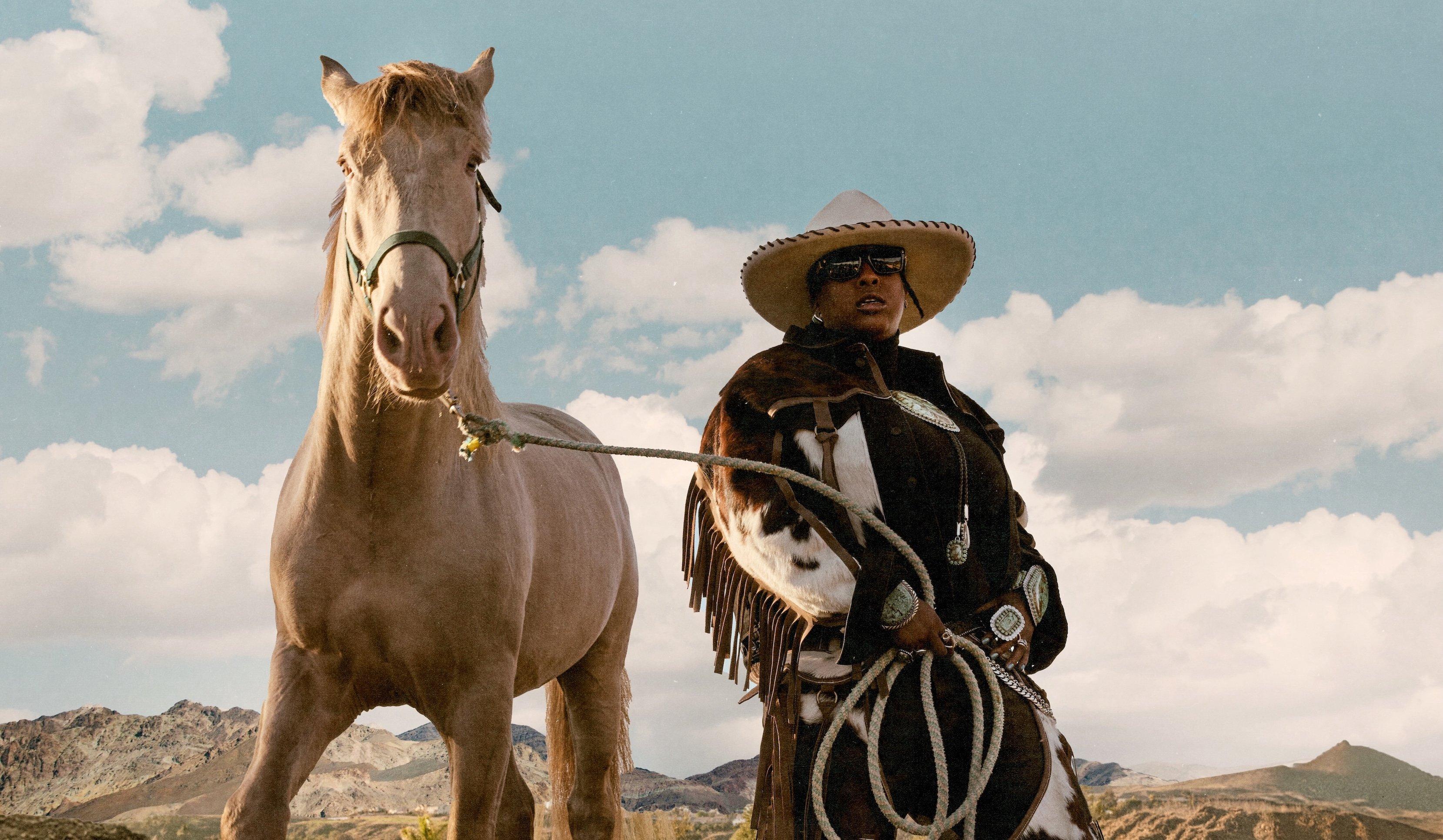
Ink
Photo: Matty Vogel
Get To Know Ink, The Hitmaking Songwriter For Beyoncé & Kendrick Ready To Take The Spotlight
After a big year of co-writing chart-topping hits, Ink showcases her own artistry with a new EP, 'BIG BUSKIN'.' Learn more about the GRAMMY-nominated singer/songwriter and her journey to stardom.
GRAMMYs/Oct 2, 2025 - 08:22 pm
Imagine cementing your place among icons before releasing your debut project. Ink doesn't have to.
Born Atia Boggs, the Atlanta-raised singer/songwriter has become a go-to collaborator for the likes of Beyoncé, Kendrick Lamar, Childish Gambino, Justin Bieber, Kacey Musgraves, Lil Nas X, and Jennifer Lopez. And now, she's stepping into the spotlight with BIG BUSKIN'. Out Oct. 3, the new EP will see Ink display her own star power, blending elements of country with hip-hop to create her unique genre-blending sound.
BIG BUSKIN' — the title a tribute to her early days busking around her hometown — comes on the heels of a remarkable couple of years for Ink. After writing on Beyoncé's GRAMMY-nominated RENAISSANCE, Ink returned for Bey's Album Of The Year-winning COWBOY CARTER, co-writing its historic crossover hit "TEXAS HOLD 'EM." While that marked her first No. 1 on the Billboard Hot 100, Ink soon landed another thanks to "Luther," Lamar's latest smash with SZA that stayed at the top for a whopping 13 weeks.
"It's just a different level of craftsmanship that they have," Ink told Rolling Stone of Lamar and Beyoncé. "It alters my process and how I look at music."
When it comes to her own project, Ink declares that it's "definitely something special." "[BIG BUSKIN'] showcases a lot of different parts of myself," the three-time GRAMMY nominee shared in a statement. "Each chapter you're going to get something new, and each story you're going to get something true."
As Ink releases her debut EP with Big Loud Records, learn more about the inspiration behind her genre-defying sound and why she's earned Beyoncé's praise as an "artist's artist."
She Has Always Known She'd Be A Star
Ink's musical journey began when she taught herself guitar at a young age. Soon after, she began hitting the streets of Georgia to perform for anyone who'd be willing to listen. "I was playing for change, selling CDs, going straight to the people," she shared in press materials for BIG BUSKIN'.
As she recalled to Rolling Stone, Ink busked outside of Jay-Z and Beyoncé's show at the Georgia Dome in 2014 — not only a fateful situation, but one that displayed her confidence. "I wanted to go in there so bad, but [I thought,] 'I hope they have fun, because when I go in there, it's going to be my time.'"
Five years later, Ink doubled down on that manifestation upon seeing Beyoncé at the Roc Nation GRAMMY Week brunch in 2019. "I went up to her and said, 'Hey, I just wanted to let you know, I'm going to be writing your next album,'" she told Billboard, "And she giggled and said, 'What's your name?' We just hit it off."
Her Genre-Blending Sound Is No Coincidence
Ink's musical style is a melting pot shaped by her upbringing, deeply rooted in both her ethnic and social background. On BIG BUSKIN', she weaves together elements of country, rock and hip-hop — genres that can be described as the soundtracks of her life.
The Germany-born, Georgia-raised artist is influenced by singer/songwriters like Babyface, Tony Henry, Creedence Clearwater Revival, Lauryn Hill, and Sister Rosetta Tharpe. And with roots in the Cherokee and Blackfoot indigenous tribes, Ink's diverse background has helped a unique identity all her own.
It was her deep connection to the South — specifically, through Houston rapper Trae Tha Truth — that truly shaped her musical identity. "He's one of the reasons that I'm how I am today," she shared in a press statement.
She also counts GRAMMY-winning singer/songwriter/producer James Fauntleroy — who has worked with the likes of Bruno Mars, Justin Timberlake, and Rihanna — as a mentor, noting that he's shown support since they became Facebook friends in the late 2000s. "[He gave me the confidence to say, 'I can do this,'" she said to Billboard.
Now in her stride, Ink has even managed to blow Beyoncé's mind with her wide-spanning talent. "[Beyoncé] told me that she didn't understand how I was so consistent, because I'd always make different genres of music," Ink recalled in a press statement. "She said, 'You're an artist's artist,' and that gave me a boost of confidence to stay on my path and stay true to my authentic self."
This Isn't Her First Rodeo
BIG BUSKIN' will mark Ink's official debut with Big Loud Records, but it won't be the first time she's released a project. The singer/songwriter previously released three albums independently: 2018's Highlight Real, 2019's Backstreets and 2021's Imagine Not Knowing.
On Highlight Real, Ink tapped into more of her R&B sensibilities. With Backstreets, she incorporated her rock influences with acoustic and electric guitars. And on Imagine Not Knowing, she intertwined R&B stylings with hip-hop beats. Though none of the projects explored her country side, they each helped mold the innovative sound that has pushed her to the forefront today.
She's Become A Secret Weapon For Superstars…
Ink has become one of the music industry's trusty wordsmiths, co-writing songs for some of today's leading artists. Things first took off for her in 2015, landing credits on tracks by Monica, Tamar Braxton, Rick Ross and Mary J. Blige, and Plies and Jacquees. From there, she scored cuts with several more R&B and rap stars, including Yo Gotti, Remy Ma, Chris Brown, Leon Bridges, and Paloma Mami.
While her biggest moments as a songwriter have come with Beyoncé's "TEXAS HOLD 'EM" and Kendrick Lamar's "Luther," she landed more cuts with each of them, including Beyoncé's "16 CARRIAGES" and Lamar's other SZA collab on GNX, "Gloria." But those two are far from the only major stars she's written for in recent years: along with tracks by Lil Nas X, 21 Savage and Mariah the Scientist, Lay Bankz, and Latto, Ink co-wrote over 80 percent of Jennifer Lopez's ninth studio album, This Is Me…Now.
…And A Sought-After Collaborator
As Ink became more renowned as a songwriter, more and more artists recognized her talents as a singer. Her first big feature came in 2019 with Chris Brown and Justin Bieber's "Don't Check on Me," a song she co-wrote and co-produced; as she asserts, being asked to join as a featured artist was a major turning point in her career.
"It gave me so much exposure and another boost of confidence to have a superstar say, 'Hey, we're going to introduce you to the world,'" she told Billboard, adding, "that was one of the moments that led to the unstoppable train I'm on now."
She's also noted that her feature on Childish Gambino's funky 2020 single "Psilocybae (Millennial Love)" was another moment that transcended her artistry in another light. And since then, she's offered her vocal chops to NLE Choppa's "Hear Me," Leon Bridges' "Don't Worry," Zerb and The Chainsmokers' "Addicted," Lamar's "Dodger Blue," and BigXthaPlug's "24/7," among several others.
She's Ready To Get The Party Started
As Ink began her countrified new chapter earlier this year, the multi-faceted artist released "Turquoise Cowboy." While she has dubbed the anthemic track "a theme song for myself," the singer/songwriter sees its toe-tapping follow-up, "Hoedown," as a perfect depiction of the vibe she's channeling with this new music.
"[Hoedown is] a good way to introduce me to the world," she said in a press statement. "I like to dance, I like to get the party going, I like to keep the energy up."
With a desire to make timeless music and a larger-than-life personality, Ink is ready to show the world her true self with BIG BUSKIN' — and she's excited to take listeners along for the ride. "I do music so that I can interact with humans and turn up the frequency of the universe," she explains in a statement, "while showing people that this classic American music never left."
Latest News & Exclusive Videos

Cam
Photo: Szilveszter Makó
How Cam's 'All Things Light' Was Inspired By Her Daughter, Beyoncé & "Exploring Deeper Questions"
The GRAMMY-winning country star opens up about the life experiences and lessons that shaped her introspective new album, and how the project is "100 percent what I wanted it to be."
GRAMMYs/Jul 22, 2025 - 04:21 pm
Cam admits she's been in survival mode for the past five years. But it resulted in one of her most authentic projects to date.
All Things Light, her reflective new album out now via RCA Records, sees the country singer/songwriter embracing life's highs and lows. Cam started crafting All Things Light by herself during a period she describes as "insane"; as a new mom in the midst of a pandemic, she found creativity on her own.
"I went into the studio by myself a lot, because obviously nobody was sharing spaces," she tells GRAMMY.com of the early album process. "I tapped into something while I was by myself. I love collaborating, but to only be listening from my own gut and coming up with stuff, I had a whole new body of work coming to me."
All Things Light further displays Cam's songwriting depth while embracing a wider sonic landscape. While still rooted in country music, the album experiments with new sounds and genres taken from her life journey; elements of folk, rock and pop weave seamlessly throughout the 12-track project. She sings about life's unanswerable questions, trusting the universe, and ultimately finding her way.
As a result, All Things Light finds Cam surer of herself as a songwriter, a creative and a woman. "If I fall, I still sing and I know why," she confidently sings on the triumphant "Turns Out That I Am God"; elsewhere, she fully embraces her pop and dance side on tracks like "Wherever You Are" and "Pretty Girls." While topics of heartbreak and death ("Half Broke Heart," "Village" on 2015 debut Untamed) and deeply personal songs ("Redwood Tree," "Girl Like Me," on 2020 The Otherside) have been prevalent throughout her catalog, Cam sings them on All Things Light as a woman who has grown from life's obstacles — and throughout every track, her positive light shines through.
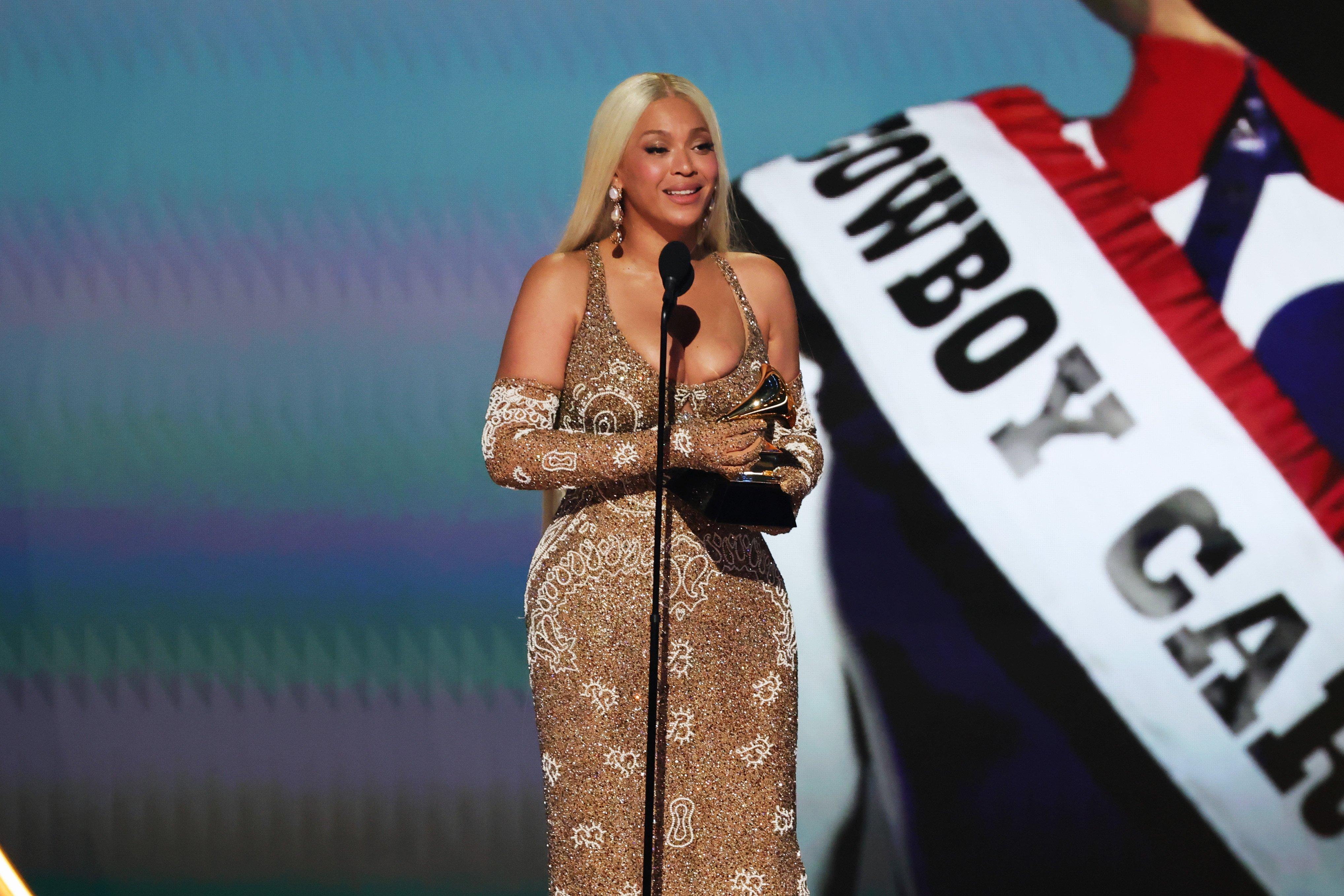
While working on the album, Cam got the opportunity to work on Beyoncé's COWBOY CARTER. Co-writing five tracks — "AMERIICAN REQUIEM," "PROTECTOR," "DAUGHTER," "TYRANT," and "AMEN" — her contributions not only earned Cam her first GRAMMY, but also further inspired her own project.
"It all came from the same wellspring," she says of the songs on All Things Light and COWBOY CARTER. "Creatively, it was an amazing time. You can tell from this subject matter on the album that it's a very heavy time. I definitely felt the weight of being a mom, and as a mom, you're the guide, and the protector, and the world builder. You're the one who explains what this whole thing is to your kid."
Cam's experiences with her 5-year-old daughter, Lucy, heavily inspired All Things Light. Living life fully is also at the heart of the project, as she witnessed loss within her immediate family, which she touches on in lead single "Alchemy": "From dust to flesh to bones to dust/ We are golden/ Call it a miracle/ I call it alchemy," she sings on the surprisingly upbeat track. Meanwhile, the old-timey "Slow Down" serves as a reminder to trust her gut when chasing a dream: "If you get a funny feeling/ That it's not your dream you're dreamin/ Slow down."
"A lot of these songs are facing the abyss and exploring deeper questions, and maybe not even having an answer, but guideposts for myself and her," Cam explains. "It's a deep, heavy meaning, and then some fun little dance-y vibes — it's everything I wanted in an album."
Below, Cam discusses All Things Light, her creative process, and how motherhood inspires her songwriting.
This interview has been edited for length and clarity.
All Things Light came from dealing with loss and motherhood during the pandemic. Did the songs help you get through the other side of that loss?
It's been a tough time, personally. In my immediate family, we've had a lot of loss and health stuff, and as difficult as it was, it was a wake-up call about what makes life worth living. It's spending time with people you love. All these songs and raising a kid needing these answers about [life's] big questions, it all showed up [while writing All Things Light]. I have to address things like that.
Even though you think motherhood is a happy creation time, the other side of the coin is, What does it all mean in the big picture? To me, singing is incredibly calming, and writing is super therapeutic and cathartic. These are things that I need to hear.
"Turns Out That I Am God," when I say, "I was busy waiting for someone to live my life," [it] is me being on autopilot and not examining this stuff. "Dreamt myself to the center of all things light" is when I first meditated. I've turned this constantly talking mind off, and inside my belly there's this peace. You get filled with this joy. It's there in me, it's there in the trees, it's there in everything. There's some sort of energy to the universe, and to me, I call that God, and that's realizing that that's in me.
Has your songwriting changed at all being a mother?
I'm really intentional. I don't have time to do anything that isn't important to me. I have to feel really drawn to or inspired by a concept that I commit to, because it's like, Okay, this is important to me. I want this to be out. Then I'll commit all the time that's necessary to make it great.
Obviously when Beyoncé calls, you show up.
It was such incredible divine timing, because I feel like this is something that was coming out of me, this type of music. I obviously love being experimental and pushing boundaries.
Getting a GRAMMY for being a part of that album that was very experimental and pushed a lot of boundaries and still was incredibly meaningful. I think people are going to be discovering the layers of what she did for years. It was so inspiring to see somebody commit and do that at such a high level.
I think it's really easy to feel scared that if you do something outside of the norm or outside of the box, that it's gonna cost you — and maybe it will. But the point is, what are you doing this for? What matters is you're making great art. If anything, it made me feel super free and emboldened to just stick with it.
You'll forever be introduced as "GRAMMY-winning singer/songwriter Cam" for working on Beyoncé's COWBOY CARTER. Have you fully processed that?
Honestly, it hasn't fully processed yet. It's pretty cool to have this statue that says my name, and COWBOY CARTER, and Beyoncé on it. 12-year-old me is like, No way! I get to go see the tour in Vegas, and I'm ready to bawl my eyes out, dance and cry, because it's so incredible.
Years ago, you mentioned that you write songs based on colors. Did you do that for All Things Light?
Definitely, yeah. I think that's one of the easiest ways to describe [songs], when you're trying to take something from a collective subconscious, then you have to try and communicate it with anyone else you're working with. I think that colors usually help me the most — or temperature, sometimes — of describing what it is.
"Alchemy" was your first solo release in four years. What color or temperature were you feeling when you wrote that song?
I started it with my longtime co-writer, Anders Mouridsen, and we were trying really hard to focus on melody. I was like, "Wow, this album is heavy. What if I try and not be heavy?" It still ended up being a death mantra. "From dust to flesh to bones to dust." It's a Buddhist meditation on death.
To me, that song, even though it's talking about death, and the single art is flowers growing out of me, in my mind your body decomposes and becomes something else, transformative. "We are golden" is the assurance. That whole process is beautiful, and can we see that in a positive light? So, to me, that one's this orangey, yellowy, golden-ish color.
I noticed Joni Mitchell has a writing credit on "Alchemy."
It's similar enough to "Woodstock," that song of hers, that I was like, "I want to reach out and make sure that this is good with them, because it's such an important thing to say." It was definitely insane to get approval from her and that team.
It's very Joni Mitchell inspired. She's such an inspiration to me. My mom always loved Joni Mitchell growing up, so we listened to a lot of that. She's one in a million.
How have you transformed in the past five years?
I think I went from a bit shellshocked with motherhood, to then trying to find my feet, and feeling a little bit underwater. At this point, I'm trying really hard to own that life is messy and it doesn't look how you think it's gonna look. That doesn't mean it isn't fantastic, and something that you get lessons out of, and you have heartache, and you have joy. The acceptance of it all and the surrender to it all. I don't think I've mastered it, but I think I'm trying to get better at reminding myself that that's why we're here.
Is there one song that best describes where you are in life right now?
Probably "Turns Out That I'm God." That and "Slow Down," I think those are my core thesis statements. This is my life happening, and it's my experience to enjoy or not enjoy, and it's up to me. That is a heavy and freeing thing at the same time.
The first lyric of the album is, "I was busy waiting for someone to live my life," and then the last lyric is from "We Always Do": "We'll think of something we always do." It's like radical optimism, in a relationship, or just humanity. I think we're gonna figure it out. The last lyric on the whole album is "try," and I like that a lot.
Tell me about writing "Turns Out That I'm God."
I listened to Alan Watts give a lecture. He's a philosopher, entertainer, from the '60s/'70s, and he brought a bunch of Eastern ideas to Westerners. Generally speaking, Westerners feel so separate from the world, like humans are alone and isolated. In general, a lot of Eastern philosophies and religions are integrated, and you're all part of one.
He did a thought experiment: We're all God, we've just forgotten. We could do anything we wanted and dream these beautiful dreams, and they would last for 75 years.
After so many nights, you're like, "Well, maybe I should throw in a little surprise, a little risk." After you try that, you're like, "Wow, that was something. I think I want to try more." You add more and more risk until you get to where you are now, and that's you living your life — where you don't know what's going to happen, and what a gift that is, and what a gift you've chosen to live like that.
It's about how that makes you feel, when you hear that, [you think], "Maybe I've chosen to be here doing it this way." That was a relief for me when I heard that.
What has this album taught you about yourself and your career?
I got in really late to professional music, because I switched my career when I was 25. I was 29 and 30 and "Burning House" happened so fast. I want to keep meeting what my dream version of music can be, and I think I keep getting closer. I feel like I've landed on something this time.
I love every single thing that's in this album. Every single piece, nothing was a compromise. Nothing was a decision made out of fear. It all was 100 percent what I wanted it to be. It feels very pure in that way.
I feel really lucky that I get to keep making music and keep journeying forward to do it like this. It's always something new. It's never the same thing over and over again.
It was definitely a heavy, heavy run around. But then, having the COWBOY CARTER stuff happen… and 070 Shake, who I love, getting to sing and feature on her stuff [2024's "Never Let Us Fade"], I'm so proud of where [my career] is at.
I know it's not culturally accepted to take your time making art, but I do, and I appreciate that people still want to hear what I've got to say. I'm proud of this album, and I think it's going to be a healing balm for a lot of people.
Latest News & Exclusive Videos
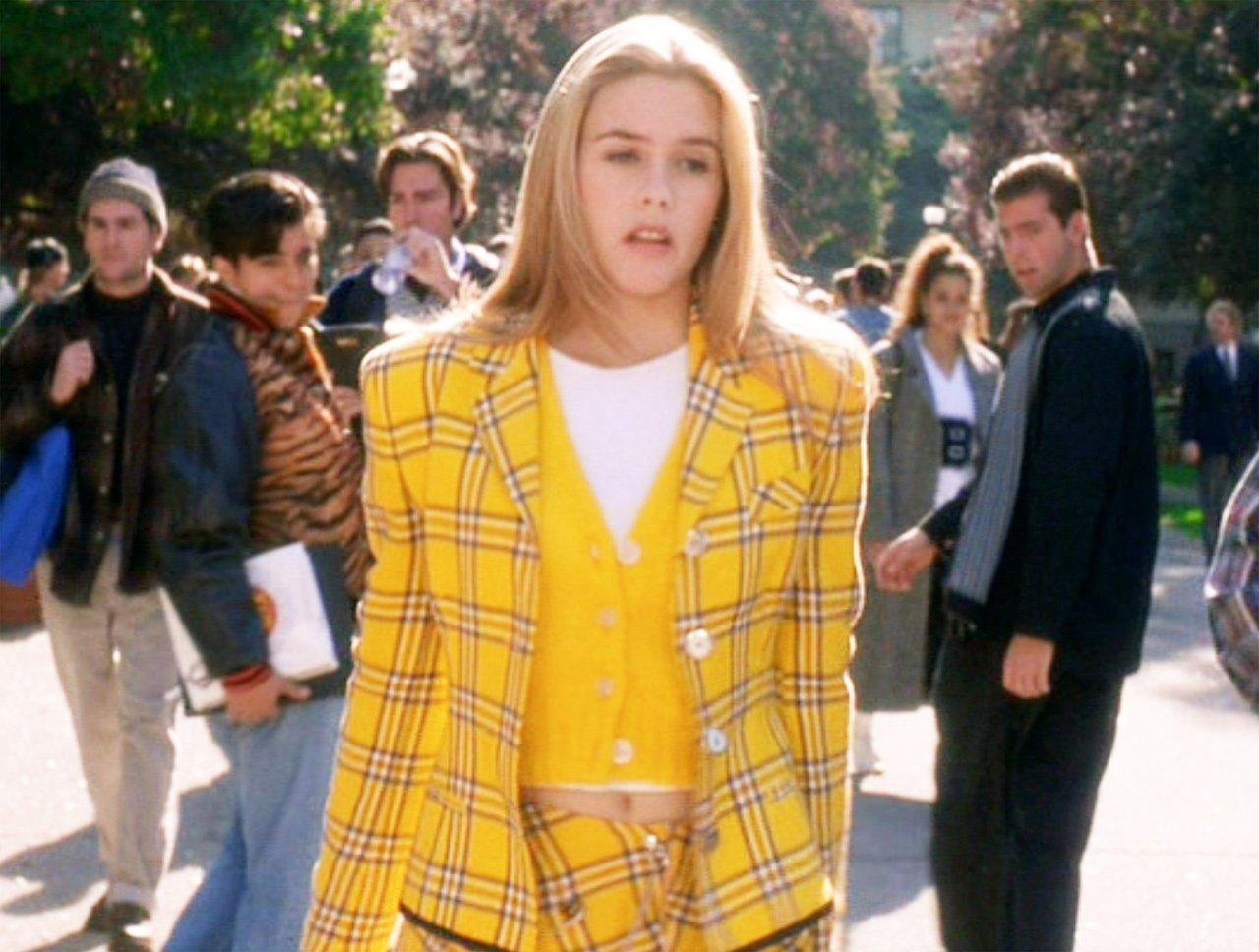
Alicia Silverstone as Cher Horowitz in 'Clueless'
Photo: CBS via Getty Images
How 1995 Became A Blockbuster Year For Movie Soundtracks
From 'Clueless' to 'Dangerous Minds,' soundtracks were big business in 1995, but the year's hits offered no clear formula for success.
GRAMMYs/Jul 17, 2025 - 03:41 pm
Mariah Carey, Alanis Morissette, 2Pac and the Smashing Pumpkins all had No. 1 albums in 1995. Despite such hallowed competition, four movie soundtracks also topped the Billboard 200 chart that year. Two were family-friendly Disney behemoths: Pocahontas and The Lion King, the latter still powering from the previous year. The other chart-topping soundtracks, for the Michelle Pfeiffer vehicle Dangerous Minds and the stoner comedy Friday, were no one's idea of kids' entertainment.
Beyond those No. 1 spots, 1995 marked a fascinating midpoint in a soundtrack-heavy decade. According to a New York Times report, a new release CD that year typically cost anywhere between $13-$19. At that price, a soundtrack needed major star power or an undeniable concept.
For movie studios and musicians alike, the format was rich with opportunity. However, there was no certain formula for success. Some soundtracks were guided by a single producer, while others drew on a grab bag of then-current songs. Several featured one clear hit that eclipsed the soundtrack, or occasionally the movie itself. For all their differing approaches, the soundtracks of 1995 epitomized the energy and audacity of the decade, while also establishing tropes for the next 30 years.
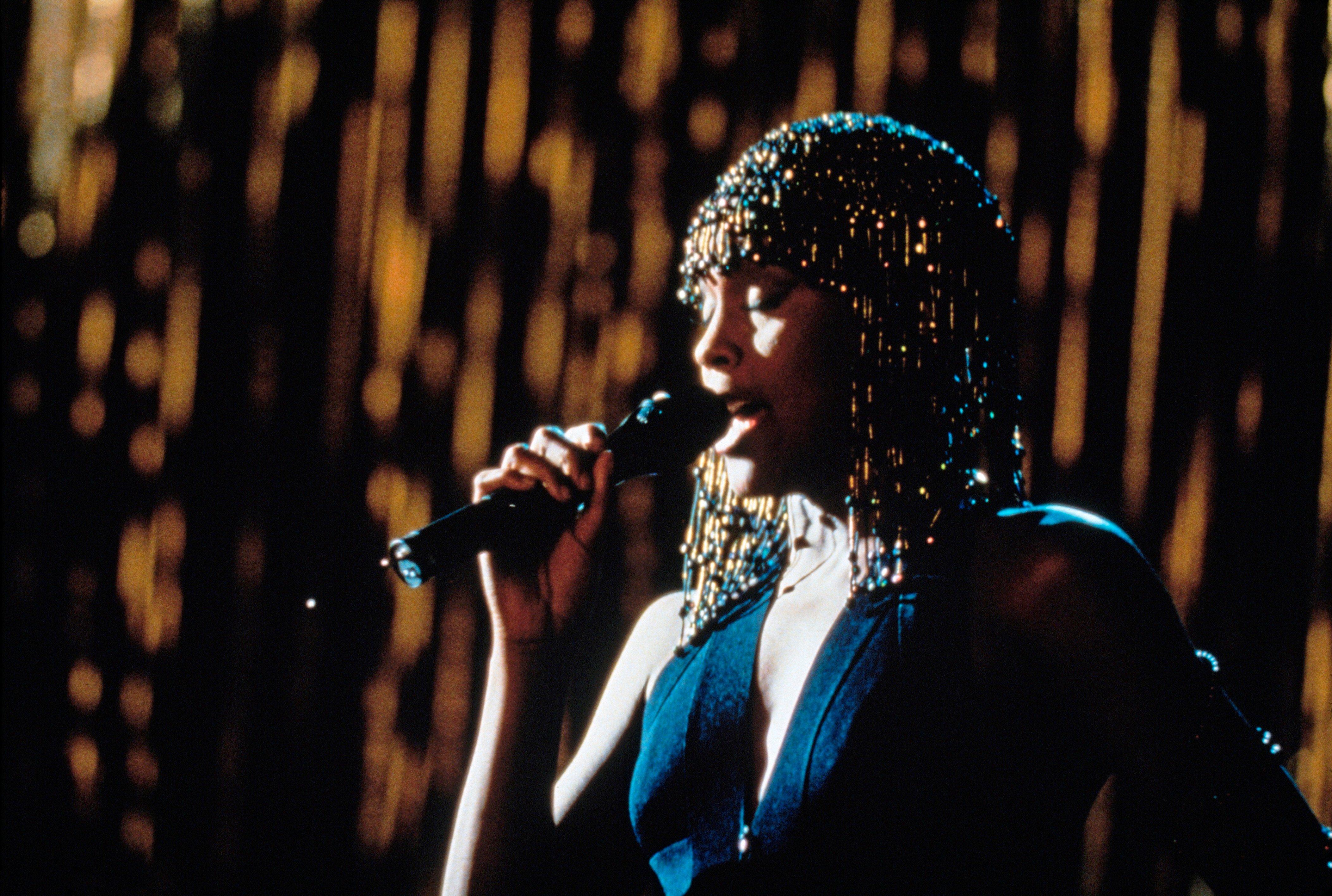
The Bodyguard: Original Soundtrack Album (1992) set the bar high for the decade. With a 20-week reign at No. 1, it remains the biggest-selling soundtrack of all time. Whitney Houston performed six songs on the album, including the titanic power ballad, "I Will Always Love You." (At the 1994 GRAMMYs, the track won the GRAMMY for Record Of The Year and Best Pop Vocal Performance, Female, while the soundtrack itself earned the Album Of The Year award.)
While The Bodyguard magnified their commercial potential, movie soundtracks like Quentin Tarantino's Reservoir Dogs (1992) and Pulp Fiction (1994) framed the medium as an artistic showpiece. Throughout the '90s, Tarantino and fellow indie auteurs Paul Thomas Anderson, Richard Linklater and Spike Lee made music a key character in their films. (The latter continues the trend on his latest movie, Da 5 Bloods, alongside six-time GRAMMY-winning composer and trumpeter Terence Blanchard.) Both instincts, for commercial returns and artistic validation, were well-represented in 1995.
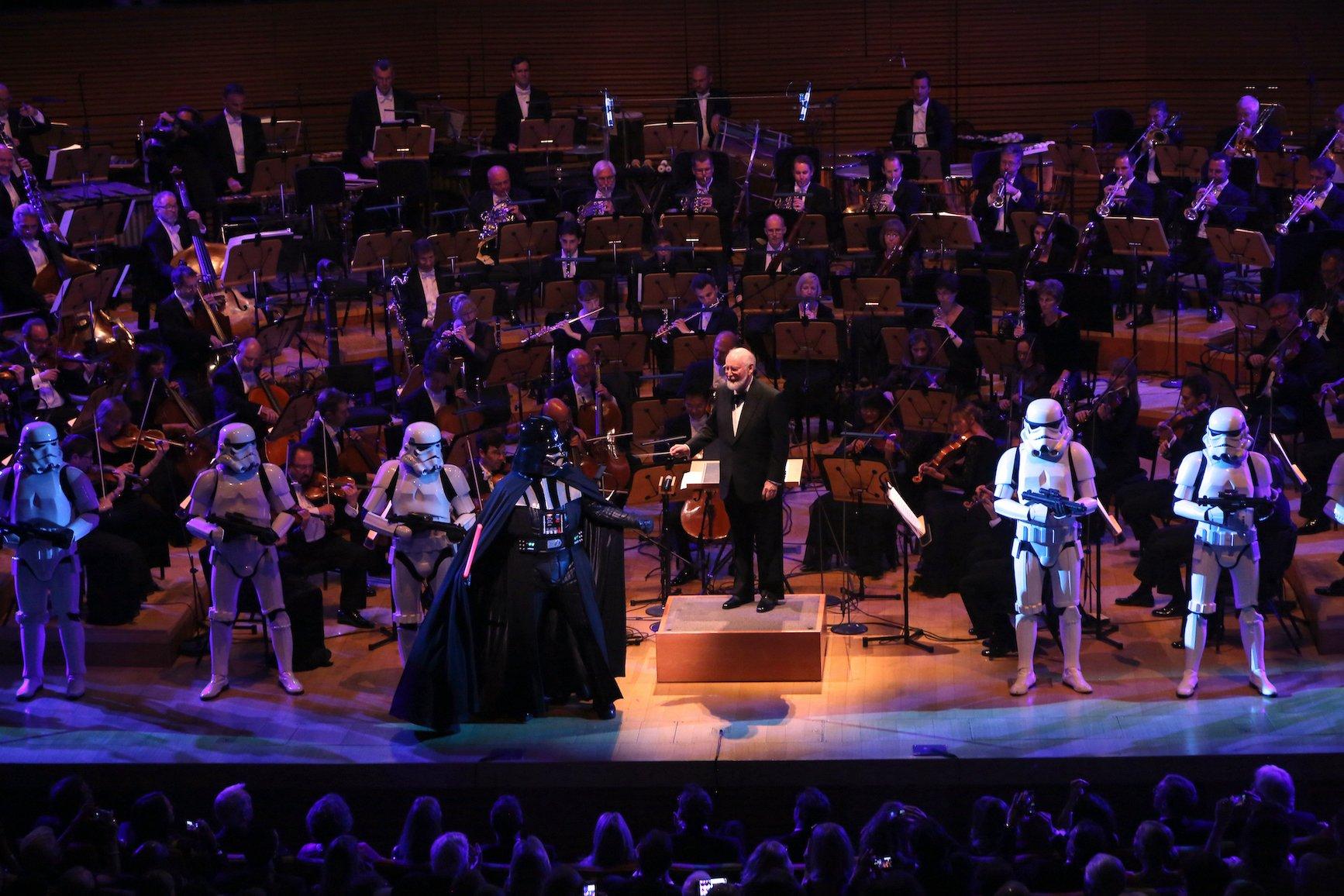
Batman Forever (1995) epitomized the big-budget, mass-appeal mid-'90s soundtrack. Spanning PJ Harvey to Method Man, the 14-track set employed some tried-and-true tactics. First, only five songs on the track list appear in the movie itself, ushering in a rash of "Music From And Inspired By" soundtracks. Second, its featured artists largely contributed songs you couldn't find on other albums: According to Entertainment Weekly in 1995, U2 landed a reported $500,000 advance for "Hold Me, Thrill Me, Kiss Me, Kill Me," an offcut from the band's Zooropa album sessions.
Most significantly, Batman Forever backed a surprise smash in Seal's "Kiss From A Rose." Originally released as a single in 1994, the ballad blew up as the movie's "love theme." In its music video, Seal croons in the light of the Bat-Signal, intercut with not-very-romantic scenes from the film. Outshining U2, "Kiss From A Rose" reached No. 1 in 1995; one year later, the song won for Song Of The Year, Record Of The Year and Best Male Pop Vocal Performance at the 38th GRAMMY Awards.
Both Bad Boys and Dangerous Minds had their "Kiss From A Rose" equivalent in 1995. Diana King's reggae-fusion jam "Shy Guy" proved the breakout star of Bad Boys, transcending an R&B- and hip-hop-heavy soundtrack. Meanwhile, Coolio's "Gangsta's Paradise," featuring singer L.V., the key track on Dangerous Minds, became the top-selling single of 1995; it won the rapper his first, and only, GRAMMY for Best Rap Solo Performance the next year.
Other soundtracks from 1995 endure as perfect documents of their time and place. Clueless compiled a cast from '90s rock radio to accompany the adventures of Alicia Silverstone's Cher Horowitz and her high school clique: Counting Crows, Smoking Popes, Cracker and The Muffs. Coolio, the everywhere man of 1995, contributed "Rollin' With My Homies."
From the same city, but a world outside Cher's Beverly Hills bubble, came the Ice Cube- and Chris Tucker-starring Friday. Its soundtrack took a whistle-stop tour of West Coast hip-hop and G-funk via Ice Cube, Dr. Dre, Tha Alkaholiks and Mack 10. True to the era, the music video for Dr. Dre's "Keep Their Heads Ringin'" is half stoner comedy, half cheesy action movie.
Waiting To Exhale, the 1995 drama directed by Forest Whitaker, boasted a soundtrack with a clear author. Babyface, the R&B superproducer with 11 GRAMMY wins for his work with the likes of Boyz II Men and Toni Braxton, produced the set in full. Following Babyface's co-producer role on The Bodyguard soundtrack three years prior, Waiting To Exhale featured two new songs from the movie's star, Whitney Houston.
Houston's "Exhale (Shoop Shoop)" and "Why Does It Hurt So Bad" led a track list that also featured Aretha Franklin, TLC, Chaka Khan, Mary J. Blige and then-newcomer Brandy. A powerful showcase of Black women across generations, the soundtrack has prevailed as a standalone work, going on to receive multiple nominations, including Album Of The Year, at the 1997 GRAMMYs. In a crowded year for soundtracks, which also included Dinosaur Jr. founder Lou Barlow's work on Larry Clark's contentious Kids, Waiting To Exhale demonstrated the power of a singular vision.
For the most part, the soundtracks of 1995 tried a bit of everything. The previous year, The Crow: Original Motion Picture Soundtrack went all-in on covers, including Nine Inch Nails overhauling Joy Division's "Dead Souls." That trend continued into 1995, from Tori Amos covering R.E.M.'s "Losing My Religion" for Higher Learning to Evan Dando's update of Big Star's "The Ballad Of El Goodo" in Empire Records to Tom Jones gamely taking on Lenny Kravitz's "Are You Gonna Go My Way"' for The Jerky Boys movie. (Is there a more '90s sentence than that?)
Elsewhere, the Mortal Kombat soundtrack blended metal and industrial rock (Fear Factory, Gravity) with dance music (Utah Saints, Orbital). For every Dead Presidents, which zeroed in on '70s funk and soul, there was a Tank Girl, which threw together Bush, Björk, Veruca Salt and Ice-T to match the movie's manic tone.
Continuing from their '90s winning streak, grown-up soundtracks have proven surprisingly resilient. In an echo of Babyface's role on Waiting To Exhale, Kendrick Lamar oversaw production on 2018's chart-topping, multi-GRAMMY-nominated Black Panther: The Album, uniting an A-list cast under his creative direction. On the same front, Beyonce executive-produced and curated The Lion King: The Gift, the soundtrack album for the 2019 remake of the Disney classic, which spotlighted African and Afrobeats artists. In 2016, Taylor Swift and One Direction's Zayn recorded "I Don't Wanna Live Forever (Fifty Shades Darker)," pitching for the movie tie-in bump enjoyed in 1995 by Seal and Coolio. (The millennial stars stopped short of including scenes from the movie in their music video.)
Like Batman Forever back in the day, the DC Universe continues to put stock in soundtracks. Both *Suicide Squad *(2016) and its follow-up, Birds Of Prey (2020), are packed tight with to-the-minute pop, R&B and hip-hop. Each soundtrack reads like a who's who of the musical zeitgeist. In 1995, Mazzy Star, Brandy and U2 grouped up behind Batman. In 2016, Twenty One Pilots, Skrillex and Rick Ross powered the Suicide Squad. In 2020, everyone from Doja Cat to Halsey to YouTube star Maisie Peters form Team Harley Quinn.
As 1995 taught us time and time again, nothing traps a year in amber quite like a movie soundtrack.
Latest News & Exclusive Videos
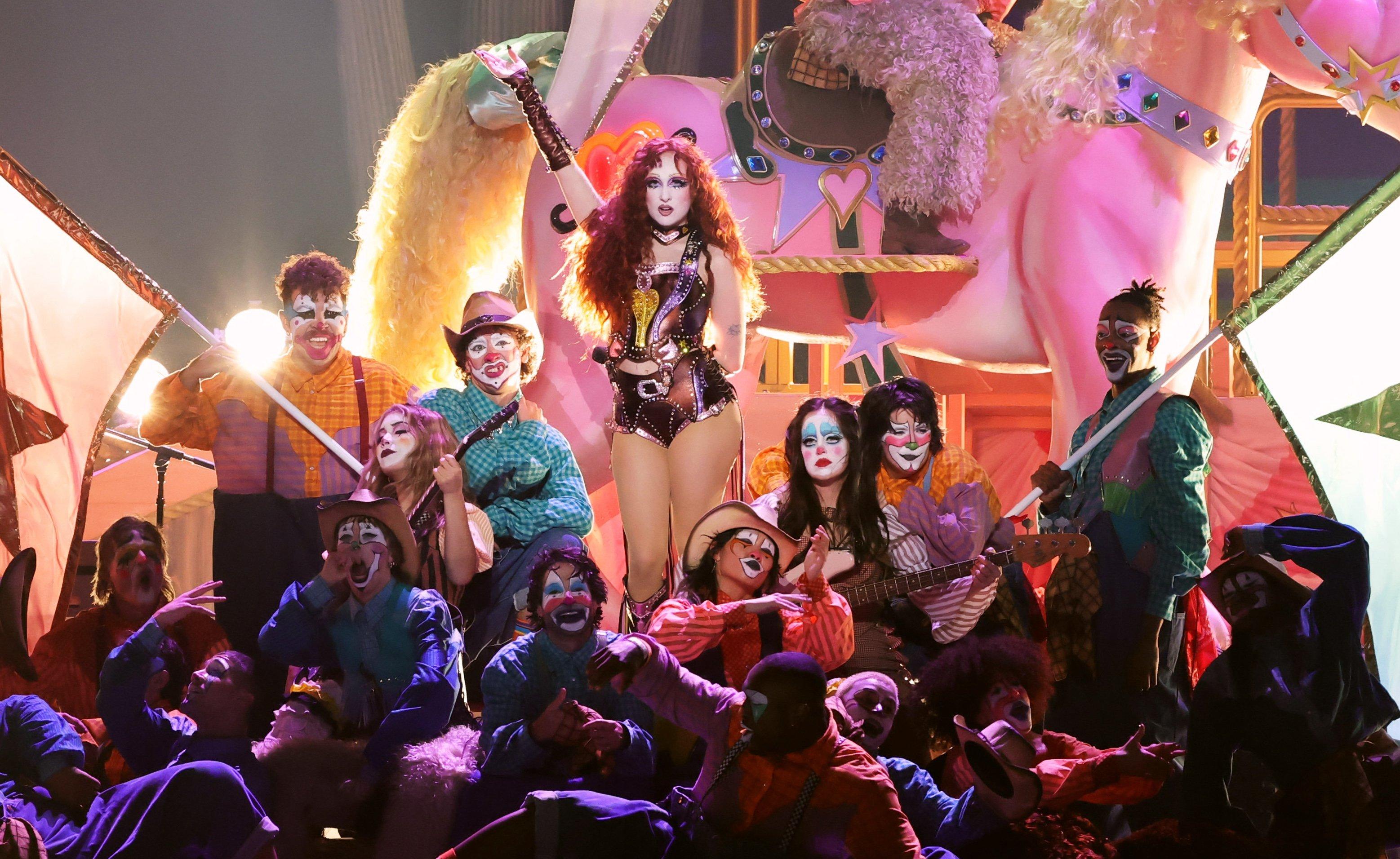
Chappell Roan performs at the 2025 GRAMMYs.
Photo: Kevin Winter/Getty Images for The Recording Academy
11 Artists Who Advocate For The LGBTQIA+ Community: Lady Gaga, Lil Nas X, Taylor Swift & More
From Chappell Roan to Beyoncé, artists who identify as queer and allies alike celebrate love in all its forms.
GRAMMYs/Jun 11, 2025 - 09:12 pm
Editor's Note: This article was originally published on June 21, 2023, and was updated on June 11, 2025 with the additions of Chappell Roan and Lady Gaga.
"I want to shout out every single person in this community. You guys, we're the f—in' lifeline of the world, I'm not even kidding. Happy Pride, everybody," Troye Sivan declared on stage on June 6.
Along with Jennifer Lopez, the pop star was headlining the World Pride Music Festival, where artists like Kim Petras, RAYE, RuPaul, Betty Who, Paris Hilton, and MARINA all descended on Washington D.C. to mark 50 years of Pride celebrations in the nation's capital.
Music has always been a safe haven for gay and trans people of all kinds — from the closeted kids in Middle America finding sanctuary in the songs of their favorite pop stars, to the out-and-proud artists forming the soundtrack for the next generation of LGBTQIA+ fans. And Pride has always been a special time of the year to celebrate visibility and inclusion in the music industry — a place where everyone deserves to show up and be seen (and heard!) as their authentic self, and where every proverbial note, melody and harmony make up a beautiful and unique soundtrack that can only be yours.
Recently, queer musicians and allies who use their platforms to stand up for the LGBTQIA+ community have felt more important than ever. Blatant anti-LGBTQIA+ sentiment continues to sweep the country, from hundreds of anti-LGBTQIA+ bills being introduced in state legislatures across the nation, to the Department of Defense purposely stripping legendary gay rights advocate Harvey Milk's name from a Navy ship during Pride, to states like Utah starting to ban Pride flags in schools and government buildings. But those who stand for the community are fighting even harder.
As Pride month carries on, GRAMMY.com has rounded up a list of eleven LGBTQIA+ artists, allies and bonafide gay icons who've made advocating for the community a central tenet of their music, their words and their actions. Of course, there are dozens to highlight, but take a look at how queer artists like Sivan and Lady Gaga and allies like Taylor Swift and Madonna have helped fans shine as their authentic selves.
Read More: Pride Month 2025 Playlist: Listen To Unabashedly Queer Songs By Chappell Roan, Billie Eilish & More
ARTISTS
Betty Who
In June 2023, the indie pop star received an invitation directly from Joe Biden to perform at the White House's official Pride Celebration, where the then-President formally announced his administration's plan titled New Actions to Protect the LGBTQIA+ Community.
"Today was the biggest pride celebration ever held at the white house and i got to be a part of it!!!!!!!!" Betty, who identifies as both queer and bisexual, wrote afterwards on social media. "What an honour it is, how proud i am to be part of the lgbtqia+ [community]...queer joy spouting everywhere!!!"
A staple on the roster of Pride events across the country every year, Who shared an empowering message ahead of hitting the stage at World Pride in Washington D.C. two years later.
"To my LGBTQIA+ sisters, brothers, everyone in between, in the community: don't give too much of your time and energy to the people who don't get it," she said in a May 2025 interview with PRIDE. "Try and save it all for the people who do, and celebrate you for who you are. Because those are the people who reflect back to you what a special and amazing person you really are… You can't let other people hold you back from living your life and feeling the joy that you absolutely deserve to feel."
Big Freedia
In 2023, Big Freedia was honored by PFLAG — the nation's longest-running LGBTQIA+ organization — with its first-ever National Breaking Barriers Award. The honor is meant to shine the spotlight on "an individual who uses their platform to help remove obstacles to LGBTQIA+ and intersectional equality in pursuit of a more just, equitable and inclusive world."
Upon receiving the award, the bounce music trailblazer took to Instagram with a determined message, writing, "There's still so much work to do to fight discrimination and I will continue to work on behalf of our whole community to spread love, acceptance, inclusion and everyone's right TO BE FREE."
In May 2025, Freedia suffered a devastating loss when her partner of 20 years, Devon Hurst, passed away from complications with diabetes. "Happy pride month from me and my guardian angel," the GRAMMY nominee wrote on June 1, captioning a bittersweet photo with her late love to mark the start of another Pride season.
Chappell Roan
Loading...
"I think throughout the year, I'm like, 'What can I get away with?' Because right now it's pretty tame for what it is like to be a gay artist," Chappell Roan told GRAMMY.com last year. "But I just want to push it to see how far can I go — with the most controversial outfits or things to rile people up. I'm not really afraid to do that."
That mantra has helped Roan become one of pop's current queens and the Best New Artist winner at the 2025 GRAMMYs. The outspoken star, who identifies as a lesbian, has unabashedly weaved her sexuality into her music, whether she's pining for a "Super Graphic Ultra Modern Girl," calling out compulsory heterosexuality in "Good Luck, Babe!," or celebrating the place where she can express her true self in "Pink Pony Club." Her recent single "The Giver" continues that trend: "only a woman knows how to treat a woman right," she declares on the bridge.
She's also championed women's rights and trans rights during performances, using her platform to promote change and to uplift oppressed communities. And as she continues to stake her claim as a household name, Roan is ensuring that queer women are both seen and heard.
Read More: From Dusty To Chappell: A Timeline Of Lesbian & Queer Girl Pop Icons
Lady Gaga
Since the very beginning of her career, Lady Gaga has been a fearless and unwavering champion of her LGBTQIA+ fans and the community at large. After all, there's a reason the superstar, who publicly came out as bisexual in a 2009 interview with Barbara Walters, is called Mother Monster.
As she rocketed up the charts with early hits like "Poker Face" and "Bad Romance," the pop star was unequivocal about her connection to the queer community, whether that meant telling an interviewer on the red carpet that her inspiration came from "God and the gays" or famously dismissing transphobic questions about her own anatomy in a 2011 sit down with Anderson Cooper. (Years later, she admitted her now-famous response to the offensive line of questioning was a conscious and purposeful effort to support any trans or intersex fans who'd found a safe space in her music.)
At nearly every turn, Gaga has used her platform to uplift her queer fans, giving them some of the greatest gay anthems of a generation, from "Born This Way" to "Abracadabra." She launched the Born This Way Foundation with her own mother in 2011, and has been a constant, outspoken advocate for gay rights on the political front — including at the 2025 GRAMMYs, where she declared that "Trans people deserve love" and "The Queer community deserves to be lifted up."
Lil Nas X
Lil Nas X has never been shy when it comes to sticking up for the queer community — and he usually does so with a healthy dose of snarky humor on social media. He's cheerfully clapped back about everything from the explicit queerness of his music videos and his place in the modern pantheon of hip-hop to conservative outrage over Pride-themed merchandise at retailers like Target.
"Can't believe target is supporting this nonsense, im never shopping there again, my son is not 'too cool for school' these shirts are ridiculous. He is going to school and he WILL learn," the GRAMMY winner wrote in a since-deleted tweet in 2023, mockingly referencing the anti-LGBTQIA+ crusaders upset with inclusive and trans-friendly apparel being sold at the popular retailer.
With anti-trans sentiments reaching dangerous new levels in the years since, Lil Nas is giving his fans a momentary escape with flamboyant and fun new singles like "HOT BOX" and "DREAMBOY" while choosing to remain optimistic about the future of the LGBTQIA+ community.
"Everything with the young males being taught these super conservative ways, at least in America: everything is shifting with this rebellious hyper-masculine thing," he told PAPER in April. "I think it's going to work itself out. I think things are going to be fine.
"I'm not trying to minimize what's happening," he continued. "I just think s— is going to work itself out, especially in the generation where everything is a trend. The second the next thing comes along, it will be like, 'Hey, we don't hate women and gay people anymore. Let's do something else now.'"
Kim Petras
Loading...
Petras cemented her place as a rising star in the pop music echelon in February 2023, when she became the first trans woman to win the GRAMMY for Best Pop Duo/Group collaboration with Sam Smith for their subversive collaboration "Unholy." (Smith, who identifies as non-binary, also made history with the win, though they graciously ceded the floor for Petras to give her awestruck acceptance speech on the GRAMMYs stage.)
The German pop princess opened up about her experience growing up trans and the vulnerable state of trans youth in the ongoing political climate in the cover story of Out's 2023 Pride issue. "I literally was very suicidal as a kid, and I just wouldn't still be here had my parents not believed me," she told the magazine. "I hate that another generation is going through this, and I hate that young kids are going through the same s— I was going through, and that apparently just isn't changing. I think it's sad. I just never understood why people were so obsessed with what people do to be happy. Just focus on what you can do to be happy."
Petras was booked and busier than ever in 2025, criss-crossing the country to headline major Pride celebrations like Outloud Music Festival at WeHo Pride; World Pride Music Festival in Washington, D.C.; Nashville Pride Festival; Drag Me to Cowboys in Calgary, Alberta; San Diego Pride and more.
Read More: A Legacy Of Pride: Queer Artists Who Changed The GRAMMYs Forever
Troye Sivan
Years before releasing his debut album Blue Neighborhood in 2015, Troye Sivan came out publicly via YouTube. Since then, he's been consistently outspoken about his experiences as a gay artist in the music industry.
The Australia native has made an intentional point in his career of turning his visuals into unapologetic examples of queer art — from the lusty defiance of 2018's "My My My!" and to the "gushy juicy doting adoring power b^tt^m gay ballad" perfection that was 2021's "Angel Baby."
Perhaps most powerful of all, though, was his video for early single "Heaven" featuring Betty Who, which depicted historic moments in the LGBTQIA+ rights movement including some of the earliest Pride parades on record. "We have always been here. we will always be here. this video is dedicated to all those who've come before me and fought for our cause and those who now continue the fight," he wrote in the video's description. "in dark and light times, let's love forever. love, troye x."
Meanwhile, in the last two years, Sivan has established his place as at the very center of gay culture thanks to his 2023 album, Something to Give Each Other, and the headline-making SWEAT Tour with Charli xcx, who also tapped him to collaborate on the 2024 remix of Brat single "Talk Talk."
ALLIES
Beyoncé
Long considered a gay icon in her own right, Beyoncé paid reverential honor to the LGBTQIA+ community and her late uncle Johnny with 2022's RENAISSANCE, an undulating magnum opus inspired by the underground ballroom scene sparked by Black, trans and gay pioneers of the 1970s, '80s, '90s, and beyond.
Queen Bey also held space for queer artists throughout RENAISSANCE's sprawling, hour-long track list, collaborating with TS Madison and Big Freedia, sampling Kevin Aviance and late drag star Moi Renee, working with Honey Dijon behind the boards and more. "Thank you to all of the pioneers who originate culture, to all of the fallen angels whose contributions have gone unrecognized for far too long," the living legend wrote in a note posted to her personal website upon the album's release. "This is a celebration for you."
The most-awarded artist in GRAMMY history revived the spirit of RENAISSANCE during her 2025 COWBOY CARTER TOUR as well, performing fan favorite cuts from the era like "CUFF IT," "THIQUE," "I'M THAT GIRL" and "COZY" during the tour's final two acts.
Dan Reynolds of Imagine Dragons
Imagine Dragons frontman Dan Reynolds has emerged as a powerful advocate for the LGBTQIA+ community through his nonprofit organization Loveloud and its popular Utah festival, which he launched in 2017 to support LGBTQIA+ teens in the state's overwhelmingly conservative (and outspokenly anti-LGBTQIA+) Mormon community.
Since then, Reynolds and the Loveloud board — which includes out and proud musicians like Tyler Glenn of Neon Trees, Tegan Quin of Tegan & Sara, VINCINT, Greyson Chance, and Parson James — have expanded Loveloud's mission beyond the Mormonism of the Wasatch front. In 2023, Loveloud morphed into a traveling festival with stops in Austin, Texas (where dozens of anti-LGBTQIA+ laws have been pursued by the state legislature and Gov. Greg Abbott) and Washington D.C., and in 2024, held its first-ever events in New York City, Chicago and Miami after being named to the Out100.
Madonna
What hasn't Madonna done in her iconic career to lift up the LGBTQIA+ community? In fact, there's an entire Wikipedia page dedicated solely to her status as a living gay icon.
Famously, Her Madgesty's love for the gay community started with her early mentor and dance teacher Christopher Flynn. Early in her career, she became one of the first artists to speak out about the HIV/AIDS crisis and decry the stigmatization of gay people at the time.
She's been recognized by the GLAAD Media Awards multiple times, including in 1991 with the Raising Gay Awareness award and in 2019 with the Advocate for Change award. (At the latter ceremony, GLAAD president Sarah Kate Ellis stated, "Madonna always has and always will be the LGBTQ community's greatest ally.")
Naturally, the icon's Celebration Tour throughout 2023 and 2024 felt like one massive tribute to the queer community, whether the icon was paying emotional tribute to the lives lost to the HIV/AIDS crisis with "Live to Tell" or hosting an impromptu ballroom competition every night during "Vogue."
While that global tour has since concluded (with a record-setting concert at Rio de Janeiro's Copacabana Beach, no less), Madonna has continued to celebrate her LGBTQIA+ fans by sharing messages about Trans Day of Visibility and Pride — and promoting the Trans Justice Funding Project — in the lead-up to the release of her long-rumored remix project Veronica Electronica.
Taylor Swift
While she'd slyly referenced her support for the LGBTQIA+ community in the past on songs like "Welcome to New York," Taylor Swift took a public stand in 2019 with her Lover era single "You Need to Calm Down." The gay anthem's celebratory music video issued a call to action for her fans to support the as-yet-unpassed Equality Act with her very own Change.org petition.
During her Eras Tour stop in Chicago in June 2023, the superstar spoke specifically to her LGBTQIA+ fans, promising them that her concerts would always be a "safe space" for them to celebrate who they are.
"I wish that every place was safe and beautiful for people in the LGBTQ community, I really wish that. We can't talk about Pride Month without talking about pain," she told the sold-out crowd of Swifties at Soldier Field. "There have been so many harmful pieces of legislation that have put people in the LGBTQ and queer community at risk. It's painful for everyone — every ally, every loved one, every person in these communities. And that's why I'm always posting, 'This is when the midterms are. This is when these important, key primaries are.'
"'Cause we can support as much as we want during Pride Month," the 12-time GRAMMY winner continued. "But if we're not doing our research on these elected officials — Are they advocates? Are they allies? Are they protectors of equality? Do I want to vote for them? — I love you guys so much, and happy Pride Month."