
Photo: Frazer Harrison/Getty Images
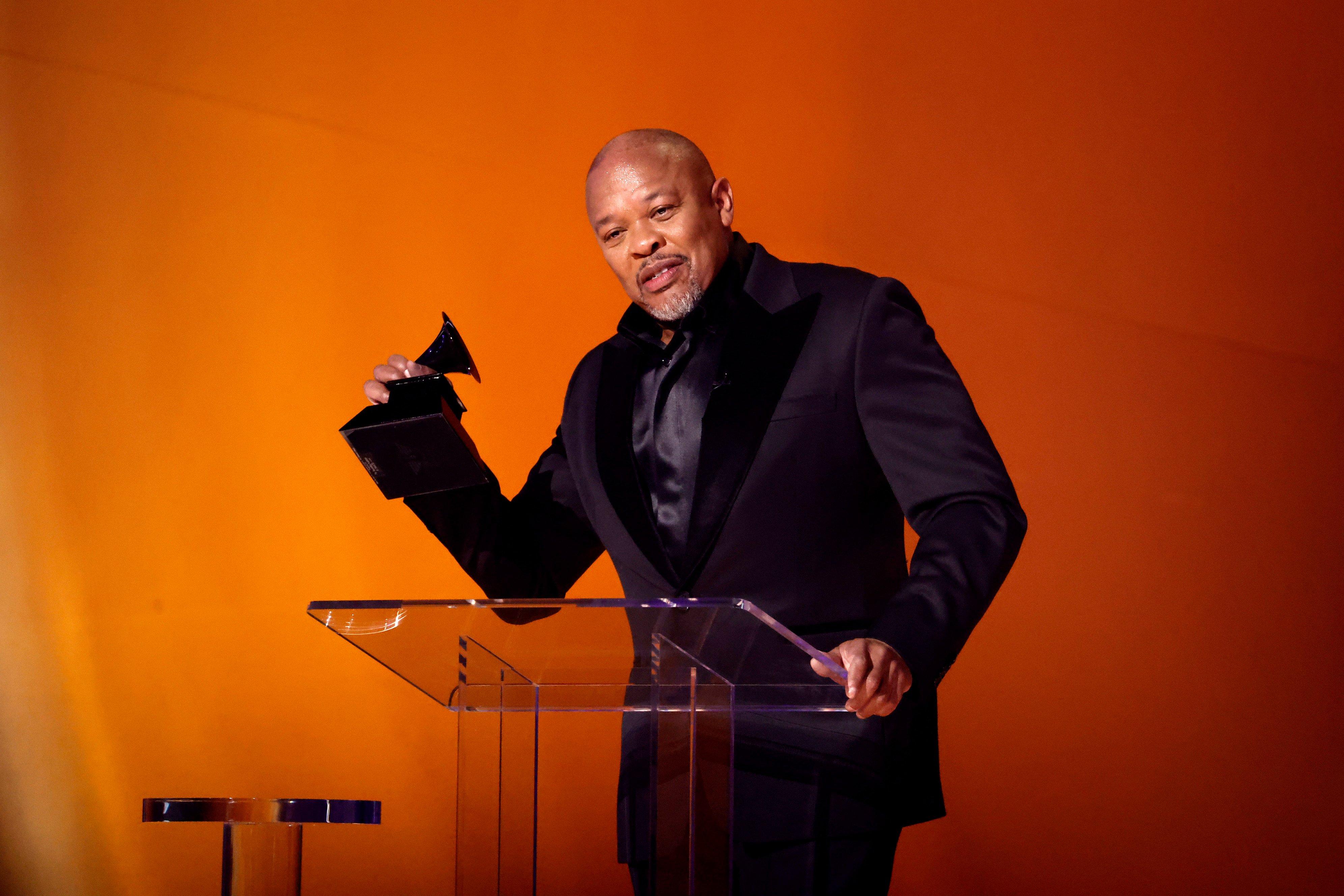
Dr. Dre at the 2023 GRAMMYs
Dr. Dre Is The Recipient Of The Inaugural Dr. Dre Global Impact Award At The 2023 GRAMMYs
At the 2023 GRAMMYs, seven-time GRAMMY winner Dr. Dre was the recipient of the inaugural Dr. Dre Global Impact Award.
GRAMMYs/Feb 6, 2023 - 04:09 am
At the 2023 GRAMMYs, seven-time GRAMMY winner Dr. Dre was the recipient of the inaugural Dr. Dre Global Impact Award for his multitude of achievements through his innovative, multi-decade career.
Dr. Dre was presented the award after a warm introduction by his friend and collaborator LL Cool J as well as a plethora of televised bona fides naming him a global icon.
In his acceptance speech, Dr. Dre offered his thanks to the Recording Academy and Black Music Collective for the prestigious honor in light of the Recording Academy's celebration of the 50th anniversary of hip-hop. He also gave a shoutout to "The Adventures of Grandmaster Flash on the Wheels of Steel" (1981) as a catalyst for his decades-long musical career that has defined West Coast hip hop.
“What I love about this award is that it uses my name to inspire the next generation of producers, artists, and entrepreneurs to reach for their greatness and demand that from everybody around you,” Dr. Dre said in his speech. “Never compromise your vision, at all. Pursue quality over quantity, and remember that everything is important. That is one of my mottos. Everything is important.”
Read More: How Hip-Hop Took Over The 2023 GRAMMYs, From The Golden Anniversary To 'God Did'
Check out the complete list of winners and nominees at the 2023 GRAMMYs.
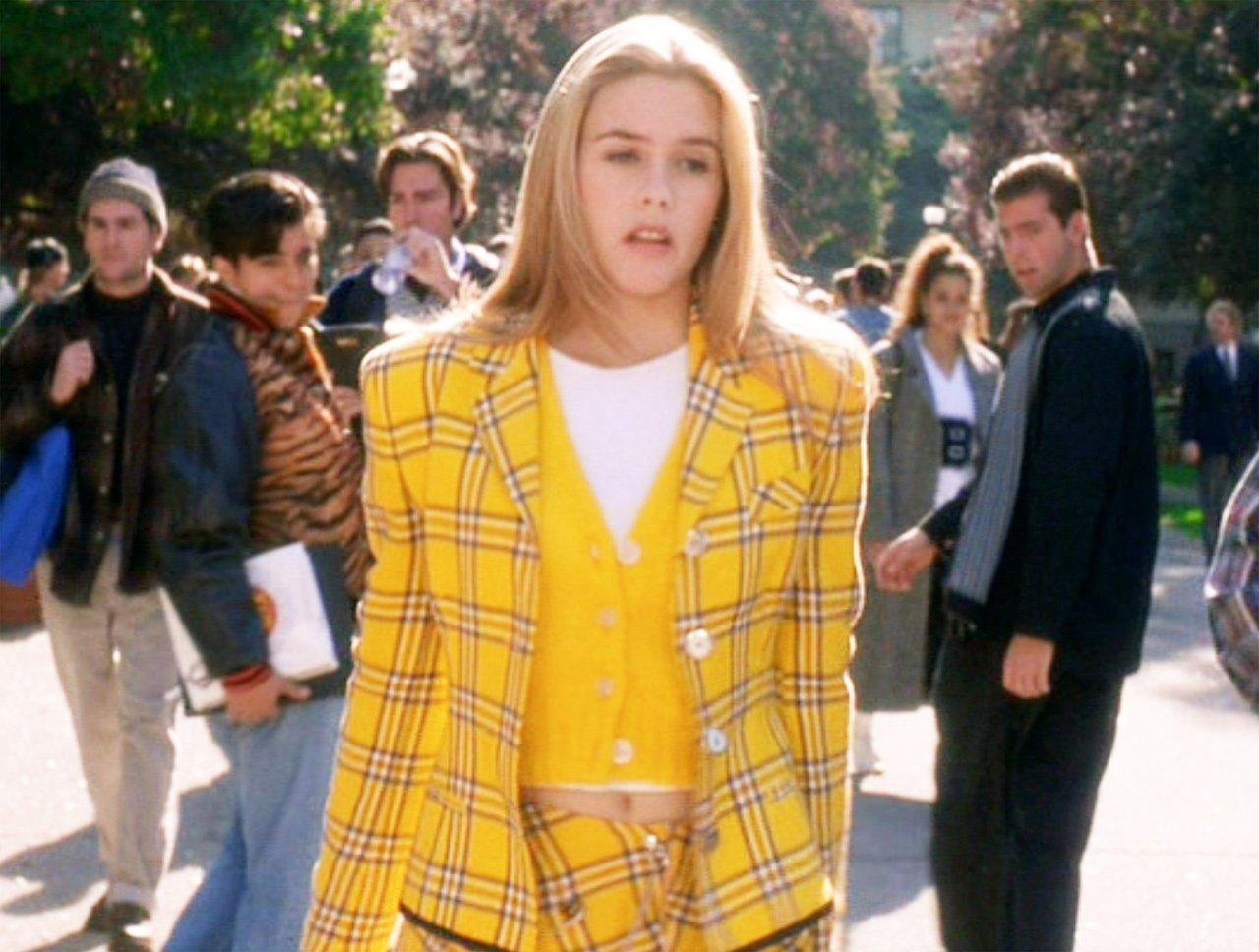
Alicia Silverstone as Cher Horowitz in 'Clueless'
Photo: CBS via Getty Images
How 1995 Became A Blockbuster Year For Movie Soundtracks
From 'Clueless' to 'Dangerous Minds,' soundtracks were big business in 1995, but the year's hits offered no clear formula for success.
GRAMMYs/Jul 17, 2025 - 03:41 pm
Mariah Carey, Alanis Morissette, 2Pac and the Smashing Pumpkins all had No. 1 albums in 1995. Despite such hallowed competition, four movie soundtracks also topped the Billboard 200 chart that year. Two were family-friendly Disney behemoths: Pocahontas and The Lion King, the latter still powering from the previous year. The other chart-topping soundtracks, for the Michelle Pfeiffer vehicle Dangerous Minds and the stoner comedy Friday, were no one's idea of kids' entertainment.
Beyond those No. 1 spots, 1995 marked a fascinating midpoint in a soundtrack-heavy decade. According to a New York Times report, a new release CD that year typically cost anywhere between $13-$19. At that price, a soundtrack needed major star power or an undeniable concept.
For movie studios and musicians alike, the format was rich with opportunity. However, there was no certain formula for success. Some soundtracks were guided by a single producer, while others drew on a grab bag of then-current songs. Several featured one clear hit that eclipsed the soundtrack, or occasionally the movie itself. For all their differing approaches, the soundtracks of 1995 epitomized the energy and audacity of the decade, while also establishing tropes for the next 30 years.
The Bodyguard: Original Soundtrack Album (1992) set the bar high for the decade. With a 20-week reign at No. 1, it remains the biggest-selling soundtrack of all time. Whitney Houston performed six songs on the album, including the titanic power ballad, "I Will Always Love You." (At the 1994 GRAMMYs, the track won the GRAMMY for Record Of The Year and Best Pop Vocal Performance, Female, while the soundtrack itself earned the Album Of The Year award.)
While The Bodyguard magnified their commercial potential, movie soundtracks like Quentin Tarantino's Reservoir Dogs (1992) and Pulp Fiction (1994) framed the medium as an artistic showpiece. Throughout the '90s, Tarantino and fellow indie auteurs Paul Thomas Anderson, Richard Linklater and Spike Lee made music a key character in their films. (The latter continues the trend on his latest movie, Da 5 Bloods, alongside six-time GRAMMY-winning composer and trumpeter Terence Blanchard.) Both instincts, for commercial returns and artistic validation, were well-represented in 1995.
Batman Forever (1995) epitomized the big-budget, mass-appeal mid-'90s soundtrack. Spanning PJ Harvey to Method Man, the 14-track set employed some tried-and-true tactics. First, only five songs on the track list appear in the movie itself, ushering in a rash of "Music From And Inspired By" soundtracks. Second, its featured artists largely contributed songs you couldn't find on other albums: According to Entertainment Weekly in 1995, U2 landed a reported $500,000 advance for "Hold Me, Thrill Me, Kiss Me, Kill Me," an offcut from the band's Zooropa album sessions.
Most significantly, Batman Forever backed a surprise smash in Seal's "Kiss From A Rose." Originally released as a single in 1994, the ballad blew up as the movie's "love theme." In its music video, Seal croons in the light of the Bat-Signal, intercut with not-very-romantic scenes from the film. Outshining U2, "Kiss From A Rose" reached No. 1 in 1995; one year later, the song won for Song Of The Year, Record Of The Year and Best Male Pop Vocal Performance at the 38th GRAMMY Awards.
Both Bad Boys and Dangerous Minds had their "Kiss From A Rose" equivalent in 1995. Diana King's reggae-fusion jam "Shy Guy" proved the breakout star of Bad Boys, transcending an R&B- and hip-hop-heavy soundtrack. Meanwhile, Coolio's "Gangsta's Paradise," featuring singer L.V., the key track on Dangerous Minds, became the top-selling single of 1995; it won the rapper his first, and only, GRAMMY for Best Rap Solo Performance the next year.
Other soundtracks from 1995 endure as perfect documents of their time and place. Clueless compiled a cast from '90s rock radio to accompany the adventures of Alicia Silverstone's Cher Horowitz and her high school clique: Counting Crows, Smoking Popes, Cracker and The Muffs. Coolio, the everywhere man of 1995, contributed "Rollin' With My Homies."
From the same city, but a world outside Cher's Beverly Hills bubble, came the Ice Cube- and Chris Tucker-starring Friday. Its soundtrack took a whistle-stop tour of West Coast hip-hop and G-funk via Ice Cube, Dr. Dre, Tha Alkaholiks and Mack 10. True to the era, the music video for Dr. Dre's "Keep Their Heads Ringin'" is half stoner comedy, half cheesy action movie.
Waiting To Exhale, the 1995 drama directed by Forest Whitaker, boasted a soundtrack with a clear author. Babyface, the R&B superproducer with 11 GRAMMY wins for his work with the likes of Boyz II Men and Toni Braxton, produced the set in full. Following Babyface's co-producer role on The Bodyguard soundtrack three years prior, Waiting To Exhale featured two new songs from the movie's star, Whitney Houston.
Houston's "Exhale (Shoop Shoop)" and "Why Does It Hurt So Bad" led a track list that also featured Aretha Franklin, TLC, Chaka Khan, Mary J. Blige and then-newcomer Brandy. A powerful showcase of Black women across generations, the soundtrack has prevailed as a standalone work, going on to receive multiple nominations, including Album Of The Year, at the 1997 GRAMMYs. In a crowded year for soundtracks, which also included Dinosaur Jr. founder Lou Barlow's work on Larry Clark's contentious Kids, Waiting To Exhale demonstrated the power of a singular vision.
For the most part, the soundtracks of 1995 tried a bit of everything. The previous year, The Crow: Original Motion Picture Soundtrack went all-in on covers, including Nine Inch Nails overhauling Joy Division's "Dead Souls." That trend continued into 1995, from Tori Amos covering R.E.M.'s "Losing My Religion" for Higher Learning to Evan Dando's update of Big Star's "The Ballad Of El Goodo" in Empire Records to Tom Jones gamely taking on Lenny Kravitz's "Are You Gonna Go My Way"' for The Jerky Boys movie. (Is there a more '90s sentence than that?)
Elsewhere, the Mortal Kombat soundtrack blended metal and industrial rock (Fear Factory, Gravity) with dance music (Utah Saints, Orbital). For every Dead Presidents, which zeroed in on '70s funk and soul, there was a Tank Girl, which threw together Bush, Björk, Veruca Salt and Ice-T to match the movie's manic tone.
Continuing from their '90s winning streak, grown-up soundtracks have proven surprisingly resilient. In an echo of Babyface's role on Waiting To Exhale, Kendrick Lamar oversaw production on 2018's chart-topping, multi-GRAMMY-nominated Black Panther: The Album, uniting an A-list cast under his creative direction. On the same front, Beyonce executive-produced and curated The Lion King: The Gift, the soundtrack album for the 2019 remake of the Disney classic, which spotlighted African and Afrobeats artists. In 2016, Taylor Swift and One Direction's Zayn recorded "I Don't Wanna Live Forever (Fifty Shades Darker)," pitching for the movie tie-in bump enjoyed in 1995 by Seal and Coolio. (The millennial stars stopped short of including scenes from the movie in their music video.)
Like Batman Forever back in the day, the DC Universe continues to put stock in soundtracks. Both *Suicide Squad *(2016) and its follow-up, Birds Of Prey (2020), are packed tight with to-the-minute pop, R&B and hip-hop. Each soundtrack reads like a who's who of the musical zeitgeist. In 1995, Mazzy Star, Brandy and U2 grouped up behind Batman. In 2016, Twenty One Pilots, Skrillex and Rick Ross powered the Suicide Squad. In 2020, everyone from Doja Cat to Halsey to YouTube star Maisie Peters form Team Harley Quinn.
As 1995 taught us time and time again, nothing traps a year in amber quite like a movie soundtrack.
Latest News & Exclusive Videos

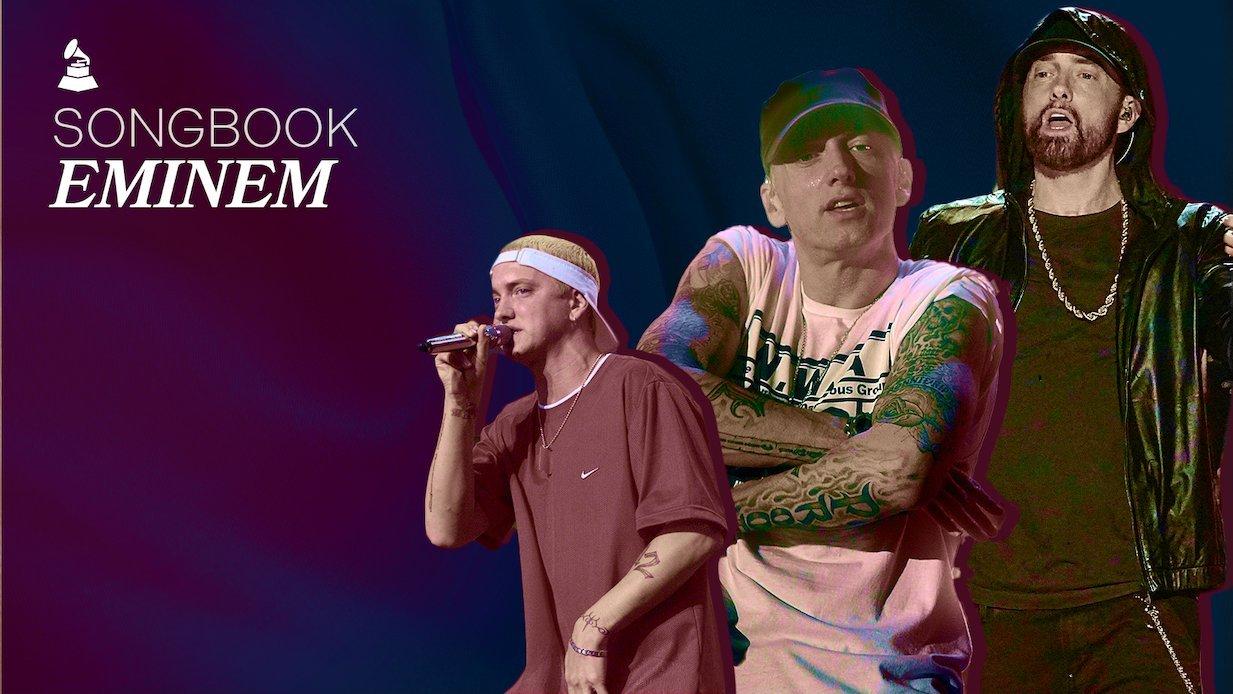
From left: Eminem in 2000, 2014 and 2022.
Photo: Eminem in KMazur/WireImage, Gary Miller/FilmMagic and Jeff Kravitz/FilmMagic
Songbook: A Deep Dive Into Eminem's Inimitable Career
As Eminem's seminal third album, 'The Marshall Mathers LP,' turns 25, revisit all of the 15-time GRAMMY-winning rapper's albums and how each one tells a different chapter of his story.
GRAMMYs/May 23, 2025 - 03:58 pm
Marshall Bruce Mathers III is a man of many names. But no matter what you call him — Marshall, Slim Shady, or the name by which he's best-known, Eminem — he's undoubtedly a household name. In fact, he's the top-selling hip-hop artist of all time, and in turn, one of the most popular artists of all time, in any genre.
He's no slouch when it comes to awards, either. Eminem has 15 GRAMMYs, and a total of 47 nominations. His latest album, The Death Of Slim Shady (Coup De Grâce), earned three nods at the 2025 GRAMMYs, including his eighth for Best Rap Album — a Category he's won six times.
This year marks the 25th anniversary of one of those GRAMMY-winning albums, The Marshall Mathers LP. After breaking through with his second set, 1999's The Slim Shady LP, Eminem's third album put the rapper into the dead center of early-2000s media and discourse. During that era, Eminem inspired protests, sold a now-unthinkable amount of albums, and inspired seemingly endless amounts of cultural criticism.
The Marshall Mathers LP also saw Eminem reacting to the expectations brought on by the massive success of The Slim Shady LP, beginning a chain of albums that react to the previous album that continues to this day.
Em's 12 studio albums are just one component of his sprawling discography — which, along with several deluxe or extended versions of his LPs, include two separate greatest hits collections, mixtapes, collaborative and group projects, and movie soundtracks. And that's not to mention guest features, unreleased tracks and other rarities.
There's much more to Eminem than what many consider his classic period, which started with The Slim Shady LP and ended right before the release of his fourth album, Encore, in November 2004. But it is that season — where a white rapper from Detroit teamed up with Dr. Dre and rocketed to the peak of popular culture — that is at the center of the rapper's discography and persona, and that he has in some ways been reckoning with since.
The best way to understand Eminem's catalog is to break it down into several eras: his pre-fame output, where he was not yet fully artistically formed; the aforementioned classic period; the fall and subsequent rise that followed; a look back at his classic period, but with mature insights and fresh eyes; and, over the past few years, a reaction to the changed world around him.
Now, dig into each one of these eras, and how they all contributed to making Eminem one of rap's greats.
The Pre-Fame Period (1996-1998)
Eminem's first album, 1996's Infinite, is a project he still seems slightly embarrassed by. It is, notably, not available anywhere online (at least not legally), and only the title track can be found on streaming services.
But it is worth hearing in order to understand Em's whole story. It was recorded before he came up with the Slim Shady persona, and sounds like what it is: the earnest work of a talented mid-'90s underground rapper with an AZ obsession and a chip on his shoulder.
The dense rhyming that would characterize his mature work is there, as are hints of the troublemaker personality that would soon take over the world. All of that is mixed in with the odd cringe-worthy punchline ("I'll run your brain around the block to jog your f—ing memory") and resentment towards local radio stations for ignoring him — stations that, only a few short years later, wouldn't stop playing his records.
That project is followed by the debut of his Slim Shady alter ego on the appropriately-named Slim Shady EP. This is where Em first finds his footing.
Slim Shady is the device Em used to say things you're not supposed to say (one song begins: "Slim Shady, brain-dead like Jim Brady"), while providing a complicated artistic and philosophic out. The character gave Em permission to be extreme, and also room to claw back some of what he was saying, and question whether he really meant it.
The intro of the Slim Shady EP goes into this head-on, featuring tropes Em would use throughout his career. The demonic-sounding Shady tells him, "You're nothing without me," in a skit that could appear verbatim on his most recent project, The Death of Slim Shady.
Musically, Eminem has discovered that evil sells. Letting his most deranged thoughts loose makes him sound far more energized than on Infinite, and already, even before meeting with Dre, he has a unique voice and style.
One other project happened during this era that's worth mentioning: a single with Royce Da 5'9", "Nuttin' to Do"/"Scary Movies," which they released in 1998 under the group name Bad Meets Evil. It is a stellar piece of work, and even at that early stage Shady and Royce have a notable chemistry — one it would take them over a decade to fully explore.
This was the time when Em could not miss. Pretty much everything he put out during this period was both artistically and commercially successful. Even seemingly throwaway efforts like his appearances on DJ Green Lantern's Invasion mixtapes (three volumes of which were released between 2002-2004) were both memorable and newsworthy.
All of this began with Em's discovery by Dr. Dre and the subsequent album The Slim Shady LP. Along with its influence on hip-hop, this album put its maker at the white-hot (pun intended) center of popular culture. Everything Eminem did or said got a reaction, which in turn inspired him to act out, which inspired more outrage. It was a cycle that ultimately led to burnout (more on that later), but for a few years it created something close to magic.
Read More: 4 Reasons Why Eminem's 'The Slim Shady LP' Is One Of The Most Influential Rap Records
The Marshall Mathers LP showed Em at his provocateur best, playing in the sandbox of his newfound stardom and the outrage it inspired. The record has, as of this writing, sold over 11 million copies in the US alone, which should give you some idea of its astronomical impact. Eminem was reckoning with the fact that he moved from overlooked and ignored to multi platinum seemingly overnight — and he didn't seem to be having an easy time of it. All of his grievances with fans, family and pretty much anything else he could think of were given the largest canvas imaginable.
Its follow-up, 2002's The Eminem Show, was just as provocative, but had a wider focus. Slim Shady's name was now being spoken in the halls of power, and he had some thoughts about that (and about America's post-9/11 terrorism obsession) — as well as some jokes about then-VP Dick Cheney's heart problems.
It wasn't just the music that made this season so pivotal for Eminem's career, either. He also starred in 8 Mile, a sort of fictionalized version of his battle rapping come-up, which proved that he was a big enough star that he could be at the center of a massively successful and compelling film. Naturally, he contributed a few songs to the film's soundtrack, including the one that arguably solidified him as a global superstar: the chart-topping and GRAMMY- and Oscar-winning "Lose Yourself."
He also, alongside Dre, discovered and signed 50 Cent, and produced and rapped on Fif's monster 2003 debut, Get Rich or Die Tryin'. There were other major features during this period as well: virtuosic raps on songs by Missy Elliott, Jay-Z, Xzibit, and more. He even appeared on one of the very few worthwhile posthumous Notorious B.I.G. songs, "Dead Wrong."
In addition, he somehow managed to find time during this period to release two albums from his group D12, both of which went platinum.
Eminem himself summed up this period the best. "Them last two albums didn't count," he rapped on Recovery's "Talkin' 2 Myself." "Encore I was on drugs, Relapse I was flushing 'em out."
The rise to megastardom began to take its toll. Em became trapped by the demands of celebrity, and by his own drug use. And it began to show in his work.
Encore contains a number of extremely juvenile songs with titles like "Ass Like That" and "Big Weenie" that would have been better left on the cutting room floor. There are also several tracks that simply retread concepts he had already done on his previous albums ("Mockingbird" is, for example, essentially "Hailie's Song" redux).
That said, there are also occasional great moments: a mature look at the costs of rap beef ("Like Toy Soldiers"), and a glance back at his childhood that, in its seriousness and thoughtfulness, avoids the exaggerated, comic tall tales of his first album ("Yellow Brick Road"). The deluxe version of Encore contains several of his best songs of this era, "We As Americans" and "Love You More," which were inexplicably left off the album proper.
Following Encore, fans would have to wait over four years for Eminem's next release — and the result, Relapse, was a divisive record. Many heard it as a largely sub-par collection of serial killer stories, celebrity insults, pill addiction stories, and bad accents (the last of which he would apologize for later). But it was produced almost in its entirety by Dr. Dre, which has won it no shortage of fans over the years. And those same serial killer tales would become influential on a new generation; it is, notably, an album that Tyler, the Creator has repeatedly and publicly championed.
Recovery marked, well, Eminem's recovery. It also set the template for a sound and a style he would use in future years. Sound-wise, there's a heavy rock and roll influence: drums, guitars and organ that wouldn't sound out of place on a classic rock station (not for nothing, Black Sabbath is sampled on "Changes"). Stylistically, he adds heavy amounts of puns to his repertoire for the first time, a device to which he would return again and again.
Read More: GRAMMY Rewind: Watch Eminem Show Love To Detroit And Rihanna During His Best Rap Album Win In 2011
The project aimed for hits, and it succeeded. Biggest of all, of course, was "Love the Way You Lie," a ballad with Rihanna on the hook that was No. 1 on the Billboard Hot 100 for seven weeks. This is yet another formula that Em would return to, as we shall see.
By the time the 2010s began, Eminem began to acknowledge his past. Two projects in a row, Hell: The Sequel and the suitably-named Marshall Mathers LP 2, looked back at different aspects of his career.
The former of these found him re-teaming with Royce Da 5'9" as Bad Meets Evil, this time for an EP-length project. The pairing hadn't lost a step since the late '90s, when they joined up for a fantastic single and a Slim Shady LP collaboration. Here, Em is less focused on his own story and mythology, and more concerned with simply rapping. He sounds happier and more free, more interested in wordplay than narrative.
Even his by-now-long running ultraviolent worldview is more palatable in tandem with Royce. It also sounds good to have Eminem rapping with someone else (his own records are notably short on guest verses). Hell: The Sequel is largely not thought of as a high point of Em's discography, perhaps because it wasn't released under his name. But in this writer's estimation, it's his best project outside of the classic period.
The sequel to the Marshall Mathers LP also looks back, but in a different way. Em is thinking about the people affected by the often-scattershot insults he hurled at the height of his fame, and treating at least some of them with nuance and empathy — including the frequent villain of many of his early tracks, his mother.
Sonically, the rock-influenced material is still there. And so is the Rihanna duet, repeated on "Monster." There is also perhaps the best-known and showiest example of Em's virtuoso rapping, "Rap God."
This idea of legacy — the album literally has a song by that title — continues on 2017's Revival. He's concerned with how hard it is to live up to the expectations set by his own past work. He also continues to look back on his early years, but this time with a clear-eyed view of how it affected his daughter, which he looks at on "Castle."
One other part of this record is a response to modern rap. Em has heard Migos and their then-ubiquitous triplet flow, and he's got some things to say about it. That will come to a head shortly.
Revival did not have a great critical or popular reception, which did not sit well with Eminem. Within eight months, he released Kamikaze, a record that was largely about that poor response to Revival. It is shorter and more focused than pretty much any other solo album he's ever released.
It's also perhaps the most bitter, which is no small feat. He was angry at the current state of rap and the media that covers it. The only relief comes with the song "Stepping Stone," in which he examines his culpability in the collapse of his group D12.
That same cycle of an album responding to the previous album's reviews continued on Music to be Murdered By, which literally begins with the couplet, "They said last album I sounded bitter/ Nah, I sound like a spitter." He even responded to specific reviews, with this 2.5 star Rolling Stone review of Kamikaze a particular target of ire. He seemed frustrated that neither the seriousness of Revival nor the lashing out of Kamikaze got the acclaim he felt they deserved.
That said, MTBMB does have some standout tracks. There's the moving "Leaving Heaven," where Em responds to his father's death in 2019. And there's "Darkness," which reimages the 2017 Las Vegas mass shooting. Plus there's "Yah Yah," an excellent collaborative display of rapping with Black Thought and, yet again, Royce.
Em's most recent project, The Death of Slim Shady, is also a reactionary album. But this time, it's not a response to the reception of a previous album — instead, it's a reaction to a changed social climate.
Eminem (or, more properly, his never-quite-buried alter ego) sounds like your angry uncle at Thanksgiving, or a "South Park" rerun. Gen Z, pronouns, the "PC police," opposition to fatphobia — all of these come under fire. One of the songs, "Brand New Dance," appears to be a slightly reworked 20-year-old leftover, which explains the track's Christopher Reeve jokes.
The album openly deals with the same question that plagued Slim Shady EP's opening: is the bottle-blonde enfant terrible Slim Shady all that Marshall Mathers has to offer the world? He doesn't appear to have come up with an answer yet. But the struggle to figure that out has led to a quarter-century of frequently compelling music, with the promise of a lot more to come.
Latest News & Exclusive Videos
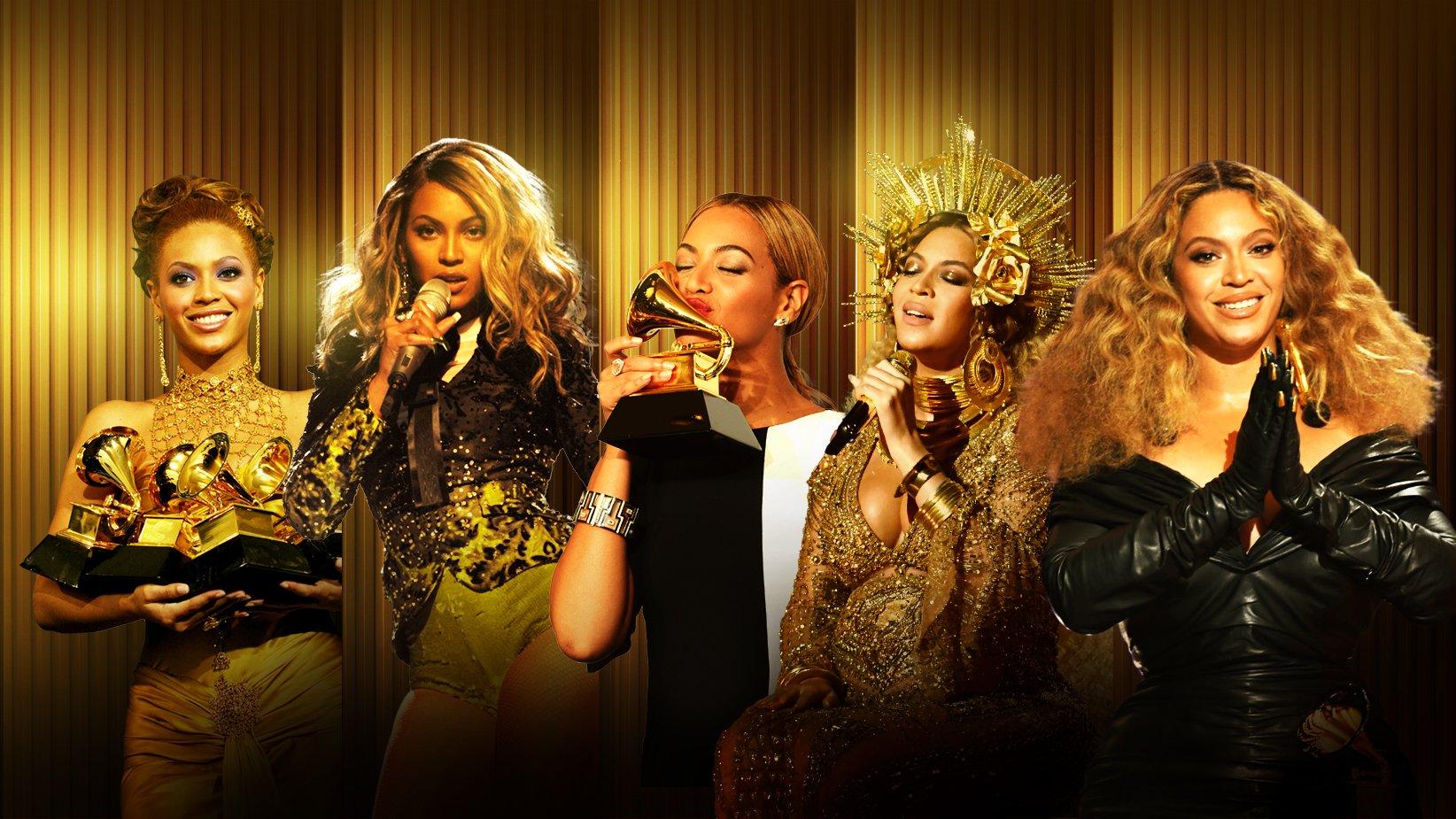
(L-R): Beyoncé in 2004, 2008, 2013, 2017, 2021
Photos {L-R): Frederick M. Brown/Getty Images, Kevin Mazur/WireImage, Jason Merritt/Getty Images, Jeff Kravitz/FilmMagic, Kevin Winter/Getty Images for The Recording Academy
A Timeline Of Beyoncé's GRAMMY Moments, From Her First Win With Destiny's Child To Making History With 'Cowboy Carter'
With three wins at the 2025 GRAMMYs, Beyoncé furthers her reign as the artist with the most GRAMMYs ever. To celebrate her latest feat, take a look at her record-breaking 22-year history at the GRAMMY Awards.
GRAMMYs/Feb 4, 2025 - 02:18 am
Editor's Note: This article was originally published on Jan. 31, 2023 and was updated on Feb. 3, 2025 to reflect her 2025 GRAMMY wins.
Two years after becoming the artist with the most GRAMMY wins at the 2023 GRAMMYs, Beyoncé made GRAMMY history again at the 2025 GRAMMYs. Along with winning her first golden gramophone for Album Of The Year for COWBOY CARTER, the now 35-time GRAMMY-winning star also became the first Black artist to win the GRAMMY for Best Country Album.
While the past few years may have spawned her most historic feats, Beyoncé has created an extensive array of GRAMMY moments. She has delivered epic live performances on her own and alongside icons like Prince and Tina Turner, and she's taken home six GRAMMYs in one night.
Starting from her first nominations with Destiny's Child in 2000, take a trip through Beyoncé's most memorable and impactful moments at Music's Biggest Night.
2000 — 42nd GRAMMY Awards
Nominations: Best R&B Performance By A Duo Or Group With Vocal and Best Rhythm & Blues Song ("Bills, Bills, Bills") with Destiny's Child
Beyoncé's first red carpet appearance at the GRAMMYs was with fellow Destiny's Child members Kelly Rowland, Michelle Williams and Farrah Franklin (who was only part of the group for six months). The iteration of the group that was there that day was not the same group that received two nominations for "Bills, Bills, Bills" — that distinction goes to Beyoncé, Rowland, LeToya Luckett, and LaTavia Roberson.
Beyoncé, Luckett and Rowland co-wrote the track with producer Kevin "She'kspeare" Briggs and Xscape singer Kandi Burruss, the latter of whom coincidentally won the GRAMMY for Best Rhythm & Blues Song that year for co-writing TLC's "No Scrubs" with Tameka "Tiny" Cottle.
2001 — 43rd GRAMMY Awards
Photo: Steve Granitz / Contributor / Getty Images
Wins: Best R&B Song ("Say My Name"), Best R&B Performance By A Duo or Group With Vocal ("Say My Name")
Nominations: Record Of The Year and Song Of The Year ("Say My Name"), Best Song Written For A Motion Picture, Television Or Other Visual Media ("Independent Women Part I" From Charlie's Angels)
The first GRAMMY red carpet as a trio with Roland and Williams, the group wore matching silky gowns on the red carpet and "Survivor"-era green outfits backstage, all designed by Beyoncé's mother, Tina Knowles.
Destiny's Child took home their first GRAMMYs that night, for Best R&B Performance By A Duo or Group With Vocal and Best R&B Song for "Say My Name," which was also nominated for Record Of The Year and Song Of The Year.
Beyoncé also earned a Best Song Written For A Motion Picture, Television Or Other Visual Media nomination for Destiny's Child's contribution to the 2000 film Charlie's Angels, "Independent Women Part I," which she co-wrote.
2002 — 44th GRAMMY Awards
Wins: Best R&B Performance By A Duo Or Group With Vocal ("Survivor")
Nominations: Best R&B Album (Survivor)
Performance: "Quisiera Ser" with Alejandro Sanz
Destiny's Child's first performance at the GRAMMYs was to duet with Latin star Alejandro Sanz on "Quisiera Ser." They provided supporting vocals and Beyoncé added some English lyrics to his Spanish song.
The group's own international hit "Survivor," an anthem about thriving as the trio, won a GRAMMY for Best R&B Performance By A Duo Or Group With Vocal, and the Survivor album was nominated for Best R&B Album.
2004 — 46th GRAMMY Awards
Wins: Best Female R&B Vocal Performance ("Dangerously In Love 2"), Best R&B Performance By A Duo Or Group With Vocals ("The Closer I Get To You") with Luther Vandross, Best R&B Song and Best Rap/Sung Collaboration ("Crazy In Love"), Best Contemporary R&B Album (Dangerously In Love)
Nominations: Record Of The Year ("Crazy In Love")
Performance: "Purple Rain," "Baby I'm a Star," "Let's Go Crazy" and "Crazy In Love" with Prince
After dazzling in a gold Tina Knowles dress on the red carpet, Beyoncé opened the show alongside Prince with a medley of his hits "Purple Rain," "Let's Go Crazy" and "Baby I'm a Star," with a dash of her own "Crazy In Love."
She accepted her first five GRAMMYs as a solo artist, including Best Female R&B Vocal Performance for "Dangerously In Love 2" — which she also performed — Best R&B Performance By A Duo Or Group With Vocals for "The Closer I Get To You" with Luther Vandross, Best Contemporary R&B Album for Dangerously In Love and two wins for "Crazy In Love" (Best R&B Song and Best Rap/Sung Collaboration).
2005 — 47th GRAMMY Awards
Nomination: Best R&B Performance by a Duo or Group With Vocals ("Lose My Breath")
Destiny's Child celebrated another global smash earning a GRAMMY nomination with "Lose My Breath." The lead single from Destiny Fulfilled — their final studio album — received a nomination for Best R&B Performance by a Duo or Group With Vocals.
Beyoncé and Rowland co-produced "Lose My Breath" with hitmakers Rodney Jerkins (who also helmed "Say My Name" and "Cater 2 U" from Destiny Fulfilled), and Sean Garrett, who later co-produced Bey solo singles including "Check On It," "Get Me Bodied," "Ring The Alarm" and "Upgrade U" with Swizz Beatz.
2006 — 48th GRAMMY Awards
Win: Best R&B Performance by a Duo or Group With Vocals ("So Amazing") with Stevie Wonder
Nominations: Best Contemporary R&B Album (Destiny Fulfilled), Best Female R&B Vocal Performance ("Wishing On A Star"), Best R&B Performance By A Duo Or Group With Vocals ("Cater 2 U"), Best R&B Song ("Cater 2 U"), Best Rap/Sung Collaboration ("Soldier")
Beyoncé and Stevie Wonder won a GRAMMY for Best R&B Performance by a Duo or Group With Vocals for "So Amazing," a cover of the song Luther Vandross wrote for Dionne Warwick in 1983 and recorded himself three years later. Bey also received a solo nomination for her cover of Rose Royce's "Wishing On A Star" on her Live at Wembley album.
Meanwhile, Destiny's Child closed out their time as a group with four more nominations, bringing their career total to 14. Although the group had announced in June 2005 that they would be disbanding to pursue solo ventures, they assembled on the GRAMMY stage one last time — igniting eruptive applause — to present the golden gramophone for Song Of The Year, which went to U2 for "Sometimes You Can't Make It on Your Own."
2007 — 49th GRAMMY Awards
Win: Best Contemporary R&B Album (B'Day)
Nominations: Best Female R&B Vocal Performance ("Ring The Alarm"), Best R&B Song and Best Rap/Sung Collaboration ("Deja Vu")
Performance: "Listen"
Beyoncé performed "Listen," her original song that she also sang as the lead role of Deena Jones in the film adaptation of the Broadway musical Dreamgirls.
She went home a GRAMMY winner again that night, as her second album, B'Day, was victorious as Best Contemporary R&B Album. Two of the album's singles earned nominations as well: "Ring The Alarm" for Best Female R&B Vocal Performance and "Deja Vu" for Best Rap/Sung Collaboration.
2008 — 50th GRAMMY Awards
Wins: Best Compilation Soundtrack (Dreamgirls)
Nominations: Record Of The Year ("Irreplaceable"), Best Pop Collaboration ("Beautiful Liar") with Shakira
Performance: "Proud Mary" with Tina Turner
Continuing her streak of performing live with legends at the GRAMMYs, Beyoncé joined Tina Turner onstage to sing a fierce rendition of "Proud Mary" and achieve one of her personal bucket-list moments.
"She's my hero and my icon," she said of Turner at an after party. "It was crazy. I went in the room [after] and I just bawled because I couldn't believe it.”
Dreamgirls won Best Compilation Soundtrack that night, while "Irreplaceable" was nominated for Record Of The Year and "Beautiful Liar," her collaboration with Colombian star Shakira from B'Day, received a nomination for Best Pop Collaboration.
2009 — 51st GRAMMY Awards
Nomination: Best Female R&B Vocal Performance ("Me, Myself & I")
A top 10 hit that was co-produced by Beyoncé and Scott Storch, "Me, Myself & I" touts the benefits of self-care, of being one's "own best friend" and not taking the blame in the face of a partner's infidelity. The relatable song was nominated for Best Female R&B Vocal Performance.
2010 — 52nd GRAMMY Awards
Loading...
Wins: Song Of The Year, Best R&B Song and Best Female R&B Vocal Performance ("Single Ladies (Put A Ring On It)"), Best Female Pop Vocal Performance ("Halo"), Best Contemporary R&B Album (I Am… Sasha Fierce), Best Traditional R&B Vocal Performance ("At Last" from Cadillac Records: Music From The Motion Picture)
Nominations: Record Of The Year ("Halo"), Album Of The Year (I Am... Sasha Fierce), Best Rap/Sung Collaboration ("Ego"), Best Song Written For Motion Picture, Television Or Other Visual Media ("Once In A Lifetime" from Cadillac Records: Music From The Motion Picture)
Performance: "If I Were a Boy"
Backed by an army of male dancers, Beyoncé's live performance of "If I Were a Boy" included an even more unexpected moment. At the song's climax, she switched to the chorus from "You Oughta Know" by Alanis Morrissette, the 1996 GRAMMY winner for Best Rock Song and Best Female Rock Vocal Performance.
Bey won an impressive six GRAMMYs in 2010, including three for "Single Ladies (Put A Ring On It)." She also earned a nomination for her portrayal of Etta James in the 2008 film Cadillac Records, as Beyoncé's version of "At Last" won Best Traditional R&B Vocal Performance.
2011 — 53rd GRAMMY Awards
Nominations: Best Female Pop Vocal Performance ("Halo (Live)"), Album Of The Year (The Fame Monster), Best Pop Collaboration With Vocals ("Telephone") with Lady Gaga
Several of Beyoncé's GRAMMY nominations have been for live songs as well as songs with other artists. At the 2011 GRAMMYs, she celebrated nominations for both: "Halo (Live)," which appears on the live album I Am… Yours: An Intimate Performance at Wynn Las Vegas, was nominated for Best Female Pop Vocal Performance, and her collaboration with Lady Gaga, "Telephone," earned Beyoncé two nominations.
2012 — 54th GRAMMY Awards
Nominations: Best Rap/Sung Collaboration ("Party") and Best Longform Music Video (I Am… World Tour)
"Party," a duet with André 3000 from OutKast, is a highlight from Beyoncé's 4 album for its infectious chorus and the sheer rarity of scoring a verse from Three Stacks. The GRAMMYs recognized this dream team with a nomination for Best Rap/Sung Collaboration. Bey also received her first-ever nomination in the Best Longform Music Video category for I Am…World Tour. The film includes her singing "If I Were a Boy" with a few measures of "You Oughta Know," just like she did in her 2010 GRAMMYs performance.
2013 — 55th GRAMMY Awards
Win: Best Traditional R&B Performance ("Love On Top")
Beyoncé's 17th GRAMMY win occurred in the Premiere Ceremony for the 2013 GRAMMYs, which she and husband Jay-Z did not attend. So when Jimmy Jam announced that Beyoncé had won Best Traditional R&B Performance for "Love On Top," he jokingly offered to drop off the GRAMMY along with the awards Jay-Z won at the ceremony.
"They live in the same place, it's all good," Jam smiled. "Economical!"
2014 — 56th GRAMMY Awards
Photo: Frederic J. Brown / Getty Images
Nomination: Best Rap/Sung Collaboration ("Part II (On The Run)") with Jay-Z
Performance: "Drunk In Love" with Jay-Z
Smoke billowed across the stage as Beyoncé opened the 2014 GRAMMYs with an intimate live performance of "Drunk In Love," joined by her husband Jay-Z for what may just be the sexiest performance of their careers.
Although "Drunk In Love" wasn't nominated until the following year, the couple did celebrate a nomination in 2014 for "Part II (On The Run)," from Jay's album Magna Carta Holy Grail. Backstage, Bey's long white Michael Costello gown got cameras clicking and slayed style watchers, a standout among all of her GRAMMY fits.
2015 — 57th GRAMMY Awards
Wins: Best R&B Performance ("Drunk In Love"), Best R&B Song ("Drunk In Love"), Best Surround Sound Album (Beyoncé)
Nominations: Album Of The Year (Beyoncé), Best Contemporary Album (Beyoncé), Best Music Film (Beyoncé and Jay-Z: On The Run Tour)
Performance: "Take My Hand, Precious Lord"
After the previous year's racy performance of "Drunk In Love" that opened the show, Beyoncé took a markedly more pious approach with her musical number in 2015. Backed by an all-male choir, she sang "Take My Hand, Precious Lord," a gospel classic written by Thomas A. Dorsey in 1932. In a now-deleted behind-the-scenes video posted on her website, she explained that the performance was meant as a statement around police brutality and civil unrest in the wake of the murders of Eric Garner and Michael Brown, among others.
"My grandparents marched with Dr. King, and my father was part of the first generation of Black men that attended an all-white school," Beyoncé said. "My father has grown up with a lot of trauma from those experiences. I feel like now I can sing for his pain, I can sing for my grandparents' pain. I can sing for some of the families that have lost their sons."
During her three wins, fans saw her show some rare PDA with Jay-Z. The pair shared a kiss when they won Best R&B Performance for "Drunk In Love."
Two days after the 2015 GRAMMYs, Beyoncé also took part in a star-studded salute to Stevie Wonder for the CBS special "Stevie Wonder: Songs in the Key of Life — An All-Star Grammy Salute," which aired on Feb. 15, 2015. She sang a medley of "Fingertips," "Master Blaster" and "Higher Ground" alongside Ed Sheeran and Gary Clark Jr.
2016 — 58th GRAMMY Awards
In a year when she didn't have eligible work in the running, Beyoncé still made international waves when she appeared at the GRAMMYs in a white wedding-like gown. She wasn't there to get married, though — she presented the award for Record Of The Year to Bruno Mars for his hit song "Uptown Funk."
"Let's go, Beyoncé, let's do it!" Mars playfully yelled from the audience, just before she said his name.
2017 — 59th GRAMMY Awards
Wins: Best Contemporary Urban Album (Lemonade), Best Music Video ("Formation")
Nominations: Album Of The Year (Lemonade), Best Music Film (Lemonade), Record Of The Year ("Formation"), Song Of The Year ("Formation"), Best Pop Solo Performance ("Hold Up"), Best Rock Performance ("Don't Hurt Yourself"), Best Rap/Sung Performance ("Freedom")
Performance: "Love Drought" and "Sandcastles"
Beyoncé dressed like a goddess while pregnant with twins Rumi and Sir Carter to perform "Love Drought" and "Sandcastles," songs from her multi-nominated (and GRAMMY-winning) album and music film Lemonade. Her kids were at the forefront of her mind during her acceptance speech for Best Contemporary Urban Album.
"It's important to me to show images to my children that reflect their beauty so they can grow up in a world where they look in the mirror — first through their own families, as well as the news, the Super Bowl, the Olympics, the White House and the GRAMMYs — and see themselves," she said.
Later, in an unexpected — and instantly viral — moment, Adele dedicated her acceptance speech for Album Of The Year to effusively praising Beyoncé and the Lemonade album, which was also nominated in the category.
"You are our light!" Adele exclaimed, calling Lemonade her album of the year.
2018 — 60th GRAMMY Awards
Nomination: Best Rap/Sung Performance ("Family Feud")
It was all in the family when Beyoncé, Jay-Z and their then 6-year-old daughter Blue Ivy Carter sat together at the GRAMMYs in 2018 — though Blue's parents were ironically nominated for a song called "Family Feud" from Jay's 4:44 album. In a clip that went viral, a camera caught Blue seemingly motioning for them to stop clapping. The world fell in love with her commanding presence at that very moment.
2019 — 61st GRAMMY Awards
Win: Best Urban Contemporary Album (Everything Is Love)
Nominations: Best R&B Performance ("Summer"), Best Music Video ("Apes***")
Beyoncé's 2019 win and nominations were given for her collaborations with Jay-Z in their Everything Is Love album. The Carters won Best Urban Contemporary Album with the nine-song album, which they co-produced with Leon Michels and Cool & Dre. They also were nominated for Best R&B Performance for "Summer" as well as Best Music Video for "Apes***," a bold piece which they filmed in front of the Mona Lisa, Venus de Milo, Great Sphinx of Tanis and other seminal works displayed in Paris' Louvre.
2020 — 62nd GRAMMY Awards
Win: Best Music Film (Homecoming)
Nominations: Best Pop Solo Performance ("Spirit"), Best Song Written for Visual Media ("Spirit"), Best Pop Vocal Album (The Lion King: The Gift)
Homecoming offers an intimate look at the best onstage and behind-the-scenes moments from Beyoncé's massive headline sets at Coachella in 2018. Performed over two consecutive weekends, her show at the Southern California desert festival pays homage to the great Southern bands from HBCUs (Historically Black Colleges and Universities). There's also a brief but thrilling Destiny's Child reunion, as well as plenty of Easter eggs for Southern rap fans in the form of instrumental and lyrical riffs and snippets weaved into her hits.
Two additional nominations recognized her work for The Lion King: The Gift. She voiced Nala in the film.
2021 — 63rd GRAMMY Awards
Wins: Best R&B Performance ("Black Parade"), Best Music Video ("Brown Skin Girl"), Best Rap Performance ("Savage") and Best Rap Song ("Savage") with Megan Thee Stallion
Nominations: Record Of The Year ("Savage") and Record Of The Year ("Savage") with Megan Thee Stallion, Best R&B Song and Song Of The Year ("Black Parade"), Best Music Film (Black Is King)
Beyoncé's Best R&B Performance win made her the performing artist with the most career GRAMMY wins in history. (She's tied with producer Quincy Jones, and Georg Solti, who has more wins, was a conductor and not a performer.) She also became the woman with the most GRAMMY wins that night.
During her acceptance speech, she shared that she's worked hard since she was 9 years old and congratulated her daughter — also 9 at the time — for scoring her first GRAMMY. Blue stars in the video for "Brown Skin Girl," the Best Music Video winner.
"It has been such a difficult time so I wanted to uplift, encourage, and celebrate all of the beautiful Black queens and kings that continue to inspire me and inspire the whole world," Beyoncé added about her Black Is King project.
Bey also appeared onstage with fellow Houstonian Megan Thee Stallion, who couldn't contain her excitement about sharing the stage — and two GRAMMYs — with her hometown hero. "I love her work ethic, I love the way she is, I love the way she carry herself," Megan said. "My momma will always be like, 'Megan, what would Beyoncé do?' And I'm always like, 'You know what? What would Beyoncé do, but let me make it a little ratchet.'"
2023 — 65th GRAMMY Awards
Loading...
Wins: Best Dance/Electronic Music Album (RENAISSANCE), Best R&B Song ("CUFF IT"), Best Traditional R&B Performance ("PLASTIC OFF THE SOFA"), Best Dance/Electronic Music Recording ("BREAK MY SOUL")
Nominations: Album Of The Year (RENAISSANCE), Record Of The Year ("BREAK MY SOUL"), Song Of The Year ("BREAK MY SOUL"), Best Song Written For Visual Media ("Be Alive" from King Richard), Best R&B Performance ("VIRGO’S GROOVE")
Beyoncé made even more GRAMMY history in 2023 — and it was her biggest record yet.
She needed four wins out of her nine nominations to become the artist with the most GRAMMYs of all time with 32. Going into the ceremony, she had two wins down (Best Traditional R&B Performance and Best Dance/Electronic Music Recording), and she was, according to host Trevor Noah, "stuck in traffic" upon winning her third golden gramophone for Best R&B Song. But she made it just in time for her history-making moment, taking deep breaths as she took the stage and noting that she was "trying to just receive this night."
Throughout her speech, Beyoncé first thanked God and her late Uncle Jonny — her main inspiration for RENAISSANCE — then went on to thank her parents as well as Jay-Z and their three kids. She poignantly ended with a tribute to the trailblazers who opened the door for her record-breaking album.
"I’d like to thank the queer community for your love and for inventing this genre," she said. "God bless you, thank you so much to the GRAMMYs."
2025 — 67th GRAMMY Awards
Loading...
Wins: Album Of The Year (COWBOY CARTER), Best Country Album (COWBOY CARTER), Best Country Duo/Group Performance ("II MOST WANTED" with Miley Cyrus)
Nominations: Record Of The Year ("TEXAS HOLD 'EM"), Song Of The Year ("TEXAS HOLD 'EM"), Best Pop Solo Performance ("BODYGUARD"), Best Pop Duo/Group Performance ("LEVII'S JEANS" with Post Malone), Best Melodic Rap Performance ("SPAGHETTII" with Linda Martell and Shaboozey), Best Country Solo Performance ("16 CARRIAGES"), Best Country Song ("TEXAS HOLD 'EM"), Best Americana Performance ("YA YA")
With 11 nominations, Beyoncé wasn't just the most-nominated artist at the 2025 GRAMMYs — she became the artist with the most GRAMMY nominations ever.
While the noms helped her break yet another GRAMMY record, she continued to add to her ever-growing GRAMMY legacy when she won three more golden gramophones that night. Along with furthering her lead as the artist with the most GRAMMYs (from 32 to 35), Beyoncé also achieved another GRAMMY first with one of her three wins: the first Black artist to win Best Country Album.
In her heartfelt speech, Beyoncé admitted that she "really was not expecting" to win in the Best Country Album Category. "I think sometimes genre is a cold word to keep us in our place as artists, and I just want to encourage people to do what they're passionate about, and to stay persistent," she said, thanking God, her family, her collaborators, and "all of the incredible country artists that accepted this album."
COWBOY CARTER also won Beyoncé two more GRAMMYs, including perhaps one of the most exciting of her career for both Queen Bey and her loyal Beyhive: her first Album Of The Year victory. With five nominations in the Category prior to the 2025 GRAMMYs, the star couldn't help but acknowledge her long-awaited feat in her speech. "I just feel very full and very honored — it's been many, many years," she said. To close out another historic GRAMMY night, she left viewers with an uplifting message: "I hope we just keep pushing forward, opening doors."
Enter The World Of Beyoncé

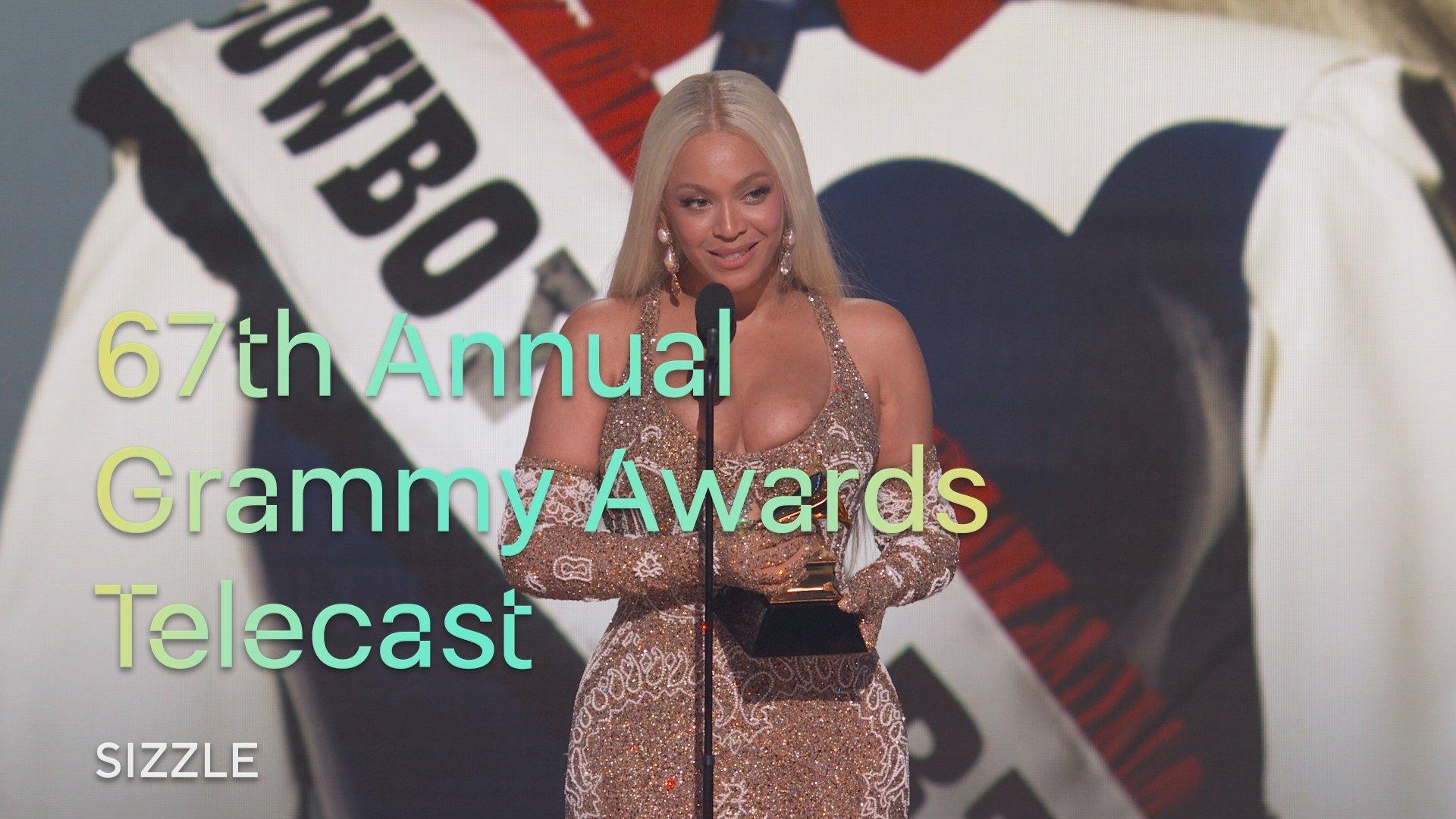
New Music Friday: Listen To Releases From Snoop Dogg & Dr. Dre, Stray Kids, GloRilla & Kehlani And More
As the holidays draw closer, several stars delivered gifts early. Check out new songs from Offset, Will Smith & Joyner Lucas, and more.
GRAMMYs/Dec 13, 2024 - 05:01 pm
Somehow, we're already halfway through December. And as Christmas draws closer, superstars and rising artists alike are putting the final touches on their musical stocking stuffers.
Snoop Dogg and Dr. Dre mark the 30th anniversary of Doggystyle by delivering new album Missionary, Mario returns with his sixth full-length Glad You Came, DMX gets a second posthumous release with the heavenward Let Us Pray: Chapter X, and the soundtrack to Disney's Mufasa: The Lion King arrives with songs by Lin-Manuel Miranda and Lebo M.
Plus, a dearth of live albums drop including the National's Rome, the Cure's Songs Of A Lost World + Songs Of A Live World: Troxy London MMXXIV, and FLETCHER's THE ANTIDOTE: FLETCHER LIVE.
There's plenty to celebrate for the holiday season, too: while she may not generally acknowledge the passage of time, Mariah Carey reasserts her ageless title as the Queen of Christmas by gifting the 30th anniversary edition of her landmark holiday album Merry Christmas, complete with remastered live renditions recorded at the Cathedral of St. John the Divine.
Below, press play on even more new releases, including singles by Offset, Tank And The Bangas and Graham Barham as well as exciting new projects from Stray Kids and DETO BLACK.
More than 30 years after their last collaborative project, rap's iconic duo Snoop Dogg and Dr. Dre finally gave us the next episode.
Missionary marks their first full-length team-up since Snoop's 1993 classic Doggystyle, with Dre handling production on all 16 tracks. But they're far from the only collaborators on the album; Snoop recruits the likes of 50 Cent and Eminem ("Gunz & Smoke"), Sting ("Another Part of Me") and Jhene Aiko ("Gorgeous") among several others. No matter who is on the track, Missionary is proof that the legendary pair's musical chemistry is alive and well.
"We [still] in love with what we do. I'm peaking right now and Dr. Dre see that," Snoop said, according to a press release. As Dre added in a recent interview, "We're better together… It's a love and respect. We can get in there and just have fun being creative and just experiment."
Months after teasing the single on Instagram Live, Offset has finally released his new solo cut "Swing My Way."
Excess is on full display in the Kid Art-helmed visual for the track, with Offset bragging about private planes, luxury goods and getting "unlimited checks like I'm Capital One" in a garage filled with Tesla Cybertrucks and showing off his collection of blinged-out watches and exotic animals.
A sinister undercurrent of violence also runs through the video, from model Anok Yai tracing her eyeliner along the edge of a knife to flashes of a snake coiled in the grass, ready to strike.
Stray Kids — "HOP"
Nearly seven years after their unofficial EP Mixtape, Stray Kids are releasing their very first official mixtape, HOP.
Just hours after hitting the stage to perform "Chk Chk Boom" and "Jjam" at the 2024 Billboard Music Awards, the K-pop idols unleashed the 12-track collection, which includes lead single "Walkin on Water" and a long-teased collab with Epik High leader TABLO in B-side "U."
Each member gets a solo cut (with co-writing credit!) as well, from I.N's echoing "HALLUCINATION" to HAN's romantic, guitar-charged "Hold my hand."
In the spirit of the season, GloRilla and Kehlani team up for an original holiday cut, "Xmas Time."
The Blue Water Road songstress ably handles a warm and cheerful hook ("Nothing compares to the love at Christmas time") in between nostalgic verses.
Nearly two minutes in, the beat drops and gives Glo free rein to drive the sleigh into gleefully naughty territory as she declares, "Come sit on my lap/ I ain't Santa, but I stay givin' it" and "I'm the biggest helper Santa ever had/ He can get whatever that he want, he got good head/ Certified trick, I get it from my dad!"
Read More: Christmas Music 2024 Playlist: Listen To 50 New Songs From Pentatonix, Ed Sheeran, LISA & More
Will Smith is back on his musical journey. On "TANTRUM," his new collab with Joyner Lucas, the four-time GRAMMY winner is out to heal his inner child — or, at the very least, let little Will run wild for the space of three minutes.
"I'm 'bout to face all the s— I been running from/ You might relate to the places I'm coming from/ I been through trauma I thought I'd recovered from/ I got regrets, you heard about some of them," the Fresh Prince raps, possibly making a veiled reference to the Oscars slap heard 'round the world.
The song's music video leans into the child-focused theme with animation by Cartuna Cartoon that sends slick 3D renderings of Smith and Lucas through a series of dangerous obstacles, from dodging lightning in the middle of a storm at sea to falling through a futuristic cityscape a la Miles Morales.
It seems Beach Weather are celebrating Chrismukkah this year with their new single "Seth Cohen."
Taking its name from Adam Brody's beloved character on "The O.C.," the "Sex, Drugs, Etc." rockers put all the quirks, foibles and flaws that made Seth Cohen such a lovably awkward poster boy of 2000s youth culture on a pedestal, with frontman Nick Santino warbling, "I'm buried in the corner, ever lonely/ Wishing I could be Seth Cohen/ You're up all night with the king of self-loathing/ I make self-deprecation look so boring."
Tank Ball is fed up. Just look to Tank And The Bangas' new single "This Black" for proof, where the singer kicks things off by unapologetically pronouncing, "Uh, this Black girl got a attitude/ This Black girl got a defense mechanism, too."
The verses on the five-minute opus are presented as spoken word stanzas, with the group's leader airing her well-justified grievances and frustrations with society, men and a system crafted to continuously fail Black girls like her — while also powerfully expressing both her singular humanity and the myriad ways in which Black women everywhere "[pull] up the entire community by the strap of her bra."
On his latest single, Graham Barham is caught in the push and pull of a tempestuous, drama-filled relationship, his fiery love interest unafraid to throw him out of the house before reeling him back in when he's three blocks away.
The nonstop drama has not only left the country newcomer's head swirling, it's pushed him belly up to the nearest watering hole to cope, as he bemoans, "You don't know if I'm a locked screen door/ Or the lock screen on your phone/ I'll be at the bar killing Casamigos/ Racking up a shot count, Quentin Tarantino/ Baby, you won't let it be over/ So you won't let me stay, you won't let me stay/ Sober."
DETO BLACK — 'Nollypop'
In the three years since her debut EP, 2021's Yung Everything, DETO BLACK has been firing on all cylinders, making a name for herself not only as a poster child for Nigeria's alté movement but as a boundary-pushing model, fashionista and dual degree-holding chartered accountant, to boot.
On her sophomore EP, Nollypop, the budding Lagos-born multi-hyphenate taps Sadboi for "D - Ride" — which name-drops it-girl model Gabbriette Bechtel — and teams with Chi for the side-eye-flinging kiss-off "It's a No from Me." Other highlights include opener "Lady" and the deliciously cocky "Jump."