
Photo: Sonja Flemming/CBS via Getty Images
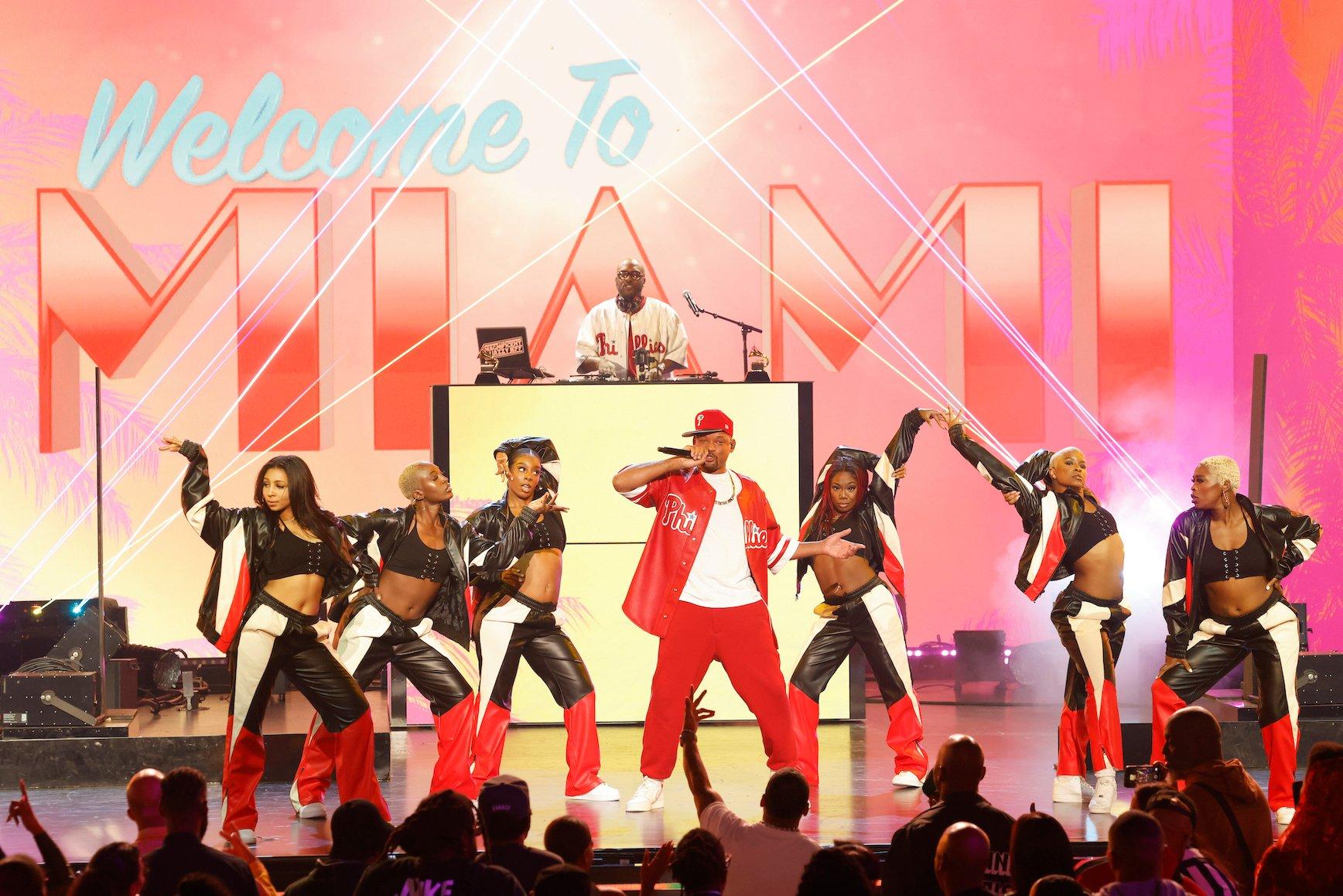
DJ Jazzy Jeff and The Fresh Prince performing at "A GRAMMY Salute To 50 Years Of Hip-Hop."
How DJ Jazzy Jeff & The Fresh Prince Created The Ultimate Prototype For The Producer/Rapper Duo
Ahead of their much-anticipated reunion on the CBS special "A GRAMMY Salute to 50 Years of Hip-Hop," take a look at the groundbreaking ways DJ Jazzy Jeff & The Fresh Prince bolstered the power of the hip-hop duo.
GRAMMYs/Dec 8, 2023 - 05:12 pm
There were plenty of rapper/DJ duos before DJ Jazzy Jeff & the Fresh Prince. Most notably, T La Rock & Jazzy Jay released the influential 1984 single "It's Yours," Def Jam's first release as a rap label run by Rick Rubin and Russell Simmons. There was Mantronix, consisting of MC Tee and producer Kurtis Mantronik, who had their first hit with "Fresh Is the Word" a year later. Well before that, '70s hip-hop pioneer Kool Herc was a DJ known for getting the party started with rhymer Coke La Rock.
But the Philadelphia duo of Jeffrey Townes and Will Smith went beyond their predecessors in several important ways, and set up a prototype of the rapper/DJ — or, as music-making techniques changed, rapper/producer — combination that would explode in the years following their success.
By the time Jeff and Will (and their third member, beatboxer Ready Rock C) released their first single in 1986, duos were a thing in pop music: Soft Cell, Erasure, Eurythmics. The prominence of musical pairs would continue to grow over the next few years, largely because of technology.
As a 1987 Philadelphia Inquirer article headlined "Pop’s New Dynamic Duos" pointed out, "The electronic age has yielded not only a new kind of music, via synthesizers, sequencers, drum machines, digital audio computers, hardware and software, but it has also spawned a new kind of group: duos in which one [person] sings and the other pushes buttons."
This division of labor — one person on music and one on lyrics — worked perfectly in hip-hop, a genre that came out of parties where a DJ spun records and someone on a mic hyped up the crowd. But when it came to DJ Jazzy Jeff & the Fresh Prince, unlike some of their predecessors, it was clear they were a team: Not only were they co-billed, but the DJ's name came first.
That's largely because Jeff was the virtuoso. While Will had the movie-star chemistry and funny stories, Jeff was the music obsessive and the innovative record-spinner who implemented new techniques — most notably, the robotic-sounding "transformer" scratch, which Will takes credit for naming in his 2021 memoir.
And Jeff was the one who proved his hip-hop bona fides by defeating all comers and being crowned the best DJ in the land at the 1986 New Music Seminar. It's a scene that rightfully opens up the very first episode of Smith's new podcast, a good indication of exactly how important that battle was to Will, Jeff and the entire hip-hop world at the time. (You can listen to Jeff's winning routines here).
Explore More Of "A GRAMMY Salute to 50 Years of Hip-Hop"
"A GRAMMY Salute To 50 Years Of Hip-Hop" Recap
Dec 11, 2023
Every Performer At The GRAMMYs’ Hip-Hop Bash
Dec 11, 2023
Watch Backstage Interviews From "A GRAMMY Salute To 50 Years Of Hip-Hop" Featuring LL Cool J, Questlove, Warren G & E-40, And Many More
Inside DJ Jazzy Jeff & The Fresh Prince's Legacy
Dec 8, 2023
Questlove On GRAMMY Tribute To Hip-Hop @ 50
Dec 7, 2023
Putting Jeff's name first in the pairing made sense in a number of ways: not only was he unimpeachably credentialed and respected, but the order itself was also a nod to the DJ's primacy in the origins of hip-hop, and in the group's home city of Philly. Whether all of those ideas were consciously considered in how they named themselves or not, they were all there in how the duo was considered.
The equality of members was emphasized from the very beginning in their music, too. Sure, their first single was the wacky, I Dream of Jeannie theme-quoting story-song "Girls Ain't Nothing But Trouble." But their second was a tribute to "The Magnificent Jazzy Jeff."
They kept that balance throughout their early career as a group. Their second album, He's the DJ, I'm the Rapper, had it throughout — in its title, and especially in its songs.
The record marked another pivotal moment for rap, as it was the genre's first double album. The first two sides had plenty of Will's stories ("Parents Just Don't Understand"; "A Nightmare on My Street"), but sides C and D — billed as a "Bonus Scratch Album" — belonged almost entirely to Jeff.
Whether it was Will and Jeff's success, the overall prominence of duos across genres, or just something in the water, within a few years of DJ Jazzy Jeff & the Fresh Prince getting their start, co-billed DJ/emcee duos were pretty much everywhere. There was Eric B & Rakim, whose first single came out the same year as Will and Jeff's, and Cash Money & Marvelous, who released their first single one year later.
We also can't forget L.A.'s entry into the sweepstakes, Rodney-O & Joe Cooley, whose 1987 single "Everlasting Bass" was the city's pre-gangsta rap anthem. X-Clan compatriots Unique & Dashan came out in 1989 and, like Rodney-O and Cooley, billed the rapper first. DJ Chuck Chillout & Kool Chip had limited releases as a team — one single and one album to follow it up — but they made an impact regardless. By the dawn of the 1990s, the equally billed DJ/rapper duo was a hip-hop trope.
It was a format that would morph over the years. First, into groups like Gang Starr, which consisted of a rapper and a DJ/producer subsumed under a single entity name. Later, into MF DOOM's album-length producer collaborations like Madvillainy (Madlib) and The Mouse and the Mask (Danger Mouse). And even today, into rapper/producer pairings like Drake and Noah "40" Shebib, 21 Savage and Metro Boomin, or The Alchemist and essentially everybody in the world.
Without DJ Jazzy Jeff & the Fresh Prince, the world might not have paid so much attention to all of these efforts. If there's one thing that Jeff and Will showed us, it's that in rap music or anywhere else, there's real power in teamwork.
DJ Jazzy Jeff & the Fresh Prince will reunite as part of "A GRAMMY Salute To 50 Years Of Hip-Hop," which will air Sunday, Dec. 10, from 8:30 to 10:30 p.m. ET and 8 to 10 p.m. PT. Tune in on the CBS Television Network, and stream live and on demand on Paramount+.
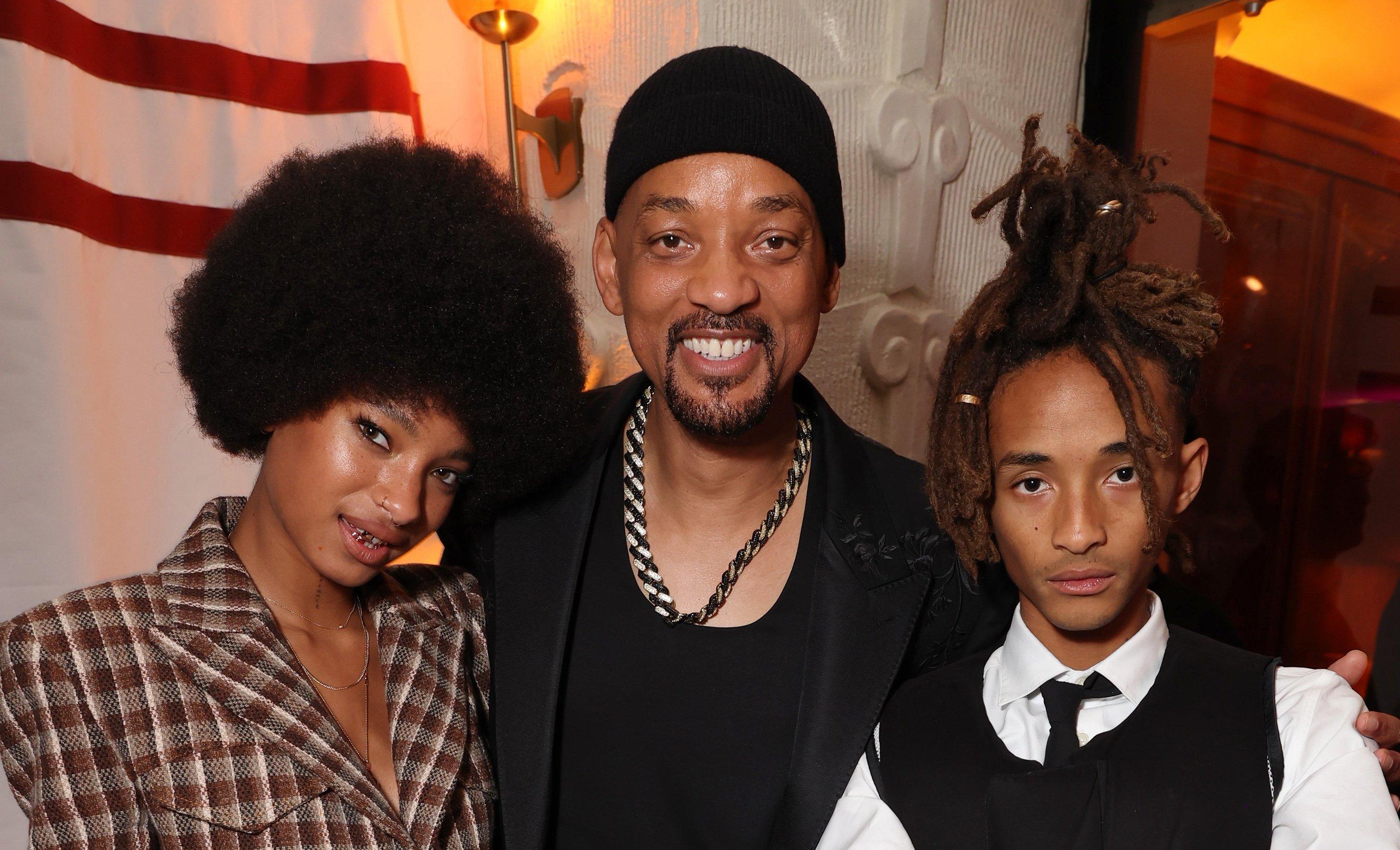
Willow, Will and Jaden Smith in 2024.
Photo: Eric Charbonneau/Getty Images for Sony Pictures
15 Music Dads Who Raised The Next Generation Of Stars: Will Smith, Travis Barker & More
In honor of Father's Day, take a look at some of the music legends whose children found fame on their own terms — from Eddie and Wolfgang Van Halen to Nat “King” and Natalie Cole.
GRAMMYs/Jun 15, 2025 - 03:02 pm
Genetics don’t guarantee hit records, but they can certainly set the stage for the next generation’s interest in a music career. Often, this inspiration starts at home; Latin pop stars Julio Iglesias and his son, Enrique Iglesias, are just one example of how enthusiasm not only for music but for a specific genre can be homegrown. For other famous music dads, while the apple doesn’t fall far from the tree, it sometimes rolls into an entirely different genre, as it has for country crooner Billy Ray Cyrus and his daughters, Miley and Noah.
Music is full of iconic lineages, like jazz trumpeter Olu Dara and his son, hip-hop wordsmith Nas, but the idea of talent running in the family isn't limited to the stage. While some families have music in their DNA, creative dynasties form across pop culture, bringing familiar surnames to other industries ranging from television and film to sports and everything in between. Take Aerosmith frontman Steven Tyler and his daughter, accomplished actress Liv Tyler, or Major League Baseball pitcher Tug McGraw and his son, country sensation Tim McGraw, as examples.
These are far from the only examples of superstars who’ve followed their famous father’s footsteps into the spotlight, and they won’t be the last. This Father’s Day, GRAMMY.com celebrates some of music’s most prominent dads, across different genres and decades in music, who changed the sound of their generation — and raised the next one.
Rhett Atkins was part of the mid-90s wave of country radio staples, scoring smashes like "That Ain't My Truck" (1995), but his biggest impact came from behind the scenes, as a chart-topping Nashville songwriter with credits for contemporary country standouts like Blake Shelton, Luke Bryan and his own son, Thomas Rhett. In his teenage years, Thomas learned how to play the drums and later joined his father on stage. Between this early experience and his father's musical roots, it's hardly any surprise that Thomas grew up to become a modern country juggernaut with crossover appeal — one who's arguably surpassed his father, at least in mainstream terms.
Since his 2013 debut, It Goes Like This, Thomas Rhett has won fans with his earnest blend of heartland storytelling and pop-savvy hooks, notching 20 No. 1s on Billboard's Country Airplay chart while balancing writing and producing his own music with penning singles for other country acts, such as Jason Aldean, Lee Brice and Florida Georgia Line. With his dad as both inspiration and co-writer — the pair have written several songs together, including "Things Dads Do" — Thomas has bridged generations of country while pushing the genre forward, proving that in this family, the hits just keep coming.
Travis Barker & Landon Barker
As blink-182's drummer, triple-threat singer/songwriter/producer Travis Barker helped bring pop-punk into the mainstream with razor-sharp skill, fiery stage presence and a knack for turning angst into anthems. Cult-favorite blink-182 albums like 1999's Enema of the State made Barker a respected rocker, recognized by Rolling Stone not only as "punk's first superstar drummer" but also one of the 100 greatest drummers of all time. Though he's best known for his role in blink-182, the native Californian has been a bandmate of other groups — including the rap-rock outfit Transplants — and has also released solo music (like his 2011 debut LP, Give the Drummer Some). As is often the case with visionary artists, Barker's influence has transcended genre, leading him to work with prominent voices in hip-hop and produce for both Machine Gun Kelly and Willow Smith.
Since making his first major strides into the music industry in 2022 (on Machine Gun Kelly's "Die in California"), Travis' son Landon has shown that musical talent runs in the Barker family blood. But unlike his father, the Gen Z up-and-comer has traded the drums for the mic and pop-punk for alternative/indie, adopting a vocal cadence and overall style not unlike Machine Gun Kelly's on Tickets to My Downfall (produced by Travis). He's currently signed to his father's record label, Elektra Imprint DTA Records, where he's released the first two official singles of his career. In a true full-circle moment, Travis plays the drummer on Landon's debut offering, "Friends With Your EX."
Few voices are as timeless as Nat "King" Cole's. The jazz pianist, pop vocalist and civil rights ally rose to prominence in the late 1930s as the founding member of the King Cole Trio, which went on to become the best-selling group and sole Black act on Capitol Records a decade later. Come 1950, he would launch his solo career, continuing to break racial barriers while delivering the velvety numbers, like "Unforgettable" and "L-O-V-E," that made him a household name.
Natalie Cole's career is inextricably linked to her father's not just by blood, but by shared artistry. Her debut single, "This Will Be (An Everlasting Love)" from her first album, 1975's Inseparable, introduced her dulcet R&B sound and earned her the GRAMMY for Best New Artist the following year. Like her father, Natalie made history in her own way, becoming the first Black artist and the first from the R&B genre to receive the award.
Over time, Natalie moved away from R&B and toward pop, eventually releasing Unforgettable…with Love. The tribute to her father finds Natalie covering some of his songs and even dueting with him on the album's namesake song, "Unforgettable." In 1992, Natalie became the first Black woman to win the coveted Album Of The Year golden gramophone for Unforgettable…with Love, which also won for Record Of The Year and Best Traditional Pop Vocal Performance that year. The LP bridged their two inimitable yet interwoven sonic legacies, striking a sense of magic that has permeated Natalie's career since.
Billy Ray Cyrus & Miley, Noah, Trace, and Brandi Cyrus
With his signature mullet and career-making hit, "Achy Breaky Heart," Billy Ray Cyrus popularized line dancing as he formalized his place in country music's hall of fame. From a Billboard Hot 100 No. 1 credit (for his feature on Lil Nas X's 2019 record-breaking single, "Old Town Road") to a nine-times multi-platinum album (his debut LP, Some Gave All), Cyrus has stacked accolades since he broke out in 1992, solidifying his status as a defining voice in country music. But his most enduring cultural imprint might be his role as the father and creative launchpad of Miley, Noah and Trace Cyrus.
Many 90s kids' first exposure to Billy Ray and Miley was the Disney Channel TV series "Hannah Montana," which blossomed into the 2009 Walt Disney Pictures theatrical film of the same name. After co-starring with her father, Miley transcended Disney stardom to become one of the most polarizing and chameleonic artists of her generation, fluidly working across country, pop, rock and even hip-hop. Last year, she won her first solo GRAMMYs (Record Of The Year and Best Pop Solo Performance for her 2024 single, "Flowers"), and added to her total at the 2025 GRAMMYs thanks to her Beyoncé collab, "II MOST WANTED," which took home Best Country Duo/Group Performance.
Noah celebrated a GRAMMY nomination of her own at the 2021 GRAMMYs, where she was nominated for Best New Artist. Since her official debut as a singer/songwriter with 2016's "Make Me (Cry)," Noah has increasingly carved her folk-pop lane while maintaining a flexibility evident in her genre-fluid collaborations with acts like Fleet Foxes, Diplo, XXXTENTACION, and Leon Bridges.
Miley and Noah's older brother, Trace, has also enjoyed musical success as the frontman of Metro Station. The pop-rock outfit scored a few radio hits in the late 2000s, including the party-starting track "Shake It." Outside of his work with Metro Station, Trace has also formed the pop group Ashland HIGH, and has most recently pursued a solo career that taps into his father's country roots (though, as recent social media posts have indicated, their relationship is strained).
Even the eldest Cyrus sister, Brandi, has dabbled in the music industry. Known for her work as a DJ, Brandi has landed residencies at the Wynn in Las Vegas, where she is also serving as the opening act for Kenny Chesney's shows at the Sphere in May and June.
Bob Dylan & Jakob Dylan
Jakob Dylan didn't set out to be his father, but comparisons were inevitable. As the frontman of The Wallflowers, he was part of the 90s alt-rock wave, netting a GRAMMY for their breakout hit, "One Headlight," and steadily developing a sound grounded in heartland grit and quiet introspection.
His father, 10-time GRAMMY winner Bob Dylan, cast one of the longest shadows in American music history, not just as a folk and rock and roll legend but as a true artist who expanded the possibilities of lyricism in folk and other genres. Widely regarded as one of the greatest songwriters of all time — who achieved greater lyrical depth by weaving imagery and allusions to political, philosophical and other influences into his music — Bob turned protest into poetry, earning a Pulitzer Prize (2008) and a Nobel Prize for Literature (2016) along the way.
Musically, Jakob took a different path — one less overtly political and generally more personal than his father's. Across six Wallflower albums and two solo projects, he's developed a lyrical style heavily invested in character-driven storytelling that unfolds in a much more straightforward fashion compared to Bob's, though with no less depth. Jakob's work is proof that he didn't try to echo Bob's voice; rather, he found his own.
The frontman of U2, Bono is arguably one of the most recognizable voices in rock. Thanks to open-hearted singles like "With or Without You" and "I Still Haven't Found What I'm Looking For," U2 carved out a contemplative corner in the genre after getting their start in 1976. The Irish band's introspective, socially conscious strain of rock set it apart from its more aggressive counterparts, merging vulnerability with a global point of view that has continued to resonate with audiences decades later. In a testament to their enduring influence, U2 became the first musical act to perform at the Sphere in Las Vegas in 2023, playing a residency of 40 shows at the groundbreaking venue.
All these years later, Bono's son, Elijah Hewson, channels that same emotional pull, but with an indie edge. As the lead singer of fellow Irish band Inhaler, he's compellingly intersected indie-rock cool with arena ambition. Their 2021 debut album, It Won't Always Be Like This, topped the Irish and UK charts, establishing Inhaler as one of Ireland's most promising exports. They further expanded their footprint with 2023's Cuts & Bruises and, more recently, February's Open Wide. These albums are Elijah and Inhaler's stepping stones into a spotlight of their own right.
Julio Iglesias & Enrique Iglesias
Julio Iglesias isn't just a romantic icon — he's also the best-selling male Latin artist of all time. With more than 300 million records sold in 14 languages, the GRAMMY-winning Spanish singer/songwriter set an unprecedented standard for suave, multilingual crossover success.
The expression "like father, like son" is certainly applicable to Enrique's booming career, which has extended the Iglesias family's musical legacy since he began releasing music in the early '90s. Determined to keep his musical ambitions a secret from his father and avoid any advantage tied to his last name, Enrique shared his first demo under the alias Enrique Martínez. In 1995, he embraced his true identity, putting out the eponymous debut LP, Enrique Iglesias.
His explosion in the Latin pop space was catalyzed by chart-dominating singles like "Bailamos," "Hero" and "Escape," which thrust Latin flavor into the American Top 40. Today, he's recognized as one of Latin music's best-selling acts; along with more than 180 million album sales worldwide, he has the most No. 1 songs on the Billboard Hot Latin Songs chart (27) and the Latin Pop Airplay chart (24). A GRAMMY and five-time Latin GRAMMY winner, Enrique has followed in his father's footsteps to become a crossover king who learned from the genre's very best.
In the case of the Kravitzes, one boundary-pushing career begets another. Lenny Kravitz built a bold reputation rooted in individuality, defined by his signature dreadlocks, bell-bottoms, sunglasses, and his soulful sound melding vintage rock influence with a modern edge.
The multi-instrumentalist is recognized not only for reinvigorating rock in the late '80s and '90s, but also for bringing Black artistry back into the rock space at a time when pop cultural conceptions of rock had grown increasingly white, due to the rise of acts like the Rolling Stones and Led Zeppelin. He reclaimed rock's Black roots through a genre-fluid, retro-futuristic lens that underscored his ear for innovation. His four consecutive GRAMMY Awards for Best Male Rock Vocal Performance between 1999 and 2002, given for hits like "Fly Away" and "Again," were a resounding reflection of his impact.
While Zoë Kravitz is better known for her acting than her music, she's made her mark as the frontwoman of Lolawolf, an indie-electronic duo that draws from a cool, curated palette of R&B and electropop. Though her sonic approach is different from her father's, it embraces the same sense of genre fluidity that helped put Lenny on the map. Lolawolf put out its last album, Tenderness, in 2020 and previously opened for Miley Cyrus, Azelia Banks and Lily Allen.
John Lennon & Julian and Sean Ono Lennon
It's only natural that the sons of a member of one of the most influential bands in music history found their way into music. The Beatles shifted the very shape of rock and roll from the '60s onward, rocketing into an unprecedented echelon of international stardom and commercial success. Come 1969, John Lennon's role in the group, which remains the best-selling music act of all time, primed him for a high-achieving solo career that often found him collaborating with his wife, multimedia artist Yoko Ono. He continued to influence popular music and culture through his resonant songwriting and peace-driven activism alike, most famously with his 1971 anthem, "Imagine."
Both Lennon brothers carry fragments of their late father's influence in their music, but they've each reshaped it in their own ways. Julian, John's eldest son, broke through in the '80s with Valotte, a GRAMMY-nominated debut that introduced his smooth, melodic pop-rock sound and vocals that bore an uncanny resemblance to John's. Like his father, Julian split his focus between music and philanthropy and, in the '90s, even took a step back from the music industry to focus on aid efforts. While he's made many nods to his father throughout his career, the most overt came on his 2022 album Jude — a titular allusion to the Beatles' "Hey Jude."
Sean Ono Lennon, by contrast, has walked a far more experimental path, embodying his father's natural aptitude for artistic exploration in an avant-garde psychedelic pop framework. This roving has taken him across roles, too, leading Sean to score several films, join four different bands (including an offshoot of his parents' Plastic Ono Band, the Yoko Ono Plastic Ono Band), and produce music for a diverse array of artists, ranging from his mother to Lana Del Rey to the Black Lips.
Notably, Sean served as an art director on the 2024 box set of John's 1973 album, Mind Games, which won Best Boxed or Special Limited Edition Packaging at the 2025 GRAMMYs. In his heartfelt acceptance speech, Sean paid tribute to his late father's legacy: "I'm going to really work my hardest to keep the Beatles and John Lennon's music out there in the world."
Before stadium tours and streaming-era fame, Brian Littrell was one of the voices that defined late-'90s pop. As the high tenor in the Backstreet Boys, his smooth, expressive vocals anchored smashes like "I Want It That Way" and "As Long As You Love Me," which turned the group into a global sensation.
His son, Baylee Littrell, grew up watching it all. By the age of 9, Baylee was already opening arena shows for the Backstreet Boys, performing two songs mostly every night. But when it came time to make music of his own, Baylee pivoted from his father's boy-band pop (and, later, contemporary Christian music) to a genre completely his own: country.
Despite his different stylistic lane, that same year, Baylee joined the Backstreet Boys as the opening act of the North American leg of their 2019 DNA World Tour. A few months later, he formalized his burgeoning sound, based in twang and storytelling, on his debut album, 770-Country. As he's continued to actualize his country music career, he's guested on Chris Lane's Big Big Plans tour and even appeared on "American Idol" this past March to punch his golden ticket to Hollywood. For Baylee, music has never been about filling his father's shoes — it's more about lacing up his own.
The face of reggae, who is widely recognized as one of the genre's founding fathers, Bob Marley merged Rastafarian philosophy with music in a movement that was deeply spiritual, political and ultimately, generational. Through celebrated numbers like "One Love" and "Redemption Song," the late Jamaican musician delivered a message of resistance and unity that his sons, Ziggy, Stephen and Damian, have expanded on in their respective, highly decorated careers.
Ziggy, the eldest of the three, has become a prominent voice in reggae music, first as the frontman of the family band, Ziggy Marley and the Melody Makers, and currently, as a solo artist with eight GRAMMY Awards and one Daytime Emmy Award to his credit. Along the way, he's used his platform to champion children's rights and social justice.
Stephen is also an eight-time GRAMMY Award winner who's earned his golden gramophones across solo projects, production and his work with Ziggy Marley and the Melody Makers. Over the years, he's leaned more heavily into production than his father did, but embraces a lyrical style similarly focused on themes of spirituality, struggle and social justice.
Like Bob, Damian carries forth the tradition of using music as a vehicle for protest and cultural pride, albeit in a more genre-fluid fashion that pushes the boundaries of reggae music by infusing elements of modern hip-hop and dancehall. He's won four GRAMMYs to date, with two — Best Reggae Album and Best Urban/Alternative Performance — given for his best-known album, Welcome to Jamrock. At the 2006 awards ceremony, Damian became the first Jamaican reggae artist in history to take home two GRAMMYs on the same night. (Perhaps surprisingly, Bob never won a GRAMMY in his lifetime, but was honored with a Lifetime Achievement Award in 2001.)
With his swiveling hips, devilish charm and singular sound, Elvis Presley ascended to a level of celebrity that propelled him to become the first true rock and roll icon — and one of the most influential cultural figures of the 20th century. He was the driving force behind rock and roll's explosion in the '50s, hybridizing the genre into a blues, country, gospel, and R&B-inflected fusion of energetic and sometimes sensual sound.
Elvis' impact is still felt in the cultural zeitgeist today, with the Elvis impersonators who marry couples in Las Vegas — where The King of Rock and Roll revolutionized the Sin City residency — serving as just one example. While he remains the best-selling solo artist in music history, Elvis' lasting influence lies not just in his rich sound and role in shaping rock and roll. As much as he was a popular figure, he was also a controversial one who challenged the era's conservative norms around race and sexuality while helping to establish the concept of the modern celebrity.
This left big blue suede shoes for his daughter, Lisa Marie Presley, to fill in the wake of his 1977 passing. In 2003, she established her bluesy, alt-rock sensibilities with the release of her debut studio album, To Whom It May Concern. Over the course of her career and two follow-up LPs, this sound morphed into a more organic, Americana offshoot that stood in stark contrast to her father's booming baritone, but descended from the same type of deliberate artistry. Listeners can hear both Elvis and Lisa Marie on "Where No One Stands Alone," a digital duet of the 1967 original, released in 2018.
The Presley family's name continues to live on in the entertainment space beyond Elvis and Lisa Marie's solo contributions, via Lisa Marie's daughter, Riley Keough. The actress took home a Primetime Emmy Award for her starring role in the 2023 Amazon Prime Video series, "Daisy Jones & the Six," in which she shows off her own musical chops — proving that the Presley genes are alive and well.
Carlos Santana & Stella and Salvador Santana
As the namesake and lead guitarist of the rock band Santana, Carlos Santana electrified and redefined Latin rock, fusing bluesy riffs and Afro-Latin percussion into a sound that has endured across generations — and continues to captivate them. His sonic footprint is massive, spanning 10 GRAMMY Awards, three Latin GRAMMYs and rock's highest honor: induction into the Rock and Roll Hall of Fame.
Stella Santana's sound largely diverges from her father's highly textured, instrument-rich fusion to favor more muted, downtempo production layered with silky vocals — but it's no less rooted in rhythm and soul. Since debuting her first single in 2015, she's released three EPs, a full-length album, and a slew of singles, including her latest, "Shark Bite," in April.
Her brother, Salvador, is also a musician, and won his first GRAMMY Award alongside his father, for the song "El Farol," from Santana's 1999 album, Supernatural. Later, in 2004, he founded the Salvador Santana Band, which specializes in a melange of hip-hop and jazz. Both siblings contributed to Santana's 2021 LP, Blessings and Miracles; Stella is credited on "Breathing Underwater," and Salvador on "Rumbalero."
Will Smith rose to fame as one-half of D.J. Jazzy Jeff & The Fresh Prince, integrating hip-hop into popular culture with a smooth, agile flow and comedic storytelling. In 1989, the duo won the inaugural GRAMMY award for rap, Best Rap Performance, for their song, "Parents Just Don't Understand." This achievement alone confers legend status to the entertainment icon, who is acclaimed not only for his success in music but also within the film and television industry. He's passed down his raw, versatile talent and charisma to his children, Jaden and Willow Smith, who have together proven that the Smith legacy isn't about replication but rather, reinvention.
While both of the Smith kids have followed in their father's footsteps to act and release music, they've done so with their own unique flair. Jaden forged his artist career with an appearance on Justin Bieber's 2010 single "Never Say Never" and a stream of mixtapes that paved the way to his 2017 debut LP, SYRE, released via Roc Nation and Interscope Records. That same year brought Willow her first taste of viral success with "Whip My Hair," which landed on Roc Nation with high energy and pure confidence.
Both siblings' sounds have transformed since the earlier days of their careers. Jaden's has morphed into a warm, upbeat hybrid of dream pop and alternative hip-hop, which complements Willows stride into a similarly ambient palette of sounds, including neo-soul, R&B and pop. It's no wonder, then, that the siblings each recruited each other on their respective 2019 projects: "Summertime in Paris" on Jaden's Erys, and "U Know" on Willow's self-titled LP. (Will and Jaden have also teamed up on two songs: "Icon" alongside Nicky Jam from Jaden's 2017 album, Syre, and "Work of Art," a collab with Russ on Will's 2025 album, Based On a True Story.)
Guitar god Eddie Van Halen all but rewrote the instrument's vocabulary while propelling his eponymous band, Van Halen, into one of the biggest rock acts of the late 20th century, courtesy of hits with horsepower, like "Jump." In the '70s, Van Halen drove hard rock's mainstream resurgence, becoming a household name in the process. With this much natural-born skill in the Van Halen bloodline, music was destined to become a family affair. (Later, Eddie would even name a line of Peavey Electronics guitars, the Wolfgang series, after his son.)
Although Wolfgang Van Halen grew up in the wings of one of rock's most esteemed legacies, he never treated it like a shortcut. After playing as the bassist in his father's eponymous band from 2007 through his father's death in 2020 — as well as in the band Tremonti in 2015 and 2016 — Wolfgang came into his own on 2021's Mammoth WVH. Along with writing every song, he sang and played every instrument, as he did on its 2023 follow-up, Mammoth II.
Though the name Mammoth is an homage to his dad's first group, Wolfgang's solo project marries precision with vulnerability, pairing muscular riffs with melodic hooks and lyrical honesty. It trades Van Halen's signature flashiness for introspection and emotional focus in a way that found Wolfgang carrying the torch but reshaping its fire — like so many other children of famous musicians who forged their paths not by lineage, but rather by finding and igniting their own creative flames.
Latest News & Exclusive Videos

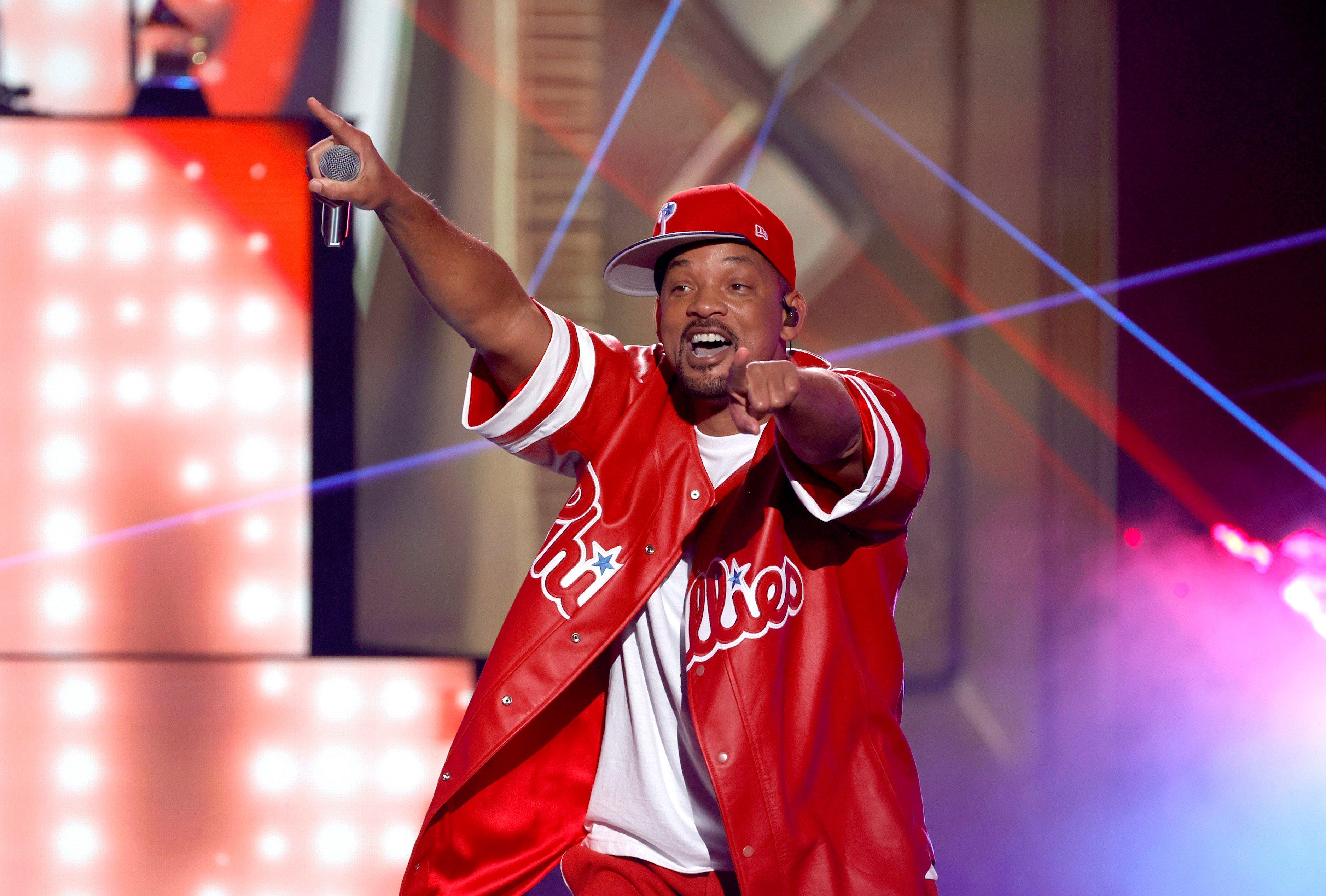
Will Smith performs at "A GRAMMY Salute to 50 Years of Hip-Hop" in 2023.
Photo: Frazer Harrison/Getty Images for The Recording Academy
Will Smith's 'Based On A True Story' Isn't A Return: 16 Ways He's Stayed Active In Music
As the multihyphenate releases his first new album in 20 years, revisit all of the songs and performances Will Smith has delivered since 2005's 'Lost and Found' — from reunions with DJ Jazzy Jeff to collabs with global stars.
GRAMMYs/Mar 27, 2025 - 04:35 pm
For the first 20 years of Will Smith's career, he was nearly as prolific in the acting world as he was in the music industry. Even his initial identity as the Fresh Prince dabbled in both: first as one half of the trailblazing, GRAMMY-winning hip-hop duo with DJ Jazzy Jeff, and later on "The Fresh Prince of Bel-Air."
As his movie career began to boom, Smith landed some of his biggest hits — whether it was film tie-ins like "Men in Black" and "Wild Wild West," or his own singles such as "Gettin' Jiggy With It" and "Switch." After 2005's Lost and Found, though, Smith pressed pause on his music. But almost exactly two decades later, he was too inspired to not return to his musical roots.
"The last couple years of my life have been pretty transformative," he said in a video on his YouTube channel, alluding to the controversy surrounding his 2022 Oscars incident. "I started to see life differently. I started to see love differently. I started to see suffering differently. I just couldn't stop it, I couldn't stop the lyrics from coming."
The result is Based on a True Story, a 14-track LP that will see Smith reflecting on the ups and downs of his life and career. "I took my traumas and made it a anthem," he declares on the booming "Tantrum"; as the gospel-tinged "You Can Make It" insists, "Every moment is an opportunity/ Embrace the journey."
While the new album may be his first in 20 years, Smith hasn't let his musical career completely lie fallow. The multihyphenate has gradually worked his way back to making his own music — from collaborating with the likes of Nicky Jam and Yuki Chiba, to starring in a live-action musical, to performing on major stages such as the Latin GRAMMYs and Rock in Rio.
In celebration of Smith's comeback album, as well as his first-ever world tour, catch up on the Fresh Prince's musical adventures since his last record.
Except for a gig at Nelson Mandela's birthday back in 2008, Smith's appearances on the BBC talk show "The Graham Norton Show" marked his first true foray back into the world of music since Lost and Found. His first appearance in 2012 featured him rapping along with the entire audience to the "Fresh Prince of Bel Air" theme song, alongside Take That's Gary Barlow on the keys. He returned a year later to perform a remix of the song with son Jaden and DJ Jazzy Jeff in tow, and as a grand finale he brought out castmate Alfonso Ribeiro to do the famous Carlton Dance.
"Fiesta (Remix)" (2015)
It seems all that time spent in Miami gave Smith a deep appreciation of Latin music, because "Fiesta (Remix)" was his first official release since Lost and Found. Even before "Despacito" initiated a wave of interest in Spanish-language pop, the rapper collaborated with Colombian psychedelic cumbia band Bomba Estéreo in 2015, jumping on a remix of their energetic, EDM-influenced track "Fiesta" alongside Ricky Reed.
Making the return even more special, Smith performed the track with the group at the 2015 Latin GRAMMYs, where it was nominated for Record Of The Year. The next day, they dropped a full EP of remixes for the track, which included the return of DJ Jazzy Jeff.
After "Fiesta" saw Smith and DJ Jazzy Jeff's names on a track for the first time in nearly 20 years, Smith's first solo single post-Lost and Found saw them return to the stage together. While Jazzy Jeff's wasn't listed as an official collaborator on the reggae-EDM hybrid "Get Lit," he assisted Smith for performances in Croatia and the U.K. — their first joint performance in 31 years. Smith documented their reunion in a video he'd later post on his YouTube channel, which he also launched in 2017.
Read More: How DJ Jazzy Jeff & The Fresh Prince Created The Ultimate Prototype For The Producer/Rapper Duo
As he ventured back into music, Smith took to one of the world's biggest stages for his next release: the FIFA World Cup.
For the soccer tournament's 2018 edition, he joined an appropriately global team of musicians including Colombian-American reggaeton sensation Nicky Jam, Kosovar singer Era Istrefi and American producer Diplo to create the cup's official anthem, "Live it Up." The collaborators later performed the song at the closing ceremony in Moscow, where the massive crowd roared as Smith made his entrance onto the field.
Three years after "Fiesta," the musica urbana movement was in full swing. So, naturally, Smith continued to pursue his interest in Latin music by hopping on Marc Anthony's "Está Rico."
The glamorous track also featured a then-rising Bad Bunny, who injected the song with the innovative trap-influenced style that would soon make him a superstar. All three took to the stage at the 2018 Latin GRAMMYs in Las Vegas to perform the song on a swanky, red-lit set flanked by dancers — está rico indeed.
"Icon (Reggaeton Remix)" (2018)
Smith reunited with Nicky Jam for a reggaeton-flavored remix of his son Jaden's bombastic viral track "Icon," his verse boasting his family's good genes: "You know why you was a icon living?/ You was born from a icon living."
Along with being the pair's first musical collaboration, "Icon" also served as the first time they performed together on stage when Will popped up at Jaden's tour opener in Miami. But perhaps the best — or at least funniest — performance of the song is Smith's parody of the "Icon" music video, which he posted to his then-newly minted Instagram after Jaden's debut album, 2017's Syre, hit 100 million streams on Spotify.
While Smith's YouTube content was largely dedicated to funny bits and behind-the-scenes looks into his life, it also occasionally fed fans hungry for new music. A 2018 video of him freestyle rapping in the studio, referencing his movie career ("Y'all be doing features, I be doing features," "I could play Muhammad Ali or a white lady, probably") and alluding to his new "unretired" status, racked up millions of views. Although the video ended with a tease of "new music coming soon," the wait for a new album would continue.
Filling the massive shoes of Robin Williams as the Genie in Disney's live-action remake of Aladdin, Smith didn't just paint himself blue — he also delivered new versions of the animated film's iconic songs for the Guy Richie-directed film. He put his own spin on "Arabian Nights," "Friend Like Me" and "Prince Ali," infusing the classic soundtrack with hip-hop energy and rapping his lyrics.
"Don't Be Afraid to Be Different (Remix)" (2019)
Logic has been known to reference "The Fresh Prince" on tracks like "Still Ballin'" and "Life of a Don," so who better to collaborate with than the Fresh Prince himself? Smith appeared on the remix for the fellow rapper's chiptune-inflected track "Don't Be Afraid to Be Different" back in 2019.
Smith's verse playfully referenced his TV career, interrupting a playful rendition of the "Fresh Prince" theme with a more serious reflection on his success and influence: "Came in the game on my neon fresh/ Won the first rap GRAMMY so I guess I'm blessed/ Come off tours, walk on sets/ Everybody following the trends I set."
Plenty of artists tried to keep themselves busy (and sane) with online performances during the pandemic, and Smith was no exception. The "Fresh Prince of No Fresh Air," as he playfully dubbed himself, joined DJ Jazzy Jeff over Zoom and performed a concert of the group's greatest hits, their first performance together since a 2019 reunion at Smith's 51st birthday party.
"Will (Remix)" (2020)
With such a long and successful career, it's inevitable that Smith would influence other younger artists — including Massachusetts-born rapper Joyner Lucas, whose tribute to the Fresh Prince, "Will," made such an impression on Smith that the man himself decided to hop on the remix.
"If it wasn't for you I wouldn't be the man that I am," Lucas told the star in a conversation on Smith's YouTube channel. The appreciation was seemingly mutual, as the two have continued to collab, with Lucas featuring on Smith's Based on a True Story track "TANTRUM."
Alongside Martin Lawrence, Smith returned to the role of Miami PD detective Mike Lowry in the Bad Boys For Life in 2020. A pandemic-delayed sequel, Bad Boys: Ride or Die, marked a return to the screen and music for Smith after the controversial slapping incident at the 2022 Oscars. The follow-up also resulted in another tie-in track for Smith; he recruited Jamaican dancehall legend Sean Paul for the '90s-tinged "LIGHT EM UP."
"TEAM TOMODACHI (WILL SMITH REMIX)" (2024)
Smith may have teamed up with Japanese rap sensation Yuki Chiba on a reimagining of the hard-edged trap tune "Team Tomodachi," but his feature is less concerned with the Far East and more interested in repping his hometown.
"Straight out of Philly, I came out the gutter/ I still hit the city with all of my brothers," he raps. "I might go to Overbrook, buy me a cheesesteak/ Cause I got all this bread and butter."
As the first-ever winners of the GRAMMY for Best Rap Performance, there was perhaps no one better suited to mark hip-hop's 50th anniversary for the Academy than Smith and DJ Jazzy Jeff. The two reunited on stage during A GRAMMY Salute to 50 Years of Hip-Hop — their first appearance together since the Fresh Prince of Bel Air Reunion special in November 2020 — repping West Philly with custom baseball shirts and performing a medley of their hits including "Miami" and "Brand New Funk."
Read More: A Brief History Of Hip-Hop At 50: Rap's Evolution From A Bronx Party To The GRAMMY Stage
Smith has described Based on a True Story as his "most personal and powerful" music ever; if the gospel-inflected lead single "You Can Make It" is any indication, the album will be quite inspirational. His Sunday Service Choir-backed debut performance of the song at the BET Awards — in which he placed himself in a literal ring of fire like a phoenix reborn from the ashes — was a fitting kickoff to this new phase of his career.
Rock In Rio (2024)
As Smith's official return to music started ramping up, he made his Brazil stage debut with an appearance at the Rock in Rio festival in September 2024. While his set was only 20 minutes, he delivered most of his solo hits as well as Based on a True Story's "You Can Make It" and "Work Of Art," even offering a rendition of "Bad Boys" in Portuguese.
The show served as a tantalizing taste of his upcoming first-ever headlining world tour, which is set to begin this June in Morocco before jaunting across Europe. Judging by this performance, it seems the world is ready for Will Smith — and the Fresh Prince is ready to take over the world once again.
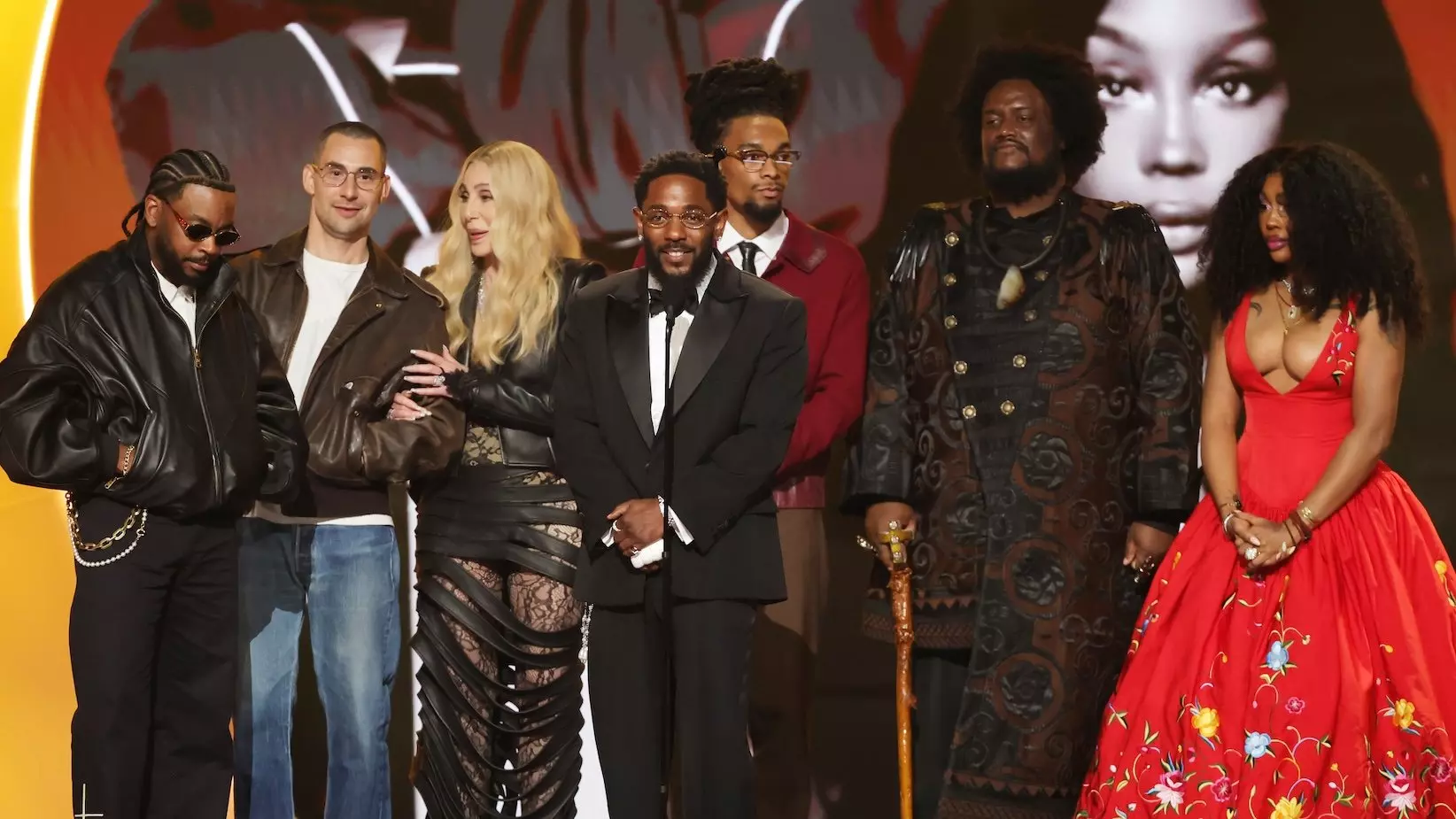
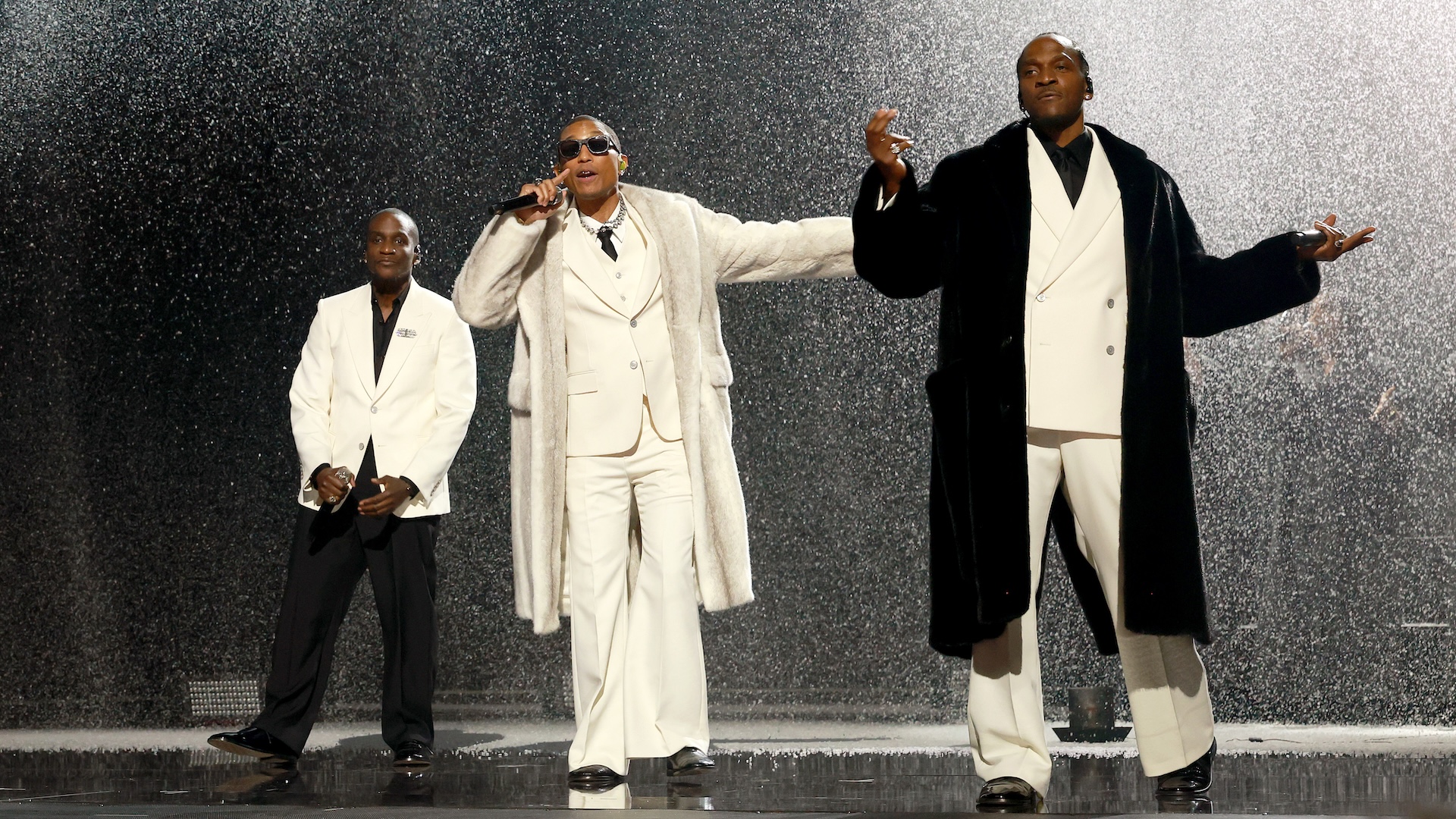
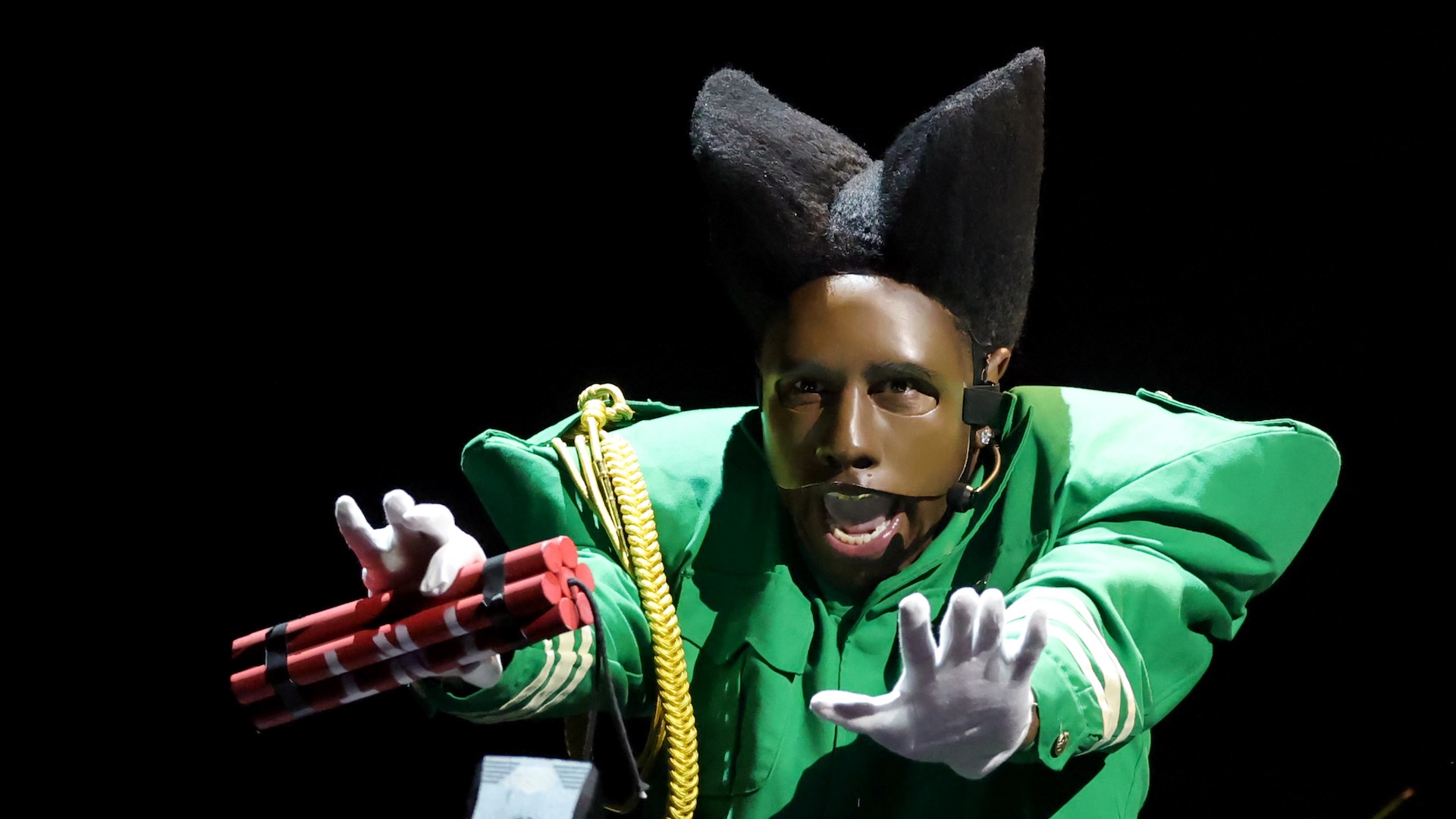
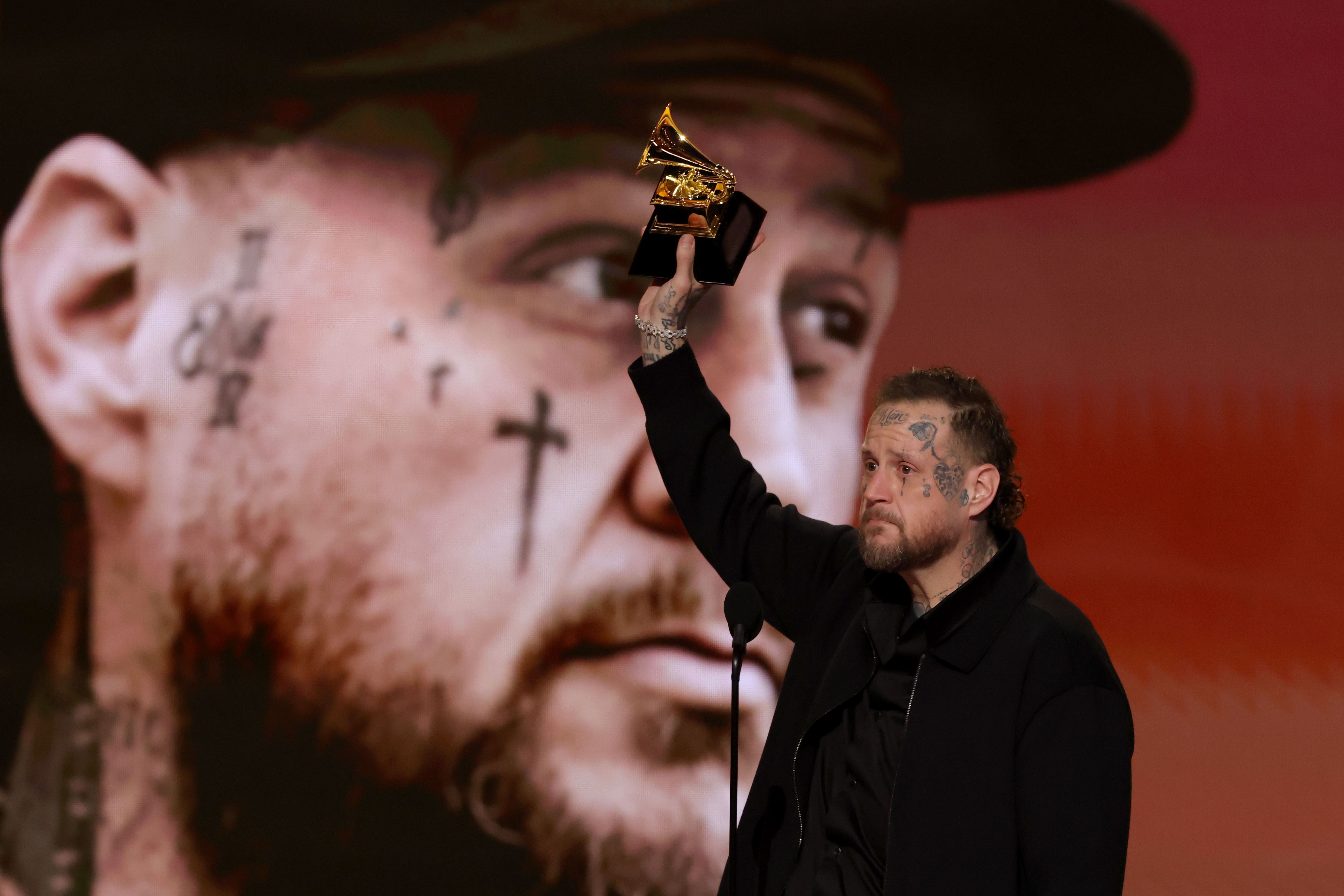
Watch the 2025 GRAMMYs on Sunday, Feb. 2, 2025, at 8 p.m. ET / 5 p.m. PT on CBS and available to stream live on Paramount+.
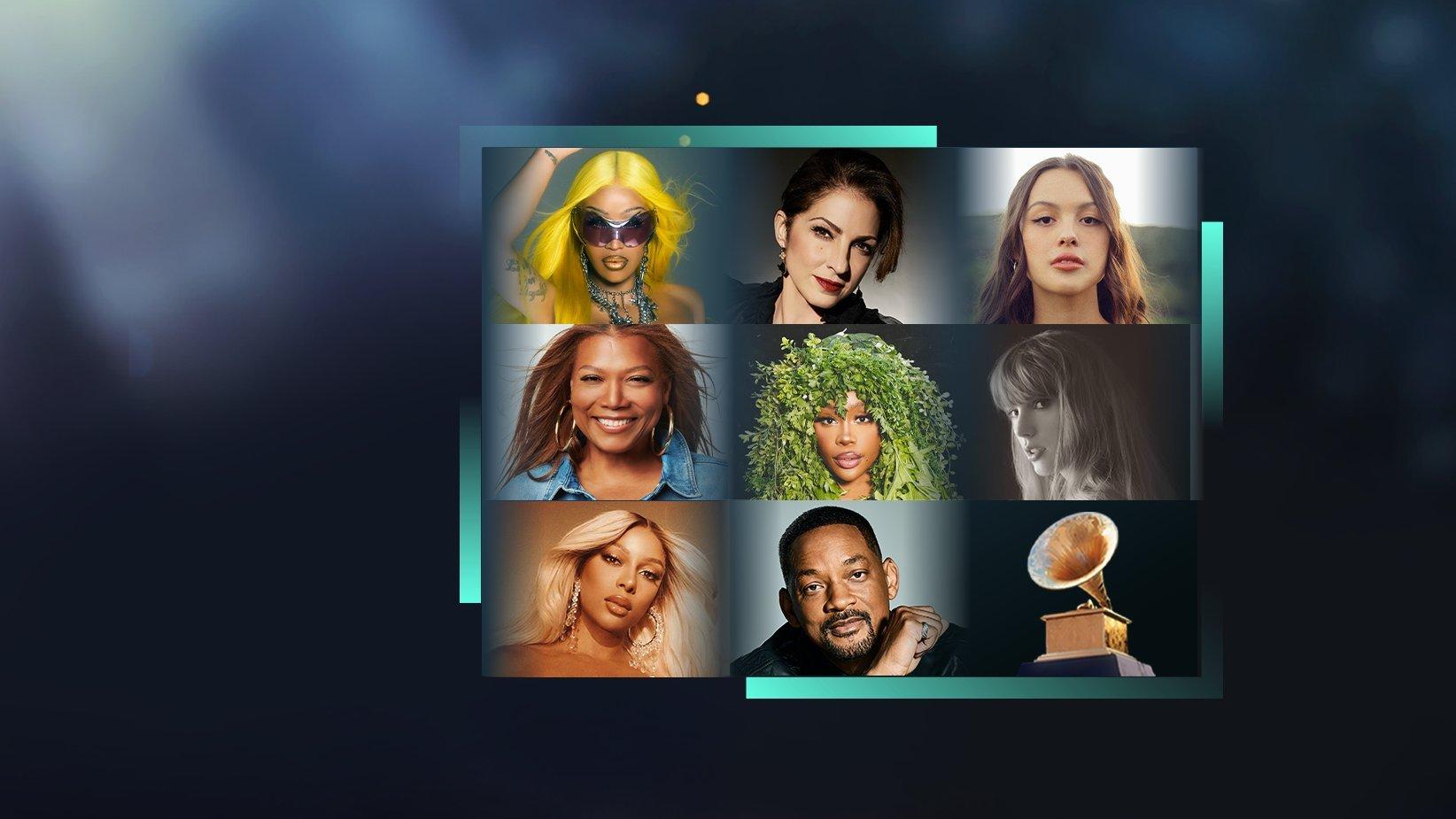
Graphic courtesy of the Recording Academy
2025 GRAMMYs Presenters Announced: Anthony Kiedis & Chad Smith, Cardi B, Gloria Estefan, Olivia Rodrigo, Queen Latifah, SZA, Taylor Swift, Victoria Monét, & Will Smith
Music’s Biggest Night adds a star-studded lineup of presenters at the 2025 GRAMMYs, airing live Sunday, Feb. 2, and raising funds to support Los Angeles wildfire relief efforts.
GRAMMYs/Jan 31, 2025 - 03:59 pm
The 2025 GRAMMYs, officially known as the 67th GRAMMY Awards, will air live on CBS and Paramount+ on Sunday, Feb. 2. Watch highlights from the 2025 GRAMMYs on live.GRAMMY.com.
The 2025 GRAMMYs telecast will be reimagined to raise funds to support wildfire relief efforts and aid music professionals impacted by the wildfires in Los Angeles. Donate to the Recording Academy's and MusiCares' Los Angeles Fire Relief Effort To Support Music Professionals.
Editor's Note: This article was updated on Jan. 31, 2025 to reflect the addition of Lady Gaga, Bruno Mars and Shaboozey as performers.
Music’s Biggest Night just got even bigger: Anthony Kiedis & Chad Smith, Cardi B, Gloria Estefan, Olivia Rodrigo, Queen Latifah, SZA, Taylor Swift, Victoria Monét, and Will Smith have been announced as presenters at the 2025 GRAMMYs.
Hosted by Trevor Noah, the 2025 GRAMMYs will be broadcast live from Crypto.com Arena in Los Angeles on Sunday, Feb. 2, at 8 p.m. ET / 5 p.m. PT on CBS and available to stream live on Paramount+. Funds raised during the 2025 GRAMMYs telecast will be used to provide emergency assistance, essential supplies, and long-term recovery support to those affected by the recent Los Angeles wildfires.
The 2025 GRAMMYs will feature a spectacular lineup of previously announced performers, including: Benson Boone, Billie Eilish, Brad Paisley, Brittany Howard, Chappell Roan, Charli xcx, Coldplay’s Chris Martin, Cynthia Erivo, Doechii, Herbie Hancock, Jacob Collier, Janelle Monáe, John Legend, Lady Gaga and Bruno Mars, Lainey Wilson, RAYE, Sabrina Carpenter, Shaboozey, Shakira, Sheryl Crow, St. Vincent, Stevie Wonder, and Teddy Swims.
Prior to the telecast, the 2025 GRAMMYs Premiere Ceremony, where the majority of the 2025 GRAMMY Awards winners will be announced, will broadcast live from the Peacock Theater in Los Angeles and will stream live starting at 12:30 p.m. PT/3:30 p.m. ET on the Recording Academy’s YouTube channel and on live.GRAMMY.com. The Premiere Ceremony will be available to watch in full and on-demand on both platforms shortly after.
On GRAMMY Sunday, fans can access exclusive behind-the-scenes GRAMMYs content, including performances, acceptance speeches, interviews from the GRAMMY Live red-carpet special, and more via the Recording Academy’s digital experience on live.GRAMMY.com.
A Night Of Celebration & Giving Back
This year’s GRAMMYs telecast will also serve as a fundraising event, supporting the Recording Academy and MusiCares’ Los Angeles Fire Relief Effort. Since launching the fund on Jan. 9, the Recording Academy and MusiCares have distributed more than $4 million in emergency aid to over 2,000 music professionals affected by the wildfires.
This year’s GRAMMY telecast renewed sense of purpose will raise additional funds to support Los Angeles wildfire relief efforts and honor the bravery and dedication of first responders who risk their lives to protect others. In order to generate maximum support not only for members of the music community but also for all those affected by the crisis in Los Angeles and the city at large, many events that traditionally make up GRAMMY Week have been canceled or reformatted.
To contribute to the Recording Academy and MusiCares’ Los Angeles Fire Relief Effort, or if you or someone you know needs help, visit musicares.org/firerelief.
More 2025 GRAMMYs News

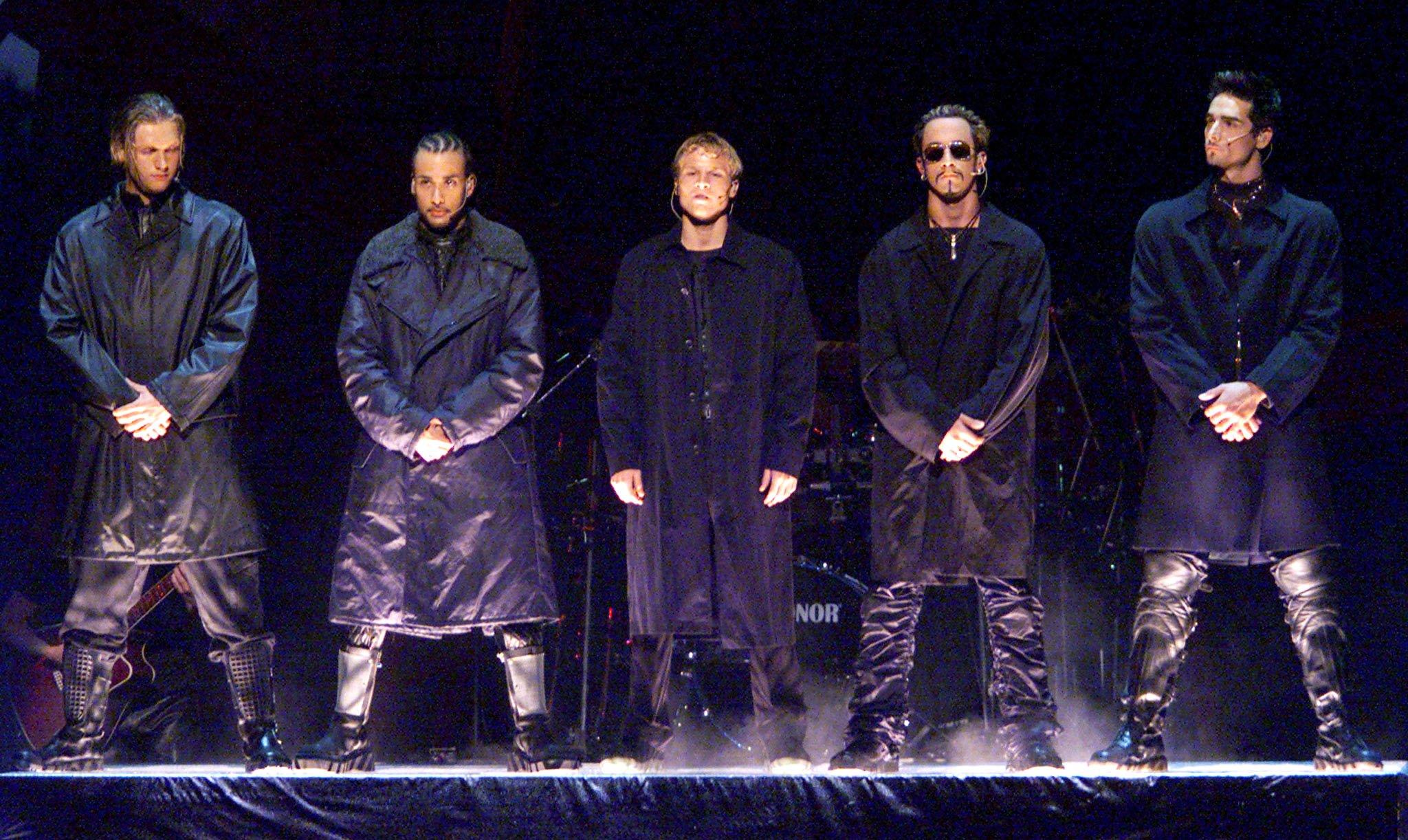
Backstreet Boys perform at the 1999 MTV Video Music Awards.
Photo: Jeff Christensen
How Pop Ushered In Y2K: Revisiting Songs & Performances By Prince, Jennifer Lopez, Backstreet Boys & More
Twenty-five years into the new millennium, look back on several ways the pop music world reacted to the year 2000 — from Will Smith's aptly titled album to several ominous New Year's Eve celebrations.
GRAMMYs/Jan 2, 2025 - 08:05 pm
It's now been a quarter of a century since we raised our glasses to the millennium, a period defined by "Mickey Mouse Club" graduates, double denim and fears that a pesky computer virus was going to plunge us all back into the dark ages. Thankfully, the latter never happened, allowing the youth of today to mine the era's sounds and styles to nostalgic effect.
Indeed, one of the most dominant trends of 2024 was the embracing of Y2K culture, whether it's Halsey sampling Britney Spears' "Lucky," *NSYNC's "Bye Bye Bye" enjoying a Deadpool-assisted renaissance, or Charli XCX spending her world-conquering summer sporting Von Dutch. And let's not forget Eminem reprising his Slim Shady alter-ego, Ice Spice naming her debut album in honor of the year 2000, or Kyle Mooney's disaster comedy which, as its Y2K title suggests, centers around the aforementioned millennium bug.
But how did pop react to such a monumental occasion first time around? Well, it certainly didn't shy away from the subject. The world's biggest boy band, family-friendly rapper, and Latin pop diva all shared their acknowledgements in audio or visual form. MTV and various concert promoters also recognized they were experiencing a part of history. And while you may well have forgotten, numerous chart-toppers teamed up to try to eliminate third world debt before the turn of the century.
To celebrate the silver anniversary of Y2K, here's a look at nine ways the music scene helped usher in perhaps the most memorable New Year's Eve ever.
Robbie Williams was the first major pop star (well, if you live on the other side of the Atlantic, anyway), to explicitly reference the impending Y2K, naming his Bond theme-sampling 1998 hit "Millennium." Though Williams' co-writer Guy Chambers would later reveal that the song didn't have specific meaning ("It was sort of obvious and a bit cheeky to be honest," he told Songwriting magazine in 2019), it helped the singer notch his first No. 1 in the UK.
In the spring of 1999, Backstreet Boys adopted the same title for their record-breaking sophomore set, which spawned another chart-topper that doesn't make much sense ("I Want It That Way") and later picked up five GRAMMY nominations. Then in slightly more timely fashion, Will Smith dropped his second studio effort, Willennium (see what he did there?), and its second single "Will 2K" just weeks before the "clock struck twelve in the year 2G."
The Y2K Videos
It wasn't just semantically where Backstreet Boys and Will Smith embraced the idea of a new millennium. The former's video for "Larger than Life" was a Transformers-meets-Star Wars sci-fi epic that awakened the heartthrobs in the year 3000. Meanwhile, the latter — assisted by the likes of K-Ci, Eve, and former cohort DJ Jazzy Jeff — raced through various 20th century musical styles before fast-forwarding to a distant cyber future in the promo for "Will 2K."
In the clip for Jennifer Lopez's single "Waiting for Tonight," the jungle-themed New Year's Eve bash is interrupted by a millennium bug-style power outage at the vital moment. Luckily, this mini-crisis lasts just six seconds before the track's Latin dance-pop sound gets everyone back on the floor.
If you've ever wondered what the pop elite of 1999 explicitly thought about the millennium bug, look no further than the highly entertaining MTV News segment titled "From Freaked to Fine." While Jay-Z, Jewel and Dr. Dre all seemed nonchalant about the prospect of vulnerable IT systems bringing about the downfall of society, others appeared to embrace their inner doomsday prepper.
"I have like 80 gallons of water, a whole bunch of Ensure, and generators just in case — I'm pretty sure things will kinda mess up," theorized Q-Tip. "I feel like in every scripture, it has been predicted that this time would be a significant time," remarked Busta Rhymes. TLC also looked to religion for the answers, arguing that the demographic who should be most fearful are devil worshippers.
In fact, TLC were arguably the most Y2K-conscious act of them all. Their three-time GRAMMY-winning third LP, FanMail, leaned into all the pre-millennial paranoia, too — from the space-age binary code artwork, to temporarily replacing Lisa 'Left Eye' Lopes with a female robot named Vic-E, to "Communicate (Interlude)" pondering about the future of the digital world. ("There's over a thousand ways/ To communicate in our world today/ And it's a shame/ That we don't connect").
Producer Dallas Austin, who heightened the cyber vibes by sampling everything from internet dial-up tones to the clicks of computer keyboards, later explained the thought process to Billboard. "I was dying to get into the future because 2000 was about to come up. But I've always been into that stuff because I'm a big Star Wars fan. Since we had to use Vic-E in place of Lisa's voice, I thought, 'Let's just go as futuristic as we can.'"
Fourteen years after helping to stage the most iconic benefit concert of all time, Live Aid, promoter Harvey Goldsmith once again persuaded pop's A-list to come together for altruistic reasons. On this occasion, familiar faces George Michael, Sting and Bono joined fresher ones such as The Corrs, Lil' Kim and Stereophonics under the umbrella of the NetAid initiative for same-night gigs in New Jersey, London and Geneva.
"The end of the millennium is the right time for a huge event to highlight the question of how extreme poverty can be eradicated," Goldsmith declared about the purpose of the shows, which raised money and awareness for the now-defunct Jubilee 2000 coalition.
Unfortunately, the reality didn't quite match the dream. While Wembley Stadium reached capacity, attendance at the Giants Stadium show struggled to reach even half. In stark contrast to "We Are the World" and "Do They Know It's Christmas," tie-in single "New Day" (by Wyclef Jean and Bono) sank without a trace. And while its predecessor raised approximately $140 million, NetAid only just made it to seven figures.
You can always rely on "Weird Al" Yankovic for a well-timed skewering of pop culture, and the millennium was no exception. The parodist hosted a VH1 seasonal special, "The Original Alpocalypse: Weird Al's Y2K Christmas!," from his own doomsday bunker. While in "It's All About the Pentiums," a spoof of P Diddy's "It's All About the Benjamins" from 1999's Running with Scissors, he mocked all concerns about the millennium bug ("Upgrade my system at least twice a day/ I'm strictly plug-and-play, I ain't afraid of Y2K").
He wasn't the only artist to address Dec. 31, 1999 in a novelty style. Hank Williams Jr. collaborated with George Jones and Chad Brock for a re-recording of his 1982 hit "A Country Boy Can Survive" ("If the bank machines crash, we'll be just fine"). And although it wasn't presented as a joke, rock veteran Cliff Richard spent three weeks at the UK No. 1 spot with a bizarre mashup of "The Lord's Prayer" and "Auld Lang Syne" titled "The Millennium Prayer."
The Super-Pricey Gigs
While some pop stars viewed the millennium as potentially apocalyptic, others saw it as an opportunity to further line their wallets, with certain promoters offering up to 50 percent more than the norm. Barbra Streisand, for example, was reported to have pocketed a cool $15 million for her New Year's Eve/New Year's Day shows at Las Vegas' MGM Grand. Whitney Houston, Rod Stewart and Eagles were just a few of the superstars who also enjoyed bumper earnings for a few hours' work, too.
But on the whole, the industry appeared to have overestimated the demand.The Los Angeles Times reported that ticket sales for most marquee names were sluggish at best. In fact, despite a star-studded bill that includedAretha Franklin,Andrea Bocelli and Chuck Berry, New York's Celebration 2000 was greeted with such a tumbleweed response that organizers had to pull the plug, prompting one manager to label it as "the Ishtar of concerts."
While many superstars asked fans to brave the freezing cold weather while watching them ring in the New Year, Prince recognized the appeal of partying like it was 1999 from the comfort of your own home. Rave Un2 the Year 2000 saw the Purple One play NYE host for a pay-per-view special screened on In Demand.
Those who forked out for the privilege got to see Prince play more than a dozen hits including "Kiss," "Purple Rain" and "U Got The Look," as well as the highlights from his then-most recent LP, Rave Un2 the Joy Fantastic, two collaborations with Lenny Kravitz, and his own rendition of the track Sinead O'Connor made famous, "Nothing Compares 2 U." Acolytes, however, will have been most interested in what Prince claimed would be the final ever live performance of his aptly-titled hit "1999" (he'd actually go on to play it more than 100 times).
MTV sure pulled out all the stops for their Y2K celebrations. Inviting blink-182, 98 Degrees, Goo Goo Dolls, and Bush to perform, the network also recruited Christina Aguilera to pull double duty as co-host with Carson Daly and Kathy Griffin, and Mark Ronson to spin the decks. But No Doubt offered perhaps the most fitting performance of them all to officially ring in the year 2000.
Just a year after Limp Bizkit kicked off proceedings live from New York's Times Square with a nu-metal cover of Prince's particularly relevant party anthem "1999," Gwen Stefani and co helped ring in 2000 with a song that encapsulated the pre-millennial fears of the big night, R.E.M.'s stream-of-consciousness classic "It's the End of the World as We Know It (And I Feel Fine)." Fortunately, MTV's first-played track of the new year, new century, and new millennium didn't bring on the apocalypse.