
Photo: Totopons986

CA7RIEL & Paco Amoroso
CA7RIEL & Paco Amoroso Talk 'PAPOTA,' Touring The World And The Importance Of Friendship
Following a viral Tiny Desk concert, the Argentine duo have a new EP and international tour. But they're no overnight success: "We spent many years making music," Paco Amorosos says. "We’re taking in all of this with humor and gratitude."
GRAMMYs/Mar 11, 2025 - 02:14 pm
It's hard to imagine any other artist impacted by a Tiny Desk appearance as much as CA7RIEL and Paco Amoroso.
During their 17-minute set at the NPR mainstay last year, the duo transformed tracks from 2024’s BAÑO MARIA and two from earlier solo projects, swapping synthesized elements with live instrumentation. Replacing bouncy electronic drum beats for soft percussion, songs like "DUMBAI" took on a sunny bossa nova feel, while "BABY GANGSTA" shed its drum-and-bass edge to bloom into a brassy Latin funk track.
The set went viral, propelling them to heights neither had experienced or anticipated.
"The fame of Tiny Desk has taken us to very strange places doing very odd things," says CA7RIEL with a knowing grin. "Sometimes, we look at each other in the eyes just to check what is happening is real."
After years of grinding — both as solo artists and collaborators across various musical ventures — the duo quickly became industry It Boys. Every concert, track, interview or step they made was blurred in a haze of hype.
Read more: 25 Artists To Watch In 2025: CA7RIEL & Paco Amoroso, John Glacier, Lola Young & More
This surreal experience is the subject of their new EP, PAPOTA. Argentine slang for someone on steroids, the word that comically captures the overblown nature of their new reality. PAPOTA includes the live Tiny Desk versions, alongside four new tracks that navigate their post-viral fame journey. The EP's narrative begins when a producer called Gymbaland approaches the newly-famous duo, and instructs them to hit the gym and sing songs written by ChadGPT — with the ultimate goal of winning the coveted Latin Chaddy.
Like Baño Maria, PAPOTA is built on a convergence of styles, from trap beats to '90s pop, with more instrumentation and funk than their previous work. The pair have just embarked upon what will be a dizzying year ahead — dozens of tour dates in the U.S., UK, Europe, Latin America, and a stop at Coachella.
CA7RIEL (Catriel Guerreiro) and Paco Amoroso (Ulises Guerriero) spoke to GRAMMY.com (not Chaddy.com) about the ups and downs of success, and how friendship is vital to staying grounded through it all.
Your new EP, PAPOTA, takes aim at the music industry — from AI-generated pop music to the Latin "Chaddys." Are you wary of music awards?
Paco Amoroso: It’s a parody of this Miami world where the music producer promises to make you successful and ensures that you win awards. Sometimes it feels like this matters more than the music. We poke fun at the industry that we too are a part of. It’s a humorous approach to the reality we live in.
So, it’s not criticizing the awards themselves, but the priorities of the industry.
Paco Amoroso: Exactly!
The new single "#TETAS" is about making commercially successful music; pasting a viral hashtag onto a catchy chorus. It starts as a funk track and twists into a '90s pop song. What if people don’t understand the parody, and assume you’ve sold out?
Paco Amoroso: I think that’s fine — that Backstreet Boys style chorus is good! There's something in liking something you think you shouldn’t; in the end, pop always wins you over.
CA7RIEL: Like with any work, some get it and others don't, right? And those who get it will laugh. For us, it’s a temon (a banger); a great song.
PAPOTA’s opening track is called "IMPOSTER," which is about experiencing imposter syndrome in the wake of the Tiny Desk success. Do you regret doing that series?
Paco Amoroso: No, not at all. We approached this new pressure we felt after the Tiny Desk with humor. It’s a nice pressure to have — that people admire us and think we are great musicians. In Argentina, we have a term [that translates to] "we added tax"; it’s to say we inflated everything a bit. It’s what we felt, it’s more fun than fear.
CA7RIEL: All these feelings are real, but they are on steroids. That’s why our album is called PAPOTA.
I imagine many artists must feel imposter syndrome, but very few talk about it.
Paco Amoroso: One hundred percent. Often, in this industry, songs are composed by several people and produced as if they were made in a factory. Some of these songs are great, others are horrible. Even your favourite artists can make terrible songs, and that's funny too. One day you feel on top of the world, and the next, you feel like crap. When everything starts going well, it tastes a little less sweet too. It's talking about all the emotions that come with success.
Are friendship and humor an important part of getting through those feelings?
Both: Yes!
Paco Amoroso: We laugh with friends. We’re simple people. We got lucky with our music, but we spent many years making music, rolling up our sleeves, so we fought for it. We’re taking in all of this [success] with humor and gratitude.
As you say, you didn’t get successful overnight, you’ve both spent years working in music; both together and as solo artists. With the Tiny Desk fame, some may assume you came out of nowhere. Does that bother you?
Paco Amoroso: Not at all. Nobody owes you anything. It’s good we took advantage of the opportunity to do Tiny Desk. Thanks to that, people from all over the world stop us in the street, those who saw it and loved it. Our career has exploded thanks to it. Now, we're on an endless tour, playing all around the world. We’re happy.
How did you prepare for the Tiny Desk session?
CA7RIEL: As urban artists, we use a lot of beats and sounds from computers. So we had to "kill" the computer and put in the heart. It was complicated. Even though we’ve been playing with friends, for a long time, switching from one format to another was difficult. We put in a lot of effort.
Paco Amoroso: It’s also interesting to see how some songs don’t work on a guitar, for example. A song isn’t always easily transferable from an electronic, beat-driven format to one without auto-rune, effects, or backing tracks. So, we also had to find the right songs that worked best for this format. It was quite a process.
Did the preparation for Tiny Desk influence the arrangements we hear on PAPOTA?
Paco Amoroso:** One hundred percent. We feel like the hard work is already done, because now all that’s left is to play and play and play. But last year, honestly, there was a lot of rehearsing and a lot of experimenting.**
Read more: 5 Rappers Taking Argentinian Hip-Hop To The Next Level: L-Gante, Duki & More
Speaking of the tour, new fans know you because of Tiny Desk, which is all about live performance. Does that put pressure on you going onstage, that you have such high expectations to live up to?
CA7RIEL: It’s the opposite. Tiny Desk was just a window into what we know how to do. We feel more comfortable playing live, with friends, defending our music with real instruments.
You’re playing Coachella soon. What can we expect from that set?
Paco Amoroso: Honestly, it’s going to be one of the most important events of our musical lives. We’ve prepared as much as possible and we’re to bring all our party favors and all our paraphernalia to the stage, so that people go crazy watching us.
The schedule ahead is pretty wild, with over 30 dates in over a dozen countries. How do you plan to look after yourselves on the road?
CA7RIEL: I don’t know if we’ll come out of it safe and sound — I just hope we do. I think we will because we have fun and we do what we love. The reality is that sometimes we push our bodies a little beyond what they can handle, but we’re good. We’re young. We still have collagen in our faces.
Hopefully, you won’t need any "papotas."
Paco Amoroso: Ha! Ask us in a few months.
Latest News & Exclusive Videos






Kendrick Lamar and SZA win the Grammy for Record Of The Year at the 2026 Grammys on Sunday, Feb. 1, at Crypto.com Arena in Los Angeles, California. (L-R) Sounwave, Jack Antonoff, Cher, Kendrick Lamar, Scott Bridgeway, Kamasi Washington, and SZA.
Photo: Kevin Winter/Getty Images for The Recording Academy
9 Powerful Acceptance Speeches From The 2026 Grammys: Bad Bunny, Kendrick Lamar, Lady Gaga & More
From pro-immigrant statements to vocal support for women in music, these moving acceptance speeches from the 2026 Grammys reflected the moments defining music and culture today.
GRAMMYs/Mar 1, 2026 - 01:49 am
See the full list of winners and nominees from the 2026 Grammys.
Watch highlights and exclusive Grammys content from the 2026 Grammys all year long.
At the 2026 Grammys, winning artists took to the stage with much more than gratitude on their minds. Grammy winners such as Lady Gaga and Recording Academy Lifetime Achievement Award honoree Cher supported rising artists, particularly women in the music industry. Kendrick Lamar deflected from his own victories to pay tribute to Luther Vandross, namesake of his Record-Of-The-Year-winning tune, and the hip-hop community at large.
In particular, many artists reacted to the ongoing campaign of deportations and anti-immigrant violence happening across the U.S. Bad Bunny, Billie Eilish and Olivia Dean all spoke movingly in support of immigrants, while many other artists wore "ICE OUT" pins.
Below, revisit some of the most moving acceptance speeches from the 2026 Grammys.

Kendrick Lamar Makes Rap History & Shouts Out The Hip-Hop Community
After dominating the 2025 Grammys with "Not Like Us," Kendrick Lamar took home five Grammys this year and became the rapper with the most Grammy wins ever. After winning three Grammys earlier in the day during the 2026 Grammy Awards Premiere Ceremony, the Los Angeles artist won the first Grammy Award of the telecast for Best Rap Album for GNX. With this Grammy win, he topped JAY-Z's 25 wins to snatch the record for most Grammys won by a rapper.
"Every time I tell you this: Hip-hop is gonna always be right here," Lamar said in his Grammy acceptance speech, dedicating his win to the hip-hop movement. "We gonna be in these suits, we gonna be looking good, we gonna be having our folks with us, we're gonna be having the culture with us."
Kendrick also shouted out Clipse, with whom he won Best Rap Performance earlier in the day for their track "Chains & Whips." He would return to the stage once more before the end of the night to take home the Grammy for Record of the Year for his song "luther" with SZA, bringing his career total to 27 Grammy wins.

Bad Bunny Stands Up For Immigrants
Of the many statements made in support of immigrants at the 2026 Grammys, few felt more powerful and resonant than Bad Bunny's, who twice spoke on the issue on the Grammy stage. Accepting the Grammy for Best Música Urbana Album for DeBÍ TiRAR MáS FOToS, the Puerto Rican superstar front-loaded his acceptance speech with a rebuke of the dehumanizing rhetoric faced by immigrants, especially Latin Americans such as himself.
"Before I say thanks to God, I'm gonna say: ICE out," he declared. "We're not savage, we're not animals, we're not aliens. We are humans and we are Americans."
Loading...
Later that night, after winning the Grammy for Album of the Year, a visibly shocked and overwhelmed Bad Bunny returned to the stage to deliver another Grammy acceptance speech, though this time mostly in Spanish. It was an appropriate move considering the history-making album is the first non-English-language album to ever win the Grammy for Album Of The Year. But given his stunned reaction, Bad Bunny may have just been too emotional to so quickly translate most of his thoughts. But in a fitting move, he dedicated his Grammy win to "all the people who had to leave their homeland, their country, to follow their dreams."

Olivia Dean Tearfully Takes Best New Artist
Loading...
"I never imagined I'd be up here, let alone nominated," Olivia Dean said as she tearfully accepted the Grammy for Best New Artist. Having just performed her U.K. chart-topping single "Man I Need" on the Grammy stage, the British singer used her platform to speak out in support of immigrants, including her own grandmother, who immigrated to the U.K. from Guyana as part of the Windrush generation.
"I'm up here as a granddaughter of an immigrant," Dean said. "I'm a product of bravery, and I think those people deserve to be celebrated."

Lady Gaga Supports Women In Music
As well-known as she is for awards-show spectacles – Remember the meat dress? – Lady Gaga kept things (mostly) low-key and earnest. Following a dynamic performance of "Abracadabra," she returned to the stage to accept the Grammy for Best Pop Vocal Album for MAYHEM.
Thanking her fiancé, Michael Polansky, and her collaborators, including Cirkut, who won the Grammy for Producer Of The Year, Non-Classical winner, and Gessaffelstein, the latter of whom won the Grammy for Best Remixed Recording for his remix of "Abracadabra," Lady Gaga offered some encouraging words for women in the music industry.
"When you're in the studio with a bunch of guys, it can be hard," she said. "Always listen to yourself and always fight for your ideas, fight for your songs, fight for yourself as a producer."
"Abracadabra" also won the Grammy for Best Dance Pop Recording, bringing her total career Grammy wins to 16.

Lola Young Swears She Didn't Expect Grammy Win
Though Lola Young certainly had stiff competition in the Best Pop Solo Performance Category, including veterans such as Justin Bieber and Lady Gaga, nobody was more shocked at her Grammy win in than Young herself. The singer, also nominated for Best New Artist, had just wrapped an emotional piano rendition of her track "Messy" earlier in the evening, one of her first live performances in four months following a health scare.
"I don't have any speech prepared," a visibly shocked Young said. "I don't know what to say. Thank you so much!" Utterly overwhelmed and searching for words, Young dropped a few less-than-TV-appropriate words before thanking her friends and mother and fleeing the stage while in a state of pure ecstasy.

Billie Eilish Gets Serious During Song Of The Year Speech
Loading...
Winning the Grammy for Song of the Year for "WILDFLOWER," her 10th Grammy, didn't seem to weigh heavily on Billie Eilish's mind as she took the stage to accept the award. Flanked by her brother and creative partner FINNEAS, both wearing "ICE OUT" pins, as were many of the other attendees, the pop star weighed in on the current anti-immigration policies being carried out in the U.S.
"No one is illegal on stolen land," Eilish said. "It's just really hard to know what to say and what to do right now … I feel really hopeful in this room, and I feel like we just need to keep fighting and speaking up and protesting, and our voices really do matter, and the people matter."
The more serious tone of the speech contrasted with Eilish's previous wins, but it felt more than appropriate given the current climate.

Cher's Audacious Return To The Grammy Stage
Cher is always a class act. With dozens of hits across a decades-spanning career, she earned the Recording Academy Lifetime Achievement Award deservedly. Her acceptance speech on the Grammy stage quickly became one of the most talked-about moments of the night.
First, she gave a stirring speech reflecting on her storied yet tumultuous time in show business. "I was famous at 19 and had a top-rated show in my 20s, actually, but it didn't occur to me how rough my career was going to be," she said. "I was either a loser or winning an Oscar. I'm sure a lot of you in the audience know what I'm talking about."
Cher also reflected on her stint in the "elephant graveyard" of Las Vegas in the '80s and her pioneering use of AutoTune on her Grammy-winning hit single "Believe." She closed out her speech by encouraging the audience: "Never give up on your dream, no matter what happens. Live it, be it, and if it's not happening now, it will happen soon."
Then things got a little bit … whacky. Apparently unclear that she would be presenting the Grammy for Record of the Year, the singer nearly walked off the stage before the crowd and host Trevor Noah coaxed her back. Then she mistakenly declared the late Luther Vandross the winner, in reference to the winning song, "luther" by Kendrick Lamar and SZA. Oh Cher, don't you ever change!

Jelly Roll Goes Full Country Music
Loading...
Jelly Roll had already won two Grammys earlier in the day for collaborations with Brandon Lake and Shaboozey, but it wasn't until the evening that he got to ascend the Grammy stage solo. Winning the Grammy for Best Contemporary Country Album for Beautifully Broken, he made his acceptance speech into a sort of country song in its own right, thanking his wife, referencing his Christian faith, and describing the troubles that led him to turn to music.
"I didn't think I had a chance, y'all," he said. "There were days that I thought the darkest things. I was a horrible human … There was a moment in my life that all I had was a Bible this big and a radio the same size and a six-by-eight-foot cell. And I believed that those two things could change my life."
The singer wrapped his speech by once again invoking religion: "Jesus is for everybody. Jesus is not owned by one political party. Jesus is not owned by no music label."
"luther" Wins Record of the Year
Cher may have been a bit off when she confidently misread that the Grammy for Record of the Year was going to "Luther Vandross." But the actual winners, Kendrick Lamar and SZA, made it clear that their chart-topping tune "luther" was a spiritual victory for the legendary R&B star who inspired the song, which prominently samples Vandross' and Cheryl Lynn's 1982 cover of "If This World Were Mine."
"First and foremost, let's give a shout-out to the late, great Luther Vandross," co-producer Sounwave began. "It was very, very, very important to keep the integrity of his record."
Lamar echoed the sentiment. "It's one of my favorite artists of all time, and they granted us the privilege to do our version of it. When we got that clearance, I promise you we damn near all dropped a tear.
"Being able to put our vocals on it, it proves that we were somewhat worthy to be just as great as them individuals," he continued. "They granted us that. They said, 'No cursing,' though."
Finally, SZA struck a note of hopefulness at the end of the speeches. "I know that right now is a scary time. I know the algorithms tell us that it's so scary, and all is lost," she said. "We can go on. We need each other. We need to trust each other and trust ourselves, trust your heart. We're not governed by the government, we're governed by God."
This Grammy win for "luther" puts Lamar in elite territory as a back-to-back Record Of The Year Grammy winner, joining fellow winners like Billie Eilish, U2, and the late Roberta Flack, the latter of whom was tributed in the annual In Memoriam celebration led by Ms. Lauryn Hill earlier in the ceremony.
2026 Grammys: Performances, Winners & Highlights

"A GRAMMY Celebration of Latin Music" airs Sunday, Dec. 28, at 8-10 p.m. ET/PT on the CBS Television Network and streams on Paramount+.
Graphic courtesy of the CBS
The Recording Academy & CBS Announce "A GRAMMY Celebration of Latin Music" Featuring Performances By Ángela Aguilar, Michael Bublé, Gloria Estefan, Luis Fonsi, Carín León, Maren Morris & More: Airing Dec. 28
"A GRAMMY Celebration of Latin Music" celebrates the lasting impact and widespread influence of Latin music in the United States. Additional performers include Andrea Bocelli, Laura Pausini, Prince Royce, Jon Secada, Robin Thicke, and many others.
GRAMMYs/Dec 2, 2025 - 05:00 pm
The Recording Academy and CBS are closing out the year with "A GRAMMY Celebration of Latin Music," a star-studded special highlighting the lasting impact and widespread influence of Latin music in the United States. Airing Sunday, Dec. 28, at 8-10 p.m. ET/PT on the CBS Television Network and streaming on Paramount+, the two-hour special features performances by Ángela Aguilar, Andrea Bocelli, Michael Bublé, Gloria Estefan, Luis Fonsi, Carín León and Nuno Bettencourt, Maren Morris, and many more.
Filmed in Miami, "A GRAMMY Celebration of Latin Music" will include covers of classic songs, tributes to various Latin artists, performances of top hits by Latin superstars, and performers across musical genres, with interviews and features throughout.
Learn more about the "A GRAMMY Celebration of Latin Music" special and see the full list of performers and special guests below.
How Can I Watch "A GRAMMY Celebration of Latin Music"?
"A GRAMMY Celebration of Latin Music" airs Sunday, Dec. 28, at 8-10 p.m. ET/PT on the CBS Television Network and streams on Paramount+.
Paramount+ Premium plan subscribers will have access to stream live via the live feed of their local CBS affiliate on the service, as well as on-demand. Paramount+ Essential subscribers will not have the option to stream live, but will have access to on-demand the day after the special airs.
Who's Performing At "A GRAMMY Celebration of Latin Music"?
The full list of performers at "A GRAMMY Celebration of Latin Music" includes:
Robin Thicke and Orianthi
The Warning with Billy Idol and Steve Stevens
The cast of Broadway's "Buena Vista Social Club"
Who Are The Special Guests At "A GRAMMY Celebration of Latin Music"?
"A GRAMMY Celebration of Latin Music" will also feature interviews with and appearances by:
John Leguizamo
Recording Academy CEO Harvey Mason jr.
Luis Miranda
Who Is Hosting "A GRAMMY Celebration of Latin Music"?
"NCIS" star Wilmer Valderrama and singer/songwriter and actress Roselyn Sánchez will co-host "A GRAMMY Celebration of Latin Music."
José Tillán and Harvey Mason jr. executive-produced the special. The POPGarage and GRAMMY Studios produced the special.
2026 Grammys: Performances, Winners & Highlights

The 2025 Latin GRAMMYs will air live Thursday, Nov. 13, from the MGM Grand Garden Arena in Las Vegas.
Graphic Courtesy of the Latin Recording Academy
2025 Latin GRAMMYS Adds Performers: Bad Bunny, KAROL G & More
The Latin Recording Academy announced additional performers for the 2025 Latin GRAMMYS: Bad Bunny, CA7RIEL & Paco Amoroso, Chuwi, Fuerza Regida, Jesús Ortiz Paz of Fuerza Regida, KAROL G, and Marco Antonio Solís. The 2025 Latin GRAMMYS airs Thurs, Nov. 13
GRAMMYs/Nov 4, 2025 - 02:00 pm
The Latin Recording Academy announced additional performers for the 2025 Latin GRAMMYS, which air live Thursday, Nov. 13, from the MGM Grand Garden Arena in Las Vegas. The newly announced performers include current nominees Bad Bunny, CA7RIEL & Paco Amoroso, KAROL G, and Fuerza Regida frontman Jesús Ortiz Paz. Also set to perform are Chuwi, Fuerza Regida, and five-time Latin GRAMMY winner and seven-time GRAMMY nominee Marco Antonio Solís.
These artists join previously announced performers and current nominees Pepe Aguilar, Aitana, Rauw Alejandro, Edgar Barrera, Ivan Cornejo, DannyLux, Gloria Estefan, Joaquina, Kakalo, Carín León, Liniker, Morat, Christian Nodal, Los Tigres del Norte, Nathy Peluso, Elena Rose, Alejandro Sanz, and Adelaido "Payo" Solis III of Grupo Frontera. Latin GRAMMY winners Grupo Frontera, eight-time GRAMMY winner Kacey Musgraves, and multi-GRAMMY and -Latin GRAMMY winner Carlos Santana will also perform at the 2025 Latin GRAMMYs. Iconic Spanish singer and performer Raphael, the 2025 Latin Recording Academy Person of the Year honoree, will also perform at the 2025 Latin GRAMMYs.
Learn More About The Newly Announced 2025 Latin GRAMMYs Performers:
Bad Bunny leads the pack at the 2025 Latin GRAMMYS with 12 nominations, including Record Of The Year, Album Of The Year, Song Of The Year, Best Urban/Urban Fusion Performance, Best Reggaeton Performance, Best Urban Music Album, Best Urban Song, Best Roots Song, and Best Short Form Music Video.
CA7RIEL & Paco Amoroso earned 10 nominations, including Record Of The Year, Album Of The Year, Song Of The Year, Best Pop Song, Best Alternative Music Album, Best Alternative Song, Best Short Form Music Video, and Best Long Form Music Video.
KAROL G received three nominations, including Record Of The Year, Song Of The Year and Best Tropical Song.
Jesús Ortiz Paz of Fuerza Regida was nominated for Best Regional Song.

When Are The 2025 Latin GRAMMYs?
The 2025 Latin GRAMMYs, officially known as the 26th Annual Latin GRAMMY Awards, will air live Thursday, Nov. 13, from the MGM Grand Garden Arena in Las Vegas. This year’s show will introduce a new field and two new Latin GRAMMY categories: Best Music For Visual Media, housed within the new Visual Media field, and Best Roots Song. See the full list of 2025 Latin GRAMMY nominees.
How Can I Watch The 2025 Latin GRAMMYs?
The three-hour 2025 Latin GRAMMYs telecast will be produced by TelevisaUnivision and will air across TelevisaUnivision’s U.S. platforms beginning at 8 p.m. ET/PT (7 p.m. CT). A one-hour pre-show will air at 7 p.m. ET/PT (6 p.m. CT).
The Latin GRAMMY Premiere, where the majority of the Latin GRAMMY Awards categories are awarded, will precede the telecast. Additional details, including date and time, about the 2025 Latin GRAMMY Premiere will be announced soon.

When Is Latin GRAMMY Week 2025?
Returning to Las Vegas, the 2025 Latin GRAMMYs will once again fill the city with music and celebrations during Latin GRAMMY Week 2025, a weeklong series of official events honoring current nominees, creativity, excellence, and the global impact and influence of the Latin music industry.
Among the celebrations are the 2025 Leading Ladies of Entertainment event, the Special Awards Presentation, Latin GRAMMY In The Schools, Nominee Reception, Best New Artist Showcase, the Person of the Year Gala, and the Latin GRAMMY Premiere. All of these official events lead up to the 2025 Latin GRAMMY Awards, the Biggest Night in Latin Music.
Get ready to watch some of your favorite artists take the stage during the 2025 Latin GRAMMYs on Thursday, Nov. 13.
Latest News & Exclusive Videos

Fans attend the first Sepultura concert in Cuba on July 19, 2008, in Havana.
Photo: STR/AFP via Getty Images
Refuse & Resist: How Latin America Transformed Heavy Metal Forever
Latin American bands have made a lasting impact on metal throughout the decades, revolutionizing the genre by incorporating their own political and socioeconomic histories, regional instruments and different languages. Metal has never been the same since.
GRAMMYs/Oct 29, 2025 - 01:44 pm
When System of a Down played their final show in São Paulo during their South American tour in May, videos from the concert went viral: Plumes of smoke, raging fires, massive mosh pits, and thousands of people filled the explosive videos as the GRAMMY-winning band played on stage.
On Instagram, the group posted footage of the concert and wrote, "This is not a war zone, this is not a riot, this is a System Of A Down style rock and roll concert in Brazil!!!!!!!"
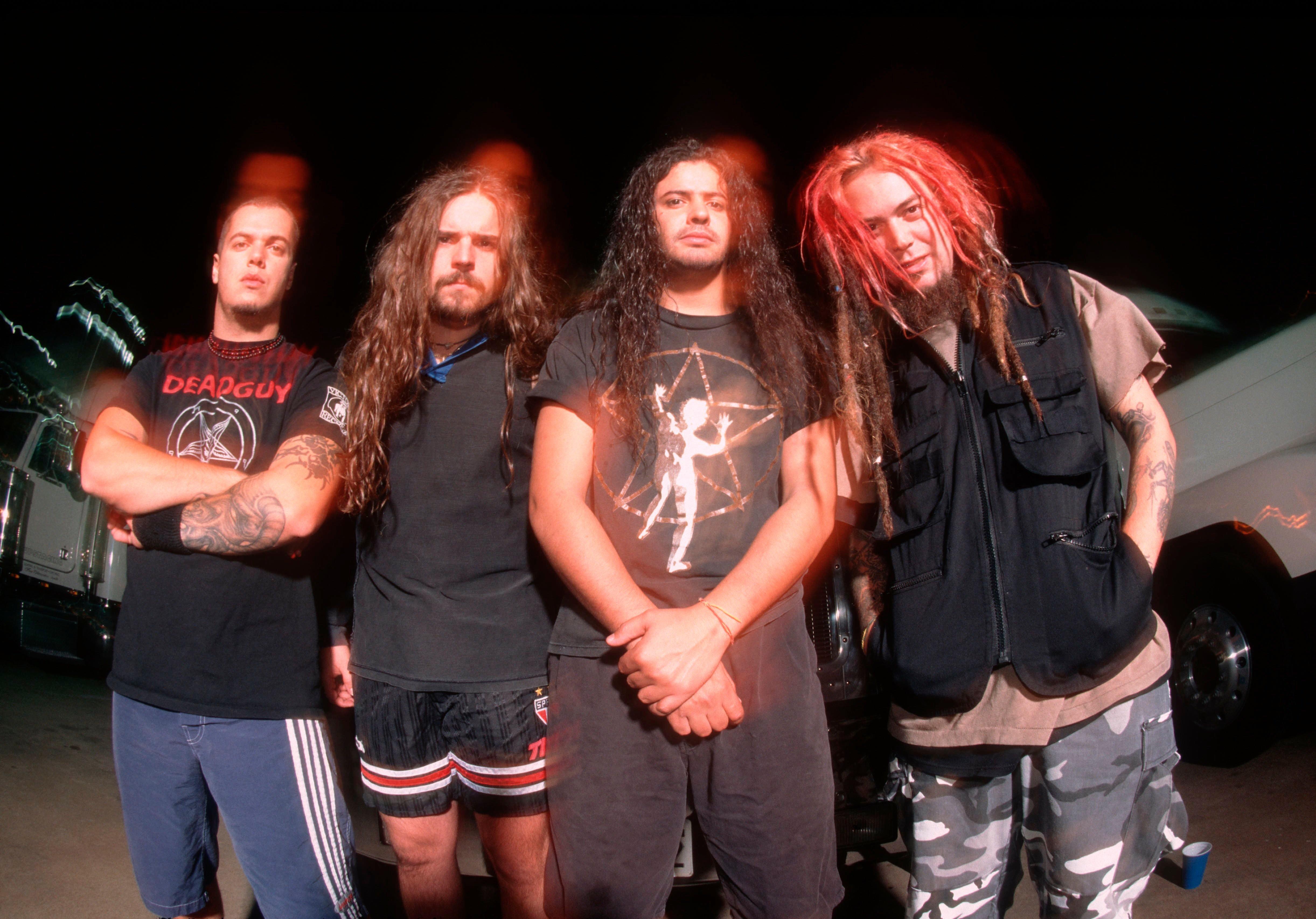
For Max Cavalera, co-founder of the pioneering Brazilian metal band Sepultura — and vocalist for bands Soulfly and Cavalera Conspiracy — the magnitude of the witnessed chaos does not surprise him.
"Some of the most memorable shows to me have been [in] Argentina, Brazil, Chile and then of course, Central America," he tells GRAMMY.com. "You put together the oppression of the country, the poverty, and once they're out in a show, they're gonna let it all out, and that's why you see fires and s— like that that you normally would not see at a regular show. It's almost like the concert gives them permission to let all that out."
Cavalera's point is supported by the research and writings of Dr. Nelson Varas-Díaz, a professor of global and sociocultural studies at Florida International University. Dr. Varas-Díaz is a metal fan who's written books and academic articles on the genre, including Decolonial Metal Music in Latin America and Seeing Metal Music in Latin America and the Caribbean, the latter co-written with Dr. Daniel Nevárez Araújo. In his work, Dr. Varas-Díaz traces the evolution of metal in Latin American countries to reveal how the genre has been used as a creative tool of expression to critically challenge the legacy of colonialism and subvert systemic oppression.
He says the crowd's reaction at the System of a Down concert ultimately underscores the importance of heavy metal in the region. But in order to deconstruct the phenomenon and understand why the music has had such a significant impact there, he says it's critical to recognize the heterogeneity of Latin American countries and key differences in their histories.
"Whenever the Global North thinks about Latin America or tries to conceptualize metal in Latin America, they think about the region as this uniform whole … they think about it as one thing," he tells GRAMMY.com. "But Latin America is a collection of different countries, and each one has their own particular history: cultural, political. Those dynamics are very different, and they yield themselves for different ways in which metal began in those scenes or changed in those settings."
The Birth Of A Global Metal Scene
The origins of metal can be traced back to the late 1960s when English bands like Black Sabbath and Deep Purple fused blues and rock to create a more aggressive and heavier sound. When Black Sabbath released their self-titled 1970 debut album, they cultivated an influential style, which inspired countless bands, and by the mid-'70s, a new class of metal bands known as the new wave of British heavy metal (NWOBHM) had been birthed, with bands like Iron Maiden, Venom, Diamond Head, and others leading the sound. By the '80s, metal continued to evolve, and subgenres like thrash came to fruition, powered by the fast sounds of American bands like Metallica and Megadeth.
Despite the genre's predominant evolution in Europe, Dr. Varas-Díaz says there's a misconception that heavy metal arrived in Latin American countries much later than it did in the United States or other regions. He says that as bands were releasing music and cultivating various subgenres of metal, fans in Latin American countries were aware of these developments as they were unfolding.
"During the '80s, for example, the references of metal music that emanated from the Global North were kind of universal. If you were in any country in Latin America during the '80s, you were aware of the sheer number of bands that were coming out of Europe and the United States," he says. "So, there was a moment at the very onset of this huge, booming popularity where you could talk to people from different countries and we were consuming the same things."
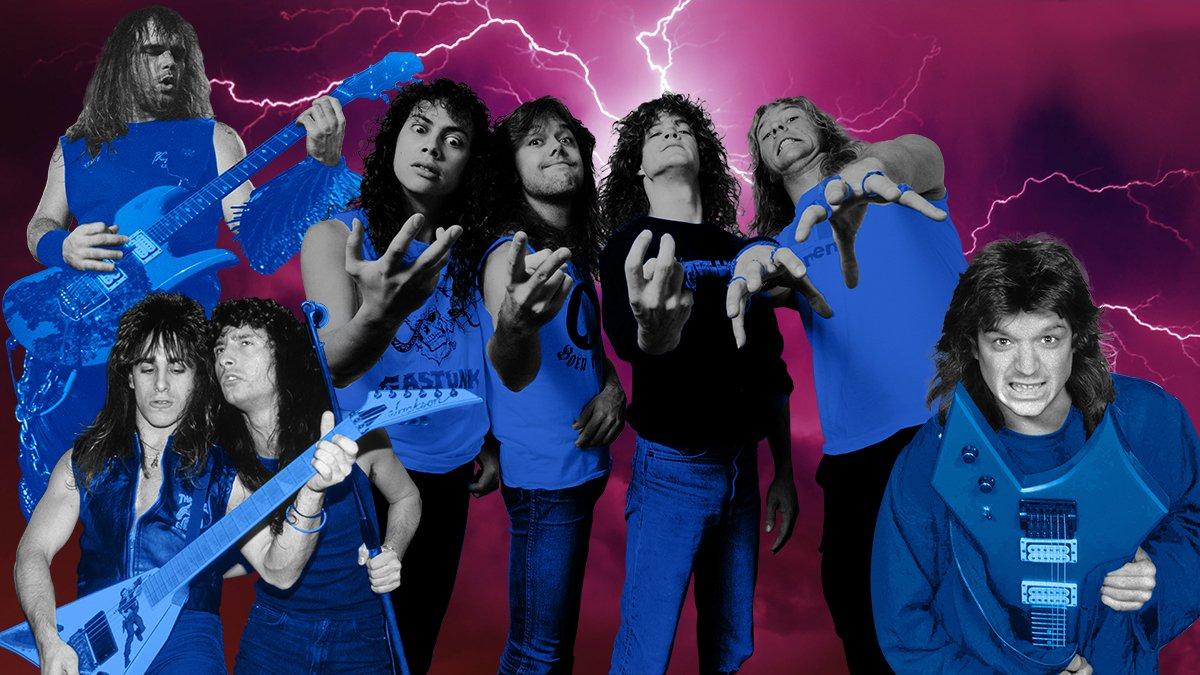
This is true for Cavalera, who says that in 1981, Queen were touring for their album The Game when they made a pit stop in Brazil where he and his brother Igor witnessed the British rock band for the first time. He says the concert was life-changing, and it immediately introduced Cavalera and his brother to other hard rock and metal bands.
"Me and Igor became rock and rollers overnight right after that," he says. "We bought cassette tapes of Queen and Kiss, and then we just wanted to know more bands like that, so we got into Judas Priest, Van Halen, and got more into other bands. But yeah, Queen was the gateway band."
In 1984, Cavalera went on to create Sepultura with his brother, and initially, their music emulated the bands they were most inspired by. The Sepultura frontman says they even decided to write their lyrics in English instead of Portuguese in an attempt to reach more metal fans beyond the borders of Brazil.
"For us as kids, our influences were more of the American and European bands; we wanted to sound like them. The only difference is, within a couple of years, we kind of realized that it's cool to sound like your heroes, but it's also very important to find your own voice and be original," Cavalera says.
Turning Poverty & Oppression Into Metal Music
Sepultura's quest for originality is one that many early Latin American metal bands were also experiencing as they began to rise across the region.
"There's a lot of people who believe that Latin Americans consumed metal music from the Global North in a passive manner, like we are receiving the bands from the north and we're just consuming them and imitating them, right?" Dr. Varas-Díaz says. "And there's some level of imitation early on, but the sheer speed at which metal music in Latin America is transformed through this Latin American filter that makes it sound different, integrates different instruments, is visually different from the Global North, and talks about different topics than metal in the Global North, that was almost immediate."
According to Dr. Varas-Díaz, many bands in Latin America were releasing similarly styled music concurrent to bands in the Global North. For example, in 1981, when Iron Maiden released Killers, the Argentine band Riff released Ruedas de Metal ("Wheels of Metal"), and in 1983, when Metallica's Kill 'Em All debuted, Arkangel in Venezuela released Represión Latinoamericana ("Latin American Repression").
Though the music is not exactly alike, these same-year releases show that bands were taking inspiration from the same source material and producing stylistically similar sounds while instilling their own unique cultural elements. Dr. Varas-Díaz says many bands from Latin America innovated the genre by incorporating their own political and socioeconomic histories, regional instruments, and different languages.
"This was not, 'Let's wait and consume.' This thing reached Latin America and was immediately transformed," the metal author says.
In Sepultura's case, that transformation began to occur through their lyrics, when the band started writing more political music reflective of their environment in Brazil. Cavalera says that in his country, poverty, corrupt governments and oppression afflicted Brazilians, and in the aftermath of the country's military dictatorship — which began with the 1964 Brazilian coup d'état, when military forces overthrew the president — generations like his continued to feel the ramifications of the country's deeply troubled history.
"We actually grew up later, but we remember this dictatorship. We know the stories of people being tortured in jails and the military coups and all that stuff. That was very, very fresh in our minds," he says. "We had all those military years of oppression, and we were scared to death of the police. All those things were real, and we grew up with all those elements, so I think all that really blended into the music and in the lyrics of the records."
Sepultura's 1993 album Chaos A.D. signaled Cavalera's musical departure from earlier albums and showcased his pursuit to create something original and authentic to his experience growing up in Brazil.
"There's a huge change in my lyrics when you talk about records like Beneath the Remains and Arise and then Chaos A.D. Chaos A.D. was fully aware of social issues. That's why I wrote stuff like "Refuse/Resist" and "Propaganda" and "Clenched Fist"; those are high-powered social issues," he says.
Even before Sepultura's 1993 release, however, many Latin American bands were already writing about their lived experiences under dictatorships or corrupt governments. According to Dr. Varas-Díaz, Colombian band Masacre was singing about the waves of violence in the region, Brazil's Ratos de Porão was writing about the burning of the Amazon, Argentina's Hermética was singing about police brutality against impoverished people, and in Chile, Warpath was writing about the Chilean dictatorship.
"While the Global North was singing about the problems of modernity like war, poverty — but singing about it in a very general manner — Latin Americans were thinking about the same thing in a very regional manner. So, it wasn't war like Sodom would write about war, or like Megadeth would write about war. [Instead,] it was the armed conflict in Peru, it was the armed conflict in Guatemala — it's very specific to the setting, to the region," he says.
Dr. Varas-Díaz believes that Argentina in particular — because of its storied political history and the bands that resulted from it — cultivated one of the most important metal scenes to ever materialize out of Latin America.
"It's a scene that was very organized from the beginning and had its own stamp of difference … there's this very working-class ethos in the way that the initial bands in Argentina conceptualized metal. If you think about Hermética's Acido Argentino, it's a very Argentinean [metal] album," he says. "This is a scene that very rapidly created its own narrative, like, 'This is who we are, this is what we sing about.' And it was a very working-class type of narrative, very anti-government, reflective of the dictatorship, reflective of the killing of Indigenous peoples in the country and addressing those topics early on."
Culture, Heritage & Latinidad Are Metal
Although the political upheaval that marred many Latin American countries was a dominant force that heavily imbued the music that emerged from those areas, culture and heritage were also critical factors in the regional transformation of metal. Many bands incorporated traditional instruments native to their countries, like Peru's Kranium, whose music includes Andean instruments like the charango and the zampoña.
"What we know today as folk metal in Latin America we owe in great part to Kranium in Peru, who started using local instrumentation years before actually recording and releasing them," Dr. Varas-Díaz says.
Cavalera amalgamated his own culture with metal when he connected with his Brazilian heritage for Sepultura's 1996 seminal album Roots, which incorporated traditional elements from famed Brazilian percussionist Carlinhos Brown and featured the native Xavante tribe from Brazil's eastern state of Mato Grosso. Even now, Cavalera continues to infuse Indigenous themes into the genre with Soulfly's new album Chama — Portuguese for "flame" — released earlier this month.
"The cover is actually Apache warriors from the Navajo reservation in Arizona, and it's bridging my Brazilian roots with the Amazon all the way to the deserts of Arizona," Cavalera, who lives in Arizona, says.
Meanwhile, contemporary Latin American bands have continued to build on the music of their predecessors while championing their cultural identity through the genre. Crisálida, a metal and progressive rock band from Chile, say they merge their influences from bands like Leprous and Teserract with the musical traditions of Chilean folk artists like Victor Jara, Violeta Parra, and Quilapayún. The latter are part of the nueva canción chilena genre, a type of folk music that spread throughout Latin America in the '60s and '70s and became associated with leftist political movements.
For Crisálida's vocalist, Cinthia Santibáñez, the influence of the nueva canción chilena genre proved to be the most impactful vehicle for telling Chile's cultural stories through the band's music.
"I sing the stories of my country, of what I feel is South American. My way of thinking centers on Argentina, Peru, Bolivia, Chile," Santibáñez told GRAMMY.com in an interview in Spanish. "I was born in this land, I want to talk about my land."
Crisálida bassist Braulio Aspé adds, "Music is art, and it's an expression from the soul, from our hearts, and that's why we don't want to do general heavy metal. We want to use our musical roots from here and we want to write about our history."
The band uses their music to explore the folklore from their homeland. Their 2024 album Niños Dioses ("Child Gods") spotlights the Capacocha ritual of the Inca empire, in which children made long treks into the Andes Mountains to be ultimately sacrificed to the gods. Aspé says the album has a "very powerful cultural context" and that Santibañez focused on conceptualizing the perspectives of the sacrificed children and their families.
"The instrumentation is very strong, very powerful, but also very soft. We worked a lot on the dynamics and dedicate this album to the children," Santibañez says.
Dr. Varas-Díaz appreciates the contributions of bands like Crisálida to the metal genre, and he believes that bands from Latin America have ultimately made a profound impact on the worldwide metal scene. The phenomenon goes beyond simply hosting large concerts — bands from this region have created a lasting, influential legacy.
"When you think about metal in Latin America, instead of thinking about, 'Oh, the crowds are huge,' what we should be thinking about is, 'How has Latin America transformed metal from the Global North?' Because that's the main contribution that Latin America has done for metal music in the Global North," Dr. Varas-Díaz reflects. "It integrated it, transformed it, and then put it out there in a completely different way, reflecting its cultural context and historical experiences."