
Photo: Per Ole Hagen/Redferns/ Getty Images
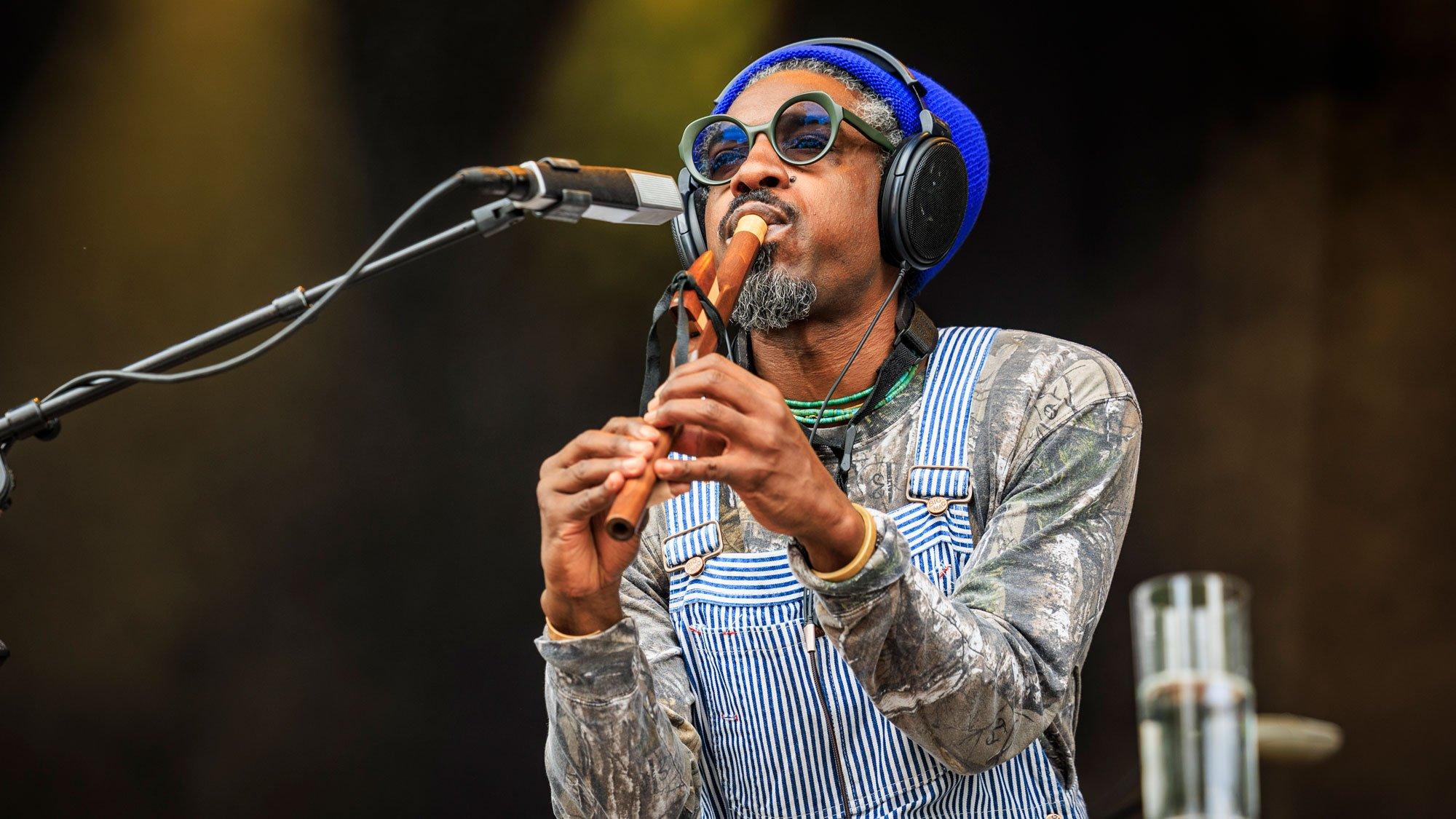
André 3000 performs on stage at the Øyafestivalen on August 8, in Oslo, Norway.
André 3000 On 'New Blue Sun,' Finding Inspiration In Visual Art & His New Musical Journey
The rapper-turned-flutist discusses his latest tour, how his artistic approach has evolved, and the surprising connections between his past and present music.
GRAMMYs/Sep 25, 2024 - 03:06 pm
André 3000 is taking his show on the road, again.
The rapper-turned-flutist is beginning another tour this week in support of his debut solo recording, last year’s New Blue Sun. The two-month North American jaunt will feature André and his band — Carlos Niño, Nate Mercereau, Surya Botofasina, and Deantoni Parks — performing the kind of collective group improvisation that was featured on their spacey, atmospheric album.
It’s been nearly a year since the album’s surprise release, so the world has had time to get adjusted to André Benjamin, experimental jazz musician instead of André Benjamin, one-half of arguably the greatest rap duo of all time. And André, likewise, has had some time to get used to being back in the public eye after years of trying to escape from it — a situation he compares to diet soda in our wide-ranging conversation.
GRAMMY.com called up André to discuss the tour, but things went in many different directions. We talked about his new musical life in detail — including why he jokingly refers to himself as the Lil B of out-there jazz. And we also delved into his old one. Does he ever write raps, even if only for himself? What is it like to have millions of people who only know you as the 23-year-old young man you were when OutKast's Aquemini created a whole new lane in hip-hop, as opposed to the 49-year-old man you are, who’s more into sharing stages with alums of Yusef Lateef’s jazz bands than with Big Boi or Killer Mike?
We got into all that, and a lot more. Check it out below.
This interview has been edited for clarity and length.
You're going out now for a new leg of shows in support of New Blue Sun. This tour is different. The venues are arts centers, concert halls, even an opera house or two. Last time it was jazz clubs and the occasional church. How are the audiences different in these sorts of venues, and how are you different as a musician and as a performer?
The venues, I think they're just getting larger because now people are finding out about it, and we've been blessed to keep getting booked in a great way. The only way the venue changes things is the sound. It may inform what we're doing.
Like, recently we did these caves in Napa Valley, and that was more intimate. It was caves, so you used the environment and the wall reverberation. That helps make decisions on what you're doing. But we've also gotten to a place now where, like you're saying, you’re performing in a larger church, and that church may have a longer [reverberation]. You do less in bigger spaces, because you're waiting for the sound to come back to you and fill it. Also, we've grown to bigger festivals, so we’re playing out in fields. And that’s even a different experience, because at that point you're playing out. We do more, you get louder.
It just depends, because it doesn’t change the original intent and formula of what we’re doing, which is listening to ourselves and responding. So the venue is just another effect or another instrument, in a way, that we have to pay attention to. It gives us guidelines of what we want to do in the space.
What role do you play in the dynamics of the band? Are you the one saying, time for a new section or an ending? Who's handling the cues?
No, [laughs] we don't have cues. As a whole, we feel it. We feel when it's resolving, or we feel when it's building. Sometimes it gets really silent, and then someone may start. We don't have a, “Hey, you go do this.” It's not that at all. It is a total collective of feeling what's happening at the time.
I may start a riff or a melody, or Nate may start like something, or Carlos may start something, or Surya may start something. And we just listen and chime in. But there are no cues like, okay, we're going to do this.
The only cue we may have is when we get together in our huddle before we go out, to ourselves, as a collective. We may say, “Let's start full on,” and whatever that means, we just dive completely in. Or we’ll say, “Let's just start in silence,” and we may sit there for 30 seconds to a minute completely silent, just listening to the crowd shuffle around. But that's our only cue a lot of times, and that's usually venue by venue or what we're feeling from the crowd. Other than that, once we start the ride, we're on our own G.P.S..
To the extent you can put it into words, what's going through your head when you play? I know you're not a trained musician who thinks in terms of notes and chords.
Sometimes, not musically at all. Sometimes it's concepts. I may be thinking pattern-ly or lines. Like if I just came from a museum or something, and I saw an artist and they used these kind of lines, [I’d think], how can I play like that? What does that sound like? And I'll try to mimic it.
Sometimes it’s just feelings. I may be agitated and try to play what that is. Because I'm not a trained musician, I have to find other ways to get to it, so I'm trying to use it as a way to describe what I'm feeling or what I'm trying to say.
As long as I have an intent, I think that's most important. I have a goal. Sometimes I'm trying to agitate people around me, or trying to play like a bird. More concept playing, and I try to translate that.
One thing that your old music and your new music has in common is rhythm and phrasing. What connections do you see between how you would rhythmically phrase things as a rapper, and how you phrase things on the flute?
That's good you say that, because I think my strongest point, because I'm not a trained musician — I don't know keys or certain harmonies, I'm all using my ear — but I can translate rhythm from what I've done before. I can translate rapping.
It’s almost as if a rapper became a guitarist, you’d probably be a better rhythm guitarist than anything, because he's played with rhythm. So yeah, a lot of things are rhythmically for me. I respond to that, because I've been in that space, and my mouth is doing that. It's rhythm.
When you were rapping, you had other groups in your Dungeon Family collective and people you probably considered your peers. Who do you consider your peers now when it comes to the type of music you and the group are making?
A long line of historical bands like Sun Ra, the Chicago Art Ensemble. Even rapper Lil B. I was joking to myself: I was like, I'm almost the Lil B of this type of music. Lil B is, they call it based rap. My son actually turned me on to Lil B.
I'm informed by all kinds of things. I'm informed by Coltrane in ways. Eric Dolphy, for sure. Pharoah Sanders, Yusef Lateef. These are all people that for years I considered gods, not even knowing that I would be going in this direction, but I responded to these people. So I think when I play, I may reference them and not even know it, because it's in me.
Sometimes we have OG players sit in with us that may have played with Yusef. We invite them on stage and after we play a set, some of the feedback that I've gotten has been really interesting about what I'm referencing and what I'm doing and who I sound like. And I'm like, wow, I'm not even trying to do a thing. But sometimes, it’s in your skin what you listen to or your sense of melody because you’ve listened to a certain thing for so long.
I'm curious to go back to the Lil B thing. What sort of parallels do you see between his approach and what you're doing?
Because a lot of what he's doing is made up or improv or really reactionary. It's not this studied, perfect thing. Because I came up in the ‘90s, we came up with Nas and Wu-Tang and some of the [people] considered the best rappers around. It was about clarity. It was more of a studied kind of thing.
A person like Lil B is not studied at all. But the way the kids respond to him, it's because of that. It's kind of like a punk way of rapping, and I like it. [And what I’m doing is] almost like punk jazz or punk spiritual jazz. It's pure feeling.
For me, it's really physical, because I'm coming from a different way. It's always been like that for me when it comes to instruments. Like, if I pick up a guitar, it's shapes in my hand, or if I'm on a piano, it's shapes on my fingers.
So when I'm playing a wind instrument, I'm physically trying to will something to happen. Some of my favorite players are physical. Kurt Cobain was physical — he wasn't the most perfect player. [Jimi] Hendrix wasn't even the most perfect player, but sometimes it was physical, what he was doing. Or Thelonius Monk, he hit the piano like it was drums. It's this physical thing that I like,
Did you connect more to Hendrix’s physicality during the time you literally had to become him for a couple of months [during the filming of the 2013 biopic Jimi: All Is by My Side]?
No. That was such an odd thing I had to do because I had to pretend to be left handed, which was very odd for me. No, it was a true acting situation.
The past year or so, what has it been like being a public person again? Are you treating it any differently than your first go-round?
It’s almost like [laughs] superstar lite, like Coke Lite or Coke Zero. It’s like Superstar Zero. You’ve got the fame, but it's not as intense as it was before. It's different. A lot of people are weirded out about the direction, so it's not the same intensity of the whole world on board with you — which is kind of cool for my age and tastes. I like this pace a lot, compared to just being all over everywhere all the time.
Then there's this other thing, too. The album has been out a year, and we recently dropped this film that we did to the album that came out a year ago, but we just released it on YouTube. So a lot of people are just now discovering the album. It's like, “Yeah, we heard something about this flute thing,” but they never heard it. Now that this video is out, a lot of people are hearing it again, or for the first time. So it's a cool thing that you kind of get this second wave of people that are just now hearing it.
Some of the ways you talk about playing remind me that your initial artistic plans, before rap, were in visual art. What connection do you see between the type of music you're doing now and the visual art you were doing when you were a teenager?
I don't necessarily see a connection from what I was doing when I was younger, visually. But as I've gotten older, now I do my own personal art study. I've never been to art school or anything, but now on YouTube, I have my own personal art history classes, and I'm learning: “Whoa, okay, Basquiat, he liked Cy Twombly. Cy Twombly, he just made these gestures on the canvas. Oh, I see Basquiat makes these gestures on the canvas.” Now I totally can see or even get influenced from a visual or physical thing, because a lot of those gestures were physical things.
It wasn't like I'm trying to make the most perfect figurative image. I'm trying to relate something. A lot of that, I can take from or be inspired by when I'm playing. Sometimes it's the only thing I have, because I don't know a certain progression or a certain series of notes. I know I'm physically doing a thing, and if I know that's matching what my ears are hearing in that key, I feel like I'm in the right place.
One thing I'm always interested in is how rappers think about rap. I've talked to artists who are like, “If I was walking down the street and saw a stop sign, I would come up with 100 rhymes for ‘stop sign,’ and it got so intrusive that I had to consciously cut that off.”
These days, do you still think of raps, even if it's only fragments or lines? If so, do you ever write them down or save them? Where are you these days in terms of composing raps or having raps come to mind?
Yeah, I totally rap all the time. I think it's just in me. But it's not an obsessive thing where if I see a brick, I have to rhyme “brick” with something. It's more of: there's a thought that's important to me. Then if there's a next line that rhymes, I go there and I'll write it down. But I'm not obsessive, where I'm trying to find every word that rhymes with “brick.” It's not an exercise for me. It's just a means to an end.
It's funny because my engineer that I'm working with now, he raps, too, and he's a younger kid. He's asking me about how I do it. He was telling me his technique — he'll find all these words that rhyme with this word. And I was like, oh, that's cool. But when I do it, it's supporting the thought more than the rhyme. The rhyme is supporting the thought. It's not seeing how many things I can rhyme. But if I have a thought and I have a next thought, I am going to try to find that.
So it's more important to support what I'm trying to say, more than rhyming. There are rappers to me that are true rhymers. The biggest way I can explain it is, some painters are just painters — that's their form, is oil on canvas. And then some artists are concept artists, some artists are emotive. It's more about the emotion or saying something. For me, it's more about what I'm saying than how I'm saying it.
What’s next for you, recording-wise?
There's always new music to come.
Anything specifically you can say about that?
No. It's too early for me to even be able to describe what’s coming. But I'm always recording and trying to figure out new ways to do stuff.
I assume you hear OutKast’s music sometimes when you’re out and about. But do you ever intentionally listen to it?
Rarely. But recently, a friend of mine sent me a video of an interview that I was doing, and I was talking about a certain song that I hadn't heard in a long time. So I went back to listen to that song, and that sent me down the rabbit hole of all my guest verses and OutKast stuff. So one day I was in my hotel room listening to all this stuff for hours — five hours of albums and guest stuff. And it was surprising because you’re listening as a fan and not remembering where you were at the time when you did them. It's almost like you're having an out-of-body experience listening to yourself. Then you realize how much time has gone by and how different of a person you are, which is even crazier.
I can imagine! The first time I saw you perform was in 2001, which was four records into your career. But that’s almost 25 years ago.
Yeah. Twenty-five years is a long, long, long, long time. So you gotta imagine listening to yourself. It’s almost like looking back at high school pictures: how your hairstyle was, how your clothes were. It's all a trip because you're like, whoa, that was a completely different time.
And what's even crazier is that the audience a lot of times, they don't grow, or they only know what you've given them. So a lot of times in their mind they're still there, and it's kind of weird. Stuff that they're hoping for from you, you've already moved past that.
A lot of people don't understand — even when you put an album out, you're past it already. You may be onto something else. But they start right then, and they only know of that. They don't know the years in between. They don't know the growth in between. And they really don't care, which is understandable. As the audience, we only know what we get — we don't know the in-betweens. It's almost like seeing your nephew that you hadn't seen for years. You only remember him as your little nephew. Then he's taller than you the next time you see him.
It's like that, but on such a grand scale, I can't imagine what it must be like for you to have millions of people whose mental image of you is when you're 23 or 25.
Yeah. And it's funny because we're almost on two different wavelengths. Even when New Blue Sun dropped, one of the biggest stories, which I didn't understand at first — but then I had to understand — was writers saying, “We wait fucking seventeen years, and he puts this out?”
To them, they're waiting. But I never said that I was about to put out an album. So in my mind, I'm not trying to be what I was 17 years ago. To me, it's just, life has gone on. It’s almost crazy to think that someone would put something out 17 years later. At ten years, I'm like, “Oh, that's done.” Even for me, I thought I was done. I really thought I was done at a certain point. And here comes a different thing. So that was surprising to me. At first, I was like, why would y’all wait 17 years for anything? And then I'm like, oh, well, that's all they know. I wasn't waiting.
Over the last couple of years leading up to the album, there was this [clip] that became famous, of you walking around and playing the flute in public. Is that something you're still doing? Are you still practicing in public?
I do it still, but it's sad in a way, because now that I've put the album out, when I do it, people expect as if I'm performing in public. But it started as a thing for me. I like to walk. I like to hike. I like to walk, and carry my flute while I do. It was just a thing.
And so when people started sneaking videos and posting them, it was not a plan or anything. I actually love to play in nature. I love to play when I'm walking, when I find caves or when I find tunnels where the reverb is awesome. I love walking and finding places to play, but now it's almost like I have to sneak off and do it. I have to be away from the public in a way to do it, so it doesn't become a thing. So I don't do it as much as I used to.
Latest News & Exclusive Videos

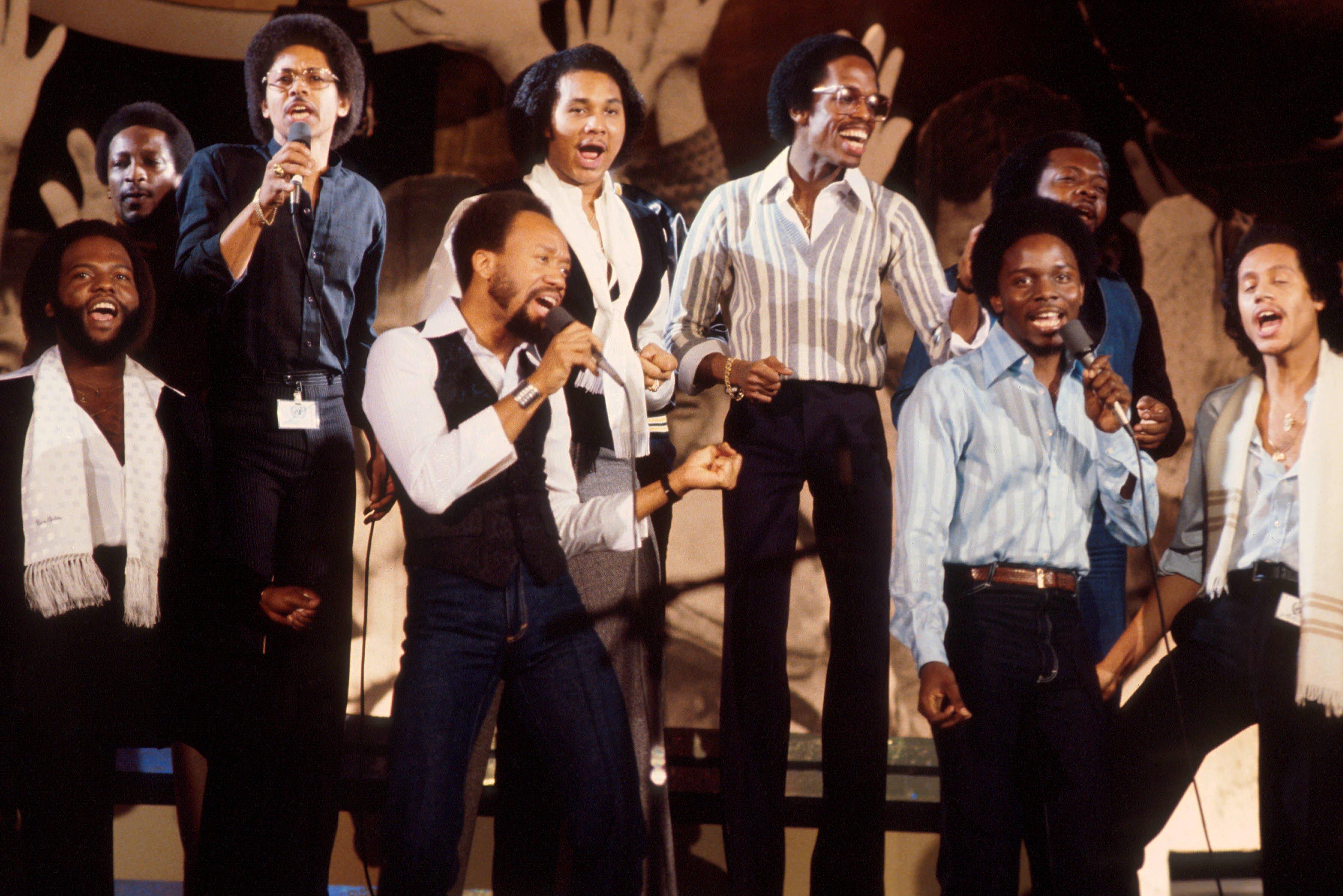
Earth, Wind & Fire perform at the Music for UNICEF Concert in 1979.
Photo: Michael Putland/Getty Images
5 Artists Influenced By Earth, Wind & Fire: Phil Collins, Pharrell Williams & More
As the genre-blending band's impact is celebrated with the CBS special "A GRAMMY Salute to Earth, Wind & Fire," see how they've influenced some of the biggest names in rap, R&B and beyond.
GRAMMYs/Sep 16, 2025 - 02:12 pm
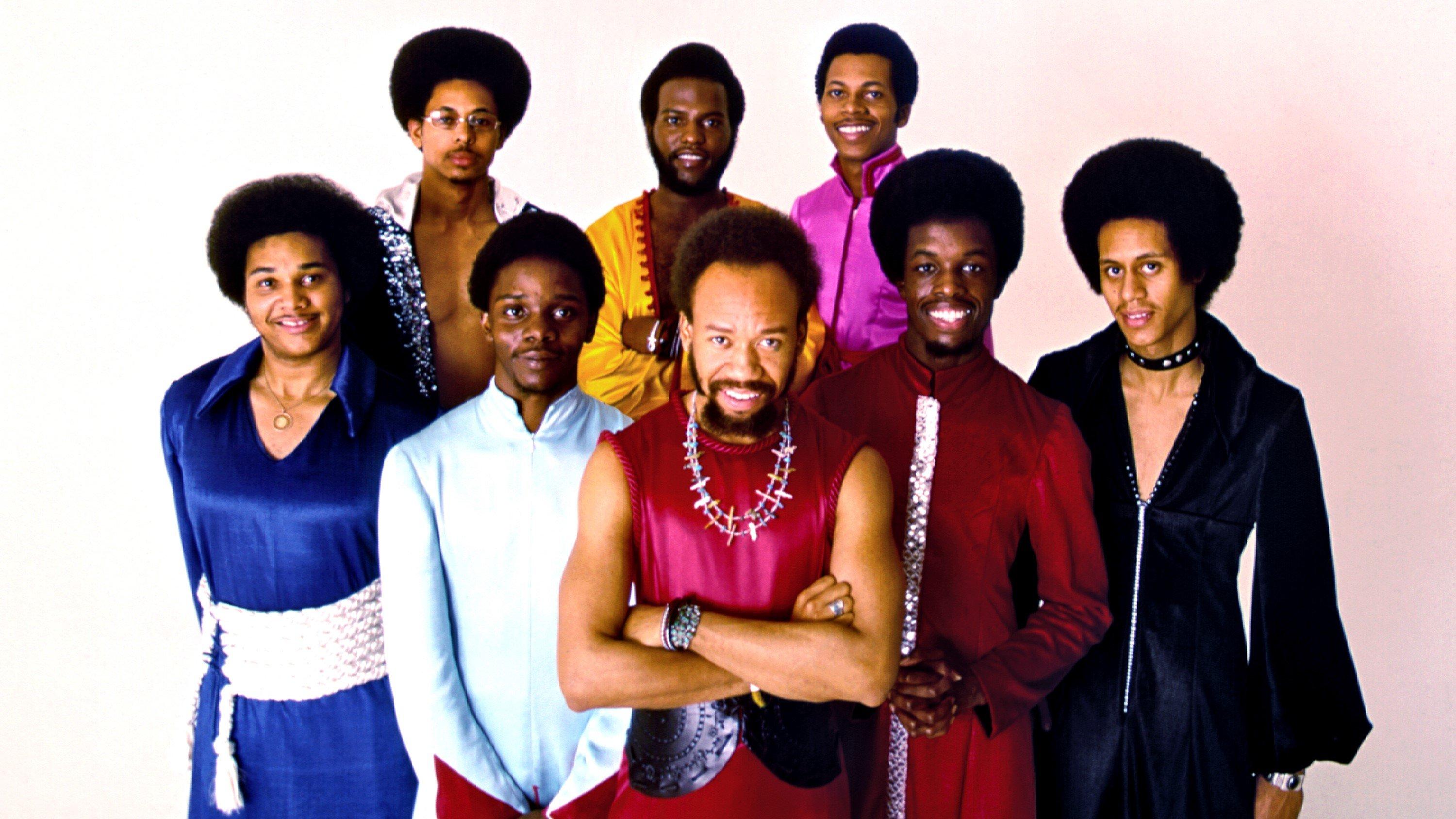
It took Earth, Wind & Fire six studio albums before they became mainstays on the pop charts. However, the genre-blending funk group's longstanding influence suggests that they've been opening minds and writing inspiring music since their self-titled debut in 1971.
Earth, Wind & Fire's legacy is now cemented with multi-platinum albums and six GRAMMYs, but just as important is the cultural impact they left on the generations of artists that followed them. Founding member Maurice White introduced the kalimba, a Zimbabwean finger-plucking instrument, to mainstream audiences, while their seamless blend of soul, funk, R&B, and jazz — particularly on breakout album That's The Way Of The World — paved the way for future crossover success from Black artists.
EWF's contemporaries in the 1970s and 1980s were showering them with praise and incorporating elements of the group's sound and style into their own work. Even when it's not explicitly stated, moments like the look of the Jacksons' 1984 album, Victory, and its subsequent tour seemed to draw directly from the sequin-heavy, futuristic and eccentric costumes and large-than-life performances of Earth, Wind & Fire. Miles Davis once called EWF his "all-time favorite band," which Maurice White said there was no greater honor than that in his book My Life With Earth, Wind & Fire. Isaac Hayes, Quincy Jones, Dionne Warwick, and Stevie Wonder have all praised the group's impact on popular music and their work.
Then came the hip-hop generation who discovered Earth, Wind & Fire records in their parent's record collections. According to Whosampled.com, their most popular sample isn't even a famous single, but a minute and twenty-one second interlude from All 'N All called "Brazilian Rhyme (Beijo Interlude)." The rhythmic barbershop vocals and percussion have been sampled in over 100 hip-hop and R&B songs by artists like Big Pun, the Black Eyed Peas, Eazy-E, Mary J. Blige, Madlib, and the Fugees. (The clip has also been a staple for house and disco DJs through edits and remixes by DJs like Danny Krivit, who extended the groove by looping the rhythm section for a more satisfying burn on the dance floor.)
More recently, EWF's iconic hit "September" took on new life in 2016 thanks to actor and TV writer Demi Adejuyigbe's viral videos dedicated to honoring the 21st day in September. For six years, his meme-worthy annual "September" videos garnered millions of views and raised thousands of dollars for charity. And just this year, pop music's newest queen Sabrina Carpenter gave the group their flowers during her headlining set at Lollapalooza in Chicago, bringing out the hometown heroes to perform "September" and "Let's Groove" with her.
Coincidentally, on this September 21, Earth, Wind and Fire will be the subject of a television special titled "A GRAMMY Salute to Earth, Wind & Fire Live: The 21st Night of September" from 8-10 p.m. (ET/PT) on CBS and Paramount+. Filmed at the Hollywood Bowl with the L.A. Philharmonic, "A GRAMMY Salute to Earth, Wind & Fire Live" will honor the group's cultural impact and timeless sound with hit songs and special guests; Stevie Wonder, the Jonas Brothers, Jon Batiste, and Janelle Monáe are among the artists who will join in the celebration.
Ahead of the special, check out five acts — Monáe included — who have paid respect to the group's everlasting legacy through their own artistry.
Janelle Monáe
In a 2011 interview with Rhapsody.com, Janelle Monáe shared that growing up, the only 8-track albums she and her sister wanted to hear in her father's car were the Earth, Wind & Fire ones. "They left a lasting impression in my mind of what funk music represented," she said.
It's easy to see the Afrofuturist lineage in placing the Egyptian futurism of EWF album covers alongside Monáe's 2010 breakout album, The ArchAndroid. Her sound moved closer to EWF influences on "It's Code" and "Ghetto Woman" from 2013's Electric Lady. However, it's her 2023 LP, The Age of Pleasure, where the free-spirit singer directly tapped into her idols' energy.
As Monae told Rolling Stone, she was thinking about the Maurice White quote "If it ain't no beauty, make some beauty" while recording The Age of Pleasure. Much like EWF pushed Black consciousness and ancestral spirituality in the 1970s through infectious funk and a triumphant brass section, Monáe's GRAMMY-nominated album opened that same consciousness chakra to a Pan African diaspora and pro-LGBTQIA+ community.
Outkast
In 2003, following the release of Outkast's epic double album Speakerboxxx/The Love Below, André 3000 referenced Earth, Wind & Fire while musing about the mystical nature of certain album artwork: "You looked at album covers and they was like, 'Damn! Look at that picture of Earth Wind & Fire.' It's like, aw, man! That's amazing. They must be magic or something."
If there's one group who came close to the visual aura of EWF, it was undoubtedly Outkast. Whether it was the zodiac mash-up of Aquemini, which paired a bohemian with a lowriding pimp, or the expansive experimentalism of Stankonia that sought to treat rave, gospel, twangy funk, and psychedelia as a unified groove, Outkast honored EWF with their fearless spirit. But, if there's one song that exemplifies their admiration for EWF, it's "The Way You Move" featuring Sleepy Brown.
With its horn accompaniment and Sleepy's Philip Bailey-esque falsetto chorus, the single off Big Boi's Speakerboxxx rose to ubiquitous, EWF-esque levels of mainstream success. The connection was confirmed when Earth, Wind & Fire shared the stage with Outkast and Sleepy Brown for a performance of the single at the 2004 GRAMMYs, the same night that Outkast made history as the first rap album to ever win Album Of The Year.
Pharrell Williams
In a feature on the soundtrack to his life, Pharrell Williams told The Guardian that he was "raised on Earth, Wind & Fire" — going on to credit "Can't Hide My Love" as the song that "made me a singer."
Knowing that, it's hard not to hear Williams' signature falsetto as his take on Philip Bailey. And while some of his biggest, most EWF-esque singles with Daft Punk were made with another 1970s disco legend in Nile Rodgers, Daft Punk provides a bit of Earth, Wind & Fire in songs like "Get Lucky" and "Lose Yourself To Dance."
Williams' role as a producer has also incorporated the group's influence. N.E.R.D. productions that feature orchestral flourishes, like "Bobby James" and "Run To The Sun," feel like direct descendents of Charles Stepney-era Earth, Wind & Fire.
Phil Collins
By the 1980s, Phil Collins was exclusively known for the prog-rock stylings of Genesis — in turn, few understood or expected Collins' experimental proclivity would produce an R&B- and jazz-influenced pop album. But, Collins was a big admirer of experimental Black musicians who would still create infectious grooves like Weather Report and Earth, Wind & Fire.
Rather than imitating his admiration for EWF's horn section, The Phenix Horns, he hired them to accompany him on six songs for his 1981 solo debut, Face Value. While recording in Los Angeles, he'd been developing a pop-friendly crossover sound that pulled more from R&B and world beat that fit squarely in the Phenix Horns' comfort zone.
Collins' continued to draw from EWF when he returned to Genesis, once again enlisting the Phenix Horns for "No Reply At All" on the album Abacab, which was released just seven months after Face Value. In 1984, he recorded "Easy Lover" with Philip Bailey for the EWF singer's third solo album, Chinese Wall, while EWF drummer Fred White appeared on Collins' 1990 live album, Serious Hits… Live!
A Tribe Called Quest
In a 2013 interview with Red Bull Music Academy, Q-Tip of A Tribe Called Quest shared that when he was recording their debut album, 1990's A People's Instinctive Travels and the Paths of Rhythm, his thought process was to "to make something as close to like the Beatles, or Earth, Wind & Fire, or Sly [Stone] as possible for hip-hop." Which is why it's no surprise that he looped a segment of Maurice White's signature scatting lyrics from "Brazilian Rhyme (Beijo Interlude)" for the Tribe song "Mr. Muhammed."
While the quartet didn't sample EWF much beyond "Mr. Muhammed," their eclectic and adventurous sound that blended disco, funk, soul, and jazz into a groundbreaking new style for hip-hop — mixed with open-minded lyrics — makes A Tribe Called Quest descendents of EWF. In fact, after Maurice White passed away in 2016, Q-Tip revealed that "Tribe was meant to be hip-hop's equivalent" to Earth, Wind & Fire during a tribute episode of his Apple Music radio show, "Abstract Radio." In a Facebook post promoting the episode, Q-Tip wrote the simple dedication to "My hero, the master, the maestro."
Latest News & Exclusive Videos
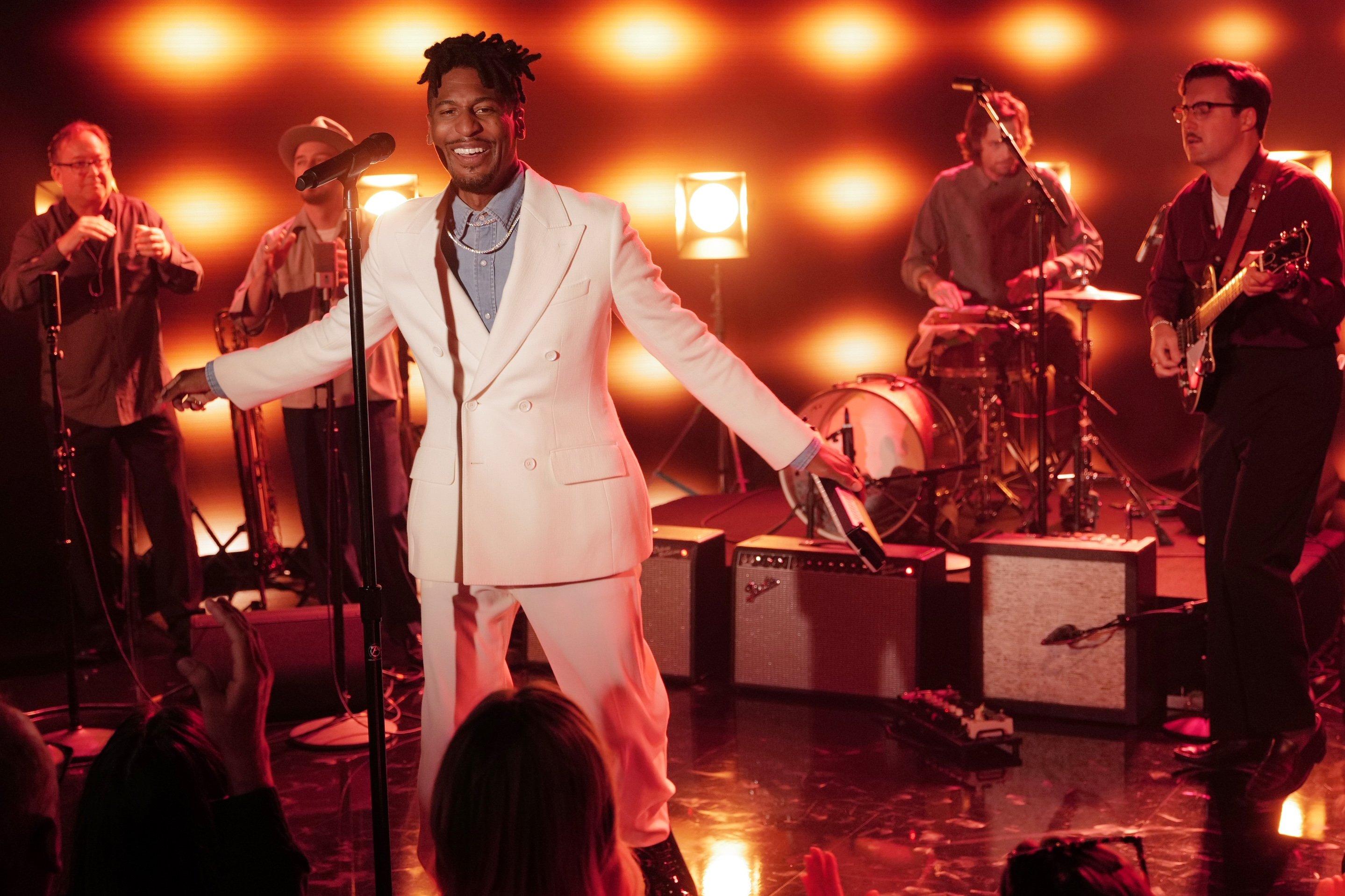
Jon Batiste performs on "Jimmy Kimmel Live!" in August 2025.
Photo: Randy Holmes/Disney via Getty Images
8 Jon Batiste Songs That Show His Ability To Unite Through Music
With his new album, 'BIG MONEY,' Jon Batiste continues the message-driven lyrics and hope-instilling sounds that have made him so acclaimed — from his moving take on "What a Wonderful World" to the title track of 2022's GRAMMY Album Of The Year, 'WE ARE.'
GRAMMYs/Aug 26, 2025 - 04:56 pm
Music offers a language and a palette to speak of untruths, to right wrongs in song, and to call people to rise up. Few modern artists are better at eliciting this collective meeting of the minds than Jon Batiste.
The classically-trained pianist and 7-time GRAMMY winner — and first-ever recipient of Ray Charles "Architect of Sound" Award at the 2025 GRAMMY Hall Of Fame Gala — uses his voice and the 88 keys on the piano to create sonic textures that evoke the zeitgeist. Batiste has inspired listeners with his songs, whether originals or reimagined covers of standards from the American songbook, since his 2005 debut Times in New Orleans. And it's no surprise that his latest, BIG MONEY, offers another batch of powerful songs that make strong statements.
The message that permeates the nine-song collection — and is symbolized by its title— is that no matter how hard you work, or how much money you make, you can not add any more life to the balance sheet. The album also further exemplifies Batiste's ability to defy genre, as BIG MONEY is a subdued, bluesier sonic exploration that features a palette of musical colors and his signature jolts of joy.
As BIG MONEY implies, Batiste's songs are gifts from somewhere in the ether that offer hope when we need them the most. His entire discography bursts with compositions that create and celebrate community, and inspire and teach without getting too preachy. Batiste's goal is to reach your soul and uplift your spirit; these are songs about hope, freedom and love that both move you and make you want to move to the music.
In honor of Batiste's latest release, GRAMMY.com combed his catalog to highlight eight tracks that showcase the depth — and the breadth — of this accomplished artist.
Following graduation from Julliard, Batiste assembled a band featuring many of his classmates and musical peers. He named the group Stay Human to reflect his belief in the power of music to uplift. Batiste has always used his music as a connector, and that was the raison d'etre behind the concept (and the recording) of his 2011 EP with Stay Human, MY N.Y.
The 11-song project was recorded all on a New York subway train, using this physical representation of "connections" to make a statement about the importance of community. The artist's goal is to always search for ways — whether through original lyrics or through feelings he evokes with his chosen instruments by rearranging well-known melodies — to make connections. Sometimes, like in this version of the 1930 jazz standard "On the Sunny Side of the Street," no words are needed to move people to action.
This traditional tune from the American songbook was first a poem penned by Julia Ward Howe in the mid-1860s; she was inspired by the abolitionist singalong "John Brown's Body," adding new lyrics to create a patriotic Union rallying call for the end of slavery. On Batiste's rearranged version for The Atlantic, he brings his feelings to the classic and reinterprets it knowing the social history of the past and contemplating the present, trying to capture all of these moods in the music.
He keeps the melody intact and instead creates this bittersweet reworking in two ways. First, in the gospel delivery of a preacher the song's chorus, "Glory, glory Hallelujah." And, second, by composing this reimagination entirely on a prepared piano — a technique where objects (in this case his wallet, paper and duct tape) are placed on the strings to create unique sounds such as Gregorian chants and global rhythms to symbolize what, to him, the American Dream really means.
As he said in an interview with "Face the Nation," "It's just a blend of everything that I think that if we, at our best … the ideal of American life at its best everything co-existing and the great compromise of everything being her and being as one, and that's what the piece represents."
Originally written for Louis Armstrong as a vehicle to unite people in turbulent times, "What a Wonderful World" was penned by a pair of songwriters during the mid-1960s with the assassinations of the Kennedys, the escalating Vietnam War, the Civil Rights revolution, and racial tensions weighing heavy on their minds.
With an emotive solo piano rendition, Batiste breathes new life into this timeless tune at a time America needs it the most and once again faces a divided nation. The country, and the people, needs this elixir of optimism in song as a reminder of the everyday beauty that surrounds us.
Alongside Trent Reznor and Atticus Ross, Batiste scored the music to Soul, the award-winning 2020 Disney/Pixar animated film that follows the main character, Joe Gardner, into another realm on a journey to reunite his body and his soul using jazz music as the soundtrack to this quest. As Batiste told Rolling Stone, "music in the film is a character."
Perhaps one of the most moving musical moments comes from Batiste's version of Curtis Mayfield's "It's All Right," which was made famous by his band, The Impressions, in 1963. Featured during the end credits, the uplifting track offers the perfect bookend to Soul, reminding listeners to live in the present and take every day as a gift.
"We are the chosen ones." This is the universal message that lingers long after one listens to the title cut of Batiste's Album Of The Year-winning WE ARE.
The record's underlying theme of hope and its message that humans are all connected resonated as it arrived in the midst of a global pandemic — a time of uncertainty and isolation when the world was looking for something to cling to. WE ARE offered messages that were both autobiographical and universal, blending the past, present and future in melodies and compositions that offered hope amidst hopelessness.
The title track features the St. Augustine High School Marching 100, a nod to his past and his heritage, as several generations of his family are alumni of this historically Black New Orleans high school. Written and inspired during the Black Lives Matter movement, with the killings of George Floyd and Breonna Taylor weighing on his mind, the gospel-esque song is overwrought with the spirit of "we shall overcome" and leaves one with the universal message that "we are the chosen ones."
The funky title to WE ARE's anticipated follow-up alludes to Batiste's ongoing mission to use music as a conduit to connect. Radio, the medium to receive music for generations, should not be defined by genre, but be a place where all voices and all sounds are heard; in Batiste's eyes, all music is "world music." And with album cut "Be Who You Are," he broadcasts an important message: we need to celebrate our differences.
"You're bringing something they can't bring/ And singing something they can't sing," he asserts to the listener on the song's opening verse. With rapper J.I.D, K-pop group New Jeans and Spanish star Camilo sending a similar message in their own style (and languages), "Be Who You Are" is a quintessential example of Batiste's knack for both inspiration and connection.
Batiste's documentary explores the love and the relationship between him and his wife, Suleika Jaouad. It also chronicles Jaouad's brave battle with leukemia as Batiste attempts to pen his first symphony. This ballad — which appears in the final scene of the doc, with Batiste alone at the piano to bring this story to its poignant conclusion — encapsulates the power of their enduring love and Jaouad's courage.
As Batiste sings, "Summertime adventure/ That's what we were meant for/ I need you/And that's never goin' to change." Though specifically a personal ode, this composition is a conversation in song that is also an omnipresent lullaby of perseverance and survival that hits home for everyone.
Read More: Inside 'American Symphony': 5 Revelations About The Jon Batiste Documentary
You can't take it with you. Batiste reprises the age-old adage in the title track from his new album.
The bluesy song is a gospel-infused number that tackles capitalism head-on, along with humans' desire to acquire more and more greenbacks thinking material wealth equals happiness. Reminding us of this truth in this catchy song, Batiste croons: "You could be livin' the life, but not the dream … everybody is chasing that big, big money … so you might as well live for something you can feel." Wise words indeed, JB.
Latest News & Exclusive Videos
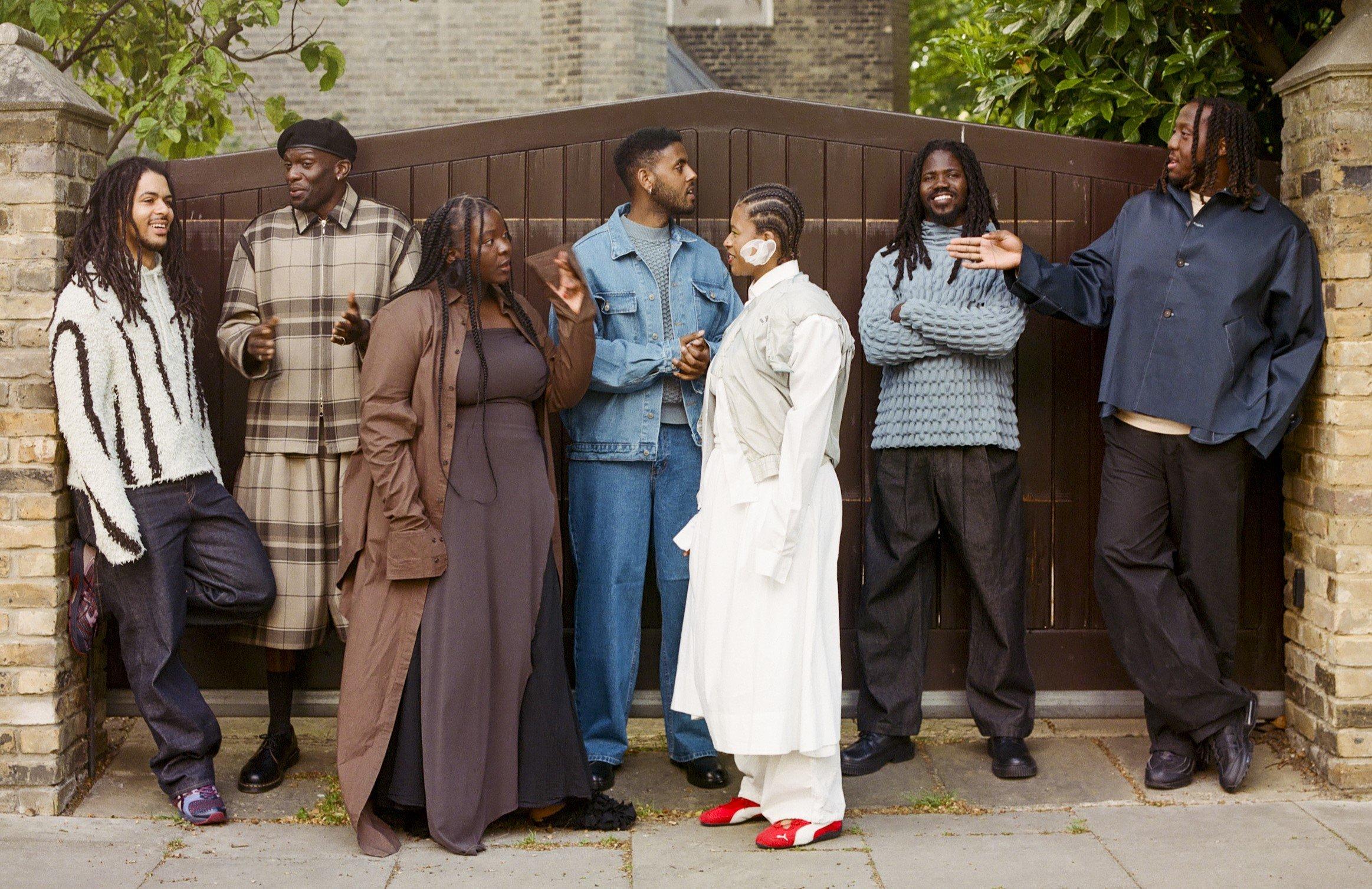
Kokoroko in London. Photo: Kemka Ajoko
Photo: Kemka Ajoko
Kokoroko's Joyous, Pan-African LP Is A Reminder 'That Tuff Times Never Last'
Kokoroko are a testament to their wide-ranging community. "We want to be a part of sharing that story. We are, just by living. But we can put it down on paper and in music," says percussionist Onome Edgeworth.
GRAMMYs/Jul 10, 2025 - 03:37 pm
In a world where Black musicians are often pigeonholed, forced to maintain legibility, Kokoroko remains unpindownable, ever-changing. In the tradition of British African ensembles like Osibisa and the West African Rhythm Brothers, the London-based seven-piece are masters of African fusion, intent on bridging the divide between young people and African popular music of old.
Their unique sonic disposition paved way for the critical success of 2018’s "Abusey Junction," a tranquil, 7-minute debut record inspired by everything from the lilt of the West African kora to the warmth of Ghanaian highlife. With a breakout track so significant, many tastemakers rushed to define the troupe’s sound, often categorizing them within the confines of dominant "Black" live music genres like jazz and Afrobeat. But much like the Black London in which they were raised — known for its ever-shifting face, for its chaotically diasporic character that makes it difficult to ascertain where one culture ends and another begins — their soundscape remains grander than life itself.
On their 2022 debut LP Could We Be More, for example, funk and Afrobeat meet seamlessly on tracks like" War Dance" and "Something’s Going On." In their 2024 EP Get the Message, they flirt with reggae and dub on their intro "Higher," before jumping into the Highlife-soul potpourri that is "Sweeter Than."
Their latest release, Tuff Times Never Last, is no different. The album features Kokoroko’s telltale confluence of West African and global Black sonics, but with fresh references ranging from West African disco to D’Angelo’s Voodoo. And unlike Could We Be More, which implored listeners to reflect on the turbulence of the times via striking instrumentals, Tuff Times Never Last looks to prove its title right. It is warm, uncomplicated, buoyed along by calming vocals, and emblematic of a London summer — a soothing balm in a harsh and unpredictable world.
Following a packed summer spent touring Europe for the album, Kokoroko will kick off their U.S. tour at the end of July. Having shut down iconic venues like New York’s Baby’s All Right and Warsaw on their 2024 North American tour, they have gone even bigger this year, taking on the likes of Brooklyn Steel and the Telluride Jazz Festival. GRAMMY.com sat down with Kokoroko co-founders Sheila Maurice-Grey and Onome Edgeworth in the band’s Hackney studio, to discuss the many references behind their new album, British African identity, and the unending fount of inspiration that is Black London.
You released four tracks ahead of the album drop, including "Just Can’t Wait" and "Closer to Me." How has the reception been so far for the new work?
Onome: It’s been super good so far. We have one song that just is always ahead of the others, with "Abusey." But these songs have started to creep up in the streams, and month by month they’re matching it. It’s a different sound for us, so you're never sure how people are gonna take it. It's been such a positive response to us doing something different.
Sheila: One person in particular was like, "I actually really like the music you’ve been releasing recently." [Laughs.] But it’s kind of like a compliment, in a way. I feel like we’ve matured in our writing, so there’s a different type of appreciation at the moment. There are a lot more lyrics [on this album], and I think we pushed ourselves way out of our comfort zone.
From a consumer’s perspective, Tuff Times Never Last feels deeply heartwarming and free-spirited. What was your approach — thematically and sonically — behind this new era, especially when contrasted with your more introspective debut album, Could We Be More?
Sheila: It’s interesting that you’re saying [the last album] was more demanding and more introspective. With this one, you can hear more openness, the playfulness, the joy. I think the remit that we gave ourselves was —
Onome: "Enjoyment."
Sheila: Yeah. And "tough times never last." Just for it to be a light in a dark place. To bring joy to people when they’re listening to it.
But then there's so many different references. We have Loose Ends in the UK, to Azymuth from Brazil, to, maybe, Herbie Hancock, to Ebo Taylor. I think a lot of the songs [on the album] do take on Highlife structures, so you have the horns first, and then you've got the melody — the chorus or verse.
Onome: Also, we tour a lot, and you've got to live with songs. You've got to play it. It might be your life for the next two years or 10 years if it goes well. So we realized, how do we want our lives to look? Let's really put something into the world that feels how we want to feel. So we wrote a lot of music that we just enjoyed playing and enjoyed writing.
Was there anything in particular that the band was responding to — either in your personal lives or on a larger scale — that made you want to create a joy-centered project?
Onome: Prior to us writing the album, for me, there were a lot of ups and downs. Just a lot of change in my life with family, with relationships, growing into a relationship. It was a lot to process and understand. And I think you can hear it in the lyrics of a lot of the songs, they're basically about the title. I'm only realizing now, that all the lyrics are basically like,"A lot has happened, but we've landed." A lot of it is a celebration of things becoming sweet and finding sweetness.
Sometimes you don't realise how you're feeling until you've written the songs and written the music, and you look back on it and you're like, All this music is about this, I must have been going through it. [Laughs.]
Sheila: It was a very uncertain time in our personal lives. We also didn't have a lot of confidence writing, but we were like, "Okay, let's just do this. Let’s go for it." So I think you definitely can hear that energy. There’s a vulnerability to it, but there’s also an openness to it.
Onome: We were broke as well. [Everyone laughs.] Music sounds different when you’re broke.
Notably, you have only three features on the project and they’re all British Africans. Was this intentional?
Sheila: You’ve got LULU., you’ve got Azekel, you’ve got Demae. All Londoners, all Nigerian as well. These collaborations are really important for us, especially for this album, just having it feel like London. It really represents us, and bringing other people who come from a similar background to be part of the story is a beautiful thing for us.
After the album drops, you all will be heading off on your second-ever U.S. tour. How was the tour the first time around, and what are your expectations now, considering that the U.S. is such a distinct market when compared with the U.K.?
Sheila: Being in the U.S. feels like such a big thing for us. Prior to last year, we'd been trying to get to America for maybe five years.
Onome: We'd done the whole visa application, interviews, everything. And then we got [our visas], and lockdown happened.
Sheila: Being able to tour last year — for us we were all like, "This is probably the best tour we've ever done." For many reasons. We were in a tour bus as well.
Onome: For the first time.
Sheila: It's not just that, obviously. Being able to explore America and see all the different sides. Going through Canada, coming back to the East Coast, then the West Coast, was amazing.
And with the music we’re playing, even more so now, there's a lot that you can trace back to Black American music. And in the most recent gigs that we did [in the U.S.], we had probably 50 percent Black people [in the audience], which we never experienced in Europe. Having predominantly Black people at our shows and giving us good feedback outside of London. There was one gig that we did in New York, where someone was like,"I've never seen so many Black women at your shows."
Onome: For a non-pop gig or a non-hip-hop gig — it's major to us.
Sheila: [Onome] always talks about the show that we did in Chicago when we played "Da Du Dah," and on the right of the stage, there were loads of aunties just dancing. It just felt really special to see people really resonating and giving us so much love.
Onome: In San Fran there were like, four generations of Black people, a lot of people in their 80s and 90s. It’s amazing to us. There are few places where you can play that people really get music and there's a history of music. And playing across America, there's so much history in every city and they've been exposed to a lot of greatness. So it's a challenge, you can't come and just play badly.
If you're playing for a jazz crowd, they've seen jazz. If you’re playing soul, they've seen soul music. So I think it's affirming, and it's a beautiful thing when it goes well. Knowing that we can do it now pushes us on.
There’s been a tendency for people to pigeonhole Kokoroko as solely an Afrobeat troupe or a jazz troupe. In reality, however, it seems like you’re all of that and so much more. How do you all work to define yourselves on your own terms, in a music landscape that’s quite preoccupied with categorization?
Sheila: If you’re being true to yourself, you're always gonna keep on moving with the times, and not necessarily with what is going on in popular culture.
The greatest musicians that I love — like Miles Davis, Herbie Hancock, even Patrice Rushen — I would say that all three of them were popular artists at some point, but they’ve all delved into so many different genres. And Miles talked about how you've got to move with the times. Keep it fresh. You can't just be stuck and say, "This is the box that we’re in, and we’re going to make this music for the rest of our lives." Which some people do, but I think it's not true to us.
Upbringing-wise, what got me into music in this way was going to Kinetika Bloco, which is a music youth group [in London]. We were playing Dizzee Rascal, Fela Kuti, Abdullah Ibrahim, Funkadelic, music from Brazil — all sorts of music. I think all of us [in the band] have had a similar upbringing where we've listened to so much music. So it's inevitably going to translate in the music that we make somehow.
The beauty of this moment, in terms of where African music is now, is that artists and creatives are able to access platforms that our predecessors were never able to, and simultaneously use these platforms to pay homage to our music greats. How does Kokoroko use its work to pay homage to African music’s past, while offering a voice to the next generation?
Onome: Our live shows are a window to what we love. We always play covers, and especially with West African music, there's so much good music across the spectrum. From psychedelic music to disco to whatever.
We try and play those songs knowing that when people come to our shows, they follow it up, and if people like it, they find similar things. We’ve seen not just with us, but with all the bands that are doing what we do — there’s definitely more and more shows in London that young people are going to, as opposed to it being a "world music" thing. We played at Recessland [recent Black music festival in London], and seeing a young crowd…when I was younger, you couldn't get that many Black people in London in a space. You could, but the vibe was completely different. That was so positive and so beautiful that we're seeing that we have actually moved things forward.
And as we're playing covers and whatnot, the next thing is recording them, releasing them, letting people go find the original. It benefits us because it's good music, and then you're shedding light on those artists as much as possible. We've been playing music by this woman Jean Adebambo, who is from Montserrat and Nigeria, and from London. Just beautiful, beautiful music. I think that’s maybe the first one we want to release as a cover — "Paradise."
In this country we speak a lot about and celebrate the Windrush Generation, which is one part of the story of the Black community. My grandfather moved here in a completely different way. I think something we want to do is be a part of telling that story as well, of West Africans coming to this country, and just celebrating that generation.
What we're doing now and what our generation is doing now is a real testament to those people who came over here and set up our community. We want to be a part of sharing that story. We are, just by living. But we can put it down on paper and in music.
Sheila: I did some research and found that my grandfather was a sea merchant, but he actually came to the U.K. to study engineering. It seems to be a common story; there's so many Africans who have been here. There's this center in Norwood Junction called the Samuel Coleridge-Taylor Center, and he was from Sierra Leone. So there is a stamp of Africans being in Europe, in London — for probably centuries now — that doesn't get spoken about.
Onome: What's interesting is that when we were growing up, Caribbean culture was definitely dominant.
Sheila: And everyone was from Jamaica. [Laughs.]
Onome: But I really celebrate the influence and the impact that had on us — especially reggae music and live instrumentation. The positivity in a lot of their music was, for me, mind-blowing. Music that was telling stories — it's gorgeous, gorgeous stuff. Us being able to add to that story makes all of our communities stronger. If we all get that shine, it just enriches us as a community here. I think it's a beautiful thing.
Sheila: Another important thing that we've been talking about is having a stamp of this time, this moment in time, as Black people in London, and just as people in London. I think being a part of that story feels important — it feels like a big responsibility to try and accurately paint where we're at.
Explore More Sounds From Around The World
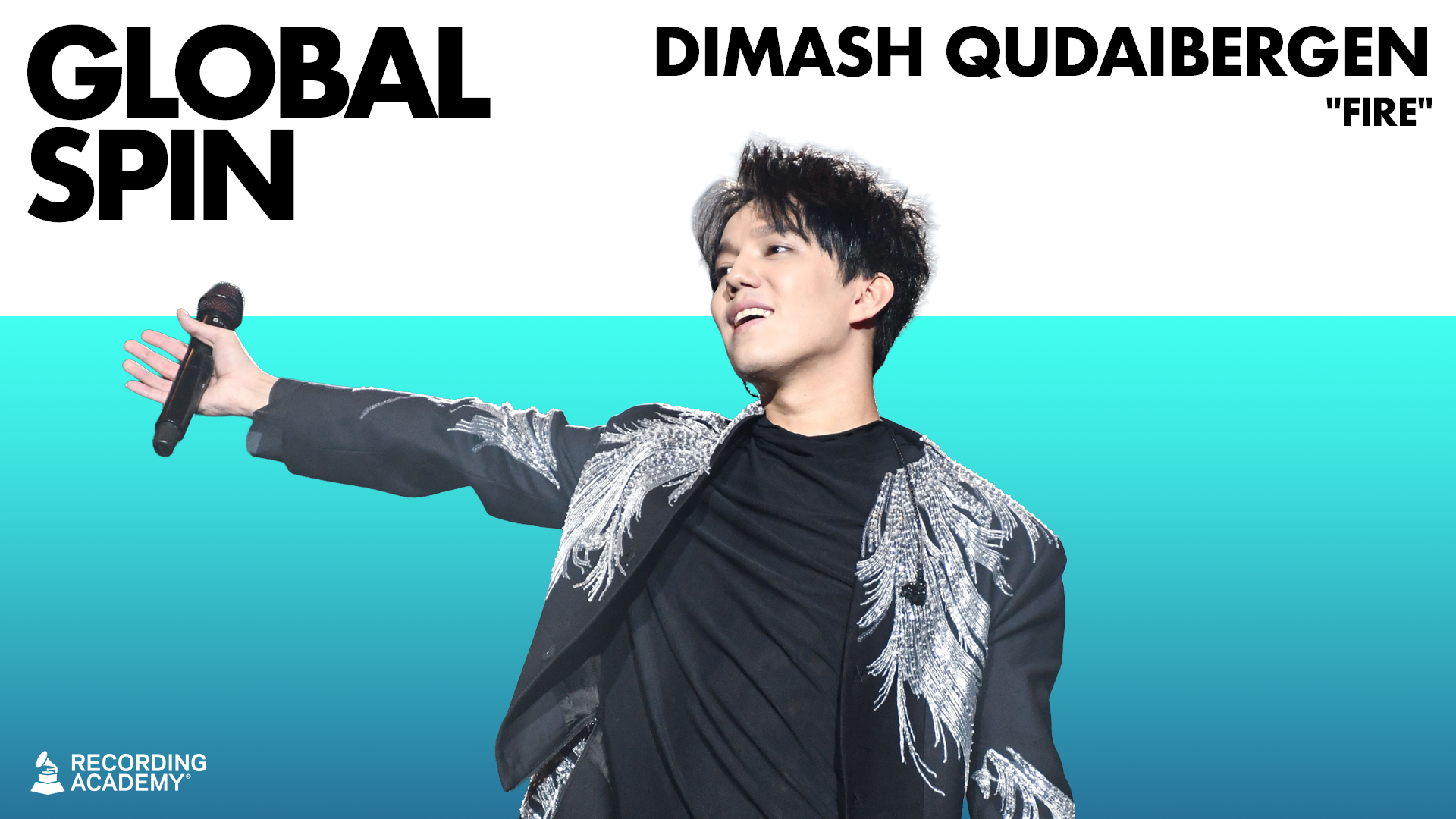


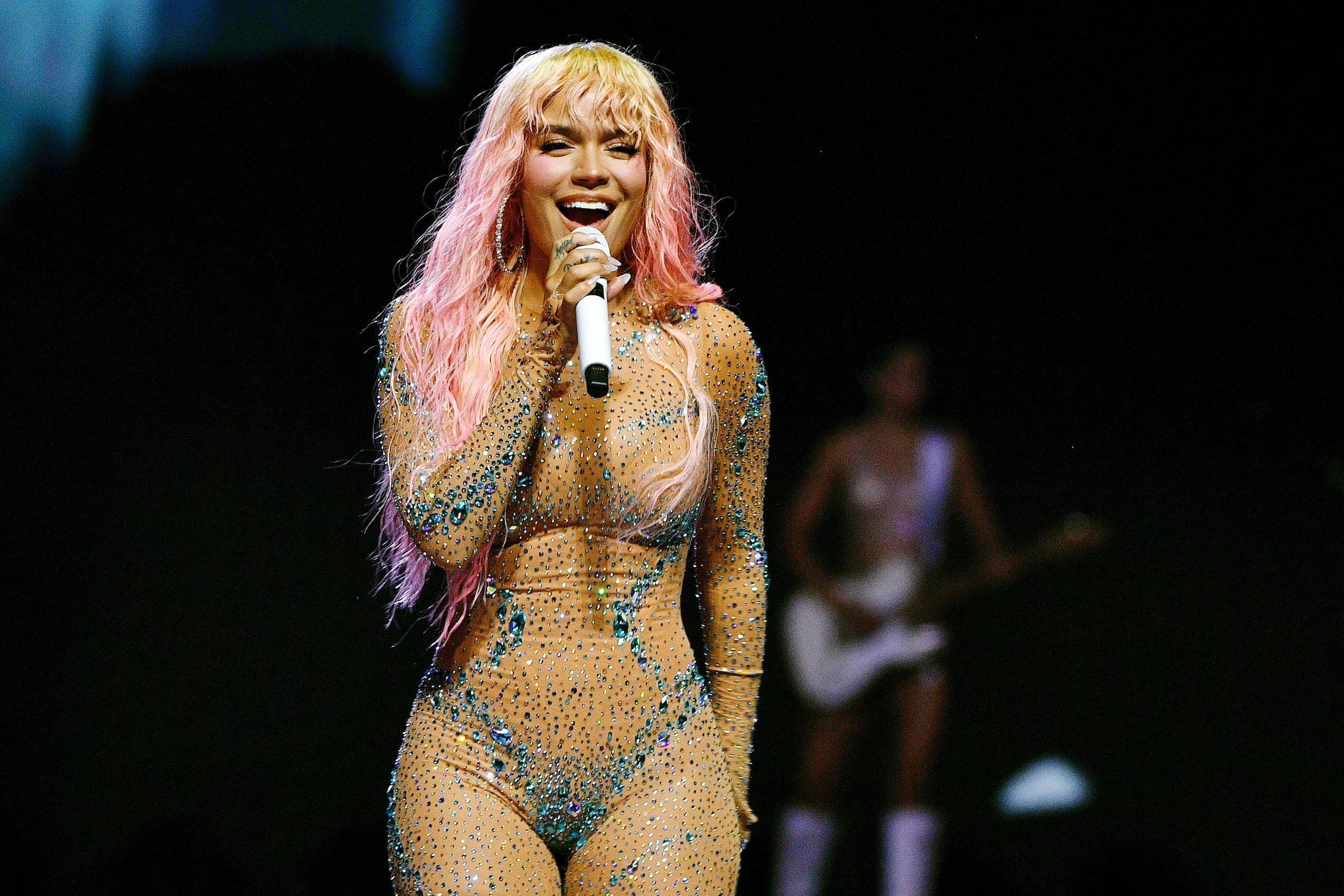
Karol G performs at The O2 Arena in London in 2024.
Photo: Jim Dyson/Getty Images
New Music Friday: Listen To The Weeknd With Playboi Carti & Doechii, ROSÉ, Karol G, Miley Cyrus And More
From Kali Uchis' latest album to an international mashup between Jackson Wang and Diljit Dosanjh, press play on 11 of this week's most intriguing releases.
GRAMMYs/May 9, 2025 - 04:53 pm
This week's bevy of new releases is filled with major collaborations from the worlds of hip-hop and R&B (The Weeknd with Playboi Carti and Doechii; UMI with 6LACK), pop-punk (Avril Lavigne and Simple Plan), country (Thomas Rhett and Tucker Wetmore; Kenny Chesney and Megan Moroney), Latin (Becky G and Manuel Turizo), and rock (Halsey and Evanescence's Amy Lee).
Notable new albums include Maren Morris' DREAMSICLE, Sleep Token's Even in Arcadia, Forrest Frank's CHILD OF GOD II, Blake Shelton's For Recreational Use Only, I'm With Her's Wild & Clear & Blue, Cuco's Ridin', KALEO's MIXED EMOTIONS, and Arcade Fire's Pink Elephant.
Plus, Tyla is wrapped up in "Bliss" on her latest single, Morgan Wallen sings to his son on "Superman," David Archuleta puts his heart on the line on the dreamy "Can I Call You," and Moses Sumney gets into the groove with Hayley Williams for "I Like It I Like It."
Below, press play on 11 major new releases, including exciting new singles from ROSÉ, Karol G and Miley Cyrus, full-lengths from PinkPantheress and Kali Uchis and more.
Doechii joins The Weeknd and Playboi Carti for a self-assured remix of the duo's recent smash single "Timeless," which kicked off the former's rollout for Hurry Up Tomorrow and was part of The Weeknd's return to the GRAMMY stage at the 2025 GRAMMYs.
The reigning Best Rap Album GRAMMY winner revels in her meteoric rise on her new verse. "I been legit since I came out the swamp/ Miss TPA and the Birkin's a croc,'" she raps. "My brand grossin' numbers you'll never believe/ It's a bill' on the streams/ Hop in the booth, I advance on the beat/ B—, it's a wrap like lettuce and cheese."
Read More: Doechii's Sonic Evolution: From Rising Alt-Hip Hop Anomaly To Best Rap Album GRAMMY Winner
ROSÉ revs up the romance on "Messy," her contribution to the star-studded soundtrack of F1 The Movie, which arrives in full on June 27 alongside the film's theatrical release.
"Baby I'm obsessed with you and there's no replica/ Maybe if it's messy, if it's messy, if it's messy/ Then you know it's really love," the K-pop superstar sings on the ballad's cascading chorus. And though the accompanying music video is interspersed with footage from the movie — in which Brad Pitt is a retired Formula One racer — it's ROSÉ who steals the show as she's showered in diamonds and finds herself strolling straight down the middle of a remarkably deserted Las Vegas Strip.
Read More: Breaking Down Every Solo Act From BLACKPINK: From LISA's "Money" To JENNIE's 'Ruby'
Miley Cyrus ushers in Act 3 of her forthcoming pop opera, Something Beautiful, with "More to Lose." Upon first listen, the emotional ballad has the potential to become one of the defining showstoppers in the superstar's discography as she confesses, "I knew someday that one would have to choose/ I just thought we had more to lose."
In between the song's clever, heartfelt wordplay ("The TV's on, but I don't know/ My tears are streaming like our favorite show"), Miley's fashion sense takes center stage in the accompanying visual — whether she's wearing the same archival 1997 Thierry Mugler couture seen in the album's transcendent cover art, a sparkling, strapless gown paired with a messy updo and winged eyeliner, or the tailored black suit and matching sheer face-kini she's donned by the final chorus.
Watch: Miley Cyrus' Evolution From Teen Idol To Boundary-Breaking Superstar | Run The World
To celebrate the release of her new Netflix documentary, Tomorrow Was Beautiful, Karol G offers up the tender "Milagros" as her first release of 2025. "Pa' que más milagros/ Que estar respirando/ Pa' que milagros/ Quiero yo, corazón/ Que sentir tu mano," she sings on the track, which translates to "Miracles" in English.
The midtempo Spanish-language ballad, which plays over the film's end credits, is inflected with folksy flourishes that deviate from the superstar's reggaeton-driven sound in favor of a simple acoustic guitar and an instrumental break featuring a flute solo.
Read More: Mañana Y Siempre: How Karol G Has Made The World Mas Bonito
"My name is Pink and I'm really glad to meet you," PinkPantheress states in the opening moments of her sophomore mixtape, Fancy That. Arriving 18 months after her 2023 debut album Heaven knows, the 9-song project serves as something of a reintroduction to the British sensation, who first went viral with her 2022 smash "Boy's a Liar."
Citing club legends like Basement Jaxx, Groove Armada and Fatboy Slim as major influences for the project's dance-fueled sound, PinkPantheress also finds Y2K-era inspiration by sampling the likes of Panic! At the Disco's 2008 deep cut "Do You Know What I'm Seeing?" on lead single "Tonight," and Jessica Simpson's 2001 pop hit "Irresistible" on highlight "Nice to Know You." Other standouts include The Dare-produced single "Stateside" and closer "Romeo," which borrows from Basement Jaxx's 2003 hit "Good Luck" with Lisa Kekaula.
For his new single "BUCK," Jackson Wang recruited Indian superstar Diljit Dosanjh, who just made his own starry debut at the Met Gala on Monday night.
"I can show you how to dance" the Got7 member-turned-solo star promises over and over before rapping, "Yeah, bad lil' thing, make a ruckus/ Smile when she turn around and buss it." On the second verse, Dosanjh — who counts Ed Sheeran and Sia among his past collaborators — injects a dose of melody into the track in his native Punjabi language before the track culminates in a dance break worth waiting for.
On her fifth album, Sincerely, Kali Uchis is a big fan of using punctuation to help make her point. Just look at the track list filled with ellipses (lead single "Sunshine & Rain…" and opener "Heaven Is a Home…"), exclamation marks ("Sugar! Honey! Love!" and "Daggers!"), liberal commas ("Lose My Cool," "Silk Lingerie," "Fall Apart," ) and a single, blunt-force colon ("For: You").
The host of varying dots and dashes punctuate the five-time Latin GRAMMY nominee's heart-on-her-sleeve songwriting across the album's 14 tracks, whether she's refusing to apologize for her love in the brand-new music video for doo-wop-inspired focus track "All I Can Say" or confessing it all on previously released single and album closer "ILYSMIH."
Read More: Kali Uchis Essentials: 9 Songs That Flaunt Her Soulful Magnetism
In the 15 months since P1Harmony released their debut full-length, Killin' It, in early 2024, the K-pop boy band has already delivered a new EP (Sad Song) and now, their eighth mini-album. Titled DUH!, the six-track project takes their P1ece fandom on a decade-hopping journey from the '90s-inspired hip-hop of the title track and boom bap highlight "Murmur" to the EDM of the 2010s on the appropriately titled "Flashy."
Several of the group's members split creative duties on the mini-album. Jiung, Intak and Jongseob share co-writing credits across the six tracks, while Keeho joined Jiung and Jongseob in helping compose the EP's sonic palette.
Read More: 8 Rookie K-Pop Acts To Watch In 2025: ARTMS, NEXZ, MEOVV & More
Avril Lavigne joins forces with Simple Plan on "Young & Dumb," a triumphant look back at the Canadian stars' pioneering reign over the pop-punk takeover of the early 2000s — and a celebration of their upcoming summer tour together.
Over anthemic guitars and a singalong chant, Lavigne namedrops her roots in the tiny Ontario town of Napanee before referencing her famous '00s-era uniform made up of a white tank, black eyeliner and striped necktie. Together with Simple Plan's Pierre Bouvier, she reminisces about living like rockstars, trashing hotel rooms and getting dumb tattoos on their way to pop-punk greatness.
Read More: 15 Avril Lavigne Songs That Prove She's The "Motherf—in' Princess" Of Pop-Punk
Grupo Firme are back with Evolución, their first full-length album in three years. Alongside previously released singles "Hubiéramos" and "El Beneficio de la Duda," the Spanish-language studio set features new focus track "Alégale Al Umpire" and comes complete with 14 music videos filmed across Europe — from Barcelona's Basilica de la Sagrada Familia to the Eiffel Tower in Paris.
The Latin GRAMMY winners also recruited fellow regional Mexican music acts for a trio of collaborations across the LP, including two-time Latin GRAMMY nominee Joss Favela ("La Vida Es Pa'Gozarla"), Mexican pop icon Gloria Trevi ("Súfrale"), and Carolina Ross ("Todavía Te Amo").
André 3000 heralded the surprise arrival of his new EP, 7 piano sketches, in the most epic way possible: by strutting up down the carpet of the 2025 Met Gala with a high-fashion piano strapped to his back.
In stark contrast to such a grandiose announcement, the seven-track EP is spare and understated — though equally as experimental as some of the avant-garde fashions seen on The First Monday in May. The instrumental sketches found here range from the three-and-a-half minute mark on the circuitous, glowing "off rhythm laughter" to just a scant 54 seconds on the meanderingly titled "when you're a ant and you wake up in an awesome mood, about to drive your son to school, only to discover that you left the lights on in the car last night so your battery is drained."