
Photo: ALAIN JOCARD/AFP via Getty Images)
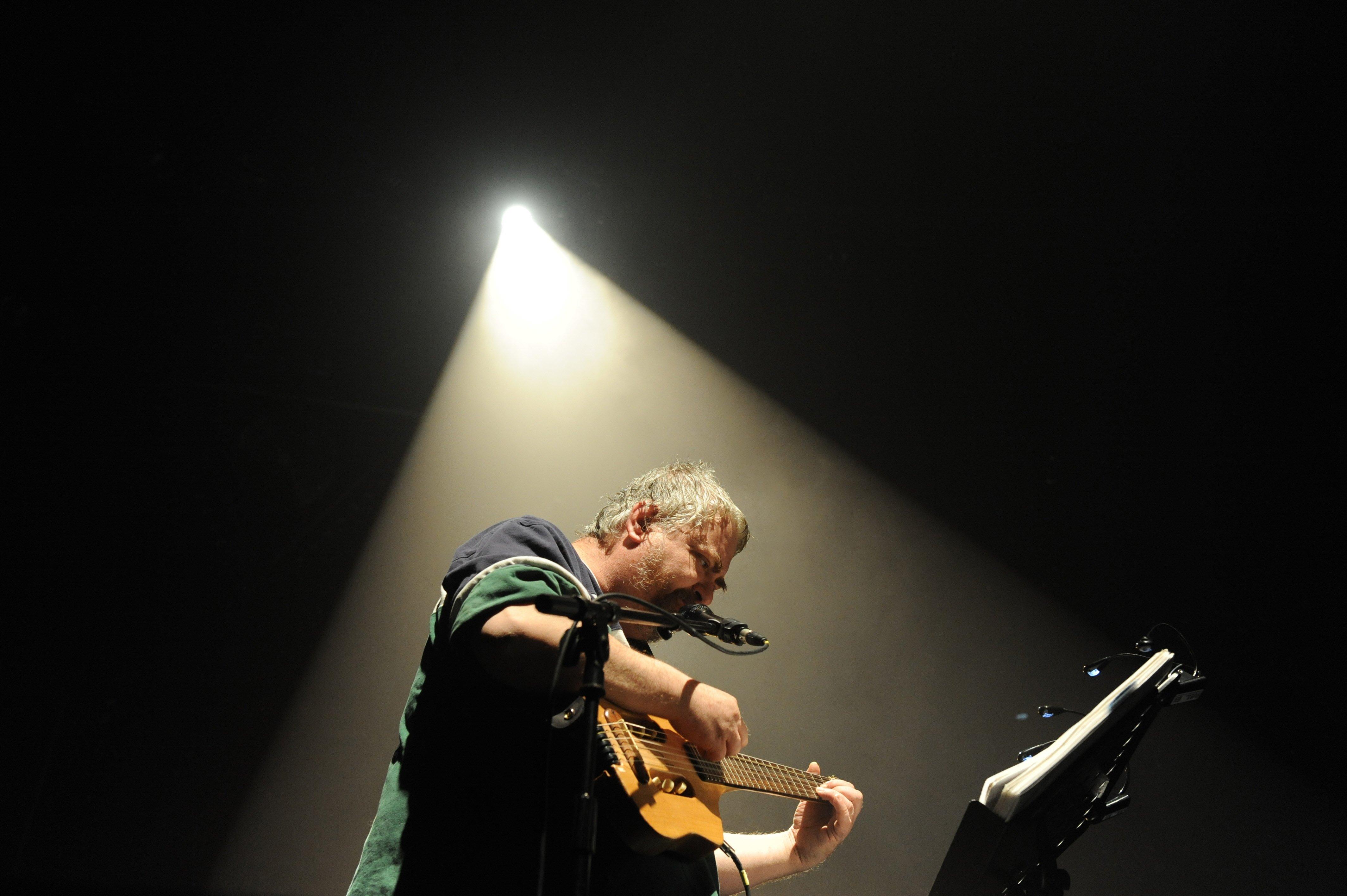
Daniel Johnston
15 Songs That Directly Address Mental Health, From The Beatles To Ariana Grande To 'Encanto'
If it's a cliché that we're freer to discuss mental-health struggles than ever before, so be it: it's an often lifesaving development. While there has been a recent preponderance of mental health songs, here are selections from across the decades.
GRAMMYs/May 2, 2022 - 09:57 pm
As long as there have been humans, there has been music — as well as mental illness. Thereby, people must have been singing about it since the beginning, right?
Sure. But music's an abstract, poetic artform, so the topic usually isn't approached literally. That's why Hank Williams wrote "I'm So Lonesome I Could Cry," not "I'm Depressed And Also An Alcoholic." And why the Rolling Stones called it "Paint It, Black," not "Wantonly Projecting My Trauma."
So, what does that mean for mental illness and the history of popular music? That delineations aren't always neat and tidy. That's why GRAMMY.com prepared a list of songs that address psychological maladies, more-or-less directly.
Obviously, it's not exhaustive — how could a list that leaves out all pre-1968 music be? Plus, It's not like these tunes have to reference the DSM-5 — it's that, to make the cut, they should touch on anxiety, depression, addiction, PTSD, and other conditions without too many buffering layers.
With that in mind, here are 15 songs from across the decades that got real about the realities of mental illness, and how to overcome it.
The Beatles, "Yer Blues" (1968)
After years of freewheeling experimentation in the studio, the Fabs finally jammed out in a room together. Eyeball-to-eyeball, they recorded "Yer Blues," John Lennon's 12-bar cry for help from the White Album.
Never before or since — not even on 1970's shockingly confessional Plastic Ono Band — had he been this candid about suicidal depression in a song. And more than half a century later, "Yer Blues" remains bracing, cathartic and strangely giddy.
Read More: Now That I Showed You What I Been Through: 50 Years Of John Lennon/Plastic Ono Band
Bill Fay, "Be Not So Fearful" (1970)
Skip the string-swelling version from Bill Fay's self-titled debut and seek out the stripped-down demo, found on From The Bottom of An Old Grandfather Clock. What you'll hear is a pocket-sized hymn for when the enemy within has you on the ropes.
"Someone watches you," the English singer/songwriter promises, "you will not leave the rails." A rare thing: a convincing argument against anxiety, and a song of honest-to-goodness utility.
Daniel Johnston, "Peek a Boo" (1982)
Throughout his long, unconventional career until his untimely death in 2019, singer/songwriter Daniel Johnston unflinchingly detailed his hopes, longings and fears in his rough-hewn music — as well as his struggles with bipolar disorder and schizophrenia.
His songbook is littered with sometimes harrowing songs about the latter, but "Peek a Boo" sums it up: "I'm tired from being kidnapped by a dark wolf that would do me in."
Swans, "God Damn the Sun" (1989)
While mostly known for skull-rattling noise jams and symphony scale indie rock, Swans have at least one unforgettable acoustic ballad.
The majestic, doomed "God Damn the Sun" isn't just worthy of Leonard Cohen — because of leader Michael Gira's unvarnished language, it arguably surpasses even the Godfather of Goth's sense of despair.
"I've got one thing to say before I am drunk again," Gira seethes, before condemning life on Earth — all of it. But he made it through, and so can all of us. And when we're in the depths of sorrow articulated in "God Damn the Sun," sometimes pitch-black commiseration feels paradoxically healing.
Bob Dylan, "Not Dark Yet" (1997)
Less theatrical than "God Damn the Sun" yet no less unequivocal about depression, this late-period masterpiece from Time Out of Mind is the soundtrack to self-inventory deep into the night.
"Every nerve in my body is so naked and numb," Uncle Bob sings over a gorgeous soundscape by producer Daniel Lanois, sounding depleted and discouraged. "I can't even remember what it was I came here to get away from."
What a monument to a universal facet of the human condition — a fearsome enemy, but not one that has to consume us.
Sia, "Breathe Me" (2004)
Sia's "Breathe Me" feels like a continuation of Nine Inch Nails' (and Johnny Cash's) classic "Hurt" — only left off this list due to its ubiquity — thanks to its opening lines.
"Help, I have done it again/ I have been here many times before," she sings. "Hurt myself again today/ And, the worst part is there's no one else to blame."
Hung on piano and a hangdog string section, "Breathe Me" is a dispatch about despair and vulnerability that belongs on a shelf with the best of them.
Amy Winehouse, "Wake Up Alone" (2006)
Sadly, the wildly talented Amy Winehouse didn't win her battle against drug and alcohol addiction — alcohol poisoning got her at only 27.
But she left behind a monster body of work — including her breakthrough album Back to Black, which garnered her a whopping five GRAMMYs.
Over a doo-wop rhythm and stabbing chords, "Wake Up Alone" is both a love song and a gripping expression of crepuscular loneliness and discontent. "That silent sense of content that everyone gets," Winehouse sings, "Just disappears soon as the sun sets."
Paramore, "Fake Happy" (2017)
The juxtaposition of crestfallen lyrics with a sparkling melody is the heart of power-pop — and by extension, pop-punk and alternative rock. And Paramore, who's been at the vanguard of both subgenres for almost 20 years, blends these qualities masterfully.
"Fake Happy," an inspired single from After Laughter, captures the feeling of feigning a grin when you're down in the dumps. "If I go out tonight, dress up my fears," asks bandleader Hayley Williams, "you think I'll look alright with these mascara tears?"
Ariana Grande, "breathin" (2018)
Despite dealing with high-profile breakups and PTSD from horror of the Manchester Arena bombing, Ariana Grande examines her internal mechanisms with humility and magnanimity. (Just think of her immortal line: "I'm so f***ing grateful for my ex.")
"breathin," from Sweetener, is no different. "Feel my blood runnin', swear the sky's fallin'/ How do I know if this s***'s fabricated?" she asks. Grande doesn't get self-pitying or pretend to have the answers — instead, she looks to a universal human balm during throttling times.
"Just keep breathin' and breathin' and breathin' and breathin'," she sings in the hook, over and over and over — like she's telling herself to hang in there as much as us.
Jason Isbell and the 400 Unit, "It Gets Easier" (2020)
Since his Drive-By Truckers days, Jason Isbell has written like a surgeon about fundamental topics — his sociopolitical beliefs; his relationship with his wife, Amanda Shires; and his decade-plus of sobriety.
True to the current state of his recovery, "It Gets Easier" isn't about getting on the wagon, but staying on it. It begins with a "drunk dream," a common phenomenon among those sobering up. "I had one glass of wine/ I woke up feeling fine/ That's how I knew it was a dream," he sings.
Taking a cue from his friend and mentor, the late John Prine, Isbell sums up the tune in a crystalline thesis of a hook, over a kicking guitar riff: "It gets easier, but it never gets easy."
G Herbo, "PTSD" (2020)
File this one with Grande's Sweetener, which addresses the Manchester Bombing and her emotions in its wake.
While many of the entries insofar on this list deal with anxiety, depression or substance abuse, rapper G Herbo homes in on a very specific and sometimes misunderstood malady: post-traumatic stress disorder.
"I got a war zone inside of my head / I made it on my own, they said I'd be in jail or dead," he raps in "PTSD," featuring Chance the Rapper, Lil Uzi Vert and Juice WRLD. "I've seen my brothers fall over and over again / Don't stand too close to me, I got PTSD."
"I felt like people may look at my situation and my life like I don't do these things, like I don't have problems, like I don't endure pain or stress," Herbo told GRAMMY.com in 2020. "I just wanted the world to know that we all are the same."
Read More: G Herbo Talks PTSD And The Importance Of Mental Health: "People Need To Treat Mental Health More Seriously"
Francisca Valenzuela, "La Fortaleza" (2020)
"La Fortaleza" — meaning "the fortitude" or "the strength" — is an impactful statement by Chilean singer/songwriter Francisca Valenzuela about finding the resilience to go on.
"Everything that has happened has led me to today," she sings. "I look forward to the horizon/ I bury guilt and leave." But Valenzuela isn't giving up, or stepping into oblivion. She's beginning anew.
"With my pen and my poem/ I will cross the mountain range," she sings, framing artistic expression as a magical weapon for healing and self-transformation. "And if I am in the middle of the storm/ Be the calm that sustains the center of the earth."
Julia Michaels, "Anxiety" (2021)
Some measure of trepidation is necessary for survival, but full-blown anxiety warps that psychological tool — into one that can undermine our day-to-day relationships.
Singer/songwriter Julia Michaels clearly understood this while writing "Anxiety," a cut from Melancholic Mood featuring Selena Gomez. "My friends, they wanna take me to the movies," she sings. "I tell 'em to f*** off/ I'm holding hands with my depression."
"For the first year [of mass success], I was having panic attacks, I was hiding in hallways, I was running away, people couldn't find me," Michaels told Billboard in 2019. Which, she explains, is often hidden in artists behind glitzy promotional machinery.
"You don't see the photoshoots and the interviews and the flying all the time and the being away from everyone and everything you love," she continued. But thanks to "Anxiety," the entire planet saw her clearly.
Jessica Darrow, "Surface Pressure" (from Encanto) (2021)
The hit Disney flick Encanto treated viewers to a nuanced take on Latine family dynamics, and "Surface Pressure" — written by Lin-Manuel Miranda as the character Luisa's solo — captures bluster that obfuscates insecurity.
"I'm the strong one, I'm not nervous/ I'm as tough as the crust of the Earth is," it begins. But then Miranda's tune cracks that facade: "Under the surface/ I feel berserk as a tightrope walker in a three-ring circus."
The strength and incisiveness of "Surface Pressure" speaks to what makes certain Disney and Pixar films special — despite being marketed to children, they speak to universal human truths.
Read More: From Encanto To "Euphoria" And Grand Theft Auto V: Behind The Making Of A Great Soundtrack
Jimmie Allen, "Untitled Song" (2022)
Country star Jimmie Allen's trajectory may have led him to a GRAMMY nomination, but it was flecked with difficulties and hardship. Specifically, he was diagnosed with bipolar disorder as a young teen, and the isolation of the COVID-19 pandemic didn't help at all.
But Allen hasn't just come to terms with this reality — he's made it public so that he might help others in his boat. On April 19, he posted a performance of an unreleased and untitled song, about "pain [that] pulls me apart like a ripped-up floor" and feeling "always on the edge."
"I wrote this song about how I feel a lot of the time," Allen tweeted. "Mental illness is something I have struggled with my entire life."
Of course, he's far from alone. But as always, music is one of our most precious gifts to bridge those divides and forge those missing connections — and, consequently, let the light in.
Meet Question, A Rapper/Producer Who Doesn't Want To Be Boxed In By Blindness
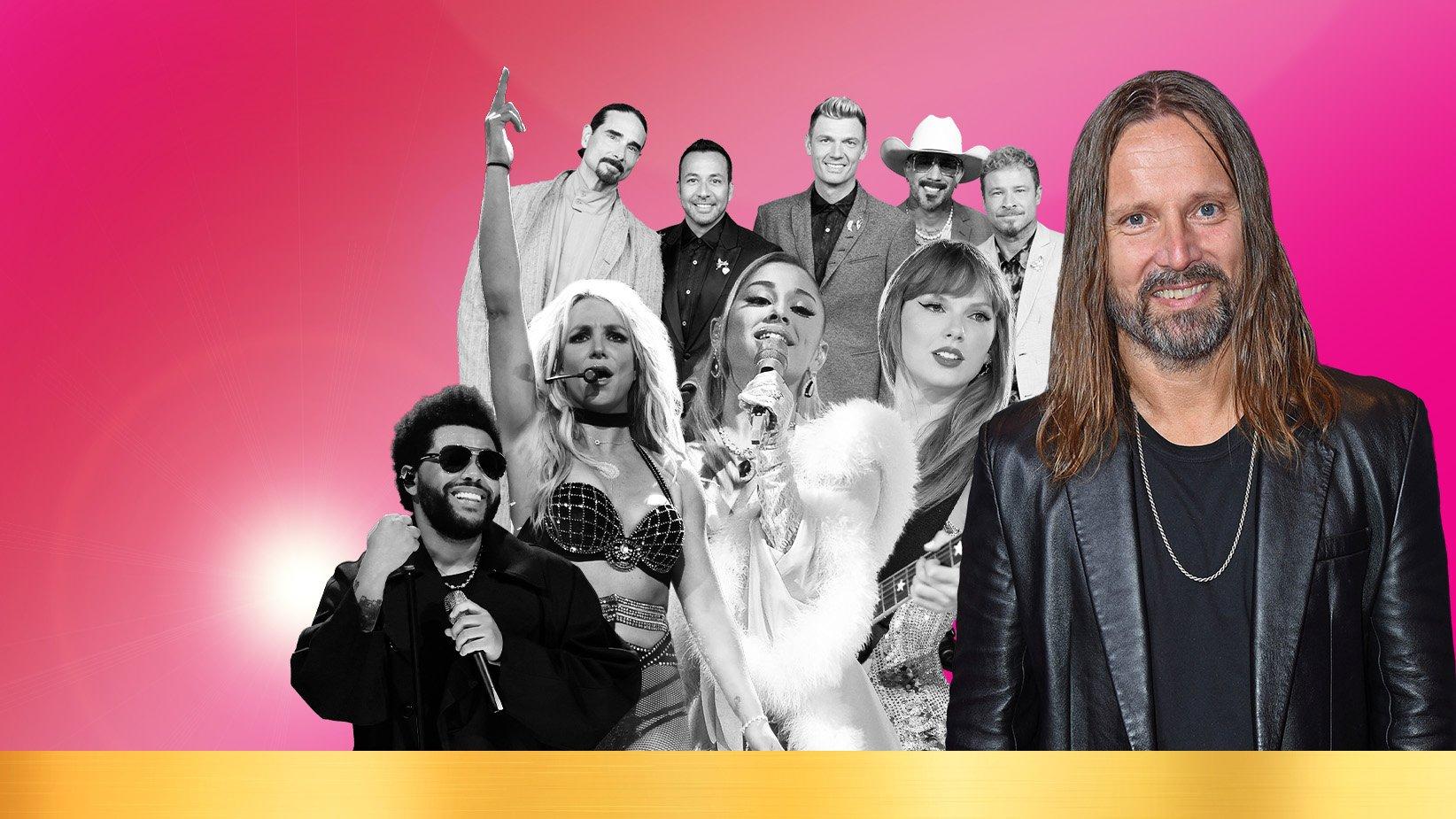
Clockwise from top: Backstreet Boys, Max Martin, Taylor Swift, Ariana Grande, Britney Spears, The Weeknd
Photo: Ayisha Collins/FilmMagic, Tristar Media/Getty Images, Buda Mendes/TAS23/Getty Images for TAS Rights Management, John Shearer/Getty Images for The Recording Academy, Kevin Mazur/BCU18/Getty Images for BCU, Dimitrios Kambouris/Getty Images for REFORM Alliance
The Many Eras Of Max Martin: How He's Helped Taylor Swift, Ariana Grande & More Dominate Pop Music
In celebration of his reunion with Taylor Swift for 'The Life of a Showgirl,' look back at Martin's illustrious production discography that includes countless superstars — from the Backstreet Boys and Kelly Clarkson to Ed Sheeran and The Weeknd.
GRAMMYs/Oct 1, 2025 - 06:37 pm
25 Billboard Hot 100 No. 1s as a writer, two more as a producer, at least 140 million record sales, five GRAMMY wins and 25 nominations. The stats speak for themselves: Max Martin is undeniably one of the most successful hitmakers in the history of pop.
Still only in his mid-fifties, and with every other Billboard regular still clamoring for his creative prowess, his remarkable career tallies are only likely to grow. That's why Taylor Swift recruited him to help her transition from teen country sensation to pop superstar with 2014's 1989, and why she now refers to him as her "mentor." It's also why Martin, alongside his longtime collaborator (and fellow Swede) Shellback, returned for her latest set, The Life of a Showgirl.
"The three of us have made some of my favorite songs that I've ever done before," Swift said on the "New Heights" podcast upon announcing the album in August. "There's something about 'em … they're just geniuses."
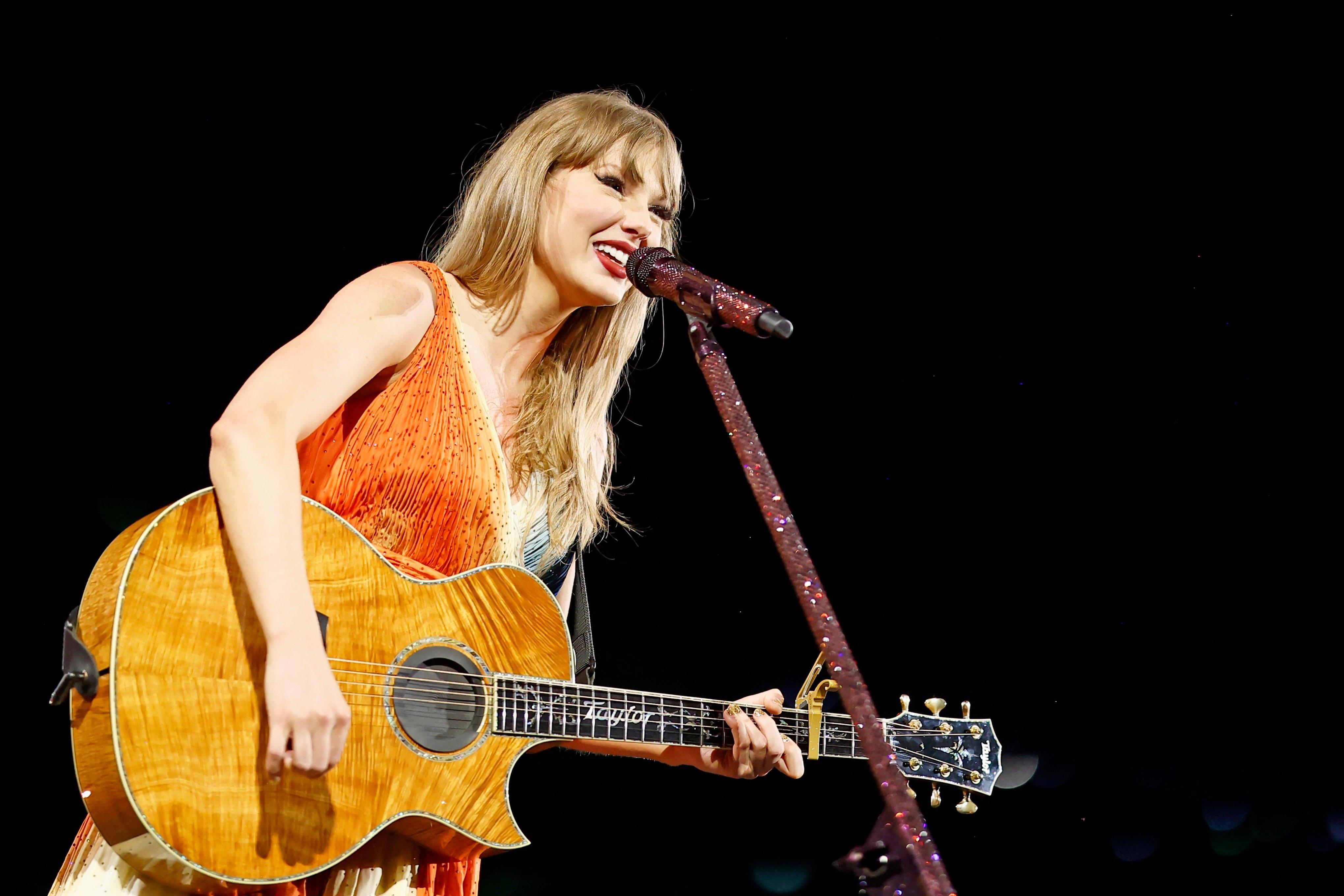
Of course, Swift is just one of countless stars that Martin has helped turn into household names. Backstreet Boys, Britney Spears, Katy Perry, Pink, Taylor Swift, The Weeknd, Ariana Grande — think of any zeitgeist-defining artist from the turn of the century onward, and it's likely that the renowned perfectionist has played a part in their success.
"I like being around people who keep me curious," the famously reclusive Martin explained in a rare interview back in 2019 about the key to his longevity. "Experience might be one part of the puzzle, but beat-making and trendsetting, it's a young person's game. If 200 million people love [something] then I try to understand why. It's almost like science to me; you listen and try to crack the code."
Martin has continued to crack this elusive code for the best part of 30 years. In honor of his reunion with Swift, revisit Martin's own musical eras — from the maximalism of the millennium to the genre-hopping sounds of Gen Z.
The Early Days
Martin officially began his rise to enigmatic pop god in unlikely circumstances: as the lead singer of a Swedish hair metal outfit. Yes, the man of mystery spent 10 years fronting It's Alive under the name of Martin White, with the Kiss-esque outfit recording a self-titled debut in 1991 and a sophomore Earthquake Visions two years later. But he eventually realized his talents lay elsewhere, as did the group's label boss, Denniz PoP, who took Martin under his wing.
The musical prodigy quickly became a vital member of PoP's Cheiron Studios, co-producing for several of his fellow countrymen including techno-country bumpkins Rednex, Eurodance favorite E-Type and the '90s answer to ABBA, Ace of Base (the latter's "Beautiful Life" became the first of his countless Hot 100 entries). By now, Martin had also adopted his more familiar guise, officially waved goodbye to the world of Scandinavian glam metal, and started working with a boy band who'd helped redefine his career for good.
The Pure Pop Years
After dabbling in the boy band world with 3T in 1995, Martin met the Backstreet Boys, and soon his career was on another trajectory. The Swede first worked with the group on "Quit Playing Games (with My Heart)" — which came within a whisker of becoming both parties' first U.S. No. 1 in the spring of 1997 — and contributed to several other classics including "As Long As You Love Me" and "Everybody (Backstreet's Back),"
Proving that he could write for the opposite sex just as effectively, Martin was instrumental in guiding a young Britney Spears to superstardom. In fact, he penned her record-breaking smash "... Baby One More Time" entirely alone. And the instant pop classic provided both singer and songwriter with their first of many U.S. chart-toppers, too.
Martin still kept one foot in the boy band world, however. He provided the breakthrough hits for *NSYNC ("I Want You Back," "Tearin' Up My Heart") which would see them wrestle for the ultimate boy band crown. And he essentially became a sixth member for the sales juggernaut that was Backstreet Boys' Millennium, working his magic on seven of its 12 tracks, most notably the superfan anthem "Larger Than Life" and the group's most iconic hit, "I Want It That Way."
Martin continued to perfect what was now becoming his signature sound — emphatic pop beats, hairbrush sing-along choruses, and happy-sad melodies — throughout the year 2000. He guided Spears' second LP, Oops!... I Did It Again (the pair scoring a second No. 1 together with its title track) and helped *NSYNC achieve their sole chart-topper with "It's Gonna Be Me."
By this point, the prolific talent had also been tapped by Robyn ("Show Me Love," "Do You Know (What It Takes)"), Bryan Adams ("Cloud Number Nine," "Before The Night Is Over"), 5ive ("Slam Dunk (Da Funk)"), and Westlife ("When You're Looking Like That"), and in a surprise nod to his hairspray-soaked roots, Bon Jovi. In fact, Martin penned the rock veterans' biggest hit of the 21st century with "It's My Life." He was also responsible for steering Celine Dion into rare upbeat territory on "That's The Way It Is."
The Promising Period
When the untimely death of PoP in 1998 resulted in the permanent shutdown of Cheiron Studios, Martin joined forces with entrepreneur Tom Talomaa to open his own hit factory Maratone, which later evolved into production companies MXM and Wolf Cousins.
Maratone initially picked up where Cheiron had left off, producing a brace of hits for Spears ("Overprotected," "Not A Girl, Not Yet A Woman"). But keen to leave her pop princess past behind, Spears cut all ties for several years. And with BSB taking a hiatus, and Nick Carter's solo career failing to take flight, Martin suddenly found himself slightly unmoored in 2002 and 2003, despite reuniting with Robyn and Dion.
Of course, you can't keep a hitmaking extraordinaire down for too long. He came back with a vengeance in 2004 with Kelly Clarkson's "Since U Been Gone," a feisty alt-rock affair that immediately proved the inaugural "American Idol" was no flash in the pan; he was also responsible for its follow-up hit, "Behind These Hazel Eyes."
Although Martin was no longer a phenomenon as such, he continued to rack up a string of considerably big hits including The Veronicas' "4ever," BSB's "Just Want You To Know," and a-ha's first major hit in over a decade, "Analogue (All I Want)," in 2005, Pink's "Who Knew" and "U + Ur Hand" in 2006, and Daughtry's "Feels Like Tonight" in 2007. But he truly hit his stride the following year.
The Imperial Phase
Martin went on to have a hand in at least one U.S. No. 1 single every year between 2008 and 2016 — and previously unknown Christian pop singer born Katy Hudson was the catalyst. Katy Perry's provocative breakthrough "I Kissed A Girl" became the Swede's first song to reach pole position since *NSYNC's "It's Gonna Be Me" eight years previously, and it pretty much opened the floodgates.
Reunions with Pink ("So What"), Clarkson ("My Life Would Suck Without You"), and his former pop muse Spears ("3") all spawned chart-toppers. And before you can say "Peter, Paul and Mary gettin' down with 3P," the long-haired maverick was back to being the most in-demand man in the business. Whether talent contest alumni (Adam Lambert, Carrie Underwood), R&B lotharios (Usher, Taio Cruz), or new pop girls on the block (Miranda Cosgrove, Kesha), everyone wanted a piece of the Martin pie.
But his biggest Billboard success came when he reunited with Perry. Martin was pivotal to the record-equaling blockbuster success of Teenage Dream, contributing to four of its five No. 1s including the bubblegum pop of "California Gurls," '80s throwback "Last Friday Night (T.G.I.F)," and the wistful title track.
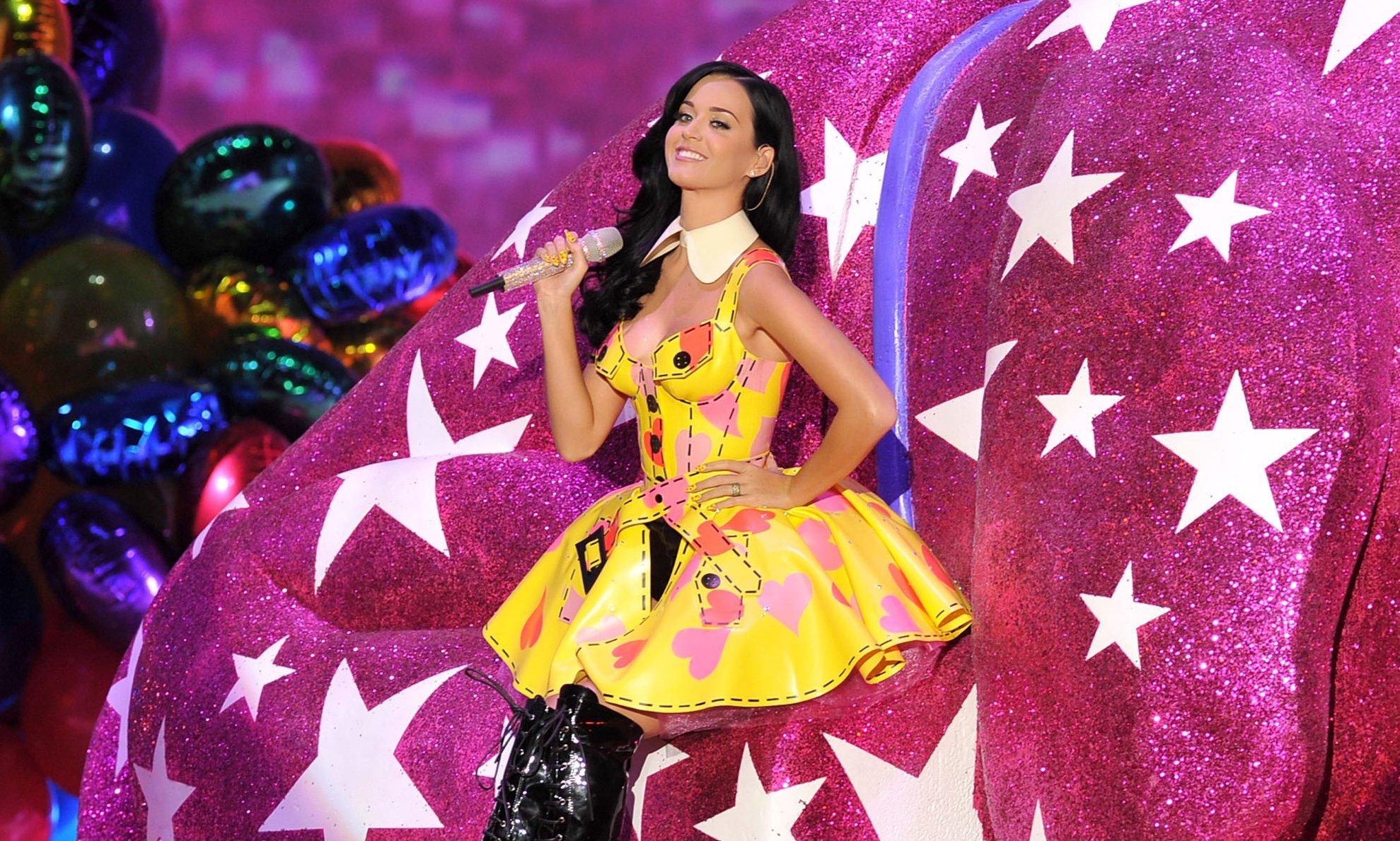
After giving Spears her final chart-topper with "Hold It Against Me," Martin added another big pop girl to his resume when he helped steer Taylor Swift from country favorite to mainstream sensation. Tabloid-baiting kiss-off "We Are Never Ever Getting Back Together" gave the singer/songwriter the first of her dozen career No. 1 in 2012, a year in which he also gave Maroon 5 their third ("One More Night").
Over the next half-decade, Martin would continue to elevate Swift (Red, 1989, Reputation) and Perry (Prism, Witness) onto the list of all-time greats. He also masterminded The Weeknd's pivot from bedroom hipster to commercial juggernaut ("Can't Feel My Face"), powered Ariana Grande's game-changing sophomore set, My Everything (and follow-up Dangerous Woman), and reconnected with Justin Timberlake on the inescapable Trolls cut "Can't Stop The Feeling."
And we've not even mentioned his Hot 100 hits for Christina Aguilera, Carly Rae Jepsen, Jennifer Lopez, Jessie J, Pitbull, Tori Kelly, Demi Lovato, Selena Gomez, and Ellie Goulding. Even the record industry's savior Adele called upon his talents for 25's third single "Send My Love (To Your New Lover)." Little wonder, therefore, that at the 2015 GRAMMY Awards, Martin took home the coveted Producer Of The Year, Non-Classical — and went on to win four more golden gramophones across 2016 and 2017.
The Record-Breaking Era
Although nearly three years went by without a No. 1, Martin still maintained his stranglehold on contemporary pop, providing hits for both the usual suspects (Grande, Perry, Pink, Swift) and new collaborators (James Arthur, Anne-Marie, Sam Smith). Remarkably, it took until 2019 for the Swede to work with the man who'd been almost as prolific and prevalent throughout the decade. But the wait proved to be worth it, with three of his four cuts from Ed Sheeran's No.6 Collaborations Project topping the UK chart.
His Stateside "drought" was broken later that same year thanks to the gleaming synth-pop of The Weeknd's record-breaking "Blinding Lights." In 2021, he again guided the latter to the top spot on Grande collaboration "Save Your Tears," while another A-list team-up, Coldplay and BTS's "My Universe," repeated the feat, too. In fact, proving how he was now very much accepted by those outside the pure pop field, Chris Martin and co. invited the Swede to produce the entirety of its parent album, Music of the Spheres.
Lady Gaga, Måneskin, Lizzo, Kim Petras, Lewis Capaldi, Post Malone, and Conan Gray all made their Martin bow around this time, too. But it was a regular cohort that helped the Scandinavian achieve his most impressive career goal.
In 2024, Ariana Grande's "Yes, And" became Martin's 24th U.S. No. 1, breaking an all-time record that had been held by George Martin since 1970. And he wasn't done there, either, extending his tally just two months later with Grande's "We Can't Be Friends (Wait For Your Love)." He's now second only to Paul McCartney when it comes to writing the most chart-toppers, too.
The Future
Martin certainly hasn't been resting on his laurels since officially joining the pantheon of Billboard greats. While he's continued to work with The Weeknd, Grande and Coldplay, he's also introduced his studio trickery to the likes of Childish Gambino, BLACKPINK's LISA, and the 2024 Latin GRAMMY Best New Artist winner, Ela Taubert.
Of course, the biggest career development of late (especially for the army of Swifties) is Martin's first collaboration with Swift in eight years. After several albums with the only man likely to steal his hitmaking crown — Jack Antonoff — the future Mrs. Travis Kelce has hired the Swede to oversee her eagerly-awaited 12th LP The Life of a Showgirl.
"When I was on tour in Stockholm, I had Max Martin come out to the show, and I was talking to him, and I was like, 'I just feel like we could knock it out of the park if we went back in,'" Swift told "New Heights" about the musical reunion.
Featuring tributes to silver screen goddess Elizabeth Taylor and tragic Shakespeare heroine Ophelia, a guest spot from Sabrina Carpenter, and a sample of George Michael's '80s classic "Father Figure," the album looks set to reaffirm both names as the most dominant players in 21st century pop.
Latest News & Exclusive Videos

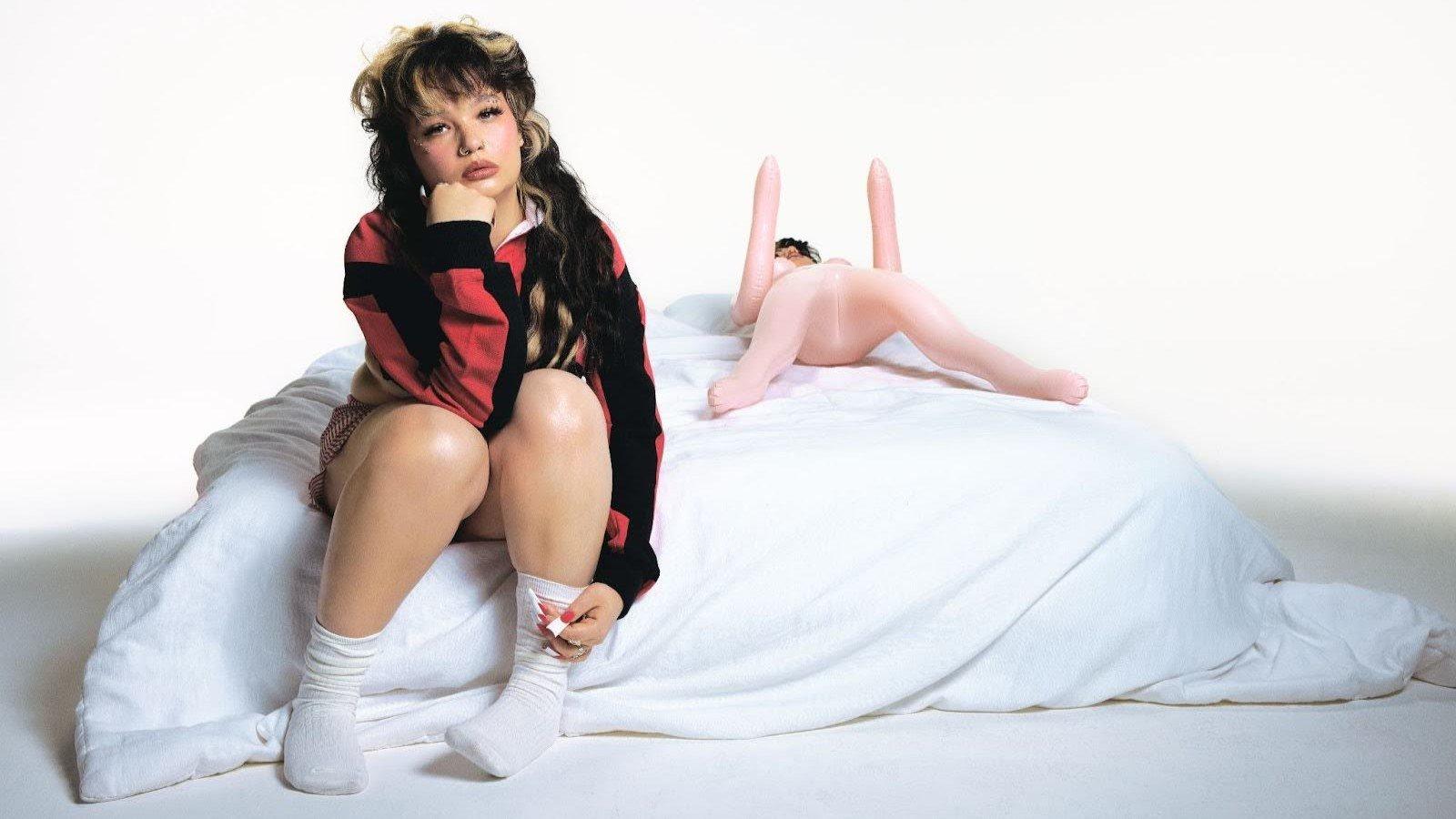
Lola Young
Photo: Conor Cunningham
Get To Know Lola Young: Inside The "Messy" Singer's Rise To Fame
Ahead of her bold new album 'I'm Only F**king Myself,' explore the British sensation's history — from the vulnerable lyrics that went viral on TikTok to the pop smash that caught the ear of Elton John.
GRAMMYs/Sep 18, 2025 - 02:03 pm
The last year of British singer/songwriter Lola Young's life has been a whirlwind of accolades, accomplishments and firsts — especially since her vintage rock inflected pop gem "Messy" went viral on TikTok late last year. But don't call the 24-year-old a TikTok star.
As her No. 1 hit demonstrates, the South Londoner has a penchant for deeply vulnerable and memorable lyrics that capture the challenges of being a young woman dealing with mental health challenges and societal pressures. She joins the ranks of the lovingly rough-around-the-edges women in pop — Chappell Roan, Charli xcx, Sabrina Carpenter, Olivia Rodrigo and Remi Wolf — with a powerful, unique voice that is at times feminine, gritty or talky, with plenty of texture and range.
The sixth single from Young's critically acclaimed sophomore album This Wasn't Meant For You Anyway, "Messy" was her first charting single and first No. 1 hit (in the U.S. and the U.K.). Yet Lola Young has been penning gut-punching songs and pursuing a career in music since she was just 14. At 18, she signed with Island Records and began a rather prolific run of releases as she continues to hone her craft.
Even with the wild schedule that comes with viral fame — including a packed run of festival performances beginning with her Coachella debut this year — the "One Thing" singer already has another album up her sleeve. Ahead of her third album, I'm Only F**king Myself, due Sept. 19, let's get to know Lola Young.
Lola Young Is No Overnight Sensation
“Coming from an artistic family was really helpful because they understood that music is a real job, that I can make money from it," Young told The Telegraph in February 2022. "I never had a plan B."
Young grew up in a musical home in Beckenham, South London, with her mother and professional bass player stepfather, who ran salsa nights together. Her mom always played music at home and signed her daughter up for piano, guitar and singing lessons when she was just 6. At 14, the "Good Books" singer enrolled in the BRIT School, the performing arts school attended by Amy Winehouse, who Young is often compared to, and Adele.
This was a momentous time in her burgeoning music career as she began furiously writing and recording music and performing in the local open-mic scene. At 15, she beat 9,000 hopeful singers in the Open Mic UK contest, and soon after met manager Nick Shymansky, who hadn't managed an artist since he worked with Winehouse in her early days. (He stopped working with the late songstress after she wouldn't get sober. Her response was the triple-GRAMMY-winning hit "Rehab.")
In 2019, Young signed with Island Records and released her debut single and EP. She dropped her second EP, Renaissance, about a month into the COVID-19 lockdowns, followed by a string of singles and, finally, her debut album, My Mind Wanders and Sometimes Leaves…, in 2023. During this time, she was building a buzz in the U.K. around her fresh vintage-soul-inflected pop music, and was nominated as a Rising Star at the 2021 Brit Awards.
She Thinks "Messy" Is One Of Her Best Songs
"'Messy' is a great introduction. It’s raw, honest, and encapsulates a lot of the themes of the album. It’s about embracing imperfections and finding strength in who I am," Young told Atwood Magazine last year. "Those lyrics are, in my opinion, some of my best."
"I'm not skinny / and I pull a Britney every other week / But cut me some slack / who do you want me to be? / 'Cause I'm too messy / and then I'm too fucking clean," Young sings on her massive breakout hit.
"Messy" was a slow burn that exploded and is still aflame. After Sofia Richie Grainge (Lionel Richie's 27-year-old daughter) vibed to the song alongside fellow influencer Jake Shane, the track went viral on TikTok. The video, posted on his account on Nov. 28, has 2.4 million likes at the time of writing.
On the day the video was posted, "Messy" had racked up 3.9 million streams in the U.S. that week. Two weeks later, its weekly stream count was 9.1 million. The song climbed the Billboard charts and eventually hit the No. 1 spot on the Alternative Airplay chart on April 5 and the Pop Airplay chart on May 17. The single hit No. 1 in the U.K. on Jan. 24, where she kept the top spot for four weeks, making her the first British female artist to do so since Adele's "Easy on Me" in 2021.
"You can’t catch the moments between your fingers — they pass too quickly. Honestly, it’s been a dream come true. Having a number one that became one of the biggest songs in the world," she told Elle UK. It’s weird to even talk about."
She won the Rising Star Award at 2025 Ivor Novello Awards because of the hit, which was also nominated for Best Song Musically and Lyrically, alongside a Best Album nod, which made her the most-nominated artist that year. "Messy" also brought her back to the BRIT Awards in 2025 (after her first nomination in 2021), where she performed the song and was nominated for Best Pop Act.
Unabashedly Real Lyrics Are Her Specialty
"Women are standing for what we believe in. We’re saying, 'f— you, we won’t conform to certain ideologies,' and it’s resonating with others — not just other women, but men too," she affirmed to Elle UK.
Similarly to bawdy pop peer Sabrina Carpenter, many of her lyrics pick apart toxic men and relationships, as well as her penchant for them. Young's lyrics are also sharp and memorable, as evidenced on "Conceited," the raucous 2023 lead single to This Wasn't Meant for You Anyway: "Told me that you loved me / you're just talking to yourself."
On "Big Brown Eyes," self-deprecation, set to a chilled '70s surf rock beat, takes center stage: "And I could have anybody else / but I love what I like. / You can call me a bitch / if you say it / with your big brown eyes."
This Wasn’t Meant For You Anyway saw Young embrace the messiness of being in your 20s and lean further into vulnerable songwriting. “It’s more confident, more honest, and slightly more unapologetic, although I have always been unapologetic in my writing” Young told Atwood Magazine last year.
"Finding my voice has been a journey of resilience. There have been times when I’ve felt silenced or overlooked, but music has always been my way of expressing my power and reclaiming it to a certain degree," she continued.
Her New Album Came With Healing
She told The New York Times that I’m Only F**king Myself sees her "crawling out of my own self-sabotage."
Young wrote much of it over six months in Paris with producers/songwriters Manuka and Solmonophonic, and recorded it at New York City's iconic Electric Lady Studios. She's worked with the British production duo Manuka since her early releases in 2019, and first linked up with California alt-pop production wizard Solomonophonic (who's also worked with SZA, Remi Wolf and Reneé Rapp) on her sophomore album, a collab she’s found very fruitful and inspiring to her songwriting.
Young was diagnosed with a schizoaffective disorder as a teen and severe ADHD more recently, and has used songwriting and performing as a cathartic solace. But she's also struggled with substance use and sobriety, a frequent theme in her music, especially on her upcoming album. In November, before "Messy" went viral and before she recorded I’m Only F**king Myself, Young spent five weeks in rehab. In the midst of her many big festival gigs, interviews and the promotion of her new singles, she relapsed and returned to rehab in July.
On "Dealer," Young illustrates the fine line between sobriety and relapse as she repeats "Tell my dealer I'll miss him" as if it were a spell. The single got the attention of Elton John, who called it "the biggest smash I have heard in years." (The GRAMMY-winning pop icon famously battled with his own substance use earlier in his career and has been sober since 1990.)
"All the songs connect to me in some way," she told Elle UK about her upcoming album. "It tells the story of everything I’ve been through over the past couple of years — discovering different parts of life and what can threaten you."
She's Cautious About Fame
Young and her manager are mindful of the impacts of fame and a busy schedule on her well-being, and they know she's working with a delicate balance.
"Her work ethic’s amazing and her commitment to herself is amazing but there’s inevitably going to be moments where she can’t keep up with both," Shymansky told NYT about Young.
She is grateful to have found success in music, but she's wary of what comes with fame — the pressure, the haters, and most of all, the adulation.
"People treat you differently. They know who you are before you walk in. I’ve never spoken about this before, but it’s something I’m still grappling with. It’s strange. You have to know who you can turn to — who’ll tell you when you’re being a s—," she told Elle UK.
The bright side is that it gives her a platform for more people to hear and feel seen in her lyrics, to know that they are not alone. Through her music and interviews, she's become an honest mental health advocate — something that feels impossible to have existed in the pop sphere even 10 years ago.
"I’ve tried to be open from the start," she told Elle UK.
"People don’t see what happens behind the scenes. I still have really bad days, but through music I can always find joy. They can coexist. If I picture my inner child, the girl playing guitar at 14, I know she’d be shocked but proud. I try to link it back to that: this is my dream, and I have to continue."
Latest News & Exclusive Videos
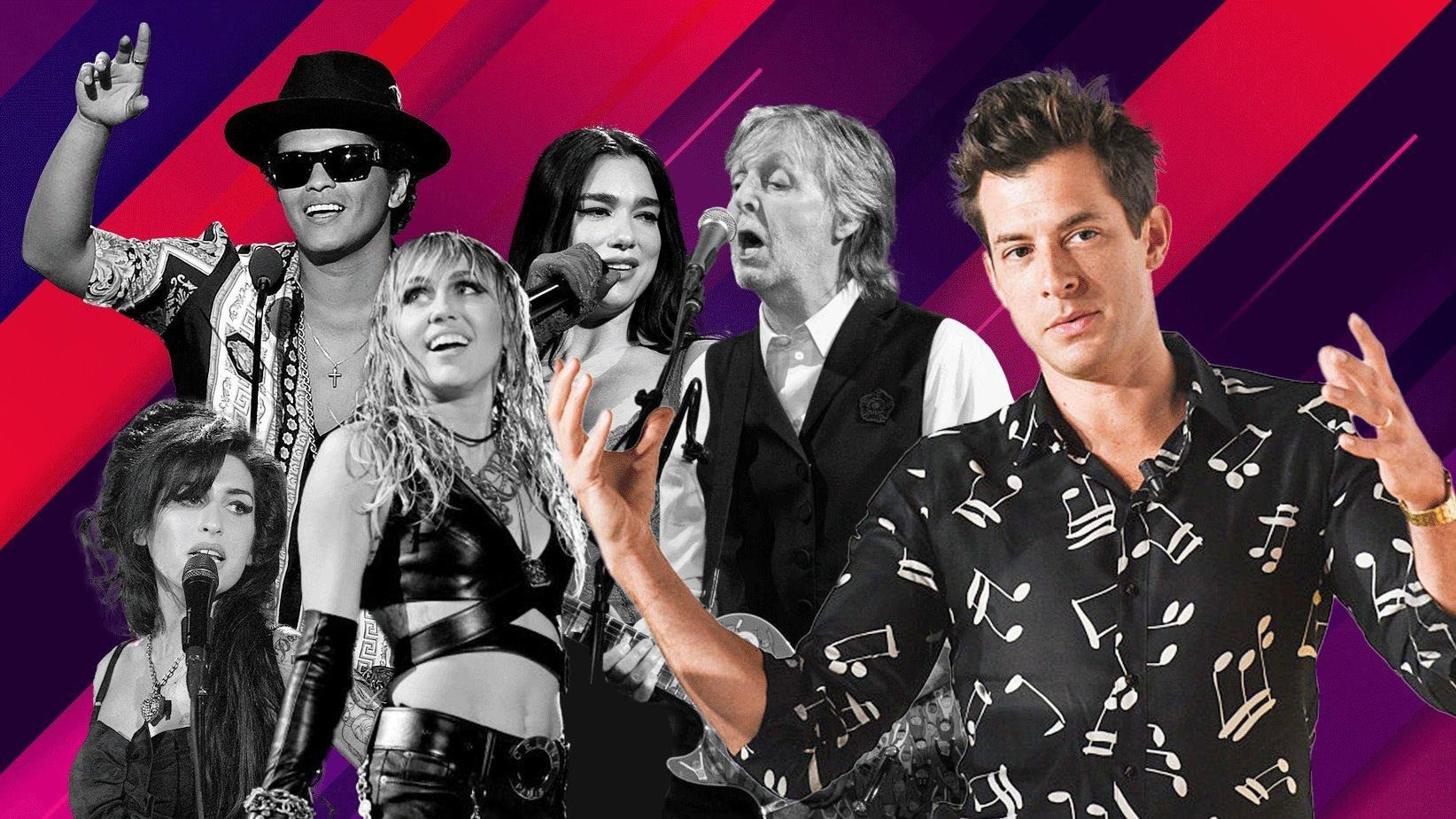
Mark Ronson with Amy Winehouse, Bruno Mars, Miley Cyrus, Dua Lipa and Paul McCartney
Photos: Antoine Antonio/Getty Images; Peter Macdiarmid/Getty Images for NARAS; Kevin Winter/Getty Images For MTV; Denise Truscello/Getty Images for iHeartMedia; Don Arnold/Getty Images; Harry Durrant/Getty Images
Behind Mark Ronson's Hits: How 'Boogie Nights,' Five-Hour Jams & Advice From Paul McCartney Inspired His Biggest Singles & Collabs
Ahead of the release of his memoir, 'Night People: How to Be a DJ in '90s New York City,' revisit GRAMMY.com’s 2023 interview with Mark Ronson.
GRAMMYs/Sep 15, 2025 - 05:04 pm
This story was originally published on Sept. 26, 2023 and has been updated to reflect details of his memoir.
Mark Ronson's fingerprints are everywhere in pop music.
Whether he's behind the board as a producer, penning earwormy hooks for some music's biggest names, or employing a crate digger's mindset to create his own records, you'd be hard-pressed to find something on your playlist that Ronson hasn't touched. The seven-time GRAMMY winner might as well be considered the industry’s Kevin Bacon — he's worthy of his own "six degrees" game.
Today, Ronson is on his way back to New York City from some time spent in the Hudson Valley — a much-need reprieve after a blockbuster summer that saw his Barbie movie soundtrack top charts around the world.
"I love this film so much and I did something I've never done before by executive producing and overseeing [its music]," he tells GRAMMY.com.
That Ronson still has things to check off his professional bucket list is something of a surprise. The stepson of Foreigner guitarist Mick Jones, Ronson got his start DJing in New York in the '90s, bridging his twin loves of funk and hip-hop. In the latter part of the decade, Diddy hired Ronson to DJ several parties, thus opening up the then-twentysomething to a world of A-list talent. Ronson's elite status only grew over decades — from DJing Paul McCartney's wedding in 2011 (for which he refused to accept payment), to creating the ubiquitous hit "Uptown Funk," and curating the final night of the iconic 2023 Montreux Jazz Festival.
Ronson has released five of his own albums — beginning with 2003's Here Comes The Fuzz and up to 2019's Late Night Feelings — each of which is a star-studded affair, featuring everyone from Miley Cryus and Camilla Cabello to Bruno Mars and Mary J. Blige (as well as the occasional lawsuit over interpolation and sampling). Over the years, he's developed a cadre of session musicians and production collaborators, creating an incredibly pop savvy sound often built on horn-driven funk and soul.
At the bedrock of Ronson's production — and among his best-known works — is Amy Winehouse's GRAMMY-winning album Back To Black. Since that 2006 release, Ronson has collaborated with an ever-increasing number of major acts, composing, arranging, producing, writing or playing on (and sometimes all of the above) works by Lady Gaga, Duran Duran, Dua Lipa, Adele, Queens of the Stone Age, and even Sir Paul himself.
Ronson will add another first to his list: author. A hybrid memoir and cultural history, the still-in-progress 93 'Til Infinity will cover the New York downtown club scene of Ronson's salad days.
"It's really fun to revisit that era, and it was a very specific time in DJing where DJs weren't really famous," he recalls. "There was no stage; sometimes the turntables were shoved in the corner at the end of the bar and you would have to crane your neck to even see the crowd. I sound like Grandpa Simpson, but I loved it."
Ronson is en route to a DJ gig as we speak, though the new dad says he'll be "kicking back into high gear on the book" soon. "[Writing it] requires really falling off for seven hours in the basement, like Stephen King says in his book. But I like that," he says.
Ahead of the release of his memoir, Night People: How to Be a DJ in '90s New York City on Sept. 16, revisit GRAMMY.com’s interview with Mark Ronson. Ronson shared the stories behind some of his favorite productions – including the song that makes people "stupidly happy."
"Ooh Wee," Here Comes The Fuzz feat. Ghostface Killah, Nate Dogg, Trife and Saigon (2003)
I went to see Boogie Nights in the theater and I remember this scene where Mark Wahlberg's a busboy on roller skates and in the background there was this song playing that had just this string thing that just hit me so hard. I bought the Boogie Nights soundtrack and it wasn't on there — obviously this is 20 years before Shazam — then I figured out it was the song called "Sunny" by Boney M.
When I was making my first record, I was sort of locked up by myself in the studio on 54th Street just experimenting, making tracks all the time. That string line, I could never figure out what to do with the sample. I tried 80 different tempos and drum beats over it, and it wasn't until I just put that drum break behind it, the drums from the song, and it just all sort of gelled together.
Because that was an era in hip-hop where people weren't really using drum loops or drum breaks anymore. It was about chopping and having hard kicks and snares, like DJ Premiere and Timbaland. The DJ in me was like, f— it, let me just try putting a drum break under it. It all gelled and felt good.
I was a huge Wu-Tang fan, and at that point Ghostface was my favorite out of the group and I loved his solo records. I've never been more nervous in some weird way to talk to somebody — nervous and giddy, and what if I just sound so dorky?
I remember he was like, "Yeah, I get it. I think it's dope. It's like some Saturday Night Fever with Tony Manero s—." I guess because of the strings and it was so disco, and Ghost always had this pension for those disco kind of uptempo beats.
The album had to be handed in and I didn't have a hook that I liked on this song yet. Sylvia Rhone was the head of Elektra and she said, "I could try and get Nate Dogg on it." Of course that was the dream. I sent him the track, and it was probably two days before I had to master the album, on a Sunday. He sent me the files back, and all the waveforms were blank.
I had to call Nate Dogg at like 10 a.m. at home on a Sunday. While he's on the phone, he goes back in the studio and turns all his equipment on, trying to do the session.
The fanboy thing is still very real because I still work with people all the time that I'm a fan of. At that age, being in the studio with M.O.P., Mos Def, Q-Tip, Jack White, Freeway, Nate. I was just trying to keep it together some of the time.
"Rehab" - Amy Winehouse, Back to Black (2006)
"Rehab" just came about in general because Amy was telling me an anecdote. She was really together when we worked — she might not have been sober, but she got her whole life together. She was telling me about this time in her life that was difficult and she was in a really bad place. She said, "And my dad and manager came over and they tried to make me go to rehab and I was like, 'No, no, no.'"
I remember that it instantly sounded like a chorus to me, so we went back to my studio and we made the demo. That was when the Strokes and the Libertines were really big. I remember [the drums] sounded much more like an indie beat, even though it came from soul and Motown and the original rock 'n' roll. She would tease me; she's like, "You trying to make me sound like the bloody Libertines."
When [studio group] the Dap-Kings played it, they just brought it to life. I didn't really know anything about analog recording at that point. I only knew how to make s— sound analog by sampling records, so to hear them all play in the original Daptone studio, all the drums bleeding into the piano…. I felt like I was floating because I couldn't believe that anybody could still make that drum sound in 2006.
Amy couldn't be there for the recording, so I was taking a CD-J into the studio with me and I had her demo vocals on a cappella. I was playing it live with the band so that they could keep pace with the arrangement. I loved it so much.
"Valerie," feat. Amy Winehouse,Version (2007)
Amy had never met the Dap-Kings, even though they had been the band for all the songs that I had done on Back to Black. There was this really lovely day in Brooklyn where I took her to the studio to meet all the guys. The album was already out; there was a very good feeling about it [and] they obviously made something really special together. Amy loved the way the record sounded so much, she was so grateful. They loved her.
While we're all having this love-in in Bushwick, I was finishing my album Version and I said, "Maybe we could just cut a song for my record?" The whole theme of the record had sort of been taking more guitar indie bands like the Smiths, the Jam, the Kaiser Chiefs, and turning those into R&B or soul arrangements. I asked Amy if she knew any songs like that. She's like, "Yeah, they play this one song down at my local. It's called 'Valerie,'" and she played us all the Zutons' version. I didn't really hear it at first.
The first version we did was this very Curtis Mayfield kind of sweet soul. Part of me was just like, This is really good, but I feel like there's a hit version as well. I don't have that kind of crass thing where everything needs to be a hit, but…
Everybody was already packing up their instruments and I didn't know the guys that well yet, so it was kind of a pain in the ass to be like, "Hey, I know everybody just wants to go onto the f—ing bar and get a beer right now, but can we just do one more version where we speed it up a little?" Everybody flips open their guitar cases and we do like two more takes, and that's the version on my album.
"Alligator" - Paul McCartney, NEW (2013)
We've done other things together, but I've only really [worked on] three songs on his album, NEW. "New" I just loved as soon as he sent me the demo, because as a McCartney fan, it gives you the same feeling as "We Can Work It Out"; it just has that amazing uplifting feel. That's just his genius. I love "Alligator" maybe a little more because it's more weird.
He definitely gives you a day to f— up and be an idiot because you're just so nervous to be in the studio with McCartney. By the second day it's like, okay, get your s— together.
I remember running around just like, What sound can I find for Paul McCartney that every other amazing producer who ever recorded him [hasn't found already]? He was like, "Anybody can record a pristine acoustic guitar. Give me something with some characteristic that's iconic. That feels like someone just put the needle down on track one on an album."
That's something I always try to remember: don't just make it sound like a guitar, make it sound like a record.
"Uptown Funk" feat. Bruno Mars, Uptown Special (2015)
My enjoyment of the song is now gauged by the people that I'm playing it for. I was playing at this party at Public Records [in Brooklyn] on Sunday. I knew that I wasn't going to play that song on that night; it wasn't right for that crowd or something. And then an hour into my set, the vibe is really good, and I was just like, f— it and I dropped it, and people went crazy.
I'm a little extra critical sometimes on the more commercial songs, thinking nobody wants to hear this or this doesn't really have a place in this space. I think it's just a song that makes people stupidly happy, and that's cool.
The lyrics [to "Uptown Funk"] came really quick. We had the jam: Bruno was on drums, I was playing bass, Jeff Bhasker was on keys, and then Phil Lawrence was there and we jammed for five hours. We just chopped up our favorite parts of the instrumental jam, and then just started writing lyrics almost like a cipher. Bruno had been playing the Trinidad James song ["All Gold Everything"] in his live sets and playing it over a sort of uptempo, funky James Brown, "Get Up Off That Thing" groove.
We were just throwing about lyrics, throwing a little bit of the cadence of the Trinidad James song. Then when Jeff Bhasker said, "This s—, that ice cold/That Michelle Pfeiffer, that white gold." It was like a great rap line. Then everything started to elevate a little bit from there on up.
That first day, we had the whole first verse and it felt great. Every time we went back in the studio, a lot of the times it would feel labored and not as good as that first verse. So it really took a long time to get in. Sometimes we'd go in the studio for three days and then at the end of the whole session we realized, we actually only liked these four bars.
So we kept building on it, and luckily Bruno didn't really let it die. Bruno was touring Unorthodox Jukebox; I was just flying around the country with a five string bass just to get the song done.
"Uptown Funk" still ended at Daptone…to do the horns last with Dave [Guy] and Neil [Sugarman], me. It's almost like you've always got to go through Daptone to finish something.
Bruno came up with that horn line. He was like, "I know you're going to kill me because you're trying to get away from being the horn guy, but I have this horn line and I think it's kind of killer." He demoed it from whatever backstage room on tour and I was like, Okay, here we go.
"Shallow" - Bradley Cooper and Lady Gaga, A Star Is Born Soundtrack (2018)
It's very rare that I write on a song that I don't have to produce as well. We wrote that song in the middle of sessions for [2016's] Joanne, and then Gaga produced the whole Star is Born soundtrack herself. I remember we all had some tingly feelings when we were writing it.
It wasn't meant to be a duet ever. Then Bradley wrote it into the film; it becomes the beginning of their love story. Bradley showed [me a rough cut] at his house, I remember just being like, he's taking this special song [and] made it put its hooks into you. This film, and the story, and the way this song is unfolding is so special.
Then also shout to Lukas Nelson, because that guitar that he came up with that opens the song was not in our demo, and that is such an iconic, memorable part of the song.
The film and the script was really powerful, and I think that me, [co-writers] Andrew [Wyatt], Anthony [Rossomando], Gaga were all in this sort of heartbreak place. We're all just going through our own dramas in the song. The juju was really good and a little spooky in the studio that night.
"Electricity" - Dua Lipa & Silk City feat. Diplo, Mark Ronson, Electricity (2018)
That song just always makes me happy. I don't have a lot of other songs [that sound] like that. I'm always psyched to play that in a set or to go see Diplo play it live.
When I came up DJing in the mid-'90s in New York, if you're a hip-hop DJ you had to be versed in dancehall, old R&B dance classics, and a little bit of house. So I knew 12 house records, but I love those records.
It came out of a fun jam, just me and Diplo — who I'd known probably at that point for 10, 15 years, but we never got in the studio together. He's just firing up drum s— and I'm just playing on this old tack piano that was in the studio I just moved into. But it also sounded quite housey.
We came up with those chords and [singer/songwriter] Diana Gordon came over. I never met her before and she just started freestyling some melodies, and it was just so soulful instantly.
We'd moved the key a little bit lower for Dua — she has this amazing husky voice — but we still left Diana's demo vocal in. She's singing these mumble, non-word melodies that sound like a sample.
We had that old studio where we did Version and all the Amy demos. It has an old-school elevator that was sort of manual and it would always break down. There were people that were just too afraid, like Cathy Dennis — the brilliant songwriter who wrote "Toxic" and "Can't Get You Out of My Head" — she would just always be like, "I'm taking the stairs." We were on the fifth floor and it was a steep, steep walk up. [Editor's note: The music video for "Electricity" features Ronson and Diplo stuck in an elevator. He notes that he's gotten stuck several times in real life.]
"Nothing Breaks Like a Heart" feat. Miley Cyrus, Late Night Feelings (2019)
I was in L.A. working in Sound Factory [Studios], and I had seen Miley a couple years back sing "50 Ways to Leave Your Lover" on the "SNL" 40th anniversary; I had never heard her perform with that stripped-down arrangement. I was just so in love with her voice and the tone. I remember hounding my manager, because usually somebody who knows somebody, but Miley Cyrus was completely unreachable and just in another stratosphere.
I was in the studio with [Dap-King] Tommy Brenneck; he's just such a wonderful player, such a soulful touch. We got this thing going, and then Ilsey [Juber] was saying, like, "What about all these things that break, but nothing breaks like a heart?"
[I thought], You know what? I've been trying to hit this girl up for years and nothing ever happened, but let me just try it one more time. I sent it off to Miley, and I guess she was just in a really motivated part of life. She's like, "This is cool. Where are you guys? I'll be there Monday." She came down Monday to the studio, and then her and Illsey wrote the whole rest of the song.
"Break Up Twice" - Lizzo, Special (2022)
[I produced a few other songs on Special], but they didn't make the cut. There's one that I really love called "Are You Mad" that might hopefully see the light of day once.
We spent a lot of time together and I love working with her because she has a really eccentric/ avant garde music taste. Like, the Mars Volta is her favorite-ever band; she's a conservatoire flute player; then she has a strong Prince heritage because she spent time in Minneapolis and she's been to Paisley Park.
The thing that I really love about her is, even at the status that she was at when we were working, there was never anything too silly or too left field to try. It's really freeing when you're with a big artist who isn't afraid to just f— around and jam and make some s— that you know might not be the thing.
"Break Up Twice" was actually an instrumental that we had done at Diamond Mine with [Daptone family] Tommy [Brenneck], Leon [Michels], Victor [Axelrod] and Nick [Movshon]. I just played that, and it instantly spoke to her and she just started freestyling, adding the harmonies and the sax and the vocal arrangements. I just didn't quite know how versatile and talented that she was when we first went in the studio. I just remember constantly being impressed and amazed.
Barbie: The Album (2023)
I'm really proud of the Dom Fike song ["Hey Blondie"], the Sam Smith song ["Man I Am"], [Dua Lipa's] "Dance and Night," of course. Even the Billie [Eilish] song that we did the string arrangement for. I played the tiniest bit of synths on the Nicki [Minaj]i/Ice [Spice] song.
I love this film so much and I did something I've never done before by executive producing and overseeing it. There's so many songs that I had nothing to do with creatively; sometimes I was just doing admin, hounding Tame Impala to send in a demo.
I'm really proud of "I'm Just Ken." Of course Ryan Gosling is a superstar in a different kind of way, but the fact that he's not some superstar pop artist, and the fact that that song has managed to do what it's done….Obviously it's so much to do with the film and his performance, but I'm really proud of that song. I was so inspired by the script. I just instantly had the idea for that line.
There was never anything in the script that said Ryan was going to sing a song. It was just something where Greta [Gerwig] and him really loved the demo, and she loved it enough to write it into the film, which was just so exciting. It was happening in a way that felt wonderful and organic, and to then get Josh Freese and Slash, and Wolf Van Halen to play on it and even bring it to even this next level of sonic fullness.
On TikTok and Instagram, I've seen people singing it; [even] in Spanish, really intense, really earnest covers. We were never trying to write a parody song or anything that wasn't earnest, because there's nothing parody about the film. I guess the chords have a bit of heartbreak in them, a little melancholy, and Ryan's performance is really lovely.
Barbie score (2023)
We worked equally hard or harder [on the score]. It doesn't have quite the same shine because obviously it's not Billie Eilish, Lizzo, and Dua Lipa, but it's something Andrew [Wyatt] and I did. A piece called "You Failed Me" — that's during both Barbie and Ken's meltdown in the middle of the film — I'm quite proud of that. I really love the "Meeting Ruth" orchestral interpolation of the Billie tune as well.
I've contributed music to other films and little cues and things like that, but this is the first time that Andrew and I really did a whole movie from start to finish while also doing the soundtrack.
It's incredibly humbling, too, because when you make a song for someone's album, you're working. It's certainly the most important thing that's happening. In a film, it could be the second most important thing. You could sometimes say it's the third most important thing after dialogue and the sound effects. All that's programmed into your mind about hooks and things like that it's like, No, actually sometimes get the f— out of the way and just provide a lovely emotional texture for things to sit under things.
The thing that I guess is universal is you're reacting to an emotion. Especially if it's a film that you really feel emotionally partial to, you're watching this wonderful performance on screen and how could you not be inspired by that? We're so spoiled to have this as our first film where we're reacting to the emotional heart of this film, which is so rich.
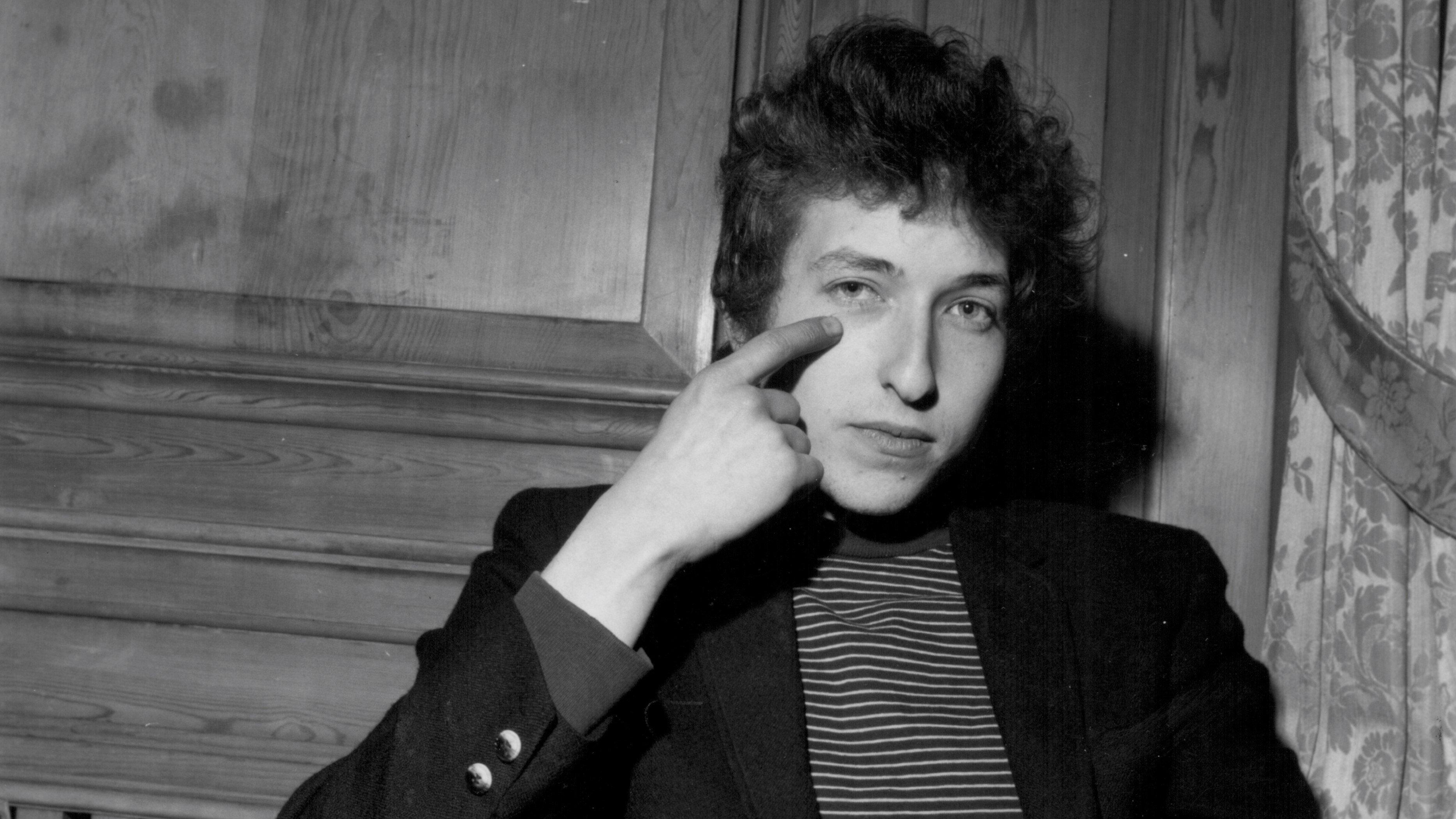
Bob Dylan in 1965
Photo: Doug McKenzie/Hulton Archive/Getty Images
Revisiting 'Highway 61 Revisited' At 60: How Bob Dylan's Electric Masterpiece Changed The World
Dylan's 1965 magnum opus — and GRAMMY Hall of Fame entry — ushered in a new sound that still resonates.
GRAMMYs/Aug 28, 2025 - 05:00 pm
When Bob Dylan released his seminal Highway 61 Revisited, on Aug. 30, 1965, the term "folk-rock" was not even in the lexicon.
The adjective appeared for the first time just two months earlier when — writing for Billboard — journalist Eliot Tiegel used the word to describe the hybrid sound of bands like the Byrds and the Lovin' Spoonful. Dylan's sixth studio record represented this new genre more than any record that came before. It became a touchstone for generations of artists who, upon hearing the album, stepped through a door and onto a road less travelled.
"The first time I heard Bob Dylan, I was in the car with my mother listening to WMCA, and on came that snare shot that sounded like somebody had kicked open the door to your mind,” Bruce Springsteen said in reference to the opening percussion on, "Like a Rolling Stone," during his speech inducting his colleague into the Rock and Roll Hall of Fame.
The Boss was not the only one this record (or Dylan in general) influenced. As Joni Mitchell told David Wild in 1991: "I wrote poetry, and I always wanted to make music. But I never put the two things together….. And when I heard ‘Positively Fourth Street,' I realized that this was a whole new ballgame; now you could make your songs literature. The potential for the song had never occurred to me." Three-time GRAMMY winner Lucinda Williams echoed Mitchell's sentiments in a 2021 radio interview: "I loved the combination of the electric with the folk. Nobody had done that at the time. A lot of new ground was being broken."
GRAMMY-nominated singer and musician Valerie June is a student of Dylan’s work, and reflects on Highway 61 Revisited with deep emotion. "There's one thing for sure that Bob Dylan knows how to do, and it is absolutely timeless: When he captures characters, you will never forget them," she tells GRAMMY.com.
Dylan agreed that Highway 61 Revisited was something special, saying at the time of release: "I'm not going to make a record as good as that one." Indeed Highway may bit his biggest artistic statement — and among his most successful. The record peaked at No. 3 on the U.S. Billboard chart and No. 4 on the U.K. charts; it's often included on greatest albums of all time lists.
Deep dives aplenty abound articulating the pop-cultural impact and musical significance that the timeless Highway 61 Revisited represents. In 2002, the album was inducted into the GRAMMY Hall of Fame. The 2024 biopic A Complete Unknown, which starred Timothée Chalamet as Dylan, touched on the making of Highway 61 Revisited. As a result, the album was discovered by a whole new generation.
On the occasion of the record's 60th anniversary, GRAMMY.com offers yet another take on this pivotal collection of songs that ushered in a new era of music-making.
The Historic Highway
Highway 61 was the singer/songwriter's second of two studio releases in 1965. This chart-topper followed Bringing it All Back Home — a record that hinted at Dylan's transformation from folk to rock. That release saw Dylan backed by a full band and featured sprinklings of the fusion of blues-based sounds and literate lyrics that would be on Highway 61 Revisited.
Highway 61 directly pays homage to the blues, focusing on the ways the genre and its artists influenced Dylan himself and also early rock 'n' roll pioneers. Better known as U.S. Route 61, and often dubbed the Blues Highway, this historic road begins in Dylan's home state of Minnesota and meanders parallel to the mighty Mississippi River for most of its 1,400 miles, ending in New Orleans; in between, the highway touches eight states. Musically, and thematically, these white lines are threads Dylan uses to stitch the album together.
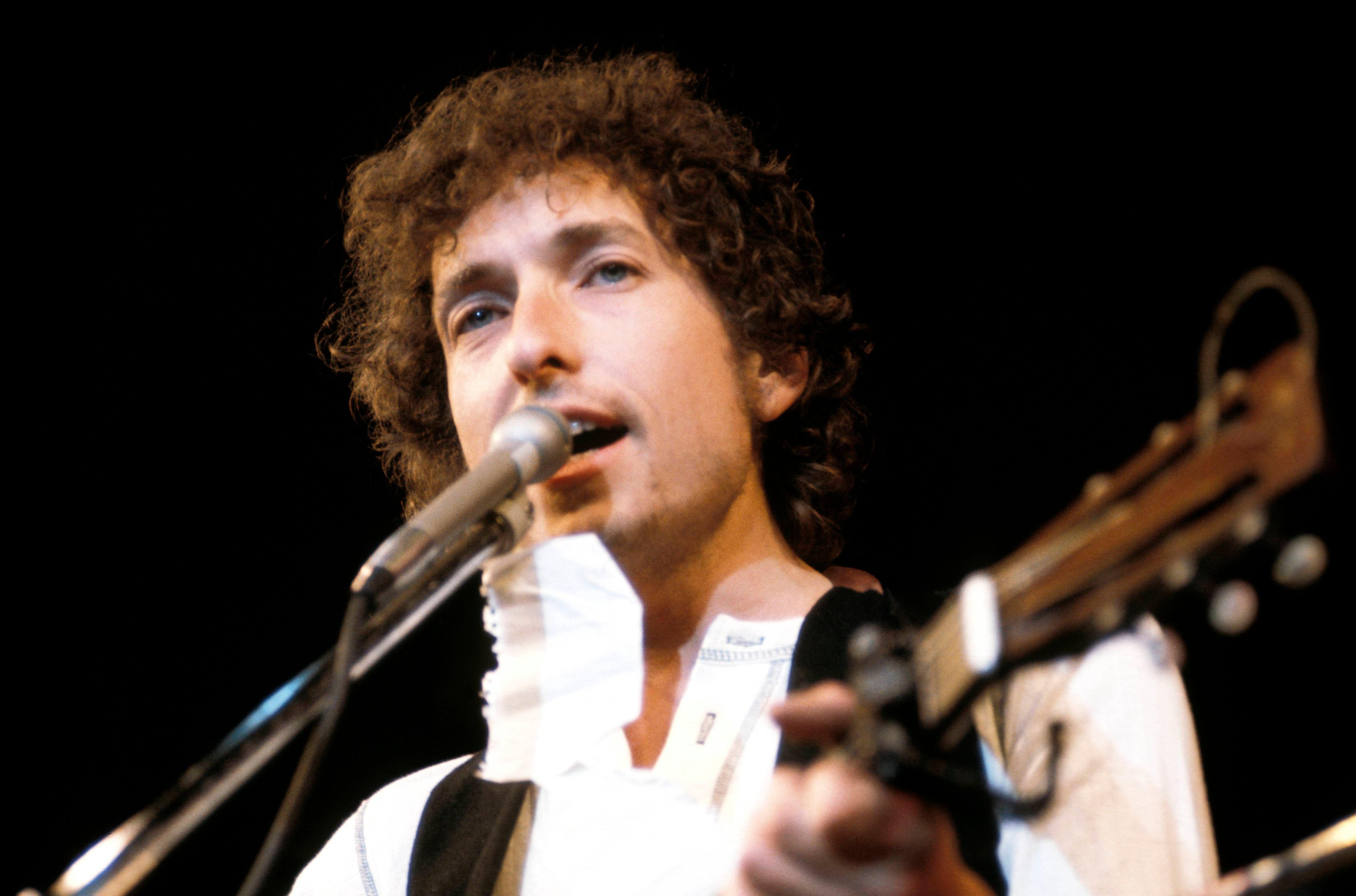
As Dylan wrote in Chronicles, Vol. 1, his best-selling 2004 memoir: "Highway 61, the main thoroughfare of the country blues, begins about where I began. I always felt like I'd started on it, always had been on it and could go anywhere, even down into the deep Delta country. It was the same road, full of the same contradictions, the same one-horse towns, the same spiritual ancestors."
The blues is like a trusted friend Dylan trusts and returns to throughout his career. Sometimes it's loud and sweaty — infused with rock and roll — and sometimes it's jazzy or more acoustically-inclined and traditional, like his famed talking blues of the 12-bar variety that blend the best of country and folk. No matter what branch of the blues trail Dylan follows, it's a universal influence on his art.
Capturing The Spirit Of The Times
Highway 61 Revisited brought new fans into Dylan's camp. Concurrently, it also alienated his dyed-in-the-wool folk followers that began with the infamous and controversial headlining set earlier that summer at the Newport Folk Festival when he plugged in and rocked out with the members of the Paul Butterfield Blues Band and Al Kooper.
Each of Highway 61's compositions were born mostly in New York City and Dylan's rustic retreat in Woodstock, New York. Once finished, the songs were recorded in two separate sessions with two different producers at Columbia's Studio A in midtown Manhattan: two days in June and sojourn at the end of July. Both sessions featured an all-star backing band that included guitarist Mike Bloomfield, drummer Bobby Gregg and pianist Koooper. While only nine songs long, these lyrically-rich ruminations made a statement and collectively captured the zeitgeist of the mid-sixties.
Indeed the times were a changin' when Dylan wrote and recorded Highway 61 Revisited. In 1965, the U.S. deployed ground troops to Vietnam escalating this war that lasted another decade; Malcolm X was assassinated; and the Civil Rights Movement was marked by the Selma to Montgomery protest march. While much has changed since that watershed year, many sentiments Dylan espoused in the songs on Highway 61 Revisited resonate, and are relevant, still.
"Like a Rolling Stone," with its rhetorical questions asked in the chorus like —"how does it feel to be on your own," and be "a complete unknown," — speaks to the loss of innocence felt by many disenchanted youth during the turbulent 1960s.
Highway 61 Revisited influenced the folk-rock music released over the next decade. Musicicologist Greil Marcus captured the gravitas of this record in the July 23, 1970 edition of Rolling Stone in his record review of Self Portrait, Dylan's most recent release. The esteemed critic listed 25 points about the album, and No. 19 states, "because of what happened in the middle sixties, our fate is bound up with Dylan's whether he or we like it or not. Because Highway 61 Revisited changed the world, the albums that follow it must — but not in the same way."
Valerie June spent significant time in Clarksdale, Mississippi, where bluesman Robert Johnson sold his soul to the devil at the crossroads of Highways 61 and 49 and generations toiled in cotton fields.
"I feel, and have felt for many years, the energy of that area," June says. "For Bob Dylan to name this record Highway 61 Revisited is very impactful in the flow of the land and the richness of those cotton fields where folks worked, where the blues men played and in the water. And once you get into the water, you're on a totally different level."
The Poetic, "Desolating" Bookend
Three chords and the truth. "Desolation Row," the song that bookends this masterclass in songwriting, is the only all acoustic number on the record. And, while musically it's propelled by only three chords, lyrically it's one of the richest offerings on Highway 61 Revisited.
Clocking in at more than 11 minutes, "Desolation Row" is an epic parable in song that requires repeated listens to understand all the lessons and observations that Dylan is making. Even then, there is so much mystery that remains as to the song's essence. The song showcases Dylan's penchant for writing lyrics that straddle between prose and poetry — Biblical references, name drops of everyone from American poets Ezra Pound and T.S. Eliot to Shakespeare's Romeo, 18th-century Italian adventure Casanova, and Beat poet language all appear.
"These characters that he's singing about are characters that walk down the street, or go into a Walmart," June continues. "Their names might not be the Hunchback, Cain and Abel, Ophelia the Maid, or Einstein, but you'll see these same characters in the world."
Fifty-one years before the bard was the first musician honored with the Nobel Prize for Literature, "Desolation Row" makes the case for why he was bestowed that prestigious honor.
For all of the above songwriting greatness, and so much more, Dylan received yet another honor in 1991 when he was bestowed the Recording Academy Lifetime Achievement Award. Bob Dylan's road is not yet complete, but it's worth taking a pause and spending time to revisit one of his greatest records. Spontaneous, surprising and unexpected. An unplugged Dylan, unrelenting in his invectives and commentaries about the world in flux around him, makes Highway 61 Revisited a must listen and a record to ruminate on for just as long in 2025 as it did 60 years ago.